QQuestionAnatomy and Physiology
QuestionAnatomy and Physiology
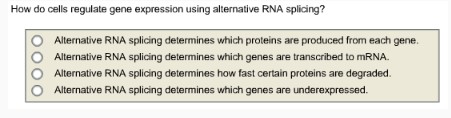
How do cells regulate gene expression using alternative RNA splicing?
- ☐ Alternative RNA splicing determines which proteins are produced from each gene.
- ☐ Alternative RNA splicing determines which genes are transcribed to mRNA.
- ☐ Alternative RNA splicing determines how fast certain proteins are degraded.
- ☐ Alternative RNA splicing determines which genes are underexpressed.
Attachments
6 months agoReport content
Answer
Full Solution Locked
Sign in to view the complete step-by-step solution and unlock all study resources.
Step 1: Understand the question and identify the concept being tested.
The question asks about the role of alternative RNA splicing in regulating gene expression. Alternative RNA splicing is a process where a single gene can produce multiple proteins by including or excluding different exons (coding regions) in the final mRNA molecule.
Step 2: Identify the correct answer from the given options.
The correct answer is: Alternative RNA splicing determines which proteins are produced from each gene.
Final Answer
Alternative RNA splicing determines which proteins are produced from each gene.
Need Help with Homework?
Stuck on a difficult problem? We've got you covered:
- Post your question or upload an image
- Get instant step-by-step solutions
- Learn from our AI and community of students