

Understanding Business Ethics Third Edition Test Bank
- Business Law
- 197 pages
- Shared May 2025
Simplify your study sessions with Understanding Business Ethics Third Edition Test Bank, an exam guide designed for effective revision and maximum retention.
Preview 16 of 197 pages
See the first 16 pages exactly as they appear in the document.
Page 1 Read page 1 as text
Stanwick, Understanding Business Ethics, 3e Instructor Resource Chapter 1: The Foundation of Ethical Thought Test Bank Multiple Choice 1. How is the price of a meal determined at a Panera Cares Café? a. C ustomers decide how much to pay for their meal b. M eal prices are determined based on the cost of meal preparations c. C afé managers set the prices of the meals each day based on ingredient costs d. T op management at Panera set a standard price of meals for all café locations. Ans: a Learning Objective: 1 .1 Cognitive Domain: Knowledge Answer Location: Panera Cares Community Café: A L oaf in E very A rea Question Type: MC 2. The average Panera Cares Café will generate revenues of ___________ and profits of __________ per month. a. $10,000; $300 to $400 b. $50,000; $1,000 to $5,000 c. $100,000; $3,000 to $4,000 d. $500,000; $30,000 to $35,000 Ans: c Learning Objective: 1 .1 Cognitive Domain: Knowledge Answer Location: Panera Cares Community Café: A L oaf in E very A rea Question Type: MC The profit from Panera Cares Café is used to a. O pen new cafes b. F und training programs c. I ncrease wages d. P ublicize Panera Bread Ans: b Learning Objective: 1.1 Cognitive Domain: comprehension Answer Location: Panera Cares Community Café: A L oaf in E very A rea Question Type: MC 4. ___________ can be defined as the values that an individual uses to interpret whether any particular action or behavior is considered acceptable and appropriate. a. Ethics b. Validity c. Reliability d. Commitment Ans: a
Page 2 Page 3 Read page 3 as text
Stanwick, Understanding Business Ethics, 3e Instructor Resource Learning Objective: 1.1 Cognitive Domain: Comprehension Answer Location: Introd uc tion Question Type: MC 5. _____________ can be defined as the collective values of a business organization that can be used to evaluate whether the behaviors of the organization’s collective members are considered acceptable and appropriate. a. Validity b. Business e thics c. Self - efficacy d. Groupthink Ans: b Learning Objective: 1.1 Cognitive Domain: Knowledge Answer Location: Introduction Question Type: MC 6. Which of the following is not one of the three types of ethical examinations? a. D escriptive b. C onstructive c. A nalytical d. N ormative Ans: b Learning Objective: 1.2 Cognitive Domain: Comprehension Answer Location: Types of E thical E xaminations Question Type: MC 7. What percentage of the 1,700 executives from 43 countries surveyed by Ernest and Young stated they would be willing to make cash payments in the form of a bribe in order to obtain business from a customer? a. 5% b. 15% c. 25% d. 45% Ans: b Learning Objective: 1.1 Cognitive Domain: Comprehension Answer Location: Why I s S tudying Ethics S o I mportant ? Question Type: MC 8. ____________ is the presentation of facts related to specific ethical actions of an individual or organization. a. Analytical e thics b. Descriptive e thics
Page 4 Read page 4 as text
Stanwick, Understanding Business Ethics, 3e Instructor Resource c. Normative e thics d. Constructive e thics Ans: b Learning Objective : 1.2 Cognitive Domain: Comprehension Answer Location: Types of E thical E xaminations Question Type: MC 9. Which of the following is used when an observer wants to understand the cause of events that generated the ethical issue? a. Analytical e thics b. Descriptive e thics c. Normative e thics d. Constructive e thics Ans: b Learning Objective: 1.2 Cognitive Domain: Comprehension Answer Location: Types of E thical E xaminations Question Type: MC 10. _____________ is the process of understanding the reasons a course of action that may have an ethical impact took place. a. Analytical e thics b. Descriptive e thics c. Normative e thics d. Constructive e thics Ans: a Learning Objective: 1.2 Cognitive Domain: Comprehension Answer Location: Types of E thical E xaminations Question Type: MC 11. From a legal standpoint, _____________ would address the “motive” behind the actions instead of just being satisfied with a description of the actions. a. A nalytical ethics b. D escriptive ethics c. N ormative ethics d. C onstructive ethics Ans: a Learning Objective: 1.2 Cognitive Domain: Comprehension Answer Location: Types of E thical E xaminations Question Type: MC 12. _____________ is a prescribed course of action that attempts to ensure that ethical behavior will be followed in the future.
Page 5 Read page 5 as text
Stanwick, Understanding Business Ethics, 3e Instructor Resource a. Analytical e thics b. Descriptive e thics c. Normative e thics d. Constructive e thics Ans: c Learning Objective: 1.2 Cognitive Domain: Comprehension Answer Location: Types of E thical E xamination Question Type: MC 13. ______________ allows employees and managers to address potential ethical issues before they occur. a. Analytical e thics b. Descriptive e thics c. Normative e thics d. Constructive e thics Ans: c Learning Objective: 1.2 Cognitive Domain: Comprehension Answer Location: Types of E thical E xamination Question Type: MC 14 . Which of the following is not one of the three teleological frameworks? a. Ethical e goism b. Utilitarianism c. Kant’s ethics d. Sidgwick’s Dualism Ans: c Learning Objective: 1.2 Cognitive Domain: Comprehension Answer Location: Teleological Frameworks Question Type: MC 15. The supporters of ______________ argue that this framework is the only ethical mold that captures the essence of motivation within individuals. a. Utilitarianism b. Sidgwick’s Dualism c. Ethical Egoism d. Kant’s Ethics Ans: c Learning Objective: 1.2 Cognitive Domain: Comprehension Answer Location: Teleological Frameworks Question Type: MC
Page 6 Read page 6 as text
Stanwick, Understanding Business Ethics, 3e Instructor Resource 16. ______________ is based on the principle of utility where each person’s actions add to the overall utility of the community impacted by his or her actions. a. Utilitarianism b. Sidgwick’s d ualism c. Ethical e goism d. Kant’s e thics Ans: a Learning Objective: 1.2 Cognitive Domain: Comprehension Answer Location: Teleological Frameworks Question Type: MC 17. Supporters of _______________ state that this theory is the only one that captures the essence of benevolent behavior. a. Utilitarianism b. Sidgwick’s d ualism c. Ethical e goism d. Kant’s e thics Ans: a Learning Objective: 1.2 Cognitive Domain: Comprehension Answer Location: Teleological Frameworks Question Type: MC 18. ______________ attempted to resolve the fundamental difference of whether the actions for one’s self - benefit impact just the individual or others. a. Utilitarianism b. Sidgwick’s d ualism c. Ethical e goism d. Kant’s e thics Ans: b . Learning Objective: 1.2 Cognitive Domain: Comprehension Answer Location: Teleological Frameworks Question Type: MC 19. Sidgwick’s d ualism argues that _______________ is necessary in an individual’s actions. a. U tilitarianism b. R ational benevolence c. E thical egoism d. Kent’s ethics Ans: b Learning Objective: 1.2 Cognitive Domain: Comprehension Answer Location: Teleological Frameworks Question Type: MC
Page 7 Read page 7 as text
Stanwick, Understanding Business Ethics, 3e Instructor Resource 20. Which of the following ethical frameworks focuses on the duty or obligation in determining whether the actions are wrong or right? a. T eleological b. Sidgwick’s dualism c. D eontological d. E thical egoism Ans: c Learning Objective: 1.2 Cognitive Domain: Comprehension Answer Location: Deontological Frameworks Question Type: MC 21. All of the following are d eontological f rameworks except a. Ethical egoism b. Existentialism c. Contractarianism d. Kant’s Ethics Ans: a Learning Objective: 1.2 Cognitive Domain: Comprehension Answer Location: Deontological Frameworks Question Type: MC 22. ___________ is based on the belief that all individuals agree to social contracts to be a member within a society . a. Intuitionism b. Existentialism c. Contractarianism d. Kant’s Ethics Ans: c Learning Objective: 1.2 Cognitive Domain: Comprehension Answer Location: Deontological Frameworks Question Type: MC 23. ___________ is based on the underlying belief that the only person who can determine right and wrong is based on the free will of the person making the decision. a. Intuitionism b. Existentialism c. Contractarianism d. Kant’s Ethics Ans: b Learning Objective: 1.2 Cognitive Domain: Comprehension Answer Location: Deontological Frameworks
Page 8 Read page 8 as text
Stanwick, Understanding Business Ethics, 3e Instructor Resource Question Type: MC 24 . Which of the following is not one of Ross’s s even guiding principles? a. Gratitude b. Justice c. Self - Improvement d. Greed Ans: d Learning Objective: 1.2 Cognitive Domain: Comprehension Answer Location: Seven Guiding Principles to S upport E thical A ctions Question Type: MC 25 . ___________ can be defined as the trait of an individual who has obsessive and compulsive continuous thoughts of sexual desire . a. Pride b. Envy c. Lust d. Sloth Ans: c Learning Objective: 1.3 Cognitive Domain: Comprehension Answer Location: The S even D eadly S ins Question Type: MC 26 . What did Dante call love of justice perverted to revenge and spite? a. Wrath b. Envy c. Pride d. Greed Ans: a Learning Objective: 1.3 Cognitive Domain: Comprehension Answer Location: The S even D eadly S ins Question Type: MC 27 . What allows animal instincts to control the appetite of an individual? a. Lust b . Gluttony c. Greed d. Pride Ans: b Learning Objective: 1.3 Cognitive Domain: Comprehension Answer Location: The S even D eadly S ins Question Type: MC
Page 9 Read page 9 as text
Stanwick, Understanding Business Ethics, 3e Instructor Resource 28. The t rolley problem is an example of a Sidgwick’s dualism b Kant’s ethics c A n ethical dilemma d E thical egotism Ans: c Learning Objective: 1.3 Cognitive Domain: Comprehension Answer Location: The Trolley problem Question Type: MC 29 . Traditional examples of violations of the _____________ principle include theft, misappropriation of funds, and wasting resources. a. R eliability b. D ignity c. P roperty d. T ransparency Ans: c Learning Objective: 1.4 Cognitive Domain: Comprehension Answer Location: Global Business Standards Codex Question Type: MC 3 0 . The ____________ principle is based on the belief that it is the employee’s responsibility to honor the commitments he or she has made to the firm. a. R eliability b. R esponsiveness c. S elf - respect d. T ransparency Ans: a Learning Objective: 1.4 Cognitive Domain: Comprehension Answer Location: Global Business Standards Codex Question Type: MC 3 1 . The _____________ principle is the belief that employees have a responsibility to supply information when it is requested by various stakeholders. a. R eliability b. R esponsiveness c. S elf - respect d. T ransparency Ans: b Learning Objective: 1.4 Cognitive Domain: Comprehension
Page 10 Read page 10 as text
Stanwick, Understanding Business Ethics, 3e Instructor Resource Answer Location: Global Business Standards Codex Question Type: MC 3 2 . Which of the following is not an example of fairness? a. D istributive fairness b. R eciprocal fairness c. P rocedural fairness d. F iduciary fairness Ans: d Learning Objective: 1.4 Cognitive Domain: Comprehension Answer Location: Global Business Standards Codex Question Type: MC 3 3 . The ______________ principle is based on the assumption that there are no actual or potential conflicts of interest between the employee and the firm. a. P roperty b. D ignity c. C itizenship d. F iduciary Ans: d Learning Objective: 1.4 Cognitive Domain: Comprehension Answer Location: Global Business Standards Codex Question Type: MC 3 4 . The _____________ principle is based on the assumption that every employee should act as a responsible citizen in the community. a. R eliability b. D ignity c. C itizenship d. F iduciary Ans: c Learning Objective: 1.4 Cognitive Domain: Comprehension Answer Location: Global Business Standards Codex Question Type: MC True/False 3 5 . The values that an individual uses to interpret whether any particular action or behavior is considered legal or illegal are called ethics . a. True b. False Ans: b Learning Objective: 1.1
Page 11 Read page 11 as text
Stanwick, Understanding Business Ethics, 3e Instructor Resource Cognitive Domain: Knowledge Answer Location: Why I s S tudying E thics I mportant ? Question Type: TF 3 6 . The collective values of a business organization that can be used to evaluate whether the behaviors of the organization’s collective members are considered acceptable and appropriate are called business ethics . a. True b. False Ans: a Learning Objective: 1.1 Cognitive Domain: Knowledge Answer Location: Why I s S tudying E thics I mportant? Question Type: TF 3 7 . Within the analytical ethics context, there is no interpretation of the facts or assumptions concerning why certain courses of action took place. a. True b. False Ans: b Learning Objective: 1.2 Cognitive Domain: Comprehension Answer Location: Types of E thical E xamination Question Type: TF 3 8 . From a legal standpoint, analytical ethics would address the “motive” behind the actions instead of just being satisfied with a description of the actions. a. True b. False Ans: a Learning Objective: 1.2 Cognitive Domain: Knowledge Answer Location: Types of E thical E xamination Question Type: TF 39 . The supporters of the ethical egoism theory would argue that businesses should focus solely on their own self - interests and maximize their level of profitability by developing a strong competitive advantage. a. True b. False Ans: a Learning Objective: 1.2 Cognitive Domain: Knowledge Answer Location: Teleological Frameworks Question Type: TF
Page 12 Read page 12 as text
Stanwick, Understanding Business Ethics, 3e Instructor Resource 4 0 . As opposed to deontological frameworks, which focus on whether the results are favorable or not, teleological frameworks focus on the duty or obligation in determining whether the actions are right or wrong. a. True b. False Ans: b Learning Objective: 1.2 Cognitive Domain: Knowledge Answer Location: Deont ological Frameworks Question Type: TF 4 1 . Contractarianism is based on the underlying belief that the only person who can determine right or wrong is based on the free will of the person making the decision. a. True b. False Ans: b Learning Objective: 1.2 Cognitive Domain: knowledge Answer Location: Deontological Frameworks Question Type: TF 4 2. Existentialism is based on the belief that all individuals agree to social contracts to be a member within a society. a. True b. False Ans: b Learning Objective: 1.2 Cognitive Domain: Knowledge Answer Location: Deontological Frameworks Question Type: TF 4 3 . Kant’s ethical view is considered a dualism because it attempts to bridge the gap between the existentialist and contractarian points of view. a. True b. False Ans: a Learning Objective: 1.2 Cognitive Domain: Knowledge Answer Location: Deontological Frameworks Question Type: TF 4 4 . Ethical egoism is represented in self - improvement, and utilitarianism is represented in beneficence and noninjury. a. True b. False Ans: a
Page 13 Read page 13 as text
Stanwick, Understanding Business Ethics, 3e Instructor Resource Learning Objective: 1.2 Cognitive Domain: Knowledge Answer Location: Seven Guiding Principles to Support Ethical Actions Question Type: TF 4 5 . Existentialism is represented in fidelity and self - improvement , and contractarianism is represented in fidelity and justice. a. True b. False Ans: A Learning Objective: 1.2 Cognitive Domain: Knowledge Answer Location: Seven Guiding Principles to Support Ethical Actions Question Type: TF 4 6. The traditional components of fiduciary duty include ensuring that there are no actual or potential conflicts of interest given the actions of the employee. a. True b. False Ans: a Learning Objective: 1.4 Cognitive Domain: knowledge Answer Location: Global Business Standards Codex Question Type: TF 4 7. The transparency principle is based on the belief that every employee should conduct business in a truthful and open manner. a. True b. False Ans: a Learning Objective: 1.4 Cognitive Domain: Knowledge Answer Location: Global Business Standards Codex Question Type: TF 4 8 . The property principle involves making affirmative efforts for those individuals who need help in their personal pursuits, and it also helps protect those individuals who are vulnerable to unethical actions. a. True b. False Ans: b Learning Objective: 1.4 Cognitive Domain: Knowledge Answer Location: Global Business Standards Codex Question Type: TF
Page 14 Read page 14 as text
Stanwick, Understanding Business Ethics, 3e Instructor Resource 49 . The fiduciary principle is based on the belief that stakeholders who have a vested interest in the firm should be treated fairly. a. True b. False Ans: b Learning Objective: 1.4 Cognitive Domain: Knowledge Answer Location: Global Business Standards Codex Question Type: TF Essay 5 0 . In a short essay, list and discuss the three teleological frameworks. a. Ethical e goism — based on the belief that every individual should act in a way to promote him self or herself if the net result will generate, on balance, positive rather than negative results. b. Utilitarianism — can be based on single acts of individuals (act utilitarianism) or on guiding behavior indirectly through an evaluation of ethical conduct via rules procedures (rule utilitarianism). c. Sidgwick’s d ualism — attempted to bridge the gap between the two competing frameworks of ethical egoism and utilitarianism. At the core of the argument is that both previous theories had elements of using cost - benefit analysis to help analyze the actions of individuals. Sidgwick’s dualism attempted to resolve the fundamental difference of whether the actions for one’s self - benefit impact just the individual or others. Answer Location: Teological Frameworks Question Type: ESS 5 1 . In a short essay, list and discuss the three deontological frameworks. a. Existentialism — based on the underlying belief that the only person who can determine right and wrong is based on the free will of the person making the decisions. b. Contractarianism — also called social contract theory, is based on the belief that all individuals agree to social contracts to be a member within a society. c. Kant’s e thics — Kant argues that the free will to make decisions that were considered rational needed to be converted into a universal will. Kant’s ethical view is considered a dualism because it attempts to bridge the gap between the existentialist and contractarian points of view. Answer Location: Deontological Frameworks Question Type: ESS 5 2 . In a short essay, list and discuss five of the seven guiding principles that W.D. Ross presented as the basis of how individuals develop a level of intuition that becomes incorporat ed in their decision - making process. a. Fidelity — an individual needs to keep explicit and implicit promises b. Reparation — an individual must act on repairing the consequences for previous wrongful acts c. Gratitude — an individual must be able to show gratitude for the kindnesses that others have given him or her
Page 15 Read page 15 as text
Stanwick, Understanding Business Ethics, 3e Instructor Resource d. Justice — an individual should try to see that any goods are fairly distributed e. Beneficence — an individual should focus on trying to improve the lives of others f. Self - improvement — an individual should improve himself or herself by focusing on virtue and intelligence g. Noninjury — an individual should not cause any harm to others Answer Location: Seven Guiding Principles to Support Ethical Actions Question Type: ESS 5 3 . In a short essay, list and discuss five of the seven deadly sins described as one of the founding areas of guidance for those unsure about their ethical standing. a. Lust — defined as the trait of an individual who has obsessive and compulsive continuous thoughts of sexual desire b. Gluttony — defined as when an individual over indulges and over consumes anything good to the point that the good is wasted when it is consumed c. Greed — defined as an excessive desire by the individual to obtain wealth, status , and power d. Sloth — can be defined as being lazy and indifferent about one’s own actions e. Wrath — defined as an uncontrollable level of anger or rage f. Envy — relates to focusing on one’s own self - interests in the desire to obtain qualities or possessions of another person g. Pride — relates to being considered above or “superior” to another person Answer Location: The Seven Deadly Sins Question Type: ESS 5 4 . In a short essay, list and describe five o f the eight major underlying principles in which ethical behavior can be interpreted and evaluated. a. Fiduciary p rinciple — the traditional components of fiduciary duty include ensuring that there are no actual or potential conflicts of interest given the actions of the employee. It also is implied that each employee will not put his or her self - interests above the interest of the firm b. Property p rinciple — based on the belief that every employee should respect property as well as the rights of the owners of the property c. Reliability p rinciple — based on the belief that it is the employee’s responsibility to honor commitments he or she has made to the firm d. Transparency p rinciple — based on the belief that every employee should conduct business in a truthful and open manner e. Dignity p rinciple — based on the belief that each employee needs to respect the dignity of all individuals f. Fairness p rinciple — based on the belief that stakeholders who have a vested interest in the firm should be treated fairly g. Citizenship p rinciple — based on the belief that every employee should act as a responsible citizen in the community h. Responsiveness p rinciple — based on the belief that employees have a responsibility to respond to requests for information about the operations from the various stakeholders Answer Location: Global Business Standards Codex Question Type: ESS
Page 16 Read page 16 as text
Stanwick, Understanding Business Ethics, 3e Instructor Resource Chapter 2: The Evolving Complexities of Business Ethics Test Bank Multiple Choice 1. The tax shelter established by Promogroup is based on _____________ of royalties that go into and leave the Netherlands. a. T he simple flow b. T he net present value c. D iscounted cash flow d. I nternal rate of return Ans: a Learning Objective: 2. 1 Cognitive Domain: Knowledge Answer Location: Bono : I Still Haven’t Found the Tax Rate That I’m Looking For Question Type: MC 2. The Dutch tax shelters are viable only to artists who are _______________. a. U.S. citizens b. O nly Dutch citizens c. N ot U.S. citizens d. O nly German citizens Ans: c Learning Objective: 2 .1 Cognitive Domain: Knowledge Answer Location: Bono : I Still Haven’t Found the Tax Rate That I’m Looking For Question Type: MC 3. _____________ is derived from the Greek word for character. a. Honor b. Reciprocity c. Ethos d. Norm Ans: c Learning Objective: 2 .2 Cognitive Domain: Comprehension Answer Location: History of Business Ethics Question Type: MC 4. The discovery of ethics began with discussions initiated by all of the following individuals except a. Socrates b. Aristotle c. Plato d. Napoleon
181 more pages in the full document
Unlock it once and it stays in your library, ready to chat with or turn into flashcards.
Unlock the full documentMore Business Law study materials
See all Exam Guides
Employment And Labor Law, 9th Edition Test Bank
Business Law
349 pages146downloadsFeb 2025 Textbook Guides
Solution Manual for Smith and Roberson's Business Law, 18th Edition
Business Law
572 pages136downloadsFeb 2025 Exam Guides
Test Bank for Ethics and the Conduct of Business, 8th Edition
Business Law
81 pages119downloadsFeb 2025 Exam Guides
Test Bank for Contract Law for Paralegals: Traditional and e-Contracts, 3rd Edition
Business Law
458 pages65downloadsFeb 2025 Exam Guides
Test Bank For Ethics And The Conduct Of Business 8th Edition Test Bank
Business Law
80 pages53downloadsFeb 2025 Textbook Guides
Quantitative Methods For Business, 12th Edition Solution Manual
Business Law
469 pages51downloadsFeb 2025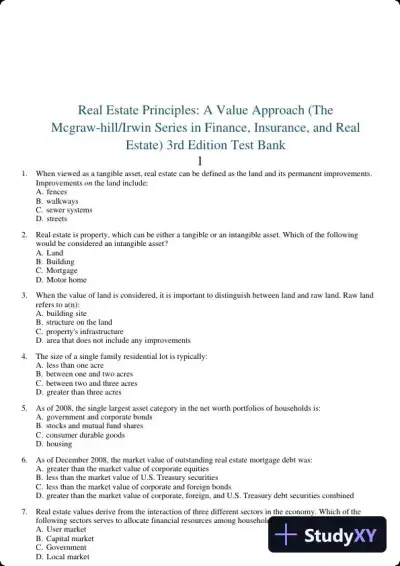 Exam Guides
Real Estate Principles: A Value Approach (The Mcgraw-hill/Irwin Series in Finance, Insurance, and Real Estate) 3rd Edition Test Bank
Business Law
209 pages37downloadsFeb 2025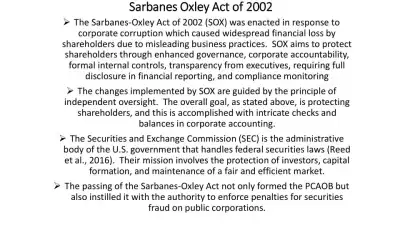 Class Presentation
Sarbanes-Oxley Act Of 2002
Business Law
2 pagesMay 2025
Study this document with CramX
Once it is in your library, every tool can work from it.