

Managing Operations Across the Supply Chain 3rd Edition Test Bank
- Operations Management
- 241 pages
- Shared May 2025
Managing Operations Across the Supply Chain 3rd Edition Test Bank ensures a smooth preparation journey with concise summaries, past questions, and step-by-step solutions.
Preview 16 of 241 pages
See the first 16 pages exactly as they appear in the document.
Page 1 Read page 1 as text
1 - 1 Copyright © 2016 McGraw - Hill Education. All rights reserved. No reproduction or distribution without the prior written consent of McGraw - Hill Education. 1. Which of the following is NOT one of the processes included in operations management? A. Design B. Finance C. Produce D. Deliver AACSB: Reflective Thinking Blooms: Remember Difficulty: 1 Easy Gradable: automatic Learning Objective: 01 - 01 Explain what operations management is and why it is important. Topic: A Broad Definition of Supply Chain Operations Management 2. A supply chain is a global network of organizations and activities involved in: A. Producing, buying, servicing, and disposing of goods and services. B. Designing, transforming, consuming, and disposing of goods and services. C. Financing, producing, and marketing of goods and services. D. Designing, financing, selling, and disposing of goods and services. The organizations and activities in a supply chain are involved in designing, transforming, consuming, and disposing of goods and services. AACSB: Reflective Thinking Blooms: Remember Difficulty: 1 Easy Gradable: automatic Learning Objective: 01 - 01 Explain what operations management is and why it is important. Topic: A Broad Definition of Supply Chain Operations Management 3. Operations managers answer questions of what, how, when, where, and who by defining both the ___________ and _____________ aspects of the operations management system. A. Financing and capacity B. Marketing and delivery C. Structural and infrastructural D. Production and accounting Structural and infrastructural aspects of operations management must be defined to answer questions of what, how, when, where, and who. AACSB: Reflective Thinking Blooms: Remember Difficulty: 2 Medium Gradable: automatic Learning Objective: 01 - 02 Describe the major decisions that operations managers typically make. Topic: A Broad Definition of Supply Chain Operations Management 4. Structural operations management decisions include: A. Workforce, capacity, and facilities. B. Workforce, production planning, and materials controls. C. Capacity, facilities, and technology. D. Materials controls, supply chain, and value definition. Structural decisions include capacity, facilities, technology, and the supply chain network. The other decisions are infrastr uctural decisions. AACSB: Reflective Thinking Blooms: Remember Difficulty: 2 Medium Gradable: automatic Learning Objective: 01 - 02 Describe the major decisions that operations managers typically make. Topic: A Broad Definition of Supply Chain Operations Management
Page 2 Page 3 Read page 3 as text
1 - 2 Copyright © 2016 McGraw - Hill Education. All rights reserved. No reproduction or distribution without the prior written consent of McGraw - Hill Education. 5. Joe Jones was asked to undertake a project to determine the resources and capacity his firm would need in the next three to 1 0 years. These types of decisions are considered to be: A. Infrastructural aspects of operations management. B. Positional aspects of operations management. C. Assessment aspects of operations management. D. Structural aspects of operations management. Resources and capacity are among the structural decisions. AACSB: Reflective Thinking Blooms: Apply Difficulty: 2 Medium Gradable: automatic Learning Objective: 01 - 02 Describe the major decisions that operations managers typically make. Topic: A Broad Definition of Supply Chain Operations Management 6. Physical goods can be differentiated from services in the operations management process by: A. Longer lead times and they can be inventoried. B. More capital intensive and short lead times. C. More labor intensive and longer lead times. D. More expensive and easier to control. Physical goods typically have longer lead times than services and can be inventoried (services typically cannot). See Table 1 - 1. AACSB: Reflective Thinking Blooms: Remember Difficulty: 1 Easy Gradable: automatic Learning Objective: 01 - 02 Describe the major decisions that operations managers typically make. Topic: A Broad Definition of Supply Chain Operations Management 7. Which of the following functions would NOT have to think about "processes"? A. Logistics management B. Production management C. Supply management D. Accounting E. All of these have to think about "processes." AACSB: Reflective Thinking Blooms: Remember Difficulty: 1 Easy Gradable: automatic Learning Objective: 01 - 03 Explain the role of processes and process thinking in operations management. Topic: A Broad Definition of Supply Chain Operations Management 8. Which of the following statements about operations management processes is NOT true? A. Inputs to operations management processes can be materials, people, and/or information. B. Outputs of operations management processes are always tangible goods. C. Operations management processes involve transformation of inputs into valuable outputs. D. Design of operations processes should reflect what customers want. Outputs of operations management processes can be services. AACSB: Reflective Thinking Blooms: Remember Difficulty: 2 Medium Gradable: automatic Learning Objective: 01 - 03 Explain the role of processes and process thinking in operations management. Topic: A Broad Definition of Supply Chain Operations Management 9. Growth of the supply chain management perspective in operations management results from the advent of: A. Technology and infrastructure advances. B. Collaborative networks. C. A focus on core capabilities. D. All of these. In addition to the three listed alternatives, reduction in trade barriers also contributed to growth of the supply chain perspective. AACSB: Reflective Thinking Blooms: Remember Difficulty: 1 Easy Gradable: automatic Learning Objective: 01 - 04 Explain what the supply chain is and what it means to view operations management using a supply chain perspective. Topic: Operations Management Yesterday and Today
Page 4 Read page 4 as text
1 - 3 Copyright © 2016 McGraw - Hill Education. All rights reserved. No reproduction or distribution without the prior written consent of McGraw - Hill Education. 10. During the "mass production" era, operations management focused primarily on: A. Production and design. B. Internal production. C. The global supply chain. D. Sales, production and design. In the mass production era, the operations focus was on internal production. AACSB: Reflective Thinking Blooms: Remember Difficulty: 2 Medium Gradable: automatic Learning Objective: 01 - 04 Explain what the supply chain is and what it means to view operations management using a supply chain perspective. Topic: Operations Management Yesterday and Today 11. While there is overlap between operations management and supply chain management, the two are different in that: A. Operations management focuses on production, supply chain management focuses on supply and logistics. B. Operations management focuses on tangible goods, supply chain management focuses on services. C. Operations management focuses on processes, supply chain management focuses on relationships and flows. D. All of these. The key distinction is that supply chain management focuses on relationships and flows, whereas operations management focuses on processes. AACSB: Reflective Thinking Blooms: Apply Difficulty: 1 Easy Gradable: automatic Learning Objective: 01 - 04 Explain what the supply chain is and what it means to view operations management using a supply chain perspective. Topic: Viewing Operations Management from a Supply Chain Management Perspective 12. Johnson Company makes widgets, which it then sends to Smith Company. Smith Company puts the widgets in packages. Smith Company is considered by Johnson to be a: A. Critical customer. B. Upstream product supplier. C. Aftermarket supplier. D. Downstream product supplier. Companies that enhance finished goods are considered downstream product suppliers. AACSB: Reflective Thinking Blooms: Apply Difficulty: 2 Medium Gradable: automatic Learning Objective: 01 - 05 Identify the partners and functional groups that work together in operations management. Topic: Viewing Operations Management from a Supply Chain Perspective 13. To an operations manager, the "critical customer" is: A. The person who buys a product. B. The person who has the greatest impact on design, sales, and growth opportunities for the product. C. The Echelon 1 customer. D. The person who uses the product. The critical customer is one who has the greatest impact on design, sales, and growth opportunities. AACSB: Reflective Thinking Blooms: Remember Difficulty: 1 Easy Gradable: automatic Learning Objective: 01 - 05 Identify the partners and functional groups that work together in operations management. Topic: Viewing Operations Management from a Supply Chain Management Perspective 14. Which functional activities are the most closely related to operations managers’ attempts to manage the flow of materials and information in a firm? A. Finance, accounting, and supply management B. Logistics, finance and supply management C. Logistics, supply, and customer management D. Customer, finance, and logistics management AACSB: Reflective Thinking Blooms: Remember Difficulty: 1 Easy Gradable: automatic Learning Objective: 01 - 06 Define the planning activities associated with managing operations across the supply chain. Topic: Viewing Operations Management from a Supply Chain Management Perspective
Page 5 Read page 5 as text
1 - 4 Copyright © 2016 McGraw - Hill Education. All rights reserved. No reproduction or distribution without the prior written consent of McGraw - Hill Education. 15. Jones Manufacturing sells a part to Lear Corporation. Lear puts this part into a radio, which Lear then sells to Ford. From F ord's point of view, Jones Manufacturing is a(n) __________ supplier. A. Echelon 1 B. Echelon 2 C. Tier 1 D. Tier 2 A supplier's supplier is known as a Tier 2 supplier. AACSB: Reflective Thinking Blooms: Apply Difficulty: 2 Medium Gradable: automatic Learning Objective: 01 - 05 Identify the partners and functional groups that work together in operations management. Topic: Viewing Operations Management from a Supply Chain Management Perspective 16. Operations management is: A. The management of production. B. The management of services. C. The management of processes. D. The management of physicians. "Processes" comprehends all of the aspects of operations management. The other answers are just possible components of operat ions management. AACSB: Reflective Thinking Blooms: Remember Difficulty: 1 Easy Gradable: automatic Learning Objective: 01 - 01 Explain what operations management is and why it is important. Topic: A Broad Definition of Supply Chain Operations Management 17. Which of the following statements are reasons why operations management is important? A. Efficient and productive operations drive the economic well - being of nations. B. Operations management is responsible for much of the value created by organizations. C. Operations management is a key source of competitive differentiation among firms. D. All of these are reasons why operations management is important. Operations management affects both macroeconomic and individual firm outcomes AACSB: Reflective Thinking Blooms: Remember Difficulty: 1 Easy Gradable: automatic Learning Objective: 01 - 01 Explain what operations management is and why it is important. Topic: A Broad Definition of Supply Chain Operations Management 18. A process is: A. A set of planned steps used to achieve an objective. B. A system of activities that transforms inputs into valuable outputs. C. A system of decisions. D. A combined effort by people who want to get something done. Processes involve transformation, and they may or may not involve people. AACSB: Reflective Thinking Blooms: Understand Difficulty: 2 Medium Gradable: automatic Learning Objective: 01 - 03 Explain the role of processes and process thinking in operations management. Topic: A Broad Definition of Supply Chain Operations Management 19. Which of the following statements is NOT true regarding supply chain management? A. Globalization has slowed the growth of supply chain management. B. Supply chain management is a way of viewing operations management. C. Supply chain management has grown as a result of a focus on core competencies. D. Supply chain management is about making the most of relationships with suppliers. Globalization has increased the growth of supply chain management. SCM involves relationships with customers and partners, no t just suppliers. AACSB: Reflective Thinking Blooms: Understand Difficulty: 2 Medium Gradable: automatic Learning Objective: 01 - 04 Explain what the supply chain is and what it means to view operations management using a supply chain perspective. Topic: Viewing Operations Management from a Supply Chain Management Perspective
Page 6 Read page 6 as text
1 - 5 Copyright © 2016 McGraw - Hill Education. All rights reserved. No reproduction or distribution without the prior written consent of McGraw - Hill Education. 20. Every organization operates which of the following types of supply chains? A. Product and tangible goods supply chains. B. Information and personnel supply chains. C. Direct and indirect supply chains. D. Product and resource/technology supply chains. Product supply chains manage flows of goods and services. Resource/technology supply chains manage acquisitions and flows of equipment, facilities, workers, product designs, and so on. AACSB: Reflective Thinking Blooms: Understand Difficulty: 2 Medium Gradable: automatic Learning Objective: 01 - 04 Explain what the supply chain is and what it means to view operations management using a supply chain perspective. Topic: Viewing Operations Management from a Supply Chain Management Perspective 21. Which of the following factors is NOT a major change driver that supply chain managers are concerned about? A. Technology changes B. Regulatory changes C. Global political changes D. Supply chain managers are concerned about All of these changes. Supply chain managers also track market changes, including social issues such as sustainability. AACSB: Reflective Thinking Blooms: Understand Difficulty: 2 Medium Gradable: automatic Learning Objective: 01 - 04 Explain what the supply chain is and what it means to view operations management using a supply chain perspective. Topic: Viewing Operations Management from a Supply Chain Management Perspective 22. Different levels of planning in supply chain operations management include: A. General and detailed planning. B. Strategic, tactical, and operational planning. C. Long - term and short - term planning. D. Logistical, operational, and procurement planning. Strategic, tactical, and operational planning address different time frames and levels of detail. AACSB: Reflective Thinking Blooms: Remember Difficulty: 1 Easy Gradable: automatic Learning Objective: 01 - 06 Define the planning activities associated with managing operations across the supply chain. Topic: Viewing Operations Management from a Supply Chain Management Perspective 23. An example of strategic planning is: A. Deciding where to locate a new manufacturing plant. B. Forecasting next week's demand of a given product item. C. Targeting customer demand for aggregate product families. D. Setting inventory levels for a given product. Strategic planning addresses long - term decisions involving large amounts of money. AACSB: Reflective Thinking Blooms: Understand Difficulty: 2 Medium Gradable: automatic Learning Objective: 01 - 06 Define the planning activities associated with managing operations across the supply chain. Topic: Viewing Operations Management from a Supply Chain Management Perspective 24. Which of the following decisions would NOT be under the direct control of operations managers? A. What resources will be used to satisfy customer demand? B. What customers should be targeted with greatest priority? C. What suppliers should provide needed inputs? D. What mode of transportation should be used to ship products? Customer targeting is primarily the responsibility of the marketing function. AACSB: Reflective Thinking Blooms: Remember Difficulty: 2 Medium Gradable: automatic Learning Objective: 01 - 02 Describe the major decisions that operations managers typically make. Topic: A Broad Definition of Supply Chain Operations Management
Page 7 Read page 7 as text
1 - 6 Copyright © 2016 McGraw - Hill Education. All rights reserved. No reproduction or distribution without the prior written consent of McGraw - Hill Education. 25. Customer service management connects what functional groups? A. Supply management, marketing, and finance. B. Logistics management, sales and distribution, and product engineering. C. Marketing, logistics management, and sales and distribution. D. Human resources management, marketing, and finance. These groups work together to identify and fulfill customers' needs. AACSB: Reflective Thinking Blooms: Understand Difficulty: 2 Medium Gradable: automatic Learning Objective: 01 - 05 Identify the partners and functional groups that work together in operations management. Topic: Viewing Operations Management from a Supply Chain Management Perspective 26. Supply chain management has grown as a prevalent perspective on operations management because: A. Purchasing managers now have stronger roles in companies. B. Firms have become more vertically integrated. C. Technology has facilitated globalization. D. Governments have become less open to trade. AACSB: Reflective Thinking Blooms: Understand Difficulty: 2 Medium Gradable: automatic Learning Objective: 01 - 04 Explain what the supply chain is and what it means to view operations management using a supply chain perspective. Topic: Viewing Operations Management from a Supply Chain Management Perspective 27. Fundamental areas of management in supply chain operations management include: A. Quality, Inventories, and Processes. B. People, Equipment, and Money. C. Markets, Processes, and Sales. D. Lean Systems, Quality, and Flexibility. AACSB: Reflective Thinking Blooms: Remember Difficulty: 2 Medium Gradable: automatic Learning Objective: 01 - 01 Explain what operations management is and why it is important. Topic: A Broad Definition of Supply Chain Operations Management 28. Which of the following statements best describes “process thinking”? A. It is a way to manage thought processes to make better decisions. B. It is a way to view business as a system of inter - related activities. C. It is a way to approach work systematically D. It is a way to categorize elements of work activities AACSB: Reflective Thinking Blooms: Understand Difficulty: 2 Medium Gradable: automatic Learning Objective: 01 - 03 Explain the role of processes and process thinking in operations management. Topic: A Broad Definition of Supply Chain Operations Management
Page 8 Read page 8 as text
1 - 7 Copyright © 2016 McGraw - Hill Education. All rights reserved. No reproduction or distribution without the prior written consent of McGraw - Hill Education. 29. Operations management is important because: A. It affects the quality of life of workers and consumers B. It is a major cost for firms that needs to be minimized C. Managers need to continually find ways to automate processes D. It is more important than finance or marketing AACSB: Reflective Thinking Blooms: Understand Difficulty: 2 Medium Gradable: automatic Learning Objective: 01 - 01 Explain what operations management is and why it is important. Topic: A Broad Definition of Supply Chain Operations Management 30. Which of the following challenges are more likely to be faced by service operations managers, rather than manufacturing opera tions manager? A. Operations is typically less financially important in service businesses B. Pure service operations need to be separated from pure goods producing operations C. The “total product experience” is more important in services D. Customers are more directly involved in service processes, so their perceptions need to be consideredIt is a way to categorize elements of work activities AACSB: Reflective Thinking Blooms: Understand Difficulty: 2 Medium Gradable: automatic Learning Objective: 01 - 01 Explain what operations management is and why it is important. Topic: A Broad Definition of Supply Chain Operations Management 31. Which of the following challenges are more likely to be faced by service operations managers, rather than manufacturing opera tions manager? A. Design B. Internal production C. External Outsourcing D. Globalization AACSB: Reflective Thinking Blooms: Understand Difficulty: 2 Medium Gradable: automatic Learning Objective: 01 - 04 Explain what the supply chain is and what it means to view operations management using a supply chain perspective. Topic: Viewing Operations Management from a Supply Chain Management Perspective 32. How is “supply chain management” different than “operations management?” A. They are exactly the same thing B. Supply chain management focuses mainly on supplier relationships, while operations management focuses mainly on production C. Supply chain management is about relationships and flows, while operations management is about processes D. Supply chain management is external, while operations management is internal AACSB: Analytical Thinking Blooms: Analyze Difficulty: 3 Hard Gradable: automatic Learning Objective: 01 - 04 Explain what the supply chain is and what it means to view operations management using a supply chain perspective. Topic: Viewing Operations Management from a Supply Chain Management Perspective
Page 9 Read page 9 as text
1 - 8 Copyright © 2016 McGraw - Hill Education. All rights reserved. No reproduction or distribution without the prior written consent of McGraw - Hill Education. 33. In working with downstream processes, internal operations managers typically work closely with: A. Marketing and sales managers B. Information technology managers C. Human resource managers D. Government regulators AACSB: Reflective Thinking Blooms: Understand Difficulty: 2 Medium Gradable: automatic Learning Objective: 01 - 05 Identify the partners and functional groups that work together in operations management. Topic: Viewing Operations Management from a Supply Chain Management Perspective 34. Internal operations managers work with what function to coordinate inbound and outbound flows of materials and informatio n? A. Finance B. Purchasing C. Marketing D. Logistics AACSB: Reflective Thinking Blooms: Understand Difficulty: 2 Medium Gradable: automatic Learning Objective: 01 - 05 Identify the partners and functional groups that work together in operations management. Topic: Viewing Operations Management from a Supply Chain Management Perspective 35. A supplier of materials used in manufactured goods is a member of: A. A union B. The product supply chain C. The resource/technology supply chain D. The tier 2 supply chain AACSB: Reflective Thinking Blooms: Understand Difficulty: 2 Medium Gradable: automatic Learning Objective: 01 - 04 Explain what the supply chain is and what it means to view operations management using a supply chain perspective. Topic: Viewing Operations Management from a Supply Chain Management Perspective 36. Which of the following groups are NOT likely to be stakeholders for operations in a local bank? A. Customers B. Regulators C. Employees D. All of the above are likely to be stakeholders AACSB: Reflective Thinking Blooms: Understand Difficulty: 2 Medium Gradable: automatic Learning Objective: 01 - 05 Identify the partners and functional groups that work together in operations management. Topic: Viewing Operations Management from a Supply Chain Management Perspective
Page 10 Read page 10 as text
1 - 9 Copyright © 2016 McGraw - Hill Education. All rights reserved. No reproduction or distribution without the prior written consent of McGraw - Hill Education. 37. What kinds of questions does an operations manager who is responsible for tactical level planning address? A. What new technologies should the company buy? B. What new customers should the company pursue? C. How many workers should we hire or fire? D. Which customer order should we work on first today? AACSB: Analytical Thinking Blooms: Apply Difficulty: 3 Hard Gradable: automatic Learning Objective: 01 - 06 Define the planning activities associated with managing operations across the supply chain. Topic: Viewing Operations Management from a Supply Chain Management Perspective 38. What kinds of questions does an operations manager who is responsible for operationallevel planning address? A. How many units of inventory for product X should I order? B. Where should we locate a new distribution center? C. What new information system should we install? D. What technical training program should we purchase? AACSB: Analytical Thinking Blooms: Apply Difficulty: 3 Hard Gradable: automatic Learning Objective: 01 - 06 Define the planning activities associated with managing operations across the supply chain. Topic: Viewing Operations Management from a Supply Chain Management Perspective 39. What kinds of questions does an operations manager who is responsible for operationallevel planning address? A. Which employees should work the day shift tomorrow? B. How should this process be organized? C. How many manufacturing plants should the company operate? D. Should we make this part or buy it? AACSB: Analytical Thinking Blooms: Apply Difficulty: 3 Hard Gradable: automatic Learning Objective: 01 - 06 Define the planning activities associated with managing operations across the supply chain. Topic: Viewing Operations Management from a Supply Chain Management Perspective 40. Suppose that you are the general manager of a hotel. For which of the following issues would you first seek help from an operations manager in your firm? A. Our prices seem to be too high. B. Customers complaints are rising. C. We need a new insurance policy. D. We are running out of cash. AACSB: Analytical Thinking Blooms: Apply Difficulty: 3 Hard Gradable: automatic Learning Objective: 01 - 02 Describe the major decisions that operations managers typically make. Topic: A Broad Definition of Supply Chain Operations Management
Page 11 Read page 11 as text
1 - 10 Copyright © 2016 McGraw - Hill Education. All rights reserved. No reproduction or distribution without the prior written consent of McGraw - Hill Education. Category AACSB: Analytical Thinking AACSB: Reflective Thinking Blooms: Analyze Blooms: Apply Blooms: Remember Blooms: Understand Difficulty: 1 Easy Difficulty: 2 Medium Difficulty: 3 Hard Gradable: automatic Learning Objective: 01 - 01 Explain what operations management is and why it is important. Learning Objective: 01 - 02 Describe the major decisions that operations managers typically make. Learning Objective: 01 - 03 Explain the role of processes and process thinking in operations management. Learning Objective: 01 - 04 Explain what the supply chain is and what it means to view operations management using a supply chain pe Learning Objective: 01 - 05 Identify the partners and functional groups that work together in operations management. Learning Objective: 01 - 06 Define the planning activities associated with managing operations across the supply chain. Topic: A Broad Definition of Supply Chain Operations Management Topic: Operations Management Yesterday and Today Topic: Viewing Operations Management from a Supply Chain Management Perspective Topic: Viewing Operations Management from a Supply Chain Perspective
Page 12 Read page 12 as text
2 - 1 Copyright © 2016 McGraw - Hill Education. All rights reserved. No reproduction or distribution without the prior written consent of McGraw - Hill Education. 1. Corporate strategic planning involves decisions related to: A. What businesses should we be in? B. What specific product - and market - based initiatives and goals should we establish? C. What measures should we use to control strategic initiatives? D. All of these. Corporate strategic planning is very broad and relates to what businesses the company should be involved in. AACSB: Reflective thinking Blooms: Remember Difficulty: 1 Easy Learning Objective: 02 - 01 Describe how operations strategy fits within a firm s overall strategic planning process. Topic: Levels of Strategic Planning 2. Functional strategic planning involves decisions related to: A. What businesses should we be in? B. Specific product - and market - based initiatives and goals. C. What metrics should be used to ensure progress in operations management? D. All of these. Functional planning includes decisions regarding appropriate metrics for the specific functions in a business unit. AACSB: Reflective thinking Blooms: Remember Difficulty: 1 Easy Learning Objective: 02 - 01 Describe how operations strategy fits within a firm s overall strategic planning process. Topic: Levels of Strategic Planning 3. A well - designed value proposition possesses four characteristics. Which of the following is NOT one of those characteristics? A. It offers the highest product quality in each quality dimension. B. It differentiates the firm from its competition in a way that is difficult to imitate. C. It satisfies the financial and strategic objectives of the firm. D. It can be reliably delivered given the operational capabilities of the firm and its supporting supply chain. Providing value does not require the highest quality in each dimension of quality. AACSB: Reflective thinking Blooms: Remember Difficulty: 1 Easy Learning Objective: 02 - 02 Describe the need for fit between the critical customers, value propositions, and operations capabilities - the essential elements that define an operations strategy. Topic: Developing Operations Strategy: Creating Value through Strategic Choices 4. Which of the following is the most appropriate definition of an "order winner"? A. A product characteristic that causes customers to choose the product over that of a competitor. B. A product characteristic that permits the product to compete in a market. C. A product that has the highest profit margin. D. A product that generates the highest dollar sales volume. Order winners are traits that cause customers to actually choose a specific product. AACSB: Reflective thinking Blooms: Remember Difficulty: 1 Easy Learning Objective: 02 - 03 Describe customer - desired outcomes in terms of order winners, order qualifiers, and order losers. Topic: Developing Operations Strategy: Creating Value through Strategic Choices 5. Which of the following is NOT true about "order qualifiers"? A. These are product traits that must meet a certain level in order for the product to even be considered by customers. B. The firm must perform acceptably on these traits, usually at least as well as competitors' offerings. C. Customers may not be aware of any level of performance in excess of those minimum levels that they have established. D. All of the items are true. AACSB: Reflective thinking Blooms: Remember Difficulty: 2 Medium Learning Objective: 02 - 03 Describe customer - desired outcomes in terms of order winners, order qualifiers, and order losers. Topic: Developing Operations Strategy: Creating Value through Strategic Choices
Page 13 Read page 13 as text
2 - 2 Copyright © 2016 McGraw - Hill Education. All rights reserved. No reproduction or distribution without the prior written consent of McGraw - Hill Education. 6. Xanadu makes HD televisions. It claims that its HD televisions have the clearest picture clarity in the industry. Xanadu is emphasiz ing which dimension of quality? A. Reliability B. Performance C. Features D. Conformance Picture clarity is a basic performance dimension of HD televisions. AACSB: Reflective thinking Blooms: Apply Difficulty: 2 Medium Learning Objective: 02 - 04 Explain what product - related and process - related operational competitive priorities are, and how they are related to competitive advantage. Topic: Developing Operations Strategy: Creating Value through Strategic Choices 7. Scantron Inc. claims that its competitors have to recall 10 percent of their products to fix defects, while it only has to re call 5 percent. Scantron is emphasizing which dimension of quality? A. Durability B. Reliability C. Performance D. Conformance Defects are an indication of lack of conformance. AACSB: Reflective thinking Blooms: Apply Difficulty: 2 Medium Learning Objective: 02 - 04 Explain what product - related and process - related operational competitive priorities are, and how they are related to competitive advantage. Topic: Developing Operations Strategy: Creating Value through Strategic Choices 8. Which of the following is considered a "process - related" competitive priority? A. Flexibility B. Quality C. Cost D. All of these Quality and cost are product - related. Flexibility is process related. AACSB: Reflective thinking Blooms: Remember Difficulty: 1 Easy Learning Objective: 02 - 04 Explain what product - related and process - related operational competitive priorities are, and how they are related to competitive advantage. Topic: Developing Operations Strategy: Creating Value through Strategic Choices 9. Xanadu Inc. claims that its manufacturing processes result in fewer greenhouse gases than those of its primary competitors. T his suggests that Xanadu has a focus on: A. Risk management. B. Sustainability. C. Flexibility. D. Profitability. Maintaining operations that are profitable and nondamaging to the environment is sustainability. AACSB: Ethics Blooms: Remember Difficulty: 1 Easy Learning Objective: 02 - 04 Explain what product - related and process - related operational competitive priorities are, and how they are related to competitive advantage. Topic: Developing Operations Strategy: Creating Value through Strategic Choices 10. Which of the following is NOT considered a key characteristic of a core capability: A. It is based on factors that are rare or unique to the firm. B. It is hard to imitate. C. It does not need to be extendable to many market opportunities. D. There are few substitutes for it. Core capabilities should be extendable to many market opportunities. AACSB: Reflective thinking Blooms: Understand Difficulty: 1 Easy Learning Objective: 02 - 05 Explain how strategic performance can be assessed both operationally and financially by using the strategic profit model, the balanced scorecard, and the supply chain operational reference model. Topic: Developing Operations Strategy: Creating Value through Strategic Choices
Page 14 Read page 14 as text
2 - 3 Copyright © 2016 McGraw - Hill Education. All rights reserved. No reproduction or distribution without the prior written consent of McGraw - Hill Education. 11. "When operational capabilities are consistent with and supportive of the value proposition and the outcomes desired by critic al customers" - this statement best describes the concept of: A. Execution. B. Flexibility. C. Strategic planning. D. Fit. AACSB: Reflective thinking Blooms: Remember Difficulty: 1 Easy Learning Objective: 02 - 05 Explain how strategic performance can be assessed both operationally and financially by using the strategic profit model, the balanced scorecard, and the supply chain operational reference model. Topic: Developing Operations Strategy: Creating Value through Strategic Choices 12. A vice president of operations wants to evaluate the impact of reducing manufacturing expenses on the firm's return on assets . A measurement approach that he might consider for this is the: A. Strategic profit model. B. Balanced scorecard model. C. SCOR model. D. None of these. The strategic profit model provides a framework to analyze the impact of operations decisions on ROA. AACSB: Reflective thinking Blooms: Understand Difficulty: 1 Easy Learning Objective: 02 - 05 Explain how strategic performance can be assessed both operationally and financially by using the strategic profit model, the balanced scorecard, and the supply chain operational reference model. Topic: Deploying Operations Strategy: Creating Value through Execution 13. You are an upper - level manager in a firm. You believe that corporate objectives are not effectively disseminated throughout the organization and that line - level managers do not take them into account in their decision making. Which of the following would best help you to try to correct this problem? A. Strategic profit model. B. Balanced scorecard model. C. Maslow's needs model. D. SCOR model. The balanced scorecard is an approach to help align corporate objectives with operational decisions. AACSB: Reflective thinking Blooms: Understand Difficulty: 2 Medium Learning Objective: 02 - 05 Explain how strategic performance can be assessed both operationally and financially by using the strategic profit model, the balanced scorecard, and the supply chain operational reference model. Topic: Deploying Operations Strategy: Creating Value through Execution 14. Which of the following is a measure common to both the strategic profit model and the SCOR model? A. Responsiveness B. Return on assets C. Delivery performance D. Lead time Of the listed measures, the only one common to both is return on assets. AACSB: Reflective thinking Blooms: Understand Difficulty: 2 Medium Learning Objective: 02 - 05 Explain how strategic performance can be assessed both operationally and financially by using the strategic profit model, the balanced scorecard, and the supply chain operational reference model. Topic: Deploying Operations Strategy: Creating Value through Execution
Page 15 Read page 15 as text
2 - 4 Copyright © 2016 McGraw - Hill Education. All rights reserved. No reproduction or distribution without the prior written consent of McGraw - Hill Education. 15. The performance measurement approach that would be most useful in measuring and describing supply chain processes would be: A. Strategic profit model. B. Balanced scorecard. C. SCOR model. D. All of these. The SCOR model is the only one of the three that provides tools for measuring and describing supply chain processes. AACSB: Reflective thinking Blooms: Understand Difficulty: 1 Easy Learning Objective: 02 - 05 Explain how strategic performance can be assessed both operationally and financially by using the strategic profit model, the balanced scorecard, and the supply chain operational reference model. Topic: Deploying Operations Strategy: Creating Value through Execution 16. Which of the following is the most appropriate definition of a core capability? A. A set of products unique to a firm. B. Technical capabilities of a firm. C. Reputation. D. Production/design processes unique to the firm. Core capabilities are skills, processes, and systems that are unique to the firm and desired by the customer. AACSB: Reflective thinking Blooms: Understand Difficulty: 1 Easy Learning Objective: 02 - 04 Explain what product - related and process - related operational competitive priorities are, and how they are related to competitive advantage. Topic: Developing Operations Strategy: Creating Value through Strategic Choices 17. Which of the following is NOT a component of the business model? A. Critical customer B. Value proposition C. Desired outcome statement D. System capabilities This is based on the discussion of the business model. AACSB: Reflective thinking Blooms: Understand Difficulty: 1 Easy Learning Objective: 02 - 02 Describe the need for fit between the critical customers, value propositions, and operations capabilities - the essential elements that define an operations strategy. Topic: Developing Operations Strategy: Creating Value through Strategic Choices 18. A company with a number of physically separate plants has a centralized tool room. This tool room in the past has been respon sible for emergency repairs. Whenever equipment (e.g., a spindle, boring machine, transfer line) in one of these separate plants breaks down, the affected items are brought to the tool room, where they are repaired. In some cases, the breakdowns affect production schedul es. In other cases, the breakdowns are more annoying but do not adversely affect schedules. Complicating the operations in the tool room i s the fact that many of the plans for the equipment are incomplete or out - of - date, thus resulting in "make from sample" requests (the broken part is provided and the tool room is asked to make the replacement piece just like the broken part). It is difficult to predict what equipment will break down and when. Furthermore, the company owns a wide variety of equipment. What are the order winners and order qualifie rs in this scenario? A. Option A B. Option B C. Option C D. Option D AACSB: Reflective thinking Blooms: Understand Difficulty: 2 Medium Learning Objective: 02 - 03 Describe customer - desired outcomes in terms of order winners, order qualifiers, and order losers. Topic: Developing Operations Strategy: Creating Value through Strategic Choices
Page 16 Read page 16 as text
2 - 5 Copyright © 2016 McGraw - Hill Education. All rights reserved. No reproduction or distribution without the prior written consent of McGraw - Hill Education. 19. Currently, our system is characterized by a lack of fit between what the customer wants and what the SCM system is best able to provide. As a result, which of the following would apply? I. The only way to restore fit is for the firm to change the market segment it is going after. II. Unless something is done, our firm will not be the most effective and efficient long - term supplier. III. Any firm can successfully counter such inconsistencies through the use of patents and aggressive advertising. A. I only. B. II only. C. III only. D. I and II only. E. I, II, and III. AACSB: Reflective thinking Blooms: Understand Difficulty: 2 Medium Learning Objective: 02 - 02 Describe the need for fit between the critical customers, value propositions, and operations capabilities - the essential elements that define an operations strategy. Topic: Developing Operations Strategy: Creating Value through Strategic Choices 20. Which three elements make up the triple bottom line? A. Planet, Pollution, Profit. B. Pollution, Equality, People. C. Profit, Equality, Pollution. D. People, Profit, Planet. AACSB: Reflective thinking Blooms: Understand Difficulty: 1 Easy Learning Objective: 02 - 05 Explain how strategic performance can be assessed both operationally and financially by using the strategic profit model, the balanced scorecard, and the supply chain operational reference model. Topic: Deploying Operations Strategy: Creating Value through Execution 21. Which of the following attributes is directly related to fitness for use? A. Transaction Price B. Timeliness C. Performance D. Availability AACSB: Reflective thinking Blooms: Remember Difficulty: 1 Easy Learning Objective: 02 - 04 Explain what product - related and process - related operational competitive priorities are, and how they are related to competitive advantage. Topic: Developing Operations Strategy: Creating Value through Strategic Choices
225 more pages in the full document
Unlock it once and it stays in your library, ready to chat with or turn into flashcards.
Unlock the full documentMore Operations Management study materials
See all Textbook Guides
Managing Operations Across the Supply Chain 3rd Edition Solution Manual
Operations Management
481 pagesMay 2025 Textbook Guides
Solution Manual for Operations and Supply Chain Management, 14th Edition
Operations Management
342 pages133downloadsFeb 2025 Textbook Guides
Managing Quality: Integrating the Supply Chain, 6th Edition Solution Manual
Operations Management
262 pages115downloadsFeb 2025 Textbook Guides
Operations Management, (Mcgraw-hill Education Operations and Decision Sciences) 1st Edition Solution Manual
Operations Management
153 pages91downloadsFeb 2025 Textbook Guides
Solution Manual For Matching Supply with Demand: An Introduction to Operations Management, 4th Edition
Operations Management
76 pages36downloadsFeb 2025 Exam Guides
Operations Management, 5th Canadian Edition Test Bank
Operations Management
1208 pagesMay 2025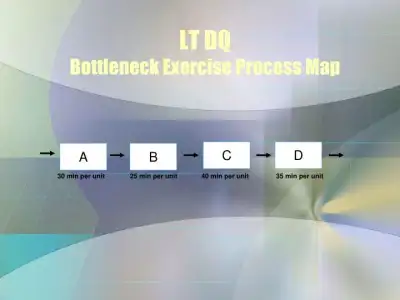 Class Notes
LT DQ Bottleneck Exercise Process Map
Operations Management
1 pageMay 2025 Textbook Guides
Solution Manual for Introduction to Materials Management, 8th Edition
Operations Management
44 pagesMay 2025
Study this document with CramX
Once it is in your library, every tool can work from it.