

Test Bank for Principles Of Operations Management: Sustainability And Supply Chain Management, 11th Edition
- Operations Management
- 1052 pages
- Shared May 2025
Need to sharpen your exam skills? Test Bank for Principles Of Operations Management: Sustainability And Supply Chain Management, 11th Edition provides answers to tough questions, helping you excel.
Preview 16 of 1052 pages
See the first 16 pages exactly as they appear in the document.
Page 1 Read page 1 as text
1 Operations Management, 13e (Heizer/Render/Munson) Module A Decision - Making Tools Section 1 The Decision Process in Operations 1) Analytic decision making is based on logic and considers all available data and possible alternatives. Answer: TRUE Diff: 1 2) The first step in the analytic decision process is to clearly define the problem and the factors that influence it. Answer: TR UE Diff: 1 3) The last step in the analytic decision process is to select the best alternative. Answer: FALSE Diff: 1 4 ) The most critical step in the analytic decision process is to minimize the total cost. Answer: FALSE Diff: 1 5) Which of the follo wing is NOT considered a step in the decision - making process? A) Clearly define the problem and the factors that influence it. B) Select the best alternative. C) Develop specific and measurable objectives. D) Evaluate each alternative solution based on its merits and drawbacks. E) Minimize costs whenever possible. Answer: E Diff: 2 6) The first step, and a key element, in t he decision - making process is to: A) consult a specialist. B) clearly define the problem. C) develop objectives. D) monitor the results. E) select the best alternative. Answer: B Diff: 1
Page 2 Page 3 Read page 3 as text
2 7) The last step of the decision - making process is to: A) develop a model. B) evaluate each alternative. C) select the best alternative. D) implement the decision. E) check the decisi on with senior management. Answer: D Diff: 2 8) Identify, in order, the six steps of analytical decision making. Answer: 1. Clearly defi ne the problem and factors that influence it. 2. Develop specific and measurable objectives. 3. Develop a model — that is, a relationship between objectives and variables (which are measurable quantities). 4. Evaluate each alternative solution based on its m erits and drawbacks. 5. Select the best alternative. 6. Implement the decision and set a timetable for completion. Di ff: 3 Section 2 Fundamentals of Decision Making 1) A state of nature is an occurrence or a situation over which the decision maker has little or no control. Answer: TRUE Diff: 1 Objective: LO A.1 Create a simple decision tree 2) In a decision tree, a round symbol represents a state of nature node. Answe r: TRUE Diff: 2 Objective: LO A.1 Create a simple decision tree 3) A square node on a decision tree infers that: A) the node splits into various states of nature, of which only one will occur. B) there are several alternatives available. C) the manager must choose an alternative. D) Both B and C E) A, B, and C Answer: D Diff: 2 Object ive: LO A.1 Create a simple decision tree AACSB: Reflective thinking
Page 4 Read page 4 as text
3 4) The following decision tree has how many state - of - nature nodes? A) 0 B) 1 C) 2 D) 3 E) 4 Answer: D Diff: 2 Objective: LO A.1 Create a simple decision tree 5) In terms of deci sion theory, an occurrence or situation over which the decision maker has no control is called a(n): A) decision under uncertainty. B) decision tree. C) state of nature. D) alternative. E) EMV. Answer: C Diff: 2 Objective: LO A.1 Create a simple decision tree 6) A(n) ________ is an occurrence or situation over which the decision maker has little or no control. Answer: state of nature Diff: 1 Objective: LO A.1 Create a simple decision tree 7) The square symbol used in drawing a decision tree represents a(n) ________ node. Answer: decision Diff: 1 Objective: LO A.1 Create a simple decision tree
Page 5 Read page 5 as text
4 8) In the context of decision making, define a state of nature. Answer: A state of nature is an occurrence or situation over which the decisio n maker has lit tle or no control. Diff: 2 Objective: LO A.1 Create a simple decision tree 9) In the context of decision - making, define an alternative. Answer: An alternative is a course of action or strategy that may be chosen by a decision maker. Diff: 2 Objective: LO A.1 Create a simple decision tree 10) Explain the symbols used in decision tree analysis. Answer: A decision node from which one or several al ternatives may be selected is represented by a square; a state of nature node out of which states of nature w ill occur is represented by a circle. Diff: 2 Objective: LO A.1 Create a simple decision tree Section 3 Decision Tables 1) An example of a con ditional value would be the payoff from selecting a particular alternative when a particular state of nature occurs. Answer: TRUE Diff: 2 Objective: LO A.2 Build a decision table 2) What is a tabular presentation that shows the outcome for each decision alternative under the various possible states of nature called? A) payoff tree B) payback period matrix C) d ecision table D) feasible region E) decision tree Answer: C Diff: 1 Objective: LO A.2 Build a decision table 3) What is the outcome of an altern ative/state of nature combination called? A) price B) conditional value C) expected value D) conditional prob ability E) conditional expectation Answer: B Diff: 2 Objective: LO A.2 Build a decision table
Page 6 Read page 6 as text
5 4) Doing nothing would yield how much profit if favorable market conditions prevail according to the following profit decision table? Alternative Favorable ma rket Unfavorable Market Do Nothing $20,000 - $10,000 A) $5,000 B) $20,000 C) - $10,000 D) $0 E) $10,000 Answer: B Diff: 1 Objective: LO A.2 Build a decision table 5) A retailer is deciding how many units of a certain product to stock. The historical pr obability distribution of sales for this product is 0 units, 0.2; 1 unit, 0.3; 2 units, 0.4, and 3 units, 0.1. The product costs $11 per unit and sells for $25 per unit. What is the conditional value for the decision alternative "Stock 3" and state of natu re "Sell 1"? A) 1.4 units B) $1 profit C) $25 profit D) $ - 8 profit E) $23.80 profit Answer: D Di ff: 2 Objective: LO A.2 Build a decision table AACSB: Analytical thinking 6) A retailer is deciding how many units of a certain product to stock. The histor ical probability distribution of sales for this product is 0 units, 0.2; 1 unit, 0.3; 2 units, 0.4, and 3 units, 0.1. The product costs $8 per unit and sells for $33 per unit. W hat is the largest conditional value (profit) in the entire payoff table for th is scenario? A) $ - 24 profit B) $42 profit C) $9 profit D) $51 profit E) $75 profit Answer: E Diff: 2 Objective: LO A.2 Build a decision table AACSB: Analytical thinking
Page 7 Read page 7 as text
6 7) A retailer is deciding how many units of a certain product to stock. The histor ical probability distribution of sales for this product is 0 units, 0.2; 1 unit, 0.3; 2 units, 0.4, and 3 units, 0.1. The product costs $10 per unit and sells for $33 per unit. W hat is the smallest conditional value (profit) in the entire payoff table for this scenario? A) $ - 30 profit B) $3 profit C) $36 profit D) $66 profit E) $75 profit Answer: A Diff: 2 Objective: LO A.2 Build a decision table AACSB: Analytical thinking 8) A(n) ________ is a tabular means of analyzing decision alternatives and states of nature. Answer: decision table Diff: 1 Objective: LO A.2 Build a decision table 9) What are decision tables? Answer: Decision tables are a tabular means of analyzing decision alternatives and states of nature. Diff: 2 Objective: LO A.2 Build a dec ision table 10) What is a conditional value? Answer: It is an outcome of a particular alternative/state of nature combinati on. Diff: 2 Objective: LO A.2 Build a decision table Section 4 Types of Decision - Making Environments 1) If a decision maker ca n assign probabilities of occurrences to the states of nature, then the decision - making environment is Decision Making under Uncertainty. Answer: FALSE Diff: 2 Objective: LO A.3 Explain when to use each of the three types of decision - making environments 2) The maximax criterion of decision making requires that all decision alternatives have an equal probability of occurrence. Answer: FALSE Diff: 2 Objective: LO A.3 Explain when to use each of the three types of decision - making environments
Page 8 Read page 8 as text
7 3) The max imin criterion is optimistic, while the maximax criterion is pessimistic. Answer: FALSE Diff: 1 4) If a decision maker knows for sure which state of nature will occur, he/she is making a decision under certainty. Answer: TRUE Diff: 2 Objective: LO A.3 Explain when to use each of the three types of decision - making environments 5) The expected value with perfect information assumes that all states of nature are equally likely. Answer: FALSE Diff: 1 Objective: LO A.3 Explain when to use each of the thre e types of decision - making environments 6) An example of expected monetary value would be the payoff from selecting a particular alternative when a particular state of nature occurs. Answer: FALSE Diff: 2 Objective: LO A.4 Calculate an expected monetary value (EMV) 7) The expected monetary value of a decision alternative is the sum of all possible payoffs from the alternative, each weighted by the probability of that payoff occurring. Answer: TRUE Diff: 1 Objective: LO A.4 Calculate an expected moneta ry value (EMV) 8) If a decision maker has t o make a particular decision only once, expected monetary value is a good indication of the payoff associated with the decision. Answer: FALSE Diff: 3 Objective: LO A.4 Calculate an expected monetary value (EMV ) AACSB: Reflective thinking 9) The expect ed value of perfect information is the same as the expected value with perfect information. Answer: FALSE Diff: 2 Objective: LO A.5 Compute the expected value of perfect information (EVPI)
Page 9 Read page 9 as text
8 10) What decision c riterion would be used by a pessimistic decis ion maker solving a problem under conditions of uncertainty? A) expected monetary value B) equally likely C) maximax D) maximin E) minimin Answer: D Diff: 2 11) A decision maker who uses the maximax criterion when solving a problem under conditions of uncertainty is: A) an optimist. B) a pessimist. C) an economist. D) an optometrist. E) making a serious mistake; maximax is not appropriate for conditions of uncerta inty. Answer: A Diff: 2 12) Expected monetary value is most appropriate for problem solving that takes place: A) when conditions are average. B) when all states of nature are equally likely. C) when all alternatives are equally likely. D) under condition s of uncertainty. E) under conditions of risk. A nswer: E Diff: 2 Objective: LO A.3 Explain when to use each of the three types of decision - making environments 13) There are three equally likely states of nature (High, Medium, and Low demand). If the lar ge factory will post profits of $60,000, $25,000 , and - $10,000 under these states of nature, respectively, what is the EMV of the factory? A) $50,000 B) $25,000 C) $28,333.33 D) $21,666.67 E) $65,000 Answer: B Diff: 2 Objective: LO A.4 Calculate an expected monetary value (EMV) AACSB: Analytical thin king
Page 10 Read page 10 as text
9 14) A plant manager wants to know how much she should be willing to pay for perfect market research. Currently there are two states of nature facing her decision to expand or do nothing. Under favorable market conditions the manager would make $100, 000 for the large plant and $5,000 for the small plant. Under unfavorable market conditions the large plant would lose $80,000 and the small plant would make $0. If the two states of n ature are equally likely, how much should she pay for perfect informatio n? A) $0 B) $25,000 C) $40,000 D) $100,000 E) $145,000 Answer: C Diff: 2 Objective: LO A.5 Compute the expected value of perfect information (EVPI) AACSB: Analytical thinking 15) T he expected value with perfect information: A) equals EVPI - Maximum EMV . B) requires that each decision alternative have a known probability of occurrence. C) is an input into the calculation of the expected value of perfect information. D) is the average of the maximax and the maximin. E) none of these Answer: C Diff: 2 Obj ective: LO A.5 Compute the expected value of perfect information (EVPI) 16) What is the difference between the expected payoff under perfect information and the maximum expected payoff under risk? A) expected monetary value B) economic order quantity C) expected value of perfect information D) PERT E) expected monetary payoff Answ er: C Diff: 2 Objective: LO A.5 Compute the expected value of perfect information (EVPI)
Page 11 Read page 11 as text
10 17) The likelihood that a decision maker will ever receive a payoff precisely equal t o the EMV when making any one decision is: A) low (near 0%). B) high (near 100% ). C) dependent upon the number of alternatives. D) dependent upon the number of states of nature. E) none of these Answer: A Diff: 2 Objective: LO A.4 Calculate an expected m onetary value (EMV) AACSB: Reflective thinking 18) The expected value of perf ect information (EVPI) is the: A) payoff for a decision made under perfect information. B) payoff under minimum risk. C) average expected payoff. D) difference between the payof f under perfect information and the payoff under risk. E) greater of EVwPI and Maximum EMV. Answer: D Diff: 2 Objective: LO A.5 Compute the expected value of perfect information (EVPI) 19) A decision maker using the maximax criterion on the problem belo w would choose Alternative ________ because the maximum of the row maximums is ________. States of Nature 1 2 3 Alternative A 50 55 60 Alternative B 30 50 80 Alternative C 70 80 70 Alternative D - 100 - 10 140 A) A; 60 B) B; 80 C) C; 70 D) D; - 100 E) D; 140 Answer: E Diff: 2 AACSB: Analytical thinking
Page 12 Read page 12 as text
11 20) A decision maker using the maximin criterion on the problem below would choose Alternative ________ because the maximum of the row minimums is ________. States of Nature 1 2 3 Alternative A 50 55 60 Alternative B 80 90 80 Alternative C 70 80 170 Alternative D - 100 - 10 140 A) A; 55 B) B; 80 C) C; 70 D) D; 140 E) D; 10 Answer: B Diff: 2 AACSB: Analytical thinking 21) For the following decision table, the highest val ue for the equally likely criterion is ________; this occurs with alternative ________. States of Nature Alternatives S 1 S 2 Option 1 $10,000 $30,000 Option 2 $5,000 $55,000 Option 3 - $4,000 $60,000 A) $20,000; Option 1 B) $30,000; Option 2 C) $28,000; Option 3 D) $32 ,000; Option 3 E) $60,000; Option 2 Answer: B Diff: 2 AACSB: Analytical thinking
Page 13 Read page 13 as text
12 22) What is the EMV for Option 1 in the following decision table? States of Nature Alternatives S 1 S 2 p .7 .3 Option 1 15,000 20,000 Option 2 10,000 30,000 A) 15,0 00 B) 16,500 C) 17,500 D) 18,500 E) 20,000 Answer: B Diff: 2 Objective: LO A.4 Calculate an expected monetary value (EMV) AACSB: Analytical thinking 23) The expected value with perfect information is: A) the maximum EMV for a set of alternatives. B) th e same as the expected value of perfect information. C) the difference between the payoff under perfect information and the payoff under risk. D) the expected return obtained when the decision maker knows which state of nature is going to occur before the decision is made. E) obtained using conditional probabil ities. Answer: D Diff: 2 Objective: LO A.5 Compute the expected value of perfect information (EVPI) 24) What is the EMV for Option 2 in the following decision table? States of Nature Alternative s S 1 S 2 p .3 .7 Option 1 15,000 20,000 Option 2 10,000 30,000 A) 10,000 B) 16,000 C) 20,000 D) 24,000 E) 30,000 Answer: D Diff: 2 Objective: LO A.4 Calculate an expected monetary value (EMV) AACSB: Analytical thinking
Page 14 Read page 14 as text
13 25) What is the EMV for Optio n 1 in the following decision table? States of Nature Alternatives S 1 S 2 p .6 .4 Option 1 10,000 30,000 Option 2 5,000 45,000 Option 3 - 4,000 60,000 A) 10,000 B) 18,000 C) 20,000 D) 22,000 E) 30,000 Answer: B Diff: 2 Objective: LO A.4 Calculate an expected monetary value (EMV) AACSB: Analytical thinking 26) What is the EMV for Option 3 in the following decision table? States of Nature Alternatives S 1 S 2 p .4 .6 Option 1 10,000 30,000 Option 2 5,000 45,000 Option 3 - 4,000 60,000 A) 5,00 0 B) 21,000 C) 25,000 D) 29,000 E) 34,400 Answer: E Diff: 2 Objective: LO A.4 Calculate an expected monetary value (EMV) AACSB: Analytical thinking
Page 15 Read page 15 as text
14 27) What is the expected value with perfect information of the following decision table? States of Na ture Alternatives S 1 S 2 p .6 .4 Option 1 10,000 30,000 Option 2 5,000 45,000 Option 3 - 4,000 60,000 A) 5,000 B) 30,000 C) 40,000 D) 60,000 E) 8,400 Answer: B Diff: 2 Objective: LO A.5 Compute the expected value of perfect information (EVPI) AACSB: Analytical thinking 28) What is the EMV for Option 1 in the following decision table? States of Nature Alternatives S 1 S 2 p .2 .8 Option 1 200 300 Option 2 50 350 A) 220 B) 240 C) 250 D) 280 E) 300 Answer: D Diff: 2 Objective: LO A.4 Calculate an expected monetary value (EMV) AACSB: Analytical thinking
Page 16 Read page 16 as text
15 29) What is the EMV for Option 2 in the following decision table? States of Nature Alternatives S 1 S 2 p .6 .4 Option 1 200 300 Option 2 50 350 A) 50 B) 100 C) 170 D) 200 E) 350 Answer: C Diff: 2 Objective: LO A.4 Calculate an expected monetary value (EMV) AACSB: Analytical thinking 30) What is the expected value with perfect information in the following decision table? States of Nature Alternatives S 1 S 2 p .6 .4 Option 1 200 30 0 Option 2 50 550 A) 90 B) 250 C) 260 D) 300 E) 340 Answer: E Diff: 2 Objective: LO A.5 Compute the expected value of perfect information (EVPI) AACSB: Analytical thinking
1036 more pages in the full document
Unlock it once and it stays in your library, ready to chat with or turn into flashcards.
Unlock the full documentMore Operations Management study materials
See all Textbook Guides
Solution Manual for Operations Management: Sustainability and Supply Chain Management, 13th Edition
Operations Management
567 pagesMay 2025 Textbook Guides
Solution Manual for Operations and Supply Chain Management, 14th Edition
Operations Management
342 pages133downloadsFeb 2025 Textbook Guides
Managing Quality: Integrating the Supply Chain, 6th Edition Solution Manual
Operations Management
262 pages115downloadsFeb 2025 Textbook Guides
Operations Management, (Mcgraw-hill Education Operations and Decision Sciences) 1st Edition Solution Manual
Operations Management
153 pages91downloadsFeb 2025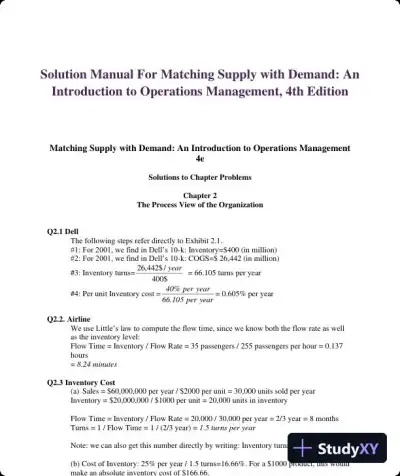 Textbook Guides
Solution Manual For Matching Supply with Demand: An Introduction to Operations Management, 4th Edition
Operations Management
76 pages36downloadsFeb 2025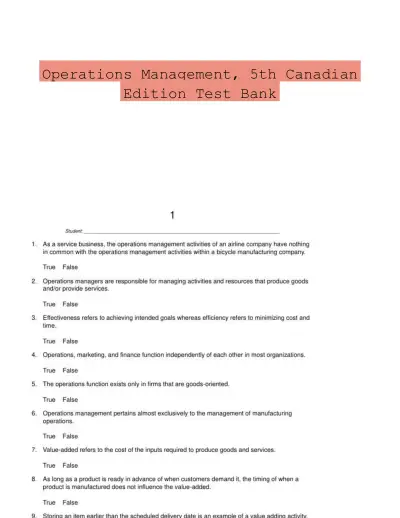 Exam Guides
Operations Management, 5th Canadian Edition Test Bank
Operations Management
1208 pagesMay 2025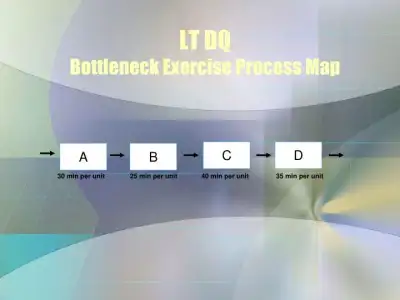 Class Notes
LT DQ Bottleneck Exercise Process Map
Operations Management
1 pageMay 2025 Textbook Guides
Solution Manual for Introduction to Materials Management, 8th Edition
Operations Management
44 pagesMay 2025
Study this document with CramX
Once it is in your library, every tool can work from it.