

Biochemical Pathways: A Comparative Analysis of Energy Transfer in Photosynthesis and Cellular Respiration
- Biology
- 13 pages
- Shared May 2025
An essay comparing the biochemical processes of photosynthesis and cellular respiration in energy transfer.
Preview 4 of 13 pages
See the first 4 pages exactly as they appear in the document.
Page 1 Read page 1 as text
Biochemical Pathways: A Comparative Analysis of Energy Transfer in Photosynthesis and Cellular Respiration Essay Questions: 1. Define ΔG and describe how it relates to changes in entropy and enthalpy. H ow ΔG is related to the equilibrium constant of a reversible reaction and explain why cells maintain product/substrate concentrations below the equilibrium constant in metabolic pathways? Answer: ΔG (Gibbs free energy) represents the energy available to do work in a system at constant temperature and pressure. It relates to changes in entropy (ΔS) and enthalpy (ΔH) by the equation: • ΔH is the change in enthalpy (heat content), • T is the temperature in Kelvin, • ΔS is the change in entropy (disorder). If ΔG is negative, the reaction is spontaneous. If ΔG is positive, the reaction is non - spontaneous. Equilibrium and ΔG : At equilibrium, ΔG = 0. The relationship between ΔG and the equilibrium constant (K) is given by: where R is the gas constant and T is the temperature. A large K (favorable reaction) means a negative ΔG, and a small K means a positive ΔG. Cells maintain product/substrate concentrations below equilibrium to ensure reactions proceed in the direction that supplies energy (negative ΔG), preventing equilibrium from being reached and sustaining metabolic processes.
Page 2 Page 3 Read page 3 as text
2. Why ATP is considered as an energy currency of the cells? B y giving examples describe how ATP provides energy for driving endergonic reactions. G iving an example show how ATP is produced by substrate level phosphorylation in glycolysis. Answer: ATP is considered the energy currency of the cell because it stores and transfers energy for biochemical reactions. It is a high - energy molecule due to the phosphate bonds, which, when broken (hydrolyzed), release energy that can be used by the cell. ATP and Endergonic Reactions: Endergonic reactions require an input of energy. ATP provides this energy through coupling . When ATP is hydrolyzed (ATP → ADP + Pi), it releases energy that is used to drive the endergonic reaction. For example: • Muscle contraction : ATP provides energy to myosin for muscle movement. • Active transport : ATP powers pumps like the sodium - potassium pump to move ions against their concentration gradient. ATP Production by Substrate - Level Phosphorylation: In glycolysis , ATP is produced by substrate - level phosphorylation, where a phosphate group is directly transferred from a substrate to ADP to form ATP. Example : During glycolysis, 1,3 - bisphosphoglycerate transfers a phosphate group to ADP, forming ATP and 3 - phosphoglycerate . The reaction: This process occurs twice in glycolysis, producing 2 ATP molecules per glucose molecule.
Page 4 Read page 4 as text
3. Briefly describe various ways enzymes are regulated by inhibitors. Answer: Enzymes are regulated by inhibitors in several ways, which can either decrease or stop enzyme activity. These include: 1. Competitive Inhibition: • Mechanism : An inhibitor resembles the substrate and competes for the enzyme’s active site. • Effect : The inhibitor blocks the substrate from binding, reducing the reaction rate. • Example : Methotrexate inhibits the enzyme dihydrofolate reductase by competing with folate. 2. Non - Competitive Inhibition: • Mechanism : The inhibitor binds to a site other than the active site (allosteric site), causing a conformational change in the enzyme that reduces its activity. • Effect : The enzyme’s function is altered, even if the substrate can still bind to the active site. • Example : Cyanide inhibits cytochrome c oxidase by binding to an allosteric site. 3. Uncompetitive Inhibition: • Mechanism : The inhibitor binds only to the enzyme - substrate complex, preventing the reaction from proceeding. • Effect : Reduces both enzyme activity and the amount of product formed. • Example : Lithium inhibits certain enzymes in neurotransmitter metabolism through uncompetitive inhibition. 4. Allosteric Inhibition: • Mechanism : Inhibitors bind to an allosteric site (distinct from the active site),
9 more pages in the full document
Unlock it once and it stays in your library, ready to chat with or turn into flashcards.
Unlock the full documentMore Biology study materials
See all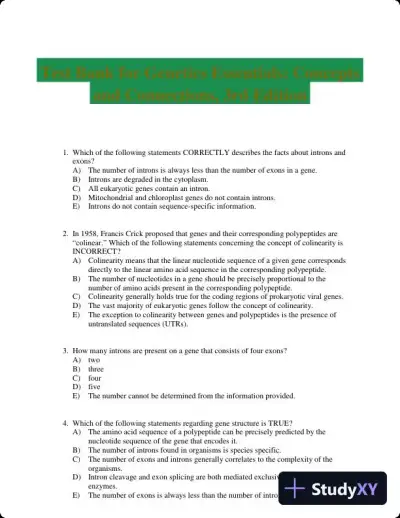 Exam Guides
Test Bank for Genetics Essentials: Concepts and Connections, 3rd Edition
Biology
561 pages147downloadsFeb 2025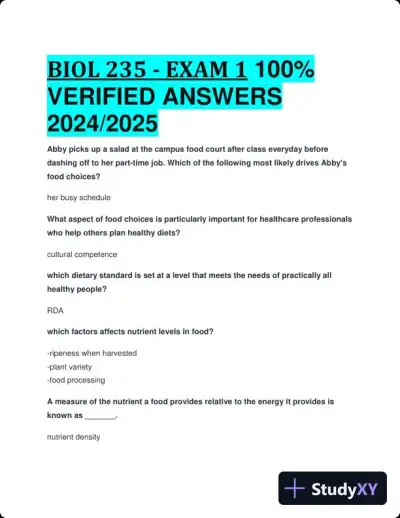 Past Exams
2024-2025 BIOL235 Nutrition Practice Exam with Answers (38 Solved Questions)
Biology
6 pages145downloadsFeb 2025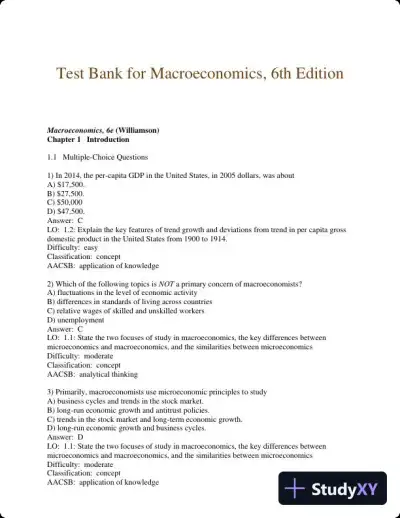 Exam Guides
Test Bank for Macroeconomics, 6th Edition
Biology
373 pages143downloadsFeb 2025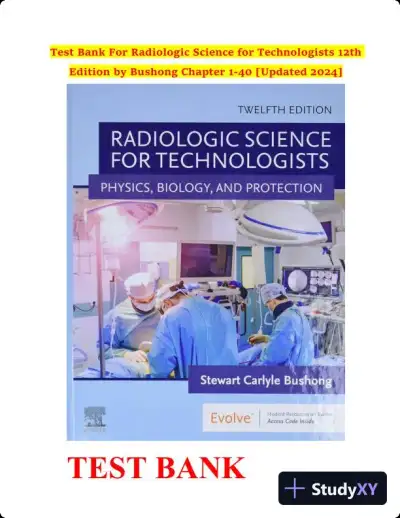 Exam Guides
Test Bank for Radiologic Science for Technologists: Physics, Biology, and Protection, 12th Edition (Chapters 1-40)
Biology
235 pages139downloadsFeb 2025 Past Exams
BIO1100 Anatomy and Physiology Openstax Test Bank with Answers (166 Solved Questions)
Biology
40 pages130downloadsFeb 2025 Exam Guides
Human Biology: Concepts And Current Issues, 8th Edition Test Bank
Biology
631 pages125downloadsFeb 2025 Textbook Guides
Solution Manual for Macroeconomics, 13th Edition
Biology
245 pages108downloadsFeb 2025 Textbook Guides
Solution Manual for Managerial Accounting, 6th Edition
Biology
929 pages100downloadsFeb 2025
Study this document with CramX
Once it is in your library, every tool can work from it.