

Solution Manual for Biology Science for Life, 4th Edition
- Biology
- 221 pages
- Shared May 2025
Enhance your learning experience with Solution Manual for Biology Science for Life, 4th Edition, covering all essential textbook topics.
Preview 16 of 221 pages
See the first 16 pages exactly as they appear in the document.
Page 1 Read page 1 as text
TEXTBOOK GUIDE BIOLOGY Science for Life and BIOLOGY Science for Life WITH PHYSIOLOGY FOURTH EDITION Colleen Belk University of Minnesota, Duluth Virginia Borden Maier St. John Fisher College Jill Feinstein Richland Community College
Page 2 Page 3 Read page 3 as text
iii CONTENTS Chapter 1 Can Science Cure the Common Cold? 1 Introduction to the Scientific Method Chapter 2 Are We Alone in the Universe? 11 Water, Biochemistry, and Cells Chapter 3 Is It Possible to Supplement Your Way to Better Health? 17 Nutrients and Membrane Transport Chapter 4 Fat: How Much Is Right for You? 27 Enzymes, Metabolism, and Cellular Respiration Chapter 5 Life in the Greenhouse 35 Photosynthesis and Global Warming Chapter 6 Cancer 41 DNA Synthesis, Mitosis, and Meiosis Chapter 7 Are You Only as Smart as Your Genes? 49 Mendelian and Quantitative Genetics Chapter 8 DNA Detective 55 Complex Patterns of Inheritance and DNA Fingerprinting Chapter 9 Genetically Modified Organisms 65 Gene Expression, Mutation, and Cloning Chapter 10 Where Did We Come From? 75 The Evidence for Evolution Chapter 11 An Evolving Enemy 85 Natural Selection Chapter 12 Who Am I? 89 Species and Races Chapter 13 Prospecting for Biological Gold 107 Biodiversity and Classification Chapter 14 Is the Human Population Too Large? 119 Population Ecology
Page 4 Read page 4 as text
iv Contents Chapter 15 Conserving Biodiversity 135 Community and Ecosystem Ecology Chapter 16 Where Do You Live? 145 Climate and Biomes Chapter 17 Organ Donation 157 Tissues, Organs, and Organ Systems Chapter 18 Clearing the Air 163 Respiratory, Cardiovascular, and Excretory Systems Chapter 19 Vaccinations: Protection and Prevention or Peril? 175 Immune System, Bacteria, Viruses, and Other Pathogens Chapter 20 Sex Differences and Athleticism 185 Endocrine, Skeletal, and Muscular Systems Chapter 21 Is There Something in the Water? 193 Reproductive and Developmental Biology Chapter 22 Attention Deficit Disorder 201 Brain Structure and Function Chapter 23 Feeding the World 211 Plant Structure and Growth Chapter 24 Growing a Green Thumb 219 Plant Physiology Quick Reference Guide to Instructor Visual Resources 229
Page 5 Read page 5 as text
1 Introduction to the Scientific Method OBJECTIVES Teaching Goals Most students have covered the scientific method in high school biology. However, when asked to define a hypothesis, the majority will say, “A hypothesis is an educated guess,” without any comprehension of what it really means. This chapter introduces the student to the scientific method as a way of thinking and explaining observations. This chapter also familiarizes students in the proper setup of experiments and statistical analysis of data. The emphasis should be on using critical thinking in everyday decision making—not just in a laboratory. Students are inundated with claims based on anecdotal evidence and misrepresentation of data. Your goal is to help the students evaluate such claims by critical analysis of the data. Student Goals By the end of this chapter, students should be able to accomplish the following learning objectives: • Describe the characteristics of a scientific hypothesis. • Compare and contrast the terms scientific hypothesis and scientific theory . • Distinguish between inductive and deductive reasoning. • Explain why the truth of a hypothesis cannot be proven conclusively via deductive reasoning. • Describe the features of a controlled experiment and explain how these experiment eliminate alternative hypotheses for the results. • List strategies for minimizing bias when designing experiments. • Define correlation, and explain the benefits and limitations of using this technique to test hypotheses. • Describe the information that statistical tests prove. • Compare and contrast primary and secondary sources. • Summarize the techniques you can use to evaluate scientific information from secondary sources. LECTURE OUTLINE 1.1 The Process of Science (Figure 1.1) A. Scientific method allows for solving of problems and answering questions. B. Hypotheses are explanations of how something works and must be testable and falsifiable. C H A P T E R 1 Can Science Cure the Common Cold?
Page 6 Read page 6 as text
2 Instructor Guide Biology: Science for Life C. Scientific theories are supported by multiple lines of evidence from hypotheses that have been tested by deductive reasoning. D. Construction of hypothesis involves inductive reasoning and hypothesis testing involves deductive reasoning. (Figure 1.3) 1.2 Hypothesis Testing A. Hypotheses are tested by experiments that should be controlled for variables and bias. B. Correlation between variables may provide answers when other testing is problematic. (Figure 1.10, Figure 1.11) C. Model systems are used when testing on humans is dangerous or unethicial. (Figure 1.7) Lecture Activity 1.1 Lecture Activity 1.2 Lecture Activity 1.3 1.3 Understanding Statistics A. Statistical analysis can help researchers apply results from a small experimental group to a larger group without actually testing the larger group. (Figure 1.12) B. The significance of results is influenced by the size of the sample and the validity of the hypothesis. (Figure 1.15) C. Sampling error is the difference between a sample and the population that it is being compared to. 1.4 Evaluating Scientific Information A. Information from primary sources is used as the basis for news articles and websites. (Figure 1.16) B. Different media sources have various levels of credibility and reliability. Lecture Activity 1.4 1.5 Is There a Cure for the Common Cold? A. Hand-washing is the best method for preventing the common cold. Lecture Activity 1.1: Developing and Testing Hypotheses Estimated Time to Complete: 15–20 minutes, or longer with discussion Introduction: This activity gives students a chance to practice what they have learned about developing hypotheses and testing them. Students work in groups of three to four to promote interactive learning and discussion. An observation is given to each group, and the group members’ job is to create a testable and falsifiable hypothesis to explain that observation. The activity can stand alone, or it can become the basis of a discussion after completion. If desired, groups could report to the class on their observation, hypothesis, and experiment. A handout is provided with a sample observation. Here are several more suggestions, and others can be made up as needed: • Algae appear in clean water left outside in a child’s plastic pool for a week. • Lawn grass doesn’t grow at the beach. • Mosquitoes bite some people more than others. • Coleus plants grown inside are taller but have thinner stems than coleus plants grown outside. • Ants eat some foods that they find outside, but not all. • Bees visit some types of flowers, but not others.
Page 7 Read page 7 as text
Chapter 1 Can Science Cure the Common Cold? 3 Material • Lecture Activity 1.1 Handout: Developing and Testing Hypotheses Procedures 1. Divide the students into groups. 2. Clearly explain that each group will receive an observation and that their job is first to formulate a testable hypothesis to explain that observation. They will then come up with an experimental protocol, including controls that would test their hypothesis. 3. Distribute a handout to each group, or give them their observation verbally. Groups can all receive the same observation, or a different observation can be used for each group. 4. Give the students 10–15 minutes to generate their hypothesis and experiment. Circulate around the classroom during that time to make sure that groups remain on task, that their hypotheses are reasonable and testable, and that the experimental procedure includes a control and makes sense. 5. If desired, ask groups to present their observation, hypothesis, and experiment to the class. Assessment Suggestions: Have groups turn in their papers. Check that the hypotheses are testable and falsifiable and that control groups were used properly. Give students participation points for presenting their ideas to the class. For an online course have students submit their hypotheses in a discussion forum and have the students discuss the results and determine if each hypothesis is in the correct format. Points are given following a rubric for participation.
Page 8 Read page 8 as text
Name: Date: Instructor: Course Section: Lecture Activity 1.1 Handout: Developing and Testing Hypotheses Observation: Sea oats grow only near the beach. Hypothesis: Questions: 1. Is this hypothesis testable? 2. Design an experiment to test your hypothesis. Be sure to include a control group and use it properly. Ask for help if you’re not sure.
Page 9 Read page 9 as text
Chapter 1 Can Science Cure the Common Cold? 5 Lecture Activity 1.2: Do Bees See in Color? Estimated Time to Complete: 15–20 minutes, or longer with discussion Introduction: This activity puts students into the shoes of a real scientist who is trying to answer a question about nature. The students read an account of some actual experiments done by Karl von Frisch to try to determine whether bees can see in color. They start with von Frisch’s observations, find out what he did, and work through the experimental method along with him. Working in groups, they see how von Frisch interpreted and then improved his experimental method to draw his conclusions. Material • Lecture Activity 1.2 Handout: Do Bees See in Color? Procedures 1. Divide students into groups. 2. Briefly introduce the activity and explain what students are to do. 3. Pass out handouts. 4. As students are working, circulate around the classroom to check that groups remain on track. Sometimes they can get off on a tangent, hypothesizing, for example, that bees like sugar water. They also tend to express themselves in vague generalities; keep them to specifics. Assessment Suggestions: Collect and check group papers. A key for correcting the handout is provided. Tell students that, using a similar set of experiments, von Frisch demonstrated that bees could not see the color red. Ask the class to describe the experiments and results that would have led von Frisch to reach this conclusion. You could also put the handout online and have them fill out the handout online after completing the work in the classroom or have students work on this individually online and treat it like an assignment. Handout Answer Key 1. What was von Frisch’s hypothesis? Von Frisch hypothesized that bees could see the color blue. 2. What conclusion should von Frisch draw from his results? He should conclude that the results supported his hypothesis—that the bees could distinguish the blue paper from the red paper. 3. What observation would have falsified von Frisch’s hypothesis? His hypothesis would have been falsified if the bees had swarmed around both bowls equally. 4. Which uncontrolled variable in his first experiment did von Frisch correct in the second experiment, and why was it important? The uncontrolled variable was color intensity. It is important because it is a way that bees could distinguish between the papers without actually being able to see their color. 5. How did von Frisch control for this variable in the second experiment? He put bowls on a series of gray papers with similar color intensity to the blue paper to see if that would confuse the bees. 6. What was the overall conclusion from von Frisch’s series of experiments? (Remember to refer to his original hypothesis.) Von Frisch concluded that his hypothesis was supported; bees can see the color blue.
Page 10 Read page 10 as text
Name: Date: Instructor: Course Section: Lecture Activity 1.2 Handout: Do Bees See in Color? Karl von Frisch studied the interactions between bees and flowers. He wanted to know how bees select which flower to go to. In particular, he wanted to know whether the bees could see different flower colors and would, therefore, select flowers based on their color. In his first experiment, von Frisch put out pieces of red- and blue-colored paper, each of which had a bowl on top. In the bowl on the blue paper, he put sugar water; he left the bowl on the red paper empty. Bees discovered the sugar water in the bowl on the blue paper and ate it, returning again and again with other bees to get more. After a while, von Frisch took away the papers and bowls. He replaced them with two new bowls with colored paper, identical to the first pair except that both bowls were empty this time. He found that bees swarmed around the bowl on the blue paper, ignoring the bowl on the red paper. Note that von Frisch already knew that bees like sugar water; this issue is not being tested in this experiment. 1. What was von Frisch’s hypothesis? 2. What conclusion should von Frisch draw from his results? 3. What observation would have falsified von Frisch’s hypothesis?
Page 11 Read page 11 as text
It occurred to von Frisch that his experiment was not well controlled. Besides their colors, there was another difference between the papers that bees might use to tell them apart. The papers were very different in over- all intensity of color; the red paper was much darker than the blue paper. In other words, even without color vision (like on a black-and-white TV), the papers would look different. Although you couldn’t tell what color the papers were, you could determine which was which if they were moved or rearranged. Perhaps the bees were responding to this intensity difference rather than to the actual color difference. To check this new hypothesis, von Frisch took away the papers and bowls again. This time he set out a series of gray papers, some with the same intensity as the blue paper, and put the blue paper in the mid- dle of these gray papers. All papers had an empty bowl on top. Once again, the bees flew directly to the blue paper and swarmed around its bowl. 4. Which uncontrolled variable in his first experiment did von Frisch correct in the second experiment, and why was it important? 5. How did von Frisch control for this variable in the second experiment? 6. What was the overall conclusion from von Frisch’s series of experiments? (Remember to refer to his original hypothesis.)
Page 12 Read page 12 as text
8 Instructor Guide Biology: Science for Life Lecture Activity 1.3: Demonstrating the Importance of Control Groups Estimated Time to Complete: 10–15 minutes Introduction: This short demonstration helps students understand the importance of a control group in drawing inferences from data. Students are presented with data on the effect of drugs on the survival rates of several diseases, but then will realize that the data are meaningless without the ability to compare the experimental data to a control group. Material • Copy or project the data given in steps 2 and 4. Procedures 1. Ask students to imagine that they head up a research expedition to a remote location; they have a medical computer and some medicines, but no doctor with them. Three members of the research team come down with different illnesses, and the expedition leader must decide how to treat them. The medical computer diagnoses their illnesses and finds out some basic data on treatment options. Luckily, some of the drugs that have been used to treat their conditions in the past are available. The computer finds the information given in step 2. 2. Copy the following data onto a slide or transparency, or write it on the board: Disease A, treated with drug A, has a survival rate of 23%. Disease B, treated with drug B, has a survival rate of 56%. Disease C, treated with drug C, has a survival rate of 89%. Based on these data, ask students what they think of these treatments and how they would choose to treat their assistants. 3. On giving the matter further thought, you realize that you are missing some important data. You can’t really understand the efficacy of the drug treatment unless you know the survival rates in the control groups that received no medications. A little more digging gives you additional data (see step 4). 4. Deliver the following data to the students in the same way, so that they can see both sets of data at the same time: Disease A, untreated, has a survival rate of 10%. Disease B, untreated, has a survival rate of 54%. Disease C, untreated, has a survival rate of 95%. 5. Ask students to reconsider their initial opinions and decisions in light of the new data and decide which disease to treat with which drug. Assessment Suggestions: Discuss with the class the role of control groups in experimental design and explore how they allow scientists to draw reliable inferences. Lecture Activity 1.4: Evaluating Scientific Claims in Advertisements Estimated Time to Complete: 10–30 minutes, depending on how many ads are used Introduction: We are saturated with stories from the newspaper, magazines, television, and the Internet about the effectiveness of many products, including cold remedies, health supplements, weight-loss products, and so on. These ads are difficult to assess, because we cannot completely determine the quality of the information or the extent to which the financial backers of a product are driving the information being presented. The purpose of this activity is to demonstrate a variety of media resources to the students and ask them their opinions about the effectiveness of the messages portrayed.
Page 13 Read page 13 as text
Chapter 1 Can Science Cure the Common Cold? 9 Material • Any source of advertisements will do: magazines, websites, taped TV or radio commercials. Ads can be displayed or reproduced in any convenient fashion. Include ads for various types of products. Procedures 1. Project or otherwise show students a variety of ads that make claims or promote products. 2. Ask the students to comment on the scientific validity and persuasiveness of the ads. This can be done as a single large discussion or in a small-group format. Discussion questions could include these: • Does the ad seem plausible? Why or why not? • Are any data cited? Do those data seem complete? Are controls or comparisons included? • Are testimonials used? If so, are they convincing? Why or why not? • What other information do you wish the ad contained to better help you decide whether to buy the product? • Would you buy the product based on this ad? Why or why not? Assessment Suggestions: A suggested assignment would be for the student to find his or her own advertisement, similar to what the instructor showed in class, and analyze the material for reliability of the information. In class discussion, poll students to see if any of them have tried or know someone who has used one of the products displayed. Have students compare opinion polling with hypothesis testing based on the use of these methods in advertising and their relative worth as sources of data. For a group project, students could be assigned a specific health issue (e.g., cold remedies, arthritis relief) and asked to find conflicting testimonials or anecdotes from media sources. Each group could present to the rest of the class their findings on that particular issue and discuss what a primary resource indicates about the subject as compared to secondary sources.
Page 14 Read page 14 as text
11 Water, Biochemistry, and Cells OBJECTIVES Teaching Goals This chapter introduces an invisible world that students often find difficult to grasp. Descriptive imagery and graphic representations are the basis for understanding atoms and cells. As a teacher, you must connect this invisible world to the visible world that students can see. Carbohydrates, proteins, and fats make more sense when seen on a food label, for example. Cells become real when connected to forensic evidence left at the scene. Student Goals By the end of this chapter, students should be able to accomplish the following learning objectives: • Describe the properties associated with living organisms. • List the components of water and some of the properties that make it important in living organisms. • Describe how atomic structure affects chemical bonding. • Compare and contrast hydrogen, covalent, and ionic bonds. • Discuss the importance of carbon in living organisms. • Describe the structure of carbohydrates, proteins, lipids, and nucleic acids and the roles these macromolecules play in cells. • Compare and contrast prokaryotic and eukaryotic cells. • Describe the structure and functions of cell membranes. • Describe the structure and function of the subcellular organelles. • Provide a general summary of the theory of evolution. LECTURE OUTLINE 2.1 What Does Life Require? A. All organisms operate using the same biological molecules, are composed of cells, and use feedback mechanisms to maintain homeostasis. (Figure 2.1) B. Atoms and subatomic particles play a role in chemical reactions and bond formation. (Figure 2.3) C. Water is essential to life, and its properties are based on its polarity. (Figure 2.4, Figure 2.5, Figure 2.6) Lecture Activity 2.1 Lecture Activity 2.2 C H A P T E R 2 Are We Alone in the Universe?
Page 15 Read page 15 as text
12 Instructor Guide Biology: Science for Life D. Acids, bases, and salts play a role in chemical reactions. E. Life on Earth is based on the carbon atom and its bonding capabilities to form macromolecules (carbohydrates, proteins, lipids, and nucleic acids). (Figure 2.9, Figure 2.10, Figure 2.11, Figure 2.12, Figure 2.13, Figure 2.14, Figure 2.15) 2.2 Life on Earth A. Cells are the basic unit of life on Earth. B. Cells are either prokaryotic or eukaryotic. Prokaryotic cells, such as bacteria, do not have a separate nucleus and are less complex than eukaryotic cells. (Figure 2.17) C. All cells have a variety of parts that work together to enable them to function in particular environments. (Table 2.1) Lecture Activity 2.3 Lecture Activity 2.4 D. The diversity of cells and organisms is based on evolutionary theory. (Figure 2.19) Lecture Activity 2.1: Understanding Chemical Bonding Estimated Time to Complete: 10–20 minutes Introduction: This activity is a basic introduction to the concept of chemical bonding. It is a short, in-class exercise that can follow the first discussion of atomic structure and bonding. Students will take the number of their birth month as their atomic number. Given this information, they will be able to determine the configuration of their electrons. They will then be able to determine how they, as atoms, will interact with other atoms, if at all. Students will form “bonds” with other students to make ions or molecules. Material • Lecture Activity 2.1 Handout: Understanding Chemical Bonding Procedures 1. Briefly explain to the students what they will be expected to do on the worksheet. 2. Each student will complete a worksheet alone, but you can allow students to work together if you like. 3. Pass out worksheets, and circulate around the room to ensure that students get started correctly; answer questions that come up. 4. After they know which type of partner they need, encourage students to get out of their seats and walk around to find someone suitable. Assessment Suggestions: Collect and grade the handouts. Use this assignment as the basis of a homework or test question.
Page 16 Read page 16 as text
Name: Date: Instructor: Course Section: Lecture Activity 2.1 Handout: Understanding Chemical Bonding 1. What is the number of your birth month? (January = 1, February = 2, etc.) This is your atomic number. 2. Draw your appearance as an atom. Around the nucleus, put the correct number of electrons in their correct valence shells. 3. Which type of bond would you like to form to become stable? 4. Find one or more other students to bond with so that you form a stable bond. Draw the ion or molecule that you all formed. 5. Explain why you are stable in this configuration.
205 more pages in the full document
Unlock it once and it stays in your library, ready to chat with or turn into flashcards.
Unlock the full documentMore Biology study materials
See all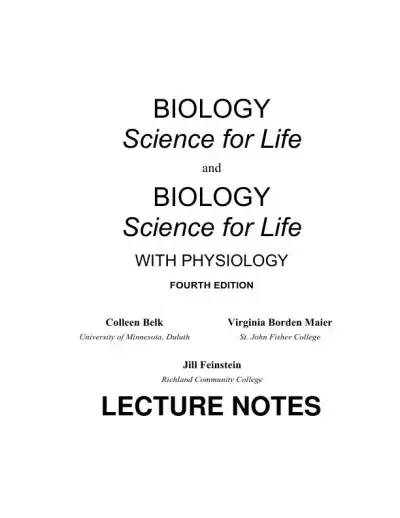 Class Notes
Revision Notes for Biology Science for Life, 4th Edition
Biology
221 pagesMay 2025 Exam Guides
Test Bank for Genetics Essentials: Concepts and Connections, 3rd Edition
Biology
561 pages147downloadsFeb 2025 Past Exams
2024-2025 BIOL235 Nutrition Practice Exam with Answers (38 Solved Questions)
Biology
6 pages145downloadsFeb 2025 Exam Guides
Test Bank for Macroeconomics, 6th Edition
Biology
373 pages143downloadsFeb 2025 Exam Guides
Test Bank for Radiologic Science for Technologists: Physics, Biology, and Protection, 12th Edition (Chapters 1-40)
Biology
235 pages139downloadsFeb 2025 Past Exams
BIO1100 Anatomy and Physiology Openstax Test Bank with Answers (166 Solved Questions)
Biology
40 pages130downloadsFeb 2025 Exam Guides
Human Biology: Concepts And Current Issues, 8th Edition Test Bank
Biology
631 pages125downloadsFeb 2025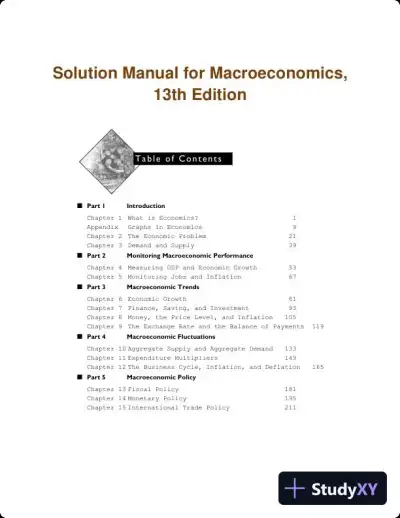 Textbook Guides
Solution Manual for Macroeconomics, 13th Edition
Biology
245 pages108downloadsFeb 2025
Study this document with CramX
Once it is in your library, every tool can work from it.