Sustainability is no longer a fashionable term reserved for conferences and corporate mission statements. For modern entrepreneurs, it has become a core business reality.
As the global population moves toward nine billion people by 2050, the pressure on food systems, energy, housing, transportation, water, and infrastructure is intensifying at an unprecedented scale. Rapid urbanization, the expansion of mega-cities, and the rise of the middle class in emerging markets are reshaping how businesses operate—and how they are expected to contribute to society.
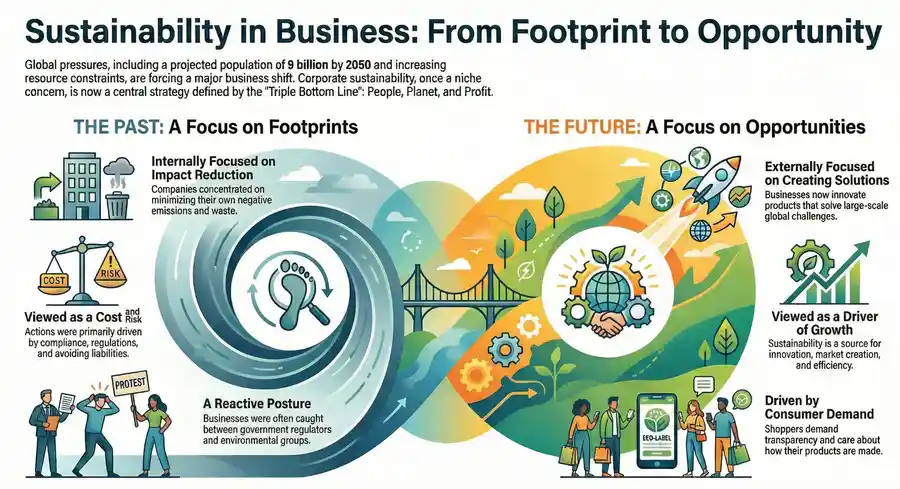
How sustainability in business has evolved from footprint reduction to opportunity-driven growth.
Meeting these demands using traditional models is no longer viable. Innovation is no longer optional. Sustainability has become the foundation for long-term entrepreneurship and economic resilience.
Why Sustainability Matters More Than Ever
Providing food, energy, and housing for a growing global population cannot be achieved without rethinking how resources are produced, distributed, and consumed. Natural resources are finite, agricultural inputs are under strain, and energy systems face increasing scrutiny.
Entrepreneurs today are operating in a world where:
Resource efficiency directly impacts profitability
Environmental risks translate into business risks
Social responsibility influences consumer trust and brand loyalty
Businesses that fail to adapt are exposed to rising costs, regulatory pressures, and reputational damage. Those that embrace sustainability, however, unlock new opportunities for growth and innovation.
What Is Corporate Sustainability?
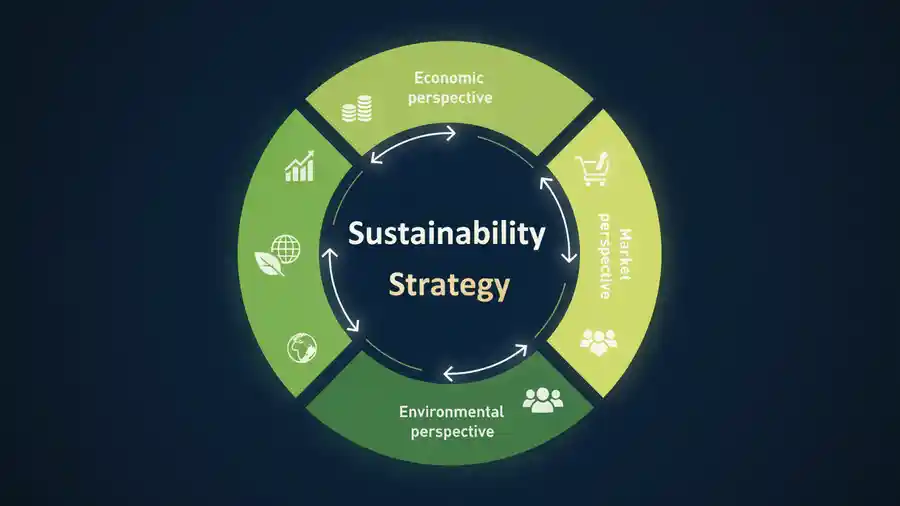
Corporate sustainability is an approach to business that recognizes the interdependence of economic success, social responsibility, and environmental stewardship.
Often referred to as the triple bottom line—people, planet, and profit—this framework emphasizes that long-term profitability is strongest when businesses actively manage their social and environmental impact.
Sustainability is no longer peripheral. Many multinational corporations now generate revenues exceeding the GDP of smaller nations. With that scale comes responsibility. Businesses are expected not only to operate efficiently but also to uphold values wherever they operate.
Entrepreneurs as Drivers of Sustainable Change
For many future founders, sustainability becomes a turning point in how they view entrepreneurship itself.
What once seemed like a choice between economic success and social impact is increasingly understood as a false trade-off. The private sector possesses financial capital, human talent, and operational discipline at a scale unmatched by governments or non-profits. When directed effectively, these strengths can address some of the world’s most complex challenges.
Entrepreneurship offers a powerful mechanism to:
Develop scalable solutions
Innovate faster than traditional systems
Deliver impact while remaining financially viable
This realization has fueled a new generation of sustainability-driven entrepreneurs.
🎥 Video: Sustainability and the Future of Business
This discussion explores how sustainability-driven thinking is reshaping entrepreneurship, corporate strategy, and innovation in modern business.
Sustainability in Modern Business Operations
Across industries, sustainability is now deeply embedded in operational decision-making.
Consider food systems and supply chains. Excessive food waste is both an environmental and economic problem. Businesses are addressing this through improvements in logistics, packaging, sourcing, and inventory management—reducing costs while minimizing environmental impact.
What was once viewed as risk mitigation is now seen as strategic advantage. Sustainable practices often result in:
Lower operating costs
Stronger supply chain resilience
Increased consumer trust
Long-term competitive differentiation
Sustainability works best when it is built into business models, not treated as an afterthought.
Changing Expectations for Corporate Leadership
The role of corporations in society is evolving rapidly.
Consumers demand transparency—not just about price and performance, but about how products are made, where they come from, and under what conditions. Social and environmental risks embedded within supply chains are no longer invisible.
Modern sustainability means:
Internalizing environmental and labor risks
Treating workers as critical stakeholders
Recognizing that sustainability is not charity—it is strategy
Forward-thinking organizations understand that leaving these challenges to governments alone is no longer acceptable. Businesses are expected to lead.
From Risk Reduction to Opportunity Creation
Corporate sustainability has shifted from minimizing harm to creating value.
Companies are increasingly asking:
How can sustainability drive innovation?
How can products actively contribute to a more sustainable world?
Where do future growth opportunities intersect with social needs?
This shift opens doors to:
Clean energy solutions
Circular economy models
Sustainable finance and impact investing
Responsible technology development
Rather than viewing climate change and global resource constraints solely as problems, entrepreneurs now see them as opportunities to redefine entire industries.
Sustainability as a Field of Study and Career Path
Sustainability is not limited to environmental science or social entrepreneurship—it applies across all professions.
Regardless of industry, professionals can act as sustainability champions:
Marketers can improve product design and packaging
Supply chain leaders can raise labor and sourcing standards
Finance professionals can support green investments and low-carbon portfolios
Students entering the workforce today will shape how sustainability is integrated into business for decades to come. The mindset shift toward long-term thinking is already underway—and markets are rewarding it.
The Road Ahead
The tools, knowledge, and technologies required to build a more sustainable future are already within reach. What matters now is execution.
By making smarter decisions, investing in better technologies, and embedding sustainability into everyday business practices, entrepreneurs can create solutions that benefit both society and the economy.
We are living in one of the most opportune periods in history—where innovation, responsibility, and entrepreneurship can align to shape a more resilient world.
“Social entrepreneurs are not content just to give a fish or teach how to fish. They will not rest until they have transformed the entire system.”
Editorial Note
This article was originally inspired by earlier educational discussions on sustainability and entrepreneurship. It has been revised and updated by the CramX editorial team to reflect current global business, technology, and sustainability trends.
Further Reading & Academic References
Entrepreneurs for Sustainability (Wikipedia) – Overview of sustainability-focused entrepreneurship
Yale Young Global Scholars – Sustainable Development & Social Entrepreneurship
Springer – Entrepreneurs for Sustainability: Principles, Practices, and Case Studies
E4S – Background on early sustainability education efforts