

NURS5315 Pathophysiology Practice Exam With Answers (186 Solved Questions)
- Nursing
- Chamberlain College of Nursing
- 24 pages
- Shared May 2025
NURS5315 Pathophysiology Practice Exam With Answers allows you to simulate exam conditions with real past papers.
Preview 8 of 24 pages
See the first 8 pages exactly as they appear in the document.
Page 1 Read page 1 as text
Nurs 5315: Adv Patho Exam 1 E. Cells decrease in size P. Still functional; imbalance between protein synthesis and degradation. Essentially there is an increase in the catabolism of intracellular organelles, reducing structural components of cell Physiologic: thymus gland in early childhood Pathological: disu se (muscle atrophy d/ decrease workload, pressure, use, blood supply, nutrition, hormonal stimulation, or nervous stimulation) - Atrophy E: cells increase in number, mitosis (cell division) must occur, size of cell does not change Phys: increased rate of division, increase in tissue mass after damage or partial resection; may be compensatory, hormonal, or pathologic Patho: abnormal proliferation of normal cells usually caused by increased hormonal stimulation (endometrial). increase of production of local growth factors Ex: removal of part of the liver lead to hyperplasia of hepatocytes. uterine or mammary gland enlargement during pregnancy - Hyperplasia E. Not true adaptation; Cells abnormal change in size, shape, organization (classified as mild, modera te, severe) P. caused by cell injury/irritation, characterized by disordered cell growth. aka atypical hyperplasia or pre - cancer, a disorderly proliferation Physiologic: N/A Pathologic: squamous dysplasia of cervix from HPV shows up on pap smear, breast ca ncer development; pap smears often show dysplastic cells of the cervix that must undergo laser/surgical tx - Dysplasia E: reversible change, one type of cell changes to another type for survival P: reversible; results from exposure of the cells to chroni c stressors, injury, or irritation; Cancer can arise from this area, stimulus induces a reprogramming of stem cells under the influence of cytokines and growth factors Ex: Patho: Columnar cells change to squamous cells in lungs of smoker or normal ciliate d epithelial cells of the bronchial linings are replaced by stratified squamous epithelial cells.; Phys: Barrett Esophagus - normal squamous cells change to columnar epithelial cells in response to reflux, aka intestinal metaplasia - Metaplasia E. inadequa te oxygenation of tissues P. decrease in mitochondrial function, decreased production of ATP increases anaerobic metabolism. eventual cell death. C.M. hypoxia, cyanosis, cognitive impairment, lethargy - Hypoxia injury E. normal byproduct of ATP production , will overwhelm the mitochondria - exhaust intracellular antioxidants P. lipid peroxidation, damage proteins, fragment DNA
Page 2 Page 3 Read page 3 as text
C.M. development in Alzheimer's, heart disease, Parkinson's disease, Amyotrophic Lateral Sclerosis - Free radical and ROS E. mood altering drug, long term effects on liver and nutritional status P. metabolized by liver, generates free radicals C.M. CNS de pression, nutrient deficiencies - Mag, Vit B6, thiamine, PO4, inflammation and fatty infiltration of liver, hepatomegaly, leads to liver failure irreversible - Ethanol Na and H2O enter cell and cause swelling. Organ increases in weight, becomes distended an d pale. Associated with high fever, hypocalcemia, certain infections - Oncosis Liver and germ cell tumors - Alpha Fetoprotein Origin GI, pancreas, lung, breast tumors - Carcinoembryonic Antigen prostate tumors - Prostate Specific Antigen from epithelia l tissue - renal cell carcinoma - Carcino - from connective tissue - chondrosarcoma - Sarco - preinvasive epithelial malignant tumors of glandular or squamous cells - cervix - Carcinoma in situ Multiple organs including brain - Lung ca metastasis Liver, lun gs - Colorectal ca metastasis Liver, lungs, brain - Testicular ca metastasis Bones (especially lumbar spine), liver - Prostate ca metastasis Liver, bones, lymphatics - Head and neck ca metastasis Peritoneal surfaces, diaphragm, omentum, liver - Ovarian ca metastasis Lungs - Sarcoma metastasis In transit lymphatics, lung, liver, brain, GI tract - Melanoma metastasis Local invasion, followed by invasion of surrounding tissues. Cells then may invad e blood and lymphatic vessels. They must survive in circulation, then enter and survive in a new location. Then the cells can multiply and form a new tumor. - Mechanisms of ca metastasis T= tumor size >/= correlates with metastatic ability
Page 4 Read page 4 as text
N= whether lym ph nodes are involved M= extra nodal involvement (liver, lungs) - TNM staging system In venous system - 20% - Intravascular fluid compartment The measure of solute concentration in a fluid. 280 - 295 mOsm - Osmolality Surrounds the cells and bathes them in nutrients - 20% - Interstitial fluid compartment Within the cells - 40% uk - Intracellular fluid compartment Passive - the movement of water from an area of low concentration of solute to one of higher concentration - Osmosis Pulling - the amount of pres sure or force that is exerted by solute molecules of a given compartment - Osmotic pressure Blood pressure - pushes fluid outside of the vessels, the force of fluid against the walls of a compartment - venous obstruction, Na and water retention - Hydrostati c pressure Colloid pressure keeps water inside the compartment, attracts water from interstitial space back into the capillary - losses or diminished albumin - Oncotic pressure The amount of blood within the arterial space - ECF changes will cause changes in the EABV in the same direction - Effective arterial blood volume Activated by low blood volume, triggers release of renin which converts angiotensinogen to angiotensin 1. ACE converts angiotensin 1 to angiotensin which causes arterial vasoconstriction and stimulat es release of aldosterone. Aldosterone stimulates renal Na reabsorption and K+ excretion. Water is retained, less urine is produced, blood volume increases. - Renin Angiotensin Aldosterone System ANP and BNP - released by heart - works opposite RAAS to decr ease blood volume, promotes urinary excretion of Na and water - Natriuretic hormones Dehydration - intake is not enough for body's needs C.M. Poor skin turgor, dry mucous membranes, sunken eyes, sunken fontanelles, decreased urine output, fatigue - Fluid v olume deficit Fluid intake exceeds body's needs C.M. Edema, rales, HTN, weight gain, bounding pulses, intake> output, JVD, restlessness or anxiety - Fluid volume excess Accumulation of fluid within the interstitial space - venous obstruction, Na and water retention
Page 5 Read page 5 as text
C.M. can be localized or dependent, tightness of skin, facial swelling, rales, decreased wound healing, increased risk of pressure sores, weight gain - Edema K+ enters cell with glucose transport. Monitor Type II DM for hypokalemia - insulin ef fect on K+ albuterol, beta blockers, and alpha adrenergic antagonists cause K+ movement into the cell. Alpha adrenergic receptors shift K+ out of the cell - Adrenergic agents effect on K+ hyperosmolality causes water to shift out of cell via osmosis. K+ will also shift out, causing hyperkalemia. - Osmolality effect on K+ intracellular K+ is released into bloodstream - Cell lysis effect on K+ cellular ATP is diminished, opening K+ channels and allowing K+ to leave cell - Exercise effect on K+ excretion and absorption of K+ is regulated by tubule system - Kidneys effect on K+ mag inhibits the potassium channels, keeping balance. when mag is low, more K+ exits the call, and is excreted via the kidneys. - magnesium and potassium E. increased acid production, loss of bicarb, diminished renal excretion of hydrogen C.M hyperventila tion (compensatory), h/a, n/v/d, dehydration, hypotension pH <7.4 HCO3 <22 - metabolic acidosis E. GI loss, diuretic use C.M. slow, shallow respirations, irritability, twitching, s/s of hypokalemia pH >7.4 HCO3 >26 - metabolic alkalosis E. cns depression , airway abnormalities C.M. restless, confused, seizures, tachycardia pH <7.4 PaCO2 >44 - respiratory acidosis E. usually anxiety, PE, chf, salicylate OD, illegal drugs C.M. light - headed, confused, tetany pH >7.4 PaCO2 <38 - respiratory alkalosis Paired genes on autosomal chromosomes - Allele Outward appearance of an individual - Phenotype A map of ones specific genes - Genotype Two or more alleles which occur with an appreciable frequency in a population - Polymorphic
Page 6 Read page 6 as text
Two dominant or recessive allele s - Homozygous When both a dominant and a recessive allele are present - Heterozygous Trait seen in phenotype - Dominant Trait not seen in phenotype - Recessive first 22 of 23 chromosomes - Autosomal chromosomes 23rd pair of chromosomes - sex - linked chromosomes E. Increase in cell size P. Caused by hormonal stimulation or increased functional demand, which increased the cellular protein in the plasma membrane, e ndoplasmic reticulum, myofilaments, and mitochondria (not cellular fluid) Physiologic: skeletal muscle hypertrophy for persons doing heavy work/weight lifting. one kidney removed, the other kidney increases in size to accommodate for workload Pathologic: c ardiomegaly from HTN/L ventricular hypertrophy - Hypertrophy ischemia which progresses to hypoxia. Intracellular enzymes such as CK, LDH, AST, ALT, troponin - Hypoxic Injury Clinical Manifestations decreased O2, loss of H/H, decreased RBC production, d isease of heart/lungs, ischemia - Hypoxic Injury - most muscle cells, including heart excrete what enzyme - CK enzymes - muscle cells, liver cells, heart cells, RBCs, brain secrete what enzyme - LDH - liver cells (s) - AST enzymes are found where? - liv er cells (L enzyme) - ALT enzymes are found where? - cardiac cells - Troponin enzymes are found where? lack of O2 causes decrease in mitochondrial function, causing decrease ATP production and increases anaerobic metabolism (generating ATP from glycogen), eventually anaerobic metabolism will stop and the cell will die. Reduction of ATP impairs Na/K pump, le ads to increased Na/Ca in cell, K is diffused out of cell, water diffuses into cell causing swelling, ribosomal dilation and malfunction occur. Ribosomes produces protein and when it malfunctions causes decrease in protein synthesis. Death will occur if in jury is not stopped. - Hypoxic Injury Pathophysiology have unpaired electron in its outer shell, making molecule unstable and highly reactive. aka being oxidized - Free Radical Etiology
Page 7 Read page 7 as text
byproduct of ATP production in the mitochondria - Reactive Oxygen Sp ecies ROS Etiology to stabilize self, it will steal an electron from another molecule or give up and electron. The free radical will often steal an electron from another molecule, making that molecule a free radical - Free Radical and Clinical Manafestati ons can overwhelm mitochondria and exhaust intracellular antioxidants, causing cell injury/disease - Reactive Oxygen Species (ROS) Clinical Manafestations may by initated with in cells by (1) absorption of extreme energy sources such as radiation or UV l ight; (2) the occurrence of endogenous reactions, such as redox reactions in which oxygen is reduced to water have role in development of Alzheimer's, Parkinson's, Amyotrophic Lateral Sclerosis. Antioxidants are our bodies' defense, reducing agents that pr ovide missing electron that can stabilize the ________ - Free Radical and Pathophysiology cause lipid peroxidation, damage proteins which maintain ion pumps and cellular transport, fragment DNA and causes less protein synthesis, cause chromatin destructio n, and damage mitochondria. - Reactive Oxygen Species (ROS) Pathophysiology ETOH is metabolized to acetaldehyde in the cytoplasm of the cell, enzyme alcohol dehydrogenase (ADH) helps with conversion - Ethanol Etiology adverse effects on liver and causes nutritional disorders. acute effects in the liver include inflammation, fatty infiltration, hepatomegaly, acute liver necrosis and suppressed fatty acid oxidation. liver failure is irreversible effect of chronic abuse - Ethanol Clinical Manafestations Con version oxidized niacin (NAD+) is reduced to NADH. In the mitochondrial acetaldehyde is further converted by ADH to acetate and further oxidized niacin (NAD+) is reduced to NADH. the increased NADH/NAD+ ratio in the liver causes the following 1.Pyruvate ch ange to lactic acid causing lactic acidosis 2. Oxaloacetate converted to malate, preventing gluconeogenesis leading to fasting hypoglycemia 3. Glyceraldehyde to glycerol which combines with fatty acids and forms triglycerides, leads to triglycerides in the liver, aka hepatosteatosis 4. decreases citric acid cycle production of NADH which leads to utilization of Acetyl - CoA for ketogenesis (causing ketoacidosis) and lipogenesis (causing hepatosteatosis) - Ethanol Pathophysiolody cellular swelling, cellular i njury because with most injuries there is some amount of O2 deprivation causing hypoxic injury - Oncosis Effects and Clinical Implications spectrum of cell changes after the cell dies - Necrosis
Page 8 Read page 8 as text
necrosis which results from sudden insufficiency of arterial blood flow - Infarct liver cell, ketogenesis occurs in the mitochondria of the hepatocyte result of unavailability of glucose - Role of the hepatocytes Ketogenesis is the formation of ketone bo dies and occurs mostly in the mitochondria of the hepatocytes (liver cells) - Role of the mitochondria lack of glucose - occur from the depletion of carbohydrate stores or may occur bc the cell is not able to use glucose but the individual is hyperglycemic (type 2 DM) - Triggers for ketogenesis processed by hepatocytes and undergoes transformation to 3 ketone bodies: Acetoacetate, Acetone and B - hydroxybutyrate (basis of ketoacidosis) - States of starvation or uncontrolled DM, cells do not receive enough glu cose to produce energy, resulting in acceleration of the B - oxidation cycle and increasing oxidation of fatty acids or energy. B - oxidation cycle results in formation of acetyl - CoA - Role of Acetyl - CoA Oxaloacetate is also used in gluconeogenesis, during st arvation & uncontrolled DM oxaloacetate levels are insufficient due to gluconeogenesis... this depletion furthers the amount of acetyl - CoA - Effect on oxaloacetate Liver and germ cell tumors - Alpha Fetoprotein (AFP) GI, pancreas, lung, breast, ect tumor s - Carcinoembryonic Antigen CEA Germ cell tumors - Beta Human Chorionic gonadotropin B - hCG origin Prostate tumors - Prostate Specific Antigen PSA arise from epithelial tissue - Carcino - (prefix) connective tissue (muscle and bone tissue) malignant can cers of the skeletal muscle are known as rhabdomyosarcomas - Sarco - (prefix) arise from ductal or glandular structures - adeno (prefix) - preinvasive epithelial malignant tumors of glandular or squamous cell origin - # of sites including cervix, skin, oral cavity, esophagus and bronchus in breast, ductal carcinoma in situ (DCIS) fills the mammary ducts but has not progressed to local tissue invasion - Carcinoma in Situ originates from precursor cells or blasts (immature or embryonic tissue). Ex: children, neuroblastoma, retinoblastoma - - blastoma (suffix)
16 more pages in the full document
Unlock it once and it stays in your library, ready to chat with or turn into flashcards.
Unlock the full documentMore Nursing study materials
See all Exam Guides
Test Bank for Critical Care Nursing: Diagnosis and Management, 9th Edition (Chapters 1-27)
Nursing
299 pages167downloadsFeb 2025 Class Notes
An Invitation To Health, Third Canadian Edition Lecture Notes
Nursing
439 pages163downloadsFeb 2025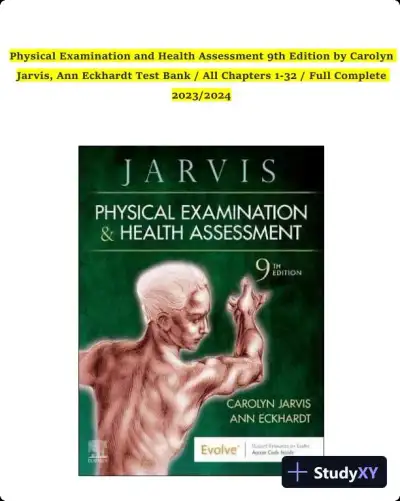 Exam Guides
Test Bank for Physical Examination and Health Assessment, 9th Edition (Chapters 1-15)
Nursing
200 pages161downloadsFeb 2025 Exam Guides
Focus on Nursing Pharmacology Seventh, North American Edition Test Bank
Nursing
1144 pages160downloadsFeb 2025 Exam Guides
Test Bank for Fundamentals of Nursing, 11th edition (Chapters 1-24)
Nursing
200 pages160downloadsFeb 2025 Class Notes
Class Notes for Child Health Nursing, 3rd Edition
Nursing
861 pages154downloadsFeb 2025 Class Notes
Class Notes for Clinical Nursing Skills: Basic to Advanced Skills, 9th Edition
Nursing
150 pages154downloadsFeb 2025 Class Notes
Class Notes for Principles of Pediatric Nursing Caring for Children, 6th Edition
Nursing
191 pages152downloadsFeb 2025
Study this document with CramX
Once it is in your library, every tool can work from it.