

Test Bank For Essentials of Pediatric Nursing, 3th Edition
- Nursing
- 417 pages
- Shared February 2025
- 91 downloads
Simplify your revision with Test Bank For Essentials of Pediatric Nursing, 3th Edition, packed with helpful practice questions.
Preview 31 of 417 pages
See the first 31 pages exactly as they appear in the document.
Page 1 Read page 1 as text
Page 1 Origin: Chapter 1, 1 1. The nurse providing family-centered care in a hospital setting reflects on the focus of the health care provided in today's society. Which statement best describes the current definition of health? A) Health is described as 'an absence of disease.' B) Health is measured by monitoring mortality and morbidity of a group. C) Health is a state of complete physical, mental, and social well-being. D) Technological gains made in health care are shared equally among all children. Ans: C Feedback: In the past, health was defined simply as the absence of disease; health was measured by monitoring the mortality and morbidity of a group. Over the past century, however, the focus of health has shifted to disease prevention, health promotion, and wellness. The World Health Organization (2013) defines health as "a state of complete physical, mental, and social well-being, and not merely the absence of disease or infirmity." The gains in child health have been huge, but, unfortunately, these gains are not shared equally among all children. Origin: Chapter 1, 2 2. The student nurse is learning about the past history of child health and health care in the United States. Which statement accurately reflects the condition of health care in the past and current centuries? A) In past centuries in the United States, the health of the country was better than it is today due to the simpler style of living. B) In the current century, mortality rates are high, but life expectancy has increased due to technological advances. C) In the late eighteenth and early nineteenth centuries urban public health improvements made cities healthier places for growing children. D) By the late twentieth century unintentional injuries rather than infectious diseases had become the leading cause of death for children older than 1 year old. Ans: D Feedback: In past centuries in the United States, the health of the country was poorer than it is today; mortality rates were high and life expectancy was short. Over the years the health of children received more and more attention, leading to a better understanding of sources of illness and improvements in sanitation, water, and nutrition. As a result, by the late twentieth century unintentional injuries rather than infectious diseases had become the leading cause of death for children older than 1 year old.
Page 2 Page 3 Read page 3 as text
Page 2 Origin: Chapter 1, 3 3. The nurse is administering a number of therapeutic interventions for neonates, infants, and children on the pediatric unit. Which intervention contributes to an increase in chronic illness seen in early childhood? A) Administering antibiotics to prevent lethal infections B) Vaccinating children to prevent childhood diseases C) Using mechanical ventilation for premature infants D) Using corticosteroids as a treatment for asthma Ans: C Feedback: Using mechanical ventilation and medications to foster lung development in premature infants increases their survival rate. Yet the infants who survive are often faced with myriad chronic illnesses. Administering antibiotics to prevent lethal infections, vaccinating children to prevent childhood diseases, and using corticosteroids as a treatment for asthma may cause side effects, but do not contribute to chronic illness in children. Origin: Chapter 1, 4 4. The nurse is reviewing a copy of the U.S. Surgeon General's Report, Healthy People. Which nursing action best reflects the nurse fostering this health care agenda? A) The nurse signs up for classes to obtain an advanced degree in nursing B) The nurse volunteers at a local health care clinic providing free vaccinations for low-income populations C) The nurse performs an in-service on basic hospital equipment for student nurses D) The nurse compiles nursing articles on evidence-based practices in nursing to present at a hospital training seminar Ans: B Feedback: Healthy People is a comprehensive health promotion and disease prevention agenda that is working toward improving the quantity and quality of life for all Americans (U.S. Department of Health and Human Services, 2010). Overarching goals are to eliminate preventable disease, disability, injury, and premature death; achieve health equity, eliminate disparities, and improve the health of all groups; create physical and social environments that promote good health; and promote healthy development and behaviors across every stage of life. Volunteering at a local health care clinic directly reflects the goal of improving the health of all groups of people. Signing up for classes, performing in-services on equipment, and compiling nursing articles on evidence-based practices in nursing are all worthwhile activities that foster health care delivery, but are not as directly linked to the agenda of promoting health in the community.
Page 4 Read page 4 as text
Page 3 Origin: Chapter 1, 5 5. The neonatal nurse researches the neonatal and mortality rates in the United States. Which statements accurately describe these measurements of child health? Select all that apply. A) Neonatal mortality is the number of infant deaths occurring in the first 28 days of life per 1,000 live births. B) The infant mortality rate refers to the number of deaths occurring in the first 6 months of life. C) Neonatal mortality is documented as the number of deaths in relation to 1,000 live births. D) The infant mortality rate is used as an index of the general health of a country. E) In 2007, the infant mortality rate in the United States was 6.8 per 1,000 live births. F) The infant mortality rate is consistent from state to state as well as between ethnic groups. Ans: A, C, D, E Feedback: Neonatal mortality is the number of infant deaths occurring in the first 28 days of life per 1,000 live births. The infant mortality rate refers to the number of deaths occurring in the first 12 months of life and is documented as the number of deaths in relation to 1,000 live births. The infant mortality rate is used as an index of the general health of a country; generally, this statistic is one of the most significant measures of children's health. In 2007, the infant mortality rate in the United States was 6.8 per 1,000 live births. The infant mortality rate varies greatly from state to state as well as between ethnic groups.
Page 5 Read page 5 as text
Page 4 Origin: Chapter 1, 6 6. The nurse researcher investigates the morbidity rate in the United States. Which statement accurately reflects this concept? A) Morbidity measures the prevalence of a specific illness in a population at a particular time. B) Morbidity is presented in rates per 100,000 population. C) Morbidity statistics are revised more frequently because of the ease in defining or obtaining the information. D) In general, 76% of children in the United States enjoyed excellent health and 27% had very good health in a 2007 report. Ans: A Feedback: Morbidity is the measure of prevalence of a specific illness in a population at a particular time. It is presented in rates per 1,000 population. Morbidity is often difficult to define and record because the definitions used vary widely. For example, morbidity may be defined as visits to the physician or diagnosis for hospital admission. Also, data may be difficult to obtain. Morbidity statistics are revised less frequently because of the difficulty in defining or obtaining the information. In general, 56% of children in the United States enjoyed excellent health and 27% had very good health as reported in a summary of health statistics for children in 2007. Origin: Chapter 1, 7 7. When assessing a family for barriers to health care, the nurse documents checks for psychosocial barriers. What is an example of this type of health care deficit? A) Academic difficulties B) Respiratory illness C) Poor sanitation D) Inherited diseases Ans: A Feedback: Environmental and psychosocial factors are now an identified area of concern in children. They include academic differences, complex psychiatric disorders, self-harm and harm to others, use of firearms, hostility at school, substance abuse, HIV/AIDS, and adverse effects of the media. Respiratory illness and inherited diseases are health problems, and poor sanitation is an environmental factor.
Page 6 Read page 6 as text
Page 5 Origin: Chapter 1, 8 8. When integrating the principles of family-centered care, the nurse would include which concept? A) Parents want nurses to make decisions about their child's treatment. B) Families are unable to make informed choices. C) People have taken increased responsibility for their own health. D) Families require little information to make appropriate decisions. Ans: C Feedback: Due to the influence of managed care, the focus on prevention, better education, and technological advances, people have taken increased responsibility for their own health. Parents now want information about their child's illness, to participate in making decisions about treatment, and to accompany their children to all health care situations. Origin: Chapter 1, 9 9. The nurse is caring for a 2-week-old girl with a metabolic disorder. Which activity would deviate from the characteristics of family-centered care? A) Softening unpleasant information or prognoses B) Evaluating and changing the nursing plan of care C) Collaborating with the child and family as equals D) Showing respect for the family's beliefs and wishes Ans: A Feedback: Family-centered care requires that the nurse provide open and honest information to the child and family. It is inappropriate to soften unpleasant information or prognoses. Evaluating and changing the nursing plan of care to fit the needs of the child and family, collaborating with them as equals, and showing respect for their beliefs and wishes are guidelines for family-centered care. Origin: Chapter 1, 10 10. The nurse is caring for a 14-year-old girl with multiple health problems. Which of the following activities would best reflect evidence-based practice by the nurse? A) Following blood pressure monitoring recommendations B) Determining how often the vital signs are monitored C) Using hospital protocol for ordering diagnostic tests D) Deciding the prescribed medication dose Ans: A Feedback: Using hospital protocol for ordering a diagnostic test, determining how often the vital signs are monitored, and deciding the medication dose ordered would be the physician's responsibility. However, following blood pressure monitoring recommendations would be part of evidence-based practice reflected in the nursing care delivered.
Page 7 Read page 7 as text
Page 6 Origin: Chapter 1, 11 11. The nurse is caring for a 10-year-old boy with a neuroblastoma. Which activities best describe the role of the nurse as a care coordinator, collaborator, and consultant? Select all that apply. A) Collaborating with the family throughout the care path B) Advancing the interests of children and their families by knowing their needs C) Informing children and families of their rights and options D) Coordinating care provided by the interdisciplinary team E) Ensuring that the child's and family's needs are met through activities such as support groups F) Providing appropriate client education based on the child's developmental level Ans: A, D, E Feedback: The pediatric nurse serves as a collaborator, care coordinator, and consultant. Collaborating with the interdisciplinary health care team, the pediatric nurse integrates the child's and family's needs into a coordinated plan of care. In the role of consultant, the pediatric nurse ensures that the child's and family's needs are met through such activities as support group facilitation or working with the school nurse to plan the child's care. In the role as a child and family advocate, the nurse safeguards and advances the interests of children and their families by knowing their needs and resources, informing them of their rights and options, and assisting them to make informed decisions. In the role of educator, the nurse instructs and counsels children and their families about all aspects of health and illness. In this role the pediatric nurse also ensures that communication with the child and family is based on the child's age and developmental level.
Page 8 Read page 8 as text
Page 7 Origin: Chapter 1, 12 12. The pediatric nurse operates according to the standards of professional performance according to the American Nurses Association (ANA) Scope and Standards of Pediatric Nursing Practice. Which statements accurately reflect these standards? Select all that apply. A) The pediatric nurse uses research findings in practice and participates in the generation of new knowledge. B) The pediatric nurse plans and delivers safe, effective nursing care regardless of the cost and its impact on practice. C) The pediatric nurse acts as an advocate for the hospital staff, physicians, and other health care team members involved in care of the child. D) The pediatric nurse's decisions and actions in all areas of practice are determined in an ethical manner. E) The pediatric nurse collaborates with the child, family, and physician in providing care for the child. F) The health care administrators, not the pediatric nurses, are responsible for improving the quality and effectiveness of pediatric nursing practice. Ans: A, D, E Feedback: According to the ANA Scope and Standards of Pediatric Nursing Practice, the pediatric nurse uses research findings in practice and participates in the generation of new knowledge; considers factors related to safety, effectiveness, cost in planning and delivering care, and the impact on practice; and is an advocate for the child and family. The pediatric nurse's decisions and actions in all areas of practice are determined in an ethical manner. The pediatric nurse collaborates with the child, family, and physician in providing care for the child, and systematically improves the quality and effectiveness of pediatric nursing practice. Origin: Chapter 1, 13 13. The nurse is providing home care for a 6-year-old girl with multiple medical challenges. Which activities are part of the educator role of the nurse? Select all that apply. A) Arranging for a physical therapy session B) Teaching parents to administer albuterol C) Reminding a parent to give a full course of antibiotics D) Giving a DTaP vaccination at the proper interval E) Showing the parents how to perform proper hand hygiene F) Integrating research findings to establish evidence-based practice Ans: B, C, E Feedback: Teaching parents to administer albuterol, reminding a parent to give the full course of antibiotics, and showing them how to perform proper hand-hygiene involves the role of the nurse as an educator. Arranging for a physical therapy session, giving a DTaP vaccination at the proper interval, and integrating research findings to establish evidence-based practice are examples of care management.
Page 9 Read page 9 as text
Page 8 Origin: Chapter 1, 14 14. The nurse is functioning in the primary role to care for a 12-year-old boy with metastatic cancer in the liver. Which activity is typical of advocacy? A) Instructing parents about proper home care B) Educating the family about choices they have C) Telling parents about clinical guidelines D) Teaching the family about types of cancers Ans: B Feedback: Educating the family about choices they have regarding therapies for the cancer in the child's liver is an example of advocacy, in which the nurse advances the interests of the child and family by informing them of options and assisting them to make informed decisions. Telling parents about proper home care, clinical guidelines, and the types of cancers are all done in the primary role of educator. Origin: Chapter 1, 15 15. The nurse is providing care for a 9-year-old girl who is medically fragile. Which is an example of the nursing role of collaboration? A) Informing the team members of the progress of treatment B) Discussing the child's needs with a school nurse C) Advising the pulmonologist of respiratory symptoms D) Arranging for after-school attendance at a day care facility Ans: A Feedback: Informing team members of the progress of treatment is an act of collaboration. Discussing the child's needs with a school nurse is done in the role of a consultant. Advising the pulmonologist of respiratory symptoms and arranging after-school attendance at a day care facility are care coordinator activities.
Page 10 Read page 10 as text
Page 9 Origin: Chapter 1, 16 16. The nurse is providing care to an ill child and his family. Which activity reflects the use of the assessment step of the nursing process when providing care for children? A) Collecting data about the child and family B) Analyzing data to make judgments about the child's health state C) Evaluating care provided by the interdisciplinary team D) Developing a care plan that incorporates child goals Ans: A Feedback: The nursing process is applicable to all health care settings and consists of five steps: assessment, nursing diagnosis, outcome identification and planning, implementation, and outcome evaluation. Collecting data about the child and family occurs in the assessment step of the nursing process. Analyzing data to make judgments about the child's health state involves nursing diagnosis, evaluating care provided by the interdisciplinary team is performed in the outcome evaluation, and developing a care plan that incorporates child goals occurs in the planning stage. Origin: Chapter 1, 17 17. The nurse is caring for a 14-year-old boy with a growth hormone deficiency. Which action best reflects using the nursing process to provide quality care to children and their families? A) Reviewing the effectiveness of interventions B) Questioning the facility standards for care C) Earning continuing education credits D) Ensuring reasonable costs for care provided Ans: A Feedback: The nursing process is used to care for the child and family during health promotion, maintenance, restoration, and rehabilitation. It is a problem-solving method based on the scientific method that allows nursing care to be planned and implemented in a thorough, organized manner to ensure quality and consistency of care. The nursing process is applicable to all health care settings and consists of five steps: assessment, nursing diagnosis, outcome identification and planning, implementation, and outcome evaluation. Reviewing the effectiveness of interventions is related to outcome evaluation in the nursing process. Even though the three remaining answer options are valuable in ensuring quality of care in health care facilities, they do not involve the direct care of the child and family using the nursing process.
Page 11 Read page 11 as text
Page 10 Origin: Chapter 1, 18 18. The nurse is caring for a newborn infant who has Down syndrome. Which nursing action reflects the nurse's use of the ethical principle of nonmaleficence? A) The nurse speaks truthfully to the parents regarding their child's prognosis. B) The nurse provides safe, competent nursing care to avoid harming the infant. C) The nurse involves the parents in making health care decisions for their child. D) The nurse fairly allocates resources for caring for newborns in a facility. Ans: B Feedback: Ethics includes the basic principles of autonomy, beneficence, nonmaleficence, justice, veracity, and fidelity. Nonmaleficence means avoiding causing harm, intentionally or unintentionally. One example is providing safe, competent nursing care. Speaking truthfully to the parents is an example of veracity. Generally, parents have the autonomy to make health care decisions for their child. Justice refers to acting fairly, and also involves allocating resources fairly. Origin: Chapter 1, 19 19. The nurse is caring for a premature infant and his mother who are scheduled for discharge even though the nurse feels the mother is not emotionally equipped to return home. When balancing the ethical components of this dilemma, the nurse identifies the problem and gathers more information. What would be the nurse's next step in this process? A) Choose a solution based on available data B) Implement a solution regardless of pros and cons C) Weigh the risks against the benefits D) Evaluate possible outcomes of the situation Ans: C Feedback: The pediatric nurse must balance these ethical components when dealing with families from a variety of cultural and religious backgrounds who are making health care decisions for their children. The process is as follows: (1) identify the problem, (2) gather information about the problem, (3) weigh the risks against the benefits, (4) choose a solution, (5) implement the solution, and (6) evaluate the outcome of the situation.
Page 12 Read page 12 as text
Page 11 Origin: Chapter 1, 20 20. A preschool child is scheduled to undergo a diagnostic test. Which action by the nurse would violate a child's bill of health care rights? A) Arranging for her mother to be with her B) Telling the child the test will not hurt C) Assuring the child that the test will be done quickly D) Introducing the child to the lab technicians Ans: B Feedback: Telling the child the test will not hurt lacks veracity. It is not a lie, but it does not honor the child's right to be educated honestly about his or her health care. Arranging for the mother to be with the child, assuring the child that the test will be done quickly, and introducing the child to the lab technicians are actions that honor the child's bill of health care rights. Origin: Chapter 1, 21 21. The pediatric nurse knows that the children she is treating are considered minors. Which statement accurately describes the regulations related to consent for medical treatment? A) Children older than age 16 can provide their own consent for, or refusal of, medical procedures. B) A guardian ad litem may be appointed by the parents to serve to protect the child's best interests. C) Parents ultimately are the decision makers regarding medical treatment for their children younger than the age of 18. D) When divorce occurs, the parent with whom the child is living on a daily basis will be granted custody of the child. Ans: C Feedback: Parents ultimately are the decision makers for their children. Generally, only persons over the age of majority (18 years of age) can legally provide consent for health care. Minors (children younger than 18 years of age) generally require adult guardians to act on their behalf. Biological or adoptive parents are usually considered to be the child's legal guardian. When divorce occurs, one or both parents may be granted custody of the child. In certain cases (such as child abuse or neglect, or during foster care), a guardian ad litem may be appointed by the courts. This person generally serves to protect the child's best interests.
Page 13 Read page 13 as text
Page 12 Origin: Chapter 1, 22 22. The nurse is caring for a 12-year-old child hospitalized for internal injuries following a motor vehicle accident. For which medical treatment would the nurse ensure that an informed consent is completed beyond the one signed at admission? A) Diagnostic imaging B) Cardiac monitoring C) Blood testing D) Spinal tap Ans: D Feedback: Most care given in a health care setting is covered by the initial consent for treatment signed when the child becomes a patient at that office or clinic or by the consent to treatment signed upon admission to the hospital or other inpatient facility. Certain procedures, however, require a specific process of informed consent, including major and minor surgery; invasive procedures such as lumbar puncture or bone marrow aspiration; treatments placing the child at higher risk, such as chemotherapy or radiation therapy; procedures or treatments involving research; photography involving children; and applying restraints to children. Origin: Chapter 1, 23 23. A child needs a consent form signed for a minor surgical procedure. Which statement accurately describes the responsibilities of the health care providers when obtaining the consent? A) The physician is responsible for ensuring that the consent form is completed with signatures from the parents or legal guardians. B) The physician is responsible for serving as a witness to the signature process. C) The nurse is responsible for informing the child and family about the procedure and obtaining consent. D) The nurse is responsible for determining that the parents or legal guardians understand what they are signing by asking them pertinent questions. Ans: D Feedback: The nurse's responsibility related to informed consent includes the following: determining that the parents or legal guardians understand what they are signing by asking them pertinent questions, ensuring that the consent form is completed with signatures from the parents or legal guardians, and serving as a witness to the signature process. The physician or advanced practitioner providing or performing the treatment and/or procedure is responsible for informing the child and family about the procedure and obtaining consent by providing a detailed description of the procedure or treatment, the potential risks and benefits, and alternative methods available.
Page 14 Read page 14 as text
Page 13 Origin: Chapter 1, 24 24. The nurse is caring for a child brought to the emergency department by a babysitter. The child needs an emergency appendectomy and the parents cannot be contacted. What would be the nurse's best response to this situation? A) Have the babysitter sign the consent form even if she does not have signed papers to do so. B) Have the primary care physician for the child sign the consent form. C) Document failed attempts to obtain consent to allow emergency care. D) Delay medical care until the child's next of kin can be contacted. Ans: C Feedback: Health care providers can provide emergency treatment to a child without consent if they have made reasonable attempts to contact the child's parent or legal guardian (American Academy of Pediatrics, Committee on Pediatric Emergency Medicine, 2007). If the parent is not available, then the person in charge may give consent for emergency treatment if that person has a signed form from the parent or legal guardian allowing him or her to do so. During an emergency situation, a verbal consent via the telephone may be obtained. In urgent or emergent situations, appropriate medical care never should be delayed or withheld due to an inability to obtain consent. Origin: Chapter 1, 25 25. The nurse knows that the emancipated minor is considered to have the legal capacity of an adult and may make his or her own health care decisions. Which of the following children would potentially be considered an emancipated minor? A) A minor with financial independence who is living with his parents B) A minor who is pregnant C) A child older than 13 years of age who asks for emancipation D) A minor who puts his or her medical decisions in writing Ans: B Feedback: Emancipation may be considered in any of the following situations, depending on the state's laws: membership in a branch of the armed services, marriage, court-determined emancipation, financial independence and living apart from parents, college attendance, pregnancy, mother younger than 18 years of age, and a runaway.
Page 15 Read page 15 as text
Page 14 Origin: Chapter 1, 26 26. After describing the procedure and medical necessity, the nurse asks a 14-year-old child to assent to a skin graft. Which statement accurately describes the requirements for this type of assent? A) The age of assent occurs at 12 years old. B) It is not necessary to obtain assent from a minor for a procedure. C) A minor can dissent to a procedure but his or her wishes are not binding. D) In some cases, such as cases of significant morbidity or mortality, dissent may need to be overridden. Ans: D Feedback: Assent means agreeing to something. In pediatric health care, the term assent refers to the child's participation in the decision-making process about health care (McCullough & Stein, 2009). In some cases, such as cases of significant morbidity or mortality, dissent may need to be overridden. The age of assent depends on the child's developmental level, maturity, and psychological state. The converse of assent, dissent (disagreeing with the treatment plan), when given by an adolescent 13 to 17 years of age, is considered binding in some states. Origin: Chapter 1, 27 27. The nurse is helping the family of a terminally ill child to fill out an advance directives form. Which options are usually determined by this document? Select all that apply. A) Withholding food B) Withholding water C) Withholding antibiotics D) "Do not attempt resuscitate" (DNAR) orders E) Withholding ventilation F) Providing artificial nutrition Ans: C, D, E, F Feedback: Advance directives determine the child's and family's wishes should life-sustaining care become necessary. After discussion with other family members, friends, and spiritual advisors, the parents may make the decision to forego life-sustaining medical treatment, either withdrawing treatment or deciding to withhold certain further treatment or opt not to resuscitate in the event of cardiopulmonary arrest. Food and water are not withheld; however, some children may not be able to drink or eat and artificial nutrition may be withheld.
Page 16 Read page 16 as text
Page 15 Origin: Chapter 1, 28 28. When integrating the principles of family-centered care, the nurse would NOT include which of the following? A) Parents want to make decisions about their child's treatment. B) Families can make informed choices. C) People have taken less responsibility for their own health. D) Families require more information to make appropriate decisions. Ans: C Feedback: Due to the influence of managed care, the focus on prevention, better education, and technological advances, people have taken increased responsibility for their own health. Parents now want information about their child's illness, they want to participate in making decisions about treatment, and they want to accompany their children to all health care situations. Origin: Chapter 1, 29 29. The school nurse monitors the amount of physical activity children in a local elementary school have planned for each day. This data will help most in meeting which foundation health measure of Healthy People 2020? A) General health status B) Health-related quality of life and well-being C) Determinants of health D) Disparities Ans: B Feedback: Participation in common activities, which would include physical activity during the school day, is included in the foundation health measure of Health-related quality of life and well-being. The General health status measure includes measures such as physically and mentally unhealthy days, life expectancy, and chronic disease prevalence. Biology, genetics, and individual behavior are included in the Determinants of health measure. Race/ethnicity, gender, and geography are measures of Disparities.
Page 17 Read page 17 as text
Page 16 Origin: Chapter 1, 30 30. The nurse is preparing a presentation regarding prevention of the unintentional injuries of drowning and bicycle accidents resulting in death. The population attending the presentation are parents of children ages 1 to 14. Which groups of parents would be best for the nurse to target when preparing this presentation? Select all that apply. A) American Indian parents B) Parents of female children C) Parents who live in government subsidized housing D) Single parents E) Asian American parents Ans: A, C, D Feedback: Unintentional injuries are the number one cause of death in children between the ages of 1 and 14 in the United States. Risk factors associated with childhood injuries include male gender, low socioeconomic status, parents who are unmarried or single, poor housing, and the highest rates of death are seen in American Indian/Alaska Natives children, followed by African American children. Origin: Chapter 1, 31 31. The school nurse is reviewing the records of students in an elementary school. Based on current child morbidity rates, which child is the nurse most careful to monitor for days missed from school? A) A child with asthma B) A child with contact dermatitis C) A child with severe hay fever D) A child with food allergies Ans: A Feedback: Morbidity refers to illness present in a specific population at a given time. Asthma is the leading chronic disease in children, affecting 14% of children in the United States; 13% of children suffer from skin allergies, 9% have hay fever, and 6% have food allergies.
Page 18 Read page 18 as text
Page 17 Origin: Chapter 1, 32 32. The nurse in charge of the quality department is reviewing cases regarding HIPAA compliance. In which cases does the nurse correctly determine that HIPAA standards were followed? Select all that apply. A) A child is diagnosed with an inner ear infection and follow-up care instructions are given to the child's aunt, who provides a medical consent form from the parents, who are on vacation. B) The emergency department nurse manager reports the suspicion of abuse to the child welfare department for a child admitted with suspicious injuries. C) The grandparents of a child ask the nurse on the medical floor when their grandchild will be released home to the parents. D) The physician reports the diagnosis of hepatitis C of a 14-year-old, who is abusing injectable drugs, to the health department. E) The nurse manager tells the superintendent of schools that a high school student is infected with HIV so that proper precautions can be implemented in the school. Ans: A, B, D Feedback: The Health Insurance Portability and Accountability Act (HIPAA) of 1996 addresses security and privacy issues involving health information about individuals. Information can be shared with the client's aunt because medical consent has been granted by the legal parents. An exception to the rule is the requirement to report suspected physical or sexual abuse of a child. In addition, public health laws require reporting certain infectious diseases, such as hepatitis C. The nurse should not provide information to the grandparents without written consent from the legal parents or guardian, nor should the nurse discuss a client's health with the school superintendent. This information should be shared only with local health department.
Page 19 Read page 19 as text
Page 1 Origin: Chapter 2, 1 1. The nurse is teaching an athletic father how to stimulate his 7-year-old son who has a 'slow-to-warm-up' temperament. Which guidance will be most successful? A) Telling him to read stories to the child about famous athletes B) Suggesting he take the child to watch him play softball C) Urging him to sign the child up for little league football D) Proposing wrestling with the child and letting him win Ans: A Feedback: Reading stories to the child would be less active and more acceptable to the child's temperament. Proposing to wrestle with the child and letting him win or signing the child up for little league football would put the child in an uncomfortable situation, as would attending his father's adult activities. Origin: Chapter 2, 2 2. The nurse is performing a health assessment of a school-age child. Based on the child's developmental level, on which problem would the nurse focus more attention? A) Infections B) Poisonings C) Risk-taking behaviors D) Accidents and injuries Ans: D Feedback: Developmental level has a major impact on the health status of children. The physiologic immaturity of an infant's body systems increases the risk for infection. Ingestion of toxic substances and risk of poisoning are major health concerns for toddlers as they become more mobile and inquisitive. Because preschool- and school-age children are, generally, very active, they are more prone to injury and accidents. Adolescents are establishing their identity, which may lead them to separate from the family values and traditions for a period of time and attempt to conform to their peers. This journey may lead to risk-taking behaviors, resulting in injuries or other situations that may impair their health.
Page 20 Read page 20 as text
Page 2 Origin: Chapter 2, 3 3. The nurse is caring for a 2-year-old girl who is wheezing and has difficulty breathing. Which interview question would provide the most useful information related to the symptoms of the child? A) Inquiring about child safety in the home B) Asking about the temperament of the child C) Asking about the child's diet D) Asking the parents if they smoke in the home Ans: D Feedback: Asking the parents if they smoke in the home would provide the most useful information related to the health condition of the child. If they smoke, the nurse could explain that they are affecting their child's health and urge them to stop for her sake. Asking about the temperament of the child and inquiring about home safety or diet would not reveal any useful information related to the respiratory alteration. Origin: Chapter 2, 4 4. The nurse is assessing the 'resilience' of a 16-year-old boy. Which exemplifies an external protective factor that may help to promote resiliency in this child? A) His ability to take control of his own decisions B) His ability to accept his own limitations C) His caring relationship with members of his family D) His knowledge of when to continue or stop with goal achievement Ans: C Feedback: The term resilience refers to the qualities that enable an individual to cope with significant adverse events or stresses and still function competently (Lietz, 2007). Various internal and external protective factors promote resiliency. External factors include caring relationships with a family member; a positive, safe learning environment at school (including clubs and social organizations); and positive influences in the community. Internal factors include the person's ability to take control and be proactive, to be responsible for his or her own decisions, to understand and accept his or her own limits and abilities, and to be goal directed, knowing when to continue or when to stop.
Page 21 Read page 21 as text
Page 3 Origin: Chapter 2, 5 5. The nurse is assessing a family to determine if they have access to adequate health care. Which statement accurately describes how certain families are affected by common barriers to health care? A) After a decade of escalation, the percentage of children living in low-income families has been on the decline since 2000. B) White, non-Hispanic children overall are more likely than African American and Hispanic children to be in very good or excellent health. C) The proportion of children between the ages of 6 and 18 who are overweight is decreasing, but a large increase is occurring in African American females. D) The overall health care plan of working families may improve access to specialty care but limit access to preventive services. Ans: B Feedback: White, non-Hispanic children overall are more likely than African American and Hispanic children to be in very good or excellent health. After a decade of decline, the percentage of children living in low-income families has been on the rise since 2000. In 2005, 39% of children were living in low-income families and 18% were living in poor families (Douglas-Hall & Chau, 2008). The proportion of children between the ages of 6 and 18 who are overweight is increasing, but the largest increase is occurring in African American females (ChildStats.gov Forum on Child and Family Statistics, 2010). The overall plan may improve access to preventive services but may limit the access to specialty care, which has a major impact on children with chronic or long-term illnesses.
Page 22 Read page 22 as text
Page 4 Origin: Chapter 2, 6 6. The nurse working in a free community clinic knows that access to health care is affected negatively by lack of health insurance. What accurately describes the effect of lack of insurance on family health? Select all that apply. A) Parents with uninsured children often delay care for their children. B) Parents with uninsured children are less likely to have taken their children to a doctor or dentist in the last 2 years. C) Parents with uninsured children are three times less likely to have a usual place of care for their children. D) The percentage of children without health insurance rose slightly from 11.7% in 2006 to 13% in 2007. E) Currently, the states have improved enrollment in Medicaid and the State Children's Health Insurance Program (SCHIP). F) Despite state efforts to ensure all children, nearly half of children eligible for these public programs are still uninsured. Ans: A, B, E, F Feedback: Parents with uninsured children often delay care for their children, are less likely to have taken their children to a doctor or dentist in the last 2 years, and are five times less likely to have a usual place of care for their children. The percentage of children without health insurance dropped slightly from 11.7% in 2006 to 11% in 2007. (Sherman, Greenstein, & Parrott, 2008). This decrease is attributed to states' ability to improve enrollment in Medicaid and SCHIP. Despite these efforts, nearly half of children uninsured are eligible for these public programs. Lack of awareness, difficulty accessing the programs, uncertainty of how to apply for the programs, discomfort related to receiving governmental assistance, and fear of jeopardizing the family's immigration status continue to be factors in failure to enroll children in these programs. Origin: Chapter 2, 7 7. The nurse is assisting low-income families to access health care. The nurse is aware that, in today's society, this most accurately defines the diversity of a modern family. A) A family consists of parents and their offspring living together. B) A family is whatever the child and family say it is. C) A family is two or more people related or unrelated who are living together. D) A family is two or more genetically related persons living together with separate roles. Ans: B Feedback: The family is considered the basic social unit. The U.S. Census Bureau defines a family as a group of two or more persons related by birth, marriage, or adoption and living together. Traditional definitions of family emphasize the legal ties or genetic relationships of people living in the same household with specific roles. Given the diversity of families in today's society, however, some believe that family should be defined as whatever the child and family say it is (Patterson, 1995).
Page 23 Read page 23 as text
Page 5 Origin: Chapter 2, 8 8. The nurse caring for families in crisis assesses the affective function of an immigrant family consisting of a father, mother, and two school-age children. Based on Friedman's structural functional theory, what defines this family component? A) Meeting the love and belonging needs of each member B) Teaching children how to function and assume adult roles in society C) Ensuring the family has necessary resources with appropriate allocation D) Involving the provision of physical care to keep the family healthy Ans: A Feedback: According to Friedman's structural functional theory, the affective function involves meeting the love and belonging needs of each member. Teaching children how to function and assume adult roles in society is the socialization and social placement function. Ensuring the family has necessary resources with appropriate allocation is related to the economic function, and involving the provision of physical care to keep the family healthy involves the health care function. Origin: Chapter 2, 9 9. The nurse is counseling a young couple who in 2 months are having their third baby. The nurse uses Von Bertalanffy's general system theory applied to families to analyze the family structure. Which best describes the main emphasis of this theory and its application to family dynamics? A) It emphasizes the family as a system with interdependent, interacting parts that endure over time to ensure the survival, continuity, and growth of its components. B) It emphasizes the social system of family, such as the organization or structure of the family and how the structure relates to the function. C) It emphasizes the developmental stages that all families go through, beginning with marriage; the longitudinal career of the family is also known as the family life cycle. D) It addresses the way families respond to stress and how the family copes with the stress as a group and how each individual member copes. Ans: A Feedback: Von Bertalanffy emphasizes the family as a system with interdependent, interacting parts that endure over time to ensure the survival, continuity, and growth of its components. Friedman emphasizes the social system of family, such as the organization or structure of the family and how the structure relates to the function. Duvall emphasizes the developmental stages that all families go through, beginning with marriage; the longitudinal career of the family is also known as the family life cycle. The family stress theory addresses the way families respond to stress and how the family copes with the stress as a group and how each individual member copes.
Page 24 Read page 24 as text
Page 6 Origin: Chapter 2, 10 10. The nurse volunteering at a homeless shelter to assist families with children identifies homelessness as a risk preventing families from achieving positive outcomes in life. What family theory encompasses this approach to assessing family dynamics? A) Duvall's developmental theory B) Friedman's structural functional theory C) Von Bertalanffy's general system theory applied to families D) Resiliency model of family stress, adjustment, and adaptation Ans: D Feedback: The resiliency model of family stress, adjustment, and adaption identified the elements of risks and protective factors that aid a family in achieving positive outcomes. Duvall's developmental theory described eight chronological stages with specific predictable tasks that each family completes. Friedman's structural functional theory identified five functions of families, and Von Bertalanffy's general system theory defined how families interact with, and are influenced by, the members of their family and society. Origin: Chapter 2, 11 11. A 10-year-old girl is living with a foster family. Which intervention is the priority for the child in this family structure? A) Determining if the child is being bullied at school B) Dealing with mixed expectations of parents C) Establishing who is the child's actual caretaker D) Performing a comprehensive health assessment Ans: D Feedback: Because the child may have lived with several different families and may not have complete medical files, performing a comprehensive health assessment will be important. Determining if the child is being bullied at school is not specific to any one family structure. Assessing for problems related to mixed expectations of parents is common to a blended family. Establishing the identity of the caretaker is necessary with a communal family.
Page 25 Read page 25 as text
Page 7 Origin: Chapter 2, 12 12. A mother confides to the nurse that she is thinking of divorce. Which suggestion by the nurse would help minimize the effects on the child? A) "Tell the child together using appropriate terms." B) "Reassure him that no one loves him more than you." C) "Do special things with him to make up for the divorce." D) "Share your feelings with the child." Ans: A Feedback: Both parents telling the child about the divorce together, using appropriate terms, will minimize the effects on the child. The other responses suggest unacceptable behaviors for the mother, such as competing with the spouse and using the child as a confidante. Origin: Chapter 2, 13 13. The nurse is caring for a child and family who just moved out of a dangerous neighborhood. Which of the following approaches is appropriate to the family stress theory? A) Determining who is the decision maker B) Assessing the child's coping abilities C) Finding out how a sibling feels D) Having to explain procedures to a sibling Ans: B Feedback: Assessing the child's coping abilities would serve the child and family's needs according to the family stress theory. Finding out how a sibling feels responds to the Von Bertalanffy general system theory. Having to explain procedures to a sibling who is being protective of the child is consistent with the resiliency model. Identifying the decision maker is a problem common with extended families. Origin: Chapter 2, 14 14. The mother of an 8-year-old girl with a broken arm is the nurturer in the family. Which nursing activity should be focused on her? A) Teaching proper care procedures B) Dealing with insurance coverage C) Determining success of treatment D) Transmitting information to family members Ans: A Feedback: The mother would be the best family member to learn proper care procedures. Dealing with insurance coverage is the responsibility of the family financial person, transmitting information to family members is the gatekeeper's duty, and determining success of treatment would likely fall to the family decision maker.
Page 26 Read page 26 as text
Page 8 Origin: Chapter 2, 15 15. A parent of four children being interviewed by the nurse states: 'Whatever my husband and I say goes and the kids need to follow our rules without complaining about them.' What type of parenting style does this attitude represent? A) Authoritative B) Authoritarian C) Permissive D) Rejecting-neglecting Ans: B Feedback: Four major parenting styles seen in our society are authoritarian, authoritative, permissive, and rejecting-neglecting. The authoritarian parent expects obedience from the child and discourages the child from questioning the family's rules. The authoritative or democratic parent shows some respect for the child's opinions. Permissive or laissez-faire parents have little control over the behavior of their children. Rejecting or neglecting parents are indifferent or uninvolved. Origin: Chapter 2, 16 16. The nurse is teaching discipline strategies to the parents of a 4-year-old boy. Which response from the parents indicates a need for more teaching? A) "We should remove temptations that lead to bad behavior." B) "We must explain how we expect him to behave." C) "We should let him know he makes us angry with bad behavior." D) "We must praise him for good behavior." Ans: C Feedback: The response "We should let him know he makes us angry with bad behavior" indicates the need to restate how it is important to let the child know that it is not him, but rather his behavior, that is bad. Removing temptations, setting expectations, and praising good behavior are concepts the parents have expressed learning.
Page 27 Read page 27 as text
Page 9 Origin: Chapter 2, 17 17. The nurse is teaching parents of a 2-year-old about the extinction method of discipline. What is an example of this method of discipline? A) Praising the child for good behavior B) Reprimanding the child C) Spanking the child D) Enforcing a 'time-out' Ans: D Feedback: Extinction focuses on reducing or eliminating the positive reinforcement for inappropriate behavior. Examples are ignoring the temper tantrums of a toddler, withholding or removing privileges, and requiring "time-out." Praising the child for good behavior is a form of positive reinforcement and reprimanding and spanking the child are forms of punishment. Origin: Chapter 2, 18 18. The nurse is teaching discipline strategies to the parents of a 14-year-old girl. Which topic is an example of positive reinforcement discipline? A) Unplugging the DVD player for the weekend B) Taking a chore away from her for a week C) Having her clean up the kitchen for a week D) Ignoring her request if she doesn't say "please" Ans: B Feedback: Taking a chore away from the child for a week is an excellent way to reward her for positive behavior. Unplugging the DVD player, assigning an extra chore, and ignoring her until she uses good manners are not examples of positive reinforcement.
Page 28 Read page 28 as text
Page 10 Origin: Chapter 2, 19 19. The nurse who is scheduled to work in a clinic in a Hispanic neighborhood takes time to research Hispanic cultural norms to better provide culturally competent care. This behavior is an example of which cultural component? A) Cultural awareness B) Cultural knowledge C) Cultural skills D) Cultural encounter Ans: B Feedback: Cultural knowledge is the acquisition of information about other cultures from a variety of sources. Cultural awareness is an exploration of one's own culture and how values, beliefs, and behaviors have influenced personal life. Cultural skills and practices provide for the incorporation of knowledge of cultural background including specific practices for health, and a cultural encounter is participation in, and interaction with, persons of diverse cultural backgrounds. Origin: Chapter 2, 20 20. The nurse accepts an assignment that involves caring for new parents and their infants in a clinic in a predominantly African American neighborhood. In order to apply culturally competent care, the nurse investigates the common beliefs and practices that may affect the health of these parents and infants. What are some examples of these beliefs? Select all that apply. A) Strong extended family relationships; mother as head of household; elder family members valued and respected B) Use of complementary modalities with Western health care practices C) View of health as harmony with nature, illness as disruption in harmony D) View of pain and suffering as inevitable; relief achieved through prayers and laying on of hands E) Health viewed as God's will maintainable with a balance of hot and cold food intake F) Restoration of physical, mental, and spiritual balance through healing ceremonies Ans: A, C, D Feedback: African Americans have strong extended family relationships, with mother as head of household, and elder family members valued and respected. They also view health as harmony with nature, illness as disruption in harmony, and pain and suffering as inevitable, with relief achieved through prayers and laying on of hands. Asian Americans combine complementary modalities with Western health care practices. Hispanics view health as God's will maintainable with a balance of hot and cold food intake, and Native Americans see restoration of physical, mental, and spiritual balance through healing ceremonies.
Page 29 Read page 29 as text
Page 11 Origin: Chapter 2, 21 21. The nurse is caring for a 4-year-old girl of Mexican descent who is recovering in the hospital following a diagnosis of epileptic seizures. The child's mother insists on a visit from her curandera to provide healing powers to her daughter. What would be the best intervention of the nurse in this situation? A) Explain to the mother that hospital policy does not allow visits from unlicensed practitioners. B) Encourage the mother to arrange a visit with her curandera when her daughter is released from the hospital. C) Discuss the situation with the child's physician and arrange for a visit from the curandera at the hospital if appropriate. D) Distract the child's mother from her demands by focusing on child and family teaching related to her daughter's condition. Ans: C Feedback: The curandero (male) or the curandera (female) of the Mexican American community is believed to have healing powers as a gift from God. If the folk remedies or practices of the folk healers are compatible with the health regimen and support appropriate health practices, these practices and beliefs do no harm; in fact, they may even benefit the child and family. However, use of a folk healer can lead to a delay in beneficial treatment or create other problems; therefore, the child's physician should be consulted prior to arranging a visit. Origin: Chapter 2, 22 22. The pediatric nurse is caring for the families of immigrant migrant workers in a small town community. For which risk factor should the nurse provide screening? A) Diabetes B) Depression C) Mental illness D) Child abuse Ans: B Feedback: Immigration can affect the health, educational, and social services provided in the United States. It also presents issues related to access to care and the types of care that need to be offered. Immigration imposes unique stresses on children and families, including depression, grief, or anxiety associated with migration and acculturation; separation from support systems; inadequate language skills in a society that is not tolerant of linguistic differences; disparities in social, professional, and economic status between the country of origin and the United States; and traumatic events such as war or persecution that may have occurred in their native country. The incidence of diabetes, mental illness, and child abuse is similar to the mainstream populations.
Page 30 Read page 30 as text
Page 12 Origin: Chapter 2, 23 23. The school nurse is caring for a 10-year-old boy whose single mother's boyfriend is living with them. Which may be an indicator of violence in the home? A) He expresses his feeling with art. B) He reports no health issues such as stomachaches. C) He recently started smoking. D) He is involved in after-school activities. Ans: C Feedback: Early initiation of smoking can be an indication of multiple adverse events of home violence. Expressing feelings with art and involvement in school activities can be a coping behavior or a sign that the child is well adjusted. Frequent stomachaches could be caused by anxiety about school. Origin: Chapter 2, 24 24. The parents of a 14-year-old girl complain about the amount of time she spends on the Internet. Which question would the nurse ask the parents to assess her psychosocial development? A) "Do you limit her usage of the Internet to an hour per day?" B) "Does she do her homework and have fun with her peers?" C) "Did you place the computer where you can keep an eye on her?" D) "Did you warn her about protecting her identity online?" Ans: B Feedback: It helps to determine if the child is neglecting responsibilities or other forms of personal interaction. After deciding that issue, the parents should determine what will be reasonable limits for the child's use of the Internet. Having the computer in a family area is better than putting it in her room, and warning her about protecting her identity is a critical safety issue.
Page 31 Read page 31 as text
Page 13 Origin: Chapter 2, 25 25. The nurse is assessing a toddler for temperament and documents a 'difficult' temperament. Which traits are often seen in this type of personality? A) Moodiness B) Irritability C) Even-temperedness D) Overly active E) Regular biologic functions Ans: B, D Feedback: Children's temperaments may be categorized into three major groups: easy, difficult, and slow to warm up. Easy children are even-tempered and have regular biological functions, predictable behavior, and a positive attitude toward new experiences. Difficult children are irritable, overactive, and intense; they react to new experiences by withdrawing and are frustrated easily. Children in the slow-to-warm-up category are moody and less active and have more irregular reactions; they react to new experiences with mild but passive resistance and need extra time to adjust to new situations. Origin: Chapter 2, 26 26. The nurse is talking with a newly married couple who are asking questions about genetic testing. Which statement by the couple indicates the need for further teaching regarding genetics? A) "We are thankful that our child's temperament won't be anything like either of our fathers' temperaments." B) "We have a 62. chance of our child being a boy!" C) "Genetic testing will help in identifying at least some genetic disorders." D) "We are glad that heart disease just runs in our family and can't be a genetic disease." E) "Since both of our parents are Asian, we will definitely be having an Asian baby." Ans: A, D Feedback: A child's gender and race; the child's biological traits, including some behavioral traits or aspects of temperament; and certain diseases or illnesses are directly linked to genetic inheritance. Stating that the child's temperament won't be like their grandfathers' and stating that heart disease can't be genetic warrants the nurse to further explain genetic influences on their future child's health.
386 more pages in the full document
Unlock it once and it stays in your library, ready to chat with or turn into flashcards.
Unlock the full documentMore Nursing study materials
See all Exam Guides
Test Bank for Critical Care Nursing: Diagnosis and Management, 9th Edition (Chapters 1-27)
Nursing
299 pages167downloadsFeb 2025 Class Notes
An Invitation To Health, Third Canadian Edition Lecture Notes
Nursing
439 pages163downloadsFeb 2025 Exam Guides
Test Bank for Physical Examination and Health Assessment, 9th Edition (Chapters 1-15)
Nursing
200 pages161downloadsFeb 2025 Exam Guides
Focus on Nursing Pharmacology Seventh, North American Edition Test Bank
Nursing
1144 pages160downloadsFeb 2025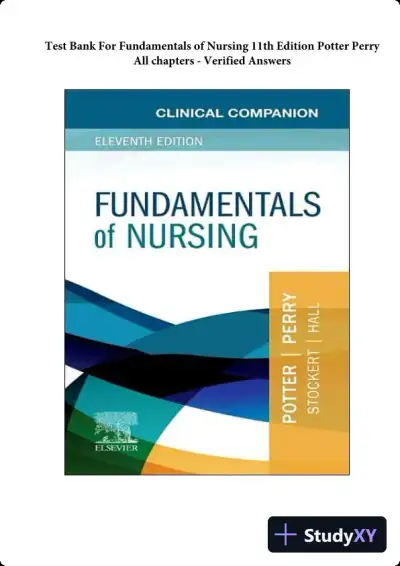 Exam Guides
Test Bank for Fundamentals of Nursing, 11th edition (Chapters 1-24)
Nursing
200 pages160downloadsFeb 2025 Class Notes
Class Notes for Clinical Nursing Skills: Basic to Advanced Skills, 9th Edition
Nursing
150 pages154downloadsFeb 2025 Class Notes
Class Notes for Child Health Nursing, 3rd Edition
Nursing
861 pages154downloadsFeb 2025 Class Notes
Class Notes for Principles of Pediatric Nursing Caring for Children, 6th Edition
Nursing
191 pages152downloadsFeb 2025
Study this document with CramX
Once it is in your library, every tool can work from it.