

Test Bank For Medical-Surgical Nursing: Assessment And Management Of Clinical Problems, 8th Edition
- Nursing
- 707 pages
- Shared May 2025
Be exam-ready with Test Bank For Medical-Surgical Nursing: Assessment And Management Of Clinical Problems, 8th Edition, a guide filled with real exam questions and step-by-step solutions.
Preview 16 of 707 pages
See the first 16 pages exactly as they appear in the document.
Page 1 Read page 1 as text
Lewis: Medical-Surgical Nursing, 8th Edition Chapter 1: Contemporary Nursing Practice Test Bank MULTIPLE CHOICE 1. The nurse has admitted a patient with a new diagnosis of pneumonia and explained to the patient that together they will plan the patient’s care and set goals for discharge. The patient says, “How is that different from what the doctor does?” Which response by the nurse is most appropriate? a. “ The role of the nurse is to administer medications and other treatments prescribed by your b. “ The nurse’s job is to help the doctor by collecting data and communicating when there are c. “ Nurses perform many of the procedures done by physicians, but nurses are here in the hos time than doctors.” d. “ In addition to caring for you while you are sick, the nurses will assist you to develop an in to maintain your health.” ANS: D This response is consistent with the American Nurses Association (ANA) definition of nursing, which describes the role of nurses in promoting health. The other responses describe some of the dependent and collaborative functions of the nursing role but do not accurately describe the nurse’s role in the health care system. DIF: Cognitive Level: Comprehension REF: 3 TOP: Nursing Process: Implementation MSC: NCLEX: Safe and Effective Care Environment 2. When providing patient care using evidence-based practice, the nurse uses a. clinical judgment based on experience. b. evidence from a clinical research study. c. evidence - based guidelines in addition to clinical expertise. d. evaluation of data showing that the patient outcomes are met. ANS: C Evidence-based practice (EBP) is the use of the best research-based evidence combined with clinician expertise. Clinical judgment based on the nurse’s clinical experience is part of EBP, but clinical decision making also should incorporate current research and research-based guidelines. Evidence from one clinical research study does not provide an adequate substantiation for interventions. Evaluation of
Page 2 Page 3 Read page 3 as text
patient outcomes is important, but interventions should be based on research from randomized control studies with a large number of subjects. DIF: Cognitive Level: Comprehension REF: 6-8 TOP: Nursing Process: Planning MSC: NCLEX: Safe and Effective Care Environment 3. The nurse primarily uses the nursing process in the care of patients a. to explain nursing interventions to other health care professionals b. as a problem - solving tool to identify and treat patients’ health care needs c. as a scientific - based process of diagnosing the patient’s health care problems d. to establish nursing theory that incorporates the biopsychosocial nature of humans ANS: B The nursing process is a problem-solving approach to the identification and treatment of patients’ problems. Diagnosis is only one phase of the nursing process. The primary use of the nursing process is in patient care, not to establish nursing theory or explain nursing interventions to other health care professionals. DIF: Cognitive Level: Comprehension REF: 10 TOP: Nursing Process: Implementation MSC: NCLEX: Safe and Effective Care Environment 4. The nurse plans an every 2-hour turning schedule to prevent skin breakdown for a critically ill patient in the intensive care unit. In this case, the nursing action is considered to be a. dependent. b. cooperative. c. independent. d. collaborative. ANS: D When implementing collaborative nursing actions, the nurse is responsible primarily for monitoring for complications of acute illness or providing care to prevent or treat complications. Independent nursing actions are focused on health promotion, illness prevention, and patient advocacy. A dependent action would require a physician order to implement. Cooperative nursing functions are not described as one of the formal nursing functions. DIF: Cognitive Level: Application REF: 10-11 TOP: Nursing Process: Implementation MSC: NCLEX: Safe and Effective Care Environment
Page 4 Read page 4 as text
5. A patient who has been admitted to the hospital for surgery tells the nurse, “I do not feel right about leaving my children with my neighbor.” Which action should the nurse take next? a. Rea ssure the patient that these feelings are common for parents. b. Have the patient call the children to ensure that they are doing well. c. Call the neighbor to determine whether adequate childcare is being provided. d. Gather more data about the patient’s feelings about the childcare arrangements. ANS: D Since a complete assessment is necessary in order to identify a problem and choose an appropriate intervention, the nurse’s first action should be to obtain more information. The other actions may be appropriate, but more assessment is needed before the best intervention can be chosen. DIF: Cognitive Level: Application REF: 11 TOP: Nursing Process: Assessment MSC: NCLEX: Psychosocial Integrity 6. A patient with a stroke is paralyzed on the left side of the body and has developed a pressure ulcer on the left hip. The best nursing diagnosis for this patient is a. impaired physical mobility related to left - sided paralysis. b. risk for impaired tissue integrity related to left - sided weakness. c. im paired skin integrity related to altered circulation and pressure. d. ineffective tissue perfusion related to inability to move independently. ANS: C The patient’s major problem is the impaired skin integrity as demonstrated by the presence of a pressure ulcer. The nurse is able to treat the cause of altered circulation and pressure by frequently repositioning the patient. Although left-sided weakness is a problem for the patient, the nurse cannot treat the weakness. The “risk for” diagnosis is not appropriate for this patient, who already has impaired tissue integrity. The patient does have ineffective tissue perfusion, but the impaired skin integrity diagnosis indicates more clearly what the health problem is. DIF: Cognitive Level: Application REF: 11 TOP: Nursing Process: Diagnosis MSC: NCLEX: Physiological Integrity
Page 5 Read page 5 as text
7. A patient with an infection has a nursing diagnosis of deficient fluid volume related to excessive diaphoresis. An appropriate patient outcome identified by the nurse is that the a. patient has a balanced intake and output. b. patient’s bedding is changed when it becomes damp. c. patient understands the need for increased fluid intake. d. patient’s skin remains cool and dry throughout hospitalization. ANS: A This statement gives measurable data showing resolution of the problem of deficient fluid volume that was identified in the nursing diagnosis statement. The other statements would not indicate that the problem of deficient fluid volume was resolved. DIF: Cognitive Level: Application REF: 13 TOP: Nursing Process: Planning MSC: NCLEX: Physiological Integrity 8. A nursing activity that is carried out during the evaluation phase of the nursing process is a. determining if interventions have been effective in meeting patient outcome s. b. documenting the nursing care plan in the progress notes in the medical record. c. deciding whether the patient’s health problems have been completely resolved. d. asking the patient to evaluate whether the nursing care provided was satisfactory. ANS: A Evaluation consists of determining whether the desired patient outcomes have been met and whether the nursing interventions were appropriate. The other responses do not describe the evaluation phase. DIF: Cognitive Level: Comprehension REF: 16 TOP: Nursing Process: Evaluation MSC: NCLEX: Safe and Effective Care Environment 9. During the assessment phase of the nursing process, the nurse a. obtains data with which to diagnose patient problems. b. uses patient data to develop priority nursing diagnoses. c. teaches interventions to relieve patient health problems. d. helps the patient identify realistic outcomes to health problems. ANS: A
Page 6 Read page 6 as text
During the assessment phase, the nurse gathers information about the patient. The other responses are examples of the intervention, diagnosis, and planning phases of the nursing process. DIF: Cognitive Level: Knowledge REF: 11 TOP: Nursing Process: Assessment MSC: NCLEX: Safe and Effective Care Environment 10. An example of a correctly written nursing diagnosis statement is a. altered tissue perfusion related to heart failure. b. risk for impaired tissue integrity related to sacral redness. c. ineffective coping related to response to biopsy test results. d. altered urinary elimination related to urinary tract infection. ANS: C This diagnosis statement includes a NANDA nursing diagnosis and an etiology that describes a patient’s response to a health problem that can be treated by nursing. The use of a medical diagnosis (as in the responses beginning “Alt ered tissue perfusion” and “Altered urinary elimination”) is not appropriate. The response beginning “Risk for impaired tissue integrity” uses the defining characteristics as the etiology. DIF: Cognitive Level: Comprehension REF: 11-13 TOP: Nursing Process: Diagnosis MSC: NCLEX: Safe and Effective Care Environment 11. The nurse writes a complete nursing diagnosis statement by including a. a problem and the suggested patient goals or outcomes. b. a problem, its cause, and objective data that support the pro blem. c. a problem with all its possible causes and the planned interventions. d. a problem with its etiology and the signs and symptoms of the problem. ANS: D The PES format is used when writing nursing diagnoses. The subjective, as well as objective, data should be included in the defining characteristics. Interventions and outcomes are not included in the nursing diagnosis statement. DIF: Cognitive Level: Knowledge REF: 11-13 TOP: Nursing Process: Diagnosis MSC: NCLEX: Safe and Effective Care Environment 12. Using the Situation-Background-Assessment-Recommendation (SBAR) format, in which order should the nurse make these statements to communicate a change in patient status to a health care provider?
Page 7 Read page 7 as text
a. Mr. A was admitted 2 days ago with heart failure a nd has been receiving furosemide (Lasix but his urine output has been low. b. I think that he needs to be evaluated immediately and may need intubation and mechanical c. This is the nurse on the surgical unit. I am calling about Mr. A in room 3. After assessing h concerned about his shortness of breath. d. Today, he has crackles audible throughout the posterior chest and his O2 saturation is 89% very unstable. ANS: C A, D, B The order of the nurse’s statements follows the SBAR format. DIF: Cognitive Level: Application REF: 5-6 TOP: Nursing Process: Implementation MSC: NCLEX: Safe and Effective Care Environment 13. Which of these nursing actions for the patient with heart failure is appropriate for the nurse to delegate to experienced nursing assistive personnel (NAP)? a. Assess for shortness of breath or fatigue after ambulation. b. Instruct the patient about the need to alternate activity and rest. c. Obtain the patient’s blood pressure and pulse rate after ambulation. d. Determine whether the patient is ready to increase the activity level. ANS: C NAP education includes accurate vital sign measurement. Assessment and patient teaching require RN education and scope of practice and cannot be delegated. DIF: Cognitive Level: Application REF: 15-16 | eFig. 1-1 OBJ: Special Questions: Delegation TOP: Nursing Process: Planning MSC: NCLEX: Safe and Effective Care Environment 14. Which action by a newly graduated RN working on the postsurgical unit indicates that more education about delegation and assignment is needed? a. The nurse delegates measurement of patient oral intake and urine output to NAP. b. The nurse delegates assessment of a patient’s bowel sounds to experienced NAP. c. The nurse assigns an LPN/LVN to administer oral medications to several patients. d. The nurse assigns a “float” RN from pediatrics to care for a patient with diabetes. ANS: B Assessment requires RN education and scope of practice and cannot be delegated to NAP. The other actions by the new RN are appropriate.
Page 8 Read page 8 as text
DIF: Cognitive Level: Application REF: 15-16 | eFig. 1-1 OBJ: Special Questions: Delegation TOP: Nursing Process: Planning MSC: NCLEX: Safe and Effective Care Environment 15. Which of these tasks is appropriate for the registered nurse to delegate to a licensed practical/vocational nurse? a. Perform a sterile dressing change for an infected wound. b. Complete the initial admission assessment and plan of care. c. Teach a patient about the effects of prescribed medications. d. Document patient teaching about a routine surgical procedure. ANS: A The education and scope of practice of the LPN/LVN include activities such as sterile dressing changes. Patient teaching and the initial assessment and development of the plan of care are nursing actions that require RN-level education and scope of practice. DIF: Cognitive Level: Comprehension REF: 15 OBJ: Special Questions: Delegation TOP: Nursing Process: Planning MSC: NCLEX: Safe and Effective Care Environment Chapter 2: Health Disparities and Culturally Competent Care Lewis: Medical-Surgical Nursing, 8th Edition Chapter 2: Health Disparities and Culturally Competent Care Test Bank MULTIPLE CHOICE 1. The nurse obtains information about all these areas during the health interview for a new patient. Which area will be the focus of patient teaching? a. Age and gender b. Hispanic/Latino ethnicity c. Family history of diabetes d. Refined carbohydrate intake ANS: D Behaviors are strongly linked to many health care problems. The patient’s carbohydrate intake is a behavior that the patient can change. The other information
Page 9 Read page 9 as text
will be useful as the nurse develops an individualized plan for improving the patient’s health, but will not be the focus of patient education. DIF: Cognitive Level: Application REF: 20-21 TOP: Nursing Process: Planning MSC: NCLEX: Health Promotion and Maintenance 2. When developing strategies to decrease health care disparities, the nurse working in a clinic located in a neighborhood with many Vietnamese individuals will include a. improving public transportation. b. obtaining low - cost medications. c. updating equipment and supplies for the clinic. d. educating staff about Vietnamese health beliefs. ANS: D Health care disparities are due to stereotyping, biases, and prejudice of health care providers; the nurse can decrease these through staff education. The other strategies also may be addressed by the nurse but will not impact health disparities. DIF: Cognitive Level: Application REF: 21-23 | 32 TOP: Nursing Process: Planning MSC: NCLEX: Health Promotion and Maintenance 3. Which information will the nurse need to collect when assessing the health status of a community? a. Average income of community members b. Morning traffic patterns in the community c. Median life expectancy for the community d. Occupations of individuals in the community ANS: C Health status is the aggregate of all health measures for individuals in a community and includes data such as life expectancy, birth and death rates, and mortality from various diseases. Although income, traffic patterns, and occupations are factors that impact a community’s health status, they are not health measures. DIF: Cognitive Level: Comprehension REF: 20-21 TOP: Nursing Process: Assessment MSC: NCLEX: Health Promotion and Maintenance 4. A family member of an elderly Hispanic patient admitted to the hospital tells the nurse that the patient has traditional beliefs about health and illness. The best action by the nurse is to
Page 10 Read page 10 as text
a. avoid asking any questions unless the patient initiates conversation. b. ask the patient whether it is important that cultural healers are contacted. c. explain the usual hospital routines for meal times, care, and family visits. d. obtain further information about the patient’s cultural beliefs from the daughter. ANS: B Because the patient has traditional health care beliefs, it is appropriate for the nurse to ask whether the patient would like a visit by a curandero(a) or other cultural healers. There is no cultural reason for the nurse to avoid asking the patient questions, and questions may be necessary to obtain necessary health information. The patient (rather than the daughter) should be consulted about personal cultural beliefs. The hospital routines for meals, care, and visits should be adapted to the patient’s preferences rather than expecting the patient to adapt to the hospital schedule. DIF: Cognitive Level: Application REF: 26 TOP: Nursing Process: Implementation MSC: NCLEX: Psychosocial Integrity 5. When caring for a patient who is Native American, the best initial action by the nurse is to a. avoid all eye contact with the patient. b. observe the patient’s use of eye contact. c. look directly at the patient when interacting. d. ask the family about the patient’s cultural beliefs. ANS: B Observation of the patient’s use of eye contact will be most useful in determining the best way to communicate effectively with the patient. Looking directly at the patient or avoiding eye contact may be appropriate, depending on the patient’s individual cultural beliefs. The nurse should assess the patient, rather than asking family members about the patient’s beliefs. DIF: Cognitive Level: Application REF: 24 | 27-28 TOP: Nursing Process: Implementation MSC: NCLEX: Psychosocial Integrity 6. A new RN graduate is assessing a newly admitted non – English-speaking Chinese patient who complains of severe headaches. The charge nurse should intervene if the new RN’s first action is to a. sit down at the bed side.
Page 11 Read page 11 as text
b. palpate the patient’s scalp. c. call for a medical interpreter. d. avoid eye contact with the patient. ANS: B Many people of Asian ethnicity believe that touching a person’s head is disrespectful; the RN should ask permission before touching the patient’s head. The other actions are appropriate. DIF: Cognitive Level: Application REF: 29 TOP: Nursing Process: Implementation MSC: NCLEX: Psychosocial Integrity 7. If an interpreter is not available when a patient speaks a language different from the nurse’s language, it is appropriate for the nurse to a. use specific medical terms in the Latin form. b. talk slowly so that each word is clearly heard. c. repeat important words so that the patient recognizes their importance. d. use simple gestures to demonstrate meaning while talking to the patient. ANS: D The use of gestures will enable some information to be communicated to the patient. The other actions will not improve communication with the patient. DIF: Cognitive Level: Comprehension REF: 34 TOP: Nursing Process: Implementation MSC: NCLEX: Psychosocial Integrity 8. When planning care for a hospitalized patient who uses culturally based treatments, the most appropriate action by the nurse is to a. coordinate the use of folk treatments with ordered medical therapies. b. discourage the use of culturally based treatments for Western diseases. c. teach the patient that folk remedies will interfere with Western treatments. d. ask the patient to discontinue the cultural treatments during hospitalization. ANS: A Many culturally based therapies can be accommodated along with the use of Western treatments and medications. The nurse should attempt to use both traditional folk treatments and the ordered Western therapies as much as possible. Some culturally based treatments can be effective in treating “Western” diseases. Not all folk remedies
Page 12 Read page 12 as text
interfere with Western therapies. It may be appropriate for the patient to continue some culturally based treatments while he or she is hospitalized. DIF: Cognitive Level: Comprehension REF: 30-31 TOP: Nursing Process: Planning MSC: NCLEX: Psychosocial Integrity 9. The best example of culturally appropriate nursing care when caring for a newly admitted patient is a. having family members provide most of the patient’s personal care. b. maintaining a personal space of at least 2 feet when assessing the patient. c. asking permission before touching a patient during the physical assessment. d. considering the patient’s ethnicity as the most important facto r in planning care. ANS: C Many cultures consider it disrespectful to touch a patient without asking permission, so asking a patient for permission is always culturally appropriate. The other actions may be appropriate for some patients but are not appropriate across all cultural groups or for all individual patients. DIF: Cognitive Level: Comprehension REF: 29 TOP: Nursing Process: Implementation MSC: NCLEX: Psychosocial Integrity 10. While talking with the nursing supervisor, a staff nurse expresses frustration that a Native American patient always has several family members at the bedside. The most appropriate action by the nursing supervisor is to a. remind the nurse that family support is important to this family and patient. b. have the nurse explain to the family that too many visitors will tire the patient. c. suggest that the nurse ask family members to leave the room during patient care. d. ask about the nurse’s personal beliefs about family support during hospitalization. ANS: D The first step in providing culturally competent care is to understand one’s own beliefs and values related to health and health care. Asking the nurse about personal beliefs will help to achieve this step. Reminding the nurse that this cultural practice is important to the family and patient will not decrease the nurse’s frustration. The remaining responses (suggest that the nurse ask family members to leave the room, and have the nurse explain to family that too many visitors will tire the patient) are not culturally appropriate for this patient.
Page 13 Read page 13 as text
DIF: Cognitive Level: Application REF: 31 TOP: Nursing Process: Implementation MSC: NCLEX: Psychosocial Integrity 11. An 82-year-old Asian American patient tells the nurse that she has lived in the United States for 50 years. The patient speaks English but lives in a predominantly Asian neighborhood. The nurse will need to a. include a folk healer when planning the patient’s care. b. ask the patient about any special cultural beliefs or practices. c. avoid making direct eye contact with the patient during care. d. involve the patient’s oldest son in making health care decisions. ANS: B Further assessment of the patient’s health care preferences is needed before making further plans for culturally appropriate care. The other responses indicate stereotyping of the patient, based on ethnicity, and would not be appropriate initial actions. DIF: Cognitive Level: Application REF: 25 | 32 TOP: Nursing Process: Planning MSC: NCLEX: Psychosocial Integrity 12. When planning health care for a community with a large number of recent immigrants from China, the most important intervention for the nurse to include is a. pregnancy testing. b. tuberculosis screening. c. contraceptive teaching. d. colonoscopy information. ANS: B Tuberculosis (TB) is endemic in many parts of Asia, and the incidence of TB is much higher in immigrants from China than in the general U.S. population. Teaching about contraceptive use, colonoscopy, and testing for pregnancy also may be appropriate for some patients but is not generally indicated for all members of this community. DIF: Cognitive Level: Application REF: 29-30 TOP: Nursing Process: Planning MSC: NCLEX: Physiological Integrity 13. When doing an admission assessment for a patient, the nurse notices that the patient pauses before answering questions about the health history. The most appropriate action by the nurse is to a. stop doing the assessment and return later.
Page 14 Read page 14 as text
b. wait for the patient to answer the questions. c. ask the patient why the questions require so much time to answer. d. give the patient an assessment form listing the questions and a pen. ANS: B Patients from some cultures take time to consider a question carefully before answering. The nurse will show respect for the patient and help develop a trusting relationship by allowing the patient time to give a thoughtful answer. Asking the patient why the answers are taking so much time, stopping the assessment, and handing the patient a form indicate that the nurse does not have time for the patient. DIF: Cognitive Level: Application REF: 28 TOP: Nursing Process: Assessment MSC: NCLEX: Psychosocial Integrity 14. Which of these strategies should be a priority when the nurse is planning care for a hypertensive patient who is uninsured? a. Follow evidence - based national guidelines. b. Assist with dietary changes as the first action. c. Teach about the impact of exercise on hypertension. d. Obtain less expensive antihypertensive medications. ANS: A The use of standardized evidence-based guidelines will reduce the incidence of health care disparities among various socioeconomic groups. The other strategies also may be appropriate, but the priority concern should be that the patient receives care that meets the accepted standard. DIF: Cognitive Level: Application REF: 32 OBJ: Special Questions: Prioritization TOP: Nursing Process: Planning MSC: NCLEX: Health Promotion and Maintenance 15. A Hispanic patient complains of abdominal cramping caused by empacho. The nurse’s first action should be to a. ask the patient what treatments are likely to help. b. give the patient medication to decrease the cramping. c. massage the patient’s abdomen until the pain is gone. d. offer to contact a curandero(a) to make a visit to the patient. ANS: A
Page 15 Read page 15 as text
Further assessment of the patient’s cultural beliefs is appropriate before implementing any interventions for a culture-bound syndrome such as empacho. Although medication, a visit by a curandero(a), or massage may be helpful, more information about the patient’s beliefs is needed to determine which intervention(s) will be most helpful. DIF: Cognitive Level: Application REF: 25 | 31-32 OBJ: Special Questions: Prioritization TOP: Nursing Process: Assessment MSC: NCLEX: Psychosocial Integrity 16. When performing a cultural assessment with a patient of a different culture, the nurse’s first action should be to a. wait until a cultural healer is available to help with the assessment. b. obtain a list of any cultural remedies that the patient currently uses. c. ask the patient about any affiliation with a particular cultural group. d. tell the patient what the nurse already knows about the patient’s culture. ANS: C An early step in performing a cultural assessment is to determine whether the patient feels an affiliation with any cultural group. The other actions may be appropriate if the patient does identify with a particular culture. DIF: Cognitive Level: Application REF: 32 OBJ: Special Questions: Prioritization TOP: Nursing Process: Assessment MSC: NCLEX: Psychosocial Integrity 17. The nurse working in a clinic in a primarily African American community notes a higher incidence of uncontrolled hypertension in clinic patients than the national average. To correct this health disparity, which action should the nurse take first? a. Initiate a regular home - visit program by nurses working at the clinic. b. Schedule teaching sessions about hypertension at community events. c. Assess the perceptions of community members about the care at the clinic. d. Obtain low - cost antihypertensive drugs using funding from government grants. ANS: C Before other actions are taken, additional assessment data are needed to determine the reason for the disparity. The other actions also may be appropriate, but additional assessment is needed before the next action is selected.
Page 16 Read page 16 as text
DIF: Cognitive Level: Application REF: 31-32 OBJ: Special Questions: Prioritization TOP: Nursing Process: Assessment MSC: NCLEX: Health Promotion and Maintenance Chapter 3: Health History and Physical Examination Lewis: Medical-Surgical Nursing, 8th Edition Chapter 3: Health History and Physical Examination Test Bank MULTIPLE CHOICE 1. A patient who is having difficulty breathing is admitted to the hospital. The best approach for the nurse to use to obtain a complete health history is to a. obtain subjective data about the patient from family members. b. omit subjective data collection and obtain the physical examination. c. use the health care provider’s medical history to obtain subjective data. d. schedule several short sessions with the patient to gather subjective data. ANS: D In an emergency situation, the nurse may need to ask only the most pertinent questions for a specific problem and obtain more information later. A complete health history will include subjective information that is not available in the health care provider’s medical history. Family members may be able to provide some subjective data, but only the patient will be able to give subjective information about the shortness of breath. Since the subjective data about the patient’s respiratory status will be essential, obtaining the physical examination alone will not provide sufficient information. DIF: Cognitive Level: Application REF: 38 TOP: Nursing Process: Assessment MSC: NCLEX: Health Promotion and Maintenance 2. Immediate surgery is planned for a patient with acute abdominal pain. The question used by the nurse that will elicit the most complete information about the patient’s coping-stress tolerance pattern is a. “ Can you tell me how intense your pain is now?” b. “ What do you think caused this abdominal pain?”
691 more pages in the full document
Unlock it once and it stays in your library, ready to chat with or turn into flashcards.
Unlock the full documentMore Nursing study materials
See all Exam Guides
Test Bank For Medical-Surgical Nursing: Assessment and Management of Clinical Problems, 8th Edition
Nursing
707 pages112downloadsFeb 2025 Exam Guides
Test Bank For Medical-Surgical Nursing: Assessment and Management of Clinical Problems, 9th Edition
Nursing
998 pages109downloadsFeb 2025 Exam Guides
Test Bank for Critical Care Nursing: Diagnosis and Management, 9th Edition (Chapters 1-27)
Nursing
299 pages167downloadsFeb 2025 Class Notes
An Invitation To Health, Third Canadian Edition Lecture Notes
Nursing
439 pages163downloadsFeb 2025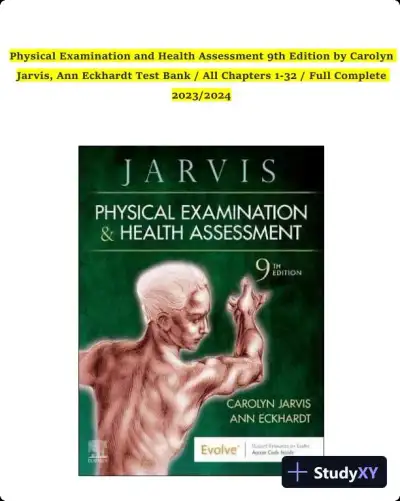 Exam Guides
Test Bank for Physical Examination and Health Assessment, 9th Edition (Chapters 1-15)
Nursing
200 pages161downloadsFeb 2025 Exam Guides
Focus on Nursing Pharmacology Seventh, North American Edition Test Bank
Nursing
1144 pages160downloadsFeb 2025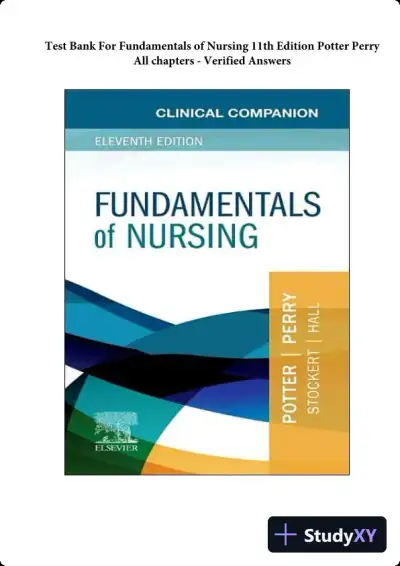 Exam Guides
Test Bank for Fundamentals of Nursing, 11th edition (Chapters 1-24)
Nursing
200 pages160downloadsFeb 2025 Class Notes
Class Notes for Child Health Nursing, 3rd Edition
Nursing
861 pages154downloadsFeb 2025
Study this document with CramX
Once it is in your library, every tool can work from it.