

Introduction to Materials Management 8th Edition Test Bank
- Operations Management
- 94 pages
- Shared May 2025
Develop strong exam strategies with Introduction to Materials Management 8th Edition Test Bank, a trusted guide packed with expert insights and sample problems.
Preview 16 of 94 pages
See the first 16 pages exactly as they appear in the document.
Page 1 Read page 1 as text
Exam Name___________________________________ MULTIPLE CHOICE. Choose the one alternative that best completes the statement or answers the question. 1) Which of the following statements is correct? 1) _______ A) The supply, production and distribution functions are part of a total system. B) Traditionally the supply - production - distribution functions have reported to different departments. C) Materials flow into an organization, are processed in some way and distributed to the consumer. D) All of the above are correct. 2) Manufacturing is important to the economy because: 2) _______ A) it adds value to products. B) it generates wealth. C) it supports service industries. D) all of the above 3) Which of the following statements is true about the operating environment in which operations management functions? 3) _______ A) Price is more important than quality. B) Most organizations do not need to worry about competition. C) Customers are more demanding. D) Government regulation is not important for companies. 4) Which of the following statements is true regarding order winners? 4) _______ A) They are the same in every market. B) They are the same as order qualifiers, only better. C) They are present in every product. D) They persuade a company's customers to choose its product. 5) Which of the following strategies has the shortest delivery lead time and the least customer input? 5) _______ A) make - to - order B) make - to - stock C) configure - to - order D) assemble - to - order 6) Which of the following statements is true? 6) _______ A) The supply chain includes all activities and processes to provide a product or service to a customer. B) Material in the supply chain usually flows from producer to customer. C) The supply chain contains only one supplier. D) All of the above are true. E) A and B only are true. 7) Companies A and B supply company C, which supplies customers D and E. Which of the following statements is true? 7) _______ A) The supply chain for company C includes A, B, D, and E. B) The supply chain for company A includes B, C, D, and E. C) The supply chain for company B includes A, C, D and E. D) All of the above are true. 8) Which of the following statements is true? 8) _______ A) The elements of a supply chain are interdependent. B) Design information generally flows from customer to supplier.
Page 2 Page 3 Read page 3 as text
C) The basic elements of a supply chain are supply, production, and distribution. D) All of the above are true. 9) Delivery lead time for an engineer - to - order product includes which of the following? 9) _______ A) design, purchase, manufacture, assemble, ship B) design, manufacture, assemble, ship C) purchase, assemble, ship D) purchase, manufacture, assemble, ship 10) If a firm wishes to maximize profit, which of the following objectives are in conflict? I. Maximize customer service. II. Minimize production costs. III. Minimize inventory costs. IV. Minimize distribution costs. 10) ______ A) I and III only B) II and III only C) I, II and III D) I and II only 11) Which of the following statements are true? I. The conflict between marketing, finance and production centers on customer service, disruption to production, and inventory levels. II. Marketing's objectives can be met with higher inventories. III. Finance's objectives can be met with higher inventories. IV. Production's objectives can be met with higher inventories. 11) ______ A) I and II only are true B) I, II, III and IV are true C) I, II and III only are true D) I, II and IV only are true E) II, III and IV only are true 12) Which of the following is normally a major activity of materials management? I. Manufacturing planning and control II. Physical supply/distribution 12) ______ A) both I and II B) neither I nor II C) I only D) II only 13) The objective of materials management is to: I. provide the required level of customer service. II. maximize the use of the firm's resources. 13) ______ A) I only B) II only C) both I and II D) neither I nor II 14) Which of the following are primary activities of manufacturing planning and control? I. Production planning II. Implementation and control III. Inventory management 14) ______ A) I and III only B) II and III only C) I and II only D) I, II, and III 15) Which of the following is (are) input(s) to manufacturing planning and control? 15) ______ A) process description B) available facilities C) quantities to be produced D) product description E) All of the above are inputs. 16) Which of the following is NOT an activity of physical supply/distribution? 16) ______
Page 4 Read page 4 as text
A) packaging B) factory inventory C) transportation D) warehousing E) material handling 17) Materials management can be considered a balancing act because: I. there are trade - offs between customer service and the cost of providing the service. II. priority and capacity must be balanced. 17) ______ A) neither I nor II B) II only C) I only D) I and II 18) If the cost of manufacturing (direct labor and materials) is 50% of sales and profit is 15% of sales, what would the profit percentage be if the direct costs of manufacturing was reduced from 50% to 47%? 18) ______ A) 18% B) 12% C) 15% D) 6% E) 3% 19) Which of the following are generally considered overall objectives of an organization? I. Providing good customer service II. Maintaining low levels of inventory investment III. Optimizing use of resources IV. Providing sufficient return on investment 19) ______ A) I, II and III only B) I, III and IV only C) I and II only D) I, II, III and IV 20) The purpose of the materials management concept is: I. to manage materials in a production operation. II. to have purchasing support the needs of production. III. to have production support the needs of purchasing. 20) ______ A) I and II only B) I and III only C) I, II and III D) II and III only 21) Making a pizza at a fast - food restaurant would be considered a form of: 21) ______ A) make to order. B) make to stock. C) engineer to order. D) assemble to order. 22) Metrics in a supply chain are: 22) ______ A) measurements of performance. B) not used on transportation. C) a charge passed on to customers. D) governed by the International Metric Commission. 23) Performance measures in a supply chain: 23) ______ A) are viewed mostly by finance. B) must be measurements of one parameter only. C) should be objective. D) concentrate on cost only. E) are not used once a process is automated. 24) Which statement is true? 24) ______ A) Performance standards are set by the supplier. B) Performance measurements show how well you did. C) Performance standards set the goal. D) Both B and C are correct.
Page 5 Read page 5 as text
25) Savings in the supply chain mostly are the result of: 25) ______ A) members having clout with suppliers. B) cutting cost after the design phase. C) members in the chain sharing information. D) sticking with local competition. E) being able to ship in larger quantities. 26) Postponement is best described as: 26) ______ A) delaying payment to a supplier until the goods have been sold. B) delaying the removal of inventory until the last possible moment. C) delaying the change to the BOM until the old components have been used up. D) delaying the customer - specific differentiation until the last possible moment. 27) Postponement is best used with items that: 27) ______ A) have suppliers with poor delivery performance. B) are standardized and have short lead times. C) have a long lead time and many product configurations. D) experience a yield that you won't know until the product is complete. 28) A channel master in a supply chain: 28) ______ A) controls the raw material supplies in a supply chain. B) initiates integration of a supply chain. C) is the largest member of a supply chain. D) is the final customer in a supply chain. 29) The process of managing the recovery, recycling and reuse of material is called: 29) ______ A) Heijunka. B) Kaizen. C) reverse logistics. D) return material authorization. 30) If the manufacturing lead time of an item is reduced by 50%, the work in process inventory: 30) ______ A) does not change. B) is reduced by approximately 50%. C) is reduced by approximately 70%. D) More information is needed for this problem.
Page 6 Read page 6 as text
1) D 2) D 3) C 4) D 5) B 6) E 7) A 8) D 9) A 10) C 11) D 12) A 13) C 14) D 15) E 16) B 17) D 18) A 19) D 20) A 21) D 22) A 23) C 24) D 25) C 26) D 27) C 28) B 29) C 30) B
Page 7 Read page 7 as text
Exam Name___________________________________ MULTIPLE CHOICE. Choose the one alternative that best completes the statement or answers the question. 1) The ability of manufacturing to produce goods and services is called: 1) _______ A) production planning. B) capacity. C) routing. D) scheduling. E) none of the above 2) Priority in production planning relates to: 2) _______ A) capacity. B) an objective of the firm. C) how much of what is needed and when. D) routing. E) none of the above 3) Which of the following is an input to the production plan? 3) _______ A) financial plan B) strategic business plan C) market plan D) engineering plan E) All of the above are inputs. 4) Which of the following plans has the longest planning horizon and the least level of detail? 4) _______ A) production plan B) master production schedule C) strategic business plan D) All of the above have the same level of detail. E) none of the above 5) In terms of INCREASING level of detail, which is the correct sequence of activities? I. Material requirements planning II. Master production scheduling III. Production planning 5) _______ A) I, II and III B) II, I, and III C) II, III, and I D) I, III, and II E) III, II, and I 6) Over the time span of the production plan, which of the following can usually be varied to change capacity? 6) _______ A) work force B) inventories C) plant and equipment D) all of the above E) A and B 7) Which of the following is a characteristic of a production plan? 7) _______ A) The only objective is to have an efficient plant.
Page 8 Read page 8 as text
B) Time horizons are five years. C) The production plan is for individual items. D) All of the above are characteristics of a production plan. E) None of the above is characteristic of a production plan. 8) Determining the need for labor, machines, and physical resources to meet the production objectives of the firm is called: 8) _______ A) capacity planning. B) production control. C) production planning. D) all of the above E) none of the above 9) The function of setting the limits or levels of manufacturing operations based on the market plan and resource availability is called: 9) _______ A) production activity level. B) production planning. C) capacity planning. D) all of the above E) none of the above 10) A statement of a schedule of requirements for individual end items is called: 10) ______ A) a capacity plan. B) a material requirements plan. C) a master production schedule. D) a production plan. E) none of the above 11) Which of the following statements is true regarding production planning? 11) ______ A) A translation must be made from product demand to capacity demand. B) Product groups based on similarity of manufacturing process should be used in planning. C) A high level of detail is not needed. D) All of the above are true. E) None of the above is true. 12) Which of the following statements is true about sales and operations planning? 12) ______ A) It has no effect on inventory levels. B) It provides a means of updating the material requirements plan. C) It includes only the marketing and production plans. D) It is usually updated on a monthly basis. 13) Which of the following are characteristics of an MRPII system? I. It incorporates the plans of marketing, production and finance. II. It is a fully integrated planning and control system. III. It has feedback from the bottom up. 13) ______ A) I only B) II only C) III only D) I, II and III 14) For the purposes of production planning, product groups should be established on the basis of: 14) ______ A) market segments. B) the availability of materials. C) the availability of machinery. D) similarity of manufacturing process.
Page 9 Read page 9 as text
E) all of the above 15) Which of the following is a basic strategy in developing a production plan? 15) ______ A) hybrid strategy B) production leveling C) chase strategy D) A and B above E) B and C above 16) A production planning strategy which turns away extra demand is called: 16) ______ A) demand matching. B) hybrid strategy. C) production leveling. D) all of the above E) none of the above 17) Which basic production planning strategy will build inventory and avoid the costs of excess capacity? 17) ______ A) demand matching (chase) B) subcontracting C) production leveling D) all of the above E) none of the above 18) Which basic production planning strategy avoids hiring and layoff costs and the costs of excess capacity? 18) ______ A) subcontracting B) demand matching C) operation smoothing D) all of the above E) none of the above 19) If the opening inventory is 100 units, the sales are 500 units and the ending inventory is 200 units, then manufacturing must produce: 19) ______ A) 400 units. B) 600 units. C) 500 units. D) 300 units. E) none of the above 20) Over a 10 - week period the cumulative sales are forecast at 10,000 units, the opening inventory is 200 units and the closing inventory is to be 100 units. What should be the weekly planned production for level production? 20) ______ A) 1000 B) 990 C) 1010 D) 1030 E) none of the above 21) Firms will generally make - to - stock when: 21) ______ A) delivery lead times are long. B) there are many product options.
Page 10 Read page 10 as text
C) demand is unpredictable. D) all of the above E) none of the above 22) Firms will generally make - to - order when: 22) ______ A) products are produced to customer specifications. B) product is expensive to make and store. C) there are many product options. D) all of the above E) none of the above 23) Which of the following information is needed to develop a make - to - stock production plan? I. Forecast by time period for the production plan II. Opening inventory III. Opening backlog of customer orders IV. Desired ending inventory 23) ______ A) I, III and IV B) II, III and IV C) I, II and IV D) I, II and III E) none of the above 24) If the old backlog was 200 units, the forecast for the next period is 500 units, and production for the next period is 600 units, what will be the backlog at the end of the next period? 24) ______ A) 100 units B) 200 units C) 300 units D) 700 units E) 800 units 25) Which of the following is concerned with long - term planning of manufacturing activity? 25) ______ A) sales and operations planning B) master planning C) production activity control D) master production scheduling E) MRP 26) Which of the following is NOT a rule of Sales and Operations Planning? 26) ______ A) A planning horizon must include new product development time. B) Performance review periods to be compared should be decided. C) Planning units of measure need to be decided. D) Product groups need not be decided. 27) Which of the following is a complete closed loop planning system that develops plans for all materials and operations? 27) ______ A) enterprise resource planning B) supply chain management C) material requirements planning D) capacity requirements planning 28) Which of the following represents the major reason for developing the production plan as part of Sales and Operations Planning? 28) ______ A) to decide how to best produce exactly what is in the sales plan B) to plan the acquisi tion of new manufacturing facilities C) to plan a schedule for the production of individual products D) to plan for resources required to produce to the agreed plan 29) Which of the following is true? I. The strategic pla II.
Page 11 Read page 11 as text
The strategic business plan is stated in financial terms. III. The strategic business plan is develope d from the strategic plan. 29) ___ ___ A) I and III only B) I, II, and III C) I and II only D) II and III only E) None is correct. 30) Which following best represents the concept of sustainability? 30) ______ A) the ability to maintain the supplier base B) the ability to make long production runs C) the ability to continue operation in the long term D) the ability to train labor effectively 31) When a company establishes a program to recycle or reuse products discarded or returned from customers it is typically called which of the following? 31) ______ A) reverse supply chain B) customer servicing C) product return contract D) resupply planning 32) Which of the following is most true about Sales and Operations Planning? 32) ______ A) It usually is produced only once a year. B) It usually includes all functions at the executive level. C) It is typically done in financial terms. D) It usually includes only sales and manufacturing people.
Page 12 Read page 12 as text
1) B 2) C 3) E 4) C 5) E 6) E 7) E 8) A 9) B 10) C 11) D 12) D 13) D 14) D 15) E 16) E 17) C 18) A 19) B 20) B 21) E 22) D 23) C 24) A 25) A 26) D 27) A 28) D 29) D 30) C 31) A 32) B
Page 13 Read page 13 as text
Exam Name___________________________________ MULTIPLE CHOICE. Choose the one alternative that best completes the statement or answers the question. 1) The information needed to develop a master production schedule will be obtained from: 1) _______ A) the production plan. B) inventory levels for individual end items. C) the forecast of individual end items. D) all of the above E) none of the above 2) The MPS is a vital link the production planning system because it: I. keeps priorities valid. II. forms the basis for determining the capacity needed. III. is input to the material requirements plan. IV. is input to the production plan. 2) _______ A) I, II and III only B) II, III and IV only C) II, IIII and IV only D) I, II and IV only E) I, II, III and IV 3) The MPS: 3) _______ A) is an agreed - upon plan between production and marketing. B) works with individual end products. C) facilitates order promising. D) all of the above E) none of the above 4) The functions of a master production schedule are to: I. plan material components. II. plan capacity requirements. III. keep priorities valid. 4) _______ A) I, II and III B) I and III only C) II and III only D) I and II only E) None of the above is a function of the MPS. 5) Which of the following are objectives of an MPS? I. Maintain the desired level of customer service. II. Keep the sales department happy. III. Make the best use of material, labor and equipment. IV. Maintain inventory investment as required. 5) _______ A) Only I and II are objectives. B) Only I, III and IV are objectives. C) Only II, III and IV are objectives. D) Only I is an objective. E) Only I, II and III are objectives. 6) The process of checking the MPS against available capacity is called: 6) _______ A) capacity planning.
Page 14 Read page 14 as text
B) shop - floor control. C) capacity control. D) process checking. E) rough - cut capacity planning. 7) In an assemble - to - order company, at which level should master scheduling take place? 7) _______ A) the raw material/component level B) the end item level C) the component/subassembly level D) It does not matter, any level will do. E) none of the above levels 8) The final assembly schedule (FAS): 8) _______ A) is really a synonym for the master production schedule. B) schedules customer orders as they are received based on components planned in the MPS. C) is basically the same as the MPS for a make - to - order product. D) A and B above E) None of the above is true. 9) Which of the following statements is true regarding the master production schedule? 9) _______ A) If it is poorly done, we can expect past - due schedules and unreliable delivery promises. B) It is an agreed - upon plan between marketing and manufacturing. C) It is a plan for specific end items that manufacturing expects to make over some period in the future. D) All of the above are true. E) None of the above is true. 10) The portion of inventory or production NOT committed to customer orders is called: 10) ______ A) waste. B) excess capacity. C) available to promise. D) free stock. E) excess production. 11) If there are customer orders, the projected available is based on: 11) ______ A) forecast demand. B) customer orders. C) the opinion of the planner. D) the greater of forecast demand and customer orders. 12) Which of the following is (are) true about time fences in a master production schedule system? I. Changes far out in the planning horizon can be made with little or no cost to manufacturing. II. In the "frozen zone," capacity and materials are committed to specific orders. III. Changes in the near future on the planning horizon are less costly to make than changes far out. 12) ______ A) I and III only B) I and II only C) II and III only D) I, II, and III E) none of the above 13) Which of the following is NOT an input to the master production schedule? 13) ______
Page 15 Read page 15 as text
A) production plan B) sales forecast for items C) final assembly schedule D) customer orders E) current inventory status 14) The MPS is constrained by: I. the availability of material. II. available capacity. III. inventory policies. IV. production plan. 14) ______ A) I, II, III and IV B) II and III only C) I, II, III only D) I and II only E) none of the above 15) Given the following data, complete the table. There are 30 on hand. Order quantity is 60 units. Week 1 2 3 4 Forecast 20 30 50 20 Projected available Scheduled receipts 15) ______ A) The projected available in week 4 is 30. B) The projected available in week 3 is 40. C) There is a scheduled receipt in week 4. D) A and B are true. E) B and C are true. 16) Given the following table, calculate the ATP. There are 50 units on hand. Week 1 2 3 4 5 Customer orders 20 20 15 30 10 Scheduled receipts 50 ATP 16) ______ A) The ATP in week one is 10. B) The ATP in week one is 30. C) The ATP in week one is 5. D) The ATP in week three is 35. E) The ATP in week two is 10. 17) The time span for which the master schedule extends is called the: 17) ______ A) forecast period. B) time fence. C) planning horizon. D) time bucket. E) none of the above 18) The final assembly schedule as different from the master schedule is primarily used: 18) ______ A) in a make - to - stock environment. B) in a assemble - to - order environment. C) in either environment. D) in neither environment. 19) Which of the following is true concerning the demand time fence? 19) ______ A) The demand time fence is longer than the planning time fence.
Page 16 Read page 16 as text
B) No more orders are allowed inside the demand time fence. C) The demand time fence represents the cumulative lead time of the product. D) Beyond the time fence, only forecasts are considered. E) Inside the time fence, only customer orders are considered for planning. 20) Which of the following is the term applied to a master schedule for a purchased item? 20) ______ A) supplier scheduling B) master scheduling C) purchase order D) material scheduling 21) Which of the following is a contract between manufacturing and marketing? 21) ______ A) forecast B) master schedule C) customer order D) production plan 22) Master scheduling is a balancing act between which of the following? 22) ______ A) supply and demand B) forecast and inventory C) inventory and customer service D) forecasts and orders 23) Which of the following modules follows the Sales and Operations Plan? 23) ______ A) master scheduling B) material requirements planning C) business planning D) production planning 24) Shifting customer design decisions as far down the supply chain as possible is typically called which of the following? 24) ______ A) reverse supply chain B) postponement C) planning horizon D) planning time fence 25) A customer requests a new order in a period where there is inadequate material available in the available - to - promise (ATP) for that period, and the period is within the planning time fence. Which of the following is the best first course of action to take in such a situation? 25) ______ A) Increase the master schedule quantity for that period by enough to cover the order. B) Tell the customer they cannot have the order in that period. C) Shift the planning time fence inward. D) Look for additional material in an earlier ATP quantity.
78 more pages in the full document
Unlock it once and it stays in your library, ready to chat with or turn into flashcards.
Unlock the full documentMore Operations Management study materials
See all Textbook Guides
Solution Manual for Introduction to Materials Management, 8th Edition
Operations Management
44 pagesMay 2025 Class Notes
Revision Notes for Introduction to Materials Management, 8th Edition
Operations Management
44 pagesMay 2025 Textbook Guides
Solution Manual for Operations and Supply Chain Management, 14th Edition
Operations Management
342 pages133downloadsFeb 2025 Textbook Guides
Managing Quality: Integrating the Supply Chain, 6th Edition Solution Manual
Operations Management
262 pages115downloadsFeb 2025 Textbook Guides
Operations Management, (Mcgraw-hill Education Operations and Decision Sciences) 1st Edition Solution Manual
Operations Management
153 pages91downloadsFeb 2025 Textbook Guides
Solution Manual For Matching Supply with Demand: An Introduction to Operations Management, 4th Edition
Operations Management
76 pages36downloadsFeb 2025 Exam Guides
Operations Management, 5th Canadian Edition Test Bank
Operations Management
1208 pagesMay 2025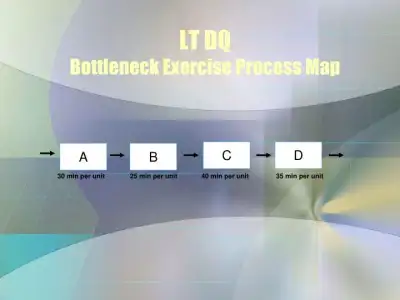 Class Notes
LT DQ Bottleneck Exercise Process Map
Operations Management
1 pageMay 2025
Study this document with CramX
Once it is in your library, every tool can work from it.