

Operations Management, 5th Canadian Edition Test Bank
- Operations Management
- 1208 pages
- Shared May 2025
Operations Management, 5th Canadian Edition Test Bank is your ultimate exam companion, providing you with all the tools necessary to succeed.
Preview 16 of 1208 pages
See the first 16 pages exactly as they appear in the document.
Page 1 Read page 1 as text
1 Student: ___________________________________________________________________________ 1. As a service business, the operations management activities of an airline company have nothing in common with the operations management activities within a bicycle manufacturing company. True False 2. Operations managers are responsible for managing activities and resources that produce goods and/or provide services. True False 3. Effectiveness refers to achieving intended goals whereas efficiency refers to minimizing cost and time. True False 4. Operations, marketing, and finance function independently of each other in most organizations. True False 5. The operations function exists only in firms that are goods - oriented. True False 6. Operations management pertains almost exclusively to the management of manufacturing operations. True False 7. Value - added refers to the cost of the inputs required to produce goods and services. True False 8. As long as a product is ready in advance of when customers demand it, the timing of when a product is manufactured does not influence the value - added. True False 9. Storing an item earlier than the scheduled delivery date is an example of a value adding activity. True False
Page 2 Page 3 Read page 3 as text
10. Management information systems (MIS) are concerned with providing management with the information it needs to effectively manage. True False 11. Operations management involves both system design and planning/control decisions. True False 12. System design decisions have very little impact on planning/control decisions. True False 13. An example of an operations control decision is the choice of location. True False 14. Scheduling jobs is a system design decision and not a planning decision. True False 15. Design decisions are usually strategic and long term, while planning decisions are tactical and medium term. True False 16. Managing inventory levels is considered a planning/control operations decision area. True False 17. A basic difference between manufacturing and service organizations is that services are action - oriented and manufacturing is goods - oriented. True False 18. Service involves a much higher degree of customer contact than the production of goods. True False 19. Service often requires a higher labour content, whereas the production of goods is more capital intensive. True False 20. Measurement of productivity in service is more straightforward than in goods production due to the high degree of uniformity of inputs. True False
Page 4 Read page 4 as text
21. Models are simplified representations of something and thus ignore important aspects of a situation. True False 22. Quantitative techniques are often quick and practical techniques for many decisions. True False 23. A systems approach emphasizes interrelationships among subsystems, but its main theme is that the whole is greater than the sum of its individual parts. True False 24. Queuing techniques are useful for analyzing situations in which waiting lines form. True False 25. It is essential to use the systems approach when something is being designed, redesigned, implemented, improved, or otherwise changed. True False 26. A systems approach is to concentrate on efficiency within a subsystem and thereby achieve overall efficiency. True False 27. Many operations management decisions can be described as trade - offs. True False 28. The Pareto phenomenon is one of the most important and pervasive concepts that can be applied at all levels of management. True False 29. Operations managers, who usually use quantitative approaches, have no responsibility to make ethical decisions. True False 30. Prior to the Industrial Revolution, goods were produced primarily by craftsmen or their apprentices using custom made parts. True False 31. Frederick Taylor is often referred to as the "father of scientific management". True False
Page 5 Read page 5 as text
32. The Human Relations Movement, which emphasized the importance of the human element in job design, was replaced by the more technical aspects of Scientific Management. True False 33. The moving assembly line introduced by Henry Ford is an example of the development of mass production based on large volumes of standardized goods produced using low or semi - skilled workers and highly specialized equipment. True False 34. The impact of globalization for manufacturing companies has been reduced reliance on long international supply chains because of the increasing cost to ship components and finished goods to foreign markets. True False 35. Operations management encompasses all of the following EXCEPT: A. buying materials. B. capacity planning. C. scheduling. D. motivating employees and training. E. preparing financial statements. 36. Which of the following is a reason for studying operations management? A. A large percentage of a company's expenses occur in the operations management activities that are at the core of all business organizations. B. Activities in all of the other areas of business organizations, such as accounting and marketing are interrelated with operations management activities. C. Many management jobs are in operations management - related areas, such as production planning, inventory management, and more. D. All of the choices are reasons. E. None of the choices are correct. 37. The three primary functions that exist in most business organizations are: A. manufacturing, production, and operations. B. operations, marketing, and finance. C. operations, accounting, and marketing. D. operations, production, and finance. E. none of the choices are correct.
Page 6 Read page 6 as text
38. The three major functions of business organizations: A. perform different but related activities. B. are related indirectly only. C. must work together, but not very closely. D. function independently of each other. E. perform similar and related activities. 39. Which of the following is not a type of service operations? A. Retail trade B. Transportation and warehousing C. Fabrication of metals D. Banking E. Hotels and restaurants 40. Measurements taken at various points in the transformation process for control purposes are called: A. plans. B. directions. C. controls. D. feedback. E. proposals. 41. Measuring process outputs at various points in order to compare outputs to previously established standards to determine if corrective action is needed is called: A. planning and directing. B. directing and conversion. C. feedback and control. D. controlling and leading. E. leading and transformation. 42. Value - added refers to: A. the cost of inputs. B. the price of outputs. C. the difference between cost of inputs and what customers are willing to pay. D. the extra profit obtained from increased productivity. E. all of the choices are correct.
Page 7 Read page 7 as text
43. Economic analysis of investment proposals, and provision of funds are activities associated with the: A. operation function. B. marketing function. C. purchasing function. D. finance function. E. industrial engineering function. 44. The marketing function's main concern is with: A. producing goods or providing services. B. assessing customer wants and needs. C. procuring materials, supplies, and equipment. D. performing economic analysis of investment proposals. E. securing monetary resources. 45. Planning decisions are usually __________ and __________ term. A. strategic; long B. tactical; medium C. forecasting; short D. strategic; short E. tactical; long 46. Which of the following does not relate to system design? A. Long term capacity B. Location of facilities C. Inventory management D. Process design E. Departmental layout 47. Tactical planning and control activities involve making decisions about all of the following EXCEPT: A. location of facilities. B. scheduling. C. material requirements planning. D. project management. E. inventory management.
Page 8 Read page 8 as text
48. System capacity and location of facilities are examples of: A. financial decisions. B. tactical decisions. C. systems design decisions. D. operational planning decisions. E. forecasting decisions. 49. The responsibilities of operations managers classified as planning activities include: A. inventory, production pace, quality, and costs. B. organizing departments, subcontracting, supplier contracts, and staffing. C. forecasting, planning, organizing, and directing. D. scheduling, job assignments, purchasing, and logistics. E. capacity, location, layout, and mix of products. 50. Which of the following responsibilities of operations managers is considered a directing activity rather than a planning or control activity? A. selecting production equipment B. product mix decisions C. scheduling workers D. inventory management E. layout of production facilities 51. Of the following, which aspect of the evolution of operations management is affiliated with Japanese manufacturing companies? A. total quality management B. scientific management C. the human relations movement. D. the industrial revolution. E. craft production 52. Which is not a significant difference between manufacturing and service operations? A. Cost per unit B. Uniformity of output. C. Labour content of jobs. D. Amount of customer contact. E. Measurement of productivity.
Page 9 Read page 9 as text
53. Which of the following is not a characteristic of service operations? A. Intangible output. B. High customer contact. C. High labour content. D. Easy measurement of productivity. E. Low uniformity of output. 54. The responsibilities of operations managers classified as controlling activities are: A. inventory, production pace, quality, and costs. B. organizing departments, subcontracting, supplier contracts, and staffing. C. forecasting, planning, organizing, and directing. D. scheduling, job assignments, purchasing, and logistics. E. capacity, location, layout, and mix of products. 55. Which of the following is not a general approach to decision - making? A. Establishing priorities B. Subjective approach C. Analysis of trade - offs D. Systems approach E. Quantitative approaches 56. Which of the following is not a characteristic of models used to support decision making? A. They provide a simplified representation of a design problem. B. They ignore unimportant details, concentrating on the most important aspects of a situation. C. They may be based on mathematical representations or graphical schematics. D. They provide abstract representations of a design problem. E. They are limited to representations of objective quantitative factors. 57. Which of the following is not true about the systems approach? A. It recognizes the importance of taking into account the impact on all parts of the system. B. It emphasizes interrelationships among subsystems. C. It concentrates on efficiency within subsystems. D. It becomes essential whenever something is being redesigned or improved. E. The objectives of the whole take precedence over those of any one part.
Page 10 Read page 10 as text
58. Which is not a quantitative technique to problem solving? A. Linear programming B. Queuing techniques C. Statistical techniques D. Heuristic approach E. All of the choices are quantitative approaches. 59. Dealing with the fact that certain aspects of any management situation are more important than others is called: A. analysis of trade - offs. B. sensitivity analysis. C. establishing priorities. D. analysis of variance. E. decision analysis. 60. The fact that improvements in a few key areas of operations will have more impact than many improvements in less significant areas is referred to as the ___________. A. forecasting approach B. Pareto phenomenon C. productivity challenge D. analysis of trade - offs E. ethical dilemma 61. Which of the following developments related to the historical evolution of operations management is the oldest? A. The human relations movement advocated by Mayo, Maslow, and Hertzberg. B. The introduction of the moving assembly line by Henry Ford. C. Scientific management principles espoused by Frederick Taylor. D. The principle of division of labour documented in Adam Smith's book The Wealth of Nations. E. The influence of Japanese management practices. 62. Which of the following is not properly matched? A. Mathematical model for inventory management - Elton Mayo B. Division of labour - Adam Smith C. Scientific Management - F. W. Taylor D. Motion study - Frank and Lillian Gilbreth E. Moving assembly line - Henry Ford
Page 11 Read page 11 as text
63. Which of the following is not a major trend influencing the strategies of manufacturing organizations? A. Globalization B. The Internet and e - commerce C. Introduction of mass production D. Supply chain management E. Technological advances
Page 12 Read page 12 as text
1 Key 1. As a service business, the operations management activities of an airline company have nothing in common with the operations management activities within a bicycle manufacturing company. FALSE Accessibility: Keyboard Navigation Difficulty: Medium Learning Objective: 01 - 01 Define the term operations management and identify operations management jobs. Stevenson - Chapter 01 #1 Topic: 01 - 01 Introduction 2. Operations managers are responsible for managing activities and resources that produce goods and/or provide services. TRUE Accessibility: Keyboard Navigation Difficulty: Easy Learning Objective: 01 - 01 Define the term operations management and identify operations management jobs. Stevenson - Chapter 01 #2 Topic: 01 - 01 Introduction 3. Effectiveness refers to achieving intended goals whereas efficiency refers to minimizing cost and time. TRUE Accessibility: Keyboard Navigation Difficulty: Medium Learning Objective: 01 - 01 Define the term operations management and identify operations management jobs. Stevenson - Chapter 01 #3 Topic: 01 - 01 Introduction 4. Operations, marketing, and finance function independently of each other in most organizations. FALSE Accessibility: Keyboard Navigation Difficulty: Medium Learning Objective: 01 - 02 Identify the three major functional areas of organizations and describe how they interrelate. Stevenson - Chapter 01 #4 Topic: 01 - 04 Functions within Organizations 5. The operations function exists only in firms that are goods - oriented. FALSE Accessibility: Keyboard Navigation Difficulty: Easy Learning Objective: 01 - 02 Identify the three major functional areas of organizations and describe how they interrelate. Stevenson - Chapter 01 #5 Topic: 01 - 04 Functions within Organizations
Page 13 Read page 13 as text
6. Operations management pertains almost exclusively to the management of manufacturing operations. FALSE Accessibility: Keyboard Navigation Difficulty: Easy Learning Objective: 01 - 01 Define the term operations management and identify operations management jobs. Stevenson - Chapter 01 #6 Topic: 01 - 01 Introduction 7. Value - added refers to the cost of the inputs required to produce goods and services. FALSE Accessibility: Keyboard Navigation Difficulty: Medium Learning Objective: 01 - 02 Identify the three major functional areas of organizations and describe how they interrelate. Stevenson - Chapter 01 #7 Topic: 01 - 05 Operations 8. As long as a product is ready in advance of when customers demand it, the timing of when a product is manufactured does not influence the value - added. FALSE Accessibility: Keyboard Navigation Difficulty: Medium Learning Objective: 01 - 02 Identify the three major functional areas of organizations and describe how they interrelate. Stevenson - Chapter 01 #8 Topic: 01 - 05 Operations 9. Storing an item earlier than the scheduled delivery date is an example of a value adding activity. FALSE Accessibility: Keyboard Navigation Difficulty: Medium Learning Objective: 01 - 02 Identify the three major functional areas of organizations and describe how they interrelate. Stevenson - Chapter 01 #9 Topic: 01 - 05 Operations 10. Management information systems (MIS) are concerned with providing management with the information it needs to effectively manage. TRUE Accessibility: Keyboard Navigation Difficulty: Easy Learning Objective: 01 - 02 Identify the three major functional areas of organizations and describe how they interrelate. Stevenson - Chapter 01 #10 Topic: 01 - 08 Other Functions
Page 14 Read page 14 as text
11. Operations management involves both system design and planning/control decisions. TRUE Accessibility: Keyboard Navigation Difficulty: Easy Learning Objective: 01 - 03 Describe the scope of operations management and provide an overview of this book including differentiating between design and planning/control decisions. Stevenson - Chapter 01 #11 Topic: 01 - 09 The Scope of Operations Management 12. System design decisions have very little impact on planning/control decisions. FALSE Accessibility: Keyboard Navigation Difficulty: Medium Learning Objective: 01 - 03 Describe the scope of operations management and provide an overview of this book including differentiating between design and planning/control decisions. Stevenson - Chapter 01 #12 Topic: 01 - 09 The Scope of Operations Management 13. An example of an operations control decision is the choice of location. FALSE Accessibility: Keyboard Navigation Difficulty: Hard Learning Objective: 01 - 03 Describe the scope of operations management and provide an overview of this book including differentiating between design and planning/control decisions. Stevenson - Chapter 01 #13 Topic: 01 - 09 The Scope of Operations Management 14. Scheduling jobs is a system design decision and not a planning decision. FALSE Accessibility: Keyboard Navigation Difficulty: Medium Learning Objective: 01 - 03 Describe the scope of operations management and provide an overview of this book including differentiating between design and planning/control decisions. Stevenson - Chapter 01 #14 Topic: 01 - 09 The Scope of Operations Management 15. Design decisions are usually strategic and long term, while planning decisions are tactical and medium term. TRUE Accessibility: Keyboard Navigation Difficulty: Medium Learning Objective: 01 - 03 Describe the scope of operations management and provide an overview of this book including differentiating between design and planning/control decisions. Stevenson - Chapter 01 #15 Topic: 01 - 09 The Scope of Operations Management 16. Managing inventory levels is considered a planning/control operations decision area. TRUE Accessibility: Keyboard Navigation
Page 15 Read page 15 as text
Difficulty: Easy Learning Objective: 01 - 03 Describe the scope of operations management and provide an overview of this book including differentiating between design and planning/control decisions. Stevenson - Chapter 01 #16 Topic: 01 - 09 The Scope of Operations Management 17. A basic difference between manufacturing and service organizations is that services are action - oriented and manufacturing is goods - oriented. TRUE Accessibility: Keyboard Navigation Difficulty: Easy Learning Objective: 01 - 04 Compare goods and services. Stevenson - Chapter 01 #17 Topic: 01 - 10 Differentiating Production of Goods and Services 18. Service involves a much higher degree of customer contact than the production of goods. TRUE Accessibility: Keyboard Navigation Difficulty: Easy Learning Objective: 01 - 04 Compare goods and services. Stevenson - Chapter 01 #18 Topic: 01 - 10 Differentiating Production of Goods and Services 19. Service often requires a higher labour content, whereas the production of goods is more capital intensive. TRUE Accessibility: Keyboard Navigation Difficulty: Medium Learning Objective: 01 - 04 Compare goods and services. Stevenson - Chapter 01 #19 Topic: 01 - 10 Differentiating Production of Goods and Services 20. Measurement of productivity in service is more straightforward than in goods production due to the high degree of uniformity of inputs. FALSE Accessibility: Keyboard Navigation Difficulty: Medium Learning Objective: 01 - 04 Compare goods and services. Stevenson - Chapter 01 #20 Topic: 01 - 10 Differentiating Production of Goods and Services 21. Models are simplified representations of something and thus ignore important aspects of a situation. FALSE Accessibility: Keyboard Navigation Difficulty: Medium Learning Objective: 01 - 06 Describe the key aspects of operations management decision making. Stevenson - Chapter 01 #21 Topic: 01 - 13 Models
Page 16 Read page 16 as text
22. Quantitative techniques are often quick and practical techniques for many decisions. FALSE Accessibility: Keyboard Navigation Difficulty: Medium Learning Objective: 01 - 06 Describe the key aspects of operations management decision making. Stevenson - Chapter 01 #22 Topic: 01 - 14 Quantitative Techniques 23. A systems approach emphasizes interrelationships among subsystems, but its main theme is that the whole is greater than the sum of its individual parts. TRUE Accessibility: Keyboard Navigation Difficulty: Medium Learning Objective: 01 - 06 Describe the key aspects of operations management decision making. Stevenson - Chapter 01 #23 Topic: 01 - 16 The Systems Approach 24. Queuing techniques are useful for analyzing situations in which waiting lines form. TRUE Accessibility: Keyboard Navigation Difficulty: Easy Learning Objective: 01 - 06 Describe the key aspects of operations management decision making. Stevenson - Chapter 01 #24 Topic: 01 - 14 Quantitative Techniques 25. It is essential to use the systems approach when something is being designed, redesigned, implemented, improved, or otherwise changed. TRUE Accessibility: Keyboard Navigation Difficulty: Easy Learning Objective: 01 - 06 Describe the key aspects of operations management decision making. Stevenson - Chapter 01 #25 Topic: 01 - 16 The Systems Approach 26. A systems approach is to concentrate on efficiency within a subsystem and thereby achieve overall efficiency. FALSE Accessibility: Keyboard Navigation Difficulty: Medium Learning Objective: 01 - 06 Describe the key aspects of operations management decision making. Stevenson - Chapter 01 #26 Topic: 01 - 16 The Systems Approach 27. Many operations management decisions can be described as trade - offs. TRUE Accessibility: Keyboard Navigation Difficulty: Medium Learning Objective: 01 - 06 Describe the key aspects of operations management decision making.
1192 more pages in the full document
Unlock it once and it stays in your library, ready to chat with or turn into flashcards.
Unlock the full documentMore Operations Management study materials
See all Textbook Guides
Operations Management, 5th Canadian Edition Solution Manual
Operations Management
669 pagesMay 2025 Exam Guides
Test Bank For Operations Management, 11th Edition
Operations Management
1680 pagesMay 2025 Textbook Guides
Solution Manual for Operations and Supply Chain Management, 14th Edition
Operations Management
342 pages133downloadsFeb 2025 Textbook Guides
Managing Quality: Integrating the Supply Chain, 6th Edition Solution Manual
Operations Management
262 pages115downloadsFeb 2025 Textbook Guides
Operations Management, (Mcgraw-hill Education Operations and Decision Sciences) 1st Edition Solution Manual
Operations Management
153 pages91downloadsFeb 2025 Textbook Guides
Solution Manual For Matching Supply with Demand: An Introduction to Operations Management, 4th Edition
Operations Management
76 pages36downloadsFeb 2025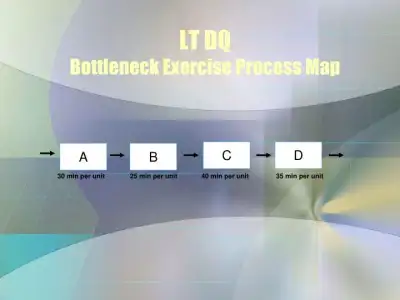 Class Notes
LT DQ Bottleneck Exercise Process Map
Operations Management
1 pageMay 2025 Textbook Guides
Solution Manual for Operations Management, 2nd Edition
Operations Management
173 pagesMay 2025
Study this document with CramX
Once it is in your library, every tool can work from it.