

California Real Estate License Express: All-in-One Review and Testing (2020)
- Other Exams & Certifications
- 523 pages
- Shared February 2025
- 117 downloads
Build your confidence with California Real Estate License Express: All-in-One Review and Testing (2020), a must-have for certification seekers.
Preview 31 of 523 pages
See the first 31 pages exactly as they appear in the document.
Page 1 Page 2 Page 3 Read page 3 as text
California Real Estate License Express All-in-One Review and Testing to Pass California’s Real Estate Exam 2 nd Edition David Cusic Stephen Mettling Ryan Mettling Performance Programs Company 502 South Fremont Ave., Ste. # 724 Tampa, FL, 33606 www.performanceprogramscompany.com
Page 4 Read page 4 as text
Material in this book is not intended to represent legal advice and should not be so construed. Readers should consult legal counsel for advice regarding points of law. © 2021 by Performance Programs Company 502 S. Fremont Ave., Suite #724,Tampa, FL 33606 info@performanceprogramscompany.com http://www.performanceprogramscompany.com/ All rights reserved. No part of this book may be reproduced in any form by any means without the express written consent of the publisher.
Page 5 Read page 5 as text
Table of Contents INTRODUCTION: OVERVIEW & INSTRUCTIONS SECTION I: Real Estate Principles & Law Key Point Review Rights Interests & Estates Ownership Encumbrances & Liens Transferring & Recording Title Leases Land Use Legal Descriptions Contract Law Agency Listing Agreements Brokerage Sale Contracts Economics Appraisal Finance Investment Taxation Professional Practices Closings Risk Management Property Management SECTION II: CALIFORNIA PRINCIPLES & LAWS KEY POINT REVIEW Part I: Department of Real Estate Structure, Duties and Powers Handling Complaints Disciplinary Action Real Estate Fund & Consumer Recovery Account Part II: Licensing Regulation
Page 6 Read page 6 as text
Licensed Activities and Exemptions CA License Types Licensing Process Reciprocity and Nonresident Licensure Place of Business Fictitious Names License Renewal Continuing Education License Status License Violations Part III: California Agency and Fiduciary Relationships Law of Agency in California Definitions and Responsibilities of Principals Types of Agency and Agency Relationships Creation and Termination of Agency Responsibilities of Agent Agency Disclosures Liabilities of Principal and Agent Part IV: Brokerage Activities Broker-Salesperson Relationships Commissions and Fees Compensation Agreements Place of Business Brokerage Supervision License Retention Branch Offices and Managers Recordkeeping Requirements Handling Trust Funds Part V: Ethics, Fair Housing, and Standards of Conduct General Prohibited Conduct State and National Fair Housing Laws Advertising Regulation Essential Brokerage Disclosures and Notices Violations and Penalties Part VI: Escrow and Trust Accounts Trust Account Definitions CA Escrow Regulations
Page 7 Read page 7 as text
Trust Accounts Part VII: Agreements, Contracts and Title Transfers Broker-Salesperson Agreements Listing Agreements Advanced Fee Agreements Contracts Title Transfers Mortgages, Deeds of Trust, Notes Leases Tax Aspects Part VIII: Special Topics Community Property Lien v Title Theory Encumbrances and Land Use Controls Subdivision Regulations Financing and Credit Laws Real Estate Specializations SECTION III: REAL ESTATE MATH CRAM CARDS Basic Math Ownership Leases Contracts for Sale Appraisal & Value Finance Investment Taxation Commissions Closing Costs, Prorations Insurance Coverage SECTION IV: GENERAL REAL ESTATE PRACTICE TESTS Test 1: Rights; Interests and Estates; Ownership Test 2: Encumbrances; Liens; Title Transfer and Recording; Leases Test 3: Land Use; Legal Descriptions; Contract Law Test 4: Agency; Listing Agreements Test 5: Brokerage Business; Sale Contracts
Page 8 Read page 8 as text
Test 6: Economics; Appraisal Test 7: Finance Test 8: Investments; Taxation; Professional Practices Test 9: Closings; Risk Management; Property Management Test 10: Real Estate Math SECTION V: CALIFORNIA STATE-LEVEL PRACTICE TESTS Test 11: DRE, Licensing and Regulation Test 12: Agency, Brokerage, and Ethics Test 13: Trust Accounts, Contracts and Transfers, and Special Topics SECTION VI: CALIFORNIA EXAMINATION Sample Test: California Practice Exam SECTION VII: ANSWER KEY PRACTICE TESTS AND CALIFORNIA PRACTICE EXAMINATION APPENDIX: USEFUL WEBSITES
Page 9 Read page 9 as text
Introduction Welcome licensee candidates and future real estate professionals! We know you have worked hard just to get here – you’ve completed or nearly completed your prelicense curricula, and now all you have to do is pass the state license exam. But easier said than done – and that’s where we come in. We know the state exam can be tough, and very nerve-wracking to prepare for. That’s why we created the California Real Estate License Express (CA-RELE) the way we did. Since we have been managing real estate schools and developing curriculum for forty years, we know how all this works – or fails to work. Let us assure you – you made the right decision buying this publication to prepare for your California exam. Here’s why. First, CA-RELE is comprehensive in that it contains both key content review and testing practice. And the text review is California-specific – not just simplistic generic content, but terse, relevant and accurate state laws and regulations presented in a well-organized set of ‘key point reviews’ which are ideal for pre-test memorization. Finally, our real estate principles and practices content, as well as our question selection, is further tailored to the state testing outline promulgated by the California Department of Real Estate (DRE). Therefore, the selected legal points and test questions reflect the topic emphasis of your California license exam. A word about the test questions… CA-RELE’s testing practice section consists of ten general practice tests, three California state law tests, and one state exam simulation test. The questions are direct, to the point, and designed to test your understanding. When you have completed a given test, you can check your answers against the answer key in the appendix. To enhance your learning and preparations, each question’s answer is accompanied by a brief explanation, or “rationale” underlying the correct answer. Your particular study and testing practice strategy using CA-RELE is up to you. But to fully exploit its comprehensive content coverage, you should try to review and memorize the key point reviews as much as possible. Then you should make every effort to take each exam, review your mistakes, and re- read the key point reviews that cover your weaker areas.
Page 10 Read page 10 as text
In the end, as you know, it’s all up to you. Unlike other publications, we are not going to tell you that using this book will guarantee that you pass your state exam. It still takes hard work and study to pass. But we have done our best here to get you ready. Following that, the most we can do is wish you the best of success in taking and passing your state exam. So good luck!! About the authors David Cusic, Ph.D., has been a training consultant, author, and Performance Programs Company partner for over forty years. As an educator with international real estate training experience, Dr. Cusic has been engaged in vocation-oriented education since 1966. Specializing in real estate training since 1983, he has developed numerous real estate training programs for corporate and institutional clients nationwide. Dr. Cusic is co-author of the Company’s flagship title, Principles of Real Estate Practice by Mettling and Cusic, now complemented by over 20 state supplements and 20 exam prep texts. For nearly fifty years, Stephen Mettling has been actively engaged in real estate education. Beginning with Dearborn in 1972, then called Real Estate Education Company, Mr. Mettling managed the company’s textbook division and author acquisitions. Subsequently he built up the company’s real estate school division which eventually became the country’s largest real estate, insurance and securities school network in the country. In 1978, Mr. Mettling founded Performance Programs Company, a custom training program publishing and development company specializing in commercial, industrial, and corporate real estate. Over time, Performance Programs Company narrowed its focus to real estate textbook and exam prep publishing. Currently the Company’s texts and prelicense resources are used in hundreds of schools in over 48 states. Mr. Mettling has authored over 100 textbooks, real estate programs and exam prep manuals. Ryan Mettling, partner and currently publisher of Performance Programs, is an accomplished online curriculum designer, author and course developer. His other principal publication is Real Estate Math Express. Mr. Mettling graduated Valedictorian from the University of Central Florida’s College of Business Administration.
Page 11 Read page 11 as text
Section I: Real Estate Principles & Law Key Point Review Rights Land / Real Estate / Real Property Land: surface, all natural things attached to it, subsurface, and air above the surface Real estate: land + manmade permanent attachments Real property: real estate + bundle of rights Constitution guarantees private ownership of real property. Physical Characteristics of Real Estate Physical characteristics Immobility; indestructibility; heterogeneity. Immobility Land cannot be moved from one site to another; its location is forever fixed Indestructibility Land is permanent and cannot be destroyed since by definition it extends below ground and into the sky Since land is permanent, it does not depreciate Only improvements depreciate and are insurable
Page 12 Read page 12 as text
Non-homogeneity Land is non-homogeneous; no two parcels of land are exactly the same since they have a different location Land versus Real Estate Real Estate as Property The Bundle of Rights: "PUTEE": P ossess U se T ransfer E xclude E ncumber Legal Title v. Equitable title
Page 13 Read page 13 as text
Legal title Full legal ownership of property and the bundle of rights as they apply to it. Contrasts with equitable title. Equitable title An interest that gives a lienholder or buyer the right to acquire legal title to a property if certain contractual conditions occur Property characteristics: property is either real or personal property is either tangible or intangible Real Property Rights Airspace = air rights Surface (of the earth) = surface rights Subsurface = subsurface or mineral rights Water rights: Doctrine of Prior Appropriation State controls water usage State grants usage permits Riparian Rights (Rivers and Streams) applies to rivers and streams if waterway is navigable: owners own land to water's edge if waterway is not navigable: owners own land to midpoint of waterway Littoral Rights (Lakes and Seas) applies to seas and lakes abutting property owners own to high water mark state owns underlying land Memory Tip:
Page 14 Read page 14 as text
R : R iver R iparian L : L ake L ittoral Real Property versus Personal Property Real Property: land fixtures attachments Personal Property: chattels trade fixtures emblements Differentiation criteria: item is real or personal property depending on why, how item is attached to the real estate. Depends on the owners' intention; adaptation; functionality; relationship of parties; contract provisions Trade fixtures: personal property items temporarily attached to real estate in order to conduct business Emblements: plants or crops that are considered personal property despite being attached to land Conversion: real to personal property referred to as severance personal to real property referred to as affixing Factory-built housing – mobile homes and manufactured homes Units are real or personal property: Real property if permanently affixed to ground; otherwise it is personal property
Page 15 Read page 15 as text
Regulation of real property interests Federal regulation Grants rights of ownership Controls broad land usage standards Regulates anti-discrimination laws Examples: land grants; federal flood zones; fair housing laws; FHA; EPA State regulation Governs real estate business Sets regional usage standards Examples: license laws; water rights; development regulation Local regulation Levies real estate taxes Controls specific usage Examples: property assessing; zoning; building permits; tax levies Judicial regulation Applies case law and common law to disputes Contrasts with statutory law Interests & Estates Interests and Estates in Land Interests: Possession / Possessory Estate in land Non-possession / Non-possessory Private: Encumbrance Public: public interest
Page 16 Read page 16 as text
Estates in Land Include right of possession Leaseholds = limited duration Freeholds: duration is not limited Freehold (Own) Fee simple Absolute Defeasible Life Estates Conventional Legal Leasehold (Lease) Estate for years Periodic Estate at Will Estate at Sufferance Freeholds Fee simple not limited by one's lifetime absolute: highest form of ownership interest defeasible: reverts to previous owner per conditions Life estate passes to another upon death of a named party remainder: named party to receive estate reversion: previous owner to receive estate Conventional life estate limited to lifetime of life tenant or named party ordinary: estate passes to remainderman or previous owner when life tenant dies pur autre vie: limited to lifetime of another, passes to remainderman or previous owner
Page 17 Read page 17 as text
Legal life estate created by operation of state law as opposed to a property owner’s agreement designed to protect family survivors Homestead: rights to one's principal residence laws protect homestead from creditors family must occupy the homestead cannot be conveyed by one spouse endures over life of head of household interests extinguished if property destroyed Leaseholds Estate for years specific, stated duration , per lease; expires at end of term Periodic lease term renews automatically upon acceptance of rent Estate at Will for indefinite period subject to rent payment; cancelable with notice Estate at Sufferance tenancy against landlord's will and without an agreement Ownership Forms of Ownership Tenancy in severalty sole ownership of a freehold estate; passes to heirs Tenancy in common co-tenants individually own undivided interests any ownership share possible
Page 18 Read page 18 as text
no survivorship can convey to outside parties Joint tenancy equal undivided interest jointly owned survivorship (may require express provision) requires four unities to create: time, title, interest, possession Tenancy by the entireties husband and wife own equal undivided interest Now applies to same-sex couples in some states Community property joint property ownership by spouses as opposed to separate property Joint Tenancy & Four Unities Unity of ownership owners hold single title jointly Equal ownership owners always hold equal shares Transfer may transfer to new owner as a tenancy in common interest with remaining joint tenants Survivorship on death, interests and rights pass to other joint tenants Creation requires "four unities," PITT : 1. P ossession: acquire same possessory rights 2. I nterest: acquire equal, undivided interests 3. T ime: acquire interests at same time 4. T itle: acquire interests with same deed
Page 19 Read page 19 as text
Community Property Separate acquired before marriage acquired by gift or inheritance acquired with separate-property funds income derived from separate property Community all other property earned or acquired during the marriage Estates in Trust Trustor gives title, deed, trust agreement to trustee Trustee renders fiduciary duties to trustor and beneficiary Beneficiary receives ownership benefits Living / testamentary trust - conveyance of real, personal property during one's lifetime Land trust - grantor and beneficiary are same party; beneficiary uses, controls property but does not appear on public records Condominiums ownership of a unit of airspace plus an undivided interes t in the common elements as tenant in common with other owners may be sold, encumbered or foreclosed without affecting other unit owners creation: by developer's declaration individually taxed managed by condo association owners share common area expenses Cooperatives ownership of shares in owning corporation proprietary lease in a unit corporation has sole, undivided ownership
Page 20 Read page 20 as text
owners potentially liable for expenses of entire co-op; creditors may foreclose on entire property Time shares lease or ownership interest in property for periodic use on a scheduled basis lease: tenant leases property per the lease’s schedule freehold: tenants in common own undivided interests, pay expenses per separate agreement Encumbrances & Liens Encumbrances Non-possessory interests limiting legal owner’s rights Do not include possession Two types: encumbrances that affect use encumbrances that affect ownership, value, transfer Encumbrances affecting use: easements, encroachments, licenses, deed restrictions Encumbrances affecting ownership, value, transfer: liens, deed conditions Easements Characteristics Rights to use portions of another’s property affirmative easement: allows a use negative easement: prohibits a use Appurtenant attaches to the estate dominant tenement's right to use or restrict adjacent servient tenement
Page 21 Read page 21 as text
by necessity , to landlocked owners party wall easement in a shared structure: to not damage or destroy in Gross does not attach to the estate Personal -- not transferrable, ends upon death of easement holder Commercial -- transferrable, granted to a business by Prescription property used without permission; can come to exist regardless of owner's consent obtainable through continuous, open, adverse use over a period License personal right to use a property does not attach non-transferrable revocable ceases upon death of owner Encroachments Unauthorized intrusions of one owner’s real property onto another’s May require survey to detect May become prescriptive easements if not remedied over prescription period Deed restrictions Conditions, covenants imposed on property by deed or subdivision plat Goes with the property upon transfer Established to control quality, standards of a subdivision Apply to land use, type of structure, setbacks, minimum house size, etc. Deed conditions Created upon property transfer If violated, ownership may revert to previous owner
Page 22 Read page 22 as text
Deed covenants Created by mutual agreement Enforceable by injunction Liens Claims attaching to real and personal property as security for debt Recorded on title effectively reducing equity in the amount of the lien Does not convey ownership unless a mortgage in a title theory state Lien attaches to the property Property can be encumbered by multiple liens Lien terminates upon payment, recording satisfaction Lien Types and characteristics voluntary / involuntary: example: mortgage lien / tax lien general / specific: example: against any & all assets / against car or house superior / junior: example: paid before juniors / paid after superiors by date of recording Lien vs. Title Theory State lien theory state – lender of mortgaged property holds equitable title rather than legal title; borrower holds legal title. title theory state – lender holds legal title to the mortgaged property until the mortgagor satisfies the terms and obligations of the loan. Lien Priority Order in which liens against a property are satisfied Determined by superior v junior class and by date of recordation The highest priority lien is paid by foreclosure proceeds before any
Page 23 Read page 23 as text
other lien Superior Liens by rank (not by date of recordation; paid before junior liens) Real estate tax liens Special assessment liens Federal estate tax liens State inheritance tax liens Junior Liens by date of recording (by date of recording) Federal income tax liens Judgment liens Mortgage liens Vendor's liens Mechanic's liens (priority by date work performed) Foreclosure Liquidation or transfer of collateral property by judicial, non-judicial, or strict foreclosure Mortgage lien foreclosure: liquidation of collateral property by judicial , non-judicial , or strict foreclosure Judicial foreclosure: lawsuit by creditor and court-ordered public sale to enforce lien; deficiency judgments, redemption rights Deficiency judgments judgment by court on borrower to forfeit other property to payoff any shortfalls from foreclosure Redemption rights borrower’s right to reclaim property before or after foreclosure sale Non-judicial foreclosure: "power of sale" granted to lender; no suit; no deficiency
Page 24 Read page 24 as text
judgment; no redemption period after sale Strict foreclosure: court orders legal transfer of title directly to lender without public sale Deed in lieu of foreclosure: defaulted borrower deeds property to lender to avoid foreclosure Transferring & Recording Title Legal v Equitable Title Legal title: owner enjoys full bundle of rights Equitable title: party can obtain legal title subject to agreements with creditors Notice Notice: how ownership is evidenced to the public Actual notice: knowledge acquired directly through demonstrable evidence, e.g., presenting or inspecting a deed, visiting a party in possession Constructive notice: knowledge one could have obtained , as presumed by law; imparted by recording in public records "for all to see" Voluntary / Involuntary Voluntary transfer deed will public grant
Page 25 Read page 25 as text
Involuntary transfer descent (without will, with heirs) escheat (without will nor heirs) foreclosure (loan default) eminent domain (public good) adverse possession (hostile, open use) Deeds of Conveyance Key characteristics grantor grants deed to grantee legal title transfers upon intentional delivery and grantee’s acceptance Deed Validity Requirements: 1. grantor 2. grantee 3. in writing 4. legal description 5. granting clause 6. consideration 7. grantor's signature 8. acknowledgement 9. delivery and acceptance Deed Clauses Premises: granting Habendum: type of estate Reddendum: restrictions Tenendum: other property included Deed Types Bargain and sale: "I own but won't defend"
Page 26 Read page 26 as text
General warranty: "I own and will defend" Special warranty: "I own and warrant myself only" Quitclaim: "I may or may not own, and won't defend" Special purpose deeds: Used for different purposes, interests conveyed, or by different parties Deed Restrictions Deed restriction single-property use restriction as stipulated in a deed; may not be discriminatory examples: minimum area of a residence; setbacks; limits on other structures; conducting commercial activities Declaration restriction use restriction in multiple-property declarations; enforced by court injunction Deed condition usage restriction that can trigger repossession by a previous owner if violated Transfer Tax Documentary stamp tax: tax on conveyance of real property based on price of property conveyed Facilitates ad valorem assessment Payment evidenced on deed Wills Key characteristics will transfers estate to heirs upon death maker= owner; devisor or testator heir = beneficiary or devisee Types of wills
Page 27 Read page 27 as text
witnessed: in writing and two witnesses holographic: will in testator’s handwriting nuncupative: oral will written by witnesses; generally not valid for property transfer Validity of will legal age; mentally competent; entitled “last will & testament;” signed, witnessed, voluntary Testate / Intestate Dies testate with heirs: Order of Title Transfer first to creditors then to homestead then to heirs by will Dies intestate with heirs: Order of Title Transfer first to creditors then to homestead then to heirs by laws of descent Dies intestate, no heirs: Order of Title Transfer first to creditors then to state by escheat Involuntary title transfer Adverse possession “unwanted owner” may claim ownership to a property must show “claim of right” as reason must be notorious possession (unconcealed) must be hostile (possessor claims ownership) must be continuous for a statutory period of time
Page 28 Read page 28 as text
Title Records Features Instruments affecting title must be recorded Gives public notice of ownership, condition of title Determines property marketability Protects lienholders; establishes chronology for lien priority Key Terms chain of title – successive property owners from original grant to present cloud on title – unrecorded claims suit to quiet title – lawsuit to settle claims abstract of title: written chronology of recorded owners, transfers, encumbrances Evidence of Title title insurance (best form of evidence) attorney's opinion of abstract title certificates Torrens registration Leases Key characteristics lease is both an instrument of conveyance and contract of covenants between tenant and landlord lease conveys temporary, exclusive use of premises in exchange for rent and right of reversion Tenant rights and obligations rights: use, possession, quiet enjoyment, profits tenant obligations: pay rent; maintain premises; follow rules Landlord rights and obligations
Page 29 Read page 29 as text
rights: receive rent; repossess upon expiration; monitor tenant compliance obligations: property condition, habitability, support services Estate Types Gross lease landlord pays expenses; tenant pays higher rent than net Net lease tenant pays some or all expenses; rent is less than gross Percentage lease landlord receives rent minimum plus percentage of retailer's sales Residential lease gross lease hybrid; short term; uniform terms reflect landlord-tenant standards Ground lease landlord owns and leases ground but does not own improvements Proprietary lease for cooperative unit owners; indefinite term; assigned to new unit owner on sale Leasing of rights leasehold transfer of rights for limited use; examples: air, mineral, water rights Lease Termination Causes default notice property destruction death term expiration
Page 30 Read page 30 as text
voluntary agreement condemnation abandonment under certain conditions Uniform Residential Landlord and Tenant Act Purposes balance landlord and tenant rights standardize leases have uniform eviction procedures protect tenants serve as model for state legislation Leases: clear lease terms fair market rent cannot waive rights Deposits: limits on amounts tenant's right to interest rules and deadlines for returning Landlord Obligations: bargain in good faith provide maintenance and repairs comply with building codes provide safety and access procedure for delivery of notices Tenant Obligations: maintain condition abide by rules and regulations no damage or abuse abide by approved uses no disturbance of other tenants
Page 31 Read page 31 as text
Land Use Planning and Zoning Definitions Building code: A standard of construction of an improved property established by local government officials Certificate of occupancy: A document confirming that a newly constructed or renovated property has fully complied with all building codes and is ready for occupancy Concurrency: A planning policy that requires developers to correct foreseen negative impacts of a development during the construction period of the project itself rather than afterwards Condemnation: 1. A decree that a parcel of private property is to be taken for public use under the power of eminent domain. 2. A government order that a is no longer fit for use and must be demolished. Deed restriction: A provision in a deed that limits or places rules on how the deeded property may be used or improved Eminent domain: A power of a government entity to force the sale of private property for subsequent public use Land use control: Regulation of how individual owners use property in a municipality or planning district. Control patterns are in accordance with a master plan Master plan: An amalgamated land use plan for a municipality, county, or region which incorporates community opinion, the results of intensive research, and the various land use guidelines and regulations of the state. Acts as a blueprint for subsequent zoning ordinances and rulings Non-conforming use: A legal or illegal land use that is not consistent with the current zoning ordinance Police power: A government's legal authority to create, regulate, tax, and
492 more pages in the full document
Unlock it once and it stays in your library, ready to chat with or turn into flashcards.
Unlock the full documentMore Other Exams & Certifications study materials
See all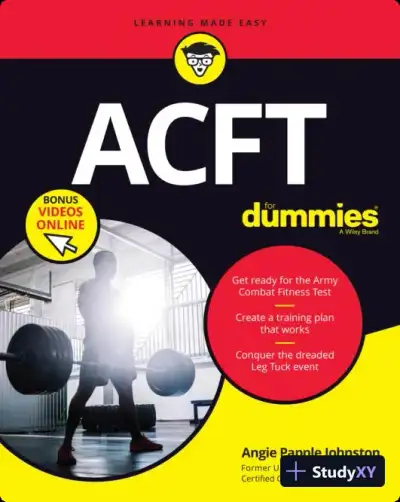 Certification Guides
ACFT For Dummies (2020)
Other Exams & Certifications
467 pages156downloadsFeb 2025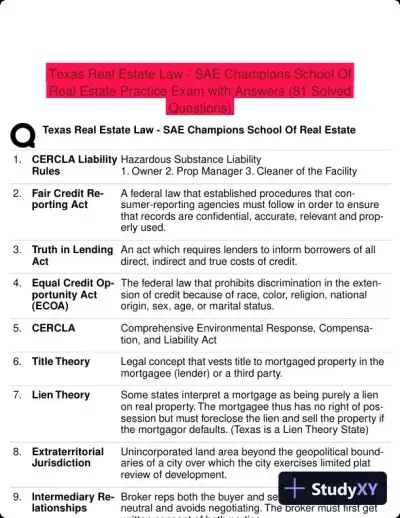 Past Exams
Texas Real Estate Law - SAE Champions School Of Real Estate Practice Exam with Answers (81 Solved Questions)
Other Exams & Certifications
9 pages153downloadsFeb 2025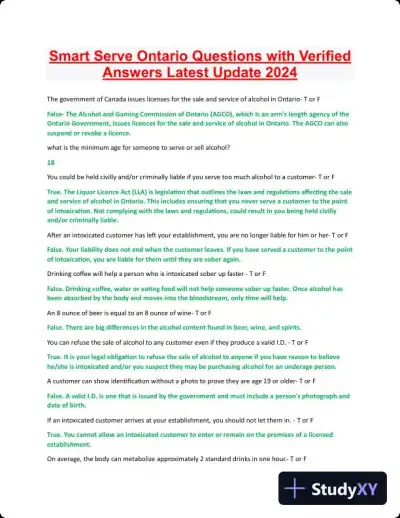 Past Exams
2024 Smart Serve Ontario Practice Exam with Answers (53 Solved Questions)
Other Exams & Certifications
6 pages153downloadsFeb 2025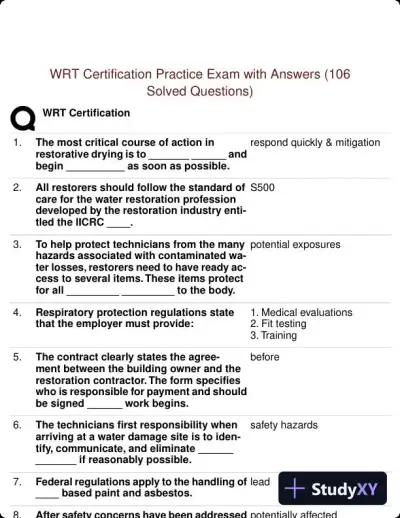 Past Exams
WRT Certification Practice Exam with Answers (106 Solved Questions)
Other Exams & Certifications
16 pages151downloadsFeb 2025 Past Exams
2024 Vivint SHP Practice Exam with Answers (35 Solved Questions)
Other Exams & Certifications
4 pages144downloadsFeb 2025 Past Exams
2024-2025 Wall Street Prep Premium Exam with Answers (50 Solved Questions)
Other Exams & Certifications
13 pages138downloadsFeb 2025 Past Exams
2024-2025 Lifeguard Final Exam with Answers (69 Solved Questions)
Other Exams & Certifications
11 pages137downloadsFeb 2025 Past Exams
2023-2024 ISSA Certification Final Exam with Answers (200 Solved Questions)
Other Exams & Certifications
49 pages136downloadsFeb 2025
Study this document with CramX
Once it is in your library, every tool can work from it.