

SAP S/4HANA Production Planning and Manufacturing Certification Guide: Application Associate Exam (2022)
- Other Exams & Certifications
- 1129 pages
- Shared May 2025
SAP S/4HANA Production Planning and Manufacturing Certification Guide: Application Associate Exam (2022) includes past certification exam papers, ensuring you practice effectively before the actual test.
Preview 16 of 1129 pages
See the first 16 pages exactly as they appear in the document.
Page 1 Page 2 Page 3 Read page 3 as text
Siva Kumar Mutnuru SAP S/4HANA® Production Planning and Manufacturing Certification Guide Application Associate Exam
Page 4 Read page 4 as text
Imprint This e-book is a publication many contributed to, specifically: Editor Rachel Gibson Acquisitions Editor Emily Nicholls Copyeditor Julie McNamee Cover Design Graham Geary Shutterstock.com: 1167096899/© Julia August Production E-Book Hannah Lane Typesetting E-Book Satz-Pro (Germany) We hope that you liked this e-book. Please share your feedback with us and read the Service Pages to find out how to contact us. The Library of Congress has cataloged the printed edition as follows: Names: Mutnuru, Siva Kumar, author. Title: SAP S/4HANA production planning and manufacturing certification guide : application associate exam / by Siva Kumar Mutnuru. Description: 1st edition. | Bonn ; Boston : SAP Press ; Rheinwerk Publishing, 2022. | Includes index. Identifiers: LCCN 2021048320 | ISBN 9781493220830 (hardcover) | ISBN 9781493220847 (ebook) Subjects: LCSH: SAP HANA (Electronic resource)--Examinations-- Study guides. | Production planning--Data processing--Examinations--Study guides. | Manufacturing processes--Data processing--Examinations--Study guides.
Page 5 Read page 5 as text
Classification: LCC TS155.6 .M88 2022 | DDC 670.285-- dc23/eng/20211109 LC record available at https://lccn.loc.gov/2021048320 ISBN 978-1-4932-2083-0 (print) ISBN 978-1-4932-2084-7 (e-book) ISBN 978-1-4932-2085-4 (print and e-book) © 2022 by Rheinwerk Publishing Inc., Boston (MA) 1st edition 2022
Page 6 Read page 6 as text
Dear Reader, In school, I was always a procrastinator when it came to studying for a test. Write a ten-page essay by Tuesday? Sure thing! Read the entirety of a classic novel by Friday? No problem! Tests, on the other hand, were the bane of my existence, so I always put off studying. The longer I waited to tackle math equations, scientific formulas, and lists of historic world leaders, the more they piled up. By midnight the night before a test, those letters and numbers began to swim around on the page and lose all meaning to me. After trial and error (and some failed attempts), I realized that my best studying didn’t happen late at night, alone at my desk. It happened in the classroom weeks before it was time to put pencil to paper. If I paid attention, took detailed notes, asked questions, and made sure I fully understood one topic before moving on to the next, I found myself fully prepared for an exam—no late-night cramming required! Think of SAP S/4HANA Production Planning and Manufacturing Certification Guide as your classroom, and author Siva Kumar Mutnuru as your teacher. This is the place where your certification status starts, so read carefully, take your time with the practice questions, and remember to pace yourself. With Siva’s expertise and guidance, you’ll be well on your way to acing your exam! What did you think about SAP S/4HANA Production Planning and Manufacturing Certification Guide ? Your comments and suggestions are the most useful tools to help us make our books the best they can be. Please feel free to contact me and share any feedback you may have.
Page 7 Read page 7 as text
Thank you for purchasing a book from SAP PRESS! Rachel Gibson Editor, SAP PRESS rachelg@rheinwerk-publishing.com www.sap-press.com Rheinwerk Publishing • Boston, MA
Page 8 Read page 8 as text
Notes on Usage This e-book is protected by copyright . By purchasing this e-book, you have agreed to accept and adhere to the copyrights. You are entitled to use this e-book for personal purposes. You may print and copy it, too, but also only for personal use. Sharing an electronic or printed copy with others, however, is not permitted, neither as a whole nor in parts. Of course, making them available on the internet or in a company network is illegal as well. For detailed and legally binding usage conditions, please refer to the section Legal Notes. This e-book copy contains a digital watermark , a signature that indicates which person may use this copy:
Page 9 Read page 9 as text
Notes on the Screen Presentation You are reading this e-book in a file format (EPUB or Mobi) that makes the book content adaptable to the display options of your reading device and to your personal needs. That’s a great thing; but unfortunately not every device displays the content in the same way and the rendering of features such as pictures and tables or hyphenation can lead to difficulties. This e-book was optimized for the presentation on as many common reading devices as possible. If you want to zoom in on a figure (especially in iBooks on the iPad), tap the respective figure once. By tapping once again, you return to the previous screen. You can find more recommendations on the customization of the screen layout on the Service Pages.
Page 10 Read page 10 as text
Table of Contents Dear Reader Notes on Usage Table of Contents Preface Introduction: The Path to Certification 1 Introduction to Supply Chain Planning 1.1 Objectives of This Portion of the Test 1.2 Digital Transformation and the Intelligent Enterprise 1.3 SAP S/4HANA 1.3.1 Deployment Options 1.3.2 Production Planning in SAP S/4HANA 1.4 SAP User Experience 1.4.1 SAP Fiori Design Principles 1.4.2 SAP Fiori Launchpad 1.4.3 SAP Fiori Application Types 1.5 SAP Activate Framework 1.6 Supply Chain Planning 1.7 Important Terminology
Page 11 Read page 11 as text
1.8 Practice Questions 1.9 Practice Answers and Explanations 1.10 Test Takeaway 1.11 Summary 2 Master Data for Production 2.1 Objectives of This Portion of the Test 2.2 Organizational Structure 2.3 Material Master 2.3.1 Material Numbering 2.3.2 Material Type 2.3.3 Creating the Material Master 2.3.4 Additional Data in the Material Master 2.3.5 Classification View of the Material Master 2.3.6 Managing the Material Master 2.4 Bill of Materials 2.4.1 Overview 2.4.2 Header Details 2.4.3 Item Details 2.4.4 Additional Topics Related to BOM 2.5 Work Centers 2.5.1 Creating Work Centers 2.5.2 Basic Data 2.5.3 Default Values 2.5.4 Capacities
Page 12 Read page 12 as text
2.5.5 Scheduling 2.5.6 Costing Data 2.6 Routings/Task Lists 2.6.1 Creating a Routing 2.6.2 Header Data 2.6.3 Operation Data 2.6.4 Subordinate Routing Objects 2.7 Production Versions 2.8 Engineering Change Management 2.9 Important Terminology 2.10 Practice Questions 2.11 Practice Answers and Explanations 2.12 Test Takeaway 2.13 Summary 3 Demand Management 3.1 Objectives of This Portion of the Test 3.2 Consumption Process and Logic 3.3 Planning Strategy 3.4 Strategies for Make-to-Stock Production 3.4.1 Net Requirements Planning (Planning Strategy 10) 3.4.2 Gross Requirements Planning (Planning Strategy 11) 3.4.3 Planning with Final Assembly (Planning Strategy 40)
Page 13 Read page 13 as text
3.4.4 Production by Lot Size (Planning Strategy 30) 3.5 Strategies for Make-to-Order Production 3.5.1 Make-to-Order Production (Planning Strategy 20) 3.5.2 Planning without Final Assembly (Planning Strategy 50) 3.5.3 Planning with Planning Material (Planning Strategy 60) 3.6 Planning for Components 3.7 Assemble-to-Order Production 3.8 Creation of Demand Plan 3.9 Important Terminology 3.10 Practice Questions 3.11 Practice Answers and Explanations 3.12 Test Takeaway 3.13 Summary 4 Material Requirements Planning 4.1 Objectives of This Portion of the Test 4.2 Material Requirements Planning Procedures 4.3 Planning Process 4.3.1 Checking Planning File Entries 4.3.2 Net Requirements Planning 4.3.3 Procurement Quantity Calculation 4.3.4 Scheduling 4.3.5 Determining the Procurement Proposal
Page 14 Read page 14 as text
4.3.6 Determination of Source of Supply 4.3.7 BOM Explosion and Determining Dependent Requirements 4.3.8 Exception Messages Creation 4.4 Master Data for Material Requirements Planning 4.5 Material Requirements Planning Customization 4.5.1 Maintain Plant Parameters 4.5.2 Maintain Environment 4.5.3 Maintain Master Data 4.5.4 Maintain Planned Orders 4.5.5 Maintain Planning Run 4.6 Carrying out Planning Run (Classic MRP) 4.7 Carrying out Planning Run Using MRP Live 4.8 Evaluating MRP Results 4.8.1 Stock/Requirements List 4.8.2 SAP Fiori Apps for Evaluation of MRP 4.9 Important Terminology 4.10 Practice Questions 4.11 Practice Answers and Explanations 4.12 Test Takeaway 4.13 Summary 5 Production Orders 5.1 Objectives of This Portion of the Test
Page 15 Read page 15 as text
5.2 Process Overview 5.3 Master Data 5.4 Production Order Configuration 5.4.1 Production Order Type 5.4.2 Order-Type-Dependent Parameters 5.4.3 Scheduling Parameters for Production Orders 5.4.4 Configuring the Availability Checks 5.4.5 Production Scheduling Profile 5.5 Production Order Preparation 5.5.1 Production Order Creation 5.5.2 Production Order Scheduling 5.5.3 Running Availability Checks 5.6 Production Order Execution 5.6.1 Release of Production Orders 5.6.2 Printing Shop Floor Papers/Lists 5.6.3 Component Withdrawal for Production Orders 5.6.4 Confirmation 5.6.5 Goods Receipt 5.7 Settlement and Order Completion 5.7.1 Settlement 5.7.2 Production Order Completion 5.7.3 Archiving and Deletion of Production Orders 5.8 Additional Topics in Production Orders 5.8.1 Reprocessing Failed Goods Movements 5.8.2 Reporting Functions 5.9 Important Terminology
Page 16 Read page 16 as text
5.10 Practice Questions 5.11 Practice Answers and Explanations 5.12 Test Takeaway 5.13 Summary 6 Lean Manufacturing 6.1 Objectives of This Portion of the Test 6.2 Repetitive Manufacturing Overview 6.2.1 Characteristics 6.2.2 Master Data 6.2.3 Planning with the Planning Table 6.2.4 Material Staging 6.2.5 Confirmation 6.2.6 Cost Object Controlling 6.3 Configuring Repetitive Manufacturing 6.4 Kanban 6.4.1 Overview 6.4.2 Master Data 6.4.3 Replenishment Strategies 6.4.4 Kanban Control 6.4.5 Error Processing 6.5 Important Terminology 6.6 Practice Questions
1113 more pages in the full document
Unlock it once and it stays in your library, ready to chat with or turn into flashcards.
Unlock the full documentMore Other Exams & Certifications study materials
See all Certification Guides
ACFT For Dummies (2020)
Other Exams & Certifications
467 pages156downloadsFeb 2025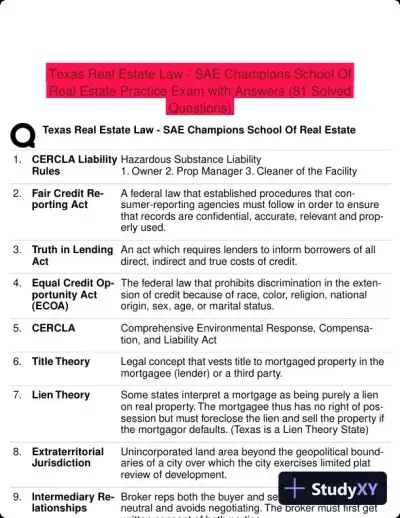 Past Exams
Texas Real Estate Law - SAE Champions School Of Real Estate Practice Exam with Answers (81 Solved Questions)
Other Exams & Certifications
9 pages153downloadsFeb 2025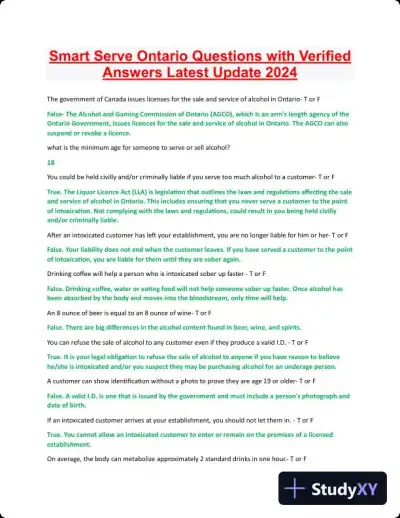 Past Exams
2024 Smart Serve Ontario Practice Exam with Answers (53 Solved Questions)
Other Exams & Certifications
6 pages153downloadsFeb 2025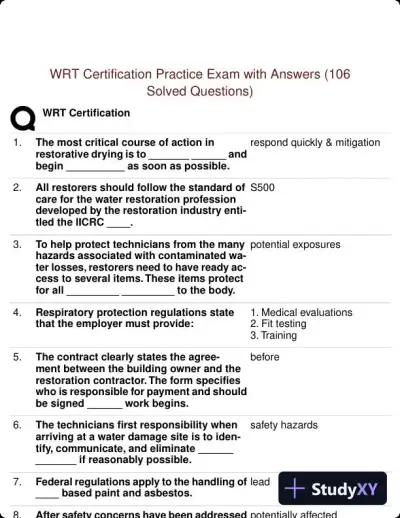 Past Exams
WRT Certification Practice Exam with Answers (106 Solved Questions)
Other Exams & Certifications
16 pages151downloadsFeb 2025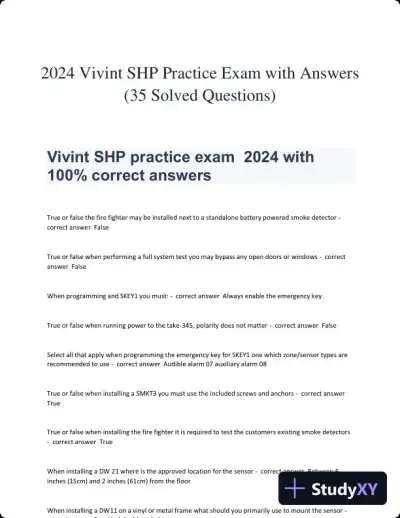 Past Exams
2024 Vivint SHP Practice Exam with Answers (35 Solved Questions)
Other Exams & Certifications
4 pages144downloadsFeb 2025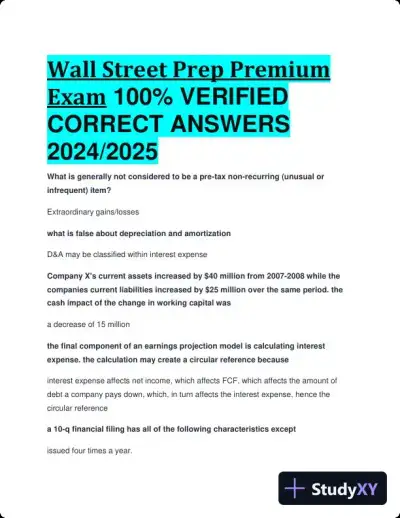 Past Exams
2024-2025 Wall Street Prep Premium Exam with Answers (50 Solved Questions)
Other Exams & Certifications
13 pages138downloadsFeb 2025 Past Exams
2024-2025 Lifeguard Final Exam with Answers (69 Solved Questions)
Other Exams & Certifications
11 pages137downloadsFeb 2025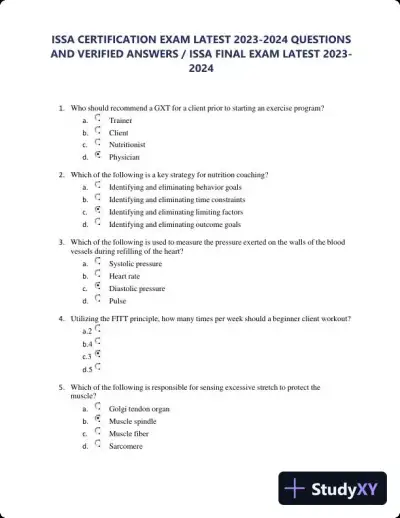 Past Exams
2023-2024 ISSA Certification Final Exam with Answers (200 Solved Questions)
Other Exams & Certifications
49 pages136downloadsFeb 2025
Study this document with CramX
Once it is in your library, every tool can work from it.