

ATI TEAS V7 NurseCheung Science Practice Questions
- Test of Essential Academic Skills
- 97 pages
- Shared June 2025
Practice questions on human anatomy and physiology covering the organization of the human body and cardiovascular system. Ideal for students and exam prep, with multiple-choice questions on planes, positions, regions, and heart functions
Preview 30 of 97 pages
See the first 30 pages exactly as they appear in the document.
Page 1 Read page 1 as text
ATI TEAS SCIENCE PRACTICE QUESTIONS VERSION 7 by: NURSE CHEUNG www.nursecheung.com
Page 2 Read page 2 as text
Table of Contents Human Anatomy and Physiology Organization of the Human Body Questions: P. 2__ Cardiovascular System Questions: P. 3 Respiratory System Questions: P. 5 — Neurological System Questions; P. 7 Gastrointestinal System Questions: P. 8 Muscular System Questions ; P. 10 Reproductive System Questions: __P. 12 Integumentary System Questions: P. 14 __ Endocrine System Question s: P. 15 Urinary System Questions: P. 17 Lympathic - Immune System Questions: P. 1 9__ Skeletal System Questions: P. 21 _ Answc i s: P. 56 Answers. P. 57 Answers; P. 58, , Answers: P. 60 _ Answers: P. 61 Answers; P. 62 . Answers: P. 64 _ Answers; P. 66 Answers: P. 68 Answers: P. 69 Answers: P. 70 Life and Physical Sciences Biological Hierarchy of the Body Questions: P. 22 Answers; P. 72 Mitosis vs. Meiosis Questions; P, 24 Answers: P. 73 Genetics and DNA Questions: P. 25 Answers: P. 74 Basic Macromolecules Questions: P. 28__ Answers: P. 76 Micro-Organisms and Questions: P. 30 __ Answers: P. 'll Microscopes Chemistry Basic Atomic Structures Questions: P. 3 1 __ Answers: P. 78 Physical Properties and States Questions: P. 35 Answers: P. 81 of Matter Chemical Reactions Questions: P. 38 Answers' P 83 Conditions that Affect Chemical Questions: P. 41 Answers: P. 85 Reactions Properties of Solutions Questions: P. 44 Answers: P. 87 Acids and Bases Questions: P. 46 Answers: P. 89 Scientific Method Scientific Measurement and Tools Scientific Explanation and Drawing Conclusions Predicting Relationships Among Events, Objects, and Processes Identifying Hypothesis Answers: P. 90 Answers: P. 91 Answers; P. Answers: P. 94 Questions: P. 53
Page 3 Read page 3 as text
SCIENCES PRACTICE QUESTIONS ORGANIZATION OF HUMAN BODY Question 11: Which plane divides the body into superior and inferior Question 1: Which term describes a position nearer to the front of the parts? A) Sagittal body? B) Frontal A) Dorsal C) Transverse B) Ventral D) Midsagittal C) Medial D) Distal Question 12: The mouth is _____ to the nose. Question?: The elbow is to the wrist. A) Superior B) Inferior A) Proximal C) Anterior B) Distal D) Posterior C) Lateral D) Inferior Question 13: Which term describes structures found closer to the Question 3: The term "superior" is best described as: body's midline? A) Medial A) Toward the midline B) Lateral B) Farther from the head C) Dorsal C) Closer to the head D) Ventral D) Away from the midline Question 4: Which term is used to describe a structure closer to the Question 14: The thumb is _____ to the little finger. A) Proximal body's surface? B) Medial A) Superficial C) Lateral B) Medial D) Distal C ) Deep D) Proximal Question 15: Which term describes the position of the spine relative to Question 5: If a surgeon makes an incision along the midline of the the belly button (umbilicus)? A) Anterior body, it's referred to as: B) Posterior A) Sagittal C) Medial B) Frontal D) Distal C ) Transverse D) Lateral Question 16: In terms of anatomical positioning, how is the ulna related Question 6: The sternum is to the heart. to the radius? A) Superior A) Anterior B) Medial B) Posterior C) Lateral C) Lateral D) Inferior D) Medial Question 7: The anatomical term for the back of the knee is: Question 17: The forehead is also termed as: A) Orbital A) Patellar B) Buccal B) Brachial C) Frontal C) Popliteal D) Nasal D) Scapular Question 8: Which of the following is a medial structure? Question 18: Which plane divides the body into equal left and right halves? A) Ulna A) Sagittal B) Radius B) Frontal C) Tibia C) Transverse D) Fibula D) Midsagittal Question 9: The anatomical position is characterized by all the Question 19: The heel is _____ to the toes. following EXCEPT: A) Superior A) Feet flat on the floor B) Inferior B) Palms facing forward C) Posterior C) Thumbs pointing outward D) Anterior D) Head tilted backward Question 10: Which term refers to the outermost layer of a structure? Question 20: The anatomical term for the cheek is: A) Axillary A) Proximal B) Buccal B) Medial C) Cervical C) Lateral D) Brachial D) Superficial 2
Page 4 Read page 4 as text
Question 21: Which of the following terms describes the back of the body or body part? A) Ventral B) Anterior C) Dorsal D) Proximal Question 22: The armpit is also known as the: A) Axillary B) Umbilical C) Carpal D) Popliteal Question 23: The term that refers to a position farther from the body's surface is: A) Superficial B) Anterior C) Deep D) Lateral Question 24: In the anatomical position, how are the palms oriented? A) Facing backward B) Facing the body C) Facing downward D) Facing forward Question 25: Which term describes a structure's location farther from the point of attachment to the trunk? A) Proximal B) Distal C) Medial D) Lateral Question 26: Which term describes the region of the body where the neck joins the trunk? A) Axillary B) Cervical C) Lumbar D) Thoracic Question 27: The bridge of the nose is _____ to the left eye. A) Medial B) Lateral C) Superior D) Proximal Question 28: The term that best describes the relationship between the skin and the underlying muscles is: A) Proximal B) Medial C) Superficial D) Distal Question 29: Which of the following regions is NOT associated with the anterior torso? A) Sternal B) Axillary C) Scapular D) Umbilical Question 30: Which term refers to the front of the elbow? A) Antecubital B) Popliteal C) Olecranal D) Calcaneal Question 31: The big toe is also known as: A) Pollex B) Hallux C) Manus D) Calcaneal Question 32: The term "inferior" can also be referred to as: A) Caudal B) Cranial C) Medial D) Lateral Question 33: The stomach is primarily located in which of the following body cavities? A) Dorsal B) Thoracic C) Abdominal D) Pelvic Question 34: In anatomical terminology, which direction means toward the tail? A) Superior B) Anterior C) Caudal D) Proximal Question 35: Which of the following terms refers to the side of the body? A) Ventral B) Lateral C) Medial D) Dorsal CARDIOVASCULAR SYSTEM Question 1: The heart is enclosed in a double-layered sac called the: A) Myocardium B) Endocardium C) Pericardium D) Epicardium Question 2: Which layer of the heart is responsible for its pumping action? A) Myocardium B) Endocardium C) Pericardium D) Epicardium Question 3: Blood flows from the left atrium into the left ventricle through which valve? A) Tricuspid valve B) Pulmonary valve C) Mitral (bicuspid) valve D) Aortic valve Question 4: Which vessels deliver oxygen-rich blood from the lungs to the heart? A) Superior and inferior vena cava B) Pulmonary veins C) Pulmonary arteries D) Coronary arteries Question 5: The valve located between the right atrium and right ventricle is: A) Tricuspid valve B) Pulmonary valve C) Mitral (bicuspid) valve D) Aortic valve Question 6: The structure responsible for initiating the heartbeat is: A) Atrioventricular node B) Bundle of His C) Purkinje fibers D) Sinoatrial node 3
Page 5 Read page 5 as text
Question 7: The phase when the heart muscle contracts and pumps blood is called: A) Systole B) Diastole C) Repolarization D) Depolarization Question 8: Which structure is responsible for preventing the backflow of blood from the aorta into the left ventricle? A) Tricuspid valve B) Mitral valve C) Aortic valve D) Pulmonary valve Question 9: The "lub-dub" sound of the heart is produced primarily by: A) Opening and closing of the atrioventricular and semilunar valves B) Flow of blood through the chambers C) Movement of blood from the veins into the atria D) Contraction of the myocardium Question 10: Which factor does NOT influence blood pressure? A) Blood volume B) Heart rate C) Blood viscosity D) ABO blood type Question 11: An acidic blood pH would be a value: A) Greater than 7.45 B) Less than 7.35 C) Exactly 7.40 D) Between 7.35 and 7.45 Question 12: Which blood type is considered the universal recipient? A) A B) B C) AB D) O Question 13: The blood vessels that carry blood away from the heart to the rest of the body are called: A) Veins B) Capillaries C) Arteries D) Venules Question 14: In the cardiac conduction system, after the SA node fires, the impulse travels to the: A) Bundle of His B) Purkinje fibers C) Atrioventricular node D) Ventricular myocardium Question 15: During which phase does the heart relax and fill with blood? A) Systole B) Diastole C) Repolarization D) Depolarization Question 16: The largest artery in the body, responsible for carrying oxygenated blood away from the heart, is the: A) Pulmonary artery B) Aorta C) Superior vena cava D) Coronary artery Question 17: Which valve prevents the backflow of blood from the pulmonary trunk into the right ventricle? A) Mitral valve B) Aortic valve C) Pulmonary valve D) Tricuspid valve Question 18: The "pacemaker" cells of the heart, responsible for setting the rate of contractions, are located in the: A) Atrioventricular node B) Bundle of His C) Sinoatrial node D) Purkinje fibers Question 19: Blood pressure is usually expressed as two numbers. The higher number represents: A) Diastolic pressure B) Systolic pressure C) Mean arterial pressure D) Pulse pressure Question 20: An individual with Type O blood should NOT receive: A) O blood B) A blood C) AB blood D) Both B and C Question 21: Which component of the vascular system is responsible for nutrient and gas exchange? A) Arteries B) Veins C) Capillaries D) Venules Question 22: The term "cardiac output" refers to: A) The amount of blood the heart pumps in one minute B) The heart rate multiplied by the stroke volume C) The volume of blood in one cardiac cycle D) Both A and B Question 23: A decrease in blood pH can be caused by: A) Hyperventilation B) Decreased carbon dioxide levels C) Increased bicarbonate levels D) Accumulation of metabolic acids Question 24: Which of the following is NOT a function of the cardiovascular system? A) Regulation of body temperature B) Production of hormones C) Transport of nutrients and oxygen to cells D) Removal of waste products from tissues Question 25: An increase in which factor would lead to a decrease in blood pressure? A) Blood volume B) Vessel diameter C) Blood viscosity D) Heart rate Question 26: In the cardiac cycle, the QRS complex seen in an ECG represents: A) Atrial depolarization B) Ventricular depolarization C) Atrial repolarization D) Ventricular repolarization Question 27: The blood vessels that return deoxygenated blood from the body to the heart are: A) Arteries B) Veins C) Capillaries D) Arterioles
Page 6 Read page 6 as text
Question 28: The inferior tip of the heart, which points downward towards the left hip, is called the: A) Base B) Apex C) Septum D) Atrium Question 29: The difference between systolic and diastolic blood pressure is known as: A) Mean arterial pressure B) Cardiac output C) Pulse pressure D) Blood flow resistance Question 30: Which component of the cardiac conduction system rapidly transmits impulses to the ventricular muscles, ensuring their coordinated contraction? A) SA node B) AV node C) Bundle of His D) Purkinje fibers Question 31: Which of the following factors can lead to an increase in blood pressure? A) Decreased cardiac output B) Vasodilation C) Increased sodium intake D) Decreased blood volume Question 32: Which chamber of the heart receives deoxygenated blood from the body via the superior and inferior vena cava? A) Left atrium B) Left ventricle C) Right atrium D) Right ventricle Question 33: Which blood type lacks antigens on the surface of the red blood cells? A) A B) B C) AB D) O Question 34: A decrease in which factor can lead to an increase in blood pressure? A) Blood viscosity B) Vessel elasticity C) Blood volume D) Resistance to blood flow Question 35: In a normal cardiac cycle, the ventricles arc filled with blood during: A) Ventricular systole B) Atrial diastole C) Ventricular diastole D) Atrial systole RESPIRATORY SYSTEM Question 1: Which structure serves as a common pathway for both air and food? A) Trachea B) Bronchi C) Pharynx D) Larynx Question 2: The primary site of gas exchange in the lungs is the: A) Bronchioles B) Alveoli C) Trachea D) Bronchus Question 3: The conducting zones of the respiratory system include all of the following EXCEPT: A) Trachea B) Bronchi C) Alveoli D) Nasal cavity Question 4: The diaphragm contracts during: A) Exhalation B) Inhalation C) Both A and B D) Neither A nor B Question 5: Which of the following best describes "ventilation" in the context of the respiratory system? A) Exchange of gases between blood and tissues B) The mechanical process of moving air in and out of the lungs C) The delivery of oxygen to cells D) The process by which oxygen binds to hemoglobin Question 6: During hyperventilation, a person might experience: A) Increased carbon dioxide in the blood B) Decreased oxygen levels in the blood C) An increase in blood pH D) A decrease in blood pH Question 7: Which structure prevents food and liquid from entering the airways during swallowing? A) Pharynx B) Uvula C) Larynx D) Epiglottis Question 8: The term "perfusion" in the context of the respiratory system refers to: A) Movement of air in and out of the lungs B) Exchange of gases between the lungs and blood C) Blood flow through the lungs D) Use of oxygen by tissues Question 9: The primary muscles responsible for normal quiet breathing are the: A) Pectoralis major and intercostals B) Diaphragm and intercostals C) Latissimus dorsi and serratus anterior D) Trapezius and diaphragm Question 10: In which part of the respiratoiy system does the air get warmed, moistened, and filtered? A) Larynx B) Nasal cavity C) Trachea D) Bronchi Question 11: A decreased rate of respiration leading to an increase in blood carbon dioxide levels is termed: A) Hyperventilation B) Hypoxia C) Hypoventilation D) Apnea Question 12: The windpipe is another term for the: A) Larynx B) Pharynx C) Esophagus D) Trachea 5
Page 7 Read page 7 as text
Question 13: Which of the following is NOT a function of the respiratory system? A) Delivering oxygen to the bloodstream B) Removing waste gases like carbon dioxide from the bloodstream C) Filtering impurities from the blood D) Assisting in vocal sound production Question 14: The space within the thoracic cavity that houses the lungs and heart is called the: A) Pleural cavity B) Pericardial cavity C) Mediastinum D) Peritoneal cavity Question 15: The amount of air that remains in the lungs after a forced exhalation is termed: A) Tidal volume B) Residual volume C) Inspiratory reserve volume D) Expiratory reserve volume Question 16: The exchange of gases between the blood and tissue cells is termed: A) Internal respiration B) Ventilation C ) External respiration D) Inhalation Question 17: Which layer of the respiratory tract primarily functions to produce mucus and move it with trapped particles out of the lungs? A) Epithelial lining B) Smooth muscle C) Hyaline cartilage D) Connective tissue Question 18: The lung volume that represents the maximum amount of air that can be inhaled after a normal tidal inhalation is called: A) Expiratory reserve volume B) Inspiratory capacity C) Inspiratory reserve volume D) Vital capacity Question 19: Which of the following factors will NOT directly influence the rate of pulmonary ventilation? A) Blood pH levels B) Blood oxygen levels C) Blood carbon dioxide levels D) Blood sugar levels Question 20: In the event of hypoxia, which of the following would most likely occur? A) Reduced heart rate B) Reduced rate of respiration C) Increased rate of respiration D) Reduced blood pressure Question 21: The term used to describe the volume of air that is inhaled and exhaled in a single breath during regular breathing is: A) Vital capacity B) Tidal volume C) Total lung capacity D) Inspiratory reserve volume Question 22: Which structure in the respiratory pathway is primarily responsible for voice production? A) Trachea B) Pharynx C ) Bronchi D) Larynx Question 23: Which of the following conditions results from chronic hypoventilation? A) Respiratory alkalosis B) Respiratory acidosis C) Metabolic alkalosis D) Metabolic acidosis Question 24: The bronchi, bronchioles, and alveoli arc found within the: A) Conducting zone B) Respiratory zone C) Ventilation zone D) Exchange zone Question 25: The primary force that drives air into the lungs during inhalation is: A) Increased thoracic pressure B) Decreased thoracic pressure C) Elastic recoil of the lungs D) Muscular contraction of the thoracic wall Question 26: An obstruction in which of the following structures would most impact an individual's ability to speak? A) Larynx B) Trachea C) Pharynx D) Bronchi Question 27: The majority of oxygen transported in the blood is bound to: A) Hemoglobin B) Plasma C) White blood cells D) Platelets Question 28: The primary function of the cilia in the respiratory tract is to: A) Warm the incoming air B) Moisturize the incoming air C) Move mucus and trapped particles out of the lungs D) Facilitate gas exchange Question 29: Which of the following will most likely happen in response to increased levels of carbon dioxide in the blood? A) Decreased rate of respiration B) Shallow breathing C) Deep and rapid breathing D) Apnea Question 30: The space between the visceral and parietal pleurae is known as: A) Alveolar space B) Pleural cavity C) Bronchial lumen D) Interstitial space Question 31: During hyperventilation, the levels of which gas decrease rapidly in the arterial blood? A) Nitrogen B) Oxygen C) Carbon dioxide D) Hydrogen Question 32: The condition in which the alveoli are damaged, leading to a reduction in surface area for gas exchange, is called: A) Bronchitis B) Asthma C) Emphysema D) Pleurisy 6
Page 8 Read page 8 as text
Question 33: The separates the thoracic and abdominal cavities. A) Intercostal muscle B) Diaphragm C) Pleura D) Sternum Question 34: Which structure is the final branching of the conducting zone and leads to the respiratory zone? A) Bronchioles B) Alveolar ducts C) Terminal bronchioles D) Respiratory bronchioles Question 35: Which of the following terms refers to the amount of air that remains in the lungs after a forceful exhalation? A) Residual volume B) Expiratory reserve volume C) Inspiratory reserve volume D) Tidal volume NEUROLOGICAL SYSTEM Question 1: Which lobe of the brain is primarily responsible for visual processing? A) Frontal lobe B) Temporal lobe C) Parietal lobe D) Occipital lobe Question 2: The structure that ensures communication between the two hemispheres of the brain is the: A) Pons B) Hypothalamus C) Corpus callosum D) Basal ganglia Question 3: Which part of the brain plays a critical role in coordinating motor movements and maintaining balance? A) Cerebrum B) Thalamus C) Cerebellum D) Brain stem Question 4: Which system controls voluntary muscle movements? A) Autonomic nervous system B) Somatic nervous system C) Sympathetic nervous system D) Parasympathetic nervous system Question 5: The part of the neuron that receives information from other neurons and directs it towards the cell body is the: A) Axon B) Dendrite C) Synapse D) Myelin sheath Question 6: Which lobe of the brain is primarily responsible for processing auditory information? A) Frontal lobe B) Parietal lobe C) Temporal lobe D) Occipital lobe Question 7: The "fight or flight" response is triggered by which division of the autonomic nervous system? A) Parasympathetic B) Somatic C) Sympathetic D) Central Question 8: Which of the following structures is responsible for connecting the cerebrum with the spinal cord and houses vital centers controlling heart rate and respiration? A) Hypothalamus B) Cerebellum C) Brain stem D) Basal ganglia Question 9: The primary function of the parietal lobe is: A) Vision B) Hearing C) Motor control D) Sensation and spatial awareness Question 10: Which part of the brain plays a vital role in controlling homeostasis, including body temperature, hunger, and thirst? A) Hypothalamus B) Frontal lobe C) Cerebellum D) Amygdala Question 11: The central nervous system consists of: A) The brain and spinal cord B) The brain and peripheral nerves C) The spinal cord and peripheral nerves D) The autonomic and somatic systems Question 12: Which structure in the brain plays a crucial role in emotion, particularly in processing fear? A) Hippocampus B) Fornix C) Amygdala D) Thalamus Question 13: Which structure serves as the relay center for sensory information, directing it to appropriate areas of the cerebrum for further processing? A) Hypothalamus B) Pons C) Thalamus D) Basal ganglia Question 14: The area of the brain that plays a crucial role in forming new memories is the: A) Amygdala B) Basal ganglia C) Hippocampus D) Fornix Question 15: The outermost layer of the cerebrum, which is responsible for complex cognitive functions such as thinking, planning, and language, is the: A) Medulla oblongata B) Cerebellum C) Cerebral cortex D) Corpus callosum Question 16: Which brain structure is involved in controlling voluntary motor movements and learned routines? A) Thalamus B) Basal ganglia C) Midbrain D) Corpus callosum Question 17: The function of the myelin sheath surrounding a neuron's axon is to: A) Produce neurotransmitters B) Speed up the transmission of electrical impulses C) Act as a receptor for incoming signals D) Generate electrical impulses 7
Page 9 Read page 9 as text
Question 18: The frontal lobe is primarily responsible for: A) Vision B) Auditory processing C) Reasoning and decision making D) Balance and coordination Question 19: Which of the following structures connects the pituitary gland to the brain and plays a role in controlling the release of hormones? A) Pons B) Hypothalamus C) Thalamus D) Midbrain Question 20: The primary function of the midbrain is to: A) Regulate hunger and thirst B) Control voluntary motor movements C) Process auditory and visual information D) Coordinate balance and posture Question 21: The division of the nervous system that consists of nerves and ganglia outside the brain and spinal cord is known as the: A) Central nervous system B) Somatic nervous system C) Autonomic nervous system D) Peripheral nervous system Question 22: The communication fibers that allow the two hemispheres of the brain to interact and share information is called the: A) Pons B) Fornix C) Corpus callosum D) Basal ganglia Question 23: Which region of the brain is responsible for interpreting touch, temperature, and taste? A) Frontal lobe B ) Temporal lobe C) Occipital lobe D) Parietal lobe Question 24: A person with damage to the cerebellum might have trouble with: A) Emotional regulation B) Language comprehension C) Coordination and balance D) Visual processing Question 25: Which part of the neuron is primarily responsible for transmitting information to other neurons or cells? A) Dendrite B) Cell body C) Synapse D) Axon Question 26: The autonomic nervous system can be divided into the sympathetic and parasympathetic divisions. Which of these is primarily responsible for "rest and digest" activities? A) Sympathetic B) Somatic C) Central D) Parasympathetic Question 27: The region of the brain that plays a significant role in memory, particularly in the consolidation of short-term memories to long-term memories, is the: A) Thalamus B) Basal ganglia C) Hypothalamus D) Hippocampus Question 28: Which part of the brain stem is continuous with the spinal cord and contains centers that control heart rate, blood pressure, and breathing? A) Midbrain B) Pons C) Medulla oblongata D) Cerebellum Question 29: Which of the following is NOT a function of the cerebrum? A) Coordinating motor movement B) Emotional response C) Problem-solving and reasoning D) Regulation of body temperature Question 30: The small, pea-sized structure that regulates the release of hormones from the pituitary gland is the: A) Thalamus B) Midbrain C) Hypothalamus D) Pons Question 31 : Which structure in the brain is responsible for linking the nervous system to the endocrine system via the pituitary gland? A) Thalamus B) Hippocampus C) Pons D) Hypothalamus Question 32: The basal ganglia are associated with all of the following functions EXCEPT: A) Motor control B) Cognitive functions related to movement C) Emotional regulation D) Vision processing Question 33: Damage to which part of the brain would most likely result in difficulties with spatial awareness and sensory interpretation? A) Frontal lobe B) Temporal lobe C) Parietal lobe D) Occipital lobe Question 34: In the context of the nervous system, what does the term "afferent" refer to? A) Motor pathways that move away from the central nervous system B) Sensory pathways that move toward the central nervous system C) Connections between neurons within the central nervous system D) The protective sheath around axons Question 35: Which of the following structures plays a primary role in coordinating movements and ensuring balance? A) Thalamus B) Hypothalamus C) Amygdala D) Cerebellum GASTROINTESTINAL SYSTEM Question 1: Which enzyme is responsible for breaking down carbohydrates in the mouth? A) Lipase B) Amylase C) Trypsin D) Pepsin Question 2: The process by which digested nutrients pass into the blood vessels in the wall of the intestine is called: A) Digestion B) Propulsion C) Absorption D) Defecation 8
Page 10 Read page 10 as text
Question 3: Which hormone stimulates the gallbladder to release bile? A) Gastrin B) Insulin C) Cholecystokinin (CCK) D) Glucagon Question 4: The stomach's primary role in digestion is: A) Absorption of nutrients B) Mechanical and chemical breakdown of food C) Production of insulin D) Absorption of water and electrolytes Question 5: Which section of the GI tract is primarily responsible for water absorption? A) Stomach B ) Small intestine C) Large intestine D) Esophagus Question 6: Bile is produced by the ______ and stored in the ______. A) Liver; gallbladder B) Gallbladder; pancreas C) Pancreas; liver D) Stomach; intestines Question 7: Which hormone decreases blood sugar levels by allowing cells to take in glucose? A) Gastrin B) Glucagon C) Cholecystokinin D) Insulin Question 8: The primary function of the pyloric sphincter is to: A) Regulate passage of food from the esophagus to the stomach B) Control the flow of chyme from the stomach to the small intestine C) Facilitate the release of bile D) Propel food through the esophagus Question 9: In which section of the small intestine does the majority of digestion and absorption occur? A) Duodenum B) Jejunum C) Ileum D) Cecum Question 10: The process of breaking down food into smaller pieces without chemical change is known as: A) Chemical digestion B) Mechanical digestion C) Absorption D) Propulsion Question 11: Which hormone is released by the pancreas to raise blood sugar levels by stimulating the liver to convert glycogen to glucose? A) Gastrin B) Insulin C) Glucagon D) Cholecystokinin Question 12: The process by which food is moved through the digestive tract by alternating contractions and relaxations of smooth muscles is called: A) Peristalsis B) Mastication C) Absorption D) Deglutition Question 13: Which enzyme is responsible for breaking down proteins in the stomach? A) Amylase B) Pepsin C) Lipase D) Nuclease Question 14: The ring of muscles at the end of the large intestine that controls the passage of feces out of the body is the: A) Pyloric sphincter B) Ileocecal valve C) Anal sphincter D) Cardiac sphincter Question 15: Which of the following is NOT a primary function of the liver? A) Producing bile B) Filtering toxins from the blood C) Absorbing water and electrolytes D) Storing vitamins and iron Question 16: Which enzyme, produced by the pancreas, is responsible for breaking down fats in the small intestine? A) Pepsin B) Pancreatic amylase C) Pancreatic lipase D) Ribonuclease Question 17: The first portion of the large intestine, which connects to the small intestine, is known as: A) Cecum B) Rectum C) Ascending colon D) Sigmoid colon Question 18: Which hormone stimulates the secretion of gastric juices in response to food entering the stomach? A) Insulin B) Secretin C) Gastrin D) Glucagon Question 19: The function of bile in the digestive process is to: A) Neutralize stomach acid B) Break down carbohydrates C) Emulsify fats for digestion D) Stimulate peristalsis Question 20: The primary function of the esophagus is to: A) Secrete digestive enzymes B) Absorb nutrients C) Transport food from the mouth to the stomach D) Store ingested food Question 21: Which of the following is NOT a primary secretion of the pancreas? A) Bile B) Insulin C) Glucagon D) Pancreatic juice Question 22: The final segment of the colon before the rectum is the: A) Ascending colon B) Transverse colon C) Descending colon D) Sigmoid colon 9
Page 11 Read page 11 as text
Question 23: The stomach lining is protected from the acidic gastric juices by: A) Bicarbonate ions B) Mucus secretion C) Insulin secretion D) Production of pepsin Question 24: The elimination of undigested food and waste from the body is known as: A) Absorption B) Defecation C) Digestion D) Propulsion Question 25: Which hormone is responsible for stimulating the release of pancreatic juice and bicarbonate to neutralize stomach acid? A) Gastrin B) Secretin C) Cholecystokinin D) Insulin Question 26: Mechanical digestion begins in which part of the digestive system? A) Stomach B) Small intestine C) Mouth D) Esophagus Question 27: The process by which food is moved from the pharynx to the stomach is known as: A) Mastication B) Peristalsis C) Deglutition D) Absorption Question 28: Which enzyme, present in the small intestine, breaks down maltose into glucose? A) Peptidase B) Nuclease C) Maltase D) Lactase Question 29: The absorption of most nutrients, including amino acids and monosaccharides, primarily takes place in the: A) Stomach B) Large intestine C) Esophagus D) Small intestine Question 30: Which hormone, produced by the alpha cells of the pancreas, acts to raise blood glucose levels? A) Gastrin B) Secretin C) Insulin D) Glucagon Question 31: The primary function of cholecystokinin (CCK) released from the small intestine is to: A) Stimulate the stomach to release gastric juices B) Trigger the pancreas to release insulin C) Signal the liver to produce bile D) Cause the gallbladder to release stored bile Question 32: The finger-like projections that increase the surface area in the small intestine, allowing for increased absorption of nutrients, are known as: A) Rugae B) Villi C) Plicae circulates D) Alveoli Question 33: Which enzyme, secreted by the stomach, is activated by hydrochloric acid and is essential for protein digestion? A) Lipase B) Amylase C) Pepsin D) Nuclease Question 34: The muscular ring located at the end of the esophagus that prevents the backflow of stomach contents into the esophagus is the: A) Pyloric sphincter B) Ileocecal valve C) Lower esophageal sphincter (LES) D) Anal sphincter Question 35: Which phase of digestion involves the voluntary process of placing food into the mouth? A) Segmentation B) Ingestion C) Absorption D) Peristalsis MUSCULAR SYSTEM Question 1 : Which type of muscle tissue is striated and involuntary? A) Smooth muscle B) Cardiac muscle C) Skeletal muscle D) Elastic muscle Question 2: The primary function of the trapezius muscle is to: A) Flex the forearm B) Move and stabilize the scapula C) Extend the knee D) Close the eyelids Question 3: Which muscle primarily assists in arm abduction? A) Trapezius B) Deltoid C) Rhomboid D) Triceps Question 4: Which of the following describes the ability of muscle fibers to receive and respond to stimuli? A) Contractility B) Excitability C) Elasticity D) Extensibility Question 5: The muscle primarily responsible for extending the forearm at the elbow joint is the: A) Biceps B) Deltoid C) Triceps Dj Pectoralis major Question 6: Which of the following muscles is primarily involved in chewing and elevating the mandible? A) Temporalis B) Orbicularis oculi C) Trapezius D) Rectus abdominus Question 7: The type of muscle tissue that lacks striations and is involuntary is: A) Smooth muscle B) Cardiac muscle C) Skeletal muscle D) Elastic muscle 10
Page 12 Read page 12 as text
Question 8: Which muscle primarily flexes the hip joint and assists in knee flexion? A) Gracilis B) Rectus femoris C) Gluteus maximus D) Sartorius Question 9: The muscle that assists in plantarflexion of the foot and elevating the heel during walking is the: A) Vastus medialis B) Tibialis anterior C) Gastrocnemius D) Serratus anterior Question 10: Which of the following muscles is primarily involved in flexion of the arm at the elbow joint? A) Triceps B) Deltoid C) Biceps D) Pectoralis major Question 11 : The function of the serratus anterior includes: A) Plantarflexion of the foot B) Flexion of the forearm C) Protraction and stabilization of the scapula D) Elevation of the mandible Question 12: The orbicularis oculi muscle is primarily responsible for: A) Chewing food B) Flexing the hip joint C) Closing the eyelids D) Extending the forearm Question 13: Which muscle extends from the midiinc of the chest and attaches to the humerus, assisting in arm flexion and adduction? A) Sternocleidomastoid B) Pectoralis major C) Latissimus dorsi D) Deltoid Question 14: Which muscle group is most directly responsible for extending the thigh and assisting in lateral rotation? A) Rectus femoris B) Gluteus medius C) Gluteus maximus D) Vastus lateralis Question 15: A unique property of muscle tissue that enables it to return to its original shape after being stretched is known as: A) Contractility B) Excitability C) Elasticity D) Extensibility Question 16: Which of the following muscles aids in elevating the scapula and retracting the shoulder blade? A) Rhomboid B) Trapezius C) Deltoid D) Latissimus dorsi Question 17: The latissimus dorsi muscle assists in: A) Flexing the forearm B) Abducting the arm C) Extending, adducting, and medially rotating the arm D) Raising the eyebrows Question 18: Which muscle is responsible for plantarflexing the foot at the ankle? A) Tibialis anterior B) Vastus medialis C) Gastrocnemius D) Serratus anterior Question 19: Which of the following muscles is located in the anterior compartment of the thigh and extends the knee? A) Gracilis B) Rectus femoris C) Gluteus maximus D) Tibialis anterior Question 20: The primary function of the external oblique muscle is to: A) Plantar flex the foot B) Flex the elbow C) Flex the vertebral column and compress abdominal contents D) Abduct the arm Question 21: Which of the following muscles aids in dorsiflexion and inversion of the foot'? A) Soleus B) Gastrocnemius C) Vastus lateralis D) Tibialis anterior Question 22: The sternocleidomastoid muscle assists in: A) Flexing the forearm B) Plantarflexing the foot C) Flexing the neck and rotating the head D) Adducting the arm Question 23: Which muscle group is found in the posterior compartment of the thigh and helps in knee flexion? A) Quadriceps B) Hamstrings C) Adductors D) Tibialis group Question 24: The biceps femoris is a part of which muscle group? A) Quadriceps B) Hamstrings C) Gastrocnemius group D) Adductors Question 25: The ability of a muscle to stretch without being damaged is termed: A) Contractility B) Elasticity C) Extensibility D) Excitability Question 26: Which muscle is primarily responsible for chewing and elevating the mandible? A) Temporalis B) Masseter C) Sternocleidomastoid D) Pectoralis major Question 27: Which muscle abducts the arm and stabilizes the scapula? A) Rhomboid B) Deltoid C) Serratus anterior D) Pectoralis major Question 28: The vastus medialis muscle is part of which group ? A) Hamstrings B) Quadriceps C) Gastrocnemius group D) Adductors 11
Page 13 Read page 13 as text
Question 29: The primary action of the orbicularis oculi muscle is: A) Elevating the eyebrows B) Closing the eyelids C) Protracting the scapula D) Flexing the elbow Question 30: Which of the following muscles is NOT involved in the actions of the arm or shoulder? A) Deltoid B) Biceps C) Trapezius D) Rectus abdominus Question 31: The function of the rectus femoris includes: A) Dorsiflexion of the foot B) Abduction of the arm C) Extension of the knee D) Plantar flexion of the foot Question 32: Which muscle group is responsible for moving the fingers? A) Flexors of the forearm B) Extensors of the forearm C) Both A and B D) Deltoid group Question 33: The muscles located in the calf region, primarily responsible for plantar flexion, are: A) Tibialis anterior and posterior B) Gastrocnemius and soleus C) Rectus femoris and vastus lateralis D) Deltoid and trapezius Question 34: The primary function of the diaphragm muscle is: A) Abducting the arm B) Elevating the ribs C) Inspiration during breathing D) Flexing the neck Question 35: Which of the following muscles aids in hip flexion and knee extension? A) Sartorius B) Biceps femoris C) Soleus D) Deltoid REPRODUCTIVE SYSTEM Question 1: The primary function of the fallopian tubes is to: A) Produce eggs B) Release estrogen C) Transport eggs to the uterus D) Store sperm Question 2: The external male reproductive organ that also serves as the urinary excretory duct is: A) Vas deferens B) Seminal vesicle C ) Prostate gland D) Penis Question 3: The cervix is: A) A tube connecting the ovaries to the uterus B) The inner lining of the uterus C ) The lower part of the uterus that connects to the vagina D) The site of egg production Question 4: Which hormone stimulates the testicles to produce sperm? A) Estrogen B) Testosterone C) Follicle-stimulating hormone (FSH) D) Luteinizing hormone (LH) Question 5: The structure responsible for producing eggs in females is: A) Uterus B) Vagina C) Ovary D) Fallopian tube Question 6: The prostate gland in males secretes: A) Sperm B) Testosterone C) A fluid that nourishes and transports sperm D) Estrogen Question 7: Which layer of the uterine wall is responsible for monthly menstrual cycles? A) Endometrium B) Myometrium C) Perimetrium D) Epimetrium Question 8: The hormone responsible for the secondary sexual characteristics in males, such as facial hair growth, is: A) Gonadotropin-releasing hormone B) Estrogen C) Testosterone D) Progesterone Question 9: The vas deferens: A) Produces testosterone B) Transports sperm from the testicles C) Is the outermost layer of the uterus D) Is responsible for egg production Question 10: Which hormone is primarily responsible for stimulating the growth of ovarian follicles? A) Testosterone B) Estrogen C) Follicle-stimulating hormone (FSH) D) Luteinizing hormone (LH) Question 11: The structure that stores mature sperm in the male reproductive system is the: A) Seminal vesicle B) Prostate gland C) Epididymis D) Urethra Question 12: Which of the following structures aids in the lubrication of the vagina? A) Seminal vesicles B) Bartholin's glands C) Prostate gland D) Fallopian tubes Question 13: The luteinizing hormone (LH) in males promotes: A) The production of sperm B) The release of an egg from the ovary C) The secretion of testosterone D) The thickening of the endometrium Question 14: The function of the seminal vesicles is to: A) Produce sperm B) Secrete a fluid that constitutes the majority of the semen volume C) Protect the entrance to the uterus D) Stimulate the production of estrogen 12
Page 14 Read page 14 as text
Question 14: The function of the seminal vesicles is to: A) Produce sperm B) Secrete a fluid that constitutes the majority of the semen volume C) Protect the entrance to the uterus D) Stimulate the production of estrogen Question 15: The monthly release of an egg from an ovary is termed: A) Menstruation B) Ovulation C) Fertilization D) Implantation Question 16: The hormone primarily responsible for maintaining the endometrial lining during the second half of the menstrual cycle is: A) Estrogen B) Luteinizing hormone (LH) C) Testosterone D) Progesterone Question 17: Sperm cells mature and gain mobility in the: A) Seminal vesicle B) Prostate gland C) Urethra D) Epididymis Question 18: The innermost lining of the uterus that sheds during menstruation is the: A) Myometrium B) Perimetrium C) Endometrium D) F.pimetrium Question 19: The primary function of the testicles is to: A) Store urine B) Produce sperm and testosterone C) Secrete a fluid to lubricate the urethra D) Produce eggs Question 20: Which part of the female reproductive system is often termed the "birth canal"? A) Uterus B) Cervix C) Ovary D) Vagina Question 21: Which hormone stimulates the release of an egg from the mature follicle? A) Progesterone B) Follicle-stimulating hormone (FSH) C) Luteinizing hormone (LH) D) Testosterone Question 22: The male structure that surrounds the urethra and produces an alkaline fluid is the: A) Epididymis B) Vas deferens C) Prostate gland D) Seminal vesicle Question 23: Which part of the brain regulates the release of hormones from the pituitary gland that controls reproductive functions? A) Cerebellum B) Medulla oblongata C) Hypothalamus D) Thalamus Question 24: The function of the vas deferens is to: A) Produce sperm B) Store sperm C) Transport sperm from the epididymis to the urethra D) Secrete testosterone Question 25: Estrogen is primarily produced in which structure of the female reproductive system? A) Uterus B) Fallopian tubes C) Cervix D) Ovaries Question 26: The thick middle layer of the uterine wall, consisting mainly of smooth muscle, is the: A) Endometrium B) Myometrium C) Perimetrium D) Epimetrium Question 27: Which of the following best describes the function of the urethra in males? A) Production of sperm B) Storage of sperm C) Passage for both urine and sperm D) Production of seminal fluid Question 28: Which hormone primarily prepares the endometrium for the potential implantation of an embryo? A) Estrogen B) Progesterone C) Luteinizing hormone (LH) D) Follicle-stimulating hormone (FSH) Question 29: The muscular structure where sperm is produced in males is the: A) Prostate gland B) Vas deferens C) Epididymis D) Testicle Question 30: Which of the following is NOT a function of testosterone? A) Development of male secondary sexual characteristics B) Stimulation of sperm production C) Preparation of the uterine lining for pregnancy D) Increase in muscle mass and bone density Question 31: Which structure serves as the site of fertilization in females? A) Ovary B) Uterus C) Vagina D) Fallopian tube Question 32: Which of the following describes the function of the hormone follicle stimulating hormone (FSH) in females? A) It triggers ovulation B) It stimulates the growth and maturation of ovarian follicles C) It prepares the endometrium for implantation D) It inhibits the release of estrogen Question 33: Which male structure is responsible for producing a fluid that nourishes and protects sperm? A) Epididymis B) Seminal vesicles C) Prostate gland D) Vas deferens Question 34: The release of an egg from the ovary is regulated by a surge in which hormone? A) Estrogen B) Progesterone C) Luteinizing hormone (LH) D) Gonadotropin-releasing hormone (GnRH) 13
Page 15 Read page 15 as text
Question 35: In which layer of the uterine wall does implantation of a fertilized egg occur? A) Myometrium B) Perimetrium C) Endometrium D) Epimetrium INTEGUMENTARY SYSTEM Question 1: Which is the outermost layer of the skin? A) Dermis B) Subcutaneous layer C) Epidermis D) Endodermis Question 2: The cells responsible for producing the pigment melanin, which protects against UV radiation, arc: A) Keratinocytes B) Melanocytes C) Langerhans cells D) Fibroblasts Question 3: Which layer of the epidermis is responsible for water resistance and is the outermost layer? A) Stratum basale B) Stratum spinosum C) Stratum granulosum D) Stratum comeum Question 4: In which layer of the skin would you find blood vessels, sweat glands, and hair follicles? A) Epidermis B) Dermis C) Subcutaneous layer D) Stratum basale Question 5: Which function of the skin involves the activation of a precursor molecule into Vitamin D when exposed to sunlight? A) Excretion B) Immunity C) Sensation D) Vitamin D synthesis Question 6: What is the primary function of keratinocytes in the skin? A) Produce melanin B) Detect sensation C) Produce keratin D) Secrete sweat Question 7: The layer of the epidermis where new skin cells are produced and pushed upward is the: A) Stratum lucidum B) Stratum granulosum C) Stratum spinosum D) Stratum basale Question 8: Which type of tissue primarily covers and lines organs, vessels, and cavities? A) Muscle tissue B) Connective tissue C) Epithelial tissue D) Nervous tissue Question 9: The function of the skin that involves the elimination of waste products like urea and salts through sweat is called: A) Immunity B) Sensation C) Excretion D) Protection Question 10: Which of the following is NOT a layer of the integumentary system? A) Epidermis B) Endodermis C) Dermis D) Subcutaneous layer Question 11: The connective tissue layer beneath the dermis, which connects the skin to underlying muscles, is known as: A) Stratum comeum B) Epidermis C) Dermis D) Subcutaneous layer Question 12: Which cells found in the epidermis are dead and filled with the protein keratin? A) Melanocytes B) Comeocytes C) Langerhans cells D) Fibroblasts Question 13: Which function of the skin involves the detection of touch, temperature, and pain? A) Excretion B) Immunity C) Sensation D) Vitamin D synthesis Question 14: Which type of tissue is responsible for transmitting electrical signals throughout the body? A) Muscle tissue B) Connective tissue C) Epithelial tissue D) Nervous tissue Question 15: Sweat and sebaceous glands, which aid in the regulation of body temperature, are found in which layer of the skin? A) Epidermis B) Dermis C) Subcutaneous layer D) Stratum basale Question 16: Which layer of the epidermis is transparent and is found only in thick skin, like that of the palms and soles? A) Stratum lucidum B) Stratum granulosum C) Stratum spinosum D) Stratum basale Question 17: Which function of the skin provides a barrier against harmful agents such as bacteria and UV radiation? A) Immunity B) Sensation C) Excretion D) Protection Question 18: Which type of tissue is primarily involved in body movement and generates force? A) Muscle tissue B) Connective tissue C) Epithelial tissue D) Nervous tissue Question 19: In which layer of the epidermis are cells filled with granules that promote dehydration, ultimately leading to cell death? A) Stratum comeum B) Stratum lucidum C) Stratum granulosum D) Stratum spinosum 14
Page 16 Read page 16 as text
Question 20: Which of the following tissues provides support, stores minerals, and produces blood cells? A) Muscle tissue B) Connective tissue C) Epithelial tissue D) Nervous tissue Question 21: Which type of cell in the epidermis helps in the immune defense against pathogens? A) Keratinoeytes B) Melanocytes C) Langerhans cells D) Comeocytes Question 22: The process of producing sweat to help cool down the body is an example of the skin's function in: A) Immunity B) Vitamin D synthesis C) Excretion D) Regulation of body temperature Question 23: Which layer of the epidermis contains actively dividing cells, replenishing the more superficial layers? A) Stratum corneum B) Stratum spinosum C ) Stratum lucidum D) Stratum basale Question 24: Which tissue type primarily lines the body's cavities and surfaces to protect, secrete, and absorb? A) Muscle tissue B) Connective tissue C) Epithelial tissue D) Nervous tissue Question 25: Which of the following is not a function of the skin? A) Synthesis of vitamin B12 B) Regulation of body temperature C) Protection against environmental hazards D) Sensation Question 26: Which type of epithelial cell is cube-shaped and often specialized for secretion? A) Squamous cells B) Columnar cells C) Cuboidal cells D) Muscle cells Question 27: Where arc columnar cells commonly found? A) Lining the alveoli of the lungs B) Lining the digestive tract C) Covering the outer skin D) Surrounding organs as a protective layer Question 28: Which type of cell is flattened and often forms the lining of cavities, such as the inside of blood vessels? A) Cuboidal cells B) Columnar cells C) Squamous cells D) Cardiac cells Question 29: Which type of muscle tissue is multinucleated and under voluntary control? A) Smooth muscle B) Cardiac muscle C) Skeletal muscle D) Connective muscle Question 30: What is the primary function of cardiac muscle? A) Facilitate body movement B) Contract to pump blood through the heart C) Push food through the digestive system D) Contract involuntarily to move blood in vessels Question 31: In which location can smooth muscle be primarily found? A) In the walls of arteries B) Attached to bones C) In the heart chambers D) Surrounding skeletal muscles Question 32: Which type of connective tissue serves as the main supporting framework of the body? A) Blood B) Bone C) Cartilage D) Proper connective tissue Question 33: Which type of connective tissue acts as a cushion and is found in places like the external ear and nose? A) Proper connective tissue B) Bone C) Blood D) Cartilage Question 34: What is the primary function of blood as a connective tissue? A) Provide a framework for muscle attachment B) Insulate the body against cold temperatures C) Transport nutrients, gases, and waste throughout the body D) Protect organs from physical damage Question 35: Which of the following cells is primarily responsible for producing the extracellular matrix in proper connective tissues? A) Erythrocytes B) Myocytes C) Fibroblasts D) Osteocytes ENDOCRINE SYSTEM Question 1: Which gland serves as the primary link between the nervous and endocrine systems? A) Adrenal cortex B) Pineal gland C) Hypothalamus D) Pancreas islets Question 2: Which of the following hormones is released by the anterior pituitary gland to stimulate growth and cell reproduction? A) Thyroxine B) Adrenalin C) Insulin D) Growth hormone Question 3: The parathyroid glands primarily regulate which mineral? A) Sodium B) Potassium C) Calcium D) Magnesium Question 4: Which gland is responsible for regulating the body's circadian rhythm? A) Pineal gland B) Thyroid gland C) Adrenal medulla D) Pancreas islets 15
Page 17 Read page 17 as text
Question 5: The outermost layer of the adrenal glands, which produces hormones that help regulate metabolism and immune response, is known as: A) Adrenal medulla B) Pituitary gland C) Adrenal cortex D) Pineal gland Question 6: Which section of the adrenal glands releases adrenaline in response to stress? A) Adrenal cortex B) Pineal gland C) Pituitary gland D) Adrenal medulla Question "I: Which gland regulates the body's metabolic rate and energy production? A) Pancreas islets B) Thyroid gland C ) Adrenal cortex D) Pineal gland Question 8: Which of the following is a function of insulin? A) Raising blood glucose levels B) Breaking down fats C) Increasing calcium absorption D) Reducing blood glucose levels Question 9: Which type of feedback mechanism amplifies the effects of a system? A) Neutral feedback B) Positive feedback C) Negative feedback D) No feedback Question 10: What is the primary function of the endocrine system? A) Physical support to the body B) Secreting digestive enzymes C) Producing hormones to regulate physiological processes D) Providing immune defense against pathogens Question 11: Which structure connects the hypothalamus to the anterior pituitary gland and is responsible for the transport of hormones? A) Adrenal medulla B) Corpus callosum C) Pineal gland D) Infundibulum Question 12: Which gland releases hormones that help the body respond to stress and inflammation? A) Thyroid B) Pineal C) Adrenal cortex D) Pituitary Question 13: The release of which hormone regulates the body's sleep- wake cycle? A) Thyroxine B) Adrenaline C) Melatonin D) Insulin Question 14: Which of the following hormones primarily regulates the body's calcium and phosphorus concentration? A) Cortisol B) Parathyroid hormone C) Adrenaline D) Melatonin Question 15: The cells of the pancreas that produce insulin are called: A) Alpha cells B) Beta cells C) Gamma cells D) Delta cells Question 16: What is the primary function of the hormone estrogen? A) Increase blood sugar B) Development of male secondary sexual characteristics C) Regulate sleep-wake cycle D) Development and regulation of the female reproductive system Question 17: Which hormone plays a key role in the body's fight or flight response by increasing heart rate, breathing rate, and muscle strength? A) Oxytocin B) Estrogen C) Adrenaline (epinephrine) D) Thyroxine Question 18: Which of the following describes a negative feedback mechanism? A) It amplifies the initial stimulus. B) It neutralizes the effects of a stimulus. C) It reverses the direction of the stimulus. D) It stabilizes the system by reversing deviations from a set point. Question 19: Which hormone, released by the hypothalamus, primarily signals the pituitary gland to release or inhibit other hormones? A) Cortisol B) Melatonin C) Gonadotropin-releasing hormone D) Adrenaline Question 20: Excessive secretion of growth hormone in adults can lead to which condition characterized by enlarged bones? A) Dwarfism B) Acromegaly C) Addison's disease D) Cushing's syndrome Question 21: In which region of the adrenal gland is aldosterone produced? A) Adrenal cortex B) Adrenal medulla C) Pineal gland D) Pancreatic islets Question 22: The thalamus, hypothalamus, and pineal gland arc all parts of which brain structure? A) Cerebellum B) Brainstem C) Basal ganglia D) Diencephalon Question 23: Which endocrine gland stores but docs not produce, hormones? A) Thyroid gland B) Parathyroid gland C) Pineal gland D) Posterior pituitary gland Question 24: The release of which hormone raises blood glucose levels? A) Insulin B) Glucagon C) Somatostatin D) Thyroxine 16
Page 18 Read page 18 as text
Question 25: Which hormone aids in the maturation of T-lymphocytes, essential for immune response? A) Epinephrine B) Progesterone C) Prolactin D) Thymosin Question 26: Calcitonin, a hormone that helps regulate calcium levels in the blood, is produced by which gland? A) Parathyroid B) Adrenal C) Pineal D) Thyroid Question 27: The "fight or flight" response is triggered by the release of hormones from which part of the adrenal gland? A) Adrenal cortex B) Adrenal medulla C) Pineal gland D) Pancreatic islets Question 28: Which of the following is a function of the endocrine system? A) Mechanical digestion B) Production of body movement C) Gas exchange D) Regulation of metabolic activities Question 29: Which of the following is a primary effect of cortisol, a hormone produced by the adrenal cortex? A) Increases blood sugar levels B) Stimulates the production of red blood cells C) Reduces inflammation D) A and C Question 30: Which endocrine gland is butterfly-shaped and located in the neck? A) Parathyroid B) Thyroid C) Pineal D) Pituitary Question 31: Which hormone is primarily responsible for regulating the body's circadian rhythm? A) Insulin B) Melatonin C) Epinephrine D) Cortisol Question 32: What differentiates endocrine glands from exocrine glands? A) The type of hormones they produce B) Their location in the body C) The manner in which they release their secretions D) Their involvement in the immune system Question 33: Which of the following hormones stimulates milk production in the mammary glands? A) Oxytocin B) Progesterone C) Prolactin D) Vasopressin Question 34: In response to low blood calcium levels, which hormone is released to stimulate the release of calcium from bone? A) Calcitonin B) Parathyroid hormone (PTH) C) Insulin D) Thyroxine Question 35: Which structure connects the two lobes of the thyroid gland? A) Isthmus B) Funiculus C) Cisterna D) Ventricle URINARY SYSTEM Question 1: Which structure serves as the functional unit of the kidney? A) Medulla B) Renal pyramid C) Nephron D) Ureter Question 2: Where docs the process of filtration primarily occur within the nephron? A) Distal convoluted tubule B) Loop of Henle C) Glomerulus D) Collecting duct Question 3: Which structure carries urine from the kidneys to the bladder? A) Urethra B) Renal artery C) Ureter D) Renal vein Question 4: The renal columns are found between which structures? A) Renal pyramids B) Minor calyces C) Major calyces D) Renal pelvis Question 5: What is the primary function of the loop of Henle in the nephron? A) Filtration of blood B) Secretion of waste products C) Concentration of urine D) Drainage of urine to the ureter Question 6: The thick ascending limb actively reabsorbs which of the following ions? A) Sodium B) Potassium C) Chloride D) All of the above Question 7: Where does most reabsorption of solutes and water occur in the nephron? A) Proximal tubule B) Distal convoluted tubule C) Collecting duct D) Loop of Henle Question 8: Which hormone promotes the reabsorption of water in the collecting ducts of the nephron? A) Aldosterone B) Antidiuretic hormone (ADH) C) Atrial natriuretic peptide (ANP) D) Insulin Question 9: The renal artery supplies blood to the kidneys. After passing through the glomerulus, where does the blood next flow? A) Peritubular capillaries B) Renal vein C) Efferent arteriole D) Afferent arteriole 17
Page 19 Read page 19 as text
Question 10: Which structure in the urinary system is responsible for storing urine until it's excreted from the body? A) Ureter B) Kidney C) Urethra D) Bladder Question 11: Within the kidney, the process of helps to maintain blood pressure and volume by adjusting the amount of filtrate that becomes urine. A) Filtration B) Reabsorption C) Secretion D) Excretion Question 12: Which structure is responsible for regulating the final concentration and volume of urine? A) Proximal tubule B) Distal convoluted tubule C ) Collecting duct D) Glomerulus Question 13: When blood pH becomes too acidic, how do the kidneys compensate? A) Reabsorb more bicarbonate B) Excrete more bicarbonate C) Decrease urine production D) Increase sodium reabsorption Question 14: Which structure connects the renal pelvis to the major calyces? A) Ureter B ) Renal pyramids C) Minor calyces D) Renal columns Question 15: What is the primary function of the distal convoluted tubule in the nephron? A) Filtration of blood B) Secretion of substances into the filtrate C) Reabsorption of water and solutes D) Concentration of urine Question 16: If there's an increase in blood pressure, what will the glomerular filtration rate (GFR) likely do? A) Increase B) Decrease C) Stay the same D) Fluctuate randomly Question 17: Which of the following is NOT a primary function of the kidneys? A) Digestion of proteins B) Regulation of blood pressure C) Removal of waste products D) Regulation of electrolyte balance Question 18: In which part of the nephron is the filtrate most hypotonic? A) At the beginning of the proximal tubule B) At the end of the proximal tubule C) At the bottom of the loop of Henle D) At the start of the distal convoluted tubule Question 19: What hormone stimulates the kidneys to reabsorb more sodium ions when blood pressure is low? A) Insulin B) Adrenocorticotropic hormone (ACTH) C ) Aldosterone D) Parathyroid hormone (PTH) Question 20: The connecting tubule of the nephron primarily connects to which structure? A) Proximal tubule B) Loop of Henle C) Collecting duct D) Glomerulus Question 21: What is the primary function of the renal pyramids? A) Secretion of hormones B) Storage of urine C) Production of filtrate D) Collection of urine Question 22: The glomerular filtrate primarily consists of: A) Large proteins and blood cells B) Hormones and enzymes C) Water, glucose, and small solutes D) Hormones and blood cells Question 23: The process of removes waste products from the blood and adds them to the filtrate. A) Filtration B) Reabsorption C) Secretion D) Excretion Question 24: Which section of the nephron is impenneable to water, allowing only for solute reabsorption? A) Thin descending limb B) Thin ascending limb C) Thick ascending limb D) Proximal convoluted tubule Question 25: An increase in which hormone would lead to an increase in water reabsorption in the kidneys? A) Insulin B) Adrenocorticotropic hormone (ACTH) C) Aldosterone D) Antidiuretic hormone (ADH) Question 26: The initial step in urine formation is: A) Tubular secretion B) Tubular reabsorption C) Glomerular filtration D) Excretion Question 27: The renal columns are part of which region of the kidney? A) Medulla B) Cortex C) Pelvis D) Ureter Question 28: Which structure of the nephron primarily focuses on conserving water? A) Proximal tubule B) Distal convoluted tubule C) Collecting duct D) Loop of Henle Question 29: Which process directly leads to the elimination of urine from the body? A) Filtration B) Reabsorption C) Secretion D) Excretion Question 30: The renal vein primarily carries: A) Oxygenated blood to the kidney B) Deoxygenated blood away from the kidney C) Filtered blood to the bladder D) Urine to the ureter 18
Page 20 Read page 20 as text
Question 31: What role do the minor and major calyces play in urine transport? A) Produce urine B) Filter urine C) Collect and funnel urine toward the renal pelvis D) Store urine Question 32: In which part of the nephron docs fine-tuning of salt and water balance occur, influenced by aldosterone and ADH? A) Proximal tubule B) Loop of Henle C) Distal convoluted tubule and collecting duct D) Glomerulus Question 33: Which structure connects the bladder to the external body, allowing for urine excretion? A) Ureter B) Urethra C) Renal pelvis D) Renal column Question 34: An increase in the concentration of which ion would directly stimulate the release of aldosterone to promote its reabsorption? A) Calcium B) Potassium C) Bicarbonate D) Hydrogen Question 35: When there's a decrease in blood volume, the kidneys can stimulate the production of red blood cells by releasing: A) Aldosterone B ) Antidiurctic hormone (ADH) C) Erythropoietin (EPO) D) Renin LYMPHATIC SYSTEM Question 1: Which structure serves as a site for the maturation of T lymphocytes? A) Bone marrow B) Thymus C) Spleen D) Appendix Question 2: Which type of immunity is present at birth and docs not rely on previous exposure to a pathogen? A) Adaptive immunity B) Innate immunity C) Passive immunity D) Active immunity Question 3: The function of is to filter and trap foreign particles, bacteria, and cellular debris. A) Bone marrow B) Thymus C) Lymph nodes D) Tonsils Question 4: Which white blood cell is most commonly found in blood and primarily targets bacteria'? A) Neutrophil B) Lymphocyte C) Monocyte D) Eosinophil Question 5: An individual who receives a vaccine for chickenpox is gaining which type of immunity? A) Passive immunity B) Active immunity C) Innate immunity D) Adaptive immunity Question 6: Which of the following are specifically known for producing antibodies? A) Helper T cells B) Cytokines C) Cytotoxic T cells D) B cells Question 7: Which glandular secretion contains enzymes that attack bacterial cell walls? A) Sweat B) Tears C) Gastric juice D) Mucus Question 8: What role do the tonsils play in immune function? A) Produce white blood cells B) Filter lymph C) Act as a physical barrier against pathogens entering the oral cavity D) Produce antibodies Question 9: Which cells are primarily responsible for cellular immunity and directly attack body cells infected with pathogens? A) Helper T cells B) Cytokines C) Cytotoxic T cells D) Antigen-presenting cells Question 10: The is known as the body's "blood filter,” removing old and damaged red blood cells. A) Appendix B) Spleen C) Thymus D) Lymph node Question 11: The primary function of basophils in the immune response is to: A) Engulf and digest pathogens B) Produce antibodies C) Release histamines during inflammatory responses D) Attack infected body cells Question 12: An antigen is best defined as: A) A protein that destroys pathogens B) A substance that triggers an immune response C) A white blood cell D) A type of antibody Question 13: Which type of immunity results from the transfer of antibodies from one individual to another, such as from mother to fetus? A) Passive immunity B) Active immunity C) Innate immunity D) Adaptive immunity Question 14: Which white blood cell type has granules that stain red and primarily targets parasites? A) Neutrophil B) Lymphocyte C) Monocyte D) Eosinophil Question 15: The thymus decreases in size and becomes less active with: A) Digestion B) Physical activity C) Age D) Hydration 19
Page 21 Read page 21 as text
Question 16: Which of the following is NOT a component of the innate immune system? A) Skin B) Antibodies C) Mucus D) Gastric acid Question 17: Memory cells function to: A) Directly kill pathogens B) Recognize antigens from previous exposures and mount a faster immune response C) Produce histamines D) Act as the primary defense against bacterial infections Question 18: The bone marrow is primarily responsible for: A) Filtering lymph B) Producing white blood cells, red blood cells, and platelets C) Maturing T lymphocytes D) Storing antibodies Question 19: Which of the following best describes the role of helper T cells in the immune response? A) Directly killing infected cells B) Producing antibodies C) Assisting in the activation of other immune cells by releasing cytokines D) Presenting antigens to other immune cells Question 20: Which of the following structures stores beneficial bacteria that help in breaking down certain substances in the intestine? A) Spleen B ) Thymus C ) Appendix D) Tonsils Question 21: Ciliated mucous membranes primarily function to: A) Produce white blood cells B ) Trap and move pathogens out of the respiratory system C) Filter lymph D) Produce antibodies Question 22: Which white blood cell is primarily responsible for phagocytosis? A) Basophil B) Lymphocyte C) Neutrophil D) Eosinophil Question 23: The antibodies produced by the immune system specifically bind to: A) Helper T cells B) Cytokines C) Antigens D) Memory cells Question 24: The primary role of the spleen in the immune response is to: A) Mature T lymphocytes B) Produce antibodies C) Filter blood and remove damaged blood cells D) Trap and remove pathogens from the respiratory system Question 25: What role do antigen-presenting cells (APCs) play in the immune response? A) Produce antibodies B) Directly attack pathogens C) Present antigens to helper T cells to initiate an adaptive immune Question 26: Gastric secretions in the stomach contribute to immunity by: A) Producing antibodies B) Releasing cytokines C) Creating a low pH environment that destroys many pathogens D) Capturing and presenting antigens Question 27: Which of the following is a primary function of the adenoids? A) Producing red blood cells B) Storing beneficial bacteria C) Trapping and removing pathogens entering through the nasal cavity D) Producing antibodies Question 28: Erythropoiesis regulation is primarily a function of the: A) Spleen B) Lymph nodes C) Bone marrow D) Kidneys Question 29: Which white blood cell releases chemicals that intensify the inflammatory response and are involved in allergic reactions? A) Neutrophil B) Basophil C) Monocyte D) Lymphocyte Question 30: The cells responsible for producing the humoral immune response by secreting antibodies are: A) Cytotoxic T cells B) Helper T cells C) B cells D) Memory cells Question 31: Which of the following best describes the role of cytokines in the immune response? A) Direct destruction of pathogens B) Production of antibodies C) Signaling molecules that mediate and regulate immunity, inflammation, and hematopoiesis D) Capturing and presenting antigens Question 32: Which structure in the lymphatic system helps in the maturation of B cells? A) Spleen B) Bone marrow C) Thymus D) Adenoids Question 33: The process by which white blood cells engulf and digest pathogens is called: A) Phagocytosis B) Pinocytosis C) Osmosis D) Active transport Question 34: In an allergic reaction, which cells release histamines that cause symptoms like itching and inflammation? A) Eosinophils B) Neutrophils C) Basophils D) Monocytes Question 35: Which of the following is NOT a sign of inflammation? A) Redness B) Pain C) Coldness D) Swelling response D) Release histamines 20
Page 22 Read page 22 as text
Question 12: In which part of the bone is yellow bone marrow primarily found? A) Periosteum B) Epiphysis C) Diaphysis D) Articular cartilage Question 13: The function of articular cartilage is to: A) Produce blood cells B) Store yellow bone marrow C) Provide a smooth surface for joint movement D) Connect bones to muscles Question 14: The patella is also known as the: A) Elbow cap B) Ankle cap C) Wrist cap D) Kneecap Question 15: Which of the following is a part of the thorax? A) Sternum B) Ulna C) Sacrum D) Femur Question 16: What type of bone is primarily composed of trabeculae and appears porous? A) Compact bone B) Spongy bone C) Articular bone D) Epiphyseal bone Question 17: The zygomatic bone is commonly referred to as the: A) Jawbone B) Cheekbone C) Forehead bone D) Chin bone Question 18: Which of the following is NOT a function of bones? A) Production of hormones like insulin B) Storage of minerals like calcium C) Blood cell production D) Support for the body structure Question 19: The hip bone is part of which section of the skeleton? A) Cranial B) Thoracic C) Axial D) Appendicular Question 20: The bones that form the wrist are known as: A) Carpals B) Tarsals C) Metacarpals D) Phalanges Question 21: Which bone protects the brain? A) Mandible B) Sternum C) Cranium D) Tibia Question 22: Which of the following is NOT a type of bone based on shape? A) Circular bone B) Flat bone C) Long bone D) Sesamoid bone SKELETAL SYSTEM Question 1: Which of the following bones forms the forehead? A) Temporal B) Parietal C) Occipital D) Frontal Question 2: The vertebrae are part of which division of the skeleton? A) Appendicular B) Axial C) Femoral D) Tibial Question 3: The primary site of blood cell production in adults is: A) Yellow bone marrow B) Spongy bone C) Red bone marrow D) Periosteum Question 4: Which of the following joints allows for a wide range of movement? A) Synarthrosis B) Amphiarthrosis C) Diarthrosis D) None of the above Question 5: The femur is an example of which type of bone? A) Flat B) Short C) Long D) Sesamoid Question 6: The bones that form the palm of the hand are known as: A) Carpals B) Metacarpals C) Phalanges D) Tarsals Question 7: Which of the following is NOT a function of the skeletal system? A) Hormone production B) Providing support and shape to the body C) Protection of vital organs D) Storage of minerals Question 8: The hard, dense bone tissue that forms the outer layer of bone is known as: A) Compact bone B) Spongy bone C) Trabecular bone D) Marrow Question 9: Which bone forms the lower jaw? A) Maxilla B) Mandible C) Zygomatic D) Frontal Question 10: The epiphyseal line is: A) Found in mature bones and is a remnant of the epiphyseal plate B) The primary location for bone marrow storage C) The outermost layer of bone tissue D) Part of the bone responsible for producing blood cells Question 11: Which of the following bones is found in the foot? A) Metatarsal B) Ulna C) Radius D) Humerus 21
Page 23 Read page 23 as text
Question 23: Which part of the bone contains the epiphyseal line in mature bones? A) Diaphysis B) Periosteum C) Epiphysis D) Endosteum Question 24: The spinal column is responsible for: A) Protecting the spinal cord B) Assisting in movement and flexibility C) Providing support to the body D) All of the above Question 25: Which of the following bones is part of the axial skeleton? A) Femur B) Tibia C) Humerus D) Sternum Question 26: Which of the following bones is the longest bone in the human body? A) Tibia B) Femur C) Humerus D) Radius Question 27: A sesamoid bone is typically found embedded within: A) Ligaments B) Tendons C) Muscles D) Cartilage Question 28: Brittle bone disease, also known as osteogenesis imperfecta, is a condition characterized by: A) Excess bone density B) Lack of bone marrow C) Fragile bones that break easily D) Overproduction of bone tissue Question 29: The periosteum is: A) The inner lining of the bone B) The outer covering of the bone C) A type of bone tissue D) The central cavity of the bone Question 30: The primary function of the appendicular skeleton is to: A) Protect vital organs B) Support the body's weight C) Facilitate movement D) House the brain Question 31: The primary cells responsible for bone formation are: A) Osteoclasts B) Osteoblasts C) Ostcocytcs D) Chondrocytes Question 32: The spongy bone is also known as: A) Cortical bone B) Trabecular bone C) Subchondral bone D) Lamellar bone Question 33: Which of the following best describes the location of the tibia? A) The larger of the two bones in the upper arm B) The larger of the two bones in the lower leg, situated medially C) The smaller of the two bones in the lower leg, situated laterally D) The bone in the forearm on the side of the thumb Question 34: Flat bones, such as the bones of the skull, primarily serve which of the following functions? A) Leverage for muscle attachment B) Protection of underlying organs C) Weight-bearing support D) Facilitating a wide range of movements Question 35: In mature bones, the space which originally contained the epiphyseal plate is called the: A) Articular cartilage B) Medullary cavity C) Epiphyseal line D) Periosteal cavity BIOLOGICAL HIERARCHY OF THE BODY Question 1: Which of the following is the most specific level of the biological hierarchy? A) Phylum B) Class C) Order D) Species Question 2: What is the correct hierarchical order from most broad to most specific? A) Family, Genus, Species B) Phylum, Kingdom, Class C) Kingdom, Phylum, Class D) Species, Genus, Family Question 3: Which structure is responsible for the synthesis of proteins in a cell? A) Mitochondria B) Golgi apparatus C) Ribosomes D) Vacuole Question 4: What structure in a cell serves as the storage and packaging center for cell products? A) Rough Endoplasmic Reticulum B) Lysosomes C) Golgi Apparatus D) Nucleus Question 5: Which level of the biological hierarchy is directly above the organ level? A) Cells B) Organ systems C) Tissues D) Organisms Question 6: In which organelle is the genetic material of a cell stored? A) Mitochondria B) Cytoplasm C) Nucleus D) Ribosomes Question 7: The biological hierarchy level that includes multicellular or unicellular entities is known as: A) Genus B) Kingdom C) Family D) Order Question 8: Which cell structure is responsible for lipid synthesis? A) Rough Endoplasmic Reticulum B) Smooth Endoplasmic Reticulum C) Golgi Apparatus D) Mitochondria 22
Page 24 Read page 24 as text
Question 9: Which of the following describes the function of lysosomes? A) Energy production B) Protein synthesis C) Digestion of cellular waste D) Storing genetic material Question 10: Which organelle is often referred to as the "powerhouse" of the cell? A) Ribosomes B) Nucleus C) Mitochondria D) Vacuole Question 11: In the biological hierarchy, which is the largest grouping? A) Family B) Genus C) Kingdom D) Phylum Question 12: Which of the following is directly made up of cells? A) Organ systems B) Tissues C) Organisms D) Organ Question 13: The cell membrane primarily consists of which of the following? A) Proteins B) Phospholipids C) Carbohydrates D) Nucleic acids Question 14: Which structure is involved in the production and modification of polysaccharides and glycoproteins? A) Smooth Endoplasmic Reticulum B) Ribosomes C) Golgi Apparatus D) Lysosomes Question 15: Which cell structure is responsible for detoxifying drugs and poisons in the liver? A) Rough Endoplasmic Reticulum B) Smooth Endoplasmic Reticulum C) Lysosomes D) Nucleus Question 16: What is the role of the vacuole in plant cells? A) Energy production B) Protein synthesis C) Storing nutrients and waste products D) Lipid synthesis Question 1 7: What is the primary function of ribosomes attached to the rough endoplasmic reticulum? A) DNA replication B) Synthesis of membrane proteins C) Detoxification of drugs D) Synthesis of carbohydrates Question 18: In the biological hierarchy of the body, the ___ is a group of similar organisms that can breed and produce fertile offspring. A) Family B) Genus C) Species D) Order Question 19: Which organelle is primarily responsible for producing ATP, the main energy currency of the cell? A) Golgi apparatus B) Ribosome C) Mitochondria D) Smooth Endoplasmic Reticulum Question 20: The stratum corncum is the outermost layer of which part of the cell? A) Nucleus B) Mitochondria C) Cytoplasm D) Cell membrane Question 21: Which of the following sequences correctly represents the hierarchy from simplest to most complex? A) Cells, Tissues. Organs, Organ systems, Organisms B) Tissues, Cells, Organs, Organisms, Organ systems C) Organ systems. Organs, Tissues, Cells, Organisms D) Organisms, Organ systems. Organs, Tissues, Cells Question 22: Which of the following structures is responsible for packaging proteins into vesicles for transport out of the cell? A) Rough Endoplasmic Reticulum B) Nucleus C) Mitochondria D) Golgi Apparatus Question 23: Where are ribosomal RNA and ribosomal proteins combined to form functional ribosomes? A) Nucleus B) Cytoplasm C) Golgi apparatus D) Nucleolus Question 24: Which cell organelle is responsible for breaking down waste and old cell components? A) Golgi Apparatus B) Lysosomes C) Ribosomes D) Endoplasmic Reticulum Question 25: In the biological hierarchy, which category falls directly below the kingdom level? A) Order B) Genus C) Family D) Phylum Question 26: What is the primary function of the smooth endoplasmic reticulum? A) Protein synthesis B) ATP production C) Lipid synthesis and detoxification D) Digesting cellular waste Question 27: In the biological hierarchy, which level includes similar species grouped together based on common characteristics? A) Class B) Genus C) Order D) Family Question 28: Which part of a cell is responsible for controlling which substances enter or leave the cell? A) Cytoplasm B) Nucleus C) Cell membrane D) Mitochondria 23
Page 25 Read page 25 as text
Question 29: The ___ packages and sorts proteins before they are sent to their final destinations. A) Nucleus B) Lysosome C) Golgi Apparatus D) Ribosome Question 30: Which part of the cell structure is responsible for producing rRNA and assembling ribosomes? A) Mitochondria B) Nucleolus C) Golgi apparatus D) Smooth Endoplasmic Reticulum Question 31: Which type of cell structure is involved in the synthesis and transport of lipids and contains no ribosomes? A) Rough Endoplasmic Reticulum B) Smooth Endoplasmic Reticulum C) Golgi Apparatus D) Lysosomes Question 32: In taxonomic classification, what is the most specific level? A) Kingdom B) Family C) Genus D) Species Question 33: Which organelle is considered the "powerhouse" of the cell due to its role in producing energy? A) Nucleus B) Golgi Apparatus C) Mitochondria D) Endoplasmic Reticulum Question 34: What is the primary function of the cell membrane's phospholipid bilayer? A) Synthesis of proteins B) Detoxification of substances C) Providing a protective barrier for the cell D) Production of ATP Question 35: Within the biological hierarchy of the body, which level provides the most general classification? A) Species B) Genus C) Kingdom D) Family MITOSIS AND MEIOSIS Question 1: Which stage of the cell cycle is primarily characterized by the cell preparing for division by copying its DNA? A) Prophase B) Interphase C) Anaphase D) Telophase Question 2: What is the primary difference between mitosis and meiosis? A) Mitosis produces two diploid daughter cells; meiosis produces four diploid daughter cells. B) Mitosis produces two diploid daughter cells; meiosis produces four haploid daughter cells. C) Mitosis produces two haploid daughter cells; meiosis produces four diploid daughter cells. D) Both processes produce haploid daughter cells. Question 3: In which phase of mitosis do the chromosomes align in the middle of the cell? A) Interphase B) Prophase C) Metaphase D) Anaphase Question 4: Which phase of meiosis is characterized by the separation of homologous chromosomes? A) Anaphase I B) Metaphase I C) Prophase II D) Anaphase II Question 5: When does crossing over, which results in genetic recombination, primarily occur? A) Prophase of Mitosis B) Anaphase of Mitosis C) Prophase I of Meiosis D) Prophase II of Meiosis Question 6: At the end of telophase in mitosis, what structure begins to form around each set of sister chromatids? A) Nuclear envelope B) Cell wall C) Mitochondrial membrane D) Golgi apparatus Question 7: How many rounds of cell division occur in meiosis? A) One B) Two C) Three D) Four Question 8: In which stage of mitosis do the centromeres split and sister chromatids separate? A) Interphase B) Prophase C) Metaphase D) Anaphase Question 9: Which of the following processes reduces the chromosome number by halt? A) Mitosis B) Meiosis C) Binary fission D) Budding Question 10: Which phase of meiosis is similar to mitosis in terms of events and outcomes? A) Meiosis I B) Meiosis II C) Both Meiosis I and II D) Neither Meiosis I nor IT Question 11: What event during meiosis can lead to genetic diversity among offspring? A) DNA replication B) Cytokinesis C) Spindle formation D) Crossing over Question 12: Which stage immediately follows metaphase in mitosis? A) Prophase B) Telophase C) Anaphase D) Interphase 24
Page 26 Read page 26 as text
Question 13: During which phase of meiosis do tetrads form and crossing over occurs? A) Prophase I B) Metaphase I C) Anaphase I D) Prophase II Question 14: Which event is unique to meiosis and is not seen in mitosis? A) Chromosome replication B) Cytokinesis C) Separation of sister chromatids D) Synapsis of homologous chromosomes Question 15: In which phase of mitosis does the nuclear envelope disintegrate and chromosomes become visible? A) Prophase B) Metaphase C) Anaphase D) Telophase Question 16: How many daughter cells are produced at the end of meiosis II? A) One B) Two C) Three D) Four Question 17: Which of the following is the correct order of phases in mitosis? A) Prophase, Metaphase, Anaphase, Telophase B) Anaphase, Metaphase, Prophase, Telophase C) Metaphase, Prophase, Anaphase, Telophase D) Telophase, Anaphase, Prophase, Metaphase Question 18: Which phase of meiosis involves the alignment of tetrads at the center of the cell? A) Prophase I B) Metaphase I C) Anaphase I D) Metaphase II Question 19: In which stage of mitosis does the cleavage furrow or cell plate begin to form? A) Prophase B) Metaphase C) Anaphase D) Telophase Question 20: Which process primarily ensures the maintenance of chromosome number across generations in sexually reproducing organisms? A) Mitosis B) Meiosis C) Binary fission D) Budding Question 21: During which phase of mitosis do sister chromatids become maximally condensed and become clearly visible under the microscope? A) Interphase B) Prophase C) Metaphase D) Anaphase Question 22: At the end of Meiosis I, the resulting cells are: A) Diploid and genetically identical. B) Diploid and genetically different. C) Haploid and genetically identical. D) Haploid and genetically different. Question 23: Which phase of meiosis involves the separation of sister chromatids? A) Prophase I B) Anaphase I C) Metaphase II D) Anaphase II Question 24: In mitosis, what ensures that each daughter cell gets a complete set of chromosomes? A) DNA replication during interphase B) Crossing over during prophase C) The alignment of chromosomes during metaphase D) The reduction division Question 25: When does the number of chromosomes get halved during meiosis? A) During DNA replication B) Anaphase of Meiosis I C) Telophase of Meiosis II D) Metaphase of Meiosis I Question 26: Which structure holds the sister chromatids together until they separate during mitosis or meiosis? A) Centriole B) Spindle fiber C) Centromere D) Nucleosome Question 27: Which of the following cells undergo mitosis? A) Somatic cells B) Germ cells C) Gametes D) Zygotes Question 28: Which phase of meiosis introduces genetic variability through the random alignment of maternal and paternal chromosomes? A) Prophase I B) Metaphase I C) Anaphase 1 D) Prophase II Question 29: In which stage of mitosis does the cell officially split into two daughter cells? A) Prophase B) Metaphase C) Anaphase D) Cytokinesis Question 30: In meiosis, when do homologous chromosomes pair up? A) Interphase B) Prophase I C) Metaphase II D) Telophase IT GENETICS AND DNA Question 1: How many chromosomes are typically found in a human body cell? A) 23 B) 46 C) 92 D) 64 Question 2: In eukaryotes, DNA is primarily found in the: A) Nucleus B) Ribosome C) Cytoplasm D) Cell wall 25
Page 27 Read page 27 as text
Question 3: Which nitrogenous base pairs with adenine in DNA? A) Guanine B) Cytosine C ) Thymine D) Uracil Question 4: What is the primary function of mRNA? A) Translation B) Replication C) DNA repair D) Transcription Question 5: Which of the following is NOT a type of RNA? A) Messenger RNA (mRNA) B) Transfer RNA (tRNA) C) Ribosomal DNA (rDNA) D) Ribosomal RNA (rRNA) Question 6: In which process is an RNA molecule synthesized from a DNA template? A) Replication B) Translation C) Transcription D) Mutation Question 7: If an organism has two identical alleles for a trait, it is: A) Homozygous B) Heterozygous C) Phenotypic D) Genomic Question 8: In a Punnett square, what does the capital letter represent? A) Recessive trait B) Dominant trait C) Phenotype D) Genomic trait Question 9: What type of inheritance results in a phenotype that is a blend of two heterozygous alleles? A) Co-dominance B) Multiple alleles C) Polygenic traits D) Incomplete dominance Question 10: Which nitrogenous base in RNA pairs with adenine of DNA during transcription? A) Thymine B) Uracil C) Cytosine D) Guaninc Question 11: Which part of the cell reads mRNA and assembles amino acids into proteins? A) Lysosome B) Golgi apparatus C) Ribosome D) Endoplasmic reticulum Question 12: The observable physical or biochemical characteristics of an organism are referred to as its: A) Genotype B) Phenotype C) Genome D) Genomics Question 13: Which RNA type brings amino acids to the ribosome during protein synthesis? A) mRNA B) tRNA C) rRNA D) rniRNA Question 14: In humans, how many genes approximately do they have? A) 10,000 B) 30,000 C) 20,000 D) 50,000 Question 15: What is the role of regulatory genes? A) Code for structural proteins B) Control the expression of other genes C) Determine physical characteristics D) Repair DNA mutations Question 16: If a trait is controlled by multiple genes rather than a single gene, it is known as: A) Co-dominance B) Incomplete dominance C) Polygenic inheritance D) Dihybrid cross Question 17: Which of the following involves both a dominant and a recessive allele being expressed, resulting in a phenotype that displays both traits? A) Incomplete dominance B) Co-dominance C) Multiple alleles D) Polygenic inheritance Question 18: The process by which DNA is duplicated before cell division is called: A) Transcription B) Translation C) Replication D) Mutation Question 19: Which of the following involves the physical appearance of an organism? A) Genotype B) Phenotype C) Gene pool D) Genetic code Question 20: What is the total number of codons that code for amino acids? A) 20 B) 23 C) 64 D) 46 Question 21: Which of the following structures is responsible for bringing the genetic information from the nucleus to the ribosome? A) tRNA B) rRNA C) mRNA D) DNA Question 22: If a trait is NOT expressed in the presence of a dominant allele, it is referred to as: A) Dominant B) Co-dominant C) Incomplete dominant D) Recessive Question 23: During which process are tRNAs used to add amino acids to a growing polypeptide chain? A) Replication B) Transcription C) Translation D) Mutation 26
Page 28 Read page 28 as text
Question 24: Which term refers to the combination of alleles an organism has for a particular trait? A) Genotype B) Phenotype C) Chromotype D) Genomics Question 25: If a gene is present on one of the first 22 pairs of human chromosomes, it is said to be: A) Autosomal B) Sex-linked C) Recessive D) Dominant Question 26: Which molecule carries the amino acid to the ribosome during protein synthesis? A) mRNA B) rRNA C) tRNA D) DNA Question 27: Which of the following is NOT a nitrogenous base in DNA? A) Adenine B) Uracil C) Guanine D) Cytosine Question 28: The law that states alleles for different traits are distributed to sex cells independently is Mendel's Law of: A) Dominance B) Segregation C) Independent Assortment D) Incomplete Dominance Question 29: What term describes the situation where multiple genes determine a single trait? A) Multiple Alleles B) Polygenic Inheritance C) Co-dominance D) Incomplete Dominance Question 30: In a heterozygous genotype, which allele is typically expressed in the phenotype? A) Neither allele B) Both alleles equally C) The recessive allele D) The dominant allele Question 31: When an individual inherits two different alleles for a trait, they are described as: A) Homozygous B) Heterozygous C) Monozygous D) Polygenic Question 32: If both parents arc heterozygous for a trait, what is the probability that an offspring will be homozygous dominant for that trait using a Punnett square? A) 25% B) 50% C) 75% D) 100% Question 33: In a dihybrid cross involving two heterozygous genes (AaBb x AaBb), what is the probability of producing an offspring that is homozygous dominant for both traits? A) 1/16 B) 1/4 C) 1/8 D) 1/2 Question 34: A situation where the heterozygous phenotype is somewhere between the two homozygous phenotypes is called: A) Codominance B) Multiple alleles C) Incomplete dominance D) Polygenic inheritance Question 35: Which of the following best describes when two dominant alleles are both expressed in a heterozygous individual? A) Incomplete dominance B) Codominance C) Dihybrid inheritance D) Polygenic inheritance Question 36: What represents an organism's physical characteristics or appearance? A) Genotype B) Phenotype C) Karyotype D) Genomics Question 37: In the ABO blood group system, what type of inheritance explains why an individual with an lAi genotype has type A blood? A) Codominance B) Multiple alleles C) Incomplete dominance D) Dihybrid inheritance Question 38: In a Punnett square, if one parent is homozygous dominant (AA) and the other is homozygous recessive (aa), what percentage of the offspring will display the dominant phenotype? A) 25% B) 50% C) 75% D) 100% Question 39: Which of the following represents the genetic makeup of an individual? A) Genotype B) Phenotype C) Karyotype D) Genomics Question 40: In pea plants, the allele for yellow seeds (Y) is dominant over the allele for green seeds (y). If a plant with genotype Yy is crossed with a yy plant, what fraction of the offspring is expected to have green seeds? A) 1/4 B) 1/2 0 3/4 D) None Question 41: In cats, there's a gene where black fur (B) is dominant over white fur (b). Two heterozygous cats (Bb) mate. What percentage of their offspring is expected to be white? A) 25% B) 50% C) 75% D) None Question 42: In the inheritance of a trait governed by codominance, a heterozygote will express: A) Only the dominant trait B) Only the recessive trait C) Neither trait D) Both traits equally 27
Page 29 Read page 29 as text
Question 43: Which of the following best describes a trait that is determined by more than two genes? A) Codominance B) Multiple alleles C) Incomplete dominance D) Polygenic inheritance Question 44: What inheritance pattern docs the ABO blood group system demonstrate due to the presence of three different alleles that determine blood type? A) Codominance B) Multiple alleles C) Incomplete dominance D) Polygenic inheritance Question 45: If a plant that is homozygous for round seeds (RR) is crossed with a plant that is homozygous for wrinkled seeds (rr), what will be the genotype of the F1 generation? A) RR B) Rr C) rr D) None of the above Question 46: When an individual's phenotype is influenced by more than one pair of genes, this is known as: A) Codominance B) Multiple alleles C) Incomplete dominance D) Polygenic inheritance Question 47: An organism's observable characteristics are determined by its: A) Genotype B) Phenotype C) Environment D) Both A and C Question 48: In humans, when a child inherits one recessive allele for blue eyes (b) and one dominant allele for brown eyes (B), the child will have: A) Blue eyes B) Brown eyes C) A mixture of blue and brown D) None of the above Question 49: If an individual exhibits a blend of two parental traits, this is most likely a result of: A) Codominance B) Multiple alleles C) Incomplete dominance D) Polygenic inheritance Question 50: What pattern of inheritance is seen when a heterozygous individual expresses both alleles, but not as a blend? A) Codominance B) Multiple alleles C) Incomplete dominance D) Polygenic inheritance BASIC MACROMOLECULES Question 1: Which of the following is a monosaccharide? A) Sucrose B) Lactose C) Starch D) Glucose Question 2: What bond forms between two monosaccharide units in a disaccharide? A) Hydrogen bond B) Glycosidic bond C) Peptide bond D) Ionic bond Question 3: Which carbohydrate is primarily stored in the liver and muscles for energy? A) Glycogen B) Galactose C) Fructose D) Cellulose Question 4: Which is NOT a function of proteins in the body? A) Store genetic information B) Act as enzymes C) Transport molecules D) Provide structural support Question 5: What level of protein structure involves the sequence of amino acids in the polypeptide chain? A) Primary B) Secondary C) Tertiary D) Quaternary Question 6: Which carbohydrate form is helix-shaped? A) Cellulose B) Starch C) Glycogen D) Lactose Question 7: Which of the following proteins acts as a catalyst in various biochemical reactions? A) Enzymes B) Antibodies C) Hormones D) Collagen Question 8: Which of the following is NOT a disaccharide? A) Maltose B) Ribose C) Lactose D) Sucrose Question 9: Which protein provides structural support in skin and connective tissues? A) Hemoglobin B) Collagen C) Insulin D) Myosin Question 10: What component makes up the basic structure of proteins? A) Nucleotides B) Amino acids C) Fatty acids D) Monosaccharides Question 11: Which of the following carbohydrates is primarily a structural molecule in the cell walls of plants? A) Starch B) Glycogen C) Cellulose D) Fructose 28
Page 30 Read page 30 as text
Question 12: Which level of protein structure is determined by the spatial arrangement of multiple polypeptide chains? A) Primary B) Secondary C) Tertiary D) Quaternary Question 13: Lactose is composed of which two monosaccharides? A) Glucose and fructose B) Glucose and galactose C) Glucose and glucose D) Galactose and fructose Question 14: Which protein function involves carrying oxygen throughout the body? A) Structural B) Storage C) Transport D) Enzymatic Question 15: Which carbohydrate form can have a branched structure? A) Sucrose B) Glycogen C) Ribose D) Fructose Question 16: The specific sequence of which molecules determines the function of a protein? A) Nucleotides B) Fatty acids C) Amino acids D) Sugars Question 17: What is the primary role of carbohydrates in the body? A) Store genetic information B) Provide quick energy C) Act as enzymes D) Facilitate communication between cells Question 18: Which level of protein structure involves the alpha-helix and beta-pleated sheet formations? A) Primary B) Secondary C) Tertiary D) Quaternary Question 19: Which of the following is NOT a monosaccharide? A) Glucose B) Fructose C) Ribose D) Maltose Question 20: Which protein type facilitates chemical reactions without being consumed in the process? A) Storage proteins B) Transport proteins C) Structural proteins D) Enzymes Question 21: Which carbohydrate form is linear and unbranched? A) Glycogen B) Cellulose C) Starch D) Lactose Question 22: Which level of protein structure is determined by interactions between side chains of amino acids? A) Primary B) Secondary C) Tertiary D) Quaternary Question 23: Which disaccharide is found in table sugar? A) Lactose B) Maltose C) Sucrose D) Cellulose Question 24: Which protein type is primarily involved in storing amino acids for later use? A) Structural proteins B) Storage proteins C) Transport proteins D) Enzymes Question 25: The molecule that provides quick energy for cells and is a product of photosynthesis is: A) Glucose B) Starch C) Cellulose D) Galactose Question 26: Which protein is responsible for muscle contraction? A) Hemoglobin B) Myosin C) Collagen D) Albumin Question 27: In which carbohydrate form are the sugar units primarily branched? A) Glycogen B) Ribose C) Fructose D) Cellulose Question 28: The function of which protein involves transporting vital molecules like oxygen? A) Keratin B) Hemoglobin C) Actin D) Insulin Question 29: Which carbohydrate cannot be digested by human digestive enzymes? A) Starch B) Glycogen C) Cellulose D) Lactose Question 30: Which type of protein is responsible for the elasticity of skin? A) Collagen B) Keratin C) Elastin D) Myosin Question 31: The molecule known as the "milk sugar" is: A) Maltose B) Lactose C) Fructose D) Sucrose Question 32: Which type of protein protects the body from pathogens? A) Enzymes B) Hormones C) Antibodies D) Storage proteins Question 33: Which carbohydrate form provides plants with their rigid structure? A) Glycogen B) Sucrose C) Starch D) Cellulose 29
67 more pages in the full document
Unlock it once and it stays in your library, ready to chat with or turn into flashcards.
Unlock the full documentMore Test of Essential Academic Skills study materials
See all Past Exams
ATI TEAS 2024 Updated Exam Science
Test of Essential Academic Skills
66 pagesJun 2025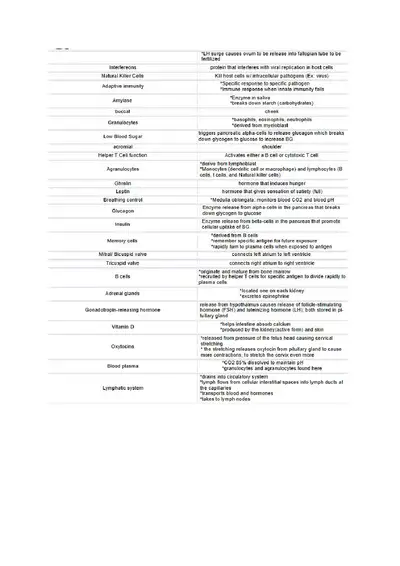 Past Exams
ATI TEAS 7
Test of Essential Academic Skills
10 pagesJun 2025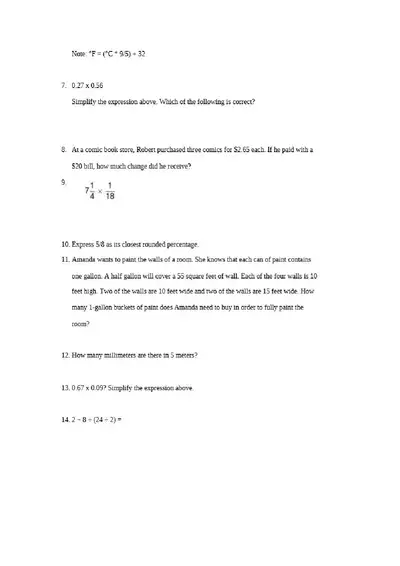 Past Exams
Teas Math Study Guide
Test of Essential Academic Skills
13 pagesJun 2025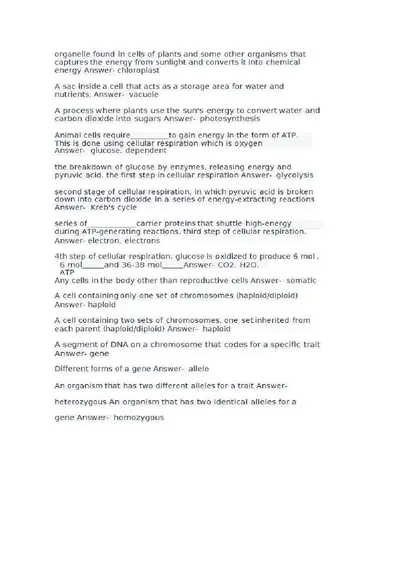 Past Exams
2023 BIOL ATI TEAS
Test of Essential Academic Skills
14 pagesJun 2025 Past Exams
ATI TEAS Test Science Questions and Answers
Test of Essential Academic Skills
23 pagesJun 2025 Past Exams
TEAS 7 Math Practice Test Edition 3
Test of Essential Academic Skills
64 pagesJun 2025 Past Exams
ATI TEAS 7 Comprehensive Practice Exam
Test of Essential Academic Skills
62 pagesJun 2025 Past Exams
TEAS Review 4
Test of Essential Academic Skills
29 pagesJun 2025
Study this document with CramX
Once it is in your library, every tool can work from it.