
ATI Maternal Newborn Practice Exam with Answers (210 Solved Questions)
- Assessment Technologies Institute
- 114 pages
- Shared February 2025
- 141 downloads
ATI Maternal Newborn Practice Exam with Answers is the perfect way to get a feel for your upcoming test.
Preview · 31 of 114 pages
Page 1
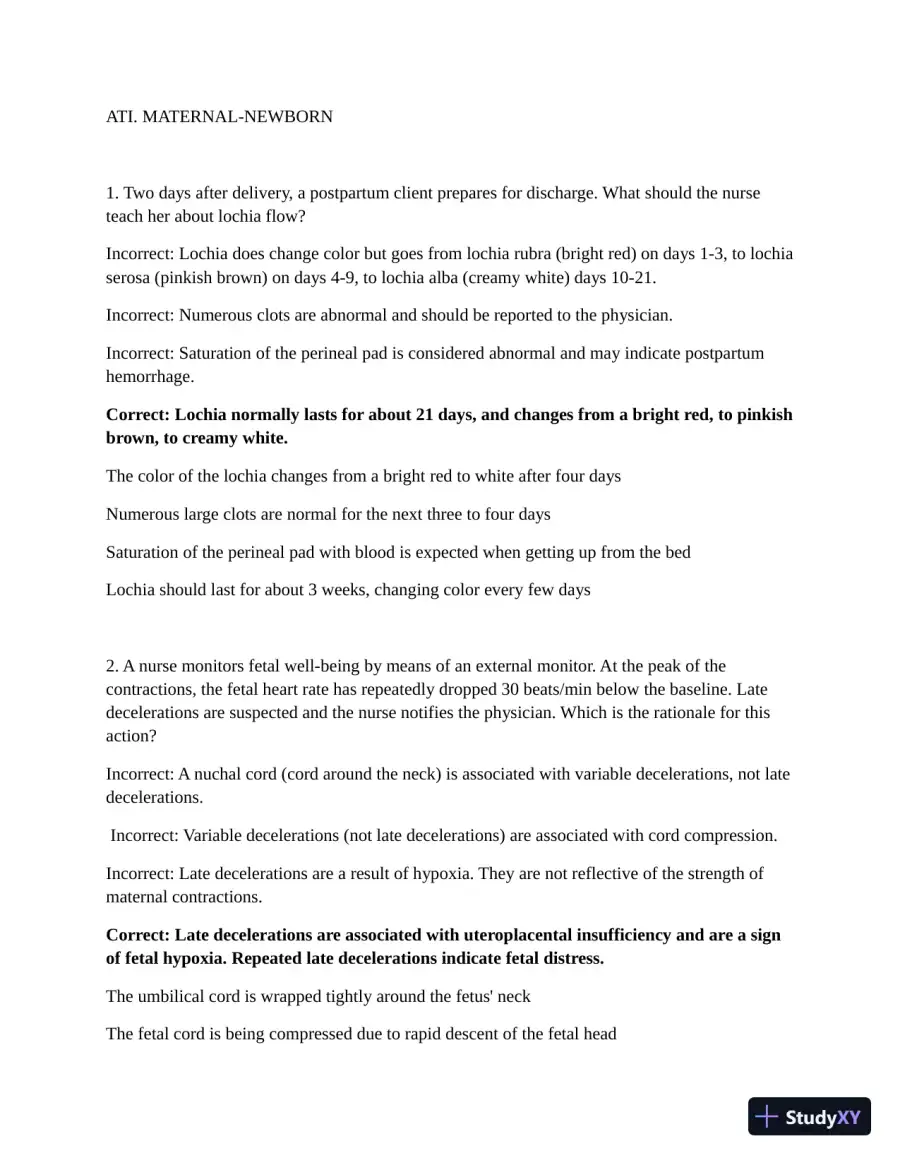 ATI. MATERNAL-NEWBORN1. Two days after delivery, a postpartum client prepares for discharge. What should the nurseteach her about lochia flow?Incorrect: Lochia does change color but goes from lochia rubra (bright red) on days 1-3, to lochiaserosa (pinkish brown) on days 4-9, to lochia alba (creamy white) days 10-21.Incorrect: Numerous clots are abnormal and should be reported to the physician.Incorrect: Saturation of the perineal pad is considered abnormal and may indicate postpartumhemorrhage.Correct: Lochia normally lasts for about 21 days, and changes from a bright red, to pinkishbrown, to creamy white.The color of the lochia changes from a bright red to white after four daysNumerous large clots are normal for the next three to four daysSaturation of the perineal pad with blood is expected when getting up from the bedLochia should last for about 3 weeks, changing color every few days2. A nurse monitors fetal well-being by means of an external monitor. At the peak of thecontractions, the fetal heart rate has repeatedly dropped 30 beats/min below the baseline. Latedecelerations are suspected and the nurse notifies the physician. Which is the rationale for thisaction?Incorrect: A nuchal cord (cord around the neck) is associated with variable decelerations, not latedecelerations.Incorrect: Variable decelerations (not late decelerations) are associated with cord compression.Incorrect: Late decelerations are a result of hypoxia. They are not reflective of the strength ofmaternal contractions.Correct: Late decelerations are associated with uteroplacental insufficiency and are a signof fetal hypoxia. Repeated late decelerations indicate fetal distress.The umbilical cord is wrapped tightly around the fetus' neckThe fetal cord is being compressed due to rapid descent of the fetal headlOMoARcPSD|13778330
Page 2

Page 3
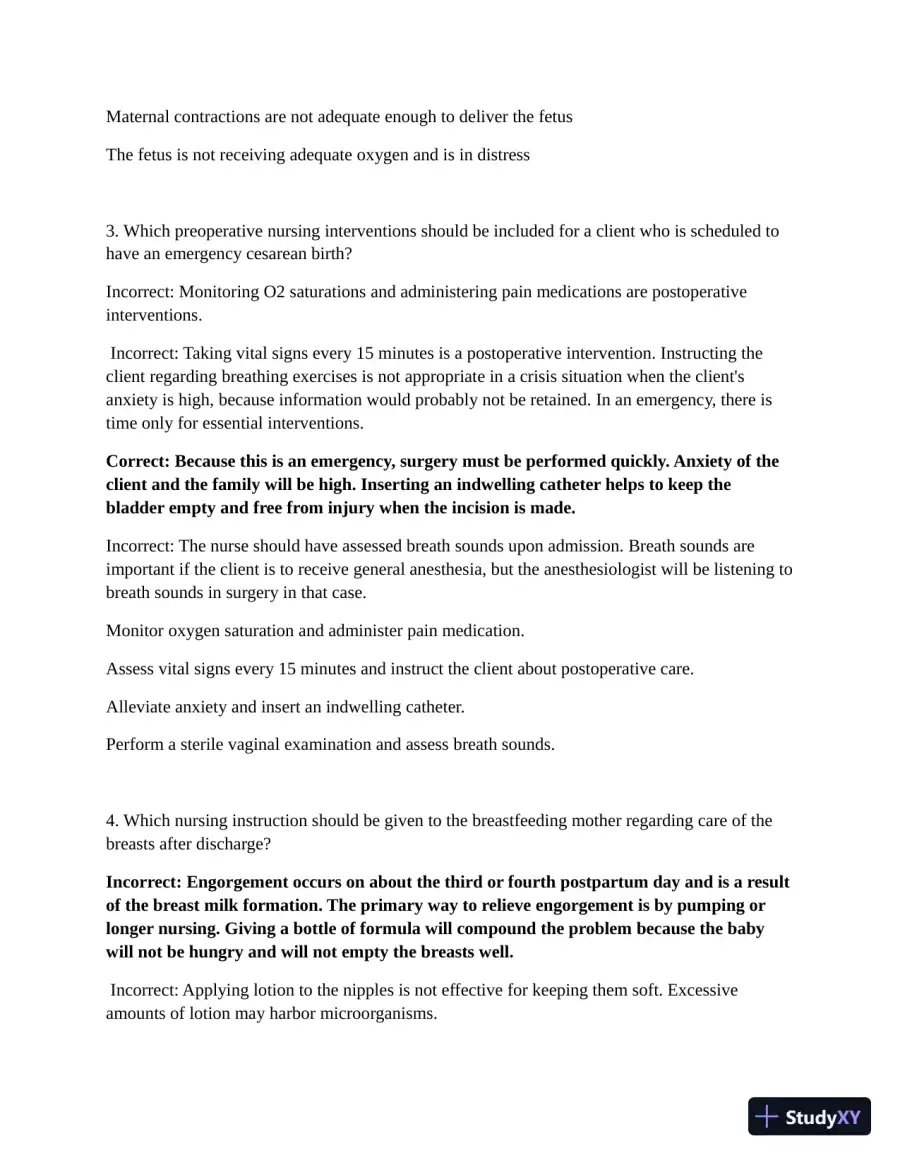 Maternal contractions are not adequate enough to deliver the fetusThe fetus is not receiving adequate oxygen and is in distress3. Which preoperative nursing interventions should be included for a client who is scheduled tohave an emergency cesarean birth?Incorrect: Monitoring O2 saturations and administering pain medications are postoperativeinterventions.Incorrect: Taking vital signs every 15 minutes is a postoperative intervention. Instructing theclient regarding breathing exercises is not appropriate in a crisis situation when the client'sanxiety is high, because information would probably not be retained. In an emergency, there istime only for essential interventions.Correct: Because this is an emergency, surgery must be performed quickly. Anxiety of theclient and the family will be high. Inserting an indwelling catheter helps to keep thebladder empty and free from injury when the incision is made.Incorrect: The nurse should have assessed breath sounds upon admission. Breath sounds areimportant if the client is to receive general anesthesia, but the anesthesiologist will be listening tobreath sounds in surgery in that case.Monitor oxygen saturation and administer pain medication.Assess vital signs every 15 minutes and instruct the client about postoperative care.Alleviate anxiety and insert an indwelling catheter.Perform a sterile vaginal examination and assess breath sounds.4. Which nursing instruction should be given to the breastfeeding mother regarding care of thebreasts after discharge?Incorrect: Engorgement occurs on about the third or fourth postpartum day and is a resultof the breast milk formation. The primary way to relieve engorgement is by pumping orlonger nursing. Giving a bottle of formula will compound the problem because the babywill not be hungry and will not empty the breasts well.Incorrect: Applying lotion to the nipples is not effective for keeping them soft. Excessiveamounts of lotion may harbor microorganisms.lOMoARcPSD|13778330
Page 4
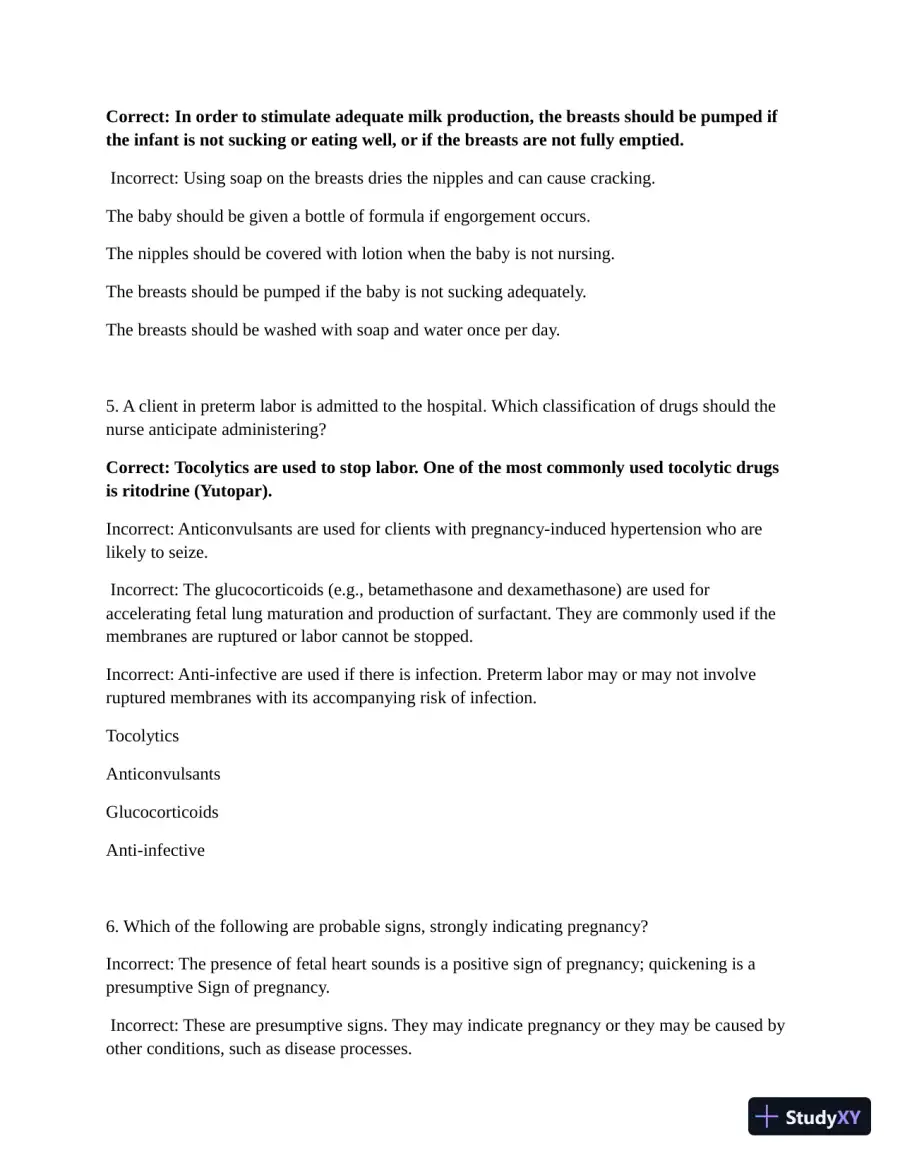 Correct: In order to stimulate adequate milk production, the breasts should be pumped ifthe infant is not sucking or eating well, or if the breasts are not fully emptied.Incorrect: Using soap on the breasts dries the nipples and can cause cracking.The baby should be given a bottle of formula if engorgement occurs.The nipples should be covered with lotion when the baby is not nursing.The breasts should be pumped if the baby is not sucking adequately.The breasts should be washed with soap and water once per day.5. A client in preterm labor is admitted to the hospital. Which classification of drugs should thenurse anticipate administering?Correct: Tocolytics are used to stop labor. One of the most commonly used tocolytic drugsis ritodrine (Yutopar).Incorrect: Anticonvulsants are used for clients with pregnancy-induced hypertension who arelikely to seize.Incorrect: The glucocorticoids (e.g., betamethasone and dexamethasone) are used foraccelerating fetal lung maturation and production of surfactant. They are commonly used if themembranes are ruptured or labor cannot be stopped.Incorrect: Anti-infective are used if there is infection. Preterm labor may or may not involveruptured membranes with its accompanying risk of infection.TocolyticsAnticonvulsantsGlucocorticoidsAnti-infective6. Which of the following are probable signs, strongly indicating pregnancy?Incorrect: The presence of fetal heart sounds is a positive sign of pregnancy; quickening is apresumptive Sign of pregnancy.Incorrect: These are presumptive signs. They may indicate pregnancy or they may be caused byother conditions, such as disease processes.lOMoARcPSD|13778330
Page 5
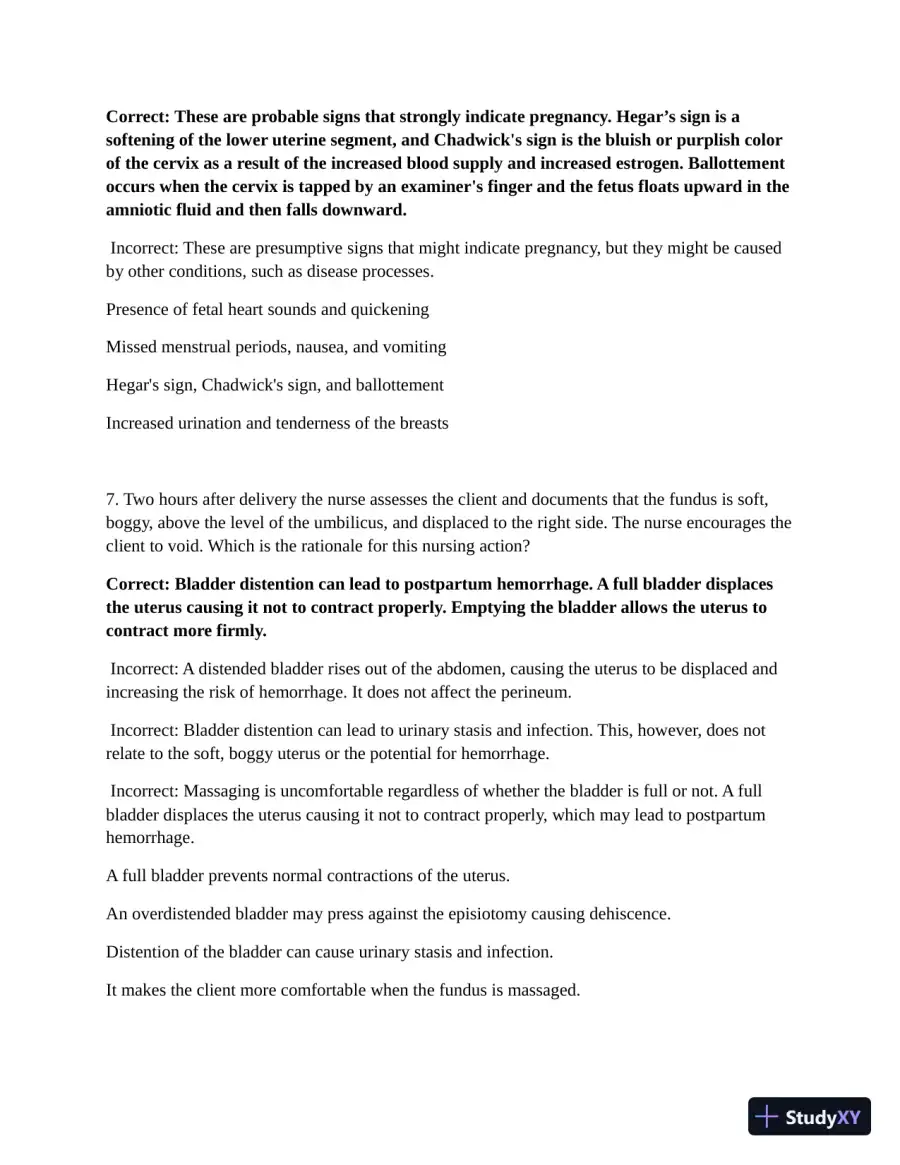 Correct: These are probable signs that strongly indicate pregnancy. Hegar’s sign is asoftening of the lower uterine segment, and Chadwick's sign is the bluish or purplish colorof the cervix as a result of the increased blood supply and increased estrogen. Ballottementoccurs when the cervix is tapped by an examiner's finger and the fetus floats upward in theamniotic fluid and then falls downward.Incorrect: These are presumptive signs that might indicate pregnancy, but they might be causedby other conditions, such as disease processes.Presence of fetal heart sounds and quickeningMissed menstrual periods, nausea, and vomitingHegar's sign, Chadwick's sign, and ballottementIncreased urination and tenderness of the breasts7. Two hours after delivery the nurse assesses the client and documents that the fundus is soft,boggy, above the level of the umbilicus, and displaced to the right side. The nurse encourages theclient to void. Which is the rationale for this nursing action?Correct: Bladder distention can lead to postpartum hemorrhage. A full bladder displacesthe uterus causing it not to contract properly. Emptying the bladder allows the uterus tocontract more firmly.Incorrect: A distended bladder rises out of the abdomen, causing the uterus to be displaced andincreasing the risk of hemorrhage. It does not affect the perineum.Incorrect: Bladder distention can lead to urinary stasis and infection. This, however, does notrelate to the soft, boggy uterus or the potential for hemorrhage.Incorrect: Massaging is uncomfortable regardless of whether the bladder is full or not. A fullbladder displaces the uterus causing it not to contract properly, which may lead to postpartumhemorrhage.A full bladder prevents normal contractions of the uterus.An overdistended bladder may press against the episiotomy causing dehiscence.Distention of the bladder can cause urinary stasis and infection.It makes the client more comfortable when the fundus is massaged.lOMoARcPSD|13778330
Page 6
 8. Which site is preferred for giving an IM injection to a newborn?Incorrect: Ventrogluteal muscles are located in the hip area. It is not the preferred site forinjections in the newborn because of lack of muscle mass.Correct: The middle third of the vastus lateralis is the preferred site for injections.Incorrect: Ventrogluteal muscles are located in the hip area. It is not the preferred site forinjections in the newborn because of lack of muscle mass.Incorrect: Newborns do not receive injections in the dorsogluteal site (gluteus maximus) due todecreased muscle mass.VentroglutealVastus lateralisRectus femorisDorsogluteal9. During the first twelve hours following a normal vaginal delivery, the client voids 2,000 mL ofurine. How should the nurse interpret this finding?Incorrect: Urinary tract infections are common during pregnancy and in the postpartum period.Urinary frequency is a common finding. However, voiding large amounts of urine is not a sign ofa UTI.Incorrect: High output renal failure occurs with injury/trauma to the kidneys. There has been nodamage to the kidneys. Incorrect: Most women do receive some IV fluids during labor anddelivery, however the IV rates are carefully calculated according to weight.Correct: During pregnancy, the circulating blood volume increases by about 50%. In orderto get rid of the excess fluid volume after delivery, the woman experiences an increasedamount of urine output during the first few hours.Urinary tract infectionHigh output renal failureExcessive use of IV fluids during deliveryNormal diuresis after deliverylOMoARcPSD|13778330
Page 7
 10. If a pregnant client diagnosed with gestational diabetes cannot maintain control of her bloodsugar by diet alone, which medication will she receive?Incorrect: Glucophage is an oral hypoglycemic. Oral hypoglycemic cross the placenta and cancause damage to the fetus. They are not used in gestational diabetes for that reason.Incorrect: Glucagon is a hormone used to raise blood sugar and manage severe hypoglycemia.Clients with gestational diabetes have hyperglycemia.Correct: Insulin is the drug of choice for gestational diabetes. Insulin lowers the client'sblood sugar without harming the fetus.Incorrect: DiaBeta is an oral hypoglycemic drug. Oral hypoglycemic agents cross the placentaand can cause damage to the fetus. They are not used for gestational diabetes for that reason.Metformin (Glucophage)GlucagonInsulinGlyburide (DiaBeta)11. Which assessment finding indicates that placental separation has occurred during the thirdstage of labor?Incorrect: There is usually an increase in bleeding (a sudden gush of blood) when the placentaseparates.Incorrect: Contractions continue in an attempt to expel the placenta. The contractions may notbe as intense, but they do not stop. Also, fundal massage helps contract the uterus preventingpostpartum bleeding.Incorrect: Shaking and chills occur about 10-15 minutes after the delivery of the baby, but arenot related to the placental detachment. They are a result of the release of pressure on pelvicnerves and the release of epinephrine during labor.Correct: As the placenta detaches, the cord that has been clamped becomes longer as itslides out of the vagina.Decreased vaginal bleedingContractions stopMaternal shaking and chillslOMoARcPSD|13778330
Page 8
 Lengthening of the umbilical cord12. The nurse midwife is concerned about a pregnant client who is suspected of having aTORCH infection. Which is the main reason TORCH infections are grouped together? They are:Incorrect: Most TORCH infections can cause mild flu-like symptoms for the mother. Death mayor may not occur in the fetus.Incorrect: TORCH is an abbreviation for Toxoplasmosis, Other (syphilis, HIV and Hepatitis B),Rubella, Cytomegalovirus, and Herpes simplex—not all of these are sexually transmitted.Correct: All TORCH infections have the capability of infecting the fetus or causing seriouseffects to the newborn.Incorrect: A vector is a carrier of the disease such as a mosquito. Not all of the TORCHinfections are carried by vector.benign to the woman but cause death to the fetus.sexually transmitted.capable of infecting the fetus.transmitted to the pregnant woman by a vector.13. During the postpartum period, a hospitalized client complains of discomfort related to herepisiotomy. The nurse assigns the diagnosis of “pain related to perineal sutures.” Which nursingintervention is most appropriate during the first 24 hours following an episiotomy?Incorrect: Petroleum jelly will harbor bacteria, which may hinder healing.Incorrect: The client should practice Kegel exercises to increase bladder tone, but these exerciseswould add to the client's discomfort during the first 24hours.Incorrect: Taking a warm sitz bath isrecommended after the first 24 hours.Correct: Ice packs will decrease edema and discomfort, and prevent formation of ahematoma.Instruct the client to use petroleum jelly on the episiotomy after voiding.Encourage the client to practice Kegel exercises.Advise the client to take a warm sitz bath every four hours.lOMoARcPSD|13778330
Page 9
 Apply ice packs to the perineum.14. A client asks the nurse about the benefits of breastfeeding. Which response by the nurseprovides the most accurate information?Incorrect: Breastfeeding does not help speed up weight loss. The lactating mother requires morecalories, but usually has an increased appetite to accommodate that need.Incorrect: Protein amounts are greater in formula and cow's milk.Correct: Breast milk is easier to digest because of the type of fat and protein in the milk.Incorrect: Breastfeeding does not prevent to woman from getting pregnant because it does notprevent ovulation. Most women ovulate within the first 6 weeks after delivery.Breastfeeding helps women lose weight faster.Breast milk contains a greater amount of protein.Breast milk is easier to digest than formula.Breastfeeding is a good method of contraception.15. Which physiological change takes place during the puerperium?Incorrect: The puerperium is the first 6 weeks after delivery. The client will experience lochia forthe first few weeks, and hormone levels will stabilize. Menstruation cannot occur until ovulationoccurs.Incorrect: This occurs in stage three of labor.Correct: The uterine changes are called involution. The uterus should return to its pre-pregnancy state within 6 weeks after delivery.Incorrect: This describes the labor process, not the puerperium.The endometrium begins to undergo alterations necessary for menstruation.The placenta begins to separate from the uterine wall.The uterus returns to a pre-pregnant size and location.The uterus contracts at regular intervals with dilation of the cervix occurring.lOMoARcPSD|13778330
Page 10
 16. A client delivered two days ago and is suspected of having postpartum "blues." Whichsymptoms confirm the diagnosis?Correct: These are signs of the postpartum blues, which typically diminishes within three-four days after delivery. Postpartum blues, a transient period of tearfulness, is a result ofhormonal shifts. Other symptoms of the blues include: sadness, anxiety about the health ofthe baby, insomnia, anorexia, anger, feelings of anticlimax.Incorrect: Postpartum blues, a transient period of tearfulness, is a result of hormonal shifts.Depression and suicidal thoughts are signs of postpartum depression, not the blues and should befollowed up with psychiatric treatment.Incorrect: Excess anxiety and the inability to care for the family are signs of postpartumdepression, not the blues. Postpartum blues, a transient period of tearfulness, is a result ofhormonal shifts.Incorrect: Nausea and vomiting are psychosomatic symptoms of postpartum depression andrequire psychiatric treatment. Postpartum blues, a transient period of tearfulness, is a result ofhormonal shifts.Uncontrollable crying and insecurityDepression and suicidal thoughtsSense of the inability to care for the family and extreme anxietyNausea and vomiting17. Shortly after delivery, the nursery nurse gives the newborn an injection of phytonadione(Vitamin K). The infant's grandmother wants to know why the baby got “a shot in his leg.”Which response by the nurse is most appropriate?Incorrect: Calcium is needed for bone and muscle growth, not Vitamin K.Incorrect: Vitamin K is used to promote clotting, and does not affect digestion.Incorrect: The B vitamins are responsible for carbohydrate metabolism and the energy derivedfrom glucose, not Vitamin K.Correct: Vitamin K is given to prevent bleeding until the intestinal bacteria can start toproduce it. The intestines of a newborn are sterile until it starts to feed. Vitamin K helpswith the clotting factors necessary to control bleeding.lOMoARcPSD|13778330
Page 11
 "Vitamin K promotes bone and muscle growth.""Vitamin K helps the baby digest milk.""Vitamin K helps stabilize the baby's blood sugar.""Vitamin K is used to prevent bleeding."18. At 10 weeks gestation, a primigravida asks the nurse what is occurring developmentally withher baby. Which response by the nurse is correct?Incorrect: Wrinkles do not form until late in the pregnancy. Fat stores usually do not form untilthe third trimester.Incorrect: The eyelids are fused until about 26 weeks.Correct: The kidneys are making urine, which is excreted by the fetus into the amnioticfluid.Incorrect: The heart is already formed and beating at 8 weeks."The skin is wrinkled and fat is being formed.""The eyelids are open and he can see.""The kidneys are making urine.""The heart is being developed."19. A nurse in the clinic instructs a primigravida about the danger signs of pregnancy. The clientdemonstrates understanding of the instructions, stating she will notify the physician if which signoccurs?Incorrect: White vaginal discharge is a normal occurrence during pregnancy due to increasedamounts of estrogen and increased blood supply to the cervix and vagina. It is not a “danger sign.“Incorrect: Backache is common in pregnancy due to the alteration of the woman's center ofgravity; it is not a “danger sign.” Backaches become worse as the uterus enlarges.Incorrect: Frequent, urgent urination is a common discomfort; it is not a danger sign. Thepressure of the enlarging uterus causes frequency and urgency.lOMoARcPSD|13778330
Page 12
 Correct: Abdominal pain is a danger sign and can be indicative of an abruptio placenta. Itis important for a physician to evaluate this symptom. It is one of several danger signs,including: headache, rupture of membranes, vaginal bleeding, edema, epigastric pain,elevated temperature, painful urination, prolonged vomiting, blurred vision, change in orabsence of fetal movement.White vaginal dischargeDull backacheFrequent, urgent urinationAbdominal pain20. An hour after delivery, the nurse instills erythromycin (Ilotycin) ointment into the eyes of anewborn. The main objective of the treatment is to prevent infection caused by which organism?Incorrect: Erythromycin (Ilotycin) is an antibiotic ointment used to prevent blindness related togonorrhea. Antibiotics are effective against bacteria. Rubella is a virus.Correct: Ilotycin, an antibiotic, is used for the prophylaxis treatment of gonorrhea andchlamydia. If left untreated, it could result in blindness.Incorrect: Ilotycin, an antibiotic, is not effective in combating syphilis infections.Incorrect: HIV is a virus. Antibiotics are effective against bacteria. Ilotycinis an antibioticointment and therefore not effective against HIV.RubellaGonorrheaSyphilisHuman immunodeficiency virus (HIV)21. A woman in active labor receives a narcotic analgesic for pain control. If the narcotic is givena half an hour before delivery, which effect will the medication have on the infant? It will causethe infant's:Incorrect: Narcotic analgesics cause respiratory depression and do not affect the infant's bloodsugar.lOMoARcPSD|13778330
Page 13
 Correct: Narcotic analgesics can cause respiratory depression for the infant and also forthe mother. This is evidenced by low Apgar scores (apnea and bradycardia) in the infant. Ifrespiratory depression occurs, a narcotic antagonist (Narcan) is usually given.Incorrect: Narcotic analgesics, if given too close to delivery, can cause bradycardia, nottachycardia.Incorrect: Narcotics, such as Demerol, cause CNS depression, not hyperactivity.blood sugar to fall.respiratory rate to decrease.heart rate to increase.movements to be hyperactive.22. For a client in the second trimester of pregnancy, which assessment data support a diagnosisof pregnancy-induced hypertension (PIH)?Incorrect: A decrease in hemoglobin is indicative of anemia, while uterine tenderness mayindicate abruptio placenta.Incorrect: Polyuria and weight loss are signs of gestational diabetes.Correct: PIH is characterized by two components: elevated blood pressure and proteinuria.Vasospasm in the arterioles leads to increased blood pressure and a decrease in blood flowto the uterus and placenta. This results in a questionable outcome for the fetus due toplacental insufficiency. Renal blood flow is affected, ultimately resulting in proteinuria.Incorrect: Elevated blood glucose is a sign of gestational diabetes. Hematuria may indicate aU.T.I.Hemoglobin 10.2 mg/dL and uterine tendernessPolyuria and weight loss of 3 pounds in the last monthBlood pressure 168/110 and 3+ proteinuriaHematuria and blood glucose of 160 mg/dL23. A 35-week gestation infant was delivered by forceps. Which assessment findings should alertthe nurse to a possible complication of the forceps delivery?lOMoARcPSD|13778330
Page 14
 Correct: A weak, ineffective suck could be a result of facial paralysis which is a majorcomplication of forceps deliveries. Scalp edema is another complication and should subsidewithin 2-3 days. Other complications of forceps deliveries include: cephalohematomas,intracranial hemorrhage (especially in premature infants) and excessive bruising, whichincreases the risk for hyperbilirubinemia.Incorrect: Molding of the head is a common occurrence with vaginal deliveries. Jitteriness is asign of low blood sugar, not forceps delivery.Incorrect: A shrill, high-pitched cry and tachypnea are signs of drug withdrawal, not acomplication of forceps delivery.Incorrect: Hypothermia is not a complication of forceps deliveries. The hemoglobin level isquite low (should be about 15-16 g/dL), but unless there is excessive bleeding, the hemoglobinlevel should be unaffected by the forceps delivery.Weak, ineffective suck, and scalp edemaMolding of the head and jitterinessShrill, high pitched cry, and tachypneaHypothermia and hemoglobin of 12.5 g/dL24. In which position should the nurse place the laboring client in order to increase the intensityof the contractions and improve oxygenation to the fetus?Incorrect: This position is contraindicated because the fetus creates pressure on the mother's venacava. Incorrect: Squatting widens the pelvic inlet, but does not improve contractions or fetaloxygenation.Correct: This prevents vena cava compression and, therefore, improves fetal oxygenation;at the same time, it provides a restful position between contractions.Incorrect: High Fowler's (sitting upright) will assist with the intensity of the contractionsbecause of gravity, but it will not help with fetal oxygenation.Supine with legs elevatedSquattingLeft side-lyingHigh Fowler'slOMoARcPSD|13778330
Page 15
 25. A woman enters the birthing center in active labor. She tells the nurse that her membranesruptured 26 hours ago. The nurse immediately takes the client's vital signs. Which is the rationalefor the nurse's actions?Incorrect: Pulse rates increase due to pain, not because of rupture of membranes.Incorrect: The woman is not reporting pain and ruptured membranes do not cause pain. Lack offluid (ruptured membranes) has no influence on respiratory rates.Incorrect: Blood pressure is not affected by prolonged rupture of membranes.Correct: The membranes are a protective barrier for the fetus. If the membranes areruptured for a prolonged period of time, microorganisms from the vagina can ascend intothe uterus. The longer the membranes have been ruptured, the greater the risk forinfection.Pulse rates rise the longer the membranes are rupturedRespiratory rates decrease due to lack of fluid in the uterusProlonged rupture of membranes can lead to transient hypertensionInfection is a complication of prolonged rupture of membranes26. A new client's pregnancy is confirmed at 10 weeks gestation. Her history reveals that her firsttwo pregnancies ended in spontaneous abortion at 12 and 20 weeks. She has a4-year-old and aset of 1-year-old twins. How should the nurse record the client's current gravida and para status?Incorrect: Gravida includes the number of times the woman has been pregnant. She has beenpregnant 5 times. A parity of 3 would be obtained by incorrectly counting the 20-weekspontaneous abortion as a viable infant.Incorrect: The woman has been pregnant 5 times, including the present pregnancy. The abortionscount as pregnancies, but not in the parity.Correct: Gravida is the number of times a woman has been pregnant, including the presentpregnancy. Para is the number of pregnancies carried past 20 weeks' gestation, regardlessof the number of fetuses delivered. The woman has been pregnant five times, including thispregnancy, and has had two pregnancies that have exceeded 20 weeks. Even though shedelivered two children as a result of one of those pregnancies, the para for her twinpregnancy remains at 1. The pregnancy after which she delivered her four-year-old childmakes her a para 2.lOMoARcPSD|13778330
Page 16
 Incorrect: A para of 4 would be obtained by incorrectly counting the 2 spontaneous abortions asviable at delivery.Gravida 2, para 3Gravida 4, para 2Gravida 5, para 2Gravida 5, para 427. A 16-year-old client reports to the school nurse because of nausea and vomiting. Afterexploring the signs and symptoms with the client, the nurse asks the girl whether she could bepregnant. The girl confirms that she is pregnant, but states that she does not know how ithappened. Which nursing diagnosis is most important?Incorrect: Although this addresses the client's nausea and vomiting, it is not the most importantdiagnosis at this time. There are no data to indicate that the client actually has a nutritionaldeficit. Because nausea and vomiting place her at risk for nutritional deficit, a diagnosis of “riskfor altered nutrition. . .” would be appropriate. The knowledge diagnosis is an actual problem andshould be addressed at this contact with the client; the nutrition problem will be ongoing duringthe pregnancy.Incorrect: This diagnosis does not address the reason for the lack of client knowledge—she maybe at risk for poor parenting, but this is not the priority because there will be time to address thatissue as the pregnancy progresses.Incorrect: There is no clear evidence of the denial of pregnancy nor of the lack of coping skills.Correct: This client clearly has a knowledge deficit about the causes of pregnancy and thephysiological changes associated with it. It is important for teaching to begin immediatelybecause her understandings essential to her compliance with suggestions for a healthypregnancy.Altered nutrition: less than body requirements related to nausea and vomitingRisk for altered family processes related to the client's ageIneffective individual coping related to denial of pregnancyKnowledge deficit related to the client's developmental stage and agelOMoARcPSD|13778330
Page 17
 28. A client is admitted to the hospital for induction of labor. Which are the main indications forlabor induction?Incorrect: These are contraindications for labor induction.Correct: Induction of labor is the stimulation of contractions (usually by the use of Pitocin)before they begin on their own. Maternal indications for induction of labor include:pregnancy induced hypertension, chorioamnionitis, gestational diabetes, chronichypertension and premature rupture of membranes. Fetal indications include intrauterinegrowth retardation, post-term dates and fetal demise.Incorrect: These are contraindications for labor induction.Incorrect: These are contraindications for labor induction. They are indications for a C-section.Placenta previa and twinsPregnancy-induced hypertension and postterm fetusBreech position and prematurityCephalopelvic disproportion and fetal distress29. A client in active labor receives a regional anesthetic. Which is the main purpose of regionalanesthetics?Incorrect: This choice describes general anesthesia.Correct: Regional anesthetics provide numbness and loss of pain sensation to an area. Themost common regional blocks are: local, pudendal, epidural, and spinal.Incorrect: Pain sensations travel to the central nervous system not away from it.Incorrect: This choice describes the action for narcotic medications, not regional anesthetics.To relieve pain by decreasing the client's level of consciousnessTo provide general loss of sensation by blocking sensory nerves to an areaTo provide pain relief by blocking descending impulses from the central nervous systemTo relieve pain by decreasing the perception of pain leading to the pain centers in the brainlOMoARcPSD|13778330
Page 18
 30. The nursery nurse reviews a newborn's birth history and notes that the Apgar scores were 5 atone minute after birth, and 7 at five minutes after birth. How should the nurse interpret thesescores? The infant:Incorrect: Usually babies that only need suctioning of the mouth and nose have Apgars that are 8or 9.Incorrect: If intubation is required, it means that the baby's heart and respiratory rates are notstable, and Apgars would be lower than 5.Incorrect: Apgar scores are used to quickly assess the well-being of the baby. Apgar scores rangefrom 0-10. A score of 0 indicates that the baby is dead. An Apgar score of 5 indicates that thebaby needs assistance.Correct: Apgar scores of 5 and 7 indicate that the heart rate was below 100, the respiratoryeffort was irregular, there was little muscle tone, the baby was pink with blue extremities,and there was a grimace. These scores indicate that the baby needed stimulation in order tobreathe, and oxygen to increase its oxygen saturation.needed brief oral and nasal suctioning.required endotracheal intubation and bagging with a hand-held resuscitator.was stillborn and required CPR.required physical stimulation and supplemental oxygen.31. With routine prenatal screening, a woman in the second trimester of pregnancy is confirmedto have gestational diabetes. How may the nurse explain the role of diet and insulin in themanagement of blood sugar during pregnancy?Correct: Insulin is given to gestational diabetic clients because their insulin requirementscannot keep up with the metabolic needs of the fetus in the last trimester. Insulin decreasesthe blood sugar.Incorrect: Oral hypoglycemic agents are not given to clients with gestational diabetes becausethey cross the placenta and are harmful to the fetus.Incorrect: The client will need frequent follow-up after delivery and into the postpartum period,but she should not need insulin after delivery because in gestational diabetes, blood glucoseusually returns to normal after delivery.Incorrect: Clients with gestational diabetes need to eat three balanced meals and three snacksdaily. The glucose load is best when maintained at a steady level throughout the day to avoidlOMoARcPSD|13778330
Page 19
 periodic overproduction of insulin. The last snack of the day should contain protein to stabilizethe energy production during the night."Insulin lowers an elevated blood sugar during pregnancy to meet the increased metabolic needsof the baby.""You will need to take an oral hypoglycemic, which is a pill to lower your blood sugar.""There is a good possibility you will be taking insulin for the rest of your life.""You should eat three large meals per day to maintain steady glucose load."32. A breastfeeding mother complains of cramping. Which is the main cause of the client'safterpains?Incorrect: Infection of the suture line can cause pain and discomfort, but is not the cause ofafterpains. Afterpains are postpartum uterine contractions.Incorrect: Constipation and bloating do occur in the postpartum period as peristalsis resumes, butconstipation does not cause afterpains, which are uterine contractions.Correct: Afterpains are caused by uterine contractions that occur for the first 2-3 dayspostpartum. Breast-feeding mothers have more afterpains due to the release of oxytocinstimulated by the nursing baby. Oxytocin strengthens uterine contractions and compressesblood vessels, preventing blood loss.Incorrect: Trauma is not the cause of afterpains. Afterpains are postpartum uterine contractions.Infection of the suture lineConstipation and bloatingContractions of the uterusTrauma during delivery33. A client who is 37 weeks gestation comes to the office for a routine visit. This is the client'sfirst baby and she asks the nurse how she will know when labor begins. Which signs indicate thattrue labor has begun?Incorrect: These signs describe Braxton-Hicks contractions, which occur throughout pregnancyand increase in intensity and frequency as labor grows closer.lOMoARcPSD|13778330
Page 20
 Incorrect: True labor pains start in the lower back and sweep to the front in waves.Incorrect: These signs occur with lightening, usually 10-14 days before labor begins.Correct: These are true signs of labor, along with the rupturing of the membranes andcervical dilatation.Contractions that are irregular and decrease in intensity when walkingAbdominal pain that starts at the fundus and progresses to the lower backIncreased pressure on the bladder and urinary frequencyExpulsion of pink-tinged mucous and contractions that start in the lower back34. A multiparous woman with a history of all vaginal births is admitted to the hospital in labor.After several hours, the client's labor has not progressed and she is getting tired and restless. Thedecision is made to proceed with cesarean delivery. The nurse recognizes the client's knowledgedeficit regarding the surgical delivery and care afterbirth. Which is the appropriate expectedoutcome for correction of the client's knowledge deficit? The client will:Incorrect: This expected outcome does not address the client's knowledge deficit. Instead, this isan expected outcome for the nursing diagnosis of ineffective individual coping.Incorrect: This choice does not address the client's knowledge deficit, but instead addresses aproblem with interrupted bonding.Correct: Goals/outcomes should reflect resolution of the stated nursing diagnosis—in thiscase, knowledge deficit. Verbalization of reasons for the surgery would indicate resolutionof the knowledge deficit. If interventions for knowledge deficit are effective, other problems(e.g., anxiety, ineffective coping) may be prevented.Incorrect: This choice addresses the anxiety that will occur because of the unknown, but does notaddress the stated problem, knowledge deficit.demonstrate appropriate coping mechanisms needed to get through the surgery.accept that the type of delivery will not affect the bonding with the baby.verbalize understanding about the reason for the unplanned surgery.demonstrate decreased anxiety and fear of the unknown.lOMoARcPSD|13778330
Page 21
 35. The physician performs an amniotomy for a woman in labor. Which nursing action shouldfollow the procedure?Incorrect: Maternal oxygenation is not affected by an amniotomy.Incorrect: Maternal pulse and blood pressure are not affected by an amniotomy.Incorrect: Assessing the perineum should be done after an episiotomy, not after amniotomy.Correct: An amniotomy, or artificial rupture of membranes (AROM), is used to speed uplabor. The nurse must document the color, amount, character and odor of the fluid, andassess for fetal well being.Check the client's capillary refill and oxygenation.Monitor the maternal pulse and blood pressure.Inspect the perineum for lacerations, bleeding, and hematoma.Assess the fluid for color, odor, and amount.36. For a pregnant adolescent who is anemic, which foods should the nurse include In the client'sdietary plan to increase iron levels?Incorrect: Milk does not contain iron and it interferes with iron absorption.Correct: Orange juice enhances the absorption of iron. Apricots are a good source of iron.Incorrect: Chicken does contain iron, but cottage cheese, a dairy product, does not.Incorrect: Pickles contain large amounts of salt, not iron. Peanut butter sandwiches do notcontain much iron.Milk and fishOrange juice and apricotsChicken and cottage cheesePickles and peanut butter sandwiches37. Which condition must occur in order for identical (monozygotic) twins to develop?Incorrect: Usually only one ovum is released per month; one sperm cannot fertilize two ova.lOMoARcPSD|13778330
Page 22
 Incorrect: This is the case in fraternal (dizygotic) twins. There are two placentas, two chorions,and two amnions. The twins may be the same or different sex.Correct: One sperm fertilizes one ovum, and then the zygote divides into two individualswith one placenta, one chorion, two amnion and two umbilical cords. These twins arealways the same sex.Incorrect: The enzyme on the head of the sperm dissolves the coating of the ovum so eventuallyonly one sperm penetrates one egg.One sperm fertilizes two ovaTwo sperm fertilize two ovaOne sperm fertilizes one ovumTwo sperm fertilize one ovum38. Which fetal structure is responsible for carrying oxygenated blood from the placenta to thefetus?Incorrect: The ductus arteriosus is a shunt that connects the lungs to the aorta, allowing the bloodto bypass the lungs.Incorrect: Except in the case of fetal circulation, arteries do carry oxygenated blood; but duringpregnancy, the two umbilical arteries carry unoxygenated blood from the fetus to the placenta,where preoxygenation occurs. Incorrect: The portal vein carries blood from the intestine to theliver.Correct: The umbilical vein carries oxygenated blood from the placenta to the fetus. Thedirection of blood flow is toward the fetal heart.Ductus arteriosusUmbilical arteryPortal veinUmbilical vein39. A client at 33 weeks gestation is admitted for suspected abruptio placenta. Which factor inthe client's history supports this diagnosis? The client states that she:lOMoARcPSD|13778330
Page 23
 Incorrect: Drinking alcohol is not usually associated with abruptio placenta. Incorrect: Clientswith abruptio placenta do not have contractions that can be relieved by walking. Usually the painis quite intense.Incorrect: Intercourse should not cause an abruptio placenta, although it is contraindicated inclients with placenta previa.Correct: The use of crack cocaine is associated with the separation of the placenta and thebleeding/ hemorrhage that results. Cocaine use is not usually an isolated incident, so thenurse should ask the client about the frequency/amount of the drug usage.drinks two glasses of wine before dinner every night.has intermittent contractions that are relieved by walking.had intercourse with her partner last night.used crack an hour before the symptoms began.40. Which explanation is most appropriate when describing physiological jaundice to the parentsof a newborn?Incorrect: Pathological jaundice, not physiological jaundice, occurs within the first 24 hours andis a result of an ABO incompatibility or Rh incompatibility.Correct: Physiological jaundice is the result of the breakdown of excessive amounts of redblood cells that are not needed after birth. Physiological jaundice is also related to theinability of the immature liver to rid the body of bilirubin, which occurs as the red bloodcells are broken down. The bilirubin accumulates in the blood causing it to be yellow.Incorrect: Jaundice related to breast milk occurs after the first 7 days, not within the first three. Itis not the cause of physiological jaundice.Incorrect: Hepatitis B may have been acquired during delivery and may cause jaundice, but it isnot the cause of physiological jaundice, which this case represents."The baby has a minor incompatibility of the blood."“The baby is breaking down the extra red blood cells that were present at birth.”“The baby is getting too much breast milk, but this is not dangerous.”“The baby may have gotten exposed to hepatitis B during the delivery.”lOMoARcPSD|13778330
Page 24
 41. A woman at 42 weeks gestation enters the hospital for induction of labor. Since the infant ispostterm, which complications should the nurse anticipate when planning for the delivery?Incorrect: Cephalopelvic disproportion is seen in large-for-gestational age infants, not postterminfants. Hypothermia occurs in premature and small-for-gestational age infants.Correct: Asphyxia is a result of chronic hypoxia in utero because of the progressivedegeneration of the placenta. Meconium stained amniotic fluid is a result of the relaxationof the anal sphincter and the passage of meconium into the fluid related to hypoxia. If themeconium stained fluid is aspirated into the infant's lungs at delivery, pneumonia (andpossibly death) will result. If there is meconium stained fluid, the infant's mouth and throatare suctioned as soon as the head is delivered.Incorrect: Intraventricular hemorrhage occurs as a major complication in premature infants, notpostterm infants. Dry, cracked skin is a normal finding of postterm infants and is not considereda complication.Incorrect: Hyperbilirubinemia is not a complication of postterm infants at birth. Hypocalcemia isa complication in small-for gestational age infantsCephalopelvic disproportion and hypothermiaAsphyxia and meconium aspirationIntraventricular hemorrhage and dry, cracked skinHyperbilirubinemia and hypocalcemia42. Which method of temperature regulation would safely and effectively prevent cold stress in anewly delivered infant?Incorrect: The baby should be wrapped snuggly with a warm blanket in order to preserve heatloss.Incorrect: It helps to cover the feet, of course. However, because the scalp is so vascular (and theblood is close to the surface) and because the head makes up a large portion of the baby's surfacearea, most heat loss occurs via the head initially. Peripheral circulation is sluggish at first, so notmuch blood would be cooled by circulating through cold feet.Correct: Newly delivered infants lose a great deal of heat as the amniotic fluid evaporatesfrom the surface of the skin. To prevent rapid heat loss, the baby's face and head should bedried and a hat placed on the baby's head.Incorrect: Infants should NEVER be placed on a heating pad because of risk for burns.lOMoARcPSD|13778330
Page 25
 Wrap the baby loosely with a blanket.Be sure the baby's feet are covered.Cover the baby's head with a hat.Position the baby on a heating pad.43. The nurse performs Leopold's maneuvers for a client admitted in labor. Which is the maingoal of Leopold's maneuvers?Incorrect: Sterile vaginal exams are used to assess the dilation of the cervix.Incorrect: Leopold's maneuvers are not used to assess contraction frequency or intensity.However, some nurses do place their hands on the abdomen to palpate the intensity andfrequency of the contractions.Incorrect: Leopold's maneuvers are not used to assess membrane rupture. Sterile vaginal examsmay assess this if membranes are intact.Correct: Leopold's maneuvers are a method of determining fetal position by abdominalpalpation. It assesses the position, presentation and engagement of the fetus. It also assistsin the location of fetal heart sounds.To determine whether the client's cervix has dilatedTo assess the frequency and intensity of the contractionsTo assess whether membranes have been rupturedTo determine the presentation and position of the fetus44. Immediately after birth, the nurse places the newborn under a radiant warmer. Which is theprimary rationale for the nurse's action?Correct: Temperature regulation is the priority for the newborn. Infants who are coldstressed are at risk for respiratory complications or death.Incorrect: Placing the infant in the warmer does assist the nurse with easier access, buttemperature regulation is the main priority.Incorrect: Most infants are not connected to the cardiac monitor unless the Apgar scores are low.lOMoARcPSD|13778330
Page 26
 Incorrect: The warmer does provide easy access for the family, but this is not the main reason forits use.To facilitate an efficient means of thermoregulationTo facilitate initial assessment by the nurseTo permit the use of the cardiac monitorTo permit close observation by the family members45. A client, gravida 1, para 0, in active labor, is becoming increasingly anxious. Whichstatement by the nurse will block therapeutic communication with the client?Incorrect: Since this is the client's first baby, there will be concerns/anxiety because of theunknown expectations. This response is appropriate, and will help decrease anxiety by allowingidentification and ventilation of fears.Incorrect: This response will encourage the client to talk and will foster good communication.Correct: This is an example of meaningless reassurance and will block therapeuticcommunication because the needs of the client are not being met.Incorrect: This response will facilitate communication, not block it."What concerns are you having now?""Tell me how you are feeling.""Everything is going just fine.""You seem a little nervous."46. A nurse prepares to teach a class regarding postpartum care and includes infections in theteaching plan. Which is the main cause of mastitis in the postpartum client?Correct: Poor breast-feeding technique and improper positioning of the baby are the mainreasons for mastitis. Improper release of the baby's suction can lead to sore, crackednipples, creating a portal of entry for pathogens.Incorrect: Poor hand washing is not the main reason that a woman gets mastitis but can be acontributing cause. For example, if the woman touches her perineal pad and then the breast, thebacteria on the hands can cause an infection.lOMoARcPSD|13778330
Page 27
 Incorrect: Systemic infections such as flu or cold are not the cause of mastitis, which is alocalized infection.Incorrect: Prolonged nursing by itself does not cause mastitis. Often babies engage innonnutritive sucking.Poor breast feeding techniqueInadequate hand washingSystemic maternal infectionProlonged nursing47. A postterm infant is delivered by cesarean section because of fetal distress and meconium-stained amniotic fluid. The nursery nurse frequently monitors the baby's respiratory rate,observing for tachypnea. Which is the reason for the nurse's actions? The infant may:Incorrect: Respiratory depression does not result in tachypnea but in apnea.Correct: This infant is a risk for meconium aspiration pneumonia related to post maturity,meconium staining, fetal distress and being delivered by c-section.Incorrect: Infants with respiratory distress (tachypneic) are usually cold stressed andhypothermic, not hyperthermic.Incorrect: A pneumothorax usually is seen in premature infants who lack surfactant.experience respiratory depression from the medications used during delivery.develop meconium aspiration pneumonia.have an elevated temperature.have a pneumothorax related to delivery.48. The nurse notices a variable deceleration on a fetal monitor strip. Which nursing action isappropriate?Incorrect: Hyperventilation is not the cause of the variable decelerations.Incorrect: Hypertonic uterine contractions refer to a labor with very painful but not necessarilyeffective contractions. The uterus does not relax between contractions. This leads to fetal distressand results in late decelerations, not variable decelerations.lOMoARcPSD|13778330
Page 28
 Correct: Variable decelerations are a result of cord compression. Turning the client ontoher left side may improve fetal oxygenation by relieving pressure on the cord.Incorrect: Variable decelerations are a result of fetal cord compression. Decreasing the fluidswill not relieve cord compression.Instruct the mother to breathe slowly because this is a sign of hyperventilation.Decrease the amount of Pitocin because this is a sign of hypertonic uterine contractions.Turn the woman onto her left side to relieve pressure on the umbilical cord.Reduce the oral and IV fluids to decrease circulatory overload.49. The nursery nurse delays the first bottle feeding of a newborn. Which is the most commonreason for the nurse's actions? The infant has:Incorrect: One method of increasing an infant's low blood sugar is by feeding him.Correct: Bottle feeding of an infant who is tachypneic (resp. rate > 60) is contraindicateddue to risk of aspiration.Incorrect: Acrocyanosis (blue hands and feet) is a normal finding for the first 24 hours.Incorrect: It is not unusual for the nurse to hear a heart murmur shortly after birth.a blood glucose of 45 gm/dL.a respiratory rate above 60.blue hands and feet.a heart murmur.50. During active labor, after a sudden slowing of the fetal heart rate, the nurse assesses thewoman's perineum and observes a prolapsed cord. Which nursing action is most appropriate?Correct: With a sterile gloved hand, the nurse should push the presenting part away fromthe cord, thus preventing cord compression. The cord supplies the fetus with oxygen andnutrients. The fetus is already showing signs of distress because of the slowing of the heartrate. In addition, the nurse should prepare for immediate delivery.Incorrect: Since the head is not engaged (which is why the cord prolapsed), it will be verydifficult to insert a scalp electrode.lOMoARcPSD|13778330
Page 29
 Incorrect: Trendelenburg position places the client with her head lower than her feet. ReverseTrendelenburg places the client with the head higher than the feet. Due to gravity, this will placeadditional pressure on the cord.Incorrect: Covering the cord with a dry gauze will not help the situation. The gauze will get wetin a matter of seconds. There is a risk that the gauze will be lost internally.Hold the presenting part away from the cord.Insert a scalp electrode for an internal fetal monitor.Place the client in reverse Trendelenburg position.Cover the cord with a dry, sterile gauze.51. A client is in the latent stage of labor. Which nursing intervention is most appropriate?Correct: Latent stage is an early stage of labor, which begins with the onset of contractionsand ends when the cervix is dilated to 4 cm. Walking adds gravity to the force of thecontractions, promotes fetal descent, and relieves backache. Once the membranes rupture,bed rest may be indicated, for example if the fetal head is not engaged.Incorrect: Pushing is not indicated until full cervical dilation.Incorrect: This type of breathing pattern is used late in labor when pushing begins.Incorrect: Once labor begins fluids and ice chips are preferred. Nausea and vomiting arecommon as labor progresses. During labor, peristalsis stops. Therefore, having food in thestomach is not advisable.Encourage the client to walk in the hall until membranes rupture.Instruct the client to place her head on her chest and push with the contraction.Teach the client to use the “pant-blow” method of breathing.Advise the client to eat a light meal consisting of carbohydrates.52. Which conditions create a risk for uterine atony in the immediate postpartum period?Incorrect: Breastfeeding causes uterine contractions due to the release of oxytocin. Uterine atonyis not related to the delivery of a child with chromosomal defect.Incorrect: Uterine atony is not a result of postterm pregnancy or amniotomy.lOMoARcPSD|13778330
Page 30
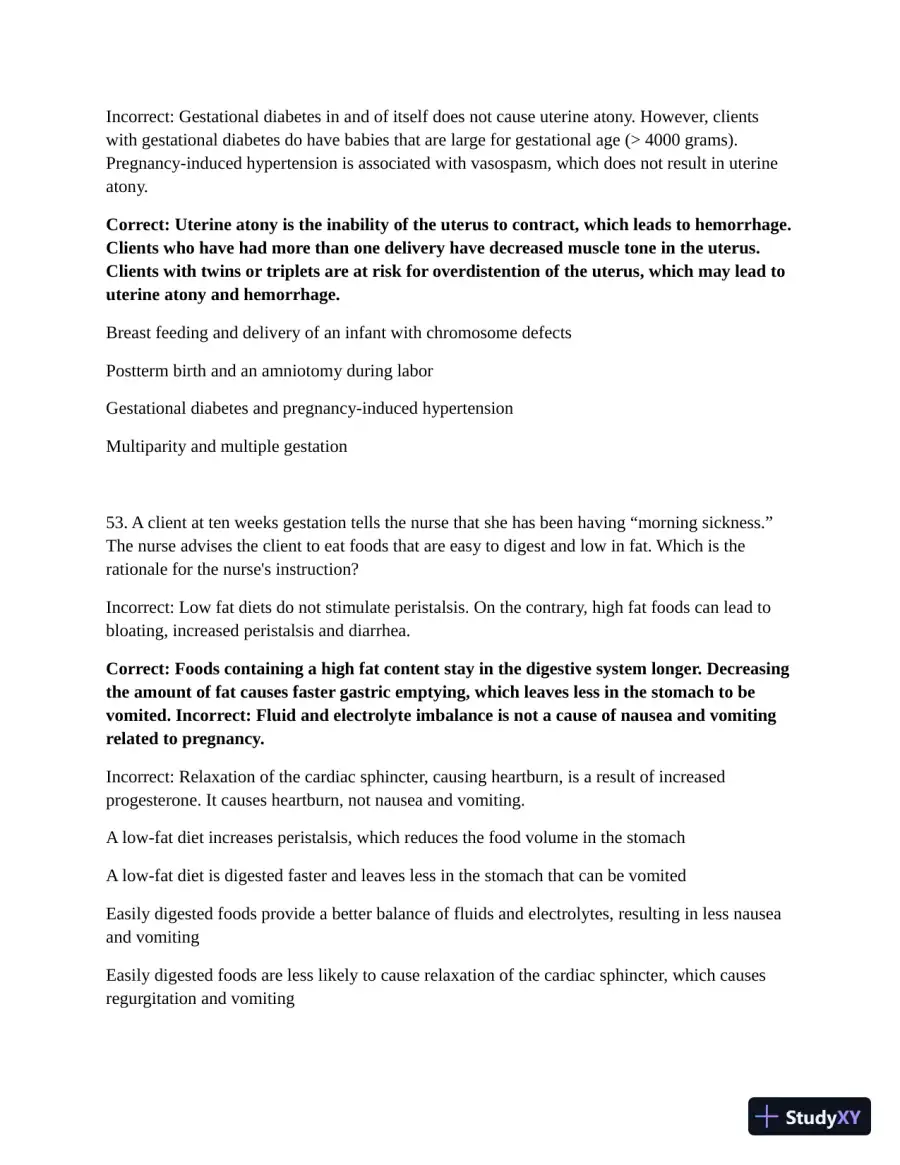 Incorrect: Gestational diabetes in and of itself does not cause uterine atony. However, clientswith gestational diabetes do have babies that are large for gestational age (> 4000 grams).Pregnancy-induced hypertension is associated with vasospasm, which does not result in uterineatony.Correct: Uterine atony is the inability of the uterus to contract, which leads to hemorrhage.Clients who have had more than one delivery have decreased muscle tone in the uterus.Clients with twins or triplets are at risk for overdistention of the uterus, which may lead touterine atony and hemorrhage.Breast feeding and delivery of an infant with chromosome defectsPostterm birth and an amniotomy during laborGestational diabetes and pregnancy-induced hypertensionMultiparity and multiple gestation53. A client at ten weeks gestation tells the nurse that she has been having “morning sickness.”The nurse advises the client to eat foods that are easy to digest and low in fat. Which is therationale for the nurse's instruction?Incorrect: Low fat diets do not stimulate peristalsis. On the contrary, high fat foods can lead tobloating, increased peristalsis and diarrhea.Correct: Foods containing a high fat content stay in the digestive system longer. Decreasingthe amount of fat causes faster gastric emptying, which leaves less in the stomach to bevomited. Incorrect: Fluid and electrolyte imbalance is not a cause of nausea and vomitingrelated to pregnancy.Incorrect: Relaxation of the cardiac sphincter, causing heartburn, is a result of increasedprogesterone. It causes heartburn, not nausea and vomiting.A low-fat diet increases peristalsis, which reduces the food volume in the stomachA low-fat diet is digested faster and leaves less in the stomach that can be vomitedEasily digested foods provide a better balance of fluids and electrolytes, resulting in less nauseaand vomitingEasily digested foods are less likely to cause relaxation of the cardiac sphincter, which causesregurgitation and vomitinglOMoARcPSD|13778330
Page 31
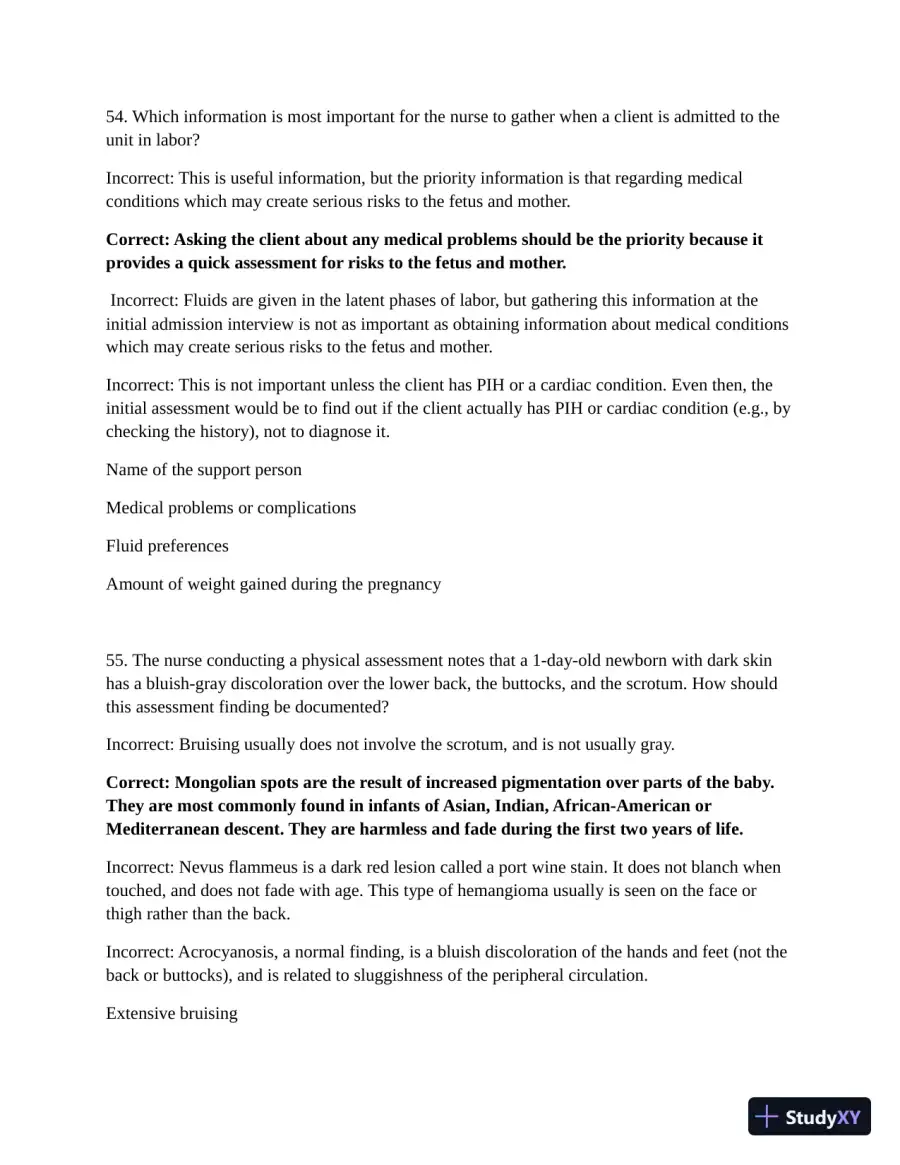 54. Which information is most important for the nurse to gather when a client is admitted to theunit in labor?Incorrect: This is useful information, but the priority information is that regarding medicalconditions which may create serious risks to the fetus and mother.Correct: Asking the client about any medical problems should be the priority because itprovides a quick assessment for risks to the fetus and mother.Incorrect: Fluids are given in the latent phases of labor, but gathering this information at theinitial admission interview is not as important as obtaining information about medical conditionswhich may create serious risks to the fetus and mother.Incorrect: This is not important unless the client has PIH or a cardiac condition. Even then, theinitial assessment would be to find out if the client actually has PIH or cardiac condition (e.g., bychecking the history), not to diagnose it.Name of the support personMedical problems or complicationsFluid preferencesAmount of weight gained during the pregnancy55. The nurse conducting a physical assessment notes that a 1-day-old newborn with dark skinhas a bluish-gray discoloration over the lower back, the buttocks, and the scrotum. How shouldthis assessment finding be documented?Incorrect: Bruising usually does not involve the scrotum, and is not usually gray.Correct: Mongolian spots are the result of increased pigmentation over parts of the baby.They are most commonly found in infants of Asian, Indian, African-American orMediterranean descent. They are harmless and fade during the first two years of life.Incorrect: Nevus flammeus is a dark red lesion called a port wine stain. It does not blanch whentouched, and does not fade with age. This type of hemangioma usually is seen on the face orthigh rather than the back.Incorrect: Acrocyanosis, a normal finding, is a bluish discoloration of the hands and feet (not theback or buttocks), and is related to sluggishness of the peripheral circulation.Extensive bruisinglOMoARcPSD|13778330
83 more pages in the full document
Unlock it once and it stays in your library, ready to chat with or turn into flashcards.
Unlock the full documentMore Assessment Technologies Institute study materials
See all Past Exams
ATI PN Pediatrics Proctored Exam Version 8 with Answers (166 Solved Questions)
Assessment Technologies Institute
40 pages126downloadsFeb 2025 Past Exams
2023 ATI NGN Comprhensive Exit Exam with Answers (87 Solved Questions)
Assessment Technologies Institute
40 pages115downloadsFeb 2025 Past Exams
2021 ATI Medical/Surgical Neurosensory AH1 with Answers (80 Solved Questions)
Assessment Technologies Institute
19 pages106downloadsFeb 2025 Past Exams
2024-2025 ATI Leadership Proctored Focus Practice Exam with Answers (63 Solved Questions)
Assessment Technologies Institute
27 pages99downloadsFeb 2025 Past Exams
2024-2025 ATI Comprehensive Exit Exam with Answers (13 Solved Questions)
Assessment Technologies Institute
6 pages77downloadsFeb 2025 Past Exams
2023 ATI RN Adult Medical Surgical For NGN Form A, B, C with Answers (21 Solved Questions)
Assessment Technologies Institute
9 pages71downloadsFeb 2025 Past Exams
2022-2023 ATI Med Surg Proctored Exam Retake with Answers (111 Solved Questions)
Assessment Technologies Institute
37 pages68downloadsFeb 2025 Past Exams
2023-2024 ATI TEAS 7 Science Versions 1-3 Actual Exam with Answers (44 Solved Questions)
Assessment Technologies Institute
38 pages64downloadsFeb 2025
Study this document with CramX
Once it is in your library, every tool can work from it.