
Past Exams
2022-2023 ATI Med Surg Proctored Exam Retake with Answers (111 Solved Questions)
- Assessment Technologies Institute
- 37 pages
- Shared February 2025
- 68 downloads
Get familiar with your upcoming exam with 2022-2023 ATI Med Surg Proctored Exam Retake with Answers, a reliable past exam resource.
Preview · 12 of 37 pages
100%
Page 1
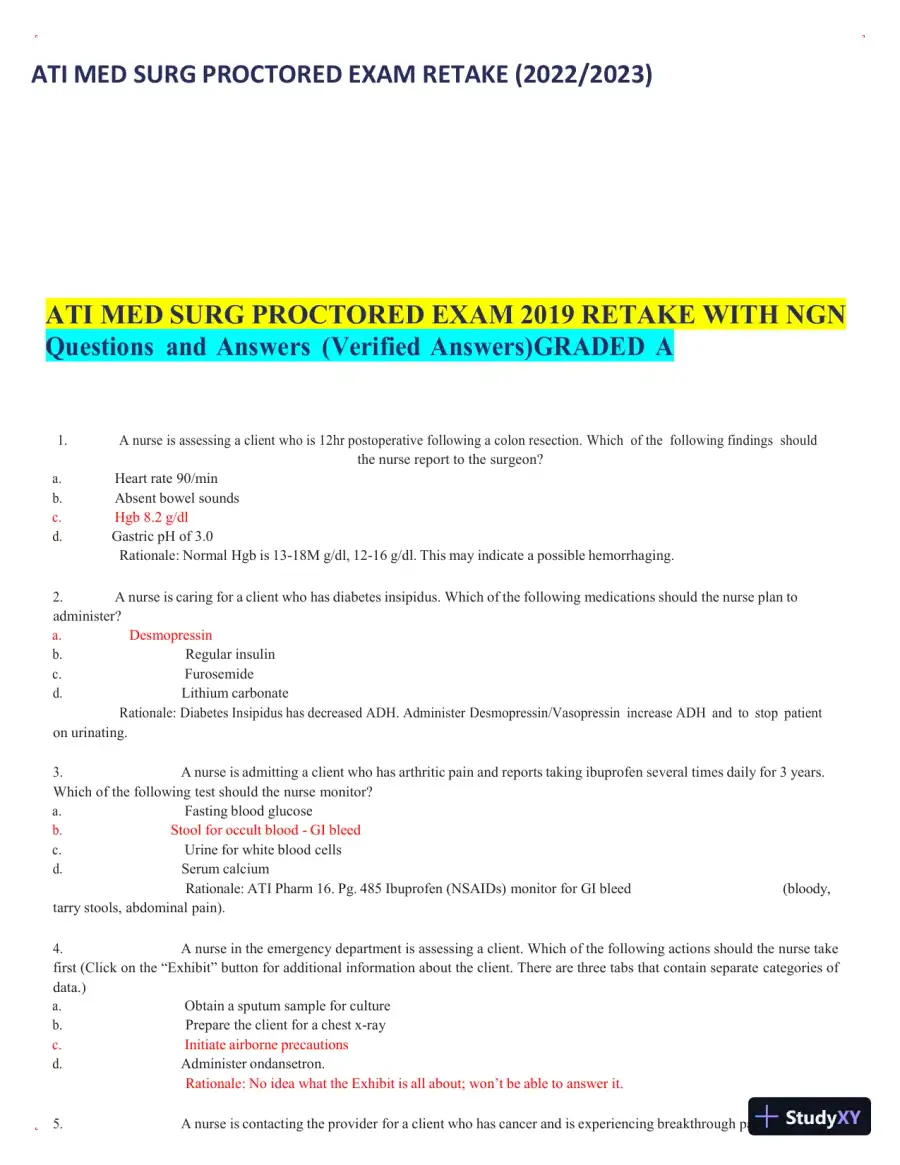 ATIMEDSURGPROCTOREDEXAMRETAKE(2022/2023)ATIMEDSURGPROCTOREDEXAM2019RETAKEWITHNGNQuestionsandAnswers(VerifiedAnswers)GRADEDA1.A nurse is assessing a client who is 12hr postoperative following a colon resection. Whichof thefollowing findingsshouldthe nurse report to the surgeon?a.Heart rate 90/minb.Absent bowel soundsc.Hgb 8.2 g/dld.Gastric pH of 3.0Rationale: Normal Hgb is 13-18M g/dl, 12-16 g/dl. This may indicate a possible hemorrhaging.2.A nurse is caring for a client who has diabetes insipidus. Which of the following medications should the nurse plan toadminister?a.Desmopressinb.Regular insulinc.Furosemided.Lithium carbonateRationale: Diabetes Insipidus has decreased ADH. Administer Desmopressin/Vasopressin increase ADH and to stop patienton urinating.3.A nurse is admitting a client who has arthritic pain and reports taking ibuprofen several times daily for 3 years.Which of the following test should the nurse monitor?a.Fasting blood glucoseb.Stool for occult blood - GI bleedc.Urine for white blood cellsd.Serum calciumRationale: ATI Pharm 16. Pg. 485 Ibuprofen (NSAIDs) monitor for GI bleed(bloody,tarry stools, abdominal pain).4.A nurse in the emergency department is assessing a client. Which of the following actions should the nurse takefirst (Click on the “Exhibit” button for additional information about the client. There are three tabs that contain separatecategories ofdata.)a.Obtain a sputum sample for cultureb.Prepare the client for a chest x-rayc.Initiate airborne precautionsd.Administer ondansetron.Rationale: No idea what the Exhibit is all about;won’tbe able to answer it.5.A nurse is contacting the provider for a client who has cancer and is experiencing breakthrough pain. Which of
Page 2

Page 3
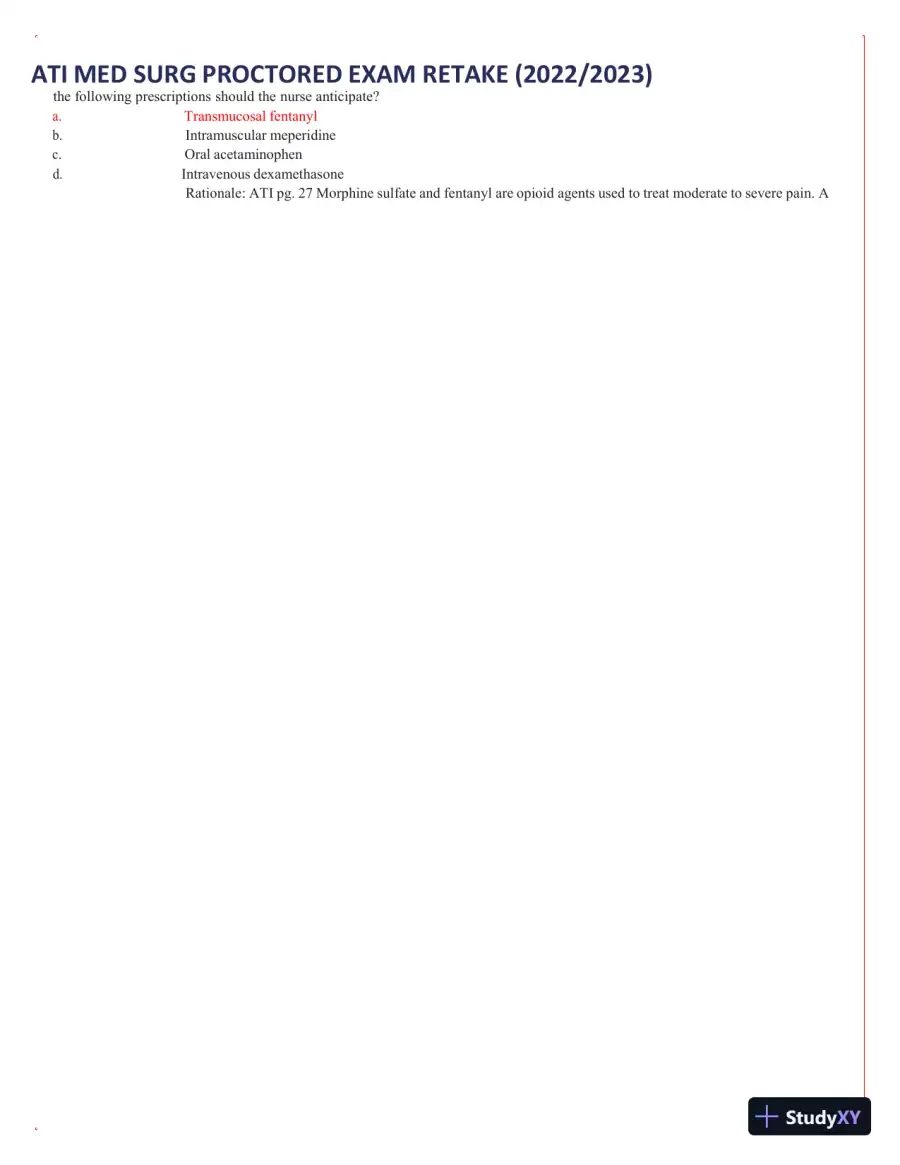 ATIMEDSURGPROCTOREDEXAMRETAKE(2022/2023)the following prescriptions should the nurse anticipate?a.Transmucosal fentanylb.Intramuscular meperidinec.Oral acetaminophend.Intravenous dexamethasoneRationale: ATI pg. 27 Morphine sulfate and fentanyl are opioid agents used to treat moderate to severe pain. A
Page 4
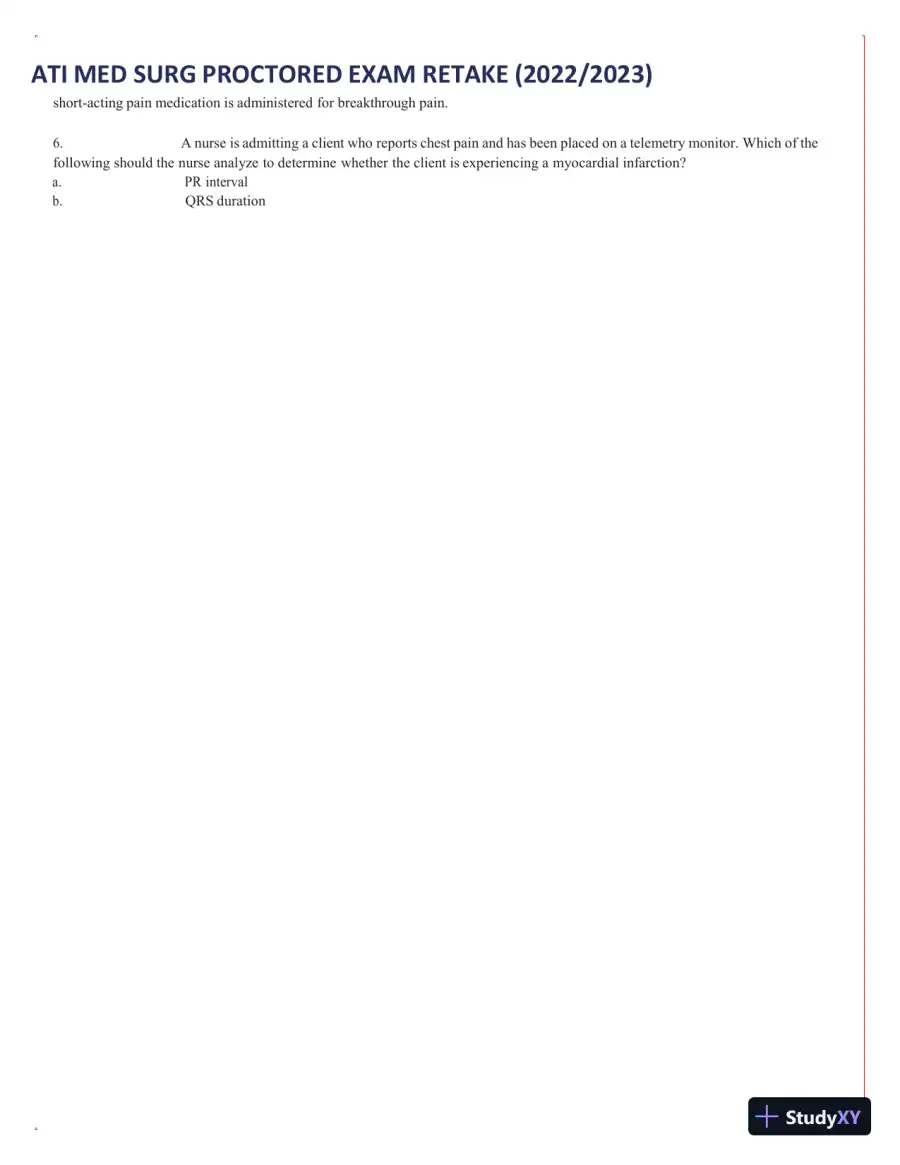 ATIMEDSURGPROCTOREDEXAMRETAKE(2022/2023)short-acting pain medication is administered for breakthrough pain.6.A nurse is admitting a client who reports chest pain and has been placed on a telemetry monitor. Which of thefollowing should the nurse analyze to determine whether the client is experiencing a myocardial infarction?a.PR intervalb.QRS duration
Page 5
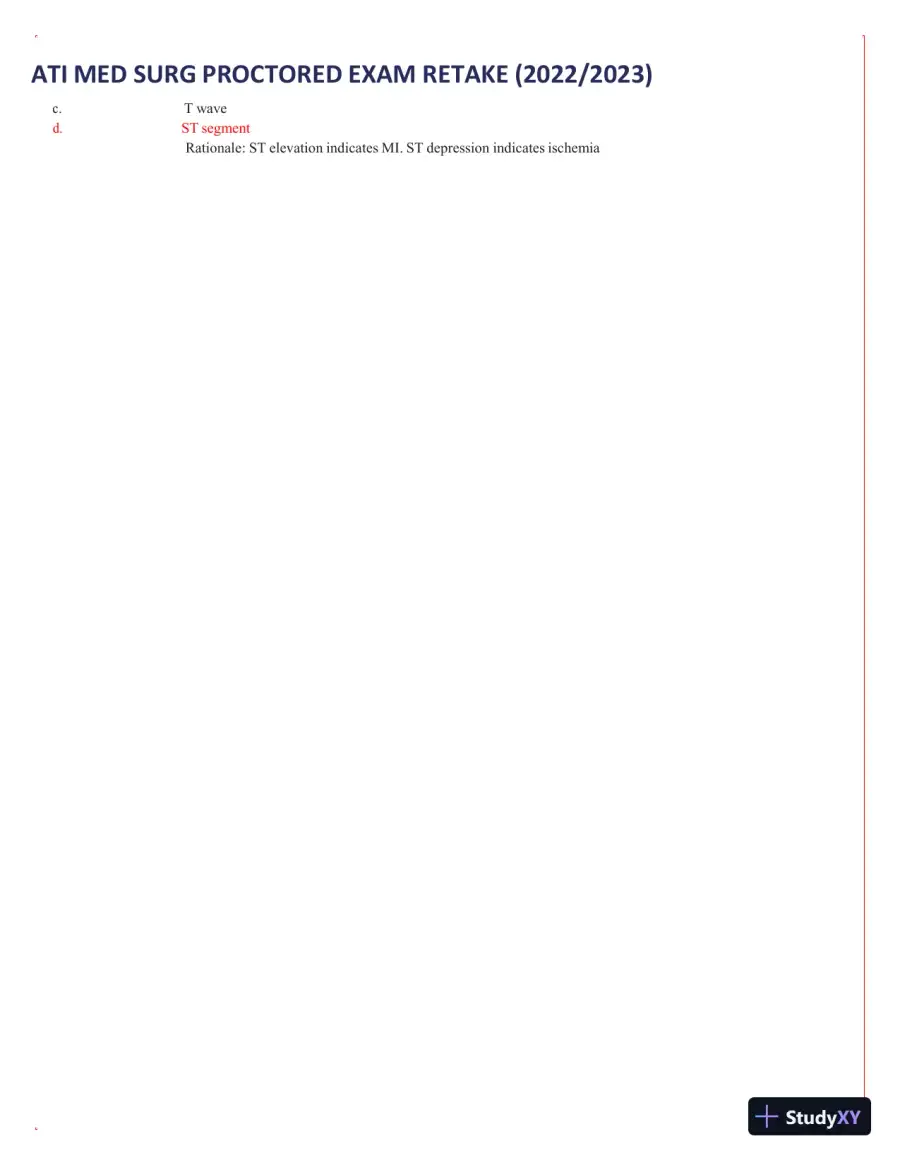 ATIMEDSURGPROCTOREDEXAMRETAKE(2022/2023)c.T waved.ST segmentRationale: ST elevation indicates MI. ST depression indicates ischemia
Page 6
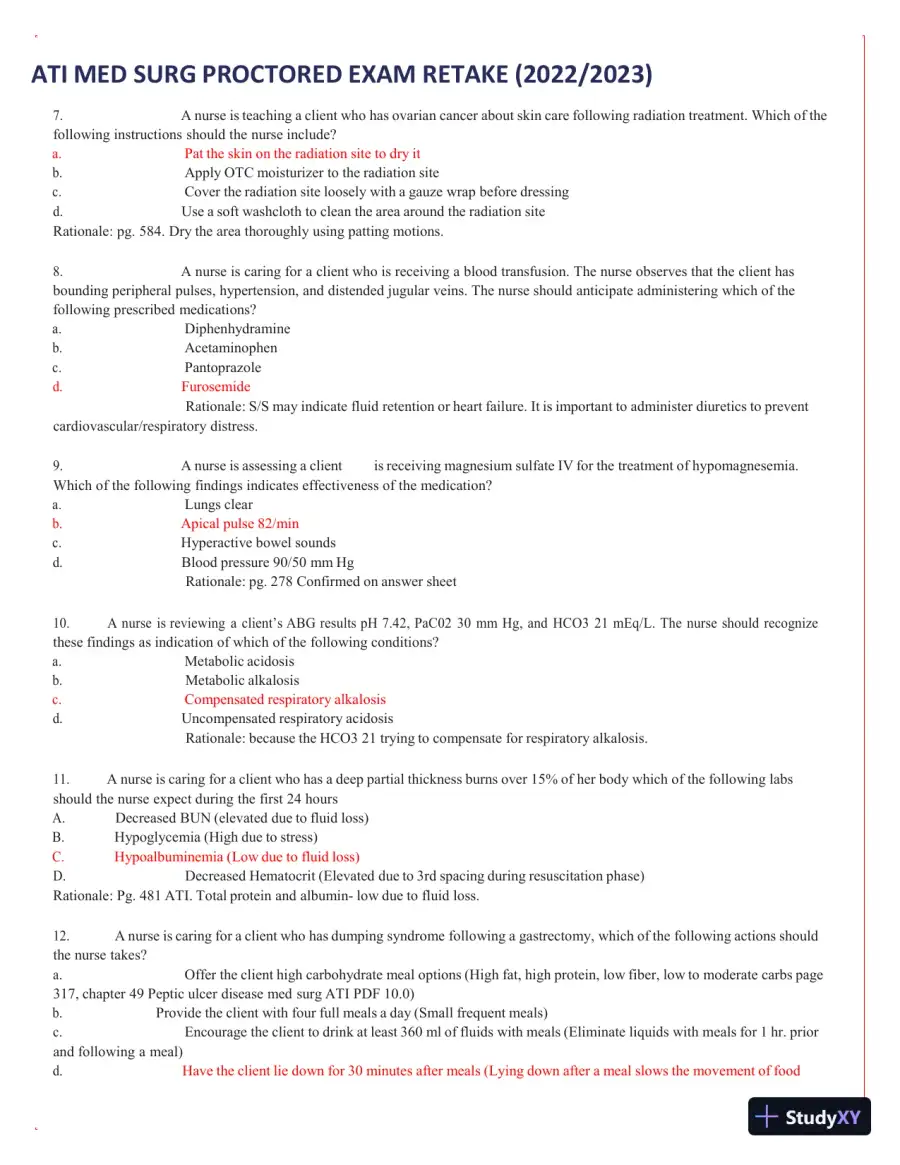 ATIMEDSURGPROCTOREDEXAMRETAKE(2022/2023)7.A nurse is teaching a client who has ovarian cancer about skin care following radiation treatment. Which of thefollowing instructions should the nurse include?a.Pat the skin on the radiation site to dry itb.Apply OTC moisturizer to the radiation sitec.Cover the radiation site loosely with a gauze wrap before dressingd.Use a soft washcloth to clean the area around the radiation siteRationale: pg. 584. Dry the area thoroughly using patting motions.8.A nurse is caring for a client who is receiving a blood transfusion. The nurse observes that the client hasbounding peripheral pulses, hypertension, and distended jugular veins. The nurse should anticipate administering which of thefollowing prescribed medications?a.Diphenhydramineb.Acetaminophenc.Pantoprazoled.FurosemideRationale: S/S may indicate fluid retention or heart failure. It is important to administer diuretics to preventcardiovascular/respiratory distress.9.A nurse is assessing a clientis receiving magnesium sulfate IV for the treatment of hypomagnesemia.Which of the following findings indicates effectiveness of the medication?a.Lungs clearb.Apical pulse 82/minc.Hyperactive bowel soundsd.Blood pressure 90/50 mm HgRationale: pg. 278 Confirmed on answer sheet10.A nurse is reviewing aclient’sABG results pH 7.42, PaC02 30 mm Hg, and HCO3 21 mEq/L. The nurse should recognizethese findings as indication of which of the following conditions?a.Metabolic acidosisb.Metabolic alkalosisc.Compensated respiratory alkalosisd.Uncompensated respiratory acidosisRationale: because the HCO3 21 trying to compensate for respiratory alkalosis.11.A nurse is caring for a client who has a deep partial thickness burns over 15% of her body which of the following labsshould the nurse expect during the first 24 hoursA.Decreased BUN (elevated due to fluid loss)B.Hypoglycemia (High due to stress)C.Hypoalbuminemia (Low due to fluid loss)D.Decreased Hematocrit (Elevated due to 3rd spacing during resuscitation phase)Rationale: Pg. 481 ATI. Total protein and albumin- low due to fluid loss.12.A nurse is caring for a client who has dumping syndrome following a gastrectomy, which of the following actions shouldthe nurse takes?a.Offer the client high carbohydrate meal options (High fat, high protein, low fiber, low to moderate carbs page317, chapter 49 Peptic ulcer disease med surg ATI PDF 10.0)b.Provide the client with four full meals a day (Small frequent meals)c.Encourage the client to drink at least 360 ml of fluids with meals (Eliminate liquids with meals for 1 hr. priorand following a meal)d.Have the client lie down for 30 minutes after meals (Lying down after a meal slows the movement of food
Page 7
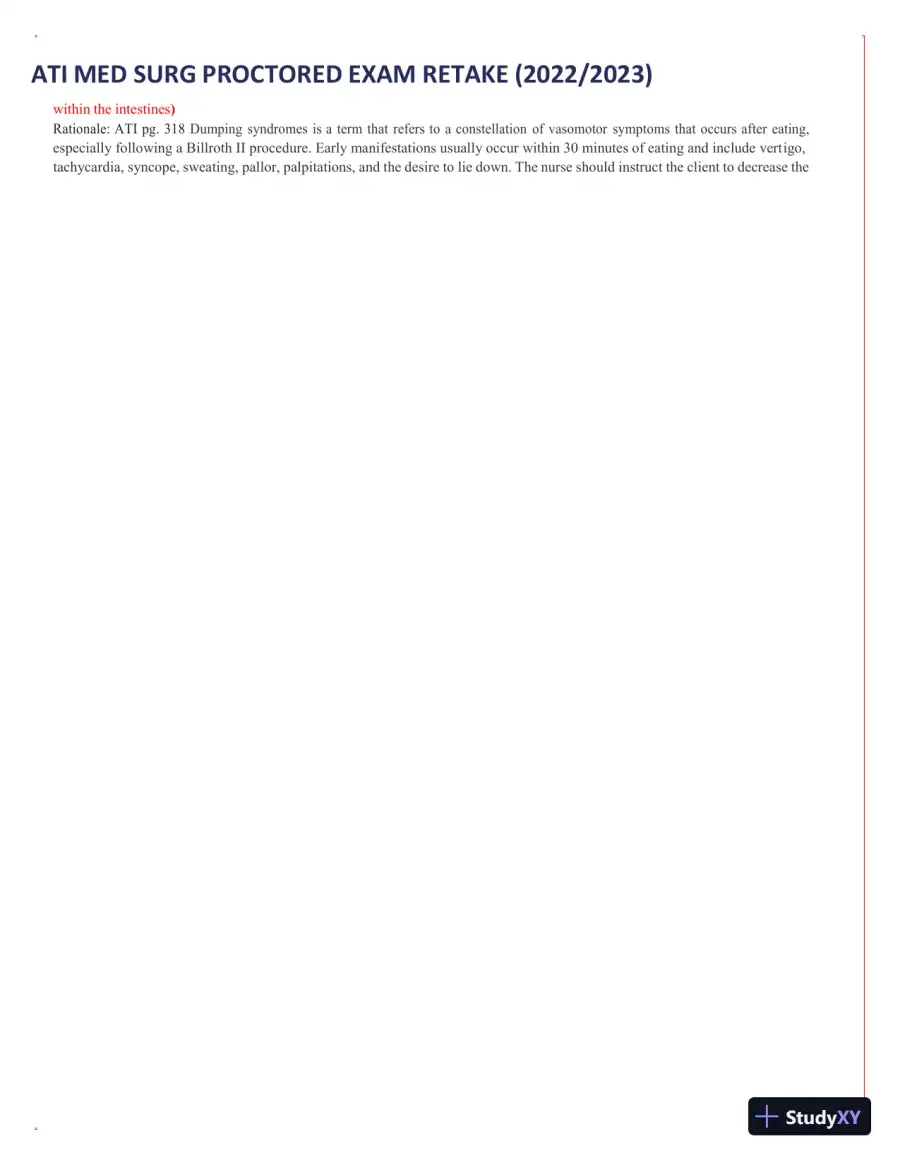 ATIMEDSURGPROCTOREDEXAMRETAKE(2022/2023)within the intestines)Rationale: ATI pg. 318 Dumping syndromes is a term that refers to a constellation of vasomotor symptoms that occurs after eating,especially following a Billroth II procedure. Early manifestations usually occur within 30 minutes of eating and include vertigo,tachycardia, syncope, sweating, pallor, palpitations, and the desire to lie down. The nurse should instruct the client to decrease the
Page 8
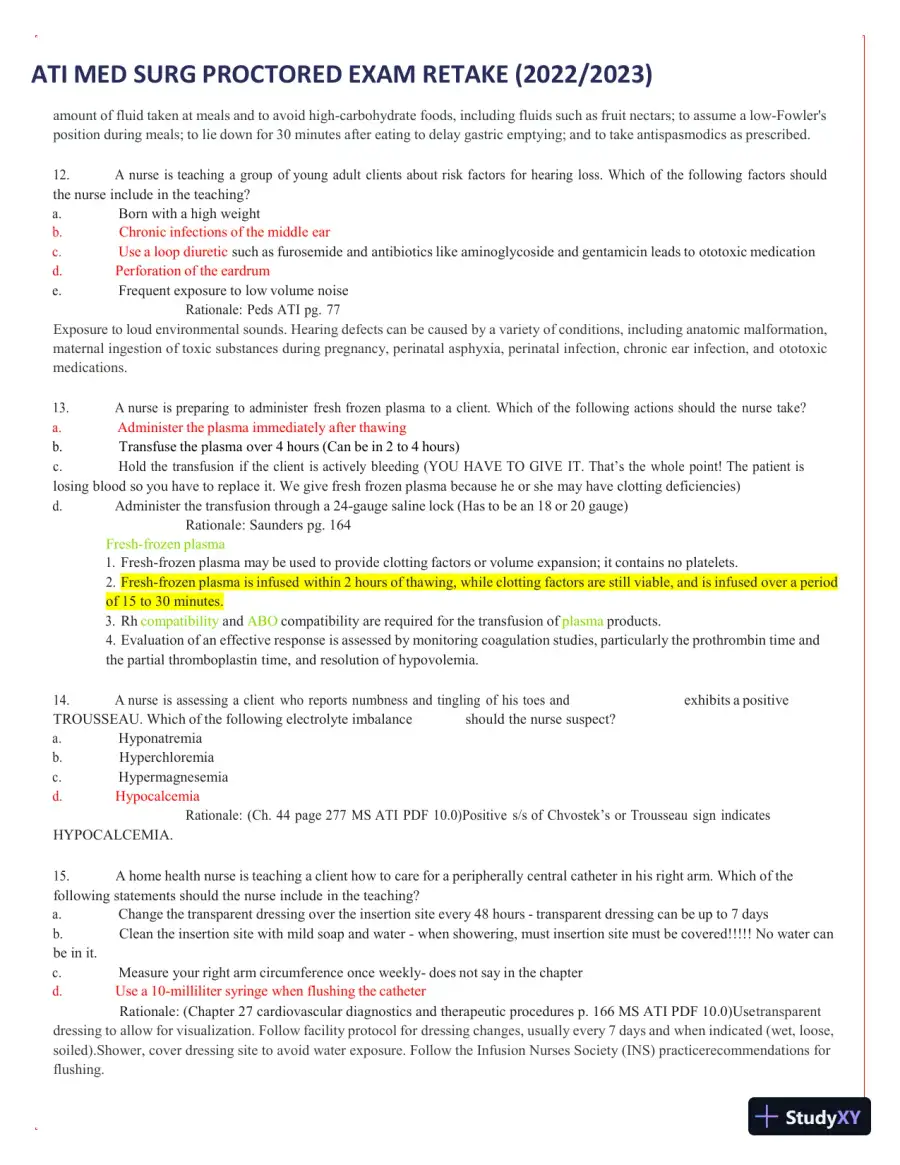 ATIMEDSURGPROCTOREDEXAMRETAKE(2022/2023)amount of fluid taken at meals and to avoid high-carbohydrate foods, including fluids such as fruit nectars; to assume a low-Fowler'sposition during meals; to lie down for 30 minutes after eating to delay gastric emptying; and to take antispasmodics as prescribed.12.A nurse is teaching a group of young adult clients about risk factors for hearing loss. Which of the following factors shouldthe nurse include in the teaching?a.Born with a high weightb.Chronic infections of the middle earc.Use a loop diuretic such as furosemide and antibiotics like aminoglycoside and gentamicin leads to ototoxic medicationd.Perforation of the eardrume.Frequent exposure to low volume noiseRationale: Peds ATI pg. 77Exposure to loud environmental sounds. Hearing defects can be caused by a variety of conditions, including anatomic malformation,maternal ingestion of toxic substances during pregnancy, perinatal asphyxia, perinatal infection, chronic ear infection, and ototoxicmedications.13.A nurse is preparing to administer fresh frozen plasma to a client. Which of the following actions should the nurse take?a.Administer the plasma immediately after thawingb.Transfuse the plasma over 4 hours (Can be in 2 to 4 hours)c.Hold the transfusion if the client is actively bleeding (YOU HAVE TO GIVE IT.That’sthe whole point! The patient islosing blood so you have to replace it. We give fresh frozen plasma because he or she may have clotting deficiencies)d.Administer the transfusion through a 24-gauge saline lock (Has to be an 18 or 20 gauge)Rationale: Saunders pg. 164Fresh-frozen plasma1.Fresh-frozen plasma may be used to provide clotting factors or volume expansion; it contains no platelets.2.Fresh-frozenplasmaisinfusedwithin2hoursofthawing,whileclottingfactorsarestillviable,andisinfusedoveraperiodof15to30minutes.3.Rh compatibility and ABO compatibility are required for the transfusion of plasma products.4.Evaluation of an effective response is assessed by monitoring coagulation studies, particularly the prothrombin time andthe partial thromboplastin time, and resolution of hypovolemia.14.A nurse is assessing a client who reports numbness and tingling of his toes andexhibits a positiveTROUSSEAU. Which of the following electrolyte imbalanceshould the nurse suspect?a.Hyponatremiab.Hyperchloremiac.Hypermagnesemiad.HypocalcemiaRationale: (Ch. 44 page 277 MS ATI PDF 10.0)Positive s/s ofChvostek’sor Trousseau sign indicatesHYPOCALCEMIA.15.A home health nurse is teaching a client how to care for a peripherally central catheter in his right arm. Which of thefollowing statements should the nurse include in the teaching?a.Change the transparent dressing over the insertion site every 48 hours - transparent dressing can be up to 7 daysb.Clean the insertion site with mild soap and water - when showering, must insertion site must be covered!!!!! No water canbe in it.c.Measure your right arm circumference once weekly- does not say in the chapterd.Use a 10-milliliter syringe when flushing the catheterRationale: (Chapter 27 cardiovascular diagnostics and therapeutic procedures p. 166 MS ATI PDF 10.0)Usetransparentdressing to allow for visualization. Follow facility protocol for dressing changes, usually every 7 days and when indicated (wet, loose,soiled).Shower, cover dressing site to avoid water exposure. Follow the Infusion Nurses Society (INS) practicerecommendations forflushing.
Page 9
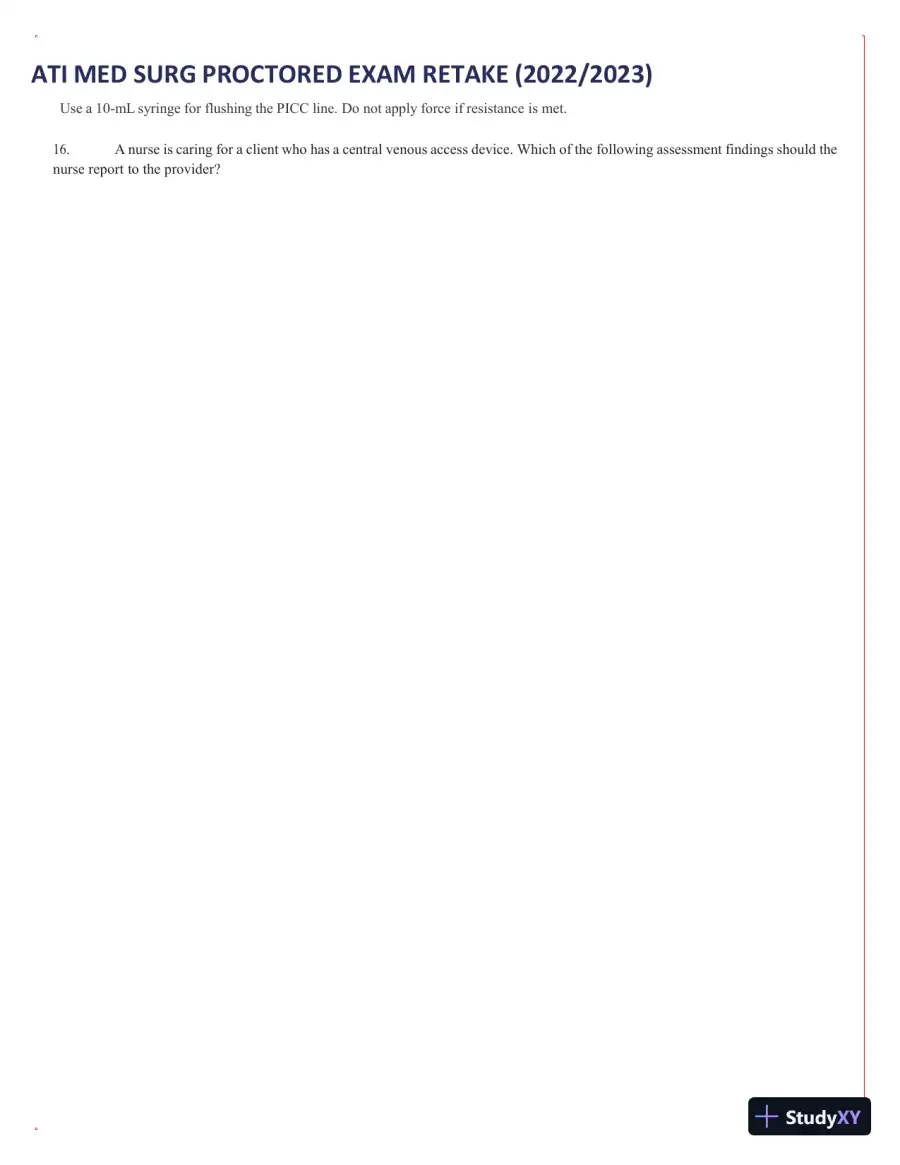 ATIMEDSURGPROCTOREDEXAMRETAKE(2022/2023)Use a 10-mL syringe for flushing the PICC line. Do not apply force if resistance is met.16.A nurse is caring for a client who has a central venous access device. Which of the following assessment findings should thenurse report to the provider?
Page 10
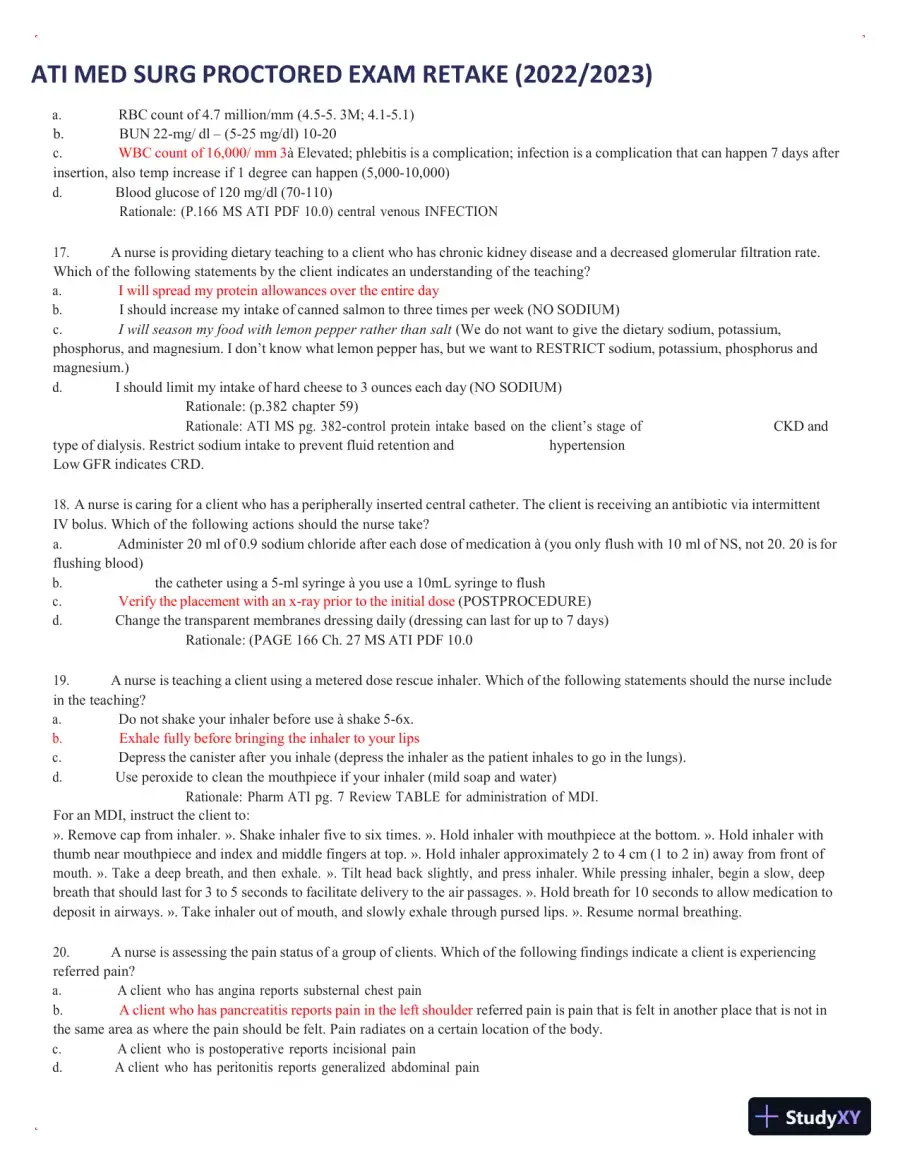 ATIMEDSURGPROCTOREDEXAMRETAKE(2022/2023)a.RBC count of 4.7 million/mm (4.5-5. 3M; 4.1-5.1)b.BUN 22-mg/ dl–(5-25 mg/dl) 10-20c.WBC count of 16,000/ mm 3à Elevated; phlebitis is a complication; infection is a complication that can happen 7 days afterinsertion, also temp increase if 1 degree can happen (5,000-10,000)d.Blood glucose of 120 mg/dl (70-110)Rationale: (P.166 MS ATI PDF 10.0) central venous INFECTION17.A nurse is providing dietary teaching to a client who has chronic kidney disease and a decreased glomerular filtration rate.Which of the following statements by the client indicates an understanding of the teaching?a.I will spread my protein allowances over the entire dayb.I should increase my intake of canned salmon to three times per week (NO SODIUM)c.I will season my food with lemon pepper rather than salt(We do not want to give the dietary sodium, potassium,phosphorus, and magnesium. Idon’tknow what lemon pepper has, but we want to RESTRICT sodium, potassium, phosphorus andmagnesium.)d.I should limit my intake of hard cheese to 3 ounces each day (NO SODIUM)Rationale: (p.382 chapter 59)Rationale: ATI MS pg. 382-control protein intake based on theclient’sstage ofCKD andtype of dialysis. Restrict sodium intake to prevent fluid retention andhypertensionLow GFR indicates CRD.18.A nurse is caring for a client who has a peripherally inserted central catheter. The client is receiving an antibiotic via intermittentIV bolus. Which of the following actions should the nurse take?a.Administer 20 ml of 0.9 sodium chloride after each dose of medication à (you only flush with 10 ml of NS, not 20. 20 is forflushing blood)b.the catheter using a 5-ml syringe à you use a 10mL syringe to flushc.Verify the placement with an x-ray prior to the initial dose (POSTPROCEDURE)d.Change the transparent membranes dressing daily (dressing can last for up to 7 days)Rationale: (PAGE 166 Ch. 27 MS ATI PDF 10.019.A nurse is teaching a client using a metered dose rescue inhaler. Which of the following statements should the nurse includein the teaching?a.Do not shake your inhaler before use à shake 5-6x.b.Exhale fully before bringing the inhaler to your lipsc.Depress the canister after you inhale (depress the inhaler as the patient inhales to go in the lungs).d.Use peroxide to clean the mouthpiece if your inhaler (mild soap and water)Rationale: Pharm ATI pg. 7 Review TABLE for administration of MDI.For an MDI, instruct the client to:». Remove cap from inhaler. ». Shake inhaler five to six times. ». Hold inhaler with mouthpiece at the bottom. ». Hold inhaler withthumb near mouthpiece and index and middle fingers at top. ». Hold inhaler approximately 2 to 4 cm (1 to 2 in) away from front ofmouth. ». Take a deep breath, and then exhale. ». Tilt head back slightly, and press inhaler. While pressing inhaler, begin a slow, deepbreath that should last for 3 to 5 seconds to facilitate delivery to the air passages. ». Hold breath for 10 seconds to allow medication todeposit in airways. ». Take inhaler out of mouth, and slowly exhale through pursed lips. ». Resume normal breathing.20.A nurse is assessing the pain status of a group of clients. Which of the following findings indicate a client is experiencingreferred pain?a.A client who has angina reports substernal chest painb.A client who has pancreatitis reports pain in the left shoulder referred pain is pain that is felt in another place that is not inthe same area as where the pain should be felt. Pain radiates on a certain location of the body.c.A client who is postoperative reports incisional paind.A client who has peritonitis reports generalized abdominal pain
Page 11
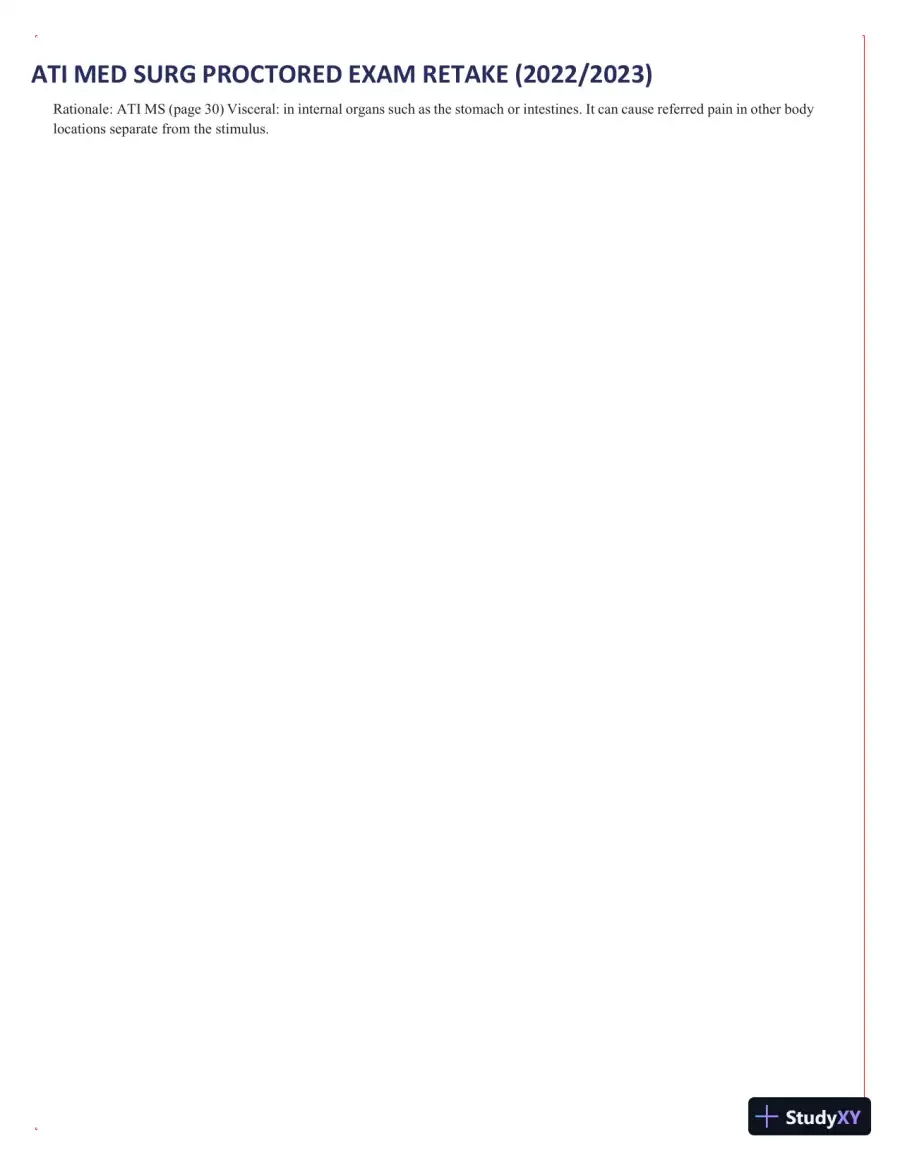 ATIMEDSURGPROCTOREDEXAMRETAKE(2022/2023)Rationale: ATI MS (page 30) Visceral: in internal organs such as the stomach or intestines. It can cause referred pain in other bodylocations separate from the stimulus.
Page 12
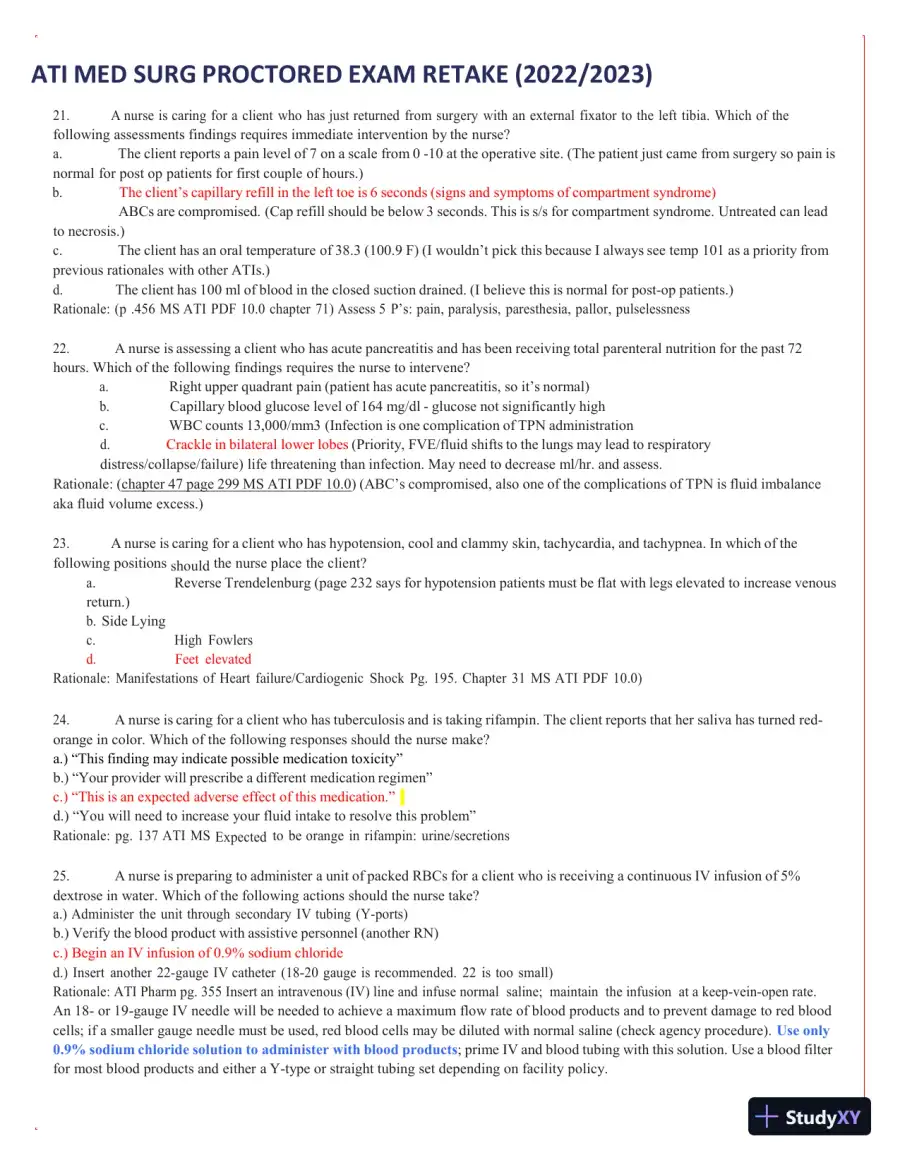 ATIMEDSURGPROCTOREDEXAMRETAKE(2022/2023)21.A nurse is caring for a client who has just returned from surgery with an external fixator to the left tibia. Which of thefollowing assessments findings requires immediate intervention by the nurse?a.The client reports a pain level of 7 on a scale from 0 -10 at the operative site. (The patient just came from surgery so pain isnormal for post op patients for first couple of hours.)b.Theclient’scapillary refill in the left toe is 6 seconds (signs and symptoms of compartment syndrome)ABCs are compromised. (Cap refill should be below 3 seconds. This is s/s for compartment syndrome. Untreated can leadto necrosis.)c.The client has an oral temperature of 38.3 (100.9 F) (Iwouldn’tpick this because I always see temp 101 as a priority fromprevious rationales with other ATIs.)d.The client has 100 ml of blood in the closed suction drained. (I believe this is normal for post-op patients.)Rationale: (p .456 MS ATI PDF 10.0 chapter 71) Assess 5P’s:pain, paralysis, paresthesia, pallor, pulselessness22.A nurse is assessing a client who has acute pancreatitis and has been receiving total parenteral nutrition for the past 72hours. Which of the following findings requires the nurse to intervene?a.Right upper quadrant pain (patient has acute pancreatitis, soit’snormal)b.Capillary blood glucose level of 164 mg/dl - glucose not significantly highc.WBC counts 13,000/mm3 (Infection is one complication of TPN administrationd.Crackle in bilateral lower lobes (Priority, FVE/fluid shifts to the lungs may lead to respiratorydistress/collapse/failure) life threatening than infection. May need to decrease ml/hr. and assess.Rationale: (chapter 47 page 299 MS ATI PDF 10.0)(ABC’scompromised, also one of the complications of TPN is fluid imbalanceaka fluid volume excess.)23.A nurse is caring for a client who has hypotension, cool and clammy skin, tachycardia, and tachypnea. In which of thefollowing positions should the nurse place the client?a.Reverse Trendelenburg (page 232 says for hypotension patients must be flat with legs elevated to increase venousreturn.)b.Side Lyingc.High Fowlersd.Feet elevatedRationale: Manifestations of Heart failure/Cardiogenic Shock Pg. 195. Chapter 31 MS ATI PDF 10.0)24.A nurse is caring for a client who has tuberculosis and is taking rifampin. The client reports that her saliva has turned red-orange in color. Which of the following responses should the nurse make?a.)“Thisfinding may indicate possible medicationtoxicity”b.)“Yourprovider will prescribe a different medicationregimen”c.)“Thisis an expected adverse effect of thismedication.”d.) “You will need to increase your fluid intake to resolve this problem”Rationale: pg. 137 ATI MS Expected to be orange in rifampin: urine/secretions25.A nurse is preparing to administer a unit of packed RBCs for a client who is receiving a continuous IV infusion of 5%dextrose in water. Which of the following actions should the nurse take?a.) Administer the unit through secondary IV tubing (Y-ports)b.) Verify the blood product with assistive personnel (another RN)c.) Begin an IV infusion of 0.9% sodium chlorided.) Insert another 22-gauge IV catheter (18-20 gauge is recommended. 22 is too small)Rationale: ATI Pharm pg. 355 Insert an intravenous (IV) line and infuse normalsaline;maintainthe infusionat a keep-vein-open rate.An 18- or 19-gauge IV needle will be needed to achieve a maximum flow rate of blood products and to prevent damage to red bloodcells; if a smaller gauge needle must be used, red blood cells may be diluted with normal saline (check agency procedure).Use only0.9% sodium chloride solution to administer with blood products; prime IV and blood tubing with this solution. Use a blood filterfor most blood products and either a Y-type or straight tubing set depending on facility policy.
25 more pages in the full document
Unlock it once and it stays in your library, ready to chat with or turn into flashcards.
Unlock the full documentMore Assessment Technologies Institute study materials
See all Past Exams
ATI Maternal Newborn Practice Exam with Answers (210 Solved Questions)
Assessment Technologies Institute
114 pages141downloadsFeb 2025 Past Exams
ATI PN Pediatrics Proctored Exam Version 8 with Answers (166 Solved Questions)
Assessment Technologies Institute
40 pages126downloadsFeb 2025 Past Exams
2023 ATI NGN Comprhensive Exit Exam with Answers (87 Solved Questions)
Assessment Technologies Institute
40 pages115downloadsFeb 2025 Past Exams
2021 ATI Medical/Surgical Neurosensory AH1 with Answers (80 Solved Questions)
Assessment Technologies Institute
19 pages106downloadsFeb 2025 Past Exams
2024-2025 ATI Leadership Proctored Focus Practice Exam with Answers (63 Solved Questions)
Assessment Technologies Institute
27 pages99downloadsFeb 2025 Past Exams
2024-2025 ATI Comprehensive Exit Exam with Answers (13 Solved Questions)
Assessment Technologies Institute
6 pages77downloadsFeb 2025 Past Exams
2023 ATI RN Adult Medical Surgical For NGN Form A, B, C with Answers (21 Solved Questions)
Assessment Technologies Institute
9 pages71downloadsFeb 2025 Past Exams
2023-2024 ATI TEAS 7 Science Versions 1-3 Actual Exam with Answers (44 Solved Questions)
Assessment Technologies Institute
38 pages64downloadsFeb 2025
Study this document with CramX
Once it is in your library, every tool can work from it.