

Fiscal Deficits, Economic Growth, and Policy Solutions: Analyzing the Impact of Expansionary Measures and Sustainable Debt Management
- Economics
- 9 pages
- Shared May 2025
An assignment discussing fiscal deficits, economic growth, and debt management policies.
Preview 3 of 9 pages
See the first 3 pages exactly as they appear in the document.
Page 1 Read page 1 as text
Fiscal Deficits, Economic Growth, and Policy Solutions: Analyzing the Impact of Expansionary Measures and Sustainable Debt Management Discuss the impact of expansionary fiscal and monetary policies on government deficits, using the Phillips curve and Okun's Law to illustrate the relationship between inflation, unemployment, and GDP. Additionally, analyze the long - term consequences of sustained fiscal deficits on economic growth, considering both theoretical perspectives (Keynesian and Monetarist) and empirical evidence from different nations. How can a government effectively manage fiscal deficits while fostering long - term economic stability? Your answer should critically evaluate the role of productive versus unproductive government spending and the implications for future generations. Word Count Requirement: 1500 - 2000 words
Page 2 Page 3 Read page 3 as text
PART 1: Maintaining a low level of unemployment as well as a low inflation rate are part of the dual mandate of the FED. The possibility of having low inflation and low unemployment is given by the Philips curve – it provides policy makers with a tradeoff between i nflation and unemployment in the short run. A government can keep unemployment under check and allow inflation OR it can keep prices under check without being able to control unemployment. This tradeoff is shown as a negative relation between inflation and unemployment. In the long run the curve is vertical at the natural rate of unemployment, so that there government has no control over unemployment, it can only manipulate the inflation rate. As given, unemployment rate is very high while inflation rate is at acceptable level of 2%. This requires expansionary fiscal policies that include an increase in government expenditure on goods and services or a substantial reduction in tax rates. The primary impact of this policy is the r i se in budget deficit ( G - T). monetary policy can also be used to raise money supply so that consumption and investment spending is not constrained by lack of money. The use of lowering FED rate, and open market purchases of securities are common tools of an expansionary monetary policy. These actions often lead to inflation as the aggregate supply fails to keep p with rise in demand due to easily available money. But any such fiscal policy will also increase inflation at the same time. Okun’s law gives the negative relation between the growth rate of GDP and that of unemployment and explains the short run Phillips curve . According to the law, a 1% increase in unemployment will roughly result in a 2% reduction in the nation’s output. Thus, through government’s expansionary fiscal policy, as the output level will increase, the unemployment level is likely to fall. In the short
6 more pages in the full document
Unlock it once and it stays in your library, ready to chat with or turn into flashcards.
Unlock the full documentMore Economics study materials
See all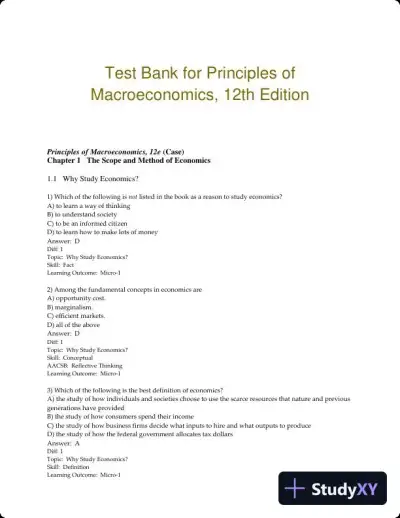 Exam Guides
Test Bank for Principles of Macroeconomics, 12th Edition
Economics
1444 pages154downloadsFeb 2025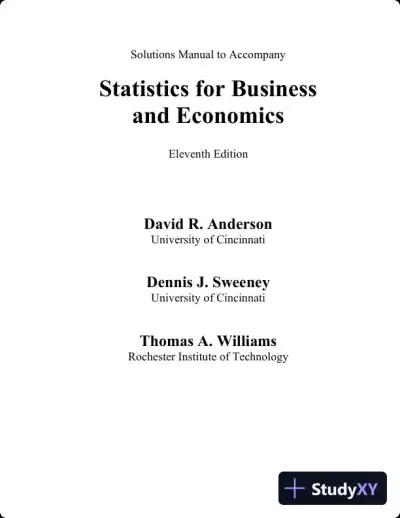 Textbook Guides
Solution Manual for Statistics for Business and Economics, 11th Edition
Economics
686 pages147downloadsFeb 2025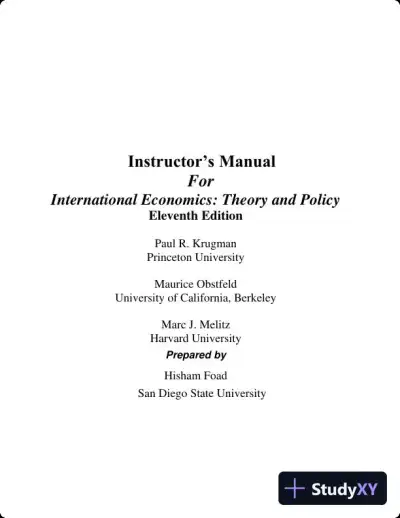 Textbook Guides
Solution Manual for International Economics Theory and Policy, 11th Edition
Economics
180 pages147downloadsFeb 2025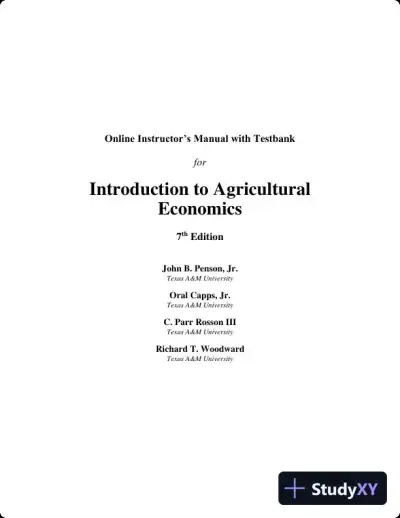 Textbook Guides
Solution Manual for Introduction to Agricultural Economics, 7th Edition
Economics
84 pages146downloadsFeb 2025 Textbook Guides
Solution Manual for Prentice Hall's Federal Taxation 2013 Individuals, 26th Edition
Economics
961 pages144downloadsFeb 2025 Textbook Guides
Solution Manual for Microeconomics, 8th Edition
Economics
353 pages139downloadsFeb 2025 Textbook Guides
Solution Manual for The Economics of Health and Health Care, 7th Edition
Economics
47 pages135downloadsFeb 2025 Exam Guides
Test Bank for Engineering Economics Financial Decision Making for Engineers, 6th Edition
Economics
254 pages134downloadsFeb 2025
Study this document with CramX
Once it is in your library, every tool can work from it.