

2021 HESI Pharmacology Practice Exam With Answers (72 Solved Questions)
- Health Education Systems, Inc.
- 29 pages
- Shared May 2025
2021 HESI Pharmacology Practice Exam With Answers helps you develop the best test-taking techniques with real exams.
Preview 9 of 29 pages
See the first 9 pages exactly as they appear in the document.
Page 1 Read page 1 as text
Hesi Pharmacology (ACTUAL) Questions & Answers All answers are Correct Graded A Latest 2021
Page 2 Page 3 Read page 3 as text
1 . A healthcare provider prescribes cephalexin monohydrate (Keflex) for a client with a postoperative infection. It is most important for the nurse to assess for what additional drug allergy before administering this prescription? A) Penicillins. B) Aminoglycosides. C) Erythromycins. D) Sulfonamides. A) Penicillins. Cross-allergies exist between penicillins (A) and cephalosporins, such as cephalexin monohydrate (Keflex), so checking for penicillin allergy is a wise precaution before administering this drug. 2. Which nursing intervention is most important when caring for a client receiving the antimetabolite cytosine arabinoside (Arc-C) for chemotherapy? A) Hydrate the client with IV fluids before and after infusion. B) Assess the client for numbness and tingling of extremities. C) Inspect the client's oral mucosa for ulcerations. D) Monitor the client's urine pH for increased acidity. C) Inspect the client's oral mucosa for ulcerations. Cytosine arabinoside (Arc-C) affects the rapidly growing cells of the body, therefore stomatitis and mucosal ulcerations are key signs of antimetabolite toxicity (C). (A, B, and D) are not typical interventions associated with the administration of antimetabolites. 3. When assessing an adolescent who recently overdosed on acetaminophen (Tylenol), it is most important for the nurse to assess for pain in which area of the body? A) Flank. B) Abdomen. C) Chest. D) Head. B) Abdomen. Acetaminophen toxicity can result in liver damage; therefore, it is especially important for the nurse to assess for pain in the right upper quadrant of the abdomen (B), which might indicate liver damage. (A, C, and D) are not areas where pain would be anticipated. Downloaded by: ACEMYWORK | kamun2@yahoo.com Distribution of this document is illegal
Page 4 Read page 4 as text
4. An adult client is given a prescription for a scopolamine patch (Transderm Scop) to prevent motion sickness while on a cruise. Which information should the nurse provide to the client? A) Apply the patch at least 4 hours prior to departure. B) Change the patch every other day while on the cruise. C) Place the patch on a hairless area at the base of the skull. D) Drink no more than 2 alcoholic drinks during the cruise. A) Apply the patch at least 4 hours prior to departure. Scopolamine, an anticholinergic agent, is used to prevent motion sickness and has a peak onset in 6 hours, so the client should be instructed to apply the patch at least 4 hours before departure (A) on the cruise ship. The duration of the transdermal patch is 72 hours, so (B) is not needed. Scolopamine blocks muscarinic receptors in the inner ear and to the vomiting center, so the best application site of the patch is behind the ear, not at the base of the skull (C). Anticholinergic medications are CNS depressants, so the client should be instructed to avoid alcohol (D) while using the patch. 5. The nurse is reviewing the use of the patient-controlled analgesia (PCA) pump with a client in the immediate postoperative period. The client will receive morphine 1 mg IV per hour basal rate with 1 mg IV every 15 minutes per PCA to total 5 mg IV maximally per hour. What assessment has the highest priority before initiating the PCA pump? A) The expiration date on the morphine syringe in the pump. B) The rate and depth of the client's respirations. C) The type of anesthesia used during the surgical procedure. D) The client's subjective and objective signs of pain. B) The rate and depth of the client's respirations. A life-threatening side effect of intravenous administration of morphine sulfate, an opiate narcotic, is respiratory depression (B). The PCA pump should be stopped and the healthcare provider notified if the client's respiratory rate falls below 12 breaths per minute, and the nurse should anticipate adjustments in the client's dosage before the PCA pump is restarted. (A, C, and D) provide helpful information, but are not as high a priority as the assessment described in (B). 6. A medication that is classified as a beta-1 agonist is most commonly prescribed for a client with which condition? A) Glaucoma. B) Hypertension. C) Heart failure. D) Asthma. Downloaded by: ACEMYWORK | kamun2@yahoo.com Distribution of this document is illegal
Page 5 Read page 5 as text
C) Heart failure. Beta-1 agonists improve cardiac output by increasing the heart rate and blood pressure and are indicated in heart failure (C), shock, atrioventricular block dysrhythmias, and cardiac arrest. Glaucoma (A) is managed using adrenergic agents and beta-adrenergic blocking agents. Beta-1 blocking agents are used in the management of hypertension (B). Medications that stimulate beta-2 receptors in the bronchi are effective for bronchoconstriction in respiratory disorders, such as asthma (D). 7. A female client with rheumatoid arthritis take ibuprofen (Motrin) 600 mg PO 4 times a day. To prevent gastrointestinal bleeding, misoprostol (Cytotec) 100 mcg PO is prescribed. Which information is most important for the nurse to include in client teaching? A) Use contraception during intercourse. B) Ensure the Cytotec is taken on an empty stomach. C) Encourage oral fluid intake to prevent constipation. D) Take Cytotec 30 minutes prior to Motrin. A) Use contraception during intercourse. Cytotec, a synthetic form of a prostaglandin, is classified as pregnancy Category X and can act as an abortifacient, so the client should be instructed to use contraception during intercourse (A) to prevent loss of an early pregnancy. (B) is not necessary. A common side effect of Cytotec is diarrhea, so constipation prevention strategies are usually not needed (C). Cytotec and Motrin should be taken together (D) to provide protective properties against gastrointestinal bleeding. 8. A client with heart failure is prescribed spironolactone (Aldactone). Which information is most important for the nurse to provide to the client about diet modifications? A) Do not add salt to foods during preparation. B) Refrain for eating foods high in potassium. C) Restrict fluid intake to 1000 ml per day. D) Increase intake of milk and milk products. B) Refrain for eating foods high in potassium. Spironolactone (Aldactone), an aldosterone antagonist, is a potassium-sparing diuretic, so a diet high in potassium should be avoided (B), including potassium salt substitutes, which can lead to hyperkalemia. Although (A) is a common diet modification in heart failure, the risk of hyperkalemia is more important with Aldactone. Restriction of fluids (C) or increasing milk and milk products (D) are not indicated with this prescription. Downloaded by: ACEMYWORK | kamun2@yahoo.com Distribution of this document is illegal
Page 6 Read page 6 as text
9. In evaluating the effects of lactulose (Cephulac), which outcome should indicate that the drug is performing as intended? A) An increase in urine output. B) Two or three soft stools per day. C) Watery, diarrhea stools. D) Increased serum bilirubin. B) Two or three soft stools per day. Lactulose is administered to reduce blood ammonia by excretion of ammonia through the stool. Two to three stools a day indicate that lactulose is performing as intended (B). (A) would be expected if the patient received a diuretic. (C) would indicate an overdose of lactulose and is not expected. Lactulose does not affect (D). 10. The healthcare provider prescribes naproxen (Naproxen) twice daily for a client with osteoarthritis of the hands. The client tells the nurse that the drug does not seem to be effective after three weeks. Which is the best response for the nurse to provide? A) The frequency of the dosing is necessary to increase the effectiveness. B) Therapeutic blood levels of this drug are reached in 4 to 6 weeks. C) Another type of nonsteroidal antiinflammatory drug may be indicated. D) Systemic corticosteroids are the next drugs of choice for pain relief. C) Another type of nonsteroidal antiinflammatory drug may be indicated. Individual responses to nonsteroidal antiinflammatory drugs are variable, so (C) is the best response. Naproxen is usually prescribed every 8 hours, so (A) is not indicated. The peak for naproxen is one to two hours, not (B). Corticosteroids are not indicated for osteoarthritis (D). 11. Which instruction(s) should the nurse give to a female client who just received a prescription for oral metronidazole (Flagyl) for treatment of trichomonas vaginalis? (Select all that apply.) A) Increase fluid intake, especially cranberry juice. B) Do not abruptly discontinue the medication; taper use. C) Check blood pressure daily to detect hypertension. D) Avoid drinking alcohol while taking this medication. E) Use condoms until treatment is completed. F) Ensure that all sexual partners are treated at the same time. A) Increase fluid intake, especially cranberry juice. D) Avoid drinking alcohol while taking this medication. E) Use condoms until treatment is completed.
Page 7 Read page 7 as text
F) Ensure that all sexual partners are treated at the same time. Correct selections are (A, D, E, and F). Increased fluid intake and cranberry juice (A) are recommended for prevention and treatment of urinary tract infections, which frequently accompany vaginal infections. It is not necessary to taper use of this drug (B) or to check the blood pressure daily (C), as this condition is not related to hypertension. Flagyl can cause a disulfiram-like reaction if taken in conjunction with ingestion of alcohol, so the client should be instructed to avoid alcohol (D). All sexual partners should be treated at the same time (E) and condoms should be used until after treatment is completed to avoid reinfection (F). 12. A client receiving albuterol (Proventil) tablets complains of nausea every evening with her 9 p.m. dose. What action should the nurse take to alleviate this side effect? A) Change the time of the dose. B) Hold the 9 p.m. dose. C) Administer the dose with a snack. D) Administer an antiemetic with the dose. C) Administer the dose with a snack. Administering oral doses with food (C) helps minimize GI discomfort. (A) would be appropriate only if changing the time of the dose corresponds to meal times while at the same time maintaining an appropriate time interval between doses. (B) would disrupt the dosing schedule, and could result in a nontherapeutic serum level of the medication. (D) should not be attempted before other interventions, such as (C), have been proven ineffective in relieving the nausea. 13. A client receiving Doxorubicin (Adriamycin) intravenously (IV) complains of pain at the insertion site, and the nurse notes edema at the site. Which intervention is most important for the nurse to implement? A) Assess for erythema. B) Administer the antidote. C) Apply warm compresses. D) Discontinue the IV fluids. D) Discontinue the IV fluids. Doxorubicin is an antineoplastic agent that causes inflammation, blistering, and necrosis of tissue upon extravasation. First, all IV fluids should be discontinued at the site (D) to prevent further tissue damage by the vesicant. Erythema is one sign of infiltration and should be noted, but edema and pain at the infusion site require stopping the IV fluids (A). Although an antidote may be available (B), additional
Page 8 Read page 8 as text
fluids contribute to the trauma of the subcutaneous tissues. Depending on the type of vesicant, warm or cold compresses (C) may be prescribed after the infusion is discontinued. 14. A client with congestive heart failure (CHF) is being discharged with a new prescription for the angiotensin-converting enzyme (ACE) inhibitor captopril (Capoten). The nurse's discharge instruction should include reporting which problem to the healthcare provider? A) Weight loss. B) Dizziness. C) Muscle cramps. D) Dry mucous membranes. B) Dizziness. Angiotensin-converting enzyme (ACE) inhibitors are used in CHF to reduce afterload by reversing vasoconstriction common in heart failure. This vasodilation can cause hypotension and resultant dizziness (B). (A) is desired if fluid overload is present, and may occur as the result of effective combination drug therapy such as diuretics with ACE inhibitors. (C) often indicates hypokalemia in the client receiving diuretics. Excessive diuretic administration may result in fluid volume deficit, manifested by symptoms such as (D). 15. The nurse is preparing the 0900 dose of losartan (Cozaar), an angiotensin II receptor blocker (ARB), for a client with hypertension and heart failure. The nurse reviews the client's laboratory results and notes that the client's serum potassium level is 5.9 mEq/L. What action should the nurse take first? A) Withhold the scheduled dose. B) Check the client's apical pulse. C) Notify the healthcare provider. D) Repeat the serum potassium level. A) Withhold the scheduled dose. The nurse should first withhold the scheduled dose of Cozaar (A) because the client is hyperkalemic (normal range 3.5 to 5 mEq/L). Although hypokalemia is usually associated with diuretic therapy in heart failure, hyperkalemia is associated with several heart failure medications, including ARBs. Because hyperkalemia may lead to cardiac dysrhythmias, the nurse should check the apical pulse for rate and rhythm (B), and the blood pressure. Before repeating the serum study (D), the nurse should notify the healthcare provider (C) of the findings.
Page 9 Read page 9 as text
16. The nurse is assessing the effectiveness of high dose aspirin therapy for an 88-year-old client with arthritis. The client reports that she can't hear the nurse's questions because her ears are ringing. What action should the nurse implement? A) Refer the client to an audiologist for evaluation of her hearing. B) Advise the client that this is a common side effect of aspirin therapy. C) Notify the healthcare provider of this finding immediately. D) Ask the client to turn off her hearing aid during the exam. C) Notify the healthcare provider of this finding immediately. Tinnitus is an early sign of salicylate toxicity. The healthcare provider should be notified immediately (C), and the medication discontinued. (A and D) are not needed, and (B) is inaccurate. 17. The healthcare provider prescribes digitalis (Digoxin) for a client diagnosed with congestive heart failure. Which intervention should the nurse implement prior to administering the digoxin? A) Observe respiratory rate and depth. B) Assess the serum potassium level. C) Obtain the client's blood pressure. D) Monitor the serum glucose level. B) Assess the serum potassium level. Hypokalemia (decreased serum potassium) will precipitate digitalis toxicity in persons receiving digoxin (B). (A and C) will not affect the administration of digoxin. (D) should be monitored if he/she is a diabetic and is perhaps receiving insulin. 18. A client who has been taking levodopa PO TID to control the symptoms of Parkinson's disease has a new prescription for sustained release levodopa/carbidopa (Sinemet 25/100) PO BID. The client took his levodopa at 0800. Which instruction should the nurse include in the teaching plan for this client? A) Take the first dose of Sinemet today, as soon as your prescription is filled. B) Since you already took your levodopa, wait until tomorrow to take the Sinemet. C) Take both drugs for the first week, then switch to taking only the Sinemet. D) You can begin taking the Sinemet this evening, but do not take any more levodopa. D) You can begin taking the Sinemet this evening, but do not take any more levodopa. Carbidopa significantly reduces the need for levodopa in clients with Parkinson's disease, so the new prescription should not be started until eight hours after the previous dose of levodopa (D), but can be started the same day (B). (A and C) may result in toxicity.
20 more pages in the full document
Unlock it once and it stays in your library, ready to chat with or turn into flashcards.
Unlock the full documentMore Health Education Systems, Inc. study materials
See all Past Exams
2023-2024 RN HESI Exit Exam Version 3 with Answers (53 Solved Questions)
Health Education Systems, Inc.
13 pages163downloadsFeb 2025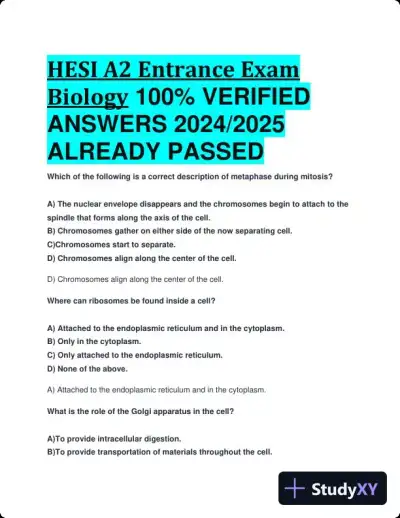 Past Exams
2024-2025 HESI A2 Biology Entrance Exam with Answers (42 Solved Questions)
Health Education Systems, Inc.
13 pages154downloadsFeb 2025 Past Exams
2024-2025 HESI A2 Anatomy and Physiology V1/V2 Practice Exam with Answers (134 Solved Questions)
Health Education Systems, Inc.
15 pages134downloadsFeb 2025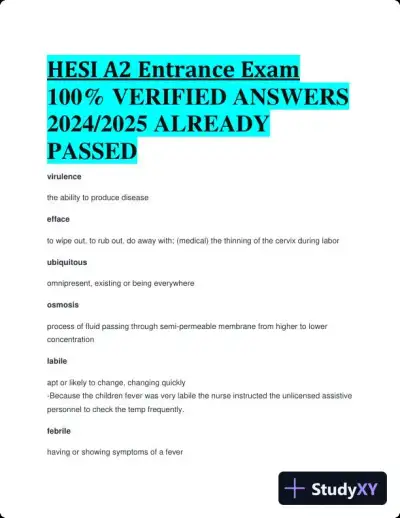 Past Exams
2024-2025 HESI A2 Entrance Exam with Answers (232 Solved Questions)
Health Education Systems, Inc.
26 pages132downloadsFeb 2025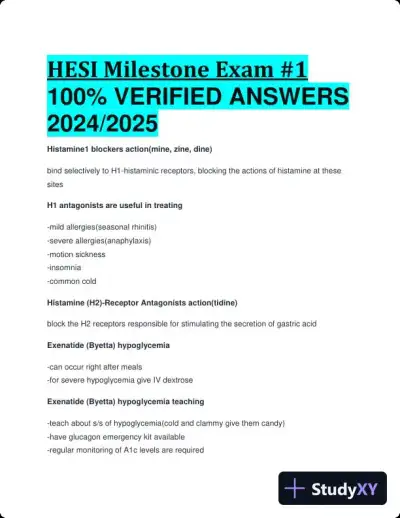 Past Exams
2024-2025 HESI Milestone Exam 1 with Answers (162 Solved Questions)
Health Education Systems, Inc.
26 pages119downloadsFeb 2025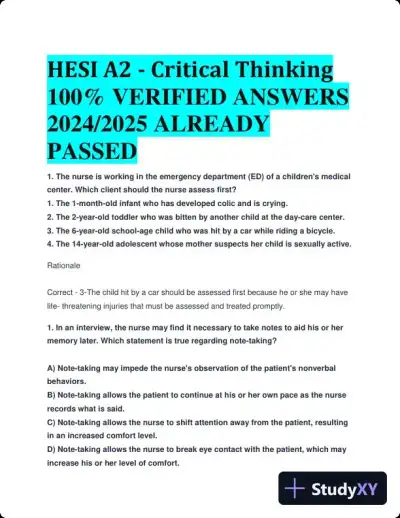 Past Exams
2024-2025 HESI A2 Critical Thinking with Answers (124 Solved Questions)
Health Education Systems, Inc.
114 pages106downloadsFeb 2025 Past Exams
2024-2025 HESI RN Exit Exam with Answers (156 Solved Questions)
Health Education Systems, Inc.
44 pages92downloadsFeb 2025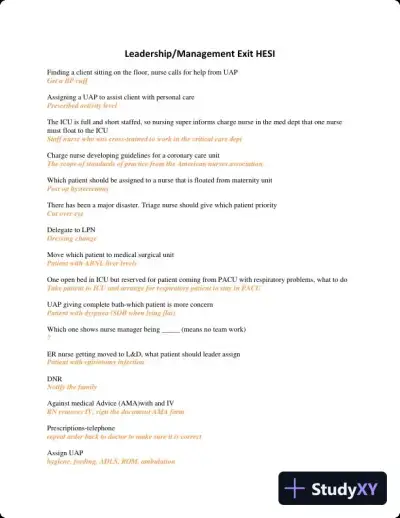 Past Exams
HESI Leadership/Management Exit Exam with Answers (59 Solved Questions)
Health Education Systems, Inc.
4 pages54downloadsFeb 2025
Study this document with CramX
Once it is in your library, every tool can work from it.