

2023 HESI Medical Surgical Exit Exam With Answers (116 Solved Questions)
- Health Education Systems, Inc.
- 23 pages
- Shared May 2025
Improve your exam techniques with 2023 HESI Medical Surgical Exit Exam With Answers, featuring real past questions.
Preview 7 of 23 pages
See the first 7 pages exactly as they appear in the document.
Page 1 Read page 1 as text
1. Which assessment is most important for the nurse to perform on a client who is hospitalized for Guillain-Barre syndrome that is rapidly progressing? A. Respiratory effort. B. Unsteady gait. C. Intensity of pain. D. Ability to eat. 2. A male client comes into the clinic with a history of penile discharge with painful, burning urination. Which action should the nurse implement? A. Collect a culture of the penile discharge. B. Palpate the inguinal lymph nodes gently. C. Observe for scrotal swelling and redness. D. Express the discharge to determine color. 3. A client with history of atrial fi brillation is admitted to the telemetry unit with sudden onset of shortness of breath. The nurse observes a new irregular heart rhythm and should perform which assessment at this time? A. Check for a pulse de fi cit. B. Palpate the apical impulse. C. Inspect jugular vein pulse. D. Examine for a carotid bruit. 4. Which client should be further assessed for an ectopic pregnancy? A. A 24-year-old with shoulder and lower abdominal quadrant pain. B. A 33-year-old with intermittent lower abdominal cramping. C. A 20-year-old with fever and right lower abdominal colic. D. A 40-year-old with jaundice and right lower abdominal pain. 5. Which dietary assessment fi nding is most important for the nurse to address when caring for a client with diabetic nephropathy? A. Drinks a six pack of beer every day. B. Enjoys a hamburger once a month. C. Eats fortified breakfast cereal daily. D. Consumes beans and rice every day. 6. Which assessment fi nding is of greatest concern to the nurse who is caring for a client with stomatitis? A. Cough brought on by swallowing. B. Sore throat caused by speaking. C. Painful and dry oral cavity. D. Unintended weight loss. 7. The nurse is teaching a client diagnosed with peripheral arterial disease. Which genitourinary system complication should the nurse include in the teaching? A. Altered sexual response. B. Sterility. C. Urinary incontinence. D. Decreased pelvic muscle tone. 8. A 40-year-old female client has a history of smoking. Which fi nding should the nurse identify as a risk factor for myocardial infarction? A. Oral contraceptives. B. Senile osteopenia. C. Levothyroxine therapy. ATI HESI MED SURG EXIT EXAM QUESTIONS 2023
Page 2 Page 3 Read page 3 as text
D. Pernicious anemia. 9. A client has been told that there is cataract formation over both eyes. Which fi nding should the nurse expect when assessing the client? A. Decreased color perception. B. Presence of fl oaters. C. Loss of central vision. D. Reduced peripheral vision. 10. Which assessment fi nding should most concern the nurse who is monitoring a client two hours after a thoracentesis? A. New onset of coughing. B. Low resting heart rate. C. Distended neck veins. D. Decreased shallow respirations. 11. While caring for a client who has esophageal varices, which nursing intervention is most important for the registered nurse (RN) to implement? A. Monitor infusing IV fl uids and any replacement blood products. B. Prepare for esophagogastroduodenoscopy (EGD). C. Maintain the client on strict bedrest. D. Insert a nasogastric tube (NGT) for intermittent suction. 12. The registered nurse (RN) is caring for a client who developed oliguria and was diagnosed with sepsis and dehydration 48 hours ago. Which assessment fi nding indicates to the RN that the client is stabilizing? A. Urine output of 40 mL/hour. B. Apical pulse 100 and blood pressure 76/42. C. Urine speci fi c gravity 1.001. D. Tented skin on dorsal surface of hands. 13. After a liver biopsy is performed at the bedside, the registered nurse (RN) is assigned the care of the client. Which nursing intervention is most important for the RN to implement? A. Position client on left side with pillow placed under the costal margin. B. Assist the client with voiding immediately after the procedure. C. Evaluate vital signs q10 to 20 minutes for 2 hours after procedure. D. Ambulate client 3 times in fi rst hour with pillow held at abdomen. 14. The registered nurse (RN) is caring for a client with aplastic anemia who is hospitalized for weight loss and generalized weakness. Laboratory values show a white blood count (WBC) of 2,500/mm 3 and a platelet countof 160,000/mm 3 . Which intervention is the primary focus in the client's plan of care for the RN to implement? A. Assist with frequent ambulation. B. Encourage visitors to visit. C. Maintain strict protective precautions. D. Avoid peripheral injections. 15. The registered nurse (RN) is caring for a young adult who is having an oral glucose tolerance tests (OGTT). Which laboratory result should the RN assess as a normal value for the two hour postprandial result? A. 140 mg/dl. B. 160 mg/dl. C. 180 mg/dl. D. 200 mg/dl. 16. The registered nurse (RN) is caring for an older client who recently experienced a fractured pelvis from a fall. Which assessment fi nding is most important for the RN to report the
Page 4 Read page 4 as text
healthcare provider? A. Lower back pain. B. Headache of 7 on scale 1 to 10. C. Blood pressure of 140/98. D. Dyspnea. 17. The registered nurse (RN) is caring for a client with tuberculosis (TB) who is taking a combination drug regimen. The client complains about taking "so many pills." What information should the RN provide to the client about the prescribed treatement? A. The development of resistant strains of TB are decreased with a combination of drugs. B. Compliance to the medication regimen is challenging but should be maintained. C. Side effects are minimized with the use of a single medication but is less effective. D. The treatment time is decreased from 6 months to 3 months with this standard regimen. 18. The registered nurse (RN) is teaching a client who is newly diagnosed with emphysema how to perform pursed lip breathing. What is the primary reason for teaching the client this method of breathing? A. Decreases respiratory rate. B. Increases O 2 saturation throughout the body. C. Conserves energy while ambulating. D. Promotes CO 2 elimination. 19. The registered nurse (RN) is caring for a client with acute pancreatitis and reviews the admission laboratory results. What laboratory value should the RN anticipate being elevated with this diagnosis? A. Triglycerides. B. Amylase. C. Creatinine. D. Uric acid. 20. A client in an ambulatory clinic describes awaking in the middle of the night with dif fi culty breathing and shortness of breath related to paroxysmal nocturnal dyspnea. Which underlying condition should the registered nurse (RN) identify in the client's history? A. Chronic bronchitis. B. Gastroesophageal re fl ux disease (GERD). C. Heart failure (HF). D. Chronic pancreatitis. 21. A client is recently diagnosed with systemic lupus erythematosus (SLE) and the registered nurse (RN) is assessing for common complications. Which symptom should the RN instruct the client to report immediately? A. Fever related to infection. B. Weight loss and anorexia. C. Depressed mood. D. Break in tissue integrity. 22. A male client is admitted after falling from his bed. The healthcare provider (HCP) tells the family that he has an incomplete fracture of the humerus. The family ask the RN what this means. Which explanation by the nurse accurately describes the client's fracture?
Page 5 Read page 5 as text
A. Straight fracture line that is also a simple, closed fracture. B. Nondisplaced fracture line that wraps around the bone. C. A complete fracture that also punctures the skin. D. A fracture that bends or splinters part of the bone. 23. The registered nurse (RN) is caring for a client who has a closed head injury from a motor vehicle collision. Which fi nding would indicate to the nurse that the client is at risk for diabetes insipidus (DI)? A. High fever. B. Low blood pressure. C. Muscle rigidity. D. Polydipsia. 24. The registered nurse (RN) is assisting the healthcare provider (HCP) with the removal of a chest tube. Which intervention has the highest priority and should be anticipated by the RN after the removal of the chest tube? A. Prepare the client for chest x-ray at the bedside. B. Review arterial blood gases after removal. C. Elevate the head of bed to 45 degrees. D. Assist with disassembling the drainage system. 25. A client with chest pain, dizziness, and vomiting for the last 2 hours is admitted for evaluation forAcute Coronary Syndrome (ACS). Which cardiac biomarker should the registered nurse (RN) anticipate to be elevated if the client experienced myocardial damage? A. Creatine Kinase (CK-MB). B. Serum troponin. C. Myoglobin. D. Ischemia modi fi ed albumin. 26. A female client is recently diagnosed with Sarcoidosis. The client tells the registered nurse (RN) that she does not understand why she has this. When teaching the client, the RN should include that sarcoidosis most commonly occurs with which ethnic group of women? A. African American women. B. Caucasian women. C. Asian women. D. Hispanic women. 27. The registered nurse (RN) is evaluating a client who presents with symptoms of viral gastroenteritis. Which assessment fi nding should the RN report to the healthcare provider? A. Dry mucous membranes and lips. B. Rebound abdominal tenderness over right lower quadrant. C. Dizziness when client ambulates from a sitting position. D. Poor skin turgor over client's wrist. 28. The registered nurse (RN) is caring for a client with peptic ulcer disease (PUD). What assessment should the RN identify and document that is consistent with PUD? (Select all that apply). A. Hematemesis. B. Gastric pain on an empty stomach. C. Colic-like pain with fatty food ingestion. D. Intolerance of spicy foods. E. Diarrhea and stearrhea. 1 Older males.
Page 6 Read page 6 as text
The registered nurse (RN) recognizes which client group is at the greatest risk for developing a urinary tract infection (UTI)? (Rank from highest risk to lowest risk.) 29. A female client admitted with abdominal pain is diagnosed with cholelithiasis. The client asks the registered nurse (RN) what she should expect as a common treatment. What recommended plan of care should the nurse provide the client? A. Rest with liquid diet only. B. Drugs such as ursodiol. C. Cholecystectomy via laparoscopy. D. LaVeen vena caval shunt. 30. Which action should the nurse implement on the scheduled day of surgery for a client with type 1 diabetes mellitus (DM)? A. Obtain a prescription for an adjusted dose of insulin. B. Administer an oral anti-diabetic agent. C. Give an insulin dose using parameters of a sliding scale. D. Withhold insulin while the client is NPO. 31. A young adult female reports that she is experiencing a lack of appetite, hypersomnia, stress incontinence, and heart palpitations. Which symptom is characteristic of premenstrual syndrome? A. Heart palpitations. B. Anorexia. C. Hypersomnia. D. Stress incontinence. 32. Which preexisting diagnosis places a client at greatest risk of developing superior vena cava syndrome? A. Carotid stenosis. B. Steatosis hepatitis. C. Metastatic cancer. D. Clavicular fracture. 34. When planning care for a client with right renal calculi, which nursing diagnosis has the highest priority? A. Acute pain related to movement of the stone. B. Impaired urinary elimination related to obstructed fl ow of urine. C. Risk for infection related to urinary stasis. D. De fi cient knowledge related to need for prevention of recurrence of calculi. 35. The nurse should explain to a client with lung cancer that pleurodesis is performed to achieve which expected outcome? A. Prevent the formation of effusion fl uid. B. Remove fl uid from the intrapleural space. C. Debulk tumor to maintain patency of air passages. D. Relieve empyema after pneumonectomy. 2 School-age female. 3 Older females. 4 Adolescent males.
Page 7 Read page 7 as text
36. The PET (positron emission tomography) scan is commonly used with oncology clients to provide for which diagnostic information? A. A description of in fl ammation, infection, and tumors. B. Continuous visualization of intracranial neoplasms. C. Imaging of tumors without exposure to radiation. D. An image that describes metastatic sites of cancer. 37. A female client with type 2 diabetes mellitus reports dysuria. Which assessment fi nding is most important for the nurse to report to the healthcare provider? A. Suprapublic pain and distention. B. Bounding pulse at 100 beats/minute. C. Fingerstick glucose of 300 mg/dl. D. Small vesicular perineal lesions. 38. Which intervention should the nurse implement that best con fi rms placement of an endotracheal tube (ETT)? A. Use an end-tital CO2 detector. B. Ascultate for bilateral breath sounds. C. Obtain pulse oximeter reading. D. Check symmetrical chest movement. 39. A client who is admitted to the emergency department with a possible tension pneumothorax after a motor vehicle collision is having multiple diagnostic tests. Which fi nding requires immediate action by the nurse? A. Serum amylase of 132 units/L. B. Serum sodium of 134 mEq/L. C. Chest x-ray indicating a mediastinal shift. D. Abdominal x-ray air throughout intestines. 40. The nurse is caring for a client who returns to the unit following a colonoscopy. Which fi nding should the nurse report to the healthcare provider immediately? A. Large amounts of expelled fl atus with mucus. B. Tympanic abdomen and hyperactive bowel sounds. C. Increased abdominal pain with rebound tenderness. D. Complaint of feeling weak with watery diarrheal stools. 41. A client with acute appendicitis is experiencing anxiety and loss of sleep about missing fi nal examination week at college. Which outcome is most important for the nurse to include in the plan of care? A. Sleep 6 to 8 hours. B. Achieve a sense of control. C. Utilize problem solving skills. D. Increase focus of attention. 42. A client with type II diabetes arrives at the clinic with a blood glucose of 50 mg/dL. The nurse provides the client with 6 ounces of orange juice. In 15 minutes the client's capillary glucose is 74 mg/dL. What action should the nurse take? A. Obtain a specimen for serum glucose level. B. Administer insulin per sliding scale. C. Provide cheese and bread to eat. D. Collect a glycosylated hemoglobin specimen. 43. The unlicensed assistive personnel (UAP) reports that an 87-year-old client who is sitting in a chair at the bedside has an oral temperature of 97.2°F (36.4°C). Which intervention should the nurse implement? A. Document the temperature reading on the vital sign graphic sheet.
16 more pages in the full document
Unlock it once and it stays in your library, ready to chat with or turn into flashcards.
Unlock the full documentMore Health Education Systems, Inc. study materials
See all Past Exams
2023-2024 RN HESI Exit Exam Version 3 with Answers (53 Solved Questions)
Health Education Systems, Inc.
13 pages163downloadsFeb 2025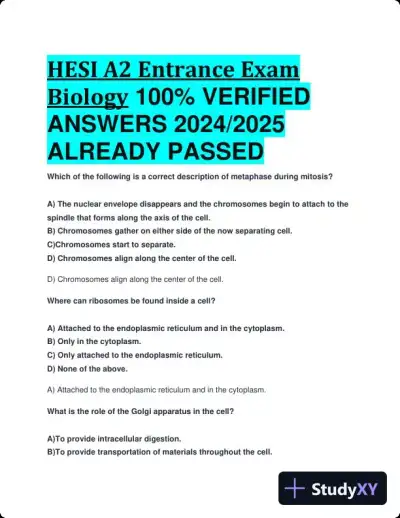 Past Exams
2024-2025 HESI A2 Biology Entrance Exam with Answers (42 Solved Questions)
Health Education Systems, Inc.
13 pages154downloadsFeb 2025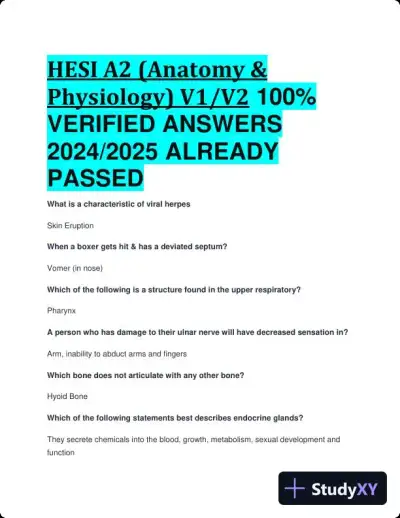 Past Exams
2024-2025 HESI A2 Anatomy and Physiology V1/V2 Practice Exam with Answers (134 Solved Questions)
Health Education Systems, Inc.
15 pages134downloadsFeb 2025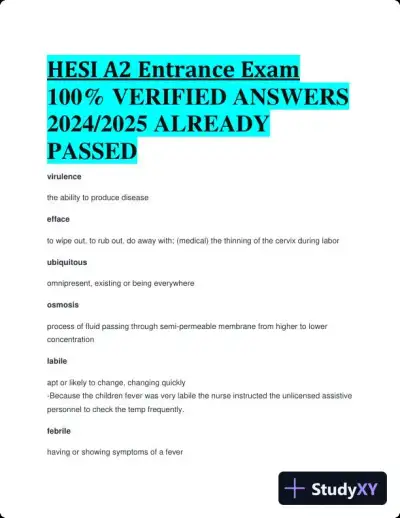 Past Exams
2024-2025 HESI A2 Entrance Exam with Answers (232 Solved Questions)
Health Education Systems, Inc.
26 pages132downloadsFeb 2025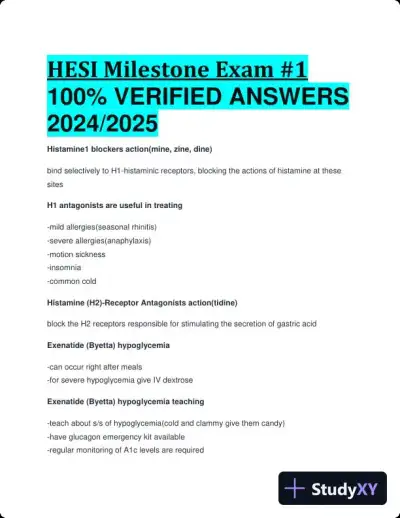 Past Exams
2024-2025 HESI Milestone Exam 1 with Answers (162 Solved Questions)
Health Education Systems, Inc.
26 pages119downloadsFeb 2025 Past Exams
2024-2025 HESI A2 Critical Thinking with Answers (124 Solved Questions)
Health Education Systems, Inc.
114 pages106downloadsFeb 2025 Past Exams
2024-2025 HESI RN Exit Exam with Answers (156 Solved Questions)
Health Education Systems, Inc.
44 pages92downloadsFeb 2025 Past Exams
HESI Leadership/Management Exit Exam with Answers (59 Solved Questions)
Health Education Systems, Inc.
4 pages54downloadsFeb 2025
Study this document with CramX
Once it is in your library, every tool can work from it.