

HESI Critical Care Practice Exam With Answers (75 Solved Questions)
- Health Education Systems, Inc.
- 75 pages
- Shared May 2025
Build exam confidence with HESI Critical Care Practice Exam With Answers, featuring a selection of past test questions.
Preview 16 of 75 pages
See the first 16 pages exactly as they appear in the document.
Page 1 Read page 1 as text
HESI Critical Care Exam Questions with Answers and Rationales 1. A client with asthma receives a prescription for high blood pressure during a clinic visit. Which prescription should the nurse anticipate the client to receive that is least likely to exacerbate asthma? A. Carteolol (Ocupress). B. Propranolol hydrochloride (Inderal). C. Pindolol (Visken). Incorrect D. Metoprolol tartrate (Lopressor). Correct The best antihypertensive agent for clients with asthma is metoprolol (Lopressor) (C), a beta2 blocking agent which is also cardioselective and less likely to cause bronchoconstriction. Pindolol (A) is a beta2 blocker that can cause bronchoconstriction and increase asthmatic symptoms. Although carteolol (B) is a b eta blocking agent and an effective antihypertensive agent used in managing angina, it can increase a client's risk for bronchoconstriction due to its nonselective beta blocker action. Propranolol (D) also blocks the beta2 receptors in the lungs, causing b ronchoconstriction, and is not indicated in clients with asthma and other obstructive pulmonary disorders. 2. A male client who has been taking propranolol (Inderal) for 18 months tells the nurse that the healthcare provider discontinued the medication b ecause his blood pressure has been normal for the past three months. Which instruction should the nurse provide? A. Obtain another antihypertensive prescription to avoid withdrawal symptoms. B. Stop the medication and keep an accurate record of blood pressure.
Page 2 Page 3 Read page 3 as text
C. Report any uncomfortable symptoms after stopping the medication. D. Ask the healthcare provider about tapering the drug dose over the next week. Correct Although the healthcare provider discontinued the propranolol, measures to prevent rebound cardiac excitation, such as progressively reducing the dose over one to two weeks (C), should be recommended to prevent rebound tachycardia, hypertension, and ventricular dysrhythmias. Abru pt cessation (A and B) of the beta - blocking agent may precipitate tachycardia and rebound hypertension, so gradual weaning should be recommended. (D) is not indicated. 3. A client who is taking clonidine (Catapres, Duraclon) reports drowsiness. Which add itional assessment should the nurse make? A. Has the client experienced constipation recently? B. Did the client miss any doses of the medication? C. How long has the client been taking the medication? Correct D. Does the client use any tobacco products? Drowsiness can occur in the early weeks of treatment with clonidine and with continued use becomes less intense, so the length of time the clien t has been on the medication (A) provides information to direct additional instruction. (B, C, and D) are not relevant. 4. ID: 6974873590 The nurse is preparing to administer atropine, an anticholinergic, to a client who is scheduled for a cholecystectomy. The client asks the nurse to explain the reason for the prescribed medication. What response is best for the nurse to provide? A. Provide a more rapid induction of anesthesia.
Page 4 Read page 4 as text
B. Induce relaxation before induction of anesthesia. C. Decrease the risk of bradycardia during surgery. Correct D. Minimize the amount of analgesia needed postoperatively. Atropine may be prescribed preoperatively to increase the automaticity of the sinoatrial node and prevent a dangerous reduction in heart rate (B) during surgical anesthesia. (A, C and D) do not address the therapeutic action of atropine use perioperatively. 5. ID: 6974876286 An 80 - year - old client is given morphine sulphate for postoperative pain. Which concomitant medication should the nurse question that poses a potential development of urinary retention in this geriatric client? A. Antacids. B. Tricyclic antidepressants. Correct C. Nonsteroidal antiinflammatory agents. D. Insulin. Drugs with anticholinergic properties, such as tricyclic antidepressants (C), can exacerbate urinary retention associated with opioids in the older client. Although tricyclic antidepressants and antihistamines with opioids can exacerbate urinary retention, the concurrent use of (A and B) with opioids do not. Nonsteroidal antiinflammatory agents (D) can increase the risk for bleeding, but do not increase urina ry retention with opioids (D). 6. ID: 6974873559
Page 5 Read page 5 as text
A client with osteoarthritis is given a new prescription for a nonsteroidal antiinflammatory drug (NSAID). The client asks the nurse, "How is this medication different from the acetaminophen I have been taking?" Which information about the therapeutic action of NSAIDs should the nurse provide? A. Are less expensive. B. Provide antiinfl ammatory response. Correct C. Increase hepatotoxic side effects. D. Cause gastrointestinal bleeding. Nonsteroidal antiinflammatory drugs (NSAIDs) have antiinflammatory properties (B), which relieves pain associated with osteoarthritis and differs from acetaminophen, a non - narcotic analgesic and antipyretic. (A) does not teach the client about the medication's actions. Although NSAIDs are irritating to the gastrointestin al (GI) system and can cause GI bleeding (C), instructions to take with food in the stomach to manage this as an expected side effect should be included, but this does not answer the client's question. Acetaminophen is potentially hepatotoxic (D), not NSAI Ds. 7. ID: 6974876262 A client with cancer has a history of alcohol abuse and is taking acetaminophen (Tylenol) for pain. Which organ function is most important for the nurse to monitor? A. Cardiorespiratory. B. Liver. Correct C. Sensory. D. Kidney.
Page 6 Read page 6 as text
Acetaminophen and alcohol are both metabolized in the liver. This places the client at risk for hepatotoxicity, so monitoring liver (A) function is the most important assessm ent because the combination of acetaminophen and alcohol, even in moderate amounts, can cause potentially fatal liver damage. Other non - narcotic analgesics, such as n onsteroidal anti - inflammatory drugs (NSAIDs), are more likely to promote adverse renal ef fects (B). Acetaminophen does not place the client at risk for toxic reactions related to (C or D). 8. ID: 6974875110 The nurse obtains a heart rate of 92 and a blood pressure of 110/76 prior to administering a scheduled dose of verapamil (Calan) for a client with atrial flutter. Which action should the nurse implement? A. Give intravenous (IV) calcium gluconate. B. Withhold the drug and notify the healthcare provider. C. Administer the dose as prescribed. Correct D. Recheck the vital signs in 30 minutes and then administer the dose. Verapamil slows sinoatrial (SA) nodal automaticity, delays atrioventricular (AV) nodal conduction, which slows the ventricular rate, an d is used to treat atrial flutter, so (A) should be implemented, based on the client's heart rate and blood pressure. (B and C) are not indicated. (D) delays the administration of the scheduled dose. 9. ID: 6974873583 A client is admitted to the hospital with a diagnosis of Type 2 diabetes mellitus and influenza. Which categories of illness should the nurse develop goals for the client's plan of care?
Page 7 Read page 7 as text
A. One chronic and one acute illness. Correct B. Two acute illnesses. C. One acute and one infectious illness. Incorrect D. Two chronic illnesses. The plan of care should include goals that are specific for chronic and acute illnesses. Adult - onset diabetes is a life - long chronic disease, whereas influenza is an acute ill ness with a short term duration (C). (A, B, and D) do not include the correct duration categories for this situation. 10. ID: 6974877914 Following an emergency Cesarean delivery, the nurse encourages the new mother to breastfeed her newborn. The client asks why she should breastfeed now. Which information should the nurse provide? A. Stimulate contraction of the uterus. Correct B. Initiate the lactation process. C. Facilitate maternal - infant bonding. D. Prevent neonatal hypogl ycemia. When the infant suckles at the breast, oxytocin is released by the posterior pituitary to stimulates the "letdown" reflex, which causes the release of colostrum, and contracts the uterus (C) to prevent uterine hemorrhage. (A and B) do not support the client's need in the immediate period after the emergency delivery. Although maternal - newborn bonding (D) is facilitated by early breastfeeding, the priority is uterine contraction stimulation. 11. ID: 6974875104
Page 8 Read page 8 as text
Which intervention should the nurse include in the plan of care for a female client with severe postpartum depression who is admitted to the inpatient psychiatric unit? A. Restrict visitors who irritate the client. B. Full rooming - in for the infant and mother. C. Supervised and guided visits with infant. Correct D. Daily visits with her significant other. Structured visits (C) provide an opportunity for the mother and infant to bond and should be facilitated and encouraged according to the client's pace of progress. (A) is unrealistic and may not be safe for the baby or the client. (B) is an unrealistic expectation. Although daily visits may provide support, the significant other may not be able to be there every day (D) based on other family responsibilities. 12. ID: 6974873535 A 16 - year - old male client is admitted to the hospital after falling off a bike and sustaining a fractured bone. The healthcare provider explains the surgery needed to immobilize the fracture. Which action should be implemented to obtain a valid informed co nsent? A. Obtain the permission of the custodial parent for the surgery. Correct B. Notify the non - custodial parent to also sign a consent form. C. Instruct the client sign the consent before giving medications. D. Obtain the signature of the client’s stepfather for the surgery. Incorrect The client is a minor and cannot legally sign his own consent unless he is an emancipated minor, so the consent should be obtained from the guardian for this client, which is the custodial parent (B). (A) is not a legal option. A stepparent is not a legal guardian for a minor unless the child has
Page 9 Read page 9 as text
been adopted by the stepparent (C). The non - custodial parent does not need to co - sign this form (D). 13. ID: 6974876258 During a client assessment, the client says, "I can't walk very well." Which action should the nurse implement first? A. Predict the likelihood of the outcome. B. Consider alternatives. C. Choose the most successful approach. D. Identify the problem. C orrect The sequential steps in problem - solving are to first identify the problem (B), then consider alternatives (C), consider outcomes of the alternatives (D), predict the likelihood of the outcomes occurring, and choose the alternative with the best chan ce of success (A). 14. ID: 6974875112 The nurse identifies a client's needs and formulates the nursing problem of, "Imbalanced nutrition: less than body requirements, related to mental impairment and decreased intake, as evidenced by increasing confusion and weight loss of more than 30 pounds over the last 6 months." Which short - term goal is best for this client? A. Verbalize understanding of plan and of intention to eat meals. B. Eat 50% of six small meals each day by the end of one week. Correct C. Meals prepared during hospitalization will be fed by the nurse. D. Demonstrate progressive weight gain toward the ideal weight.
Page 10 Read page 10 as text
Short - term goals should be realistic and attainable and should have a timeline of 7 to 10 days before discharge. (A) meets those criteria. (B) is nurse - oriented. (C) may be beyond the capabilities of a confused client. (D) is a long - term goal. 15. ID: 697 4873569 A male client is angry and is leaving the hospital against medical advice (AMA). The client demands to take his chart with him and states the chart is "his" and he doesn' t want any more contact with the hospital. How should the nurse respond? A. This hospital does not need to keep it if you are leaving and not returning here. B. Because you are leaving against medical advice, you may not have your chart. C. The information in your chart is confidential and cannot leave this facility legally. D. The chart is the property of the hospital but I will see that a copy is made for you. Correct The chart is the property of the facility, but the client has a le gal right to the information in it, even if he is leaving AMA, so a copy of the record (D) should be provided. The client does not lose his legal rights to his medical record if he leaves AMA (A). The medical record is confidential, but the hospital protec ts the client's privacy by not allowing unauthorized access to the record, so the hospital may provide the client with a copy (B). The hospital must maintain records of the care provided and should not release the original record (C). 16. ID: 6974877906
Page 11 Read page 11 as text
The nurse manager is assisting a nurse with improving organizational skills and time management. Which nursing activity is the priority in pre - planning a schedule for selected nursing activities in the daily assignment? A. Tracheostomy tube s uctioning. Incorrect B. Medication administration. Correct C. Colostomy care instruction. D. Client personal hygiene. In developing organizational skills, medication administration is based on a prescribed schedule that is time - sensitive in the delivery of nursing care and should be the priority in scheduling nursing activities in a daily assignment. Although suctioning a client's tracheostomy takes precedence in providing care, the client's PRN need is less amenable to a pr eselected schedule. (B and C) can be scheduled around time - sensitive delivery of care. 17. ID: 6974876220 What nursing delivery of care provides the nurse to plan and direct care of a group of clients over a 24 - hour period? A. Case management. B. Team nursing. Incorrect C. Primary nursing. Correct D. Functional nursing. Primary nursing (B) is a model of delivery of care where a nurse is accountable for planning care for clients around the clock. Functional nursing (D) is a care delivery model that provides client care by assignment of functions or tasks. Team nursing (A) is a care delivery model where
Page 12 Read page 12 as text
assignments to a group of clients are provided by a mixed - staff team. Case management (C) is the delivery of care that uses a collaborative process of assessment, planning, facilitation, and advocacy for options and services to meet an individual's health needs and promote quality cost - effective outcomes. 18. ID: 6974876280 Two unlicensed assistive personnel (UAP) are arguing on the unit about who deserves to take a break first. What is the most important basic guideline that the nurse should follow in resolving the conflict? A. Require the UAPs to reach a compromise. B. Weigh the consequences of each possible solution. Incorrect C. Encourage the two to view the humor of the conflict. D. Deal with issues and not personalities. Correct Dealing with the issues which are concrete, not personalities (A) which include emotional reactions, is one of seven important key behaviors in managing conflict. (B, C, and D) do not resolve the conflict when diverse opinions are expressed emotionally. 19. ID: 6974873531 The nurse is caring for a client who is unable to void. The plan of care establishes an objective for the client to ingest at least 1000 mL of fluid between 7:00 am and 3:30 pm. Which client response should the nurse document that indicates a successful outcome? A. Demonstrates adequate fluid intake and output. B. Verbalizes abdominal comfort without pressure.
Page 13 Read page 13 as text
C. Drinks 240 mL of fluid five times during the shift. Correct D. Voids at least 1000 mL between 7 am and 3 pm. The nurse should evaluate the client's outcome by observing the client's performance of each expected behavior, so drinking 240 mL of fluid five or six times during the shift (D) indicates a fluid intake of 1200 to 1440 mL, which meets the objective of at least 1000 mL during the designated period. (A) uses the term "adequate," which is no t quantified. (B) is not the objective, which establishes an intake of at least 1000 mL. (C) is not an evaluation of the specific fluid intake. 20. ID: 6974873553 The nurse plans a teaching session with a client but postpones the planned session based on which nursing problem? A. Knowledge deficit regarding impending surgery. B. Ineffective management of treatment regimen. C. Activity intolerance related to postoperative pain. Correct D. Noncompliance with prescribed exercise plan. Pain, fatigue, or anxiety can interfere with the ability to pay attention and participate in learning, so the nursing diagnosis in (A) indicates a need to postpone teaching. (B, C, and D) indicate a need for i nstruction. 21. ID: 6974875106 A client who has active tuberculosis (TB) is admitted to the medical unit. What action is most important for the nurse to implement?
Page 14 Read page 14 as text
A. Fit the client with a respirator mask. B. Assign the client to a negative air - flow room. Correct C. Don a clean gown for client care. D. Place an isolation cart in the hallway. Active tuberculosis requires implementation of airborne precautions, so the client should be assigned to a negative pressure air - flow room (D). Although (A and C) should be implemented for clients in isolation with contact precautions, it is most important that air flow from the room is minimized when the client has TB. (B) should be implemented when the client leaves the isolation environment. 22. ID: 6974873585 A client is receiving atenolol (Tenormin) 25 mg PO after a myocardial infarction. The nurse determines the client's apical pulse is 65 beats per minute. What action should the nurse implement next? A. Measure the blood pressure. B. Reassess the apical pulse. C. Notify the healthcare provider. D. Administer the medication. Correct Atenolol, a beta - blocker, blocks the beta receptors of the sinoatrial node to reduce the heart rate, so the medication should be administered (C) because the client's apical pulse is greater than 60. (A, B, and D) are not indicated at this time. 23. ID: 6974875175
Page 15 Read page 15 as text
The nurse is assessing a client and identifies a bruit over the thyroid. This finding is consistent with which interpretation? A. Hypothyroidism. B. Thyroid cyst. C. Thyroid cancer. D. Hyperthyroidism. Correct Hyperthyroidism (D) is an enlargement of the thyroid gland, often referred to as a goiter, and a bruit may be auscultated over the goiter due to an increase in glandular vascularity which increases as the thyroid gland becomes hyperactive. A bruit is not common with (A, B, and C). 24. ID: 6974876270 A 6 - year - old child is alert but quiet when brought to the emergency center with periorbital ecchymosis and ecchymosis behind the ears. The nurse suspects potential child abuse and continues to assess the child for additional manifestations of a basilar skull fracture. What assessment finding would be consi stent with a basilar skull fracture? A. Hematemesis and abdominal distention. B. Asymmetry of the face and eye movements. C. Rhinorrhoea or otorrhoea with Halo sign. Correct D. Abnormal position and movement of the arm. Raccoon eyes (periorbital ecchymosis) and Battle's sign (ecchymosis behind the ear over the mastoid process) are both signs of a basilar skull fracture, so the nurse should assess for possible meningeal tears th at manifest as a Halo sign with CSF leakage from the ears or nose (D). (A) is
Page 16 Read page 16 as text
consistent with orbital fractures. (B) occurs with wrenching traumas of the shoulder or arm fractures. (C) occurs with blunt abdominal injuries. 25. ID: 6974873555 The nurse is assessing a client who complains of weight loss, racing heart rate, and difficulty sleeping. The nurse determines the client has moist skin with fine hair, prominent eyes, lid retraction, and a staring expression. These findings are consistent wit h which disorder? A. Grave's disease. Correct B. Multiple sclerosis. C. Addison's disease. D. Cushing syndrome. This client is exhibiting symptoms associated with hyperthyroidism or Grave's disease (A), which is an autoimmune condition affecting the thyroid. (B, C, and D) are not associated with these symptoms. 26. ID: 6974875146 The nurse is assessing an older client and determines that the client's left upper eyelid droops, covering more of the iris than the right eyelid. Which description should the nurse use to document this finding? A. A nystagmus on the left. B. Exophthalmos on the right. C . Ptosis on the left eyelid. Correct D. Astigmatism on the right.
59 more pages in the full document
Unlock it once and it stays in your library, ready to chat with or turn into flashcards.
Unlock the full documentMore Health Education Systems, Inc. study materials
See all Past Exams
2023-2024 RN HESI Exit Exam Version 3 with Answers (53 Solved Questions)
Health Education Systems, Inc.
13 pages163downloadsFeb 2025 Past Exams
2024-2025 HESI A2 Biology Entrance Exam with Answers (42 Solved Questions)
Health Education Systems, Inc.
13 pages154downloadsFeb 2025 Past Exams
2024-2025 HESI A2 Anatomy and Physiology V1/V2 Practice Exam with Answers (134 Solved Questions)
Health Education Systems, Inc.
15 pages134downloadsFeb 2025 Past Exams
2024-2025 HESI A2 Entrance Exam with Answers (232 Solved Questions)
Health Education Systems, Inc.
26 pages132downloadsFeb 2025 Past Exams
2024-2025 HESI Milestone Exam 1 with Answers (162 Solved Questions)
Health Education Systems, Inc.
26 pages119downloadsFeb 2025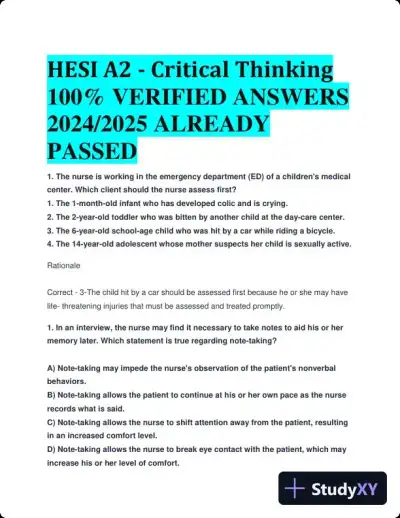 Past Exams
2024-2025 HESI A2 Critical Thinking with Answers (124 Solved Questions)
Health Education Systems, Inc.
114 pages106downloadsFeb 2025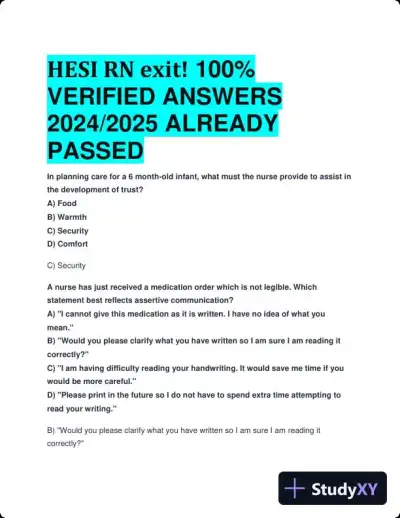 Past Exams
2024-2025 HESI RN Exit Exam with Answers (156 Solved Questions)
Health Education Systems, Inc.
44 pages92downloadsFeb 2025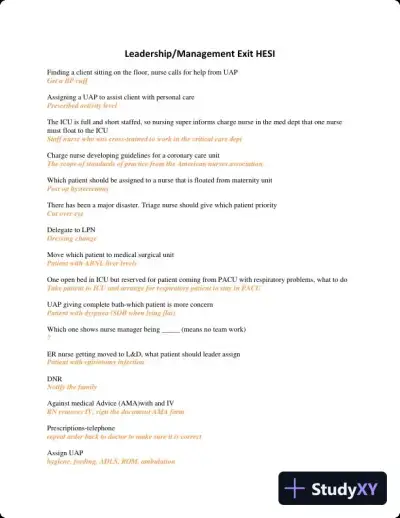 Past Exams
HESI Leadership/Management Exit Exam with Answers (59 Solved Questions)
Health Education Systems, Inc.
4 pages54downloadsFeb 2025
Study this document with CramX
Once it is in your library, every tool can work from it.