

HESI Medical Surgical Nursing Practice Exam With Answers (112 Solved Questions)
- Health Education Systems, Inc.
- 14 pages
- Shared May 2025
HESI Medical Surgical Nursing Practice Exam With Answers ensures you cover all important topics with real past questions.
Preview 5 of 14 pages
See the first 5 pages exactly as they appear in the document.
Page 1 Read page 1 as text
MED SURG 1 HESI EXAM WITH COMPLETE SOLUTIONS Hyperglycemia s/s - Polydipsia, poly iris, polyphagia, blurred vision, weakness, weight loss, syncope Encourage water, check BG, assess for ketoacidosis, insulin asdir Hypoglycemia s/s - Headache, nausea, sweating, tremors, lethargy, hunger, confusion, slurred speech, tingling around mouth, anxiety Occurs rapidly, treat with complex carbs ( glucose gel, fruit juice, 10-16 jelly beans, gum drops, life savers Check BG, <40 May seize Hypoglycemia s/s - SMBG - Record results for provider, Prediabetes - Fasting BG 100-125 or HBA1C 5.7-6.4 surgical risk factors - age; nutrition status; fluid/electrolyte status; general health (cardiac conditions, coagulation probs => hemorrhage, URTI => surgery delayed, COPD exacerbation possible r/t anesthesia, renal probs impair electrolyte stuff, uncontrolled DM => poor healing and infection, meds including OTC (anticoagulants, tranquilizers - hypotension, heroin - dec CNS response, antibiotics - incompatible w anesthetics, diuretics - electrolyte imbalance, steroids, OTC herbs, vitamin E Preop - time from decision to have surgery until taken to OR; Nurse gets hx, teaching, checklist preop history - age, allergies (iodine), current meds, hx of med/surg probs, prev. surgeries, prev. experience w/ anesthesia, tobacco, drug abuse, understanding of procedure, coping resources, cultural and ethical factors affecting surgery
Page 2 Page 3 Read page 3 as text
preop teaching - regulations about valuables, food and fluid restrictions (NPO after midnight), invasive procedures (foley, IV, NG, enema, douche), preop meds, OR, transportation, skin prep, post-anesthesia, post op (res. care, activity - ROM, ambulation, turning, pain control such as PCA, diet restrictions, PACU preop checklist - informed consent; site marked by surgeon, all team members confirm; hx and physical noted in chart; chest radiograph, ECG, and urinalysis if prescribed; hgb, hct, electrolytes, glucose, type/crossmatch of blood; chart on hand; ID band on PT w/ allergies noted; contacts, dentures, and all that jazz are removed; PT has voided or catheterized; PT has gown; VS taken; premeds (antibiotics) given; skin prep performed (cleaned, hair removed if needed, then cleaned again); nurse's signature completes intraop care - keep quiet; SAFETY (client ID, procedure, site; sponge, needle, and instrument counts accurate, position to prev injury, grounding device if electrocautery used; asepsis, suction, correct labeling and handling of all specimens); monitor physical status (blood loss - see effect on client, report VS changes to surgeon, positioning critical); psychological (emotional support, provide info to the fam if it takes too long) Postop care - Admission to PACU to recovery; on arrival, VS assessed along with LOC, skin color and condition, dressing, fluids, tubes, and O2; once stabilized, PT taken back to the floor Postop care includes: monitor for signs of shock and hemorrhage (hypotension, narrow pulse pressure, rapid weak pulse, cold moist skin, inc capillary refill time); position on side to prev aspiration, side rails up; heated blanket for warmth; manage n/v w drugs; pain w IV analgesics; check and assess drains acute respiratory distress syndrome (ARDS) - low O2 and high CO2; hypoxemia that persists even with 100% O2 on; dec. pulmonary compliance; dyspnea; non-cardiac pulmonary edema; dense pulmonary infiltrates on radiography; unexpected, catastrophic; high mortality; no abnormal sounds b/c edema happens in interstitial spaces; causes of ARDS - COPD exacerbation; pneumonia; TB; contusion; aspiration; inhaled toxins; emboli; OD; fluid overload; DIC; shock
Page 4 Read page 4 as text
assessment of ARDS - dyspnea, hyperpnea, crackles; intercostal retractions; cyanosis, pallor; hyposemia (PaO2 < 50); anxiety, restlessness ARDS interventions - position for max lung expansion; s/s hypoxemia; breath sounds; emotional support; VS and cardiac monitor; monitor ABGs; vital organ status (LOC, renal system output, apical pulse); fluids and lytes; metabolic status ABGS - pH - 7.35-7.45 PCO2 - 35-45 HCO3 - 21-28 PO2 - 80-100 O2 Sat - 95-100 Base excess - 0+- 2 *perform allen test before taking blood from radial Metformin - biguanide; careful w/ contrast dye (renal failyre and lactic acidosis) rapid acting insulin - lispro (humalog) - 10-15 min *all peak w/in 30-60 mins aspart (novolog) - 5-15 min glulisine (apidra) - 5-15 min short acting - regular (humalog r, novolin r, iletin II regular) 1-1.5h; peak in 2h; only insulin that can be given IV -often mixed w/ intermediate, never with long acting intermediate acting - NPH (humulin n, iletin II lente, iletin II NPH, novolin N) 2-4h; peak in 4- 12h; very long acting - glargine (lantus) CANNOT MIX THIS. detemis (levemir) *onset iin 1h w/ no peak Hypothyroidism - dec thyroid hormone; primary or secondary; s/s: weakness, fatigue, cold intolerance, weight gain, constipation, goiter, slow speech, dry cool skin, puffy face, dry coarse hair, thick brittle nails
Page 5 Read page 5 as text
Cushings - adrenal hypofunction; high adrenocortical hormones; weight gain, muscle weakness, buffalo hump, thinning extremities w/ muscle wasting, thin fragile skin, moon face, ruddy complexion, hirsutism, truncal obesity, broad purple striae, bruising, hyperglycemia, hyper atresia, hypokalemia, impaired wound healing; treated w/ surgery, HTN, radiation, or drug therapy Teach to take steroids w meals to prev GI distress, don't skip doses; avoid infection; low sodium diet; Hypocalcemia s/s - HHNS - occurs w/ type 2 most of the time, esp older PTs; characterized by hyperosmolarity of blood and hyperglycemia; caused by stress; slower onset than DKA; normal pH; osmolality > 350 ( BG usually 600-1200); BUN and creatinine elevated; higher mortality that DKA; mental status changes, severe dehydration, postural hypotension DKA - Results fro insulin deficiency; features are hyperglycemia, dehydration/electrolyte loss (diuresis), and acidosis; fat breakdown forms free fatty acids and glycerol; rapid onset; osmolality 300-350; BUN and creatinine elevated causes of DKA - Missed insulin dose, illness/infection, undiagnosed diabetes DKA clinical manifestations - Polyuria, polydipsia, fatigue; ketonuria; pH < 7.3; n/v, dehydration, abdominal pain, kussmaul respirations; acetone odor DKA PT prevention education - Take insulin as usual, BG and urine ketones q4h, fluids (lyte replacement), report n/v/d to provider DKA treatment - rehydration - isotonic (NS), electrolyte replacement (esp K), reversing acidosis (insulin drip w/ regular insulin, not too fast bc cerebral edema) DM nursing assessment findings - Skin infections, non healing. Wounds, periodontal disease, cataracts, retinopathy, angina, dyspnea, HTN, hair loss in extremities, coolness, shiny thin skin, weak peripheral pulses, pallor, thick nails wth ridges, edema, UTI, signs of renal failure
9 more pages in the full document
Unlock it once and it stays in your library, ready to chat with or turn into flashcards.
Unlock the full documentMore Health Education Systems, Inc. study materials
See all Past Exams
2023-2024 RN HESI Exit Exam Version 3 with Answers (53 Solved Questions)
Health Education Systems, Inc.
13 pages163downloadsFeb 2025 Past Exams
2024-2025 HESI A2 Biology Entrance Exam with Answers (42 Solved Questions)
Health Education Systems, Inc.
13 pages154downloadsFeb 2025 Past Exams
2024-2025 HESI A2 Anatomy and Physiology V1/V2 Practice Exam with Answers (134 Solved Questions)
Health Education Systems, Inc.
15 pages134downloadsFeb 2025 Past Exams
2024-2025 HESI A2 Entrance Exam with Answers (232 Solved Questions)
Health Education Systems, Inc.
26 pages132downloadsFeb 2025 Past Exams
2024-2025 HESI Milestone Exam 1 with Answers (162 Solved Questions)
Health Education Systems, Inc.
26 pages119downloadsFeb 2025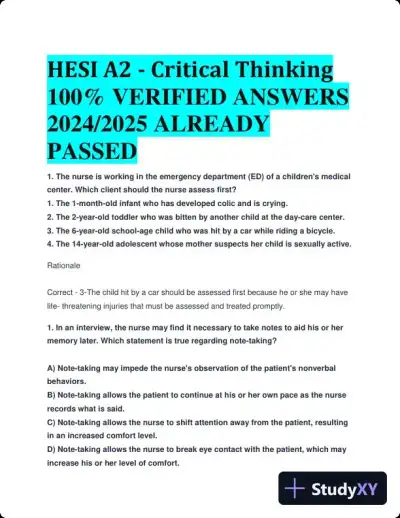 Past Exams
2024-2025 HESI A2 Critical Thinking with Answers (124 Solved Questions)
Health Education Systems, Inc.
114 pages106downloadsFeb 2025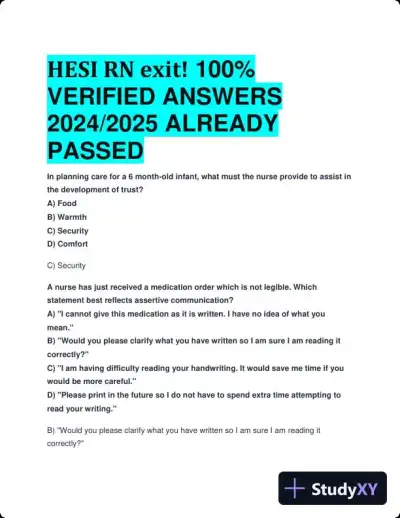 Past Exams
2024-2025 HESI RN Exit Exam with Answers (156 Solved Questions)
Health Education Systems, Inc.
44 pages92downloadsFeb 2025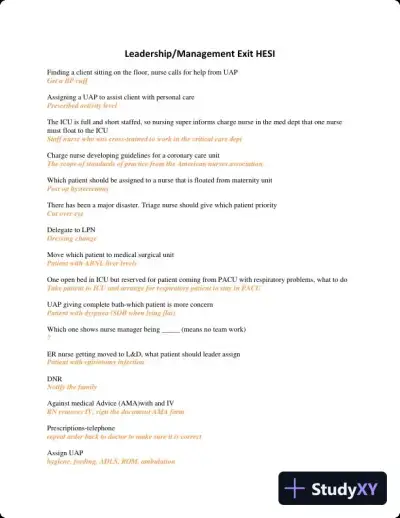 Past Exams
HESI Leadership/Management Exit Exam with Answers (59 Solved Questions)
Health Education Systems, Inc.
4 pages54downloadsFeb 2025
Study this document with CramX
Once it is in your library, every tool can work from it.