

HESI Medical Surgical Nursing Practice Exam With Answers (375 Solved Questions)
- Health Education Systems, Inc.
- 80 pages
- Shared May 2025
Familiarize yourself with different question types using HESI Medical Surgical Nursing Practice Exam With Answers, featuring past exams.
Preview 16 of 80 pages
See the first 16 pages exactly as they appear in the document.
Page 1 Read page 1 as text
MED SURG 1 & 2 HESI EXAM WITH SATISFIED SOLUTIONS Hyperglycemia s/s - Polydipsia, poly iris, polyphagia, blurred vision, weakness, weight loss, syncope Encourage water, check BG, assess for ketoacidosis, insulin asdir Hypoglycemia s/s - Headache, nausea, sweating, tremors, lethargy, hunger, confusion, slurred speech, tingling around mouth, anxiety Occurs rapidly, treat with complex carbs ( glucose gel, fruit juice, 10-16 jelly beans, gum drops, life savers Check BG, <40 May seize Hypoglycemia s/s - SMBG - Record results for provider, Prediabetes - Fasting BG 100-125 or HBA1C 5.7-6.4 surgical risk factors - age; nutrition status; fluid/electrolyte status; general health (cardiac conditions, coagulation probs => hemorrhage, URTI => surgery delayed, COPD exacerbation possible r/t anesthesia, renal probs impair electrolyte stuff, uncontrolled DM => poor healing and infection, meds including OTC (anticoagulants, tranquilizers - hypotension, heroin - dec CNS response, antibiotics - incompatible w anesthetics, diuretics - electrolyte imbalance, steroids, OTC herbs, vitamin E Preop - time from decision to have surgery until taken to OR; Nurse gets hx, teaching, checklist preop history - age, allergies (iodine), current meds, hx of med/surg probs, prev. surgeries, prev. experience w/ anesthesia, tobacco, drug abuse, understanding of procedure, coping resources, cultural and ethical factors affecting surgery
Page 2 Page 3 Read page 3 as text
preop teaching - regulations about valuables, food and fluid restrictions (NPO after midnight), invasive procedures (foley, IV, NG, enema, douche), preop meds, OR, transportation, skin prep, post-anesthesia, post op (res. care, activity - ROM, ambulation, turning, pain control such as PCA, diet restrictions, PACU preop checklist - informed consent; site marked by surgeon, all team members confirm; hx and physical noted in chart; chest radiograph, ECG, and urinalysis if prescribed; hgb, hct, electrolytes, glucose, type/crossmatch of blood; chart on hand; ID band on PT w/ allergies noted; contacts, dentures, and all that jazz are removed; PT has voided or catheterized; PT has gown; VS taken; premeds (antibiotics) given; skin prep performed (cleaned, hair removed if needed, then cleaned again); nurse's signature completes intraop care - keep quiet; SAFETY (client ID, procedure, site; sponge, needle, and instrument counts accurate, position to prev injury, grounding device if electrocautery used; asepsis, suction, correct labeling and handling of all specimens); monitor physical status (blood loss - see effect on client, report VS changes to surgeon, positioning critical); psychological (emotional support, provide info to the fam if it takes too long) Postop care - Admission to PACU to recovery; on arrival, VS assessed along with LOC, skin color and condition, dressing, fluids, tubes, and O2; once stabilized, PT taken back to the floor Postop care includes: monitor for signs of shock and hemorrhage (hypotension, narrow pulse pressure, rapid weak pulse, cold moist skin, inc capillary refill time); position on side to prev aspiration, side rails up; heated blanket for warmth; manage n/v w drugs; pain w IV analgesics; check and assess drains acute respiratory distress syndrome (ARDS) - low O2 and high CO2; hypoxemia that persists even with 100% O2 on; dec. pulmonary compliance; dyspnea; non-cardiac pulmonary edema; dense pulmonary infiltrates on radiography; unexpected, catastrophic; high mortality; no abnormal sounds b/c edema happens in interstitial spaces; causes of ARDS - COPD exacerbation; pneumonia; TB; contusion; aspiration; inhaled toxins; emboli; OD; fluid overload; DIC; shock
Page 4 Read page 4 as text
assessment of ARDS - dyspnea, hyperpnea, crackles; intercostal retractions; cyanosis, pallor; hyposemia (PaO2 < 50); anxiety, restlessness ARDS interventions - position for max lung expansion; s/s hypoxemia; breath sounds; emotional support; VS and cardiac monitor; monitor ABGs; vital organ status (LOC, renal system output, apical pulse); fluids and lytes; metabolic status ABGS - pH - 7.35-7.45 PCO2 - 35-45 HCO3 - 21-28 PO2 - 80-100 O2 Sat - 95-100 Base excess - 0+- 2 *perform allen test before taking blood from radial Metformin - biguanide; careful w/ contrast dye (renal failyre and lactic acidosis) rapid acting insulin - lispro (humalog) - 10-15 min *all peak w/in 30-60 mins aspart (novolog) - 5-15 min glulisine (apidra) - 5-15 min short acting - regular (humalog r, novolin r, iletin II regular) 1-1.5h; peak in 2h; only insulin that can be given IV -often mixed w/ intermediate, never with long acting intermediate acting - NPH (humulin n, iletin II lente, iletin II NPH, novolin N) 2-4h; peak in 4- 12h; very long acting - glargine (lantus) CANNOT MIX THIS. detemis (levemir) *onset iin 1h w/ no peak Hypothyroidism - dec thyroid hormone; primary or secondary; s/s: weakness, fatigue, cold intolerance, weight gain, constipation, goiter, slow speech, dry cool skin, puffy face, dry coarse hair, thick brittle nails
Page 5 Read page 5 as text
Cushings - adrenal hypofunction; high adrenocortical hormones; weight gain, muscle weakness, buffalo hump, thinning extremities w/ muscle wasting, thin fragile skin, moon face, ruddy complexion, hirsutism, truncal obesity, broad purple striae, bruising, hyperglycemia, hyper atresia, hypokalemia, impaired wound healing; treated w/ surgery, HTN, radiation, or drug therapy Teach to take steroids w meals to prev GI distress, don't skip doses; avoid infection; low sodium diet; Hypocalcemia s/s - HHNS - occurs w/ type 2 most of the time, esp older PTs; characterized by hyperosmolarity of blood and hyperglycemia; caused by stress; slower onset than DKA; normal pH; osmolality > 350 ( BG usually 600-1200); BUN and creatinine elevated; higher mortality that DKA; mental status changes, severe dehydration, postural hypotension DKA - Results fro insulin deficiency; features are hyperglycemia, dehydration/electrolyte loss (diuresis), and acidosis; fat breakdown forms free fatty acids and glycerol; rapid onset; osmolality 300-350; BUN and creatinine elevated causes of DKA - Missed insulin dose, illness/infection, undiagnosed diabetes DKA clinical manifestations - Polyuria, polydipsia, fatigue; ketonuria; pH < 7.3; n/v, dehydration, abdominal pain, kussmaul respirations; acetone odor DKA PT prevention education - Take insulin as usual, BG and urine ketones q4h, fluids (lyte replacement), report n/v/d to provider DKA treatment - rehydration - isotonic (NS), electrolyte replacement (esp K), reversing acidosis (insulin drip w/ regular insulin, not too fast bc cerebral edema) DM nursing assessment findings - Skin infections, non healing. Wounds, periodontal disease, cataracts, retinopathy, angina, dyspnea, HTN, hair loss in extremities, coolness, shiny thin skin, weak peripheral pulses, pallor, thick nails wth ridges, edema, UTI, signs of renal failure
Page 6 Read page 6 as text
( edema, anorexia, nausea, fatigue, difficulty concentrating), neuropathy (numbness, tingling, pain, burning), diarrhea at night, impotence, dry vag, period probs, depression Somogyi phenomenon - dec in BG around 2-3am to hypoglycemic levels; should dec evening insulin dose dawn phenomenon - normal BG until like 3am; should change time of evening injection from dinnertime to bedtime insulin waning - progressive rise in BG from bed til morning; should inc evening dose Pheocromocytoma - tumor of adrenal medulla; triad: headache, diaphoresis, and palpitations in the PT w/ HTN; fatal if undetected; patient is anxious and weak; bed rest w/ HOB elevated; alpha adrenergic blocker, maybe w/ a beta blocker; adrenalectomy diabetic retinopathy - capillary basement membrane thickening; asymptomatic at first; destruction of retinal vessels; abnormal new growth of vessels rupture and form scar tissue which causes retina to detach; prevention key; huge cause of blindness Addisons - Emergency; vascular collapse (IV fluids), hypoglycemia (IV glucose), aldosterone replacement; Autoimmune; may be caused by sudden withdrawal from steroids or stress; lack of cortisol, androgens, and aldosterone; secondary is caused by lack of ACTH from pituitary; S/s: fatigue, weakness, weight loss, anorexia, n/v, postural hypotension, hypoglycemia, hyponatremia, hyperkalmia, hyper pigmentation, shock, loss of body hair, hypovolemia DM - Hyperglycemia; affects metabolism of protein, carbs, and fat; 4 ways to dx: FPG > 126; BHA1C > 6.5; random BG of 200; OGTT > 200 Type 1: B cell destruction; autoimmune Type 2: insulin deficit or dec uptake; obesity major risk factor Any stressful event inc BG, so illness causes hyperglycemia In doubt of whether it's hyper or hypo, treat for hypo FOOT CARE
Page 7 Read page 7 as text
shock - widespread reduction of tissue perfusion; those at risk are post MI, very old and very young, PT w/ severe dysrhythmias, adrenocorticoid dysfunction, recent hemorrhage, burns, massive infection *early signs are agitation and restlessness resulting from cerebral hypoxia *all types can lead to systemic inflammatory respiratory syndrome (SIRS) and myltiple organ dysfunction syndrome (MODS) hypovolemic shock - internal or external blood or fluid loss; most common stage 1 (initial): apprehension and restlessness, inc HR, cool pale skin, fatigue stage 2 (compensatory): flattened neck veins; delayed venous filling; inc pulse and rr; pallor; diaphoresis; cool skin; dec urinary output; sunken, soft eyeballs; confusion stage 3 (progressive): edema; inc blood viscosity; excessively low bp; dysrhythmia; ischemia, MI; weak thready or absent peripheral pulses stage 4 (irreversible): profound hypotension; unresponsive to vasopressors; severs hypxemia; unresponsive to O2; anuria; renal shutdown; HR slows, BP falls; cardiac and respiratory arrest; death inevitable cardiogenic shock - related to ischemia or impairment in tissue perfusion resulting from MI, serious arrhythmia, or HF; all of these dec. CO position client in high fowlers if pulmonary edema w/ legs dependent anaphylactic shock - related to allergens; aute and life threatening w/ respiratory distress r/t bronchial constriction leading to airway obstruction; vascular collapse may follow neurogenic shock - r/t injury to descending sympathetic pathways in spinal cord; results from loss of vasomotor tone and sympathetic innervation to heart septic shock - r/t endotoxins released by bacteria; cause vascular pooling, diminished venous return, and dec. CO obstructive shock - physical obstruction r/t tamponade, emboli, compartment syndrome that impedes filling or outflow of blood resulting in dec. CO
Page 8 Read page 8 as text
medical treatment of shock - oxygenation and ventilation; fluid resuscitation w/ fluid (isotonic), whole blood, not done w/ cardiogenic b/c pulmonary edema results; drug therapy w/ drugs that increase (blood products, cryastalloids) or decrease preload (morphine, nitrates, diuretics), drugs that inc. afterload (vasopressors, dopamine) or dec. afterload (ACE, ARB), drugs that dec contractility (beta blockers, calcium channel blockers) or inc contractility (digoxin) assessment findings of PT in shock - VS: tachycardia, tachypnea, BP dec mental status: in early shock they are restless and hyperalert, in late shock they have dec alertness, lethargy, coma skin changes: cool and clammy, diaphoresis, paleness fluid status: urine dec, urins specific gravity > 1.020 interventions for PT in shock - monitor VS q15min; I/O to mantain at least 30mL out per hr; call provider if output falls below 30mL/hr; fluids asdir; position appropriately; meds given IV b/c of dec perfusion IM and SQ; keep PT warm; side rails up; get blood for labs; monitor medication effects esp w/ vasopressor and vasodilator drugs DIC - first phase has abnormal clotting in microcirculation that uses up clotting factors and then hemorrhage occurs; suspected w/ acute hypotension and septicemia w/ blood oozing from more than one place; dx with prolonged PT, PTT; dec fibrinogen and platelets; and inc FDP DIC Assessment - petichiae, purpuraa, hematomas; oozing from IV sites, drains, gums, and wounds; GI & GU bleeding; hemoptysis; mental status change, hypotension/tachycardia; pain DIC interventions - monitor for bleeding; monitor VS & PT/INR; prevent injury and bleeding (gentle oral care, minimal needle sticks, turn frequently, minimize BP measurements, gentle suction if needed, pressure to oozing site if discovered in clotting phase, heparin can stop the micro-clots; if PT gets past that point, clotting factors are given along w/ palliative care for symptoms angina - cardiac O2 demand exceeds supply; caused by: atherosclerosis, HTN, coronary artery spasm, hypertrophic cardiomyopathy, activities that inc heart's O2 demand (physical exertion, cold temperatures)
Page 9 Read page 9 as text
angina assessment - pain described as heavy, squeezing, pressure, burning, choking, aching, feeling of apprehension substernal, radiating to L arm and/or shoulder transient or prolonged, with gradual or sudden onset, often short duration dyspnea, tachycardia, palpitations n/v, fatigue, diaphoresis, pallor, weakness, syncope, dysrhythmias, ECG usually at baseline; ST depression in anginal attacks and T wave inversion (exercise stress test shows same) stress echocardiogram looks for changes in wall motion (indicated in women) cardiac catheterization: detects arterial blockage angina risk factors - nonmodifiable: heredity, gender (male > female until menopause), ethnic background (african americans), age modifiable: hyperlipidemia, serum cholesterol > 300, LDL elevated, HDL low, HTN, smoking, obesity, physical inactivity, DM, stress LDL - <100 desirable; bad cholesterol HDL - >60 desirable; good cholesterol angina interventions - monitor meds; determine what precipitates pain; teach risk factors; During attack: immediate rest, VS, ECG, nitroglycerin tabs 5 min apart not to exceed tabs, emergency treatment w/ no relief teach to avoid isometric activity, start exercise program, teach that sex is ok when exercise is tolerated, can take nitroglycerin before hand, provide nutrition info; medical tx: PTCA MI - disruption in or deficiency of coronary artery blood supply resulting in necrosis of cardiac tissue Caused by: thrombus or clotting; shock or hemorrhage MI assessment - Pain: onset in lower sternal region; severity inc to unbearabe, radiates to shoulder and down arm or to neck; women may have DOB or fatigue; differs from angina b/c
Page 10 Read page 10 as text
sudden onset; not relieved by rest, may have n/v, anxiety, feeling of impending doom, not relieved by nitroglycerin; those w/ diabetic neuropathy may not have pain... silent MI rapid irregular feeble pulse, dec LOC, dysrhythmias, cardiogenic shock or fluid retention, elevated cardiac markers, troponin best, HF - wet lung sounds, ECG changes as early as 2hr, n/v gastric discomfort or indigestion, cool pale sweaty skin women: dyspnea, unusual fatigue, sleep disturbances MI interventions - MONA; VS, ECG, O2 AT 2-6L NC; hyponatremia - cause: diuretics, GI fluid loss, hypotonic tube feeding, D5W or hypotonic IV fluids, diaphoresis s/s: anorexia, n/v, weakness, lethargy, confusion, muscle cramps and twitching, seizures; Na < 135 tx: restrict fluids (safest); IV saline asdir if restricting fluids doesnt work hypernatremia - cause: water deprivation, hypertonic tube feeding, diabetes insipidus, heatsrtoke, hyperventiation, watery diarrhea, renal failure, cushings s/s: thirst, hyperpyrexia, sticky mucous membranes, dry mouth, hallucinations, lethargy, irritability, seizures; Na > 145 tx: restrict sodium, inc water hypokalemia - cause: diuretics, diarrhea, vomiting, GI suction, steroids, hyperaldosteronism, bulimia, cushings s/s: fatigue, anorexia, n/v, muscle weakness, dec GI motility, dysrhythmias, parathesia, flat T waves; K < 3.5 tx: supplements (don't give on empty stomach); NEVER GIVE IV BOLUS. WILL KILL YOUR BUTT DEAD; high K diet (banana, orange, spinach, avocado, cantaloupe, potatoes); renal status before giving hyperkalemia - cause: oliguria, acidosis, renal failure, addisons, multiple blood transfusions s/s: muscle weakness, bradycardia, dysrhythmias, flaccid paralysis, intestinal colic, tall t waves; K > 5
Page 11 Read page 11 as text
tx:50% glucose w/ regular insulin; Kayexalate; ECG; calcium gluconate; loop diuretics; dialysis hypocalcemia - renal failure, hypoparathyroidism, malabsorption, pancreatitis, alkalosis s/s: diarrhea, numbness, tingling, convulsions, positive trousseau or chvostek; Ca < 8.5 tx: supplements; slow IV infusion; inc intake (dairy, greens) hypercalcemia - cause: hyperparathyroidism, malignant bone disease, prolonged immobilization, excess supplementation s/s: muscle weakness, constipation, anorexia, n/v, polyuria, polydipsia, neurosis, dysrhythmias; Ca > 10.5 hypomagnesemia - cause: alcoholism, malabsorption, DKA, prolonged GI suction, diuretics; s/s: anorexia, distention, neuromuscular irritability, depression, disorientation; Mg < 1.5 tx: MgSO4 IV; high Mg diet (meats, nuts, legumes, fish, veggies) hypermagnesemia - cause: renal failure, adrenal insufficiency, excess replacement; s/s: flushing, hypotension, drowsiness, lethargy, dec DTR; depressed respirations, bradycardia; Mg > 2.5 tx: avoid Mg based antacids and laxatives, restrict diet, also calcium gluconate for toxicity hypophosphatemia (dec pH) - cause: refeeding after starvation, alcohol withdrawal, DKA, respiratory alkalosis s/s: parethesias, muscle weakness, muscle pain, mental changes, cardiomyopathy, respiratory failure; pH < 2 tx: treat cause; oral replacements w/ vit D hyperphosphatemia (inc pH) - cause: renal failure, excess intake of phosphorus s/s: short term: tetany symptoms; long term: phosphorus precipitation in nonosseous sites; pH > 4.5 tx: aluinum hydroxide w/ meals to bind phosphorus; dialysis if renal failure is cause isotonic IV solutions - osmolality close to EC indicated for intravascular hydration
Page 12 Read page 12 as text
NS; LR; D5W (almost hypotonic) ex: dehydration caused by running, labor, fever hypotonic IV solutions - osmolality lower than ECF cause fluid to move from ECF to ICF used for cellular dehydration 1/2NS (HNS); D2.5HNS ex: dehydration caused by prolonged dehydration, also seen w/ PT on TPN for a long time hypertonic IV solutions - osmolality higher than ECF indicated for intravascular dehydration with interstitial or cerebral overhydration used carefully only used when serum osmolality is dangerously low D5LR; D5HNS; D5NS; D10W ex: dehydration from surgery.. blood loss causes intravascular dehydration but tissue cuts inflame and pull fluid in to the area, causing interstitial overhydration; also seen with ascites and third spacing PRBCs - for acute blood loss, low danger of fluid overload platelets - bleeding r/t thrombocytopenia; bad agitated periodically albumin prep'd from plasma, 5% & 25% solutions - hypovolemic shock, hypoalbuminemia; 25g/100mL is osmotically equal to 500mL of plasma cryoprecipitates - replacement of clotting factors; used for hemophilia respiratory acidosis - dec pH; inc PCO2; normal C=HCO3 caused by hypoventilation COPD, pulmonary disease, drugs, obesity, mechanical asphyxia, sleep apnea respiratory alkalosis - inc pH; dec PCO2; normal HCO3 caused by hyperventilation
Page 13 Read page 13 as text
overventilation on ventilator, response to acidosis, bacteremia, thyrotoxicosis, fever, hepatic failure, response to hypoxia, hysteria metabolic acidosis - dec pH; normal PCO2; dec HCO3 caused byaddition of large amounts of fixed acids to body fluids lactic acidosis (circulatory failure), ketoacidosis, phosphates and sulfates (renal disease), acid ingestion, secondary to respiratory alkalsis, adrenal insufficiency metabolic alkalosis - inc pH; normal PCO2; inc HCO3 caused by retention of base or removal of acid from body excessive gastric drainage, vomiting, potassium depletion (diuretic therapy), burns, excessive NaHCO3 administration HIV - retrovirus that attacks CD4 T cells; destroys them and reduces body's ability to fight infection; initial symptoms within 3 wks of exposure, then become asymptomatic HIV risk factors - homo/bisexual males; IV drug abusers; heterosexual partners of risk group member; recipients of blood products before screening (1985); taking steroids or other meds that cause immunosuppression; infants of infected moms; breastfeeding infants of affected moms HIV primary infection - CD4 > 800; flu like symptoms, fever, malaise mononucleosis like illness, lymphadenopathy, fever, malaise, rash symptoms usually occur within 3 wks of initial exposure, then asymptomatic HIV asymptomatic - CD4 > 500; CDC A no clinical problems continuous viral replication can last for years (10+) HIV symptomatic - CD4 betwee 200-499; CDC B persistent generalized lymphadenopathy; persistent fever; weight loss, diarrhea, peripheral neuropathy, herpes zoste, candidiasis, cervical dysplasia, hairy leukoplakia oral
Page 14 Read page 14 as text
AIDS - CD4 < 200 CDC C variety of bacteria, parasites, or viruses overwhelm body's immune system once classified ad category C, stays that way.. has implication for entitlements (health benefits, housing, food stamps) HIV assessment - positive ELISA, confirmed by western blot test (electrophoresis) symptoms: extreme fatigue, appetite loss/weight loss (>10lb in 2mo); swollen glands; leg weakness or pain; night sweats; unexplained diarrhea; cry cough; white spots in mouth and throat; painful blisters, maybe shingles; painless purple-blue lesions on skin; confusion; disorientation; in women, recurrent vaginal infections HIV Interventions - assess respiratory status frequently; avoid known sources of infection; strict asepsis for invasive procedures; frequent VS; plan for rest periods; elevate HOB; refer to nutritionise; small, frequent meals; weigh daily; encourage PT to avoid fatty foods; monitor for skin breakdown; safety precautions; emotional support for PT and family; IV fluids for hydration; TPN asdir; meds and pain mgmt opportunistic infections of HIV - pneumonia; kaposi sarcoma; cryptosporidiosis; candidiasis of oral cavity and esophagus; cryptococcal meningitis; cytomegalovirus (CMS, preggo nurse shouldn't have this PT) Retinitis; CMV colitis; disseminated CMV; perirectal mucutaneous herpes simplex; lymphoma of CNS; TB; HIV encephalopathy HIV dugs - NRTI's; Non-NRTI's; protease inhibitors; COMBINATION PRODUCTS; CCR5 inhibitor; fusion inhibitor; antiprotozoals; antivirals; antifungals pneumonia - inflammation of lower respiratory tract; caused by aspiration, inhalation, or hematogenous spread; can be bacterial, viral, fungal (rare), or chemical; community or nosocomial acquired at risk for pneumonia - PT w/ lots of lung secretions; smokers; immobile; immunosuppressed; depressed gag or cough reflex; sedated; neuromuscular disorders; NG/OG intubation; hospitalized; altered LOC; anyone susceptible to aspiration; brain injury; drug OD; stroke victim
Page 15 Read page 15 as text
pneumonia assessment - tachypnea, shallow often w/ accessory muscles; abrupt onset of fever w/ shaking and chills; productive cough w/ pleuritic pain; rapid, bounding pulse; pain and dullness ofer affected lung area; bronchial breath sounds, crackles; CXR shows infiltrates w/ consolidation or pleural effusion; elevated WBC; ABG indicates hypoxemia; drop in O2 sat.. should be > 90% but 95% preferred; older adults: confusion, lethargy/malaise, anorexia, rapid rr, tachycardia *fever can cause dehydration and inc O2 demand *irritibility and restlessness are early signs of cerebral hypoxia pneumonia interventions - assess sputum (vol, color, consistency, clarity); deep breath q2h; humidity to loosen secretions; fluids up to 3L qday; lung sounds before and after coughing; rate, depth, and pattern of respirations; ABGs; O2 sat; skin color; mental status; O2 asdir; VS regularly (temp)rest periods; teach to get immunizations preventing pneuomonia - older adults: get flu shots and pneomovax, avoid sources of infection and indoor pollutants, don't smoke immunosuppressed: flu shots, pneumovax, avoid infection sources, sensible nutrition, fluid intake, balance of rest and activity comatose/immobile: elevation of HOB for 1hr after feeding, turn frequently asplenia: flu and pneumovax MED SURGE HESI EXAM 2 WITH NGN (LATEST UPDATED 2024) 1. The nurse is providing teaching to a client with Type 2 diabetes mellitus and peripheral neuropathy. Which information should the nurse provide? a. Family members can help with regular foot exams b. Heating pads are useful if on the low setting
Page 16 Read page 16 as text
c. Aching feet may be soaked in lukewarm water for one hour or more d. Shoes should be worn outside the house, but it is fine to be barefoot inside - a. Family members can help with regular foot exams 2. A client in the operating room received succinylcholine. The client is experiencing muscle rigidity and has an extremely high temperature. What action should the nurse implement? a. Hold a prescription for dantrolene until fever is reduced b. Prepare ice packs for placement in the clients axillary area c. Call the PACU nurse to prepare for prolonged ventilator support d. Determine if prescribed antibiotics were administered preoperatively - b. Prepare ice packs for placement in the clients axillary area 3. The nurse is developing a plan of care for a client who reports blurred vision and who is newly diagnosed with cardiovascular disease. Which outcome should the nurse include in the plan of care for this client? a. The nurse will encourage the client to walk thirty minutes every day b. The clients family will state signs and symptoms about the disease c. The clients daily blood pressure will be less than 140/80 this month d. The client blood pressure readings will be less than 160/90 - c. The clients daily blood pressure will be less than 140/80 this month 4. The family suspects that acquired immune deficiency syndrome (AIDS) dementia is occuring in their son who is human immunodeficiency virus (HIV) positive. Which symptoms confirm their suspicions? a. He has begun to sleep 18 out of 24 hours b. A change has recently occurred in his handwriting c. He refuses to see any of his friends or to return their phone calls d. He exhibits angry outburst when the subject of dying is approached - b. A change has recently occurred in his handwriting
64 more pages in the full document
Unlock it once and it stays in your library, ready to chat with or turn into flashcards.
Unlock the full documentMore Health Education Systems, Inc. study materials
See all Past Exams
2023-2024 RN HESI Exit Exam Version 3 with Answers (53 Solved Questions)
Health Education Systems, Inc.
13 pages163downloadsFeb 2025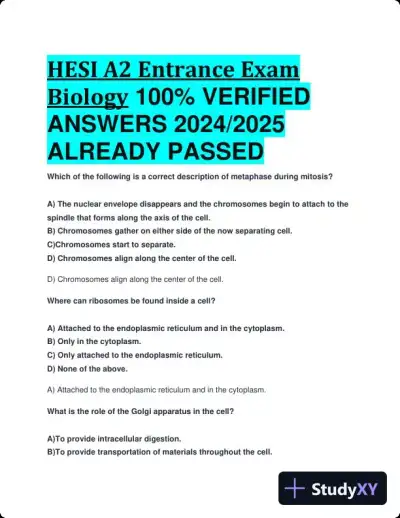 Past Exams
2024-2025 HESI A2 Biology Entrance Exam with Answers (42 Solved Questions)
Health Education Systems, Inc.
13 pages154downloadsFeb 2025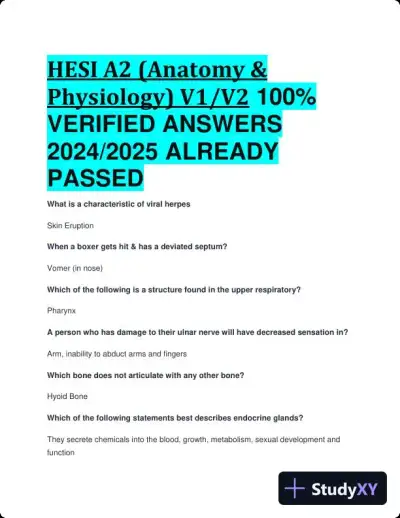 Past Exams
2024-2025 HESI A2 Anatomy and Physiology V1/V2 Practice Exam with Answers (134 Solved Questions)
Health Education Systems, Inc.
15 pages134downloadsFeb 2025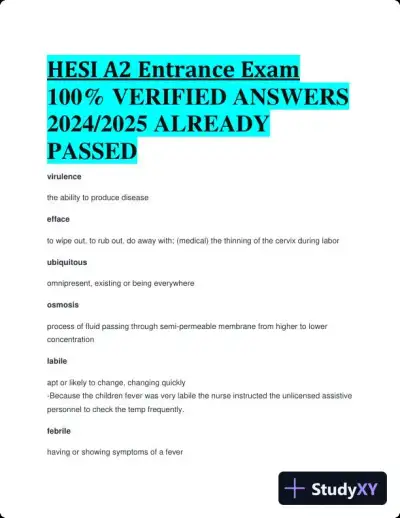 Past Exams
2024-2025 HESI A2 Entrance Exam with Answers (232 Solved Questions)
Health Education Systems, Inc.
26 pages132downloadsFeb 2025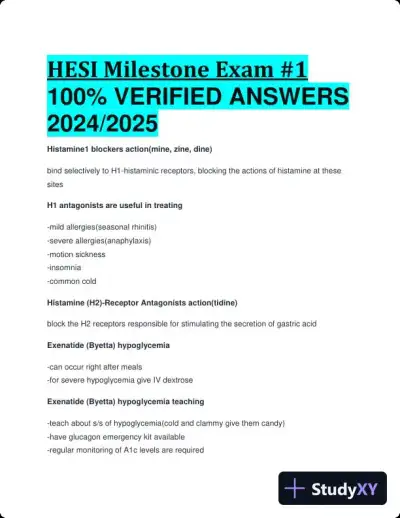 Past Exams
2024-2025 HESI Milestone Exam 1 with Answers (162 Solved Questions)
Health Education Systems, Inc.
26 pages119downloadsFeb 2025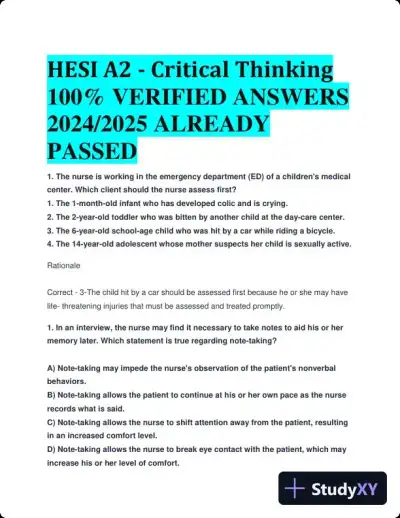 Past Exams
2024-2025 HESI A2 Critical Thinking with Answers (124 Solved Questions)
Health Education Systems, Inc.
114 pages106downloadsFeb 2025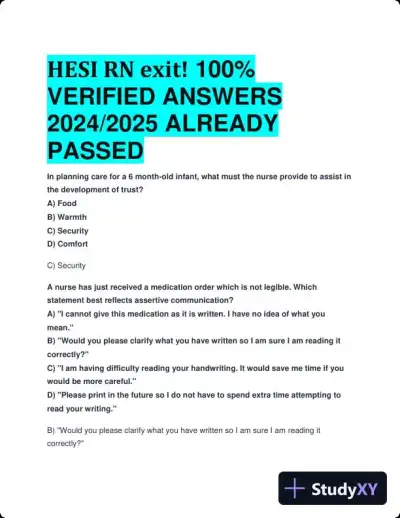 Past Exams
2024-2025 HESI RN Exit Exam with Answers (156 Solved Questions)
Health Education Systems, Inc.
44 pages92downloadsFeb 2025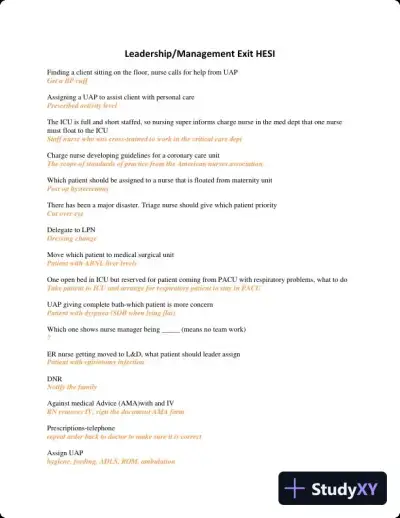 Past Exams
HESI Leadership/Management Exit Exam with Answers (59 Solved Questions)
Health Education Systems, Inc.
4 pages54downloadsFeb 2025
Study this document with CramX
Once it is in your library, every tool can work from it.