

HESI Pharmacology Comprehensive Real Exam With Answers (245 Solved Questions)
- Health Education Systems, Inc.
- 137 pages
- Shared May 2025
HESI Pharmacology Comprehensive Real Exam With Answers provides a complete revision guide using actual past exams.
Preview 16 of 137 pages
See the first 16 pages exactly as they appear in the document.
Page 1 Read page 1 as text
NEW GENERATION ATI COMPREHENSIVE HESI EXAM FOR PHARMACOLOGY | REAL EXAMS WITH RATIONALE AND STUDY HINTS 1) A nurse is caring for a client with hyperparathyroidism and notes that the client's serum calcium level is 13 mg/dL. Which medication should the nurse prepare to administer as prescribed to the client? 1. Calcium chloride 2. Calcium gluconate 3. Calcitonin (Miacalcin) 4. Large doses of vitamin D 3. Calcitonin (Miacalcin) Rationale: The normal serum calcium level is 8.6 to 10.0 mg/dL. This client is experiencing hypercalcemia. Calcium gluconate and calcium chloride are medications used for the treatment of tetany, which occurs as a result of acute hypocalcemia. In hypercalcemia, large doses of vitamin D need to be avoided. Calcitonin, a thyroid hormone, decreases the plasma calcium level by inhibiting bone resorption and lowering the serum calcium concentration. 2.) Oral iron supplements are prescribed for a 6-year-old child with iron deficiency anemia. The nurse instructs the mother to administer the iron with which best food item? 1. Milk 2. Water 3. Apple juice 4. Orange juice 4. Orange juice Rationale: Vitamin C increases the absorption of iron by the body. The mother should be instructed to administer the medication with a citrus fruit or a juice that is high in vitamin C. Milk may affect absorption of the iron. Water will not assist in absorption. Orange juice contains a greater amount of vitamin C than apple juice. 3.) Salicylic acid is prescribed for a client with a diagnosis of psoriasis. The nurse monitors the client, knowing that which of the following would indicate the presence of systemic toxicity from this medication? 1. Tinnitus 2. Diarrhea
Page 2 Page 3 Read page 3 as text
3. Constipation 4. Decreased respirations 1. Tinnitus Rationale:
Page 4 Read page 4 as text
Salicylic acid is absorbed readily through the skin, and systemic toxicity (salicylism) can result. Symptoms include tinnitus, dizziness, hyperpnea, and psychological disturbances. Constipation and diarrhea are not associated with salicylism. 4.) The camp nurse asks the children preparing to swim in the lake if they have applied sunscreen. The nurse reminds the children that chemical sunscreens are most effective when applied: 1. Immediately before swimming 2. 15 minutes before exposure to the sun 3. Immediately before exposure to the sun 4. At least 30 minutes before exposure to the sun Rationale: Sunscreens are most effective when applied at least 30 minutes before exposure to the sun so that they can penetrate the skin. All sunscreens should be reapplied after swimming or sweating. 5.) Mafenide acetate (Sulfamylon) is prescribed for the client with a burn injury. When applying the medication, the client complains of local discomfort and burning. Which of the following is the most appropriate nursing action? 1. Notifying the registered nurse 2. Discontinuing the medication 3. Informing the client that this is normal 4. Applying a thinner film than prescribed to the burn site 3. Informing the client that this is normal Rationale: Mafenide acetate is bacteriostatic for gram-negative and gram-positive organisms and is used to treat burns to reduce bacteria present in avascular tissues. The client should be informed that the medication will cause local discomfort and burning and that this is a normal reaction; therefore options 1, 2, and 4 are incorrect 6.) The burn client is receiving treatments of topical mafenide acetate (Sulfamylon) to the site of injury. The nurse monitors the client, knowing that which of the following indicates that a systemic effect has occurred? 1.Hyperventilation 2.Elevated blood pressure 3.Local pain at the burn site
Page 5 Read page 5 as text
4.Local rash at the burn site 1.Hyperventilation Rationale: Mafenide acetate is a carbonic anhydrase inhibitor and can suppress renal excretion of acid, thereby causing acidosis. Clients receiving this treatment should be monitored for signs of an acid-base imbalance (hyperventilation). If this occurs, the medication should be discontinued for 1 to 2 days. Options 3 and 4 describe local rather than systemic effects. An elevated blood pressure may be expected from the pain that occurs with a burn injury. 7.) Isotretinoin is prescribed for a client with severe acne. Before the administration of this medication, the nurse anticipates that which laboratory test will be prescribed? 1. Platelet count 2. Triglyceride level 3. Complete blood count 4. White blood cell count 2. Triglyceride level Rationale: Isotretinoin can elevate triglyceride levels. Blood triglyceride levels should be measured before treatment and periodically thereafter until the effect on the triglycerides has been evaluated. Options 1, 3, and 4 do not need to be monitored specifically during this treatment. 8.) A client with severe acne is seen in the clinic and the health care provider (HCP) prescribes isotretinoin. The nurse reviews the client's medication record and would contact the (HCP) if the client is taking which medication? 1. Vitamin A 2. Digoxin (Lanoxin) 3. Furosemide (Lasix) 4. Phenytoin (Dilantin) 1. Vitamin A Rationale: Isotretinoin is a metabolite of vitamin A and can produce generalized intensification of isotretinoin toxicity. Because of the potential for increased toxicity, vitamin A supplements should be discontinued before isotretinoin therapy. Options 2, 3, and 4 are not contraindicated with the use of isotretinoin. 9.) The nurse is applying a topical corticosteroid to a client with eczema. The nurse would monitor for the potential for increased systemic absorption of the medication if the medication were being applied to which of the following body areas? 1. Back 2. Axilla
Page 6 Read page 6 as text
3. Soles of the feet 4. Palms of the hands 2. Axilla Rationale: Topical corticosteroids can be absorbed into the systemic circulation. Absorption is higher from regions where the skin is especially permeable (scalp, axilla, face, eyelids, neck, perineum, genitalia), and lower from regions in which permeability is poor (back, palms, soles). 10.) The clinic nurse is performing an admission assessment on a client. The nurse notes that the client is taking azelaic acid (Azelex). Because of the medication prescription, the nurse would suspect that the client is being treated for: 1. Acne 2. Eczema 3. Hair loss 4. Herpes simplex 1. Acne Rationale: Azelaic acid is a topical medication used to treat mild to moderate acne. The acid appears to work by suppressing the growth of Propionibacterium acnes and decreasing the proliferation of keratinocytes. Options 2, 3, and 4 are incorrect. 11.) The health care provider has prescribed silver sulfadiazine (Silvadene) for the client with a partial- thickness burn, which has cultured positive for gram-negative bacteria. The nurse is reinforcing information to the client about the medication. Which statement made by the client indicates a lack of understanding about the treatments? 1. "The medication is an antibacterial." 2. "The medication will help heal the burn." 3. "The medication will permanently stain my skin." 4. "The medication should be applied directly to the wound." 3. "The medication will permanently stain my skin." Rationale: Silver sulfadiazine (Silvadene) is an antibacterial that has a broad spectrum of activity against gram- negative bacteria, gram-positive bacteria, and yeast. It is applied directly to the wound to assist in healing. It does not stain the skin. 12.) A nurse is caring for a client who is receiving an intravenous (IV) infusion of an antineoplastic medication. During the infusion, the client complains of pain at the insertion site. During an inspection of the site, the nurse notes redness and swelling and that the rate of infusion of the medication has slowed. The nurse should take which appropriate action?
Page 7 Read page 7 as text
1. Notify the registered nurse. 2. Administer pain medication to reduce the discomfort. 3. Apply ice and maintain the infusion rate, as prescribed. 4. Elevate the extremity of the IV site, and slow the infusion. 1. Notify the registered nurse. Rationale: When antineoplastic medications (Chemotheraputic Agents) are administered via IV, great care must be taken to prevent the medication from escaping into the tissues surrounding the injection site, because pain, tissue damage, and necrosis can result. The nurse monitors for signs of extravasation, such as redness or swelling at the insertion site and a decreased infusion rate. If extravasation occurs, the registered nurse needs to be notified; he or she will then contact the health care provider. 13.) The client with squamous cell carcinoma of the larynx is receiving bleomycin intravenously. The nurse caring for the client anticipates that which diagnostic study will be prescribed? 1. Echocardiography 2. Electrocardiography 3. Cervical radiography 4. Pulmonary function studies 4. Pulmonary function studies Rationale: Bleomycin is an antineoplastic medication (Chemotheraputic Agents) that can cause interstitial pneumonitis, which can progress to pulmonary fibrosis. Pulmonary function studies along with hematological, hepatic, and renal function tests need to be monitored. The nurse needs to monitor lung sounds for dyspnea and crackles, which indicate pulmonary toxicity. The medication needs to be discontinued immediately if pulmonary toxicity occurs. Options 1, 2, and 3 are unrelated to the specific use of this medication. 14.) The client with acute myelocytic leukemia is being treated with busulfan (Myleran). Which laboratory value would the nurse specifically monitor during treatment with this medication? 1. Clotting time 2. Uric acid level 3. Potassium level 4. Blood glucose level 2. Uric acid level Rationale: Busulfan (Myleran) can cause an increase in the uric acid level. Hyperuricemia can produce uric acid nephropathy, renal stones, and acute renal failure. Options 1, 3, and 4 are not specifically related to this medication.
Page 8 Read page 8 as text
15.)The client with small cell lung cancer is being treated with etoposide (VePesid). The nurse who is assisting in caring for the client during its administration understands that which side effect is specifically associated with this medication? 1. Alopecia 2. Chest pain 3. Pulmonary fibrosis 4. Orthostatic hypotension 4. Orthostatic hypotension Rationale: A side effect specific to etoposide is orthostatic hypotension. The client's blood pressure is monitored during the infusion. Hair loss occurs with nearly all the antineoplastic medications. Chest pain and pulmonary fibrosis are unrelated to this medication. 16.) The clinic nurse is reviewing a teaching plan for the client receiving an antineoplastic medication. When implementing the plan, the nurse tells the client: 1. To take aspirin (acetylsalicylic acid) as needed for headache 2. Drink beverages containing alcohol in moderate amounts each evening 3. Consult with health care providers (HCPs) before receiving immunizations 4. That it is not necessary to consult HCPs before receiving a flu vaccine at the local health fair 3. Consult with health care providers (HCPs) before receiving immunizations Rationale: Because antineoplastic medications lower the resistance of the body, clients must be informed not to receive immunizations without a HCP's approval. Clients also need to avoid contact with individuals who have recently received a live virus vaccine. Clients need to avoid aspirin and aspirin-containing products to minimize the risk of bleeding, and they need to avoid alcohol to minimize the risk of toxicity and side effects. 17.) The client with ovarian cancer is being treated with vincristine (Oncovin ). The nurse monitors the client, knowing that which of the following indicates a side effect specific to this medication? 1. Diarrhea 2. Hair loss 3. Chest pain 4. Numbness and tingling in the fingers and toes 4. Numbness and tingling in the fingers and toes Rationale:
Page 9 Read page 9 as text
A side effect specific to vincristine is peripheral neuropathy, which occurs in almost every client. Peripheral neuropathy can be manifested as numbness and tingling in the fingers and toes. Depression of the Achilles tendon reflex may be the first clinical sign indicating peripheral neuropathy. Constipation rather than diarrhea is most likely to occur with this medication, although diarrhea may occur occasionally. Hair loss occurs with nearly all the antineoplastic medications. Chest pain is unrelated to this medication. 18.) The nurse is reviewing the history and physical examination of a client who will be receiving asparaginase (Elspar), an antineoplastic agent. The nurse consults with the registered nurse regarding the administration of the medication if which of the following is documented in the client's history? 1. Pancreatitis 2. Diabetes mellitus 3. Myocardial infarction 4. Chronic obstructive pulmonary disease Rationale: Asparaginase (Elspar) is contraindicated if hypersensitivity exists, in pancreatitis, or if the client has a history of pancreatitis. The medication impairs pancreatic function and pancreatic function tests should be performed before therapy begins and when a week or more has elapsed between administration of the doses. The client needs to be monitored for signs of pancreatitis, which include nausea, vomiting, and abdominal pain. The conditions noted in options 2, 3, and 4 are not contraindicated with this medication. 19.) Tamoxifen is prescribed for the client with metastatic breast carcinoma. The nurse understands that the primary action of this medication is to: 1. Increase DNA and RNA synthesis. 2. Promote the biosynthesis of nucleic acids. 3. Increase estrogen concentration and estrogen response. 4. Compete with estradiol for binding to estrogen in tissues containing high concentrations of receptors. Rationale: Tamoxifen is an antineoplastic medication that competes with estradiol for binding to estrogen in tissues containing high concentrations of receptors. Tamoxifen is used to treat metastatic breast carcinoma in women and men. Tamoxifen is also effective in delaying the recurrence of cancer following mastectomy. Tamoxifen reduces DNA synthesis and estrogen response. 20.) The client with metastatic breast cancer is receiving tamoxifen. The nurse specifically
Page 10 Read page 10 as text
monitors which laboratory value while the client is taking this medication? 1. Glucose level 2. Calcium level 3. Potassium level 4. Prothrombin time Rationale: Tamoxifen may increase calcium, cholesterol, and triglyceride levels. Before the initiation of therapy, a complete blood count, platelet count, and serum calcium levels should be assessed. These blood levels, along with cholesterol and triglyceride levels, should be monitored periodically during therapy. The nurse should assess for hypercalcemia while the client is taking this medication. Signs of hypercalcemia include increased urine volume, excessive thirst, nausea, vomiting, constipation, hypotonicity of muscles, and deep bone and flank pain. 21.) A nurse is assisting with caring for a client with cancer who is receiving cisplatin. Select the adverse effects that the nurse monitors for that are associated with this medication. Select all that apply. 1. Tinnitus 2. Ototoxicity 3. Hyperkalemia 4. Hypercalcemia 5. Nephrotoxicity 6. Hypomagnesemia 1. Tinnitus 2. Ototoxicity 5. Nephrotoxicity 6. Hypomagnesem ia Rationale: Cisplatin is an alkylating medication. Alkylating medications are cell cycle phase-nonspecific medications that affect the synthesis of DNA by causing the cross-linking of DNA to inhibit cell reproduction. Cisplatin may cause ototoxicity, tinnitus, hypokalemia, hypocalcemia, hypomagnesemia, and nephrotoxicity. Amifostine (Ethyol) may be administered before cisplatin to reduce the potential for renal toxicity. 22.) A nurse is caring for a client after thyroidectomy and notes that calcium gluconate is prescribed for the client. The nurse determines that this medication has been prescribed to: 1. Treat thyroid storm.
Page 11 Read page 11 as text
2. Prevent cardiac irritability. 3. Treat hypocalcemic tetany. 4. Stimulate the release of parathyroid hormone. 3. Treat hypocalcemic tetany. Rationale: Hypocalcemia can develop after thyroidectomy if the parathyroid glands are accidentally removed or injured during surgery. Manifestations develop 1 to 7 days after surgery. If the client develops numbness and tingling around the mouth, fingertips, or toes or muscle spasms or twitching, the health care provider is notified immediately. Calcium gluconate should be kept at the bedside. 23.) A client who has been newly diagnosed with diabetes mellitus has been stabilized with daily insulin injections. Which information should the nurse teach when carrying out plans for discharge? 1. Keep insulin vials refrigerated at all times. 2. Rotate the insulin injection sites systematically. 3. Increase the amount of insulin before unusual exercise. 4. Monitor the urine acetone level to determine the insulin dosage. 2. Rotate the insulin injection sites systematically. Rationale: Insulin dosages should not be adjusted or increased before unusual exercise. If acetone is found in the urine, it may possibly indicate the need for additional insulin. To minimize the discomfort associated with insulin injections, the insulin should be administered at room temperature. Injection sites should be systematically rotated from one area to another. The client should be instructed to give injections in one area, about 1 inch apart, until the whole area has been used and then to change to another site. This prevents dramatic changes in daily insulin absorption. 24.) A nurse is reinforcing teaching for a client regarding how to mix regular insulin and NPH insulin in the same syringe. Which of the following actions, if performed by the client, indicates the need for further teaching? 1. Withdraws the NPH insulin first 2. Withdraws the regular insulin first 3. Injects air into NPH insulin vial first 4. Injects an amount of air equal to the desired dose of insulin into the vial 1. Withdraws the NPH insulin first Rationale: When preparing a mixture of regular insulin with another insulin preparation, the regular insulin
Page 12 Read page 12 as text
is drawn into the syringe first. This sequence will avoid contaminating the vial of regular insulin with insulin of another type. Options 2, 3, and 4 identify the correct actions for preparing NPH and regular insulin. 25.) A home care nurse visits a client recently diagnosed with diabetes mellitus who is taking Humulin NPH insulin daily. The client asks the nurse how to store the unopened vials of insulin. The nurse tells the client to: 1. Freeze the insulin. 2. Refrigerate the insulin. 3. Store the insulin in a dark, dry place. 4. Keep the insulin at room temperature. 2. Refrigerate the insulin. Rationale: Insulin in unopened vials should be stored under refrigeration until needed. Vials should not be frozen. When stored unopened under refrigeration, insulin can be used up to the expiration date on the vial. Options 1, 3, and 4 are incorrect. 26.) Glimepiride (Amaryl) is prescribed for a client with diabetes mellitus. A nurse reinforces instructions for the client and tells the client to avoid which of the following while taking this medication? 1. Alcohol 2. Organ meats 3. Whole-grain cereals 4. Carbonated beverages 1. Alcohol Rationale: When alcohol is combined with glimepiride (Amaryl), a disulfiram-like reaction may occur. This syndrome includes flushing, palpitations, and nausea. Alcohol can also potentiate the hypoglycemic effects of the medication. Clients need to be instructed to avoid alcohol consumption while taking this medication. The items in options 2, 3, and 4 do not need to be avoided. 27.) Sildenafil (Viagra) is prescribed to treat a client with erectile dysfunction. A nurse reviews the client's medical record and would question the prescription if which of the following is noted in the client's history? 1. Neuralgia 2. Insomnia 3. Use of nitroglycerin 4. Use of multivitamins 3. Use of
Page 13 Read page 13 as text
nitroglycerin Rationale: Sildenafil (Viagra) enhances the vasodilating effect of nitric oxide in the corpus cavernosum of the penis, thus sustaining an erection. Because of the effect of the medication, it is contraindicated with concurrent use of organic nitrates and nitroglycerin. Sildenafil is not contraindicated with the use of vitamins. Neuralgia and insomnia are side effects of the medication. 28.) The health care provider (HCP) prescribes exenatide (Byetta) for a client with type 1 diabetes mellitus who takes insulin. The nurse knows that which of the following is the appropriate intervention? 1. The medication is administered within 60 minutes before the morning and evening meal. 2. The medication is withheld and the HCP is called to question the prescription for the client. 3. The client is monitored for gastrointestinal side effects after administration of the medication. 4. The insulin is withdrawn from the Penlet into an insulin syringe to prepare for administration. 2. The medication is withheld and the HCP is called to question the prescription for the client. Rationale: Exenatide (Byetta) is an incretin mimetic used for type 2 diabetes mellitus only. It is not recommended for clients taking insulin. Hence, the nurse should hold the medication and question the HCP regarding this prescription. Although options 1 and 3 are correct statements about the medication, in this situation the medication should not be administered. The medication is packaged in prefilled pens ready for injection without the need for drawing it up into another syringe. 29.) A client is taking Humulin NPH insulin daily every morning. The nurse reinforces instructions for the client and tells the client that the most likely time for a hypoglycemic reaction to occur is: 1. 2 to 4 hours after administration 2. 4 to 12 hours after administration 3. 16 to 18 hours after administration 4. 18 to 24 hours after administration 2. 4 to 12 hours after administration Rationale: Humulin NPH is an intermediate-acting insulin. The onset of action is 1.5 hours, it peaks in 4 to 12 hours, and its duration of action is 24 hours. Hypoglycemic reactions most likely occur during peak time. 30.) A client with diabetes mellitus visits a health care clinic. The client's diabetes mellitus previously had been well controlled with glyburide (DiaBeta) daily, but recently the fasting blood glucose level has been 180 to 200 mg/dL. Which medication, if added to the client's regimen, may have contributed to the hyperglycemia?
Page 14 Read page 14 as text
1. Prednisone 2. Phenelzine (Nardil) 3. Atenolol (Tenormin) 4. Allopurinol (Zyloprim) 1. Prednisone Rationale: Prednisone may decrease the effect of oral hypoglycemics, insulin, diuretics, and potassium supplements. Option 2, a monoamine oxidase inhibitor, and option 3, a β -blocker, have their own intrinsic hypoglycemic activity. Option 4 decreases urinary excretion of sulfonylurea agents, causing increased levels of the oral agents, which can lead to hypoglycemia. 31.) A community health nurse visits a client at home. Prednisone 10 mg orally daily has been prescribed for the client and the nurse reinforces teaching for the client about the medication. Which statement, if made by the client, indicates that further teaching is necessary? 1. "I can take aspirin or my antihistamine if I need it." 2. "I need to take the medication every day at the same time." 3. "I need to avoid coffee, tea, cola, and chocolate in my diet." 4. "If I gain more than 5 pounds a week, I will call my doctor." 1. "I can take aspirin or my antihistamine if I need it." Rationale: Aspirin and other over-the-counter medications should not be taken unless the client consults with the health care provider (HCP). The client needs to take the medication at the same time every day and should be instructed not to stop the medication. A slight weight gain as a result of an improved appetite is expected, but after the dosage is stabilized, a weight gain of 5 lb or more weekly should be reported to the HCP. Caffeine-containing foods and fluids need to be avoided because they may contribute to steroid-ulcer development. 32.) Desmopressin acetate (DDAVP) is prescribed for the treatment of diabetes insipidus. The nurse monitors the client after medication administration for which therapeutic response? 1. Decreased urinary output 2. Decreased blood pressure 3. Decreased peripheral edema 4. Decreased blood glucose level 1. Decreased urinary output Rationale: Desmopressin promotes renal conservation of water. The hormone carries out this action by acting on the collecting ducts of the kidney to increase their permeability to water, which
Page 15 Read page 15 as text
results in increased water reabsorption. The therapeutic effect of this medication would be manifested by a decreased urine output. Options 2, 3, and 4 are unrelated to the effects of this medication. 33.) The home health care nurse is visiting a client who was recently diagnosed with type 2 diabetes mellitus. The client is prescribed repaglinide (Prandin) and metformin (Glucophage) and asks the nurse to explain these medications. The nurse should reinforce which instructions to the client? Select all that apply. 1. Diarrhea can occur secondary to the metformin. 2. The repaglinide is not taken if a meal is skipped. 3. The repaglinide is taken 30 minutes before eating. 4. Candy or another simple sugar is carried and used to treat mild hypoglycemia episodes. 5. Metformin increases hepatic glucose production to prevent hypoglycemia associated with repaglinide. 6. Muscle pain is an expected side effect of metformin and may be treated with acetaminophen (Tylenol). 1. Diarrhea can occur secondary to the metformin. 2. The repaglinide is not taken if a meal is skipped. 3. The repaglinide is taken 30 minutes before eating. 4. Candy or another simple sugar is carried and used to treat mild hypoglycemia episodes. Rationale: Repaglinide is a rapid-acting oral hypoglycemic agent that stimulates pancreatic insulin secretion that should be taken before meals, and that should be withheld if the client does not eat. Hypoglycemia is a side effect of repaglinide and the client should always be prepared by carrying a simple sugar with her or him at all times. Metformin is an oral hypoglycemic given in combination with repaglinide and works by decreasing hepatic glucose production. A common side effect of metformin is diarrhea. Muscle pain may occur as an adverse effect from metformin but it might signify a more serious condition that warrants health care provider notification, not the use of acetaminophen. 34.) A client with Crohn's disease is scheduled to receive an infusion of infliximab (Remicade). The nurse assisting in caring for the client should take which action to monitor the effectiveness of treatment? 1. Monitoring the leukocyte count for 2 days after the infusion 2. Checking the frequency and consistency of bowel movements 3. Checking serum liver enzyme levels before and after the infusion 4. Carrying out a Hematest on gastric fluids after the infusion is completed 2. Checking the frequency and consistency of bowel movements
Page 16 Read page 16 as text
Rationale: The principal manifestations of Crohn's disease are diarrhea and abdominal pain. Infliximab (Remicade) is an immunomodulator that reduces the degree of inflammation in the colon, thereby reducing the diarrhea. Options 1, 3, and 4 are unrelated to this medication. 35.) The client has a PRN prescription for loperamide hydrochloride (Imodium). The nurse understands that this medication is used for which condition? 1. Constipation 2. Abdominal pain 3. An episode of diarrhea 4. Hematest-positive nasogastric tube drainage 3. An episode of diarrhea Rationale: Loperamide is an antidiarrheal agent. It is used to manage acute and also chronic diarrhea in conditions such as inflammatory bowel disease. Loperamide also can be used to reduce the volume of drainage from an ileostomy. It is not used for the conditions in options 1, 2, and 4. 36.)The client has a PRN prescription for ondansetron (Zofran). For which condition should this medication be administered to the postoperative client? 1. Paralytic ileus 2. Incisional pain 3. Urinary retention 4. Nausea and vomiting4. Nausea and vomiting Rationale: Ondansetron is an antiemetic used to treat postoperative nausea and vomiting, as well as nausea and vomiting associated with chemotherapy. The other options are incorrect. 37.) The client has begun medication therapy with pancrelipase (Pancrease MT). The nurse evaluates that the medication is having the optimal intended benefit if which effect is observed? 1. Weight loss 2. Relief of heartburn 3. Reduction of steatorrhea 4. Absence of abdominal pain 3. Reduction of steatorrhea Rationale: Pancrelipase (Pancrease MT) is a pancreatic enzyme used in clients with pancreatitis as a
121 more pages in the full document
Unlock it once and it stays in your library, ready to chat with or turn into flashcards.
Unlock the full documentMore Health Education Systems, Inc. study materials
See all Past Exams
2023-2024 RN HESI Exit Exam Version 3 with Answers (53 Solved Questions)
Health Education Systems, Inc.
13 pages163downloadsFeb 2025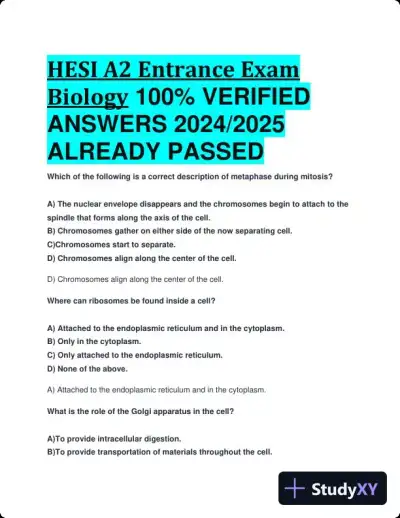 Past Exams
2024-2025 HESI A2 Biology Entrance Exam with Answers (42 Solved Questions)
Health Education Systems, Inc.
13 pages154downloadsFeb 2025 Past Exams
2024-2025 HESI A2 Anatomy and Physiology V1/V2 Practice Exam with Answers (134 Solved Questions)
Health Education Systems, Inc.
15 pages134downloadsFeb 2025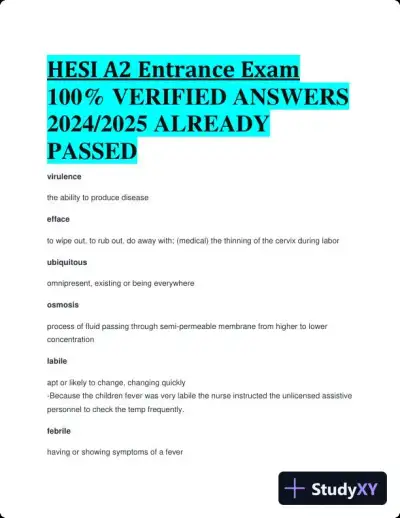 Past Exams
2024-2025 HESI A2 Entrance Exam with Answers (232 Solved Questions)
Health Education Systems, Inc.
26 pages132downloadsFeb 2025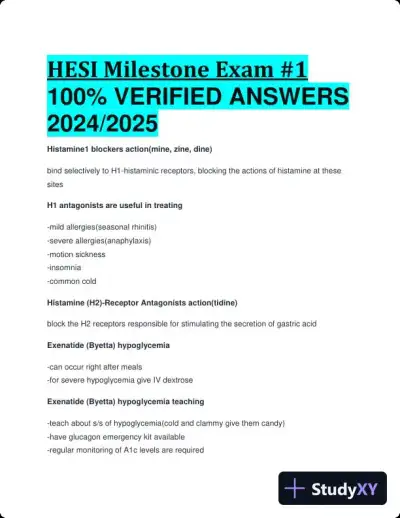 Past Exams
2024-2025 HESI Milestone Exam 1 with Answers (162 Solved Questions)
Health Education Systems, Inc.
26 pages119downloadsFeb 2025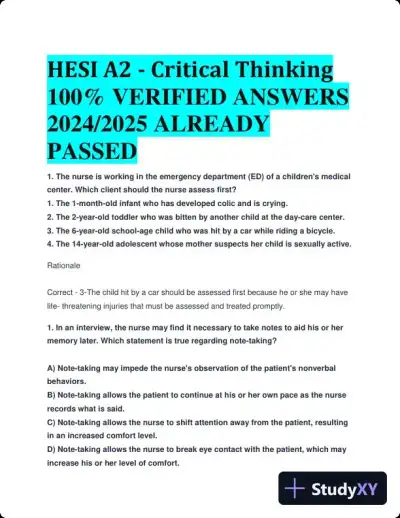 Past Exams
2024-2025 HESI A2 Critical Thinking with Answers (124 Solved Questions)
Health Education Systems, Inc.
114 pages106downloadsFeb 2025 Past Exams
2024-2025 HESI RN Exit Exam with Answers (156 Solved Questions)
Health Education Systems, Inc.
44 pages92downloadsFeb 2025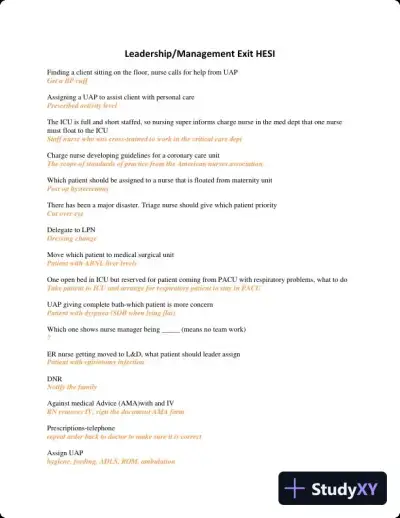 Past Exams
HESI Leadership/Management Exit Exam with Answers (59 Solved Questions)
Health Education Systems, Inc.
4 pages54downloadsFeb 2025
Study this document with CramX
Once it is in your library, every tool can work from it.