

HESI Prenatal OB Practice Exam With Answers (108 Solved Questions)
- Health Education Systems, Inc.
- 34 pages
- Shared May 2025
HESI Prenatal OB Practice Exam With Answers provides real-world examples of exam scenarios to help you prepare.
Preview 11 of 34 pages
See the first 11 pages exactly as they appear in the document.
Page 1 Read page 1 as text
OB HESI PRACTICE EXAM WITH RATIONALE What nursing action should be implemented when intermittently gavage-feeding a preterm infant? Allow formula to flow by gravity. Avoid letting infant suck on tube. Insert feeding tube through nares. Apply steady pressure to syringe. Rationale Gavage feeding is commonly used to feed preterm infants who are born at less than 32-weeks gestation, infants who weigh less than 1500 grams, or infants who are unable to tolerate oral feedings. The feeding should flow by gravity (A) to avoid over-distention and a sudden sensation of fullness that may cause vomiting. Allowing the infant to suck on the tube, not (B), permits observation of the sucking response. The feeding tube should be inserted orally, since nasal insertion (C) impedes obligatory nose breathing and may irritate delicate nasal mucosa. (D) can result in vomiting if the rate of administration is too fast. A client is receiving an oxytocin infusion for induction of labor. When the client begins active labor, the fetal heart rate (FHR) slows at the onset of several contractions with subsequent return to baseline before each contraction ends. What action should the nurse implement? Insert an internal monitor device. Change the woman's position. Discontinue the oxytocin infusion. Document the finding in the client record. Rationale Early FHR decelerations are a normal finding during active labor that occurs due to fetal head compression, so the finding should be documented in the client record (D). Although the client's status should be monitored continuously, this is a reassuring FHR pattern, so (A, B, and C) are not indicated. The nurse is teaching a new mother about diet and breastfeeding. Which instruction is most important to include in the teaching plan? Avoid alcohol because it is excreted in breast milk. Avoid spicy foods to prevent infant colic. Increase caloric intake by approximately 500 calories/day. Double prenatal milk intake to improve Vitamin D transfer to the infant. Rationale Alcohol should be avoided while breastfeeding because, when consumed by the mother, it is excreted in breast milk (A). It also adversely effects the milk ejection reflex. While (B) may cause some gastric upset in some babies, it does not cause colic. (C) should also be included in diet teaching for a breastfeeding mother, but because it does not involve safety to the infant it does not have the same degree of importance as (A). Recent research has shown that infants receive very little Vitamin D via the breastmilk and some sources recommend Vitamin D supplementation in exclusively breastfed babies to prevent rickets.
Page 2 Page 3 Read page 3 as text
An infant born at 37-weeks gestation, weighing 4.1 kg (9.02 pounds) is 2 hours old and appears large for gestational age, flushed, and tremulous. What procedure should the nurse follow to implement a glucose screening? (Arrange the examination process from first on top to last on the bottom.) Correct Answer: • 1. Wrap the infant's foot with a heel warmer for 5 minutes. • 2. Collect a spring-loaded automatic puncture device. • 3. Restrain the newborn's foot with your free hand. • 4. Cleanse puncture site on the lateral aspect of the heel. Rationale Obtaining capillary blood for the glucose screening for a infant that is macrosomic and at risk for hypoglycemia should begin with wrapping the infant's foot with a heel warmer for 5 to 10 minutes to facilitate vasodilation to obtain an adequate blood sample volume. Next, a spring loaded automatic puncture device should be obtained to puncture the skin because it is less traumatic than a manual lancet. Then, the nurse's hand is used to restrain the foot as the puncture site on the lateral aspect of the heel is cleansed. The nurse observes a male newborn who is displaying a rigid posture with his eyes tightly closed and grimacing as he is crying after an invasive procedure. The baby's blood pressure is elevated on the Dinamap display. What action should the nurse implement? Obtain a serum glucose level. Give the infant medication for pain. Feed the newborn 1 ounce of formula. Request a genetic consultation. Rationale A cry face (or crying with the eyes squeezed or closed tightly), a rigid posture, and an increase in blood pressure are indicative of pain in the neonate, so analgesia should be given for pain (B). The symptoms of hypoglycemia (A) are jitteriness and mottling. The signs of hunger include rooting, tongue extrusion
Page 4 Read page 4 as text
and possibly crying (C). A high-pitched shrill cry is associated with neurologic and genetic anomalies (D). The nurse assesses a high-risk neonate under a radiant warmer who has an umbilical catheter and identifies that the neonate's feet are blanched. What nursing action should be implemented? Place socks on infant. Elevate feet 15 degrees. Wrap feet loosely in prewarmed blanket. Report findings to the healthcare provider. Rationale Vasoconstriction of peripheral vessels, which can seriously impair circulation, is triggered by arterial vasospasm caused by the presence of the catheter, the infusion of fluids, or the injection of medication. Blanching of the buttocks, genitalia, or the legs or feet is an indication of vasospasm and should be reported immediately to the healthcare provider (D). (A, B, and C) do not provide effective resolution of this potentially serious complications. A gravid client develops maternal hypotension following regional anesthesia. What intervention(s) should the nurse implement? (Select all that apply.) Select all that apply Some correct answers were not selected Administer oxygen. Increase IV fluids. Perform a vaginal examination. Assist client to a sitting position. Place the client in a lateral position. Monitor fetal status. Rationale Correct selections are (A, B, E, and F). Oxygen (A), fluids (B), lateral position (E), and evaluating fetal response (F) effectively manage maternal hypotension following regional anesthesia. Placing the client in a sitting position (D) does not facilitate venous return to the heart and limits perfusion of the fetus. A sterile vaginal examination (C) does not increase blood flow and oxygenation to the placenta and fetus. A newborn infant who is 24-hours-old is on a 4-hour feeding schedule of formula. To meet daily caloric needs, how many ounces are recommended at each feeding? 2 ounces. 4 ounces. 1.5 ounces. 3.5 ounces. Rationale A newborn requires approximately 19 to 21 ounces of formula each day (six feedings per 24-hour period x 3.5 = 21). One-and-a-half to two ounces (A and C)
Page 5 Read page 5 as text
may be insufficient to meet the newborn's calorie needs. (B) may cause the infant to spit-up due to over-feeding. A client at 28-weeks gestation arrives at the labor and delivery unit with a complaint of bright red, painless vaginal bleeding. For which diagnostic procedure should the nurse prepare the client? Contraction stress test. Internal fetal monitoring. Abdominal ultrasound. Lecithin-sphingomyelin ratio. Rationale Bright red, painless vaginal bleeding occuring after 20-weeks gestation can be an indicator of placenta previa, which is confirmed by abdominal ultrasound (C). (A, B and D) are invasive procedures that increase the risk for premature onset of labor, and are not indicated at this client's gestation. A primigravida at 12-weeks gestation who just moved to the United States indicates she has not received any immunizations. Which immunization(s) should the nurse administer at this time? (Select all that apply.) Select all that apply Some correct answers were not selected Tetanus . Rubella. Diphtheria . Chickenpox. Hepatitis B. Rationale Correct selections are (A, C, and E). Vaccines composed of killed viruses may be administered during pregnancy. Rubella (B) and chickenpox (D) consist of live or attenuated live viruses which would be contraindicated during pregnancy due to potential teratogenicity. A client in labor receives an epidural block. What intervention should the nurse implement first? Encourage oral fluids. Assess contractions. Monitor blood pressure. Obtain a radial pulse. Rationale The risk for maternal hypotension is commonly increased by an epidural, so blood pressure should be monitored immediately after the first epidural dose (C) and for 15 minutes thereafter. Oral fluids should be encouraged to help keep the client hydrated (A), but the first action is to evaluate the client for side effects of the epidural block. Although (B and D) should be continuously monitored after an epidural, the first objective sign of epidural precipitated vasodilation is hypotension.
Page 6 Read page 6 as text
A client at 8-weeks gestation ask the nurse about the risk for a congenital heart defect (CHD) in her baby. Which response best explains when a CHD may occur? It depends on what the causative factors are for a CHD. We don't really know what or when CHDs occur. They usually occur in the first trimester of pregnancy. The heart develops in the third to fifth weeks after conception. Rationale The cardiovascular system is the first organ system to develop and function in the embryo. The blood vessel and blood formation begin in the third week, and the heart is developmentally complete in the fifth week (D). Regardless of the etiological factor, the heart is vulnerable during its period of development -- the third to fifth weeks. (A, B, and C) are inaccurate. A primigravida at 12-weeks gestation tells the nurse that she does not like diary products. Which food should the nurse recommend to increase the client's calcium intake? Canned clams. Fresh apricots. Canned sardines. Spaghetti with meat sauce. Rationale A 3 ounce can of sardines (with bones) provides about the same amount of calcium as 1 cup of milk (C). (A, B, and D) are not good sources for dietary calcium. When discussing birth in a home setting with a group of pregnant women, which situation should the nurse include about the safety of a home birth? Only the woman and her midwife should be present during the delivery. The woman should live no more than 15 minutes from the hospital. The woman's extended family should be allowed to attend the home birth. Medical backup should be available quickly in case of complications. Rationale Access to quick emergency care should be available in the event that an unforeseen complication arises (D) during a home birth. Although the nurse- midwife should be a competent healthcare provider during a home birth (A), access to emergency, surgical, and resuscitation assistance should be readily available. A 15-minute drive to the hospital is ideal, but (B) does not ensure the safest situation. The presence and support of family during the home birth (C) does not necessarily ensure a safe home birth. Which statement by a client who is pregnant indicates to the nurse an understanding of the role of protein during pregnancy?
Page 7 Read page 7 as text
"Protein helps the fetus grow while I am pregnant." "Gestational diabetes is prevented by eating protein." "Anemia is averted by consuming enough protein." "My baby will develop strong teeth after he is born." Rationale Adequate protein intake is essential to meet increasing demands of rapid growth of the fetus (A) and maternal changes during pregnancy, such as enlargement of the uterus, mammary glands, and placenta, increase in the maternal blood volume, and formation of amniotic fluid. Protein is essential for anabolism, but its consumption does not prevent gestational diabetes (B). Iron found in high protein foods, such as meat, helps prevent anemia (C), but the basic need for protein is the anabolic growth processes of the fetus. Although calcium is needed for fetal bone and teeth development (D), it is not found in all protein food sources. The nurse is assessing a full- term newborn’s breathing pattern. Which findings should the nurse assess further? (Select all that apply.) Select all that apply Shallow with an irregular rhythm. Chest breathing with nasal flaring. Diaphragmatic with chest retraction. Abdominal with synchronous chest movements. Heart rate of 158 beats per minute. Grunting heard with a stethoscope. Rationale Breathing with nasal flaring, diaphragmatic breathing with chest retraction, and grunting are signs of respiratory distress in the infant. A client is experiencing "back" labor and complains of intense pain in the lower lumbar-sacral area. What action should the nurse implement? Perform effleurage on the abdomen. Encourage pant-blow breathing techniques. Apply counter pressure against the sacrum. Assist the client in guided imagery. Rationale Counter pressure against the sacrum (C) during contractions often provides significant relief for "back labor," which results from occipital posterior position. Effleurage (A) is a helpful distraction strategy many clients use during contractions but does not assist with lower back pain. Back labor can occur throughout labor if the fetus does not rotate, and helpful distractions, such as (B), used during transition, and (D), used during phase one of labor, are not effective for back labor. A client at 28-weeks gestation experiences blunt abdominal trauma. Which parameter should the nurse assess first for signs of internal hemorrhage? Vaginal bleeding. Complaints of abdominal pain. Changes in fetal heart rate patterns. Alteration in maternal blood pressure. Rationale
Page 8 Read page 8 as text
Hypoperfusion of the fetus may be present before the onset of clinical signs of maternal compromise or shock in a pregnant woman, so the external fetal monitor tracings should be assessed first to determine signs of fetal hypoxia due to internal bleeding in the mother. (A, B, and D) are not the first findings of internal hemorrhage in the pregnant client. Which prescription should the nurse administer to a newborn to reduce complications related to birth trauma? Silver nitrate. Erythromycin (Ilotycin ointment). Ceftriaxone (Rocephin). Vitamin K (AquaMEPHYTON). Rationale The normal neonate is vitamin K deficient, so to rapidly elevate prothrombin levels and reduce the risk of neonatal bleeding, newborns receive a single injection of vitamin K (AquaMEPHYTON) (D). (A and B) are prophylactic ophthalmic agents used to prevent neonatal ophthalmia. (C) is an antibiotic used to treat neonatal infections. A multiparous client has been in labor for 8 hours when her membranes rupture. What action should the nurse implement first? Prepare the client for imminent birth. Assess the fetal heart rate and pattern. Document the characteristics of the fluid. Notify the client's primary healthcare provider. Rationale The fetal heart rate and pattern should be assessed (B) to determine compromise of fetal well-being caused by compression or prolapse of the umbilical cord. The intensity and frequency of the uterine contractions often trigger spontaneous rupture of the membranes (SROM), which does not indicate that birth is imminent (A). The healthcare provider should be notified of the client and fetal well-being after evaluation of SROM. Although the characteristics of the amniotic fluid should be documented (C), assessment of fetal response to the SROM is the priority. The nurse is teaching a primigravida at 10-weeks gestation about the need to increase her intake of folic acid. Which explanation should the nurse provide that supports preventative perinatal care? The risk for neonatal cerebral palsy increases with folic acid deficiencies during pregnancy. Folic acid can significantly reduce the incidence of mental retardation. Adequate folic acid during embryogenesis reduces the incidence of neural tube defects. The incidence of congenital heart defects is related to folic acid intake deficiencies. Rationale Folic acid can significantly reduce neural tube defects (C) if taken during early pregnancy. (A, B, or D) are not valid explanations.
Page 9 Read page 9 as text
The nurse is preparing to gavage feed a preterm infant who is receiving IV antibiotics. The infant expels a bloody stool. What nursing action should the nurse implement? Institute contact precautions. Obtain a rectal temperature. Assess for abdominal distention. Decrease the amount of the feeding. Rationale Etiological factors playing an important role in the development of necrotizing enterocolitis (NEC), a complication common in premature infants, include intestinal ischemia, colonization by pathogenic bacteria, and substrate (formula feeding) in the intestinal lumen. Bloody stools, abdominal distention, diarrhea, and bilious vomitus are signs of NEC. Nursing responsibilities include measuring the abdomen (C) and listening for bowel sounds. Contact precautions (A) are necessary if a contagious gastrointestinal infection is suspected. Rectal temperatures are contraindicated (B) because of the risk for perforation of the bowel. Oral or gavage feeding is stopped, not (D), until necrotizing enterocolitis is ruled out. A client in active labor at 39-weeks gestation tells the nurse she feels a wet sensation on the perineum. The nurse notices pale, straw-colored fluid with small white particles. After reviewing the fetal monitor strip for fetal distress, what action should the nurse implement? Escort the client to the bathroom. Offer the client a bed pan. Perform a nitrazine test. Clean the perineal area. Rationale The normal characteristic of amniotic fluid is pale, straw-colored fluid, which may contain white flecks of vernix, with an alkaline pH, so (C) should be done to confirm the pH of the fluid. (A or B) may be indicated if the fluid is urine. (D) should be done after determining the type of fluid expelled. The nurse is providing discharge teaching for a gravid client who is being released from the hospital after placement of cerclage. Which instruction is the most important for the client to understand? Plan for a possible cesarean birth. Arrange for home uterine monitoring. Make arrangements for care at home. Report uterine cramping or low backache. Rationale Uterine cramping and low back pain (D) are symptoms of preterm labor and should be reported to the healthcare provider immediately because the cerclage may need to be removed. A cesarean birth can be planned (A) or the cerclage can be removed at 37-weeks gestation to prepare for a vaginal birth. Home uterine
Page 10 Read page 10 as text
activity monitoring (B) is used to limit the woman’s need for visits and to safely monitor her status at home. Bed rest is an element of care so the client should make arrangements for care at home (C) and someone to do household chores. (A, B, and C) do not have the priority of (D). A multiparous client delivered a 7 lb 10 oz infant 5 hours ago. Upon fundal assessment, the nurse determines the uterus is boggy and is displaced above and to the right of the umbilicus. Which action should the nurse implement next? Document the color of the lochia. Observe maternal vital signs. Assist the client to the bathroom. Notify the healthcare provider. Rationale Fundus displacement commonly occurs in the early hours of the postpartum period due to urinary retention, so assisting the client to the bathroom (C) to void should be implement next. (A and B) can be completed after the client's bladder is emptied. (D) should only be implemented if the fundus does not become firm or lochial bleeding continues after the bladder is emptied. Which finding in the medical history of a post-partum client should the nurse withhold the administration of a routine standing order for methylergonovine maleate (Methergine)? Pregnancy induced hypertension. Placenta previa. Gestational diabetes. Postpartum hemorrhage. Rationale Methergine is used for post-partum bleeding. A client's history of pregnancy- induced hypertension (A) is a contraindication for Methergine which causes vasoconstriction and increases blood pressure, so the routine standing order should be withheld and reported to the healthcare provider. (B, C, and D) are not contraindications for the use of Methergine. A client in her second trimester of pregnancy asks if it is safe for her to have a drink with dinner. How should the nurse respond to the client? During second trimester beer can be consumed without harm to the fetus. Wine can be consumed several times a week after the first trimester. Only one drink with the evening meal is not harmful to the fetus. Abstinence is strongly recommended throughout the pregnancy. Rationale A safe level of alcohol consumption during pregnancy has not yet been established, so although the consumption of occasional alcoholic beverages may not be harmful to the mother or her developing fetus, complete abstinence is strongly advised (D). Beer (A), wine (B) or any alcoholic drink (C) consumption is not recommended during the pregnancy. The nurse assesses a male newborn and determines that he has the following vital signs: axillary temperature 95.1 F, heart rate 136 beats/minute and a respiratory rate 48 breaths/minute. Based on these findings, which action should the nurse take first?
Page 11 Read page 11 as text
Check the infant's arterial blood gases. Notify the pediatrician of the infant's vital signs. Assess the infant's blood glucose level. Encourage the infant to take the breast or sugar water. Rationale The nurse should first assess the infant's blood glucose level (C), because the infant is displaying signs of hypothermia (normal newborn axillary temperature is 96 to 98 F) and hypoglycemia may occur as glucose is metabolized in an effort to meet cellular energy demands. The infant's respiratory and heart rates are within normal limits, so (A) is not a priority. (B and D) would be implemented after information regarding the blood sugar level has been obtained. A client who is breastfeeding develops engorged breasts on the third postpartum day. Which action should the nurse recommend to relieve breast engorgement? Avoid pumping her breasts. Continue breastfeeding every 2 hours. Skip a feeding to rest the breasts. Decrease fluid intake for at least 24 hours. Rationale Breastfeeding every 2 hours should decrease the engorgement (B) and promote lactation that equals the neonate's demands. Skipping feedings (C) increases the symptoms of engorgement and may subsequently reduce milk production. Using a breast pump increases the amount of milk expressed which decreases engorgement and discomfort, so the client should be encouraged to pump, not (A). Decreasing fluid intake (D) does not alleviate the breast engorgement and is not recommended. A client delivers her first infant and asks the nurse if her skin changes from pregancy are permanent. Which change should the nurse tell the client will remain after pregnancy? Pruritus. Chloasma. Vascular spiders. Striae gravidarum. Rationale Striae gravidarum (D), or “stretch marks,” occur on the lower abdomen of pregnant women during the second half of pregnancy fade after delivery but do not disappear entirely because they reflect separation within the underlying connective (collagen) tissue of the skin. Pruritis (A) is a temporary skin condition most commonly ca used by cholestasis. Chloasma (B), or “mask of pregnancy,” is a temporary, blotchy, brownish hyperpigmentation caused by hormonal levels of pregnancy. Vascular spiders (C), or “angiomas,” are small, pulsating end arterioles, found on the upper body, that occur as a result of increased circulating estrogen, which usually disappear soon after delivery. The nurse notes a pattern of the fetal heart rate decreasing after each contraction. What action should the nurse implement? Give 10 liters of oxygen via face mask. Prepare for an emergency cesarean section.
23 more pages in the full document
Unlock it once and it stays in your library, ready to chat with or turn into flashcards.
Unlock the full documentMore Health Education Systems, Inc. study materials
See all Past Exams
2023-2024 RN HESI Exit Exam Version 3 with Answers (53 Solved Questions)
Health Education Systems, Inc.
13 pages163downloadsFeb 2025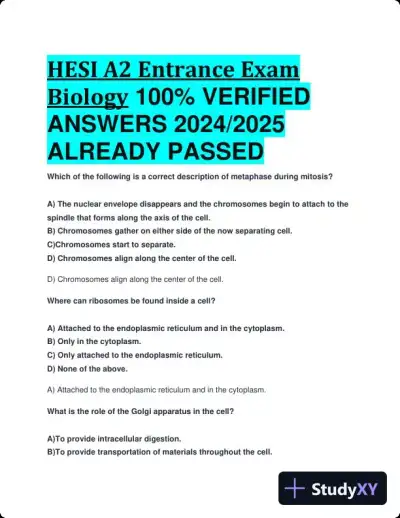 Past Exams
2024-2025 HESI A2 Biology Entrance Exam with Answers (42 Solved Questions)
Health Education Systems, Inc.
13 pages154downloadsFeb 2025 Past Exams
2024-2025 HESI A2 Anatomy and Physiology V1/V2 Practice Exam with Answers (134 Solved Questions)
Health Education Systems, Inc.
15 pages134downloadsFeb 2025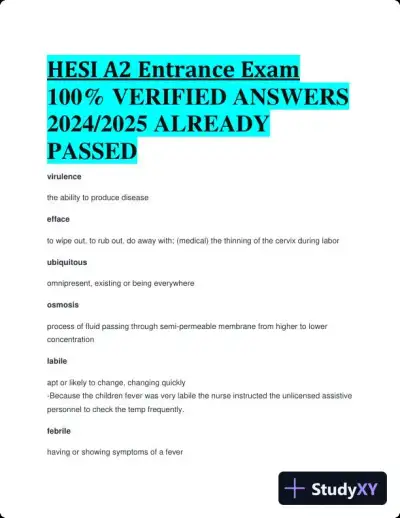 Past Exams
2024-2025 HESI A2 Entrance Exam with Answers (232 Solved Questions)
Health Education Systems, Inc.
26 pages132downloadsFeb 2025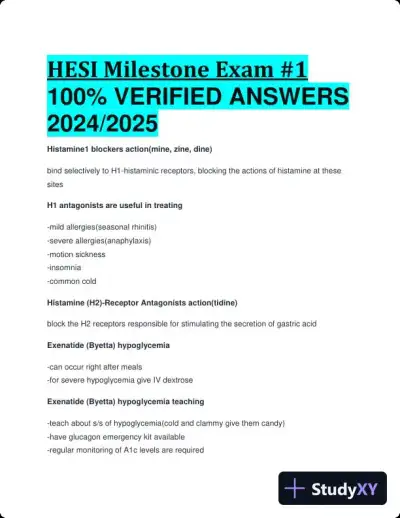 Past Exams
2024-2025 HESI Milestone Exam 1 with Answers (162 Solved Questions)
Health Education Systems, Inc.
26 pages119downloadsFeb 2025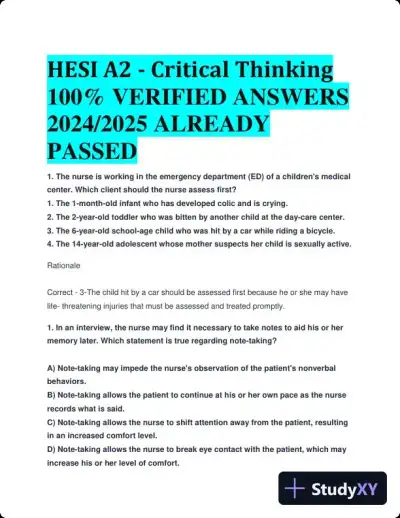 Past Exams
2024-2025 HESI A2 Critical Thinking with Answers (124 Solved Questions)
Health Education Systems, Inc.
114 pages106downloadsFeb 2025 Past Exams
2024-2025 HESI RN Exit Exam with Answers (156 Solved Questions)
Health Education Systems, Inc.
44 pages92downloadsFeb 2025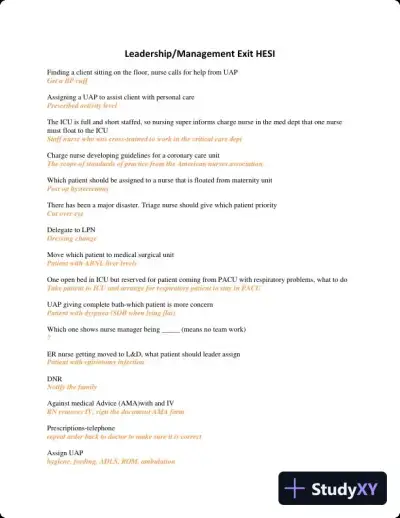 Past Exams
HESI Leadership/Management Exit Exam with Answers (59 Solved Questions)
Health Education Systems, Inc.
4 pages54downloadsFeb 2025
Study this document with CramX
Once it is in your library, every tool can work from it.