

Principles of Management - Organizational Planning
- Management
- Texas A&M University
- 10 pages
- Shared March 2026
Preview 3 of 10 pages
See the first 3 pages exactly as they appear in the document.
Page 1 Read page 1 as text
Study Guide Principles of Management – Organizational Planning 1. Detailing Types of Plans Planning is a core part of management. When managers create plans, they commit people, departments, and organizational resources to actions that will take place in the future. Good plans help everyone understand what needs to be done and how their work con tributes to the organization’s success. How Goals Work Together: The Means – Ends Chain Organizational goals are arranged in levels. Lower - level goals support higher - level goals. When employees achieve smaller, specific goals, those accomplishments help the organization reach its bigger objectives. This connection is called a means – ends chain — lower - level goals are the means, and higher - level goals are the ends. To guide this process, managers use different types of plans. 1.1 Major Types of Plans Managers rely on three main types of plans : • Operational plans • Tactical plans • Strategic plans These plans work together. Operational plans support tactical plans, and tactical plans support strategic plans. In addition, managers also prepare contingency plans in case things do not go as expected. 1.2 Operational Plans Operational plans focus on the day - to - day work of the organization. They describe specific and measurable results expected from departments, teams, and individual employees. Examples of Operational Goals • “Process 150 sales applications each week”
Page 2 Read page 2 as text
Study Guide • “Publish 20 books this quarter” These goals are clear, precise, and easy to track. Supervisors, team leaders, and facilitators usually create operational plans. Their purpose is to support tactical plans and help managers carry out their daily responsibilities. Types of Operational Plans Operational plans can be either single - use plans or ongoing plans . Single - Use Plans Single - use plans are created for activities that happen only once or do not repeat. They answer questions such as who, what, where, how, and how much. Examples include: • A special sales promotion • A project budget that estimates income and expenses for a specific task Once the activity is completed, the plan is no longer needed. Ongoing (Continuing) Plans Ongoing plans are used repeatedly over time. They are usually created once and updated as needed. Common types of ongoing plans include: • Policies Policies are general guidelines that help managers handle routine decisions. For example, human resources policies often cover hiring, promotions, performance reviews, pay increases, and employee discipline. • Procedures Procedures explain step - by - step how tasks should be completed. For instance, a purchasing procedure might describe how a request moves from a supervisor to management approval and then to the purchasing department. Procedures ensure consistency and efficiency when dealing with repeated activities. • Rules Rules clearly state what employees can and cannot do . They help maintain safety, fairness, and consistent behavior. Rules about tardiness or absenteeism, for example, allow supervisors to apply discipline fairly and quickly.
Page 3 Read page 3 as text
Study Guide 1.3 Tactical Plans Tactical plans focus on how things will get done within specific departments or units. They explain what lower - level units must do, how they will do it, and who is responsible. Tactics are the actions needed to make a strategy work. Key Features of Tactical Plans • Short - term focus (usually one year or less) • Narrower scope than strategic plans • Developed mainly by middle managers Middle managers take the organization’s broad strategy and break it down into specific actions that teams and departments can follow. 1.4 Strategic Plans Strategic plans are long - term plans that focus on the organization as a whole. Instead of concentrating on individual departments, these plans look at where the organization wants to go in the future. Strategic planning begins with the organization’s mission . Characteristics of Strategic Plans • Long - term focus (two, three, five, or more years) • Developed by top - level management • Require coordination across all levels of the organization Top management sets the overall direction, while lower - level managers develop plans that align with these goals. The strategic plan serves as a framework that guides all other planning activities. 1.5 Contingency Plans Even the best plans can fail because of unexpected changes. That is why managers also prepare contingency plans .
7 more pages in the full document
Unlock it once and it stays in your library, ready to chat with or turn into flashcards.
Unlock the full documentMore Management study materials
See all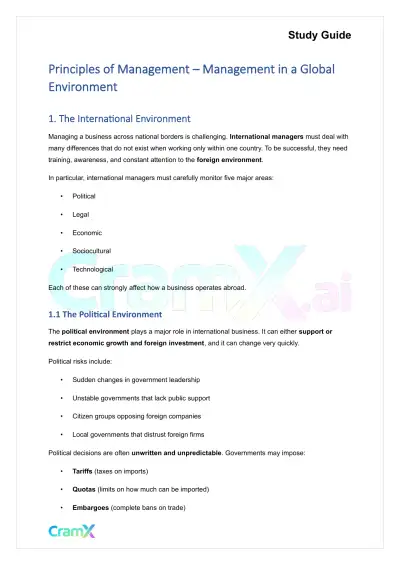 Quick Guides
Principles of Management - Management in a Global Environment
Management
14 pagesMar 2026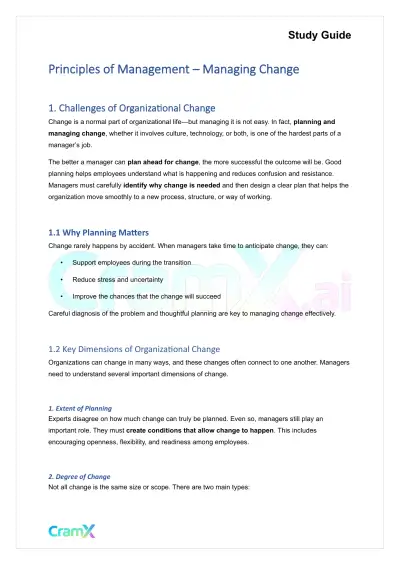 Quick Guides
Principles of Management - Managing Change
Management
16 pagesMar 2026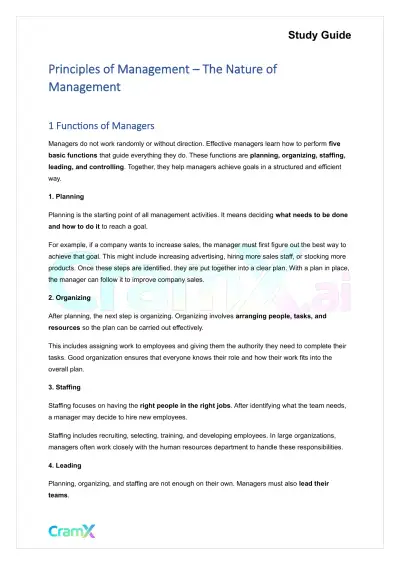 Quick Guides
Principles of Management - The Nature of Management
Management
10 pagesMar 2026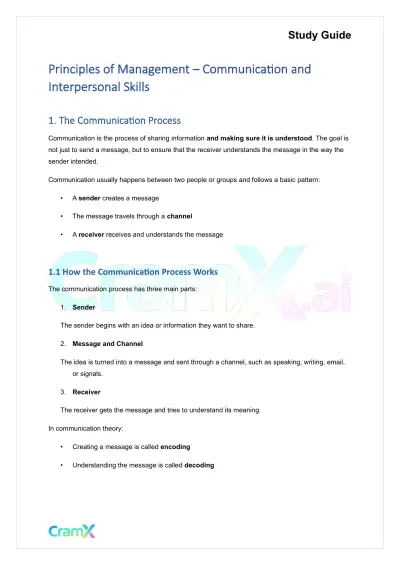 Quick Guides
Principles of Management - Communication and Interpersonal Skills
Management
13 pagesMar 2026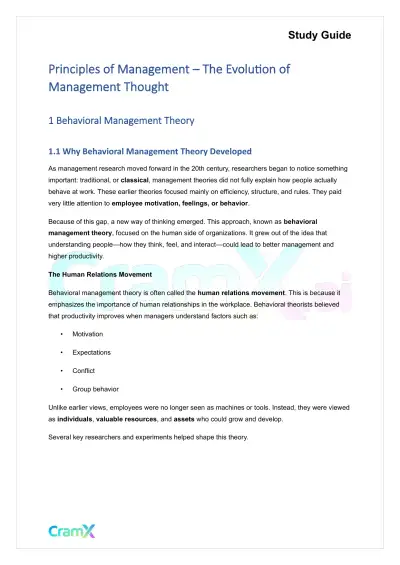 Quick Guides
Principles of Management - The Evolution of Management Thought
Management
21 pagesMar 2026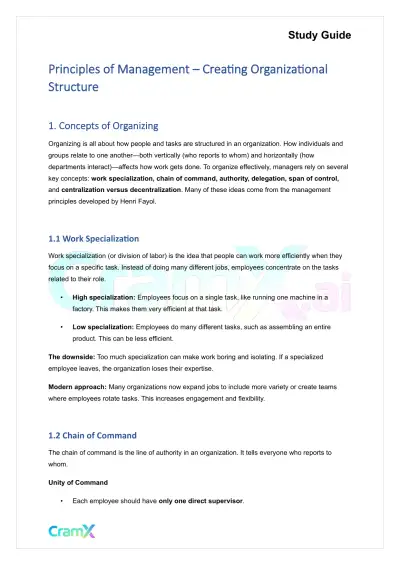 Quick Guides
Principles of Management - Creating Organizational Structure
Management
9 pagesMar 2026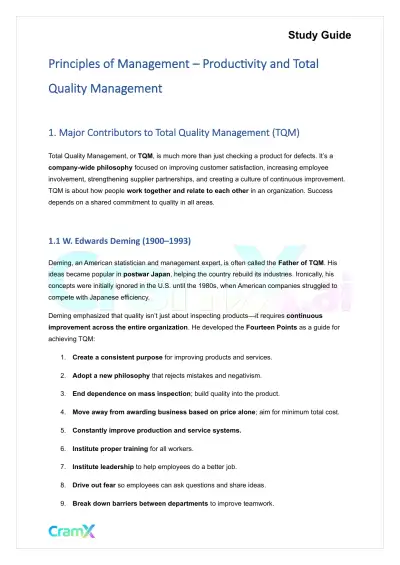 Quick Guides
Principles of Management - Productivity and Total Quality Management
Management
9 pagesMar 2026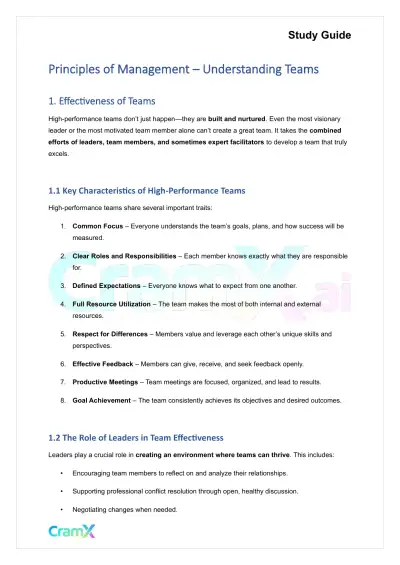 Quick Guides
Principles of Management - Understanding Teams
Management
12 pagesMar 2026
Study this document with CramX
Once it is in your library, every tool can work from it.