

Basic Clinical Laboratory Techniques 6th Edition Test Bank
- Medicine
- 241 pages
- Shared May 2025
Basic Clinical Laboratory Techniques 6th Edition Test Bank makes studying easier with a breakdown of core topics, solved examples, and revision tips.
Preview 16 of 241 pages
See the first 16 pages exactly as they appear in the document.
Page 1 Read page 1 as text
Lesson 1 - 1: Introduction to the Clinical Laboratory TRUE/FALSE 1. A laboratory that performs chemical and microscopic tests on blood, other body fluids, and tissues is called a clinical laboratory. ANS: T PTS: 1 2. In 2005 more than 189,000 clinical laboratories were listed with Department of Health and Human Service (DHHS) as providing services to humans in the United States. ANS: T PTS: 1 3. Clinical laboratories are found only in university teaching hospitals. ANS: F PTS: 1 4. Epidemiology is an important function of the Centers for Disease Control and Prevention (CDC). ANS: T PTS: 1 5. A phlebotomist is a health care worker trained in blood collection. ANS: T PTS: 1 MULTIPLE CHOICE 1. An international, nonprofit organization that establishes standards of best current practice for clinical laboratories is: a. Centers for Disease Control and Prevention (CDC) b. Commission on Office Laboratory Accreditation (COLA) c. Clinical Laboratory Standards Institute (CLSI) d. the Joint Commission ANS: C PTS: 1 2. The branch of biology dealing with microbes is called: a. virology c. microbiology b. mycology d. epidemiology ANS: C PTS: 1 3. The governmental agency that oversees public health care matters in the United States is: a. Centers for Disease Control and Prevention (CDC) b. Department of Health and Human Services (DHHS) c. Food and Drug Administration (FDA) d. Clinical and Laboratory Standards Institute (CLSI) ANS: B PTS: 1
Page 2 Page 3 Read page 3 as text
4. The division of Department of Health and Human Services (DHHS) responsible for p rotecting public health by ensuring the safety and efficacy of foods, drugs, biological products, medical devices, and cosmetics is: a. Health Insurance Portability and Accountability Act (HIPAA) b. the Joint Commission c. Food and Drug Administration (FDA) d. Clinical and Laboratory Standards Institute (CLSI) ANS: C PTS: 1 5. The agency within Department of Health and Human Services (DHHS) responsible for implementing CLIA ’88 is: a. Clinical and Laboratory Standards Institute (CLSI) b. Commission on Office Laboratory Accreditation (COLA) c. Centers for Medicare & Medicaid Services (CMS) d. Health Insurance Portability and Accountability Act (HIPAA) ANS: C PTS: 1 COMPLETION 1. The study of human blood groups is called ____________________. ANS: immunohematology blood banking PTS: 1 2. The central laboratory for the national public health system is the ____________________. ANS: CDC Centers for Disease Control and Prevention PTS: 1 3. A health care worker trained in blood collection is a(n) ____________________. ANS: phlebotomist PTS: 1 4. The liquid portion of the blood in which the blood cells are suspended is called ____________________. ANS: plasma PTS: 1 5. The liquid obtained from blood that has been allowed to clot is called ____________________. ANS: serum
Page 4 Read page 4 as text
PTS: 1 6. A physician specially trained in the nature and cause of disease is a(n) ____________________. ANS: pathologist PTS: 1 7. Mycology is the study of ____________________. ANS: fungi PTS: 1 8. Performing testing near the patient rather than in the traditional laboratory setting is called ____________________ testing. ANS: point - of - care point of care POC near - patient alternate site PTS: 1 9. The person who is responsible for the day - to - day operation of a laboratory and works directly under the authority of the laboratory director is the ____________________. ANS: technical supervisor chief technologist laboratory manager PTS: 1 10. Programs in which laboratories are sent blind samples that are analyzed, reported, and compared to the results from other laboratories are called ____________________ programs. ANS: proficiency testing PT PTS: 1 11. The Health Insurance Portability and Accountability Act of 1996 protects ____________________. ANS: personal health information patient privacy patient health information PTS: 1
Page 5 Read page 5 as text
12. The voluntary process by which an independent agency grants recognition to entities that meet or exceed established standards of quality is ____________________. ANS: accreditation PTS: 1 MATCHING Choose the best match for each item. Use an answer only once. a. CLIA ’88 b. the Joint Commission c. accreditation d. COLA e. pathologist f. accessioning g. CLSI (formerly NCCLS) h. CDC i. epidemiology j. CMS 1. central laboratory for the national public health system 2. voluntary process to obtain recognition for institutions meeting certain standards 3. agency within DHHS responsible for implementing CLIA ’88 4. federal act that specifies minimum performance standards for clinical labs 5. process by which specimens are logged in and assigned an ID code 6. agency that offers accreditation to physician office laboratories 7. study of factors that determine disease frequency 8. independent agency that accredits hospitals and large health care facilities 9. international, nonprofit organization that establishes standards of best current practice for laboratories 10. physician specially trained in the nature and cause of disease 1. ANS: H PTS: 1 2. ANS: C PTS: 1 3. ANS: J PTS: 1 4. ANS: A PTS: 1 5. ANS: F PTS: 1 6. ANS: D PTS: 1 7. ANS: I PTS: 1 8. ANS: B PTS: 1 9. ANS: G PTS: 1 10. ANS: E PTS: 1
Page 6 Read page 6 as text
Lesson 1 - 2: The Clinical Laboratory Professional TRUE/FALSE 1. Laboratory testing has become increasingly sophisticated. ANS: T PTS: 1 2. The term clinical laboratory science largely replaced medical technology for several years. ANS: T PTS: 1 3. The field of medical technology began 50 years ago. ANS: F PTS: 1 4. Early laboratories were staffed mostly by doctors. ANS: T PTS: 1 5. Clinical laboratory personnel work as “medical detectives.” ANS: T PTS: 1 6. As long as health care workers are competent, their manner of dress at work does not matter. ANS: F PTS: 1 MULTIPLE CHOICE 1. The professional society and credentialing agency for medical assistants is the: a. American Medical Technologists (AMT) b. American Society for Clinical Laboratory Science (ASCLS) c. American Association of Medical Assistants (AAMA) d. American Society for Clinical Pathology (ASCP) ANS: C PTS: 1 2. One agency that accredits educational programs for clinical laboratory personnel is the: a. North Central Association (NCA) b. American Society for Clinical Laboratory Science (ASCLS) c. National Accrediting Agency for Clinical Laboratory Sciences (NAACLS) d. American Society for Clinical Pathology (ASCP) ANS: C PTS: 1 3. One professional society and credentialing agency for phlebotomists is the: a. American Society of Phlebotomy Technicians (ASPT) b. American Society for Clinical Laboratory Science (ASCLS) c. American Society for Clinical Pathology (ASCP) d. North Central Association ANS: A PTS: 1
Page 7 Read page 7 as text
4. All of the following are current trends in health care EXCEPT: a. emphasis on wellness c. geriatric medicine b. longer hospital stays d. home health care ANS: B PTS: 1 5. Medical assistants have been trained in: a. administrative skills c. laboratory skills b. nursing skills d. all of the above ANS: D PTS: 1 COMPLETION 1. The Privacy Rule that describes the patient’ s rights to privacy developed from ____________________. ANS: HIPAA Health Insurance Portability and Accountability Act PTS: 1 2. The health profession concerned with performing laboratory analyses is ____________________. ANS: clinical laboratory science medical technology PTS: 1 3. A 1996 act of Congress that includes a guarantee of protection of privacy of an individual’s health information is ____________________. ANS: HIPAA Health Insurance Portability and Accountability Act PTS: 1 4. The ASPT is a professional and credentialing agency for ____________________. ANS: phlebotomists PTS: 1 5. The AAMA is a professional society and credentialing agency for ____________________. ANS: medical assistants PTS: 1
Page 8 Read page 8 as text
6. Risk of patient information being improperly accessed has increased due to the use of ____________________ for storing patient records. ANS: computers electronic medical records EMRs PTS: 1 7. Educational programs for laboratory personnel consist of an academic component and a ____________________ component. ANS: clinical practical PTS: 1 8. Personnel qualifications for clinical laboratory workers are defined by ____________________ and are based on the job functions of the position. ANS: CLIA ’88 Clinical Laboratory Improvement Amendments of 1988 PTS: 1 9. To become a certified laboratory professional, one must complete an approved course of study and successfully complete a national ____________________. ANS: examination exam test PTS: 1 MATCHING Choose the best match for each item. Use an example only once. a. medical technology b. new trends in the health care fields c. micro - and nano - technology d. laboratory instruments e. AAMA f. clinical laboratory science g. CAAHEP, accrediting agency for educational programs for clinical laboratory personnel h. ethics i. clinical laboratory personnel j. MLT or CLT 1. commission on Accreditation of Allied Health Education Programs
Page 9 Read page 9 as text
2. accrediting agency and professional society for medical assistants 3. 2 years of specific training and successful completion of the national certifying exam 4. the profession concerned with performing laboratory analyses 5. medical detectives 6. system of conduct or behavior 7. the field of medical laboratory technology 8. micro - and nano - technology components 9. geriatric medicine and home health care 10. technology that allows rapid testing and portable testing 1. ANS: G PTS: 1 2. ANS: E PTS: 1 3. ANS: J PTS: 1 4. ANS: A PTS: 1 5. ANS: I PTS: 1 6. ANS: H PTS: 1 7. ANS: F PTS: 1 8. ANS: D PTS: 1 9. ANS: B PTS: 1 10. ANS: C PTS: 1
Page 10 Read page 10 as text
Lesson 1 - 3: Medical Terminology TRUE/FALSE 1. An abbreviation is the shortening of a word, often by removing letters from the end of the word. ANS: T PTS: 1 2. A prefix is a modify ing word or syllable(s) placed at the end of a word. ANS: F PTS: 1 3. A suffix is a modifying word or syllable(s) placed at the beginning of a word. ANS: F PTS: 1 4. The stem is the main part of a word. ANS: T PTS: 1 5. Terms used in any specialized field make up the terminology of the field. ANS: T PTS: 1 6. Ab is the abbreviation for absorbance . ANS: F PTS: 1 7. Hct is the abbreviation for hepatitis C . ANS: F PTS: 1 MULTIPLE CHOICE 1. The abbreviation for microgram is: a. μL c. μg b. mL d. mg ANS: C PTS: 1 2. The abbreviation for prostate - specific antigen is: a. PPE c. PRC b. PSA d. PMN ANS: B PTS: 1 3. UTI is the abbreviation for: a. urinalysis c. upper respiratory infection b. universal precautions d. urinary tract infection ANS: D PTS: 1 4. The abbreviation for millimole is:
Page 11 Read page 11 as text
a. mm c. mmol b. μm d. mEq ANS: C PTS: 1 5. Which of the following is true of the prefix mal in the term malpractice ? a. It is a suffix. c. It refers to “bad.” b. It refers to “middle.” d. It is the stem word. ANS: C PTS: 1 6. The prefix peri - is defined as: a. around c. beside b. many d. through ANS: A PTS: 1 7. The prefix that means under is: a. retro - c. supra - b. sub - d. syn - ANS: B PTS: 1 8. The stem that means skin is: a. cyto - c. caud - b. cut - d. cyan - ANS: B PTS: 1 9. The meaning of the suffix - itis is: a. state or condition c. small b. process d. inflammation ANS: D PTS: 1 10. The meaning of the suffix - opathy is: a. state or condition c. cut into b. disease d. create an opening ANS: B PTS: 1 11. The suffix meaning tumor is: a. - oma c. - osis b. - oid d. - (o)logy ANS: A PTS: 1 12. The abbreviation for oral glucose tolerance test is: a. OGGT c. OGTT b. OGC d. OGTO ANS: C PTS: 1 13. Coronary care unit is abbreviated as: a. CGL c. CC b. CUU d. CCU
Page 12 Read page 12 as text
ANS: D PTS: 1 14. Fever of unknown origin is abbreviated by using the letters: a. FO c. FUO b. FBS d. FU ANS: C PTS: 1 15. The abbreviation FBS is commonly used for: a. fever of unknown origin c. fibrinogen degradation products b. fasting blood sugar d. first blood sugar ANS: B PTS: 1 COMPLETION 1. The combination of the first letters, syllables, or group of words to form a new group of letters that can be pronounced as a word is called a(n) ____________________. ANS: acronym PTS: 1 2. Diff is the abbreviation for ____________________. ANS: differential differential count white blood cell differential count PTS: 1 3. Staph is the abbreviation for ____________________. ANS: staphylococcus PTS: 1 4. The stem word morph means ____________________. ANS: shape form PTS: 1 5. The stem word card refers to the __________________. ANS: heart PTS: 1 6. The suffix - ostomy means to ____________________.
Page 13 Read page 13 as text
ANS: cut into PTS: 1 7. The abbreviation for cerebrospinal fluid is ____________________. ANS: CSF PTS: 1 8. Hct is the abbreviation used for ____________________. ANS: hematocrit PTS: 1
Page 14 Read page 14 as text
Lesson 1 - 4: Biological Safety TRUE/FALSE 1. In 1991 Occupational Safety and Health Administration (OSHA) issued the Bloodbor ne Pathogen Standard with the primary purpose of reducing or eliminating occupational exposure to HIV, HCV, and HBV. ANS: T PTS: 1 2. An aerosol is a liquid in the form of a very fine mist. ANS: T PTS: 1 3. A special cabinet that provides protection while working with infectious microorganisms is called a fume hood. ANS: F PTS: 1 4. Hepatitis B virus can be transmitted by contact with infected blood or other body fluids. ANS: T PTS: 1 5. A disinfectant is used to kill or inactivate microbes on the skin. ANS: F PTS: 1 6. Universal Precautions are more comprehensive than Standard Precautions. ANS: F PTS: 1 7. Under Standard Precautions, protective barriers must be used to protect eyes and mucous membranes. ANS: T PTS: 1 8. Hands should be washed before donning gloves and after removal of gloves. ANS: T PTS: 1 COMPLETION 1. The dige stive tube from the mouth to the anus is called the ____________________. ANS: alimentary tract PTS: 1 2. A special work cabinet that provides protection while working with infectious materials is a(n) ____________________. ANS: biological safety cabinet
Page 15 Read page 15 as text
safety cabinet PTS: 1 3. A very fine mist that forms when a liquid is spilled or poured is called a(n) ____________________. ANS: aerosol PTS: 1 4. A chemical used on living tissue to inhibit the growth of microbes is called a(n) ____________________. ANS: antiseptic PTS: 1 5. A risk or hazard to health or the environment from biological agents is a(n) ____________________. ANS: biohazard biological hazard PTS: 1 6. A situation, such as a needlestick, in which an individual is exposed to possibl e infection through contact with body substances from another individual is a(n) ____________________ incident. ANS: exposure PTS: 1 7. The use of available technology and equipment to protect workers from hazards is ____________________. ANS: engineering engineering controls PTS: 1 8. The abbreviation used for other potentially infectious materials is ____________________. ANS: OPIM PTS: 1 9. The responsibility for identifying employees at risk of exposure to blood or OPIM lies with the ____________________. ANS: employer PTS: 1
Page 16 Read page 16 as text
MATCHING Select the best match for each item. Use an answer only once. a. isolation f. sterilization b. pathogenic g. Transmission Based Precautions c. human immunodeficiency virus h. CLIA ’88 d. Universal Precautions i. Standard Precautions e. nosocomial j. HCV 1. virus that causes hepatitis C 2. capable of causing damage or injury to the host 3. hospital - acquired infection 4. retrovirus that has been identified as the cause of AIDS 5. method of preventing the spread of disease by separating a person with a contagious or infectious disease from the healthy population 6. set of comprehensive safety guidelines designed to protect patients and health care workers 7. killing or inactivation of living organisms and viruses 8. specific safety practices used in addition to Standard Precautions 9. 1988 act of U.S. Congress 10. limited to only blood and body fluids visibly contaminated with blood 1. ANS: J PTS: 1 2. ANS: B PTS: 1 3. ANS: E PTS: 1 4. ANS: C PTS: 1 5. ANS: A PTS: 1 6. ANS: I PTS: 1 7. ANS: F PTS: 1 8. ANS: G PTS: 1 9. ANS: H PTS: 1 10. ANS: D PTS: 1
225 more pages in the full document
Unlock it once and it stays in your library, ready to chat with or turn into flashcards.
Unlock the full documentMore Medicine study materials
See all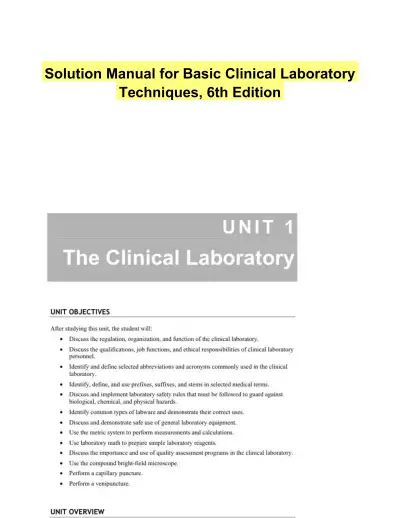 Textbook Guides
Solution Manual for Basic Clinical Laboratory Techniques, 6th Edition
Medicine
438 pagesMay 2025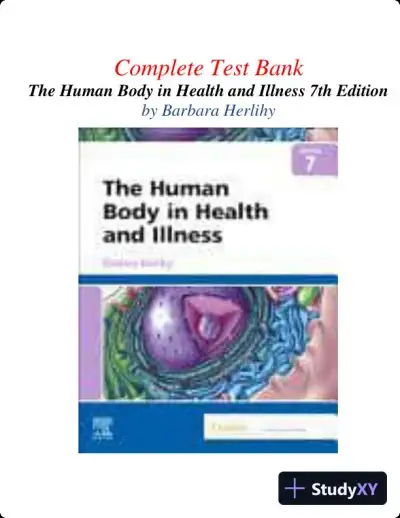 Exam Guides
Test Bank for The Human Body in Health and Illness, 7th Edition (Chapters 1-27)
Medicine
370 pages162downloadsFeb 2025 Textbook Guides
Solution Manual for Pearson's Comprehensive Medical Coding, 2nd Edition
Medicine
462 pages153downloadsFeb 2025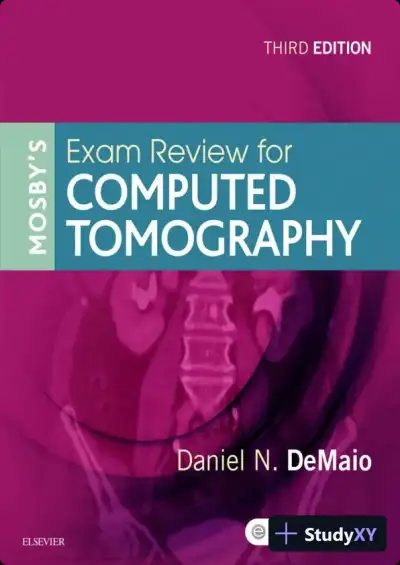 Certification Guides
Mosbys Exam Review for Computed Tomography 3rd Edition (2019)
Medicine
624 pages150downloadsFeb 2025 Exam Guides
Test Bank for CURRENT Medical Diagnosis and Treatment 2020, 59th Edition
Medicine
461 pages149downloadsFeb 2025 Exam Guides
Test Bank for Henke's Med-Math: Dosage Calculation, Preparation, and Administration, 9th Edition (Chapters 1-10)
Medicine
58 pages139downloadsFeb 2025 Exam Guides
Pathophysiology of Disease: An Introduction to Clinical Medicine 8th Edition Test Bank
Medicine
284 pages138downloadsFeb 2025 Past Exams
PDW Test Practice Exam with Answers (95 Solved Questions)
Medicine
19 pages136downloadsFeb 2025
Study this document with CramX
Once it is in your library, every tool can work from it.