

NURS480 Comprehensive Practice Exam With Answers (55 Solved Questions)
- Nursing
- Chamberlain College of Nursing
- 41 pages
- Shared May 2025
NURS480 Comprehensive Practice Exam With Answers offers a strategic approach to studying with real past exams.
Preview 13 of 41 pages
See the first 13 pages exactly as they appear in the document.
Page 1 Read page 1 as text
NURS 480 EXAM 1 – 3 WITH SATISFIED SOLUTIONS Where does MODS occur first? - Organ failure begins in lungs - progrssive dypnea, resp failure, ARDS Pt presentation of MODS - IV fluids/vasoactive meds needed to support BP/CO Hyperglycemic/hyperlactic acidemia -----severe loss of skeletal muscle Elevated bilirubin and LFTs Decreased bowl sounds and translocation of gut flora Elevtaed creatinine, BUN, anuria Coma or unresponsive DIC - Sign of underlying disorder Inflammatory response initiates clotting cascade Platelets will be decreased on CBC do to use during clots Pt presentation of DIC - Eccymosis Petechiae Hematoma Dypsnea Tachypnea Hemoptysis
Page 2 Page 3 Read page 3 as text
Pul Embolism Hypotension Chest Pain Hematemesis Rectal bleeding Melena Lab test - Low platelet (<150,000) Fibrinogen (<170) Prolonged PT (>12.5sec) aPTT(>35 sec) Thrombin (>11) D-dimer = check for clots, "leftovers" liek sawdust = clot breakdown RN considerations of DIC - Sepsis and leukemias are comon causes of DIC Monitor trends over time ATN in kidneys Alveolar compromise in lungs Headache, visual changes, LOC Avoid activities that would increase introcranial pressure A high cardiac output and low CVP suggest septic shock, and massive fluid replacement is indicated. - Increased PAWP indicates that the patient has excessive fluid volume (and suggests cardiogenic shock), and diuresis is indicated.
Page 4 Read page 4 as text
Bradycardia and a low systemic vascular resistance (SVR) suggest neurogenic shock, and fluids should be infused cautiously. - The renal hypoperfusion that accompanies cardiogenic shock results in increased BUN and creatinine levels. What are the 3 functions of renal? - Urine formation Regulatory Function(acidBase/electrolytes) Hormonal Functions Hormonal functions of the kidney - -renin to help regulate or control BP, potassium and sodium - erythropoietin: stimulates RBC production -regulation of calcium/phosphorus balance through activation of Vitamin D - bradykinins/prostaglandins Does osmolality increase or decrease with decreased H20 intake? - Increases -- stimulates release of ADH small vol of urine can be excretetd What is normal BUN range? - 8-21 If BUN is elevated, what dx test is used to assess/dx renal dysfunction? - Creatinine clearance Causes of increased BUN? - Liver disease Infection
Page 5 Read page 5 as text
High protein diet GI Bleed Steriod use/traume Causes of decreased BUN? - Severe liver damage Malnutrition Low protein diet Fluid volume excess Serum Creatinine range? - 0.5-1.2 Normal range for SG? - 1.010 - 1.025 When fluid intake INCREASES, specifc gravity DECREASES - DI, Glomerulonephritis, severe renal damage When fluid intake DECREASES, specific gravity INCREASES - Diabetes, Nephritis, Fluid deficit Acute Nephritic Syndrome - Allows RBC and protein movement into filtrate d/t post infection (such as glomerulonephritis or antibotics r/t strep) Glomerular Inflammation* Clinical Manifestations of Acute Nephritic Syndrome - Azotemia: Abnormal Conc. Nitrogenous wastes in blood Proteinuria Hematuria Cola-colored urine Casts in urine
Page 6 Read page 6 as text
Increased BUN/Creat d/t decreased U/O Med. Man. of Nephritic - Protein and sodium restriction Give abx r/t step Corticosteriods Immunosuppresants RN of Nephritic - **Give Carbs liberally** Strict i/o IVF - if fluids are effective = diuresis, decreased BP/edema Chronic Glomerulonephritis Patho - Repeated nephritis, HTN Nephrosclerosis, Hyperlipidemia Clinical Mani of GlomNeph - *Asymptomatic for years as damage increases before s/s develop* Abnormal dx: Urine w/ fixed SG, casts, protein Electrolyte imbalances Hypoalbuminia Med MGT of GlomNeph - If pt has HTN = Na+ & water restriction/antihypertensive Daily wts & diuretics to tx fluid overload Protein- dairy, eggs, meats
Page 7 Read page 7 as text
Dialysis if needed Rn of GlomNeph - Changes in fluid and electrolyte status and in cardiac and neurologic status are reported promptly to the primary provider. Nephrotic Syndrome - Damages the glomerlar membrane and increases permeability of plasma proteins 3.5 or > in urine/day **hallmark dx**(Massive Proteinuria) What does nephrotic syndrome result in? - Hypoalbuminemia pitting edema Hyperlipidemia/lipiduria Vit. D deficiency Manifestions of Nephro - Periorbital edema Dependent edema Ascites Dx of Nephro - Needle biopsy of kidney to confirm Complications of Nephro - Infection Thromboembolism Pul. Embolism AKI d/t hypovoemia Accelerated atheroscclerosis d/y hyperlipidemia Med MGT of Nephro - Diuretics Ace Inhibitors for proteinruia (Captopril,enalapril,lisinopril)
Page 8 Read page 8 as text
Lipitor, ezetimibe, niacin r/t hyperlipidemia PreRenal **external factors** - Hypoperfusion of kidney Hypovolemia Hypotensions Decreased CO CHF Burns/Sepsis Hemorrhage IntraRenal - direct damage to the kidneys by inflammation, toxins, drugs, infection, or reduced blood supply Postrenal - sudden obstruction of urine flow due to enlarged prostate, kidney stones, bladder tumor, or injury Prerenal Vs. Renal - Urinalysis: <20 (40-100) BUN/Creat: 20:1 (10:1) Fluid Chall: U/O yes (no u.o) How much fluid to give for fluid challenge - 200 mL NS over 15 min - expected outcome is Urine output increases The 4 phases of AKI - Initiating Oliguric Diuretic Recover Clinical mani of AKI - Signs of fluid overload**
Page 9 Read page 9 as text
Increased potassium, phosphate, BUN/Creat Decreased Calcium, Sodium, pH Medical MGT of AKI - Volume assessment** Assess VS, I/O, head to toe Meds: loop diuretics, Bumex, Lasix, Mannitol, AVOID NEPHROTOCC MEDS = contrast dye Hyperkalemia of AKI - Tall, tented, or peaked T waves abdominal cramping, irritability, parethesia as level increases, CO/other fucntions decline --**med emergency* How to decrease potassium levels? - Kayexalate orally or retention enema Insulin and IV dextrose 50% Calcium replacement IV sodium bicarbonate ESKD - Irreversible loss of renal failure renal insuffiency 75% = BUN/creat elevation End stage renal disease = dialysis or transplant Common causes of ESKD - Uncontrolled DM/HTN
Page 10 Read page 10 as text
Malnutrition ESKD Profession - SLOW increase in BUN/Creatinine GFR 1-90mL/min = structural changes indicating renal damage 3-30 to 60mL/min = moderate to poor function 5-15 mL/min - end stage **Cardiovascular disease is the predominant cause of death in these pts** ESKD complications - Osteodystrophy Bone resorptions,osteopenia,fractures r/t stimulation of parathyroid hormone ESKD Erythropeotin - Decreased Hg/HCT r/t production of this nurse should admin epoetin alfa(epogen) and monitor rbc/hct Nutrition restrictions of ESKD sodium, potassium, phosphate restrictions*** - 2-4 g/day of potassium avoid oranges, bananas, melons, prunes, deep green/yellow veggies, beans 1000mg/day phosphate avoid dairy When is dialysis initiated? - When patient cannot maintain a reasonable lifestyle with conservative treatment
Page 11 Read page 11 as text
GFR <15 hemodialysis - A technique in which an artificial kidney machine removes waste products from the blood peritoneal dialysis - the lining of the peritoneal cavity acts as the filter to remove waste from the blood CCRT - Continuous renal replacement therapies acutely ill pts, manages acid/base status can use a single lumen with arterial line When is urgent dialysis indicated? - High and increasing level of K+ -Fluid overload -Impending pulmonary edema -Increasing acidosis -Pericarditis -Advanced Uremia Arteriovenous Fistula - type of vascular access for dialysis; created by surgically connecting radial artery to cephalic vein "mature" fistula = large, bluging, and tortous S/S of Arterial Steal Syndrome - Ischemia d/t vascular access Vascular insufficiency = cold, numb fingers
Page 12 Read page 12 as text
s/s = pallar, pulses decreased/pain distal to fistula, necrosis RN assesssment of fistula/graft - Palpable pulsation thrill/bruit hear on auscultation w/ stethoscope NO BP or PIV on affected side Dialysis Complications - Chest pain may occur in pts w/ anemia or aterioscleotic heart disease dysrhythumias Hypotension Anemia Gastric ulcers Pts with uremia report metallic taste and nausea Dialysis Complications Continued - Poor calcium metabolism Renal Osteodystrophy Phosphorus deposits in the skin=itching Sleep problems/muscle cramping RN of Dialysis - Protect vascular access***
Page 13 Read page 13 as text
Assess site for patency signs of potential infection do not use for bp/blood drwas When is peritoneal dialysis indicated? - For pts w/vascular access problems OR respond poorly to HD/Hemodynamic instability What are the types of Peritoneal Dialysis - Ambulatory = 4-5x/day Automated = Overnight Intermitted = 30-40/WEEK When is PD contraindicated? - Hx of ab. surguries/pancratitis/diverticulitis Recurrent ab wall/inguinal hernias Severe COPD Compensatory Stage of Shock - SNS causes vasoconstriction, increased HR, increased heart contractility ◦ Maintains BP, Cardiac Output (CO) ◦ Maintenance of BP within normal limits is the hallmark of Compensatory Shock ◦ "fight-or-flight" response Manifestations of Comp - •Body shunts blood from skin, kidneys, GI tract
28 more pages in the full document
Unlock it once and it stays in your library, ready to chat with or turn into flashcards.
Unlock the full documentMore Nursing study materials
See all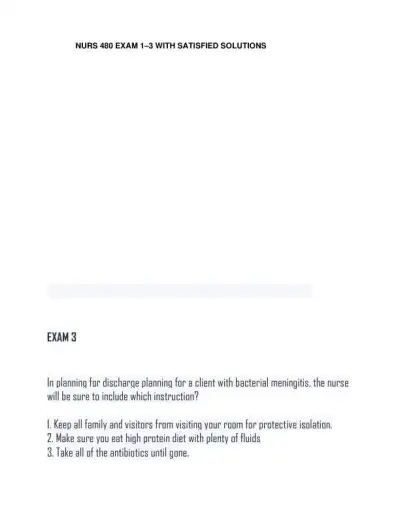 Past Exams
NURS480 Comprehensive Practice Exam With Answers (189 Solved Questions)
Nursing
81 pagesMay 2025 Past Exams
NURS480 Nursing Diagnosis Study Guide Practice Exam With Answers (250 Solved Questions)
Nursing
54 pagesMay 2025 Exam Guides
Test Bank for Critical Care Nursing: Diagnosis and Management, 9th Edition (Chapters 1-27)
Nursing
299 pages167downloadsFeb 2025 Class Notes
An Invitation To Health, Third Canadian Edition Lecture Notes
Nursing
439 pages163downloadsFeb 2025 Exam Guides
Test Bank for Physical Examination and Health Assessment, 9th Edition (Chapters 1-15)
Nursing
200 pages161downloadsFeb 2025 Exam Guides
Focus on Nursing Pharmacology Seventh, North American Edition Test Bank
Nursing
1144 pages160downloadsFeb 2025 Exam Guides
Test Bank for Fundamentals of Nursing, 11th edition (Chapters 1-24)
Nursing
200 pages160downloadsFeb 2025 Class Notes
Class Notes for Child Health Nursing, 3rd Edition
Nursing
861 pages154downloadsFeb 2025
Study this document with CramX
Once it is in your library, every tool can work from it.