

Solution Manual for Operations and Supply Chain Management: The Core, 5th Edition
- Operations Management
- 299 pages
- Shared May 2025
Solve textbook problems with ease using Solution Manual for Operations and Supply Chain Management: The Core, 5th Edition, featuring detailed solutions and step-by-step guides.
Preview 16 of 299 pages
See the first 16 pages exactly as they appear in the document.
Page 1 Read page 1 as text
Chapter 01 - Operations and Supply Chain Management CHAPTER 1 OPERATIONS AND SUPPLY CHAIN MANAGEMENT Discussion Questions 1. Using Exhibit 1.2 as a model, describe the source - make - deliver - return relationships in the following systems: a. An airline Source: Aircraft manufacturer, in - flight food, repair parts, computer systems Make: Aircraft and flight crew scheduling, ground services provided at airports, aircraft maintenance and repair Deliver: Outbound and arriving passenger service, baggage handling Return: Resolve any post - service issues such as lost or damaged luggage b. An automobile manufacturer Source: Suppliers of components and raw materials Make: Manufacturing of vehicles and components or subassemblies to be sold as spare parts Deliver: Delivery to and sales from dealerships, delivery of spare parts to the wholesale system Return: Warranty and recall repairs, trade - ins c. A hospital Source: Medical supplies, cleaning services, disposal services, food services, qualified personnel Make: Inpatient rooms, outpatient clinics, emergency room, operating rooms Deliver: Scheduling patients, providing treatment, ambulance service, family counseling Return: Billing errors, follow up visits d. An insurance company Source: Supplies needed for the office, underwriters, legal authority to operate Make: Establish policy guidelines and pricing, field agent/representative and facility network, develop Internet service capabilities, establish preferred vehicle repair service network Deliver: Meet with and advise clients, write policies, process and pay claims Return: Refund of overpayments 2. Define the service package of your college or university. What is its strongest element? What is its weakest one? The categories with examples are: Supporting facility - location, buildings, labs, parking Facilitating goods – class schedules, computers, books, chalk Explicit services – classes with qualified instructors, placement offices Implicit services – status and reputation (e.g., Ivy Leagu e schools)
Page 2 Page 3 Read page 3 as text
Chapter 01 - Operations and Supply Chain Management At Indiana University and the University of Southern California, among their strongest elements are their business schools and their Operations Management programs (of course). Both also have very dedicated alumni networks. A weak element of Indiana Universit y is its weak football program; for USC, weak elements are on - campus parking and housing. 3. What service industry has impressed you the most with its innovativeness? Our vote goes to cruise lines which have introduced such onboard innovations as wave machi nes for belly boarding and rock climbing walls, as well as all sorts of other amenities to keep cruisers involved. The industry is doing record business as well. Some of the standout companies in less innovative industries are Bank of America (has a form alized research program to try out new customer services/amenities such as video screens in next to teller lines), Intuit (e.g., putting Quicken money management software online), Ikea, JetBlue Airlines, and Progressive Insurance (discussed later in the bo ok). 4. What is product - service bundling and what are the benefits to customers? Product - service bundling is adding value - added services to a firm’s product offerings to create more value for the customer. This provides benefits in two areas. First, this di fferentiates the organization from the competition. Secondly, these services tie customers to the organization in a positive way. Alternatively, bundling can also involve adding products to a service, for example, adding the sale of convenience items and s nacks at a hotel. 5. What is the difference between a service and a good? A service is an intangible process (you can’t hold it in your hands), while a good is the physical output of a process. Some service businesses also provide a physical good as part of the service, like a restaurant. Also, mots manufacturers of goods provide services for after - sales support, like computer tech support or automobile warranty service. So while a service and a good are definitely distinguishable, customers will often encou nter both in their experiences with a company. 6. Some people tend to use the terms effectiveness and efficiency interchangeably, though we’ve seen they are different concepts. But is there any relationship at all between them? Can a firm be effective but in efficient? Very efficient but essentially ineffective? Both? Neither? Firms can be anywhere on these two dimensions. It is possible for a firm to be the best at what they do in serving their market, but be very wasteful in doing so. Alternatively, a firm could squeeze every last dollar out of their processes but fail to deliver what the market expects and desires. Of course, the best firms will provide the goods and services that the market desires, exactly as the market desires, and do so at a minimum cos t. Firms that are both inefficient and ineffective do not survive for long in any market.
Page 4 Read page 4 as text
Chapter 01 - Operations and Supply Chain Management 7. Two of the efficiency ratios mentioned in the chapter are the receivable turnover ratio and the inventory turnover ratio . While they are two completely separate measures, they are very similar in one way. What is the common thread between these two? (There are a number of answers that students may come up with, from simplistic to more thoughtful. Following is one of the latter.) Both are measuring the a verage amount of a valuable asset that is not generating value for the company. Accounts receivable are an asset, but they do not create value for the firm until the money is received. Reducing the average amount of accounts receivable frees up that money for use by the company on a recurring basis. Inventory is another asset, but while inventory is being held by the company it is not making any money for the firm. Reducing inventory allows the firm to invest the money that would otherwise be spent on the i nventory. 8. Look at the job postings at http://jobs.apics.org and evaluate the opportunities for an OSCM major with several years of experience. There are pages and pages of these in the APICS Career Center. Here are some examples: Purchasing and Planning Manager Sennheiser New Mexico Sennheiser is seeking an innovative and enthusiastic individual to manage the purchasing and planning areas at our Albuquerque manufacturing facility. This key role is responsible for leading the Purchasing, Planning and Warehouse departments to achieve outstanding results. You will be charged with ensuring cost effective on - time delivery, as well as building solid relationships with other internal departments and international sister facilities. You will use production planning, procurement, inventory and materials management concepts to solve problems and provide continuous improvement in the supply chain process. Senior Manager Supply Chain Financer Pharmavite This role contributes to Pharmavite's success by providing decision support to the organization to drive business growth and improve profitability. Responsible for supporting company innovation with respect to total delivered cost. Also supports direct sourcing team on reportin g & analyzing purchase price variance and seeking out new cost savings projects. Performs ad - hoc analysis and/or support cross - functional projects to improve operational efficiencies and optimize profitability. Also manages the control function around hea dquarters - based operations overhead expenditures as well as capital investments. Medical Device Supply Chain Manager Cadwell The Supply Chain Manager provides overall leadership and mentoring for the purchasing, shipping, and receiving functions for Cadwell Industries, Inc., a leading medical device manufacturer. This position oversees the organization wide management of strategic sourcing, procurement, contract negotiations, and evaluation of services while collaborating closely with staff in Enginee ring, Marketing, Regulatory, Sales, and Service.
Page 5 Read page 5 as text
Chapter 01 - Operations and Supply Chain Management Production/Operations Planner CG Industrial Specialties US - Nationwide Reporting to the Operations Manager or Branch Manager; this position is responsible for preparing assembly schedules for shop technicians; coordinate material requirements with purchasing as well as coordinate shipping / receiving activities with warehouse staff. 9. Recent outsourcing of parts and services that had previously been produced internally is addressed by which cur rent issue facing operations and supply management today? The coordination of relationships between mutually supportive but separate organizations. 10. What factors account for the resurgence of interest in OSCM today? With companies facing competition on a global scale, and ever - advancing manufacturing and information technologies, firms realize the competitive advantage their OSCM functions can provide if properly managed. Many have found that the same old way of doing business leaves them unable to comp ete successfully. The 2011 tsunami in Japan and the 2015 LA ports closure have also brought to the forefront how important supply chains are, as well as the negative economic impact that disruptions in the supply chain can cause. 11. As the field of OSCM has advanced, new concepts have been applied to help companies compete in a number of ways, including the advertisement of the firm’s products or services. One recent concept to gain the attention of companies is promoting s ustainability . Discuss how you have seen the idea of sustainability used by companies to advertise their goods or services. There of course will be a number of examples that students will bring up, though they may need some prodding to jog their memories. Some examples to start with might be IBM’s “I’m an IBMer” campaign where they advertise how they are “building a smarter planet.” Bottled water manufacturers have reduced the amount of plastic used in many of their products, thus saving production and distribution costs, but also allowing them to advertise how the new bottles are better for the environment because they result in less waste.
Page 6 Read page 6 as text
Chapter 01 - Operations and Supply Chain Management Objective Questions 1. What are the three elements that require integration to be successful in operations and supply chain management? Str ategy, Processes, and Analytics 2. Operations and supply chain management is concerned with the design and management of the entire system that has what function? Produces a product or delivers a service 3. Consider the following financial data from the past year for Midwest Outdoor Equipment Corporation. Gross Income $25,240,000 Total Sales 24,324,000 Total Credit Sales 18,785,000 Net Income 2,975,000 Cost of Goods Sold 12,600,000 Total Assets 10,550,000 Average Inventory 2,875,000 Average Receivables 3,445,000 a. Compute the receivable turnover ratio . $18,785,000 $3,445,000 = 5.453 b. Compute the inventory turnover ratio . $12,600,000 $2,875,000 = 4.383 c. Compute the asset turnover ratio . $24,324,000 $10,550,000 = 2.306
Page 7 Read page 7 as text
Chapter 01 - Operations and Supply Chain Management 4. A manufacturing company has entered into a new contract with a major supplier of raw materials used in the manufacturing process. Under the new arrangement, call ed vendor managed inventory , the supplier manages their raw material inventory inside the manufacturer’s plant, and only bills the manufacturer when the manufacturer consumes the raw material. How is this likely to affect the manufacturer’s inventory turn over ratio? This will reduce the average amount of money the firm has invested in raw material, so the inventory turnover ratio should increase. 5. What is the name of the process in which one company studies the processes of another firm in order to identify best practices? Benchmarking 6. A company has recently implemented an automated online billing and payment processing system for orders it ships to customers. As a result, it has reduced the average number of days between billing a customer and rec eiving payment by 10 days. How will this affect the receivables turnover ratio? Quicker payments will reduce the average amount of accounts receivables, so the receivables turnover ratio will increase. 7. Match the following OSCM job titles with the appropriate duties and responsibilities. C Plant manager A: Plans and coordinates staff activities such as new product development and new facility location D Supply chain manager B: Oversees the movement of goods throughout the supply chain A Project manager C: Oversees the workforce and resources required to produce the firm’s products E Business process improvement analyst D: Negotiates contracts with vendors and coordinates the flow of material inputs to the production process B Logistics manager E: Applies the tools of lean production to reduce cycle time and eliminate waste in a process 8. What high - level OSCM position manager is responsible for working with the CEO and company president to determine the company’s competitive strategy? Chief Operating Officer
Page 8 Read page 8 as text
Chapter 01 - Operations and Supply Chain Management 9. Order the following major concepts that have helped define the OSCM field on a time line. Use 1 for the earliest to be introduced, and 5 for the most recent. 3 Supply chain management 1 Manufacturing strategy 5 Business analytics 2 Total quality management 4 Electronic commerce 10. Which major OSCM concept can be described as an integrated set of activities designed to achieve high - volume production using minimal inventories of parts that arrive at workstations exactly when they are needed? Just - in - time (JIT) production 11. leverage the vast amount of data in enterprise resource planning systems to make decisions related to managing resources. Business analytics 12. Which current issue in OSCM relates to the ability of a firm to maintain balance in a system, considering the ongoing economic, employee, and environmental viability of the firm? Sustainability
Page 9 Read page 9 as text
Chapter 01 - Operations and Supply Chain Management Analytics Exercise: Comparing Companies Using Wall Street Efficiency Measures Each student is asked to pick an industry and compare three companies within that industry based on income per employee, revenue per employee, receivable turnover, inventory turnover, and asset turnover. The following is typica l of what you might obtain: BP Shell ExxonMobil Oil Industry Management Efficiency Net Income/Employee 315,300 343,533 414,328 289,320 Revenue/Employee 4.6 Mil 5.2 mil 4.7 mil 3 Mil Receivable Turnover 9.38 6.29 13.17 13.5 Inventory Turnover 11.92 13.59 21.91 15.5 Asset Turnover 1.92 1.36 1.41 1.1 Students are then asked to identify which company appears to have the most productive employees. With this data we see that ExxonMobil does very well in generating $414,328 net income per employee. Comparing Shell to ExxonMobil we can observe that ExxonMobil appears to be more efficient since it can generate more net income on lower revenue/employee, at least compared to Shell. The inventory turnover is highest for ExxonMobil indicating tha t the company is the most efficient from an operations and supply chain processes view. ExxonMobil also appears to do a good job in collecting receivables as well, thus supporting the idea that the company is very efficient. BP seems to do a little better in asset turnover, which relates to the use of its facility and equipment assets. But ExxonMobil is very good especially in comparison to the oil industry average. Overall, ExxonMobil appears to be the most efficient, so the other companies might find it valuable to benchmark the company’s processes. Of course, the data generated by each student will be different and an interesting interchange can be developed with students each presenting what they found from their research. It is very interesting to do comparisons across industries; retailers versus oil companies, and computer makes versus software companies, for example.
Page 10 Read page 10 as text
Chapter 02 - Strategy and Sustainability 02 - 1 CHAPTER 2 STRATEGY AND SUSTAINABILITY Discussion Questions 1. What is meant by a “triple - bottom - line” strategy? Give an example of a company that has adopted this type of strategy. A triple - bottom - line strategy places emphasis on a company’s environmental and social responsibilities as well as the traditional bottom line of economic prosperity. It recognizes that the long - term health of the firm is interdependent with the health of the environment and the betterment of society. There are many examples – one is Patagonia. For details see their current sustainability page: http://www.patagonia.com/home/ 2. Find examples where companies have used features related to environmental sustainability to “win” new customers. Car companies use environmental concerns in marketing ads. The development of hybrid and flex - fuel cars is one way they have operationalized those concerns. Consumer goods companies display the “made with recycled material” logo on the packaging. Bottled water manufacturers are using and advertising bottles made with less plastic. 3. What are the major priorities associated with operations and supply chain strategy? For each major priority, describe the unique characteristics of the market niche with which it is most compatible. • Cost: In most every industry, there is a market segment that is very price sensitive. Firms that can supply goods or services at the lowest price will have an advantage there. This requires extremely efficient operations with a continuous focus on cost minimization. As a result, large production volumes are often required to successfully c ompete here. • Quality: Similar to the low - cost focused customers, most industries will encounter a market segment willing to pay more for a higher quality product. Typically these goods and services will not be commodity products. Customers may focus on d esign quality (feature sets, materials, etc.), process quality (fit and finish, reliability, etc.) to differing levels based on the industry. • Delivery speed and reliability: When a customer has a dire and need for a good or service, companies that can del iver the product the fastest have a distinct advantage. In the business - to - business (B2B) market segment, customers depend on stated delivery windows to achieve reductions in inventory while still meeting strict production windows. • Changes in volume: Again, this is often important to be a player in many B2B markets. Customers need to know their suppliers can rapidly respond to changes in demand so they can meet the end customer demand swings.
Page 11 Read page 11 as text
Chapter 02 - Strategy and Sustainability 02 - 2 • Flexibility and new product introduction speed: The high - tech industry is a good example where this is a key competitive advantage. Being able to rapidly respond to advances in technology and correctly gauge customer expectations is key to c ompeting successfully. 4. Why does the “proper” operations and supply chain strategy keep changing for companies that are world - class competitors? The top three priorities have generally remained the same over time: make it good, make it fast, and deliver it on time. Others have changed. Part of this may be explained by realizing that world class organizations have achieved excellence in these three areas and are, therefore, focusing attention on some of the more minor areas to gain competitive advantage. T he changes in the minor priorities may result from recognizing opportunities or from changes in customer desires or expectations. 5. What do the expressions “order winner” and “order qualifier” mean? What was the order winner for your last major purchase of a product or service? Order winners are dimensions that differentiate the product or service or services of one firm from another. Order qualifiers are dimensions that are used to screen a product or service as a candidate for purchase. Order qualifiers g et a company’s “foot in the door.” Order winners are what make the sale. Obviously, answers will vary for the order winners from your last purchase. 6. Pick a company that you are familiar with and describe its operations strategy and how it relates to winni ng customers. Describe specific activities used by the company that support the strategy (see Exhibit 2.2 for an example). Student answers will vary widely based on their experiences and views. It might be helpful for a classroom exercise to assign certai n companies to a number of students/teams and compare their answers in class. 7. At times in the past, the dollar showed relative weakness with respect to foreign currencies, such as the yen, euro, and pound. This stimulated exports. Why would long - term reli ance on a lower valued dollar be at best a short - term solution to the competitiveness problem? This approach is dependent on economic policies of other nations. This is a fragile dependency. A long - term approach is to increase manufacturing and service industry productivity in order to regain competitive advantage. At a national level, solutions appear to lie in reversing attitudes. At a firm level, competitive weapons are consistent quality, high performance, dependable delivery, competitive pricing, a nd design flexibility. 8. Identify an operations and supply chain - related "disruption" that recently impacted a company. What could the company have done to have minimized the impact of this type of disruption prior to it occurring? The March 2011 tsunami that struck Japan was geographically concentrated but had global impact on multiple firms, many of which had no physical presence at all in the affected area. Examples include firms that had sole source agreements with suppliers in the affected area. The tsunami left these companies scrambling to find new suppliers to feed into their supply chains. These firms could have reduced the impact of the tsunami by having a few high - quality,
Page 12 Read page 12 as text
Chapter 02 - Strategy and Sustainability 02 - 3 dependable suppliers located in d ifferent geographical regions. There are many other examples that could be taken from this one event. A simple Internet search will provide plenty of material for discussion. More recently, the L.A. ports work slowdown in early 2015 was a man - made disrupti on for many global firms. Both inbound and outbound shipments were affected – some delayed and others (U.S. produce exports) were ruined. McDonald’s resorted to flying over 2 million pounds of frozen French fries into Japan at significant extra cost during this period to keep restaurants open. 9. What do we mean when we say productivity is a “relative” measure? For productivity to be meaningful, it must be compared with something else. The comparisons can be either intra - company as in the case of year - to - yea r comparisons of the same measure, or intercompany as in the case of benchmarking. Intercompany comparisons of single factor productivity measures can be somewhat tenuous due to differences in accounting practices (especially when comparing with foreign co mpetitors) and the balance of labor to capital resources. Total factor productivity measures are somewhat more robust for comparison purposes.
Page 13 Read page 13 as text
Chapter 02 - Strategy and Sustainability 02 - 4 Objective Questions 1. Shell Oil Company’s motto “People, Planet and Profit” is a real - world implementation of what OSCM concept? Triple bottom line 2. A firm’s strategy should describe how it intends to create and sustain value for . Its current shareholders 3. What is the term used to describe individuals or organizations that are influenced by the actions of the firm? Stakeholders 4. How often should a company develop and refine the operations and supply chain strategy. At least yearly 5. What is the term used to describe product attributes that attract certain customers and can be used to form the competitive position of a firm? Competitive dimensions 6. What are the two main competitive dimensions related to product delivery? Delivery speed and delivery reliability 7. What are the two characteristics of a product or service that define quality? Design quality and process quality 8. What is the diagram that shows how a company’s strategy is delivered by a set of supporting activities called? Activity - system map
Page 14 Read page 14 as text
Chapter 02 - Strategy and Sustainability 02 - 5 9. In implementing supply chain strategy, a firm must minimize its total cost without compromising the needs of what group of people? Customers 10. What is defined as the likelihood of disruption that would impact the ability of a company to continuously supply products or services? Supply chain risk 11. What are risks caused by natura l or manmade disasters, and therefore impossible to reliably predict called? Disruption risks 12. Match the following common risks with the appropriate mitigation strategy. E Country risks A: Detailed tracking, alternate suppliers D Regulatory risk B: Carefully select and monitor suppliers A Logistics failure C: Contingency planning, insurance C Natural disaster D: Good legal advice, compliance B Major quality failure E: Currency hedging, local sourcing 13. What is the term used to describe the assessment of the probability of a negative event against the aggregate severity of the related loss? Risk mapping
Page 15 Read page 15 as text
Chapter 02 - Strategy and Sustainability 02 - 6 14. As Operations Manager, you are concerned about being able to meet sales requirements in the coming months. You have just been given the following production report: JAN FEB MAR APR Units Produced 2300 1800 2800 3000 Hours per Machine 325 200 400 320 Number of Machines 3 5 4 4 Find the average of the monthly productivity figures (units per machine hour). To answer this we need to realize that the measure of hours given is per machine, so we have to multiply that by the number of machines in each period to get the total machine hours in each period. Those figures are used in the calculations below. Average productivity: (2300/975 + 1800/1000 + 2800/1600 + 3000/1280)/4 Average productivity (2.36+1.80+1.75+2.34)/4= 2.06 units per machine hour Note that the average above weights each month the same, although output varies. An alternative answer would be to compute a weighte d average productivity figure that is slightly different at 2.04 units per machine hour. 15. Sailmaster makes high - performance sails for competitive windsurfers. Below is information about the inputs and outputs for one model, the Windy 2000. Units sold 1, 217 Sale price each $1,700 Total labor hours 46,672 Wage rate $12/hour Total materials $60,000 Total energy $4,000 Calculate the productivity in sales revenue/labor expense . We have to do some interim calculations here. Sales revenue is calculated by multiplying units sold by the unit sales price. Labor expense is calculated by multiplying labor hours by the wage rate. (1217*1700) / (46672*12) = 3.69
Page 16 Read page 16 as text
Chapter 02 - Strategy and Sustainability 02 - 7 16. Live Trap Corporation received the data below for its rodent cage production unit. F ind the total productivity? Output Input 50,000 cages Production time 620 labor hours Sales price: $3.50 per unit Wages $7.50 per hour Raw materials (total cost) $30,000 Component parts (total cost) $15,350 Total productivity could be expressed two ways here based on how you express output: in units sold, or dollars of sales. Units sold: 50,000 / ((620 * $7.50) + 30,000 + 15,350) = 1.00 units sold per dollar input Dollars of sales: (50000*3.5) / ((620 * $7.50) + 30,000 + 15,350) = 3.5 dollars in sales per dollar input 17. Two types of cars (Deluxe and Limited) were produced by a car manufacturer last year. Quantities sold, price per unit, and labor hours are given below. What is the labor productivity for each car? Explain the problem(s) associated with the labor productivity. QUANTITY $/UNIT Deluxe car 4,000 units sold $8,000/car Limited car 6,000 units sold $9,500/car Labor, Deluxe 20,000 hours $12/hour Labor, Limited 30,000 hours $14/hour Labor Productivity – units/hour Model Output in Units Input in Labor Hours Productivity (Output/Input) Deluxe Car 4,000 20,000 0.20 units/hour Limited Car 6,000 30,000 0.20 units/hour Labor Productivity – dollars Model Output in Dollars Input in Dollars Productivity (Output/Input) Deluxe Car 4,000($8,000)= $32,000,000 20,000($12.00)= $240,000 133.33 Limited Car 6,000($9,500)= $57,000,000 30,000($14.00)= $420,000 135.71
283 more pages in the full document
Unlock it once and it stays in your library, ready to chat with or turn into flashcards.
Unlock the full documentMore Operations Management study materials
See all Textbook Guides
Solution Manual for Operations and Supply Chain Management, 14th Edition
Operations Management
342 pages133downloadsFeb 2025 Exam Guides
Test Bank For Operations And Supply Chain Management, 14th Edition
Operations Management
1011 pagesMay 2025 Textbook Guides
Solution Manual For Operations and Supply Chain Management, 16th Edition
Operations Management
361 pagesMay 2025 Textbook Guides
Managing Quality: Integrating the Supply Chain, 6th Edition Solution Manual
Operations Management
262 pages115downloadsFeb 2025 Textbook Guides
Operations Management, (Mcgraw-hill Education Operations and Decision Sciences) 1st Edition Solution Manual
Operations Management
153 pages91downloadsFeb 2025 Textbook Guides
Solution Manual For Matching Supply with Demand: An Introduction to Operations Management, 4th Edition
Operations Management
76 pages36downloadsFeb 2025 Exam Guides
Operations Management, 5th Canadian Edition Test Bank
Operations Management
1208 pagesMay 2025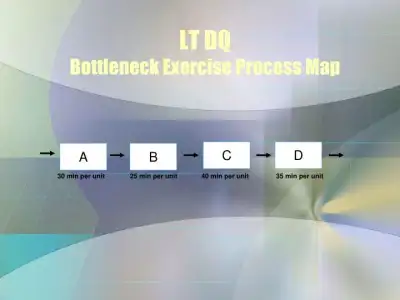 Class Notes
LT DQ Bottleneck Exercise Process Map
Operations Management
1 pageMay 2025
Study this document with CramX
Once it is in your library, every tool can work from it.