

Test Bank For Operations And Supply Chain Management, 14th Edition
- Operations Management
- 1011 pages
- Shared May 2025
Test Bank For Operations And Supply Chain Management, 14th Edition offers everything you need for thorough exam preparation, including solved questions and MCQs.
Preview 16 of 1011 pages
See the first 16 pages exactly as they appear in the document.
Page 1 Read page 1 as text
1 - 1 Chapter 01 Introduction True / False Questions 1. Efficiency means doing the right things to create the most value for the company. True False 2. Effectiveness means doing the right things to create the most value for the company. True False 3. A doctor completes a surgical procedure on a patient without error. The patient dies anyway. In operations management terms, we could refer to this doctor as being efficient but not effective. True False 4. A worker can be efficient without being effective. True False 5. A process can be effective without being efficient. True False 6. Operations and supply chain management is defined as the design, operation, and improvement of the systems that create and deliver the firm's primary products and services. True False 7. The term "value" refers to the relationship between quality and the price paid by the consumer. True False 8. Attempting to balance the desire to efficiently use resources while providing a highly effective service may create conflict between the two goals. True False
Page 2 Page 3 Read page 3 as text
1 - 2 9. Central to the concept of operations strategy are the notions of operations focus and trade - offs. True False 10. OSCM is concerned with management of the trickiest parts of the system that produces a good or delivers a service. True False 11. OSCM is a functional field of business with clear line management responsibilities. True False 12. The supply network as can be thought of as a pipeline through which cash, material and information flows. True False 13. Supply networks cannot be constructed for every product or service. True False 14. "Operations" refers to manufacturing and service processes used to transform resources employed by a firm into products desired by customers. True False 15. "Supply chain" refers to processes that move information and material to and from the manufacturing and service processes of the firm. True False 16. "Supply chain" includes only inbound freight and inventory. True False 17. It is critical that a sustainable strategy meet the needs of shareholders and employees. It is also highly desirable that it preserves the environment. True False 18. Planning is where a firm must determine how anticipated demand will be met with available resources. True False
Page 4 Read page 4 as text
1 - 3 19. Although planning involves determining how the various supply chain processes (sourcing, making, delivering, and returning) will be met, planning itself is not considered a supply chain process. True False 20. The supply chain processes mentioned in the textbook are planning, sourcing, delivering, and returning. True False 21. All managers should understand the basic principles that guide the design of transformation processes. True False 22. Operations and supply management changes constantly because of the dynamic nature of competing in global business and the constant evolution of information technology. True False 23. Internet technology has made the sharing of reliable real - time information expensive. True False 24. Capturing information directly from the source through such systems as point - of - sale, radio - frequency identification tags, bar - code scanners, and automatic recognition has had little impact on operations and supply chain management. True False 25. Use of systems like point - of - sale, radio - frequency identification tags, bar - code scanners, and automatic recognition has made it more difficult to understand what all the information is saying. True False 26. Operations and supply chain processes can be conveniently categorized as planning, sourcing, making, and delivering. True False 27. A major aspect of planning involves developing a set of metrics to monitor the supply chain. True False 28. Returning involves processes for receiving worn - out, defective, and excess products back from customers but does not involve support for customers who have problems with the product. True False
Page 5 Read page 5 as text
1 - 4 29. Delivering is not considered in supply chain analysis when outside carriers are contracted to move products to customers. True False 30. Services are intangible processes that cannot be weighed or measured. True False 31. Service innovations can be patented. True False 32. Services are homogeneous. True False 33. Services are defined and evaluated as a package of features that affect the five senses. True False 34. Automobiles and appliances are classified as "pure goods." True False 35. Core service providers integrate tangible goods into their product. True False 36. "Product - service bundling" refers to a company building service activities into its product offerings for its customers. True False 37. In contrast to careers in finance and marketing, careers in OSCM involve hands - on involvement with people and processes. True False 38. A bank branch manager position is not an OSCM - type of job. True False 39. A supply chain manager is an OSCM job while a purchasing manager is not. True False
Page 6 Read page 6 as text
1 - 5 40. Just - in - time (JIT) production was a major breakthrough in manufacturing philosophy pioneered by the Japanese. True False 41. Lean manufacturing refers to just in time production coupled with total quality control. True False 42. The Baldrige National Quality Award was started under the direction of the National Institute of Standards and Technology. True False 43. The approach that advocates making revolutionary changes as opposed to evolutionary changes is called "creation theory." True False 44. The approach that advocates making revolutionary changes as opposed to evolutionary changes is called "business process reengineering." True False 45. Business process reengineering, which seeks revolutionary change, is contrasted with total quality management which commonly advocates incremental change. True False 46. The "triple bottom line" relates to the economic, employee, and environmental impact of a firm's strategy. True False 47. Sustainability is the ability to maintain profits in a system. True False 48. Raising senior management awareness of OSCM as a competitive weapon is not an important issue. True False 49. "Green belt" programs are coordinated public works projects aimed a placing an environmentally friendly zone around major cities. True False
Page 7 Read page 7 as text
1 - 6 50. Green and black belt programs teach six - sigma quality tools to managers at many corporations. True False 51. The central idea of supply chain management is to apply a total system approach to managing the flow of information, materials, and services from raw material suppliers through factories and warehouses to the end customer. True False 52. The term "electronic commerce" refers to the buying and selling of electronic products and devices. True False 53. The term "electronic commerce" refers to the use of the Internet as an essential element of business activity. True False 54. SSME is an acronym standing for "service sector management economics." True False 55. Service science management and engineering aims to apply the latest concepts in information technology to continue to improve service productivity of technology - based organizations. True False 56. "Business analytics" involves the analysis of data through a unique combination of linear programming, game theory, and queuing theory to better solve business problems. True False 57. The mathematical results of Business Analytics are used to automate decision making and eliminate the decision maker. True False 58. Operations and supply chain strategy are not important issues to investors who tend to focus on growth, dividends, and earnings per share. True False 59. Investors pay close attention to efficiency and productivity measures like net income per employee because they are interested in how well the firm manages its workforce relations. True False
Page 8 Read page 8 as text
1 - 7 60. During a recession, efficient firms often have an opportunity to increase market share while maintaining profitability. True False 61. Wall Street analysts are not particularly concerned with how efficient companies are from an operations and supply management view. True False Multiple Choice Questions 62. One reason for studying operations and supply chain management (OSCM) is which of the following? A. OSCM is essential for understanding organizational behavior. B. Most business graduates do OSCM work regardless of their job title. C. All managers should understand the basic principles that guide the design of transformation processes. D. OSCM is a required course in all business degree programs. E. OSCM is the most rigorous business discipline. 63. The goods - services continuum consists of which set of the following categories? A. No goods, some goods, even mix, some service, no service B. Pure goods, core goods, core services, pure services C. No service, some service, good service, excellent service D. Self - service, help desk service, face - to - face service, service - with - a - smile E. None of these 64. Which of the following are defined as core goods? A. Chemicals B. Airlines C. Data storage systems D. Hotels E. None of these
Page 9 Read page 9 as text
1 - 8 65. Current issues in OSCM do not include: A. Coordinating relationships between organizations B. Making senior management aware that OSCM can be a competitive weapon C. The triple bottom line D. Managing customer touch points E. Increasing global supply chain employment 66. Which of the following are not listed in the text as jobs in OSCM? A. Department store manager B. Project manager C. Hospital administrator D. Data center manager E. Call center manager 67. Which of the following is not a characteristic that distinguishes services from goods? A. Service jobs are unskilled. B. A service is intangible. C. Services are perishable. D. Services are heterogeneous. E. None of these 68. Which of the following is not a way that operations and supply processes are categorized? A. Planning B. Return C. Delivery D. Selecting E. Making 69. One of the "package of features" that make up a service is: A. Appearance B. Facilitating goods C. Packaging D. Cost E. Implied use
Page 10 Read page 10 as text
1 - 9 70. Which of the following is not a measure of operations and supply chain management efficiency used by Wall Street? A. Inventory turnover B. Revenue per employee C. Receivable turnover D. Earnings per share E. Asset turnover 71. Which of the following is a measure of operations and supply management efficiency used by Wall Street? A. Dividend payout ratio B. Current ratio C. Receivable turnover D. Earnings per share growth E. Financial leverage Fill in the Blank Questions 72. The ability to maintain balance in a system is referred to as ______________. ________________________________________ 73. Processes that are used to transform resources into products are called _______________. ________________________________________ 74. What are the five categories of supply chain processes? 1. ___________________ 2. ___________________ 3. ___________________ 4. ___________________ 5. ___________________ ________________________________________ 75. Doing something at the lowest possible cost is called: _______________. ________________________________________
Page 11 Read page 11 as text
1 - 10 76. Value is the ratio of __________________________. ________________________________________ 77. A pipeline through which material and information flows is a conception of a ______________________. ________________________________________ 78. List five OSCM job titles. 1. ___________________ 2. ___________________ 3. ___________________ 4. ___________________ 5. ___________________ ________________________________________ 79. What are four current issues in operations and supply management that are discussed in the textbook? 1. ___________________ 2. ___________________ 3. ___________________ 4. ___________________ ________________________________________ 80. What is a total systems approach to managing the flow of information, materials, and services from raw material suppliers through factories and warehouses to the end customer called? ________________________________ ________________________________________ 81. What is a major industry and university program aiming to apply the latest concepts in information technology to continue to improve service productivity of technology - based organizations called? _____________________________________________ ________________________________________ 82. The use of the Internet as an essential element of business activity is called what? ______________________________ ________________________________________
Page 12 Read page 12 as text
1 - 11 83. Name five common measures of operations and supply management efficiency used by Wall Street. 1. _____________________ 2. _____________________ 3. _____________________ 4. _____________________ 5. _____________________ ________________________________________ Essay Questions 84. Discuss the role of efficiency and effectiveness in the creation of value.
Page 13 Read page 13 as text
1 - 12 Chapter 01 Introduction Answer Key True / False Questions 1. Efficiency means doing the right things to create the most value for the company. FALSE Efficiency means doing something at the lowest possible cost. AACSB: Analytic Blooms: Remember Difficulty: 1 Easy Learning Objective: 01 - 04 Discuss the anchors on which organizational behavior knowledge is based. Topic: Efficiency, Effectiveness, and Value 2. Effectiveness means doing the right things to create the most value for the company. TRUE Effectiveness means doing the right things to create the most value for the company. AACSB: Analytic Blooms: Remember Difficulty: 1 Easy Learning Objective: 01 - 04 Discuss the anchors on which organizational behavior knowledge is based. Topic: Efficiency, Effectiveness, and Value 3. A doctor completes a surgical procedure on a patient without error. The patient dies anyway. In operations management terms, we could refer to this doctor as being efficient but not effective. TRUE Efficiency means doing something at the lowest possible cost. Effectiveness means doing the right things to create the most value. The doctor performed the surgery without error. Because the patient died, no value was created. AACSB: Analytic Blooms: Analyze Difficulty: 2 Medium Learning Objective: 01 - 04 Discuss the anchors on which organizational behavior knowledge is based. Topic: Efficiency, Effectiveness, and Value
Page 14 Read page 14 as text
1 - 13 4. A worker can be efficient without being effective. TRUE Efficiency means doing something at the lowest possible cost. Effectiveness means doing the right things to create the most value. These are different things. AACSB: Analytic Blooms: Understand Difficulty: 2 Medium Learning Objective: 01 - 04 Discuss the anchors on which organizational behavior knowledge is based. Topic: Efficiency, Effectiveness, and Value 5. A process can be effective without being efficient. TRUE Often, maximizing effectiveness and efficiency at the same time creates conflict between the two goals. "Being efficient" at the customer service counter at a local store or bank means using the smallest number of clerks possible at the counter. Being effective, though, means minimizing the amount of time customers need to wait in line. AACSB: Analytic Blooms: Understand Difficulty: 2 Medium Learning Objective: 01 - 04 Discuss the anchors on which organizational behavior knowledge is based. Topic: Efficiency, Effectiveness, and Value 6. Operations and supply chain management is defined as the design, operation, and improvement of the systems that create and deliver the firm's primary products and services. TRUE Operations and supply chain management is defined as the design, operation, and improvement of the systems that create and deliver the firm's primary products and services. AACSB: Analytic Blooms: Remember Difficulty: 1 Easy Learning Objective: 01 - 01 Define organizational behavior and organizations; and discuss the importance of this field of inquiry. Topic: What Is Operations and Supply Chain Management?
Page 15 Read page 15 as text
1 - 14 7. The term "value" refers to the relationship between quality and the price paid by the consumer. TRUE Related to efficiency and effectiveness is the concept of value, which can be metaphorically defined as quality divided by price. AACSB: Analytic Blooms: Remember Difficulty: 1 Easy Learning Objective: 01 - 04 Discuss the anchors on which organizational behavior knowledge is based. Topic: Efficiency, Effectiveness, and Value 8. Attempting to balance the desire to efficiently use resources while providing a highly effective service may create conflict between the two goals. TRUE Often maximizing effectiveness and efficiency at the same time creates conflict between the two goals. AACSB: Analytic Blooms: Analyze Difficulty: 1 Easy Learning Objective: 01 - 04 Discuss the anchors on which organizational behavior knowledge is based. Topic: Efficiency, Effectiveness, and Value 9. Central to the concept of operations strategy are the notions of operations focus and trade - offs. TRUE Central to their thinking was the notion of factory focus and manufacturing trade - offs. Because a factory cannot excel on all performance measures, its management must devise a focused strategy, (to perform) a limited set of tasks extremely well. This requires trade - offs. AACSB: Analytic Blooms: Remember Difficulty: 1 Easy Learning Objective: 01 - 03 Debate the organizational opportunities and challenges of globalization; workforce diversity; and emerging employment relationships. Topic: Historical Development of Operations and Supply Chain Management
Page 16 Read page 16 as text
1 - 15 10. OSCM is concerned with management of the trickiest parts of the system that produces a good or delivers a service. FALSE OSCM is concerned with the management of the entire system that produces a good or delivers a service. AACSB: Analytic Blooms: Remember Difficulty: 1 Easy Learning Objective: 01 - 01 Define organizational behavior and organizations; and discuss the importance of this field of inquiry. Topic: What Is Operations and Supply Chain Management? 11. OSCM is a functional field of business with clear line management responsibilities. TRUE OSCM is a functional field of business with clear line management responsibilities. AACSB: Analytic Blooms: Remember Difficulty: 1 Easy Learning Objective: 01 - 02 Compare and contrast the four current perspectives of organizational effectiveness as well as the early goal attainment perspective. Topic: What Is Operations and Supply Chain Management? 12. The supply network as can be thought of as a pipeline through which cash, material and information flows. FALSE Think of the supply network as a pipeline through which material and information flows. AACSB: Analytic Blooms: Understand Difficulty: 1 Easy Learning Objective: 01 - 01 Define organizational behavior and organizations; and discuss the importance of this field of inquiry. Topic: What Is Operations and Supply Chain Management? 13. Supply networks cannot be constructed for every product or service. FALSE Networks such as this can be constructed for any product or service. AACSB: Analytic Blooms: Understand Difficulty: 1 Easy
995 more pages in the full document
Unlock it once and it stays in your library, ready to chat with or turn into flashcards.
Unlock the full documentMore Operations Management study materials
See all Textbook Guides
Solution Manual for Operations and Supply Chain Management, 14th Edition
Operations Management
342 pages133downloadsFeb 2025 Textbook Guides
Solution Manual For Operations and Supply Chain Management, 16th Edition
Operations Management
361 pagesMay 2025 Textbook Guides
Solution Manual for Operations and Supply Chain Management: The Core, 5th Edition
Operations Management
299 pagesMay 2025 Textbook Guides
Managing Quality: Integrating the Supply Chain, 6th Edition Solution Manual
Operations Management
262 pages115downloadsFeb 2025 Textbook Guides
Operations Management, (Mcgraw-hill Education Operations and Decision Sciences) 1st Edition Solution Manual
Operations Management
153 pages91downloadsFeb 2025 Textbook Guides
Solution Manual For Matching Supply with Demand: An Introduction to Operations Management, 4th Edition
Operations Management
76 pages36downloadsFeb 2025 Exam Guides
Operations Management, 5th Canadian Edition Test Bank
Operations Management
1208 pagesMay 2025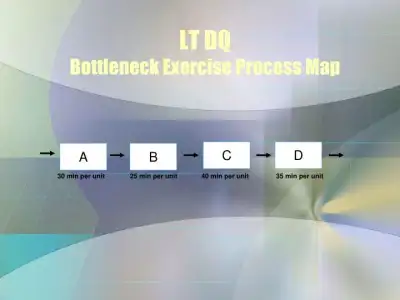 Class Notes
LT DQ Bottleneck Exercise Process Map
Operations Management
1 pageMay 2025
Study this document with CramX
Once it is in your library, every tool can work from it.