
Past Exams
2020 NSG6430 Clinical Analysis Final Exam With Answers (100 Solved Questions)
- Assessment Technologies Institute
- 46 pages
- Shared May 2025
Familiarize yourself with time management using 2020 NSG6430 Clinical Analysis Final Exam With Answers, featuring real past papers.
Preview · 14 of 46 pages
100%
Page 1
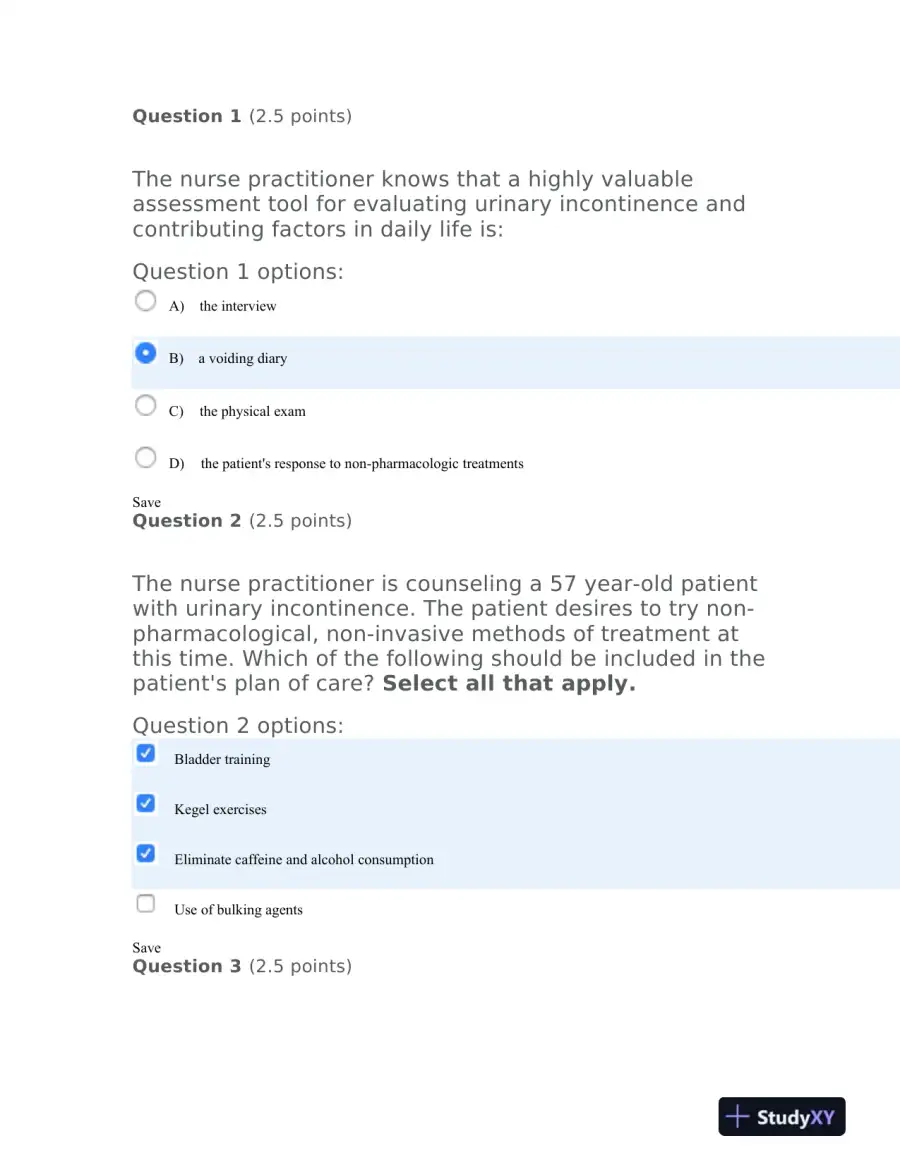 Question 1(2.5 points)The nurse practitioner knows that a highly valuableassessment tool for evaluating urinary incontinence andcontributing factors in daily life is:Question 1 options:A)the interviewB)a voiding diaryC)the physical examD)the patient's response to non-pharmacologic treatmentsSaveQuestion 2(2.5 points)The nurse practitioner is counseling a 57 year-old patientwith urinary incontinence. The patient desires to try non-pharmacological, non-invasive methods of treatment atthis time. Which of the following should be included in thepatient's plan of care?Select all that apply.Question 2 options:Bladder trainingKegel exercisesEliminate caffeine and alcohol consumptionUse of bulking agentsSaveQuestion 3(2.5 points)
Page 2

Page 3
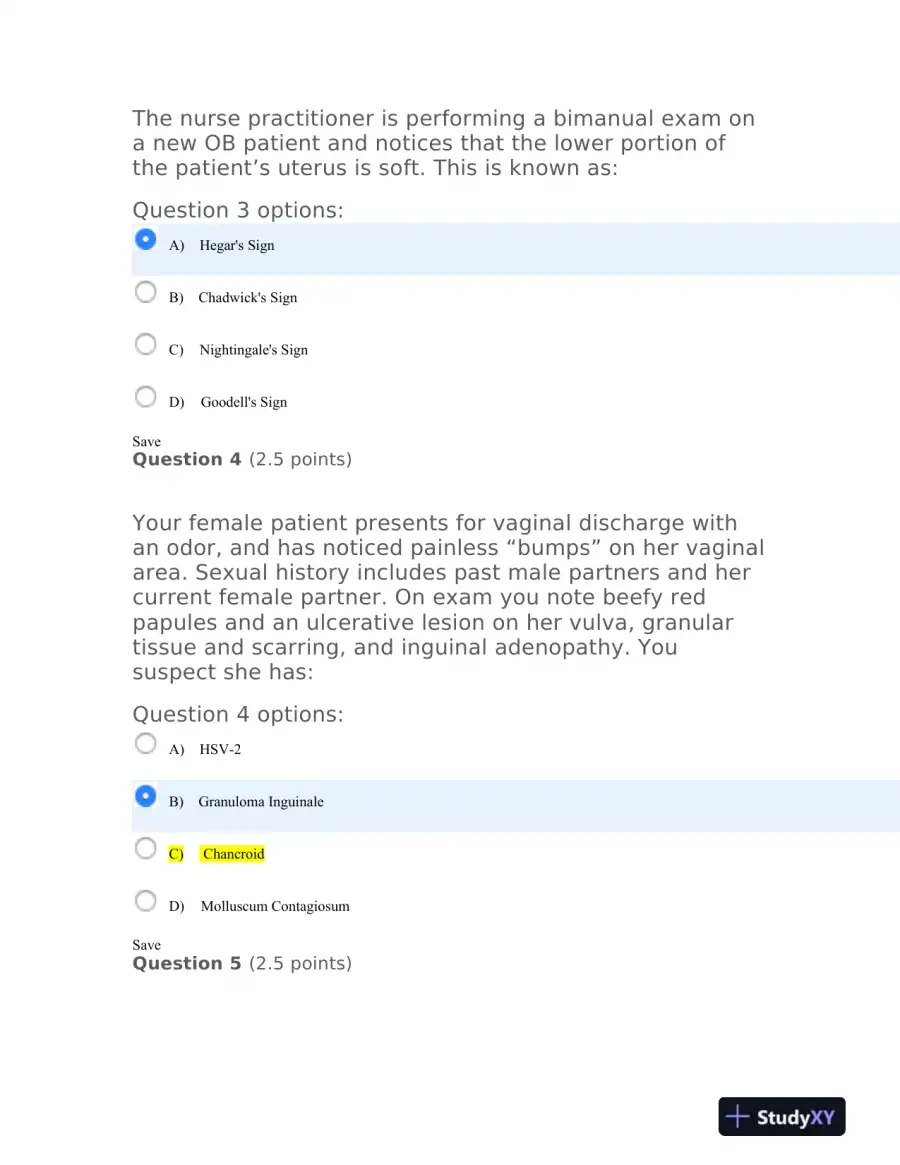 The nurse practitioner is performing a bimanual exam ona new OB patient and notices that the lower portion ofthe patient’s uterus is soft. This is known as:Question 3 options:A)Hegar's SignB)Chadwick's SignC)Nightingale's SignD)Goodell's SignSaveQuestion 4(2.5 points)Your female patient presents for vaginal discharge withan odor, and has noticed painless “bumps” on her vaginalarea. Sexual history includes past male partners and hercurrent female partner. On exam you note beefy redpapules and an ulcerative lesion on her vulva, granulartissue and scarring, and inguinal adenopathy. Yoususpect she has:Question 4 options:A)HSV-2B)Granuloma InguinaleC)ChancroidD)Molluscum ContagiosumSaveQuestion 5(2.5 points)
Page 4
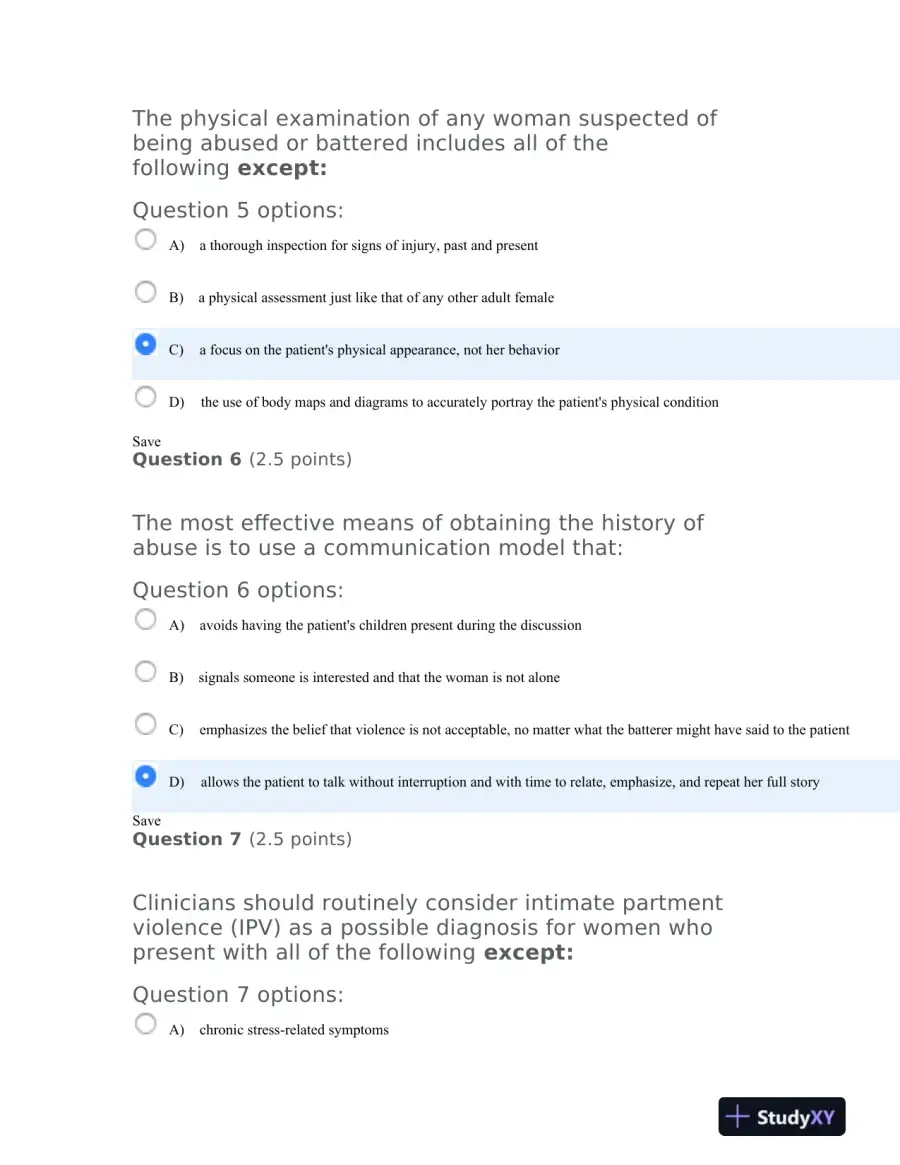 The physical examination of any woman suspected ofbeing abused or battered includes all of thefollowingexcept:Question 5 options:A)a thorough inspection for signs of injury, past and presentB)a physical assessment just like that of any other adult femaleC)a focus on the patient's physical appearance, not her behaviorD)the use of body maps and diagrams to accurately portray the patient's physical conditionSaveQuestion 6(2.5 points)The most effective means of obtaining the history ofabuse is to use a communication model that:Question 6 options:A)avoids having the patient's children present during the discussionB)signals someone is interested and that the woman is not aloneC)emphasizes the belief that violence is not acceptable, no matter what the batterer might have said to the patientD)allows the patient to talk without interruption and with time to relate, emphasize, and repeat her full storySaveQuestion 7(2.5 points)Clinicians should routinely consider intimate partmentviolence (IPV) as a possible diagnosis for women whopresent with all of the followingexcept:Question 7 options:A)chronic stress-related symptoms
Page 5
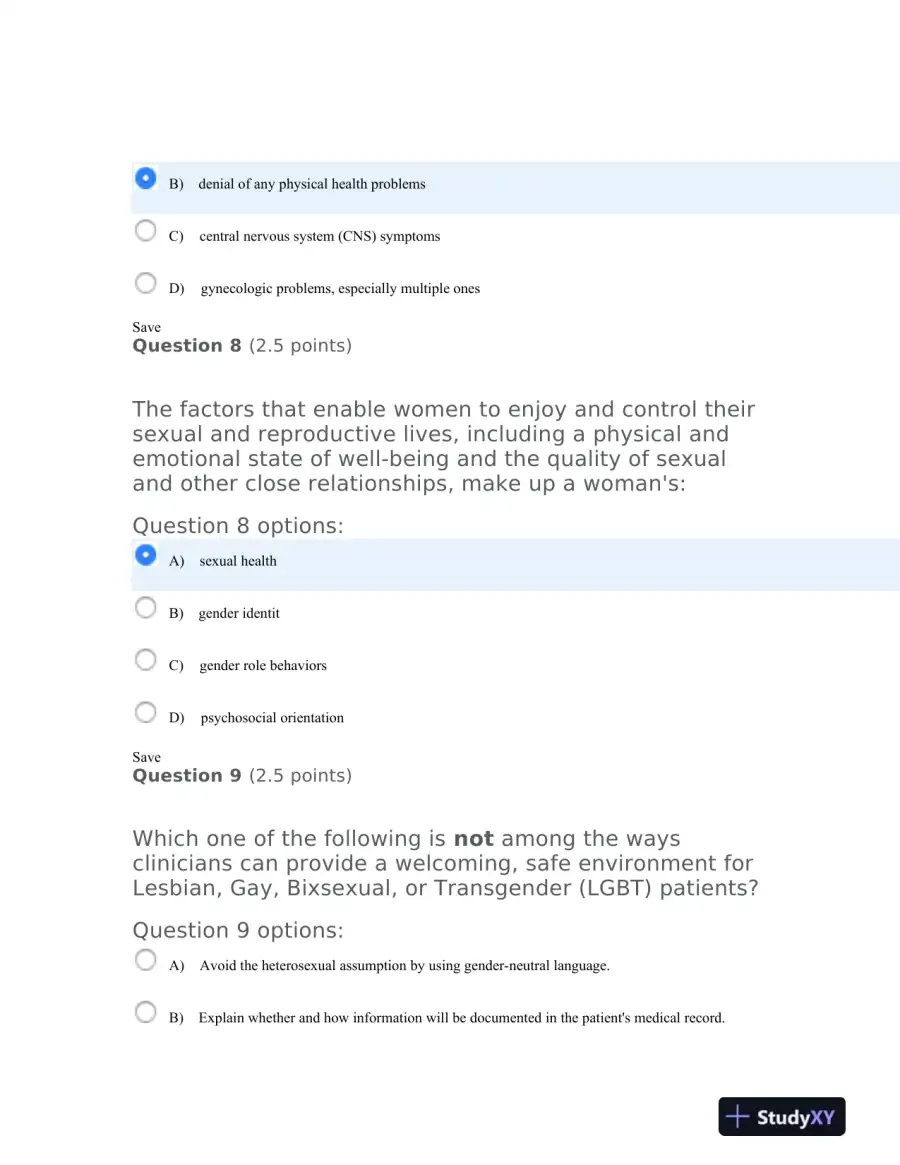 B)denial of any physical health problemsC)central nervous system (CNS) symptomsD)gynecologic problems, especially multiple onesSaveQuestion 8(2.5 points)The factors that enable women to enjoy and control theirsexual and reproductive lives, including a physical andemotional state of well-being and the quality of sexualand other close relationships, make up a woman's:Question 8 options:A)sexual healthB)gender identitC)gender role behaviorsD)psychosocial orientationSaveQuestion 9(2.5 points)Which one of the following isnotamong the waysclinicians can provide a welcoming, safe environment forLesbian, Gay, Bixsexual, or Transgender (LGBT) patients?Question 9 options:A)Avoid the heterosexual assumption by using gender-neutral language.B)Explain whether and how information will be documented in the patient's medical record.
Page 6
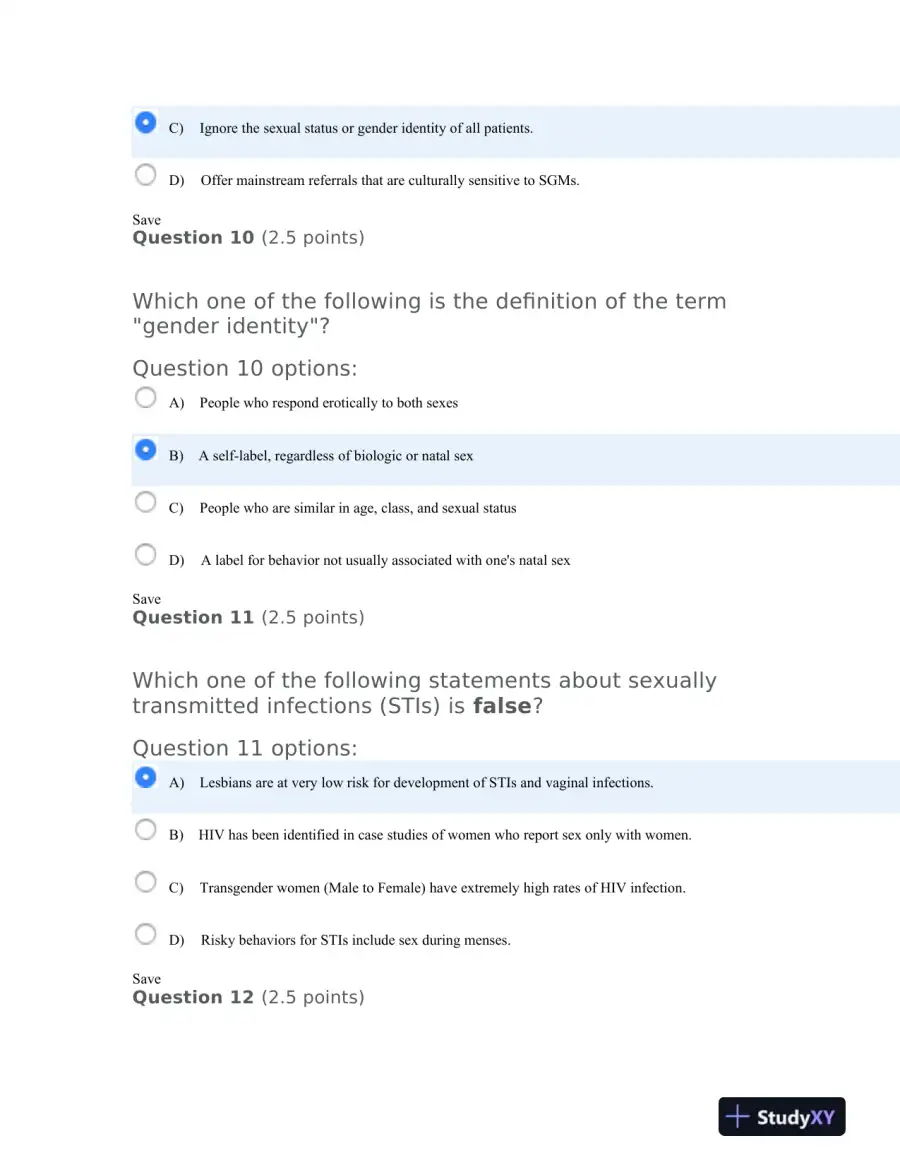 C)Ignore the sexual status or gender identity of all patients.D)Offer mainstream referrals that are culturally sensitive to SGMs.SaveQuestion 10(2.5 points)Which one of the following is the definition of the term"gender identity"?Question 10 options:A)People who respond erotically to both sexesB)A self-label, regardless of biologic or natal sexC)People who are similar in age, class, and sexual statusD)A label for behavior not usually associated with one's natal sexSaveQuestion 11(2.5 points)Which one of the following statements about sexuallytransmitted infections (STIs) isfalse?Question 11 options:A)Lesbians are at very low risk for development of STIs and vaginal infections.B)HIV has been identified in case studies of women who report sex only with women.C)Transgender women (Male to Female) have extremely high rates of HIV infection.D)Risky behaviors for STIs include sex during menses.SaveQuestion 12(2.5 points)
Page 7
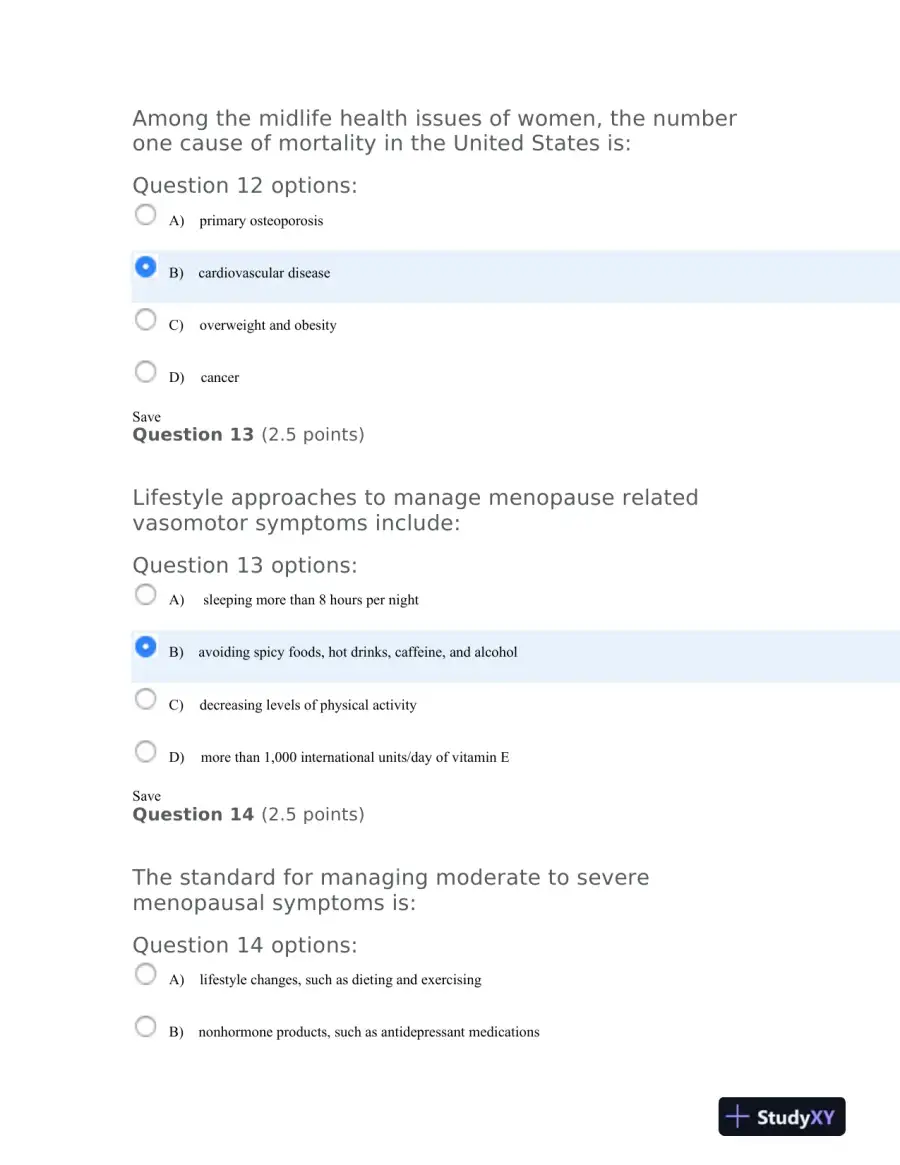 Among the midlife health issues of women, the numberone cause of mortality in the United States is:Question 12 options:A)primary osteoporosisB)cardiovascular diseaseC)overweight and obesityD)cancerSaveQuestion 13(2.5 points)Lifestyle approaches to manage menopause relatedvasomotor symptoms include:Question 13 options:A)sleeping more than 8 hours per nightB)avoiding spicy foods, hot drinks, caffeine, and alcoholC)decreasing levels of physical activityD)more than 1,000 international units/day of vitamin ESaveQuestion 14(2.5 points)The standard for managing moderate to severemenopausal symptoms is:Question 14 options:A)lifestyle changes, such as dieting and exercisingB)nonhormone products, such as antidepressant medications
Page 8
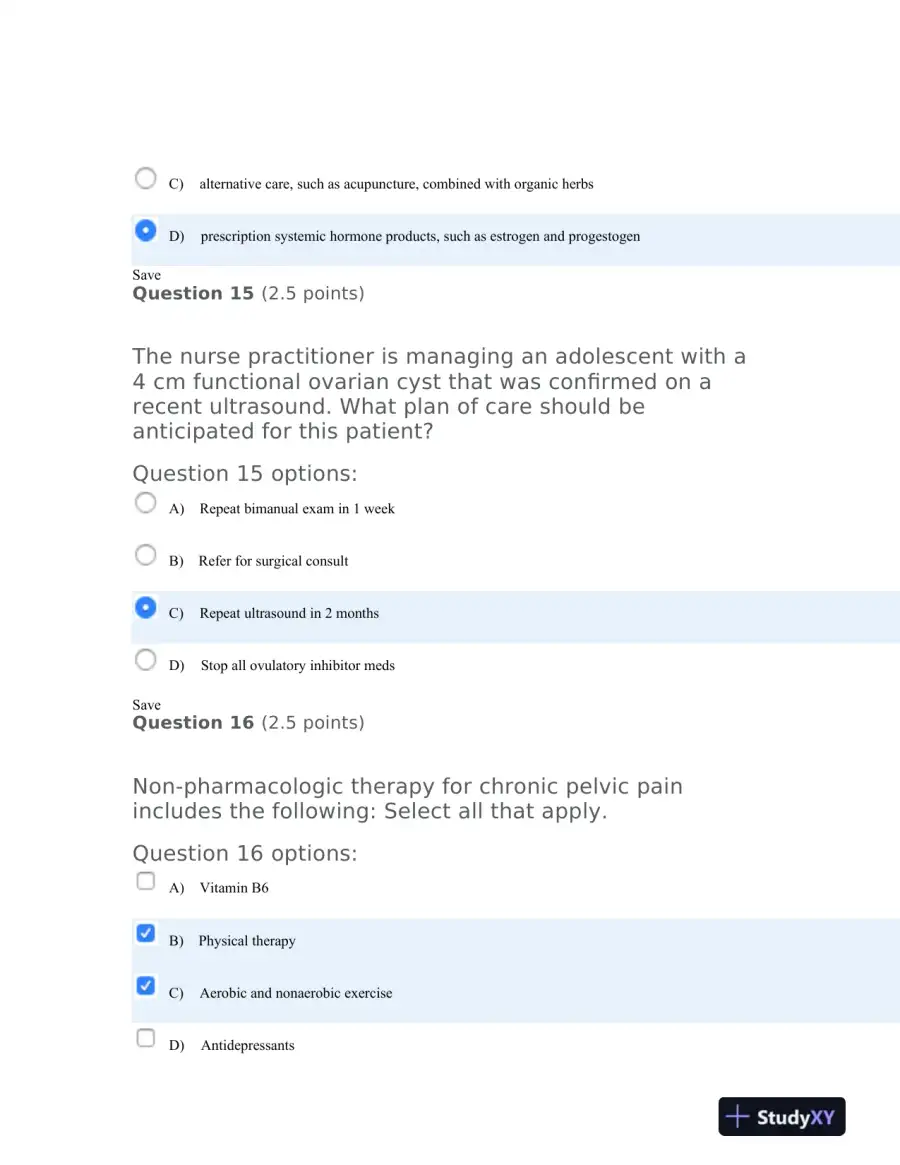 C)alternative care, such as acupuncture, combined with organic herbsD)prescription systemic hormone products, such as estrogen and progestogenSaveQuestion 15(2.5 points)The nurse practitioner is managing an adolescent with a4 cm functional ovarian cyst that was confirmed on arecent ultrasound. What plan of care should beanticipated for this patient?Question 15 options:A)Repeat bimanual exam in 1 weekB)Refer for surgical consultC)Repeat ultrasound in 2 monthsD)Stop all ovulatory inhibitor medsSaveQuestion 16(2.5 points)Non-pharmacologic therapy for chronic pelvic painincludes the following: Select all that apply.Question 16 options:A)Vitamin B6B)Physical therapyC)Aerobic and nonaerobic exerciseD)Antidepressants
Page 9
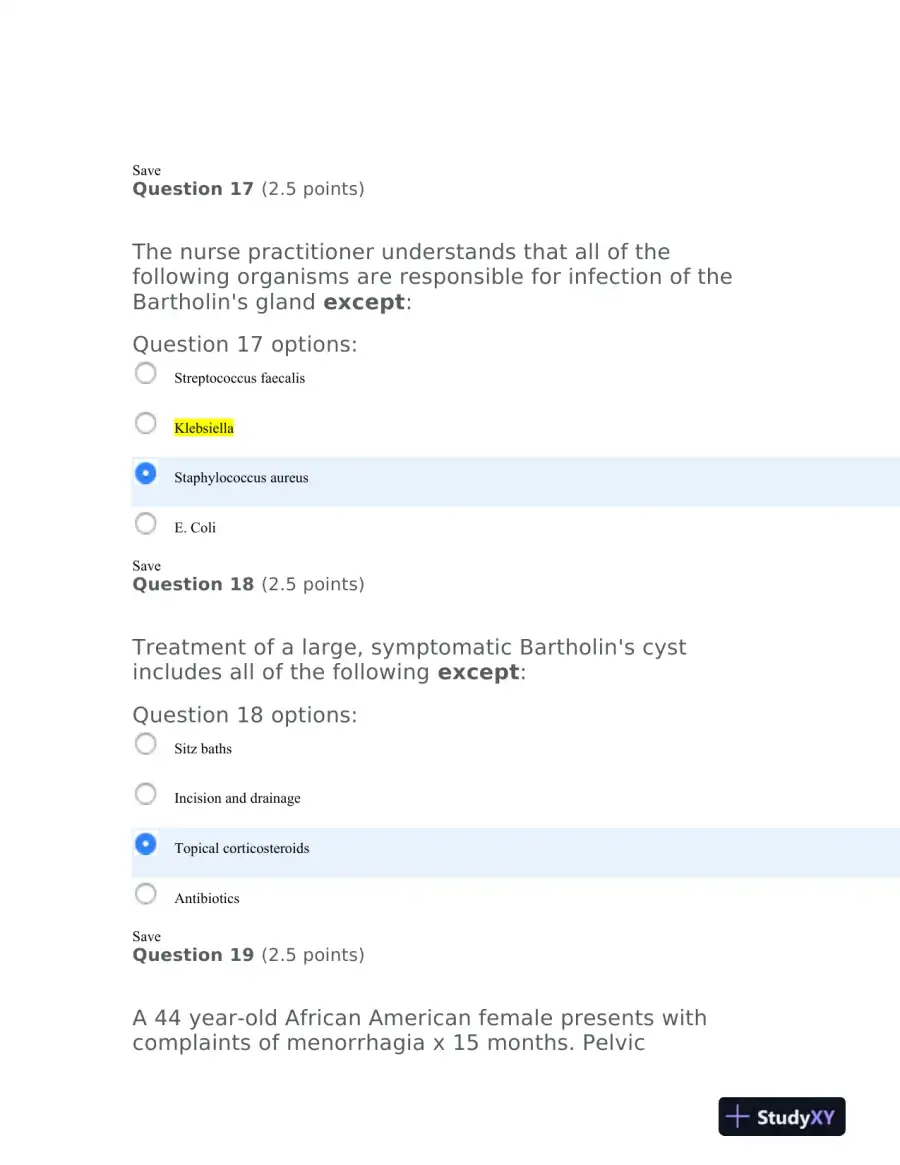 SaveQuestion 17(2.5 points)The nurse practitioner understands that all of thefollowing organisms are responsible for infection of theBartholin's glandexcept:Question 17 options:Streptococcus faecalisKlebsiellaStaphylococcus aureusE. ColiSaveQuestion 18(2.5 points)Treatment of a large, symptomatic Bartholin's cystincludes all of the followingexcept:Question 18 options:Sitz bathsIncision and drainageTopical corticosteroidsAntibioticsSaveQuestion 19(2.5 points)A 44 year-old African American female presents withcomplaints of menorrhagia x 15 months. Pelvic
Page 10
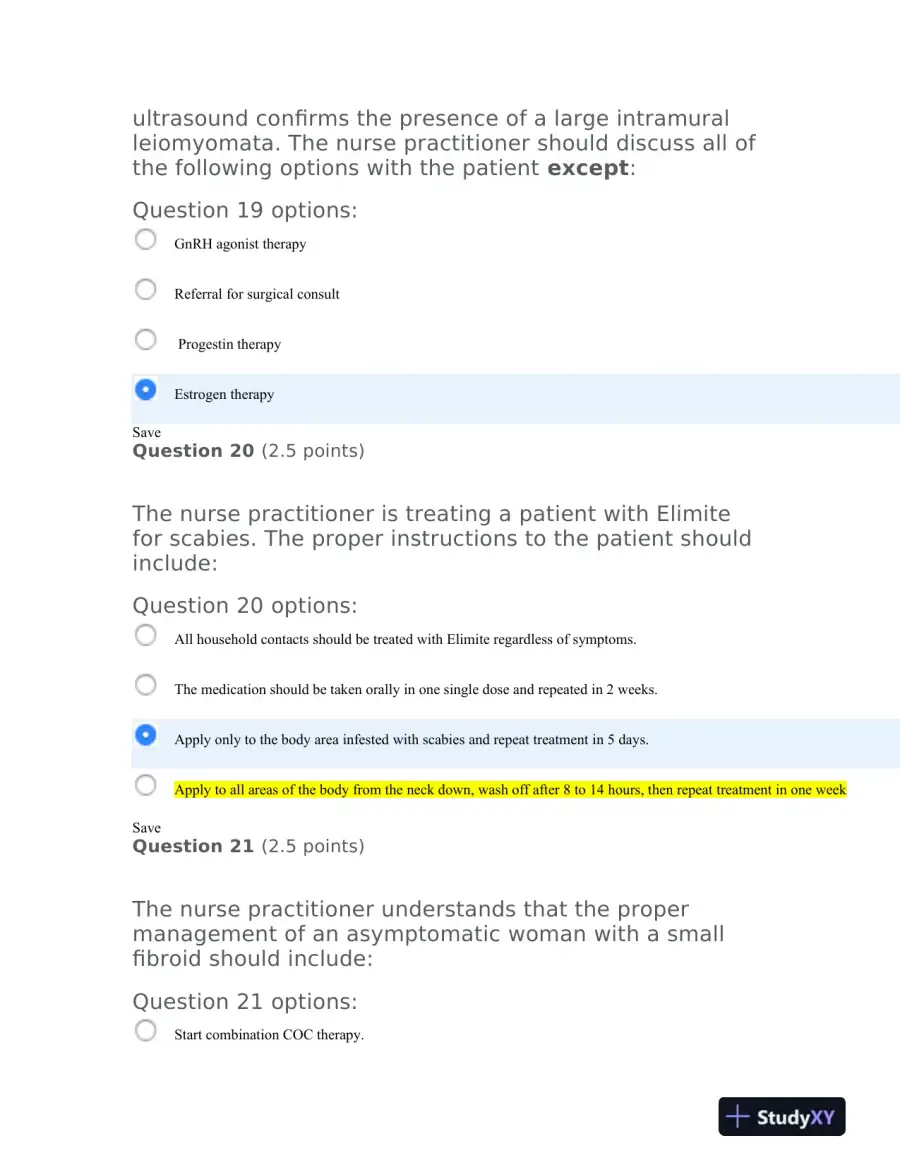 ultrasound confirms the presence of a large intramuralleiomyomata. The nurse practitioner should discuss all ofthe following options with the patientexcept:Question 19 options:GnRH agonist therapyReferral for surgical consultProgestin therapyEstrogen therapySaveQuestion 20(2.5 points)The nurse practitioner is treating a patient with Elimitefor scabies. The proper instructions to the patient shouldinclude:Question 20 options:All household contacts should be treated with Elimite regardless of symptoms.The medication should be taken orally in one single dose and repeated in 2 weeks.Apply only to the body area infested with scabies and repeat treatment in 5 days.Apply to all areas of the body from the neck down, wash off after 8 to 14 hours, then repeat treatment in one weekSaveQuestion 21(2.5 points)The nurse practitioner understands that the propermanagement of an asymptomatic woman with a smallfibroid should include:Question 21 options:Start combination COC therapy.
Page 11
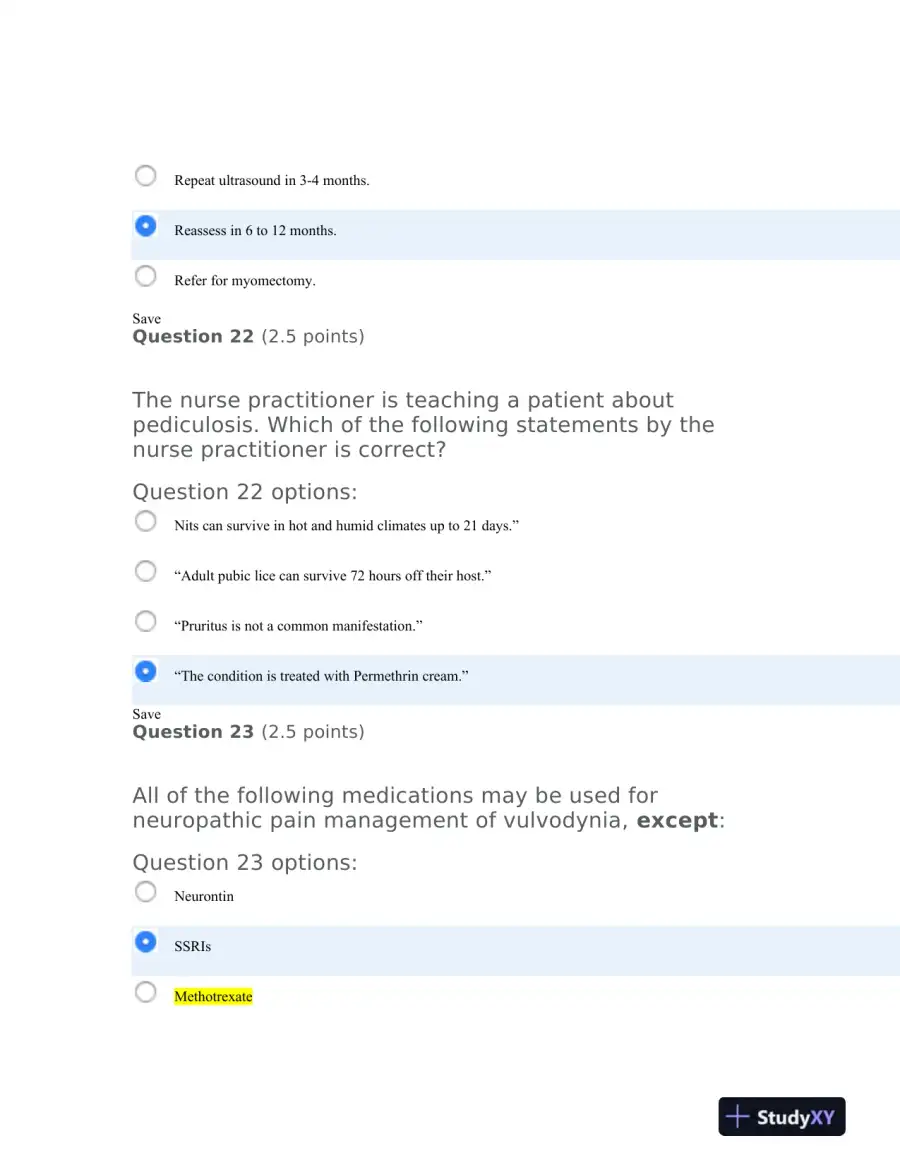 Repeat ultrasound in 3-4 months.Reassess in 6 to 12 months.Refer for myomectomy.SaveQuestion 22(2.5 points)The nurse practitioner is teaching a patient aboutpediculosis. Which of the following statements by thenurse practitioner is correct?Question 22 options:Nits can survive in hot and humid climates up to 21 days.”“Adult pubic lice can survive 72 hours off their host.”“Pruritus is not a common manifestation.”“The condition is treated with Permethrin cream.”SaveQuestion 23(2.5 points)All of the following medications may be used forneuropathic pain management of vulvodynia,except:Question 23 options:NeurontinSSRIsMethotrexate
Page 12
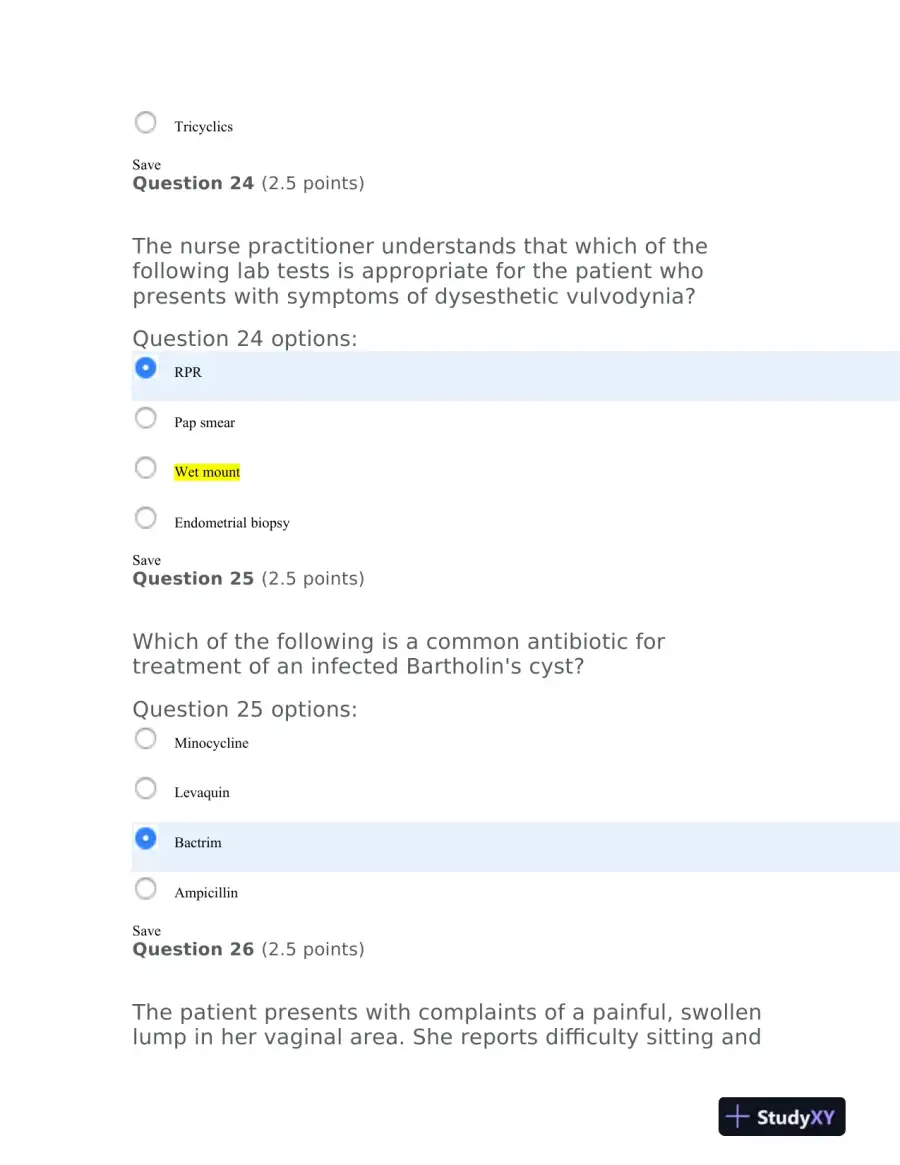 TricyclicsSaveQuestion 24(2.5 points)The nurse practitioner understands that which of thefollowing lab tests is appropriate for the patient whopresents with symptoms of dysesthetic vulvodynia?Question 24 options:RPRPap smearWet mountEndometrial biopsySaveQuestion 25(2.5 points)Which of the following is a common antibiotic fortreatment of an infected Bartholin's cyst?Question 25 options:MinocyclineLevaquinBactrimAmpicillinSaveQuestion 26(2.5 points)The patient presents with complaints of a painful, swollenlump in her vaginal area. She reports difficulty sitting and
Page 13
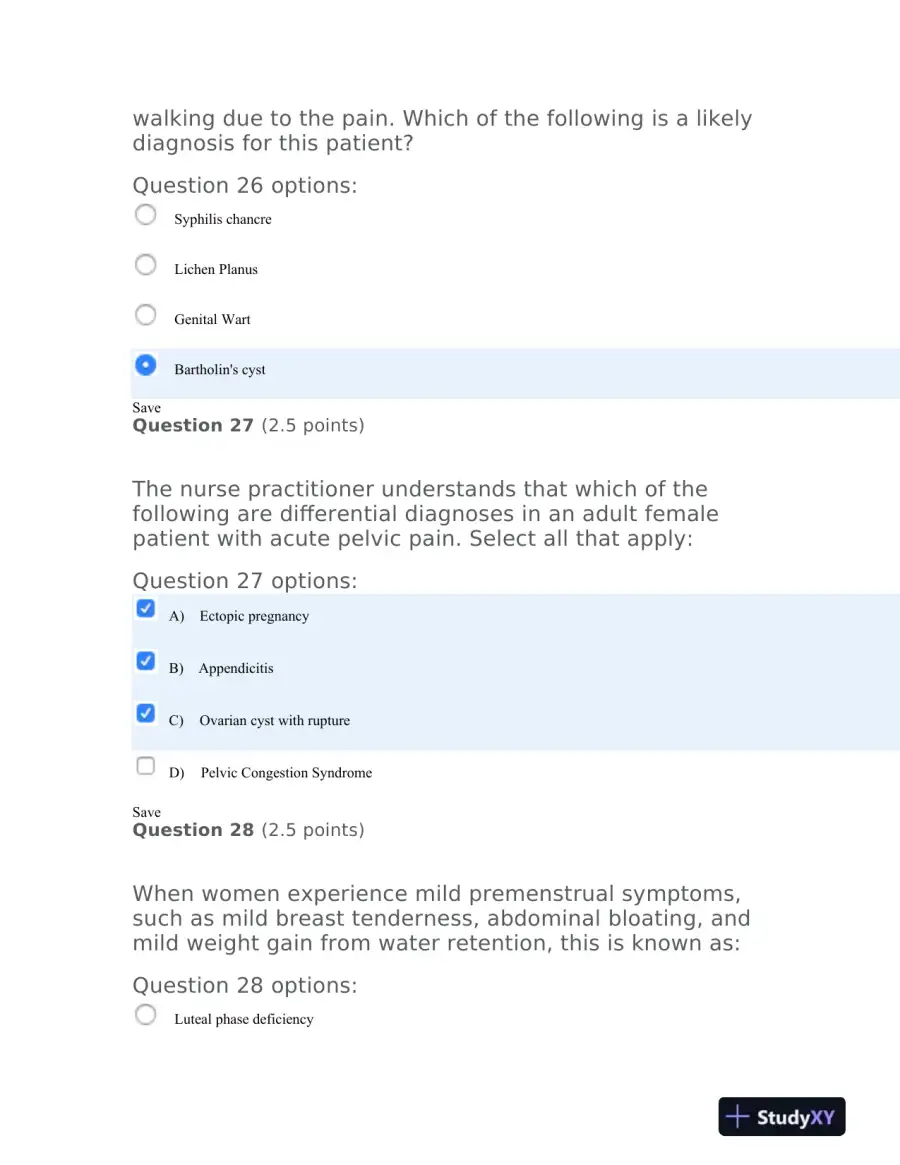 walking due to the pain. Which of the following is a likelydiagnosis for this patient?Question 26 options:Syphilis chancreLichen PlanusGenital WartBartholin's cystSaveQuestion 27(2.5 points)The nurse practitioner understands that which of thefollowing are differential diagnoses in an adult femalepatient with acute pelvic pain. Select all that apply:Question 27 options:A)Ectopic pregnancyB)AppendicitisC)Ovarian cyst with ruptureD)Pelvic Congestion SyndromeSaveQuestion 28(2.5 points)When women experience mild premenstrual symptoms,such as mild breast tenderness, abdominal bloating, andmild weight gain from water retention, this is known as:Question 28 options:Luteal phase deficiency
Page 14
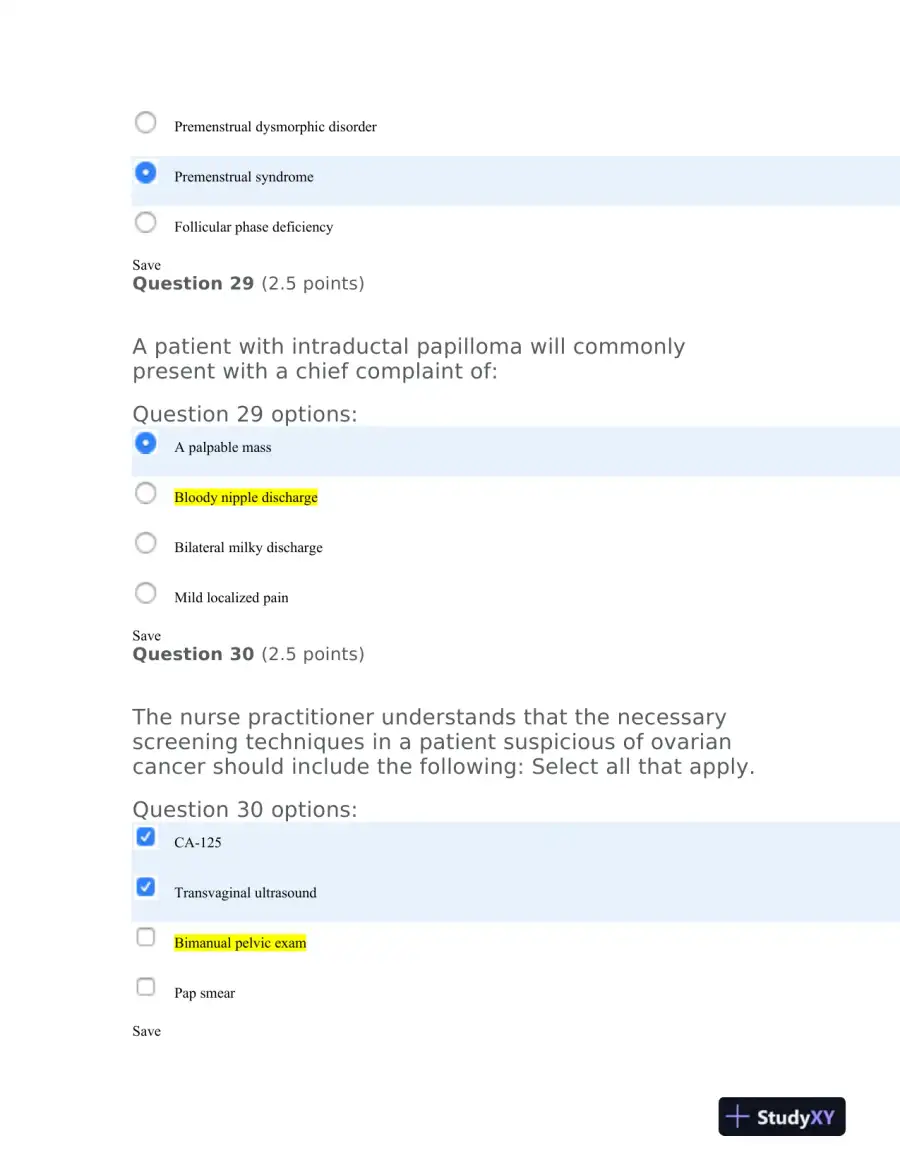 Premenstrual dysmorphic disorderPremenstrual syndromeFollicular phase deficiencySaveQuestion 29(2.5 points)A patient with intraductal papilloma will commonlypresent with a chief complaint of:Question 29 options:A palpable massBloody nipple dischargeBilateral milky dischargeMild localized painSaveQuestion 30(2.5 points)The nurse practitioner understands that the necessaryscreening techniques in a patient suspicious of ovariancancer should include the following: Select all that apply.Question 30 options:CA-125Transvaginal ultrasoundBimanual pelvic examPap smearSave
32 more pages in the full document
Unlock it once and it stays in your library, ready to chat with or turn into flashcards.
Unlock the full documentMore Assessment Technologies Institute study materials
See all Past Exams
ATI Maternal Newborn Practice Exam with Answers (210 Solved Questions)
Assessment Technologies Institute
114 pages141downloadsFeb 2025 Past Exams
ATI PN Pediatrics Proctored Exam Version 8 with Answers (166 Solved Questions)
Assessment Technologies Institute
40 pages126downloadsFeb 2025 Past Exams
2023 ATI NGN Comprhensive Exit Exam with Answers (87 Solved Questions)
Assessment Technologies Institute
40 pages115downloadsFeb 2025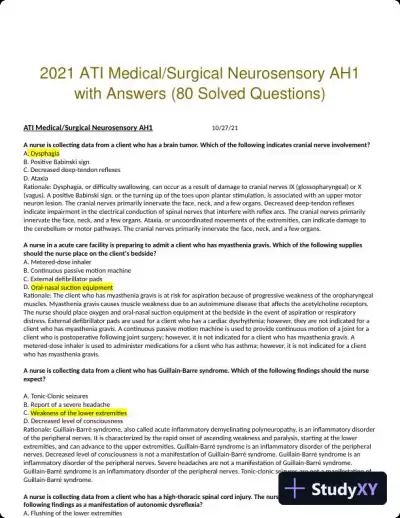 Past Exams
2021 ATI Medical/Surgical Neurosensory AH1 with Answers (80 Solved Questions)
Assessment Technologies Institute
19 pages106downloadsFeb 2025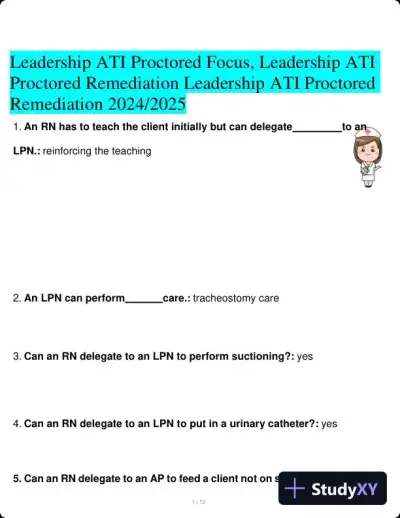 Past Exams
2024-2025 ATI Leadership Proctored Focus Practice Exam with Answers (63 Solved Questions)
Assessment Technologies Institute
27 pages99downloadsFeb 2025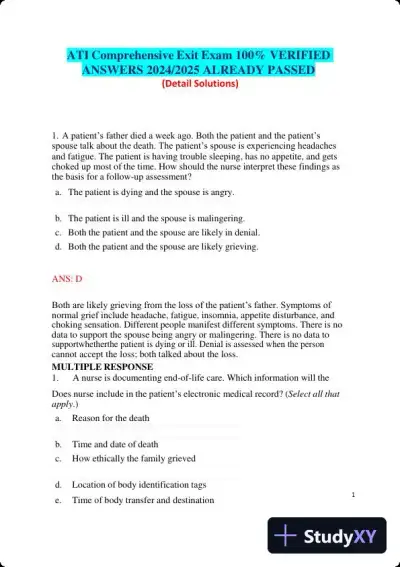 Past Exams
2024-2025 ATI Comprehensive Exit Exam with Answers (13 Solved Questions)
Assessment Technologies Institute
6 pages77downloadsFeb 2025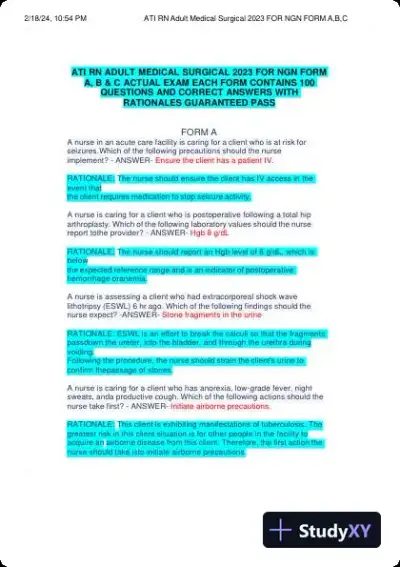 Past Exams
2023 ATI RN Adult Medical Surgical For NGN Form A, B, C with Answers (21 Solved Questions)
Assessment Technologies Institute
9 pages71downloadsFeb 2025 Past Exams
2022-2023 ATI Med Surg Proctored Exam Retake with Answers (111 Solved Questions)
Assessment Technologies Institute
37 pages68downloadsFeb 2025
Study this document with CramX
Once it is in your library, every tool can work from it.