

NR511 Clinical Analysis Final Exam With Answers (190 Solved Questions)
- Medicine
- Chamberlain College of Nursing
- 30 pages
- Shared May 2025
NR511 Clinical Analysis Final Exam With Answers allows you to practice under timed conditions with real past papers.
Preview 10 of 30 pages
See the first 10 pages exactly as they appear in the document.
Page 1 Read page 1 as text
NR i 511 i / i NR511 i FINAL i EXAM i 1 The i effectiveness i of i benzodiazepines i in i treating i anxiety i disorders i suggests i that i which i of i the i following i neurotransmitters i plays i a i role i in i anxiety? Gamma - aminobutyric i acid i (GABA) The i criteria i for i diagnosing i generalized i anxiety i disorder i in i the i American i Psychiatric i Associations i Diagnostic i and i Statistical i Manual i of i Mental i Disorders, i 5th i edition i (text i revision) i state i that i excessive i worry i or i apprehension i must i be i present i more i days i than i n ot i for i at i least? 6 i months A i 20 - year - old i woman i is i seen i in i the i clinic i because i her i boyfriend i was i found i to i have i gonorrhea. i Which i of i the i following i is i the i treatment i of i choice i for i gonorrhea? a. Ceftriaxone b. Doxycycline c. Acyclovir d. Metronidazole i Ceftriaxone A i patient i is i seen i in i the i clinic i with i a i chief i complaint i of i hematuria. i To i make i a i differential i diagnosis, i which i of i the i following i questions i should i be i asked? a. "Do i you i have i a i history i of i liver i disease?" b. "What i medications i are i you i currently i taking?" c. "Have i you i noticed i swelling i in i your i ankles?" d. All i of i the i above "What i medications i are i you i currently i taking" A i patient i is i seen i in i the i clinic i with i hematuria i confirmed i on i microscopic i examination. i The i clinician i should i inquire i about i the i ingestion i of i which i of i these i substances i that i might i be i the i cause i of i hematuria? a. NSAIDs b. Beets c. Vitamin i A d. Red i meat i NSAIDS A i 27 - year - old i female i presents i with i a i chief i complaint i of i burning i and i pain i on i urination. i She i has i no i previous i history i of i urinary i tract i infection i (UTI). i What i are i some i additional i symptoms i consistent i with i a i diagnosis i of i lower i UTI? a. Back i and i abdominal i pain b. Fever, i chills, i costovertebral i angle i (CVA) i tenderness
Page 2 Page 3 Read page 3 as text
c. Blood i in i urine i and i frequency d. Foul - smelling i discharge, i perineal i itch i Blood i in i urine i ad i frequency A i 30 - year - old i patient i presents i with i pain i on i urination. i The i urine i microscopy i of i unspun i urine i shows i greater i than i 10 i leukocytes/mL, i and i a i dipstick i is i positive i for i nitrites. i What i is i the i probable i diagnosis? i a. i Lower i urinary i tract i infection b. Chlamydia i infection c. Candidiasis d. Pyelonephritis Lower i urinary i tract i infection A i patient i presents i with i CVA i tenderness i and i a i several - day i history i of i high i fever, i chills, i and i dysuria. i Which i of i the i following i diagnoses i is i most i likely i given i the i above i information? a. Pyelonephritis b. Cystitis c. Renal i calculi d. Bladder i tumor i Pyelonephritis A i patient i is i diagnosed i with i urge i incontinence. i Before i prescribing i Detrol i XL, i the i provider i should i question i the i patient i about i which i of i these i contraindications i to i this i medication? a. Diarrhea b. Parkinson's i disease c. Closed - angle i glaucoma d. Breast i cancer i Closed - angle i glaucoma A i patient i is i seen i in i the i office i complaining i of i severe i flank i pain. i The i clinician i should i assess i this i patient i for i which i risk i factor i for i kidney i stones? a. Hypertension b. Constipation c. Tubal i ligation d. Diabetes i Hypertensio n A i patient i is i diagnosed i with i overactive i bladder. i Which i of i the i following i instructions i should i be i given i to i this i woman? a. i "Limit i the i amount i of i water i that i you i drink." i b. i "Eliminate i caffeine i from i your i diet." c. i "Wear i panty i liners." d. i All i of i the i above Eliminate i caffeine i from i your i diet
Page 4 Read page 4 as text
A i 34 - year - old i patient i was i treated i for i a i UTI i and i has i not i responded i to i antibiotic i therapy. i Which i of i the i following i actions i should i be i taken i next? a. Send i a i urine i specimen i for i microscopy i and i evaluate i for i fungal i colonies. b. Increase i the i dose i of i antibiotic. c. Order i a i cytoscopy. d. Order i a i different i antibiotic. Send i a i urine i specimen i for i microscopy i and i evaluate i for i fungal i colonies i Which i of i the i following i are i predisposing i factors i for i pyelonephritis? a. Pregnancy b. Dehydration c. Smoking d. Alkaline i urine i Pregnancy A i 42 - year - old i woman i is i seen i in i the i clinic i with i fever, i chills, i vomiting, i and i severe i dysuria. i She i is i diagnosed i with i acute i pyelonephritis. i How i should i this i patient i be i managed? a. i 3 - day i course i of i oral i antibiotics i b. i Hospitalization c. i Encourage i cranberry i juice i intake. d. i 6 - week i course i of i antibiotics i Hospitalization Oral i antibiotics i may i be i prescribed i in i mild i cases i of i acute i pyelonephritis, i characterized i by i the i absence i of i nausea i and i vomiting i or i signs i of i sepsis. i First - line i therapy i includes i ciprofloxacin i (Cipro) i 500 i mg i two i times i daily i for i 7 i days, i or i ciprofloxacin i extended - release i (Cipro i XR) i 1,000 i mg i daily i for i 7 i days, i or i levofloxacin i (Levaquin) i 750 i mg i daily i for i 5 i days. Hospitalization i may i be i indicated, i depending i on i the i patient's i ability i to i maintain i adequate i fluid i intake and i to i tolerate i oral i antibiotics, i along i with i the i severity i of i the i symptoms i and i evidence i of i bacteremia. Hospitalization i of i patients i who i are i pregnant, i vomiting, i or i dehydrated i should i be i strongly i considered. Likewise, i the i patient's i degree i of i systemic i illness i (bacteremia i or i urosepsis), i age, i history i of i chronic disease, i or i nonadherence i to i therapy i may i lead i to i the i assessment i that i hospitalization i is i necessary. Ninety - i five i percent i of i patients i demonstrate i a i good i response i within i 48 i hours i to i IV i antibiotic i treatment and i may i be i discharged i on i appropriate i oral i medication, i once i urine i culture i and i antibiotic i sensitivity results i are i available i and i subsequent i antimicrobial i therapy i may i be i narrowed i in i spectrum. A i patient i is i seen i with i a i sudden i onset i of i flank i pain i accompanied i by i nausea, i vomiting, i and i diaphoresis. i In i addition i to i nephrolithiasis, i which i of i the i following i should i be i added i to i the i list i of i differential i diagnoses? a. Pancreatitis b. Peptic i ulcer i disease
Page 5 Read page 5 as text
c. Diverticulitis d. All i of i the i above i All i of i the i above Which i of i the i following i instructions i should i be i given i to i the i patient i with i nephrolithiasis? i a. i Take i ibuprofen, i 600 i mg i every i 8 i hours. b. Take i Tums® i for i stomach i upset. c. Drink i more i black i tea. d. Increase i intake i of i vegetables, i like i spinach. i Take i ibuprofen, i 600 i mg i every i 8 i hours Which i of i the i following i patients i is i at i risk i for i developing i urinary i tract i cancer? a. The i 45 - year - old i woman i who i is i 100 i lbs i overweight b. The i 78 - year - old i man i who i smokes i three i packs i of i cigarettes i a i day c. The i 84 - year - old i man i who i worked i in i the i asbestos i mines i d. i All i of i the i above All i of i the i above Obesity; i exposure i to i asbestos, i cadmium, i and/or i gasoline; i the i use i of i phenacetin - i and i aspirin - containing i analgesics; i and i chronic i hemodialysis i for i acquired i polycystic i kidney i disease i are i all i risk i factors i for i renal i cell i carcinoma. i Cigarette i smoking i has i a i 25% i to i 30% i correlation i with i the i development i of i renal i cell i carcinoma. An i 86 - year - old i woman i is i seen i in i the i clinic i for i recurrent i hematuria. i The i provider i suspects i bladder i cancer. i Which i of i the i following i data i from i the i history i is i considered i a i risk i factor i for i this i type i of i cancer? a. History i of i alcoholism b. Sedentary i lifestyle c. Obesity d. 65 - year i smoking i history i 65 - year i smoking i history Which i of i the i following i diagnostic i tests i should i be i ordered i for i a i patient i suspected i of i having i bladder i cancer? a. i Kidneys, i ureter, i bladder i x - ray i b. i Cystoscopy i with i biopsy c. i Magnetic i resonance i imaging d. i Urine i tumor i marker i (NMP22) i Cystoscopy i with i biopsy A i 78 - year - old i man i is i diagnosed i with i Stage i D i bladder i cancer i and i asks i the i provider i what i that i means. i Which i is i the i best i response? a. "There i is i no i such i thing i as i Stage i D i cancer." b. "You i have i cancer i that i has i spread i to i the i surrounding i tissue."
Page 6 Read page 6 as text
c. "Your i cancer i has i spread i to i other i organs." d. "Your i cancer i can i be i cured i by i removing i your i bladder." i "Your i cancer i has i spread i to i other i organs" In i general, i TRANSITIONAL i CELL i CARCINOMAS i are i staged i from i A i to i D, i according i to i level i of i invasion: i stage i 0 i tumors i are i confined i to i the i mucosa; stage i A i tumors i invade i the i lamina i propria; i stage i B i tumors i invade i the i muscular i layer; stage i C i tumors i extend i to i the i peripelvic i fat i or i renal i parenchyma; i and i stage i D i indicates i metastatic i disease. The i tumor - node - metastasis i (TNM) i system i of i the i American i Joint i Committee i on i Cancer i may i also i be i used, i with i nodal i metastases i reflecting i stage i IV i cancer. i When i transitional i cell i carcinomas i are i looked i at i as i a i whole, i in i situ i disease i has i a i 5 - year i survival i rate i of i 95%, i localized i disease i nearly i 90%, i regional i disease i just i over i 60%, i and i distant i disease i only i 17% Hema turia i differential i diagnosis i include? UTI, i pylyonephritis, i cancer, i BPH i Hematuria i physical i exam i should i include? Abdominal i exam, i tenderness, i massess, i CVA i tenderness, i pelvic/prostate i exam i Diagnostic i tests i needed i in i evaluation i of i hematuria? UA, i C&S, i CMP, i BMP, i IVP i intravenous i pyelogram, i cystoscopy, i US, i CT i scan Hematuria i management i and i follow - up If i bacterial i such i as i UTI - i antibiotic i therapy **if i not i further i evaluation i refer i to i urology i or i nephrology i Lower i UTI i occurs i where? urethra, i bladder, i prostate Most i common i pathogen i of i UTI i includes? E.coli Clinical i presentation i of i UTI i S/S? dysuria, i urinary i frequency/urgency, i nocturia, i hematuria, i low i back i or i suprapubic i pain, i urinary i incontinence, i foul i smelling i urine **elderly i alterned i mental i status i may i be i only i manifestation!
Page 7 Read page 7 as text
Clean i catch i urine i sample i showing i presence i of i bacteria **>100 i organisms/ml i with i presence i of i clinical i symptoms What i diagnostic i tests i would i one i use i for i UTI? *Urine i culture i may i be i indicated i if i complicated i infection i is i suspected, i if i atypical i symptoms i are i present i or i if i symtpoms i persist i or i recur i within i a i month i of i pt i recieving i empiric i course i of i antibiotics. What i antibiotics i would i be i prescribed i for i an i uncomplicated i UTI? Bactrim i (TMP - SMP) i 160/800 i mg i BID i for i 3 i days **for i pts i with i no i drug i allergies, i previous i hospitalization i or i antibioitc i use i in i 3 i months Macrobid i (Nitrofurantoin) i 100 i mg i BID i x i 7 i days i used i as i an i alternative i for i pts i with i sulfa i allergies i or i those i with i previous i antibiotics i within i last i 3 i months Fluoroquinolones i such i as i Cipro i 250 i mg i BID i x i 3 i days i or i levaquin i 250 i mg i daily i x i 3 i days i What i would i you i treat i a i patient i with i a i fungal i UTI? What i is i usually i the i cause? Diflucan i (Fluconazole) i 200 i mg i PO i daily i for i 7 - 14 i days. **usuallyis i associated i with i indwelling i catheter i ALMOST i HALF i CASES i RESOLVE i ON i THEIR i OWN i WHEN i CATHETER i IS i REMOVED i AND i does i not i need i treatment. What i is i pyelonephritis? infection i of i the i kidney i that i is i characterized i by i infection i within i renal i pelvis, i tubules, i or i interstial i tissue i that i may i be i unilateral i or i bilateral What i are i the i pre - disposing i risk i factors i for i pyelonephritis? i a. i Pregnancy b. Dehydration c. Smoking d. Alkaline i urine i Pregnancy increased i in i patients i with i predisposing i factors i including i anatomical i abnormalities i such i as i ureterovesical i reflux, i urinary i obstruction, stress i incontinence, multiple i or i recurrent i urinary i tract i infections i (UTIs), i renal i disease, kidney i trauma,
Page 8 Read page 8 as text
pregnancy, i and metabolic i disorders i such i as i diabetes i mellitus. W hat i are i the i signs i and i symptoms i of i acute i pylonephritis sudden i onset i of i fever, i shaking, i chills, i n/v, i unilateral i or i localized i flank i pain, i fatigue, i diarrhea **largely i asymptomatic **elderly i pts i with i altered i mentation What i can i be i seen i on i physical i exam i for i pylonephritis? marked i tenderness i on i deep i abdominal i palpation **may i be i hypertensive. Diagnostics i needed i for i pylonephritis? dx i confirmed i through i UA i (positive i for i bacteria, i proteinuria, i leukocytes i esterase, i urinary i nitrates, i hematuria, i pyuria, i WBC i CASTS i (passage i through i nuetrophils i thorugh i renal i tubules) **Urine i culture i >100,000 i cfu/ml i (allowing i for i identification i of i causitive i organism) **MOST i IMPORTANT i is i WBC i CASTS *cystoscopy i with i ureteral i catheterization, i renal i ultrasound, i intravenous i pyelogram i What i assessment i is i performed i to i try i and i diagnose i pylonephritis? physical i exam: i Tenderness i on i deep i palpation/percussion i of i CVA i tenderness i (back) ** i pts i may i be i hypertensive What i antibiotics i should i be i used i for i pyleonephritis? Cipro i 500 i mg i BID i for i 7 i days i Cipro i XR i 1000mg i daily i for i 7 i days i Levaquin i 750 i mg i daily i for i 5 i days TX i for i kidney i stones i include? pain i relief i (oral i NSAIDS, i opiates, i antispasmodics, i warm i compresses, i focused i breathing i diversional i therapy) *thiazide i diuretics i (calcium) i Allopurinol i (uric i acid) D i penicillamine i (cystine) increase i water i intake noninvasive i and i invasive i surgical i interventions
Page 9 Read page 9 as text
AVOID i TUMS, i loop i diuretics, i vitamin i supplements i Stress i incontinence i can i be i brought i on i easily i by? coughing i sneezing, i straining Management i of i stress i incontinence i includes? kegals i 40 - 60 i contractions i daily i (slow i tighten i 10 i seconds, i hold i 10 i seconds, i release i over i 10 i seconds) Pelvic i floor i muscle i training Vaginal i cones i or i pessaries lose i wt limit i fluids i in i evening MEDS: i vaginal i estrogen i Surgical i intervention Over i Active i Bladder i medications i include? Anticholinergic/Antimuscarinic i medications Oxybutynin - i Ditropan i and i XL i PO i or i patch i Tolterodine i (Detrol i and i Detrol i LA) Side i effects: i dry i mouth, i constipation, i blurred i vision The i result i of i the i patient's i 24 - hour i urine i for i protein i was i 4.2 i g/day. i The i clinician i should i take i which i of i the i following i actions? a. Repeat i the i test. b. Refer i to i a i nephrologist. c. Measure i the i serum i protein. d. Obtain i a i blood i urea i nitrogen i (BUN) i and i creatinine. Refer i to i a i nephrologist. If i the i excretion i rate i is i above i 3.0 i to i 3.5 i g/day, i the i patient, i by i definition, i has i nephrotic i syndrome i and i must i be i referred i to i a i nephrologist. Can i lead i to i AKI, i End i stage i renal i failure i and i hypertension
Page 10 Read page 10 as text
A i patient i is i seen i complaining i of i "leaking i urine i when i I i sneeze." i Which i of i the i following i actions i should i the i clinician i take i first? a. Order i a i cystometrogram. b. Obtain i a i computed i tomography i scan. i c. i Instruct i the i patient i on i Kegel i exercises. d. i Prescribe i imipramine. Instruct i the i patient i on i Kegel i exercises. Which i of i the i following i information i is i essential i before i prescribing i Bactrim i DS i to i a i 24 - year - old i woman i with i a i UTI? a. Last i menstrual i period b. Method i of i birth i control c. Last i unprotected i sexual i contact i d. i All i of i the i above All i of i the i above Certain i patterns i of i pain, i numbness, i and i tingling i are i associated i with i carpal i tunnel i syndrome. Katz i hand i diagram Tinel i sign Median i nerve i integrity Tinel i sign i is i tested i by i striking i the i patient's i wrist i with i your i index i or i middle i finger i where i the i median i nerve i passes i under i the i flexor i retinaculum i and i volar i carpal i ligament. A i tingling i sensation i radiating i from i the i wrist i to i the i hand i in i the i distribution i of i the i median i nerve i is i a i positive i Tinel i sign i and i is i suggestive i of i carpal i tunnel i syndrome. Median i Nerve i Integrity/ i Carpal i Tunnel i testing Tinel i sign, i Phalen, i Thumb i abduction Thumb i abduction Have i the i patient i place i the i hand i palm i up i and i raise i the i thumb i perpendicular i to i it. i Apply i downward i pressure i on i the i thumb i to i test i muscle i strength. Full i resistance i to i pressure i is i expected. i Weakness i is i associated i with i carpal i tunnel i syndrome. Phalen i test To i perform i the i Phalen i test, i ask i the i patient i to i hold i both i wrists i in i a i fully i palmar - flexed i position i with i the i dorsal i surfaces i pressed i together i for i 1 i minute Numbness i and i paresthesia i in i the i distribution i of i the i median i nerve i are i suggestive i of i carpal i tunnel i syndrome.
20 more pages in the full document
Unlock it once and it stays in your library, ready to chat with or turn into flashcards.
Unlock the full documentMore Medicine study materials
See all Past Exams
NR511 Differential Diagnosis and Primary Care Practicum Week 5 Quiz With Answers (15 Solved Questions)
Medicine
12 pagesMay 2025 Past Exams
2022 NR511 Clinical Analysis Final Exam Week 8 With Answers (100 Solved Questions)
Medicine
77 pagesMay 2025 Past Exams
NR511 Nursing Diagnosis Midterm Exam With Answers (401 Solved Questions)
Nursing
74 pagesMay 2025 Past Exams
2023-2024 NR511 Pharmacology Mid Term Exam Final Exam With Answers (79 Solved Questions)
Pharmacology
11 pagesMay 2025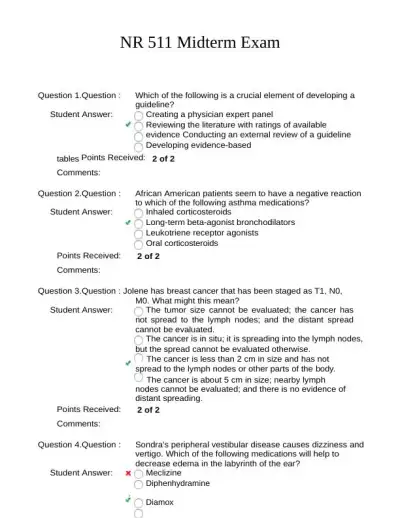 Past Exams
NR511 Healthcare Assessment Midterm Exam With Answers (15 Solved Questions)
Healthcare
4 pagesMay 2025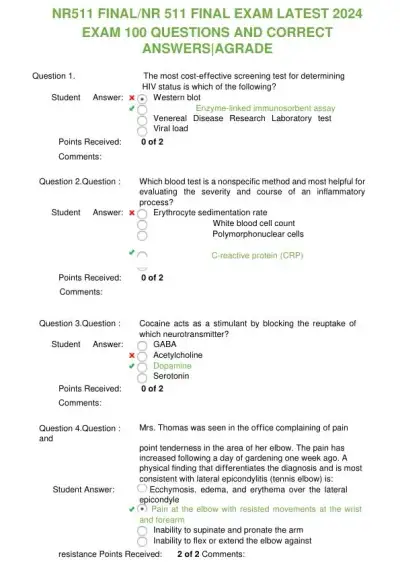 Past Exams
2024 NR511 Clinical Analysis Final Exam With Answers (99 Solved Questions)
Medicine
25 pagesMay 2025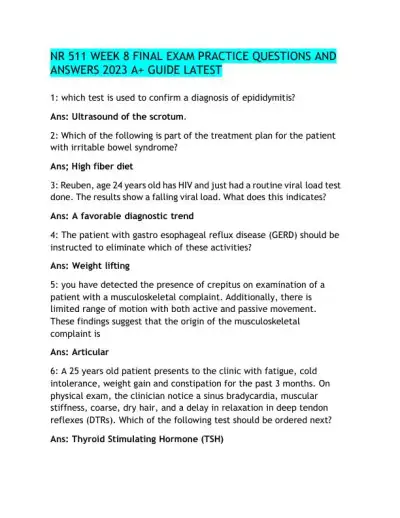 Past Exams
2023 NR511 Clinical Analysis Final Exam Week 8 With Answers (103 Solved Questions)
Medicine
16 pagesMay 2025 Exam Guides
Test Bank for The Human Body in Health and Illness, 7th Edition (Chapters 1-27)
Medicine
370 pages162downloadsFeb 2025
Study this document with CramX
Once it is in your library, every tool can work from it.