

Fundamental Accounting Principles, Vol 2, 15th Edition Test Bank
- Accounting
- 535 pages
- Shared May 2025
Gain a competitive edge with Fundamental Accounting Principles, Vol 2, 15th Edition Test Bank, a well-crafted guide that ensures thorough exam preparation.
Preview 16 of 535 pages
See the first 16 pages exactly as they appear in the document.
Page 1 Read page 1 as text
Exam Name___________________________________ MULTIPLE CHOICE. Choose the one alternative that best completes the statement or answers the question. 1) Intangible assets do not include: 1) A) Copyrights. B) Leaseholds. C) Trademarks. D) Goodwill. E) Patents. Answer: D Explanation: A) B) C) D) E) 2) Capital cost allowance: 2) A) Is not required for tax reporting. B) Is acceptable for financial reporting. C) Is not used in Canada. D) Is the income tax act equivalent of depreciation. E) All of these answers are correct. Answer: D Explanation: A) B) C) D) E) 3) Legal permissions for the extraction of oil and gas from the earth are known as: 3) A) Drilling rights. B) Patents. C) Trademarks. D) Leaseholds. E) Copyrights. Answer: A Explanation: A) B) C) D) E) 1
Page 2 Page 3 Read page 3 as text
4) The appropriate way to amortize goodwill is: 4) A) Goodwill is not amortized or depreciated. B) Straight-line over a maximum of 40 years. C) Double-declining-balance over a period not to exceed 20 years. D) Over the estimated useful life of the goodwill. E) Straight-line over a maximum of 20 years. Answer: A Explanation: A) B) C) D) E) 5) Residual value is: 5) A) The cost of an asset minus its accumulated depreciation. B) The same as an asset's service life. C) Another name for market value. D) An estimate of the asset's value at the end of its useful life. E) All of these answers are correct. Answer: D Explanation: A) B) C) D) E) 6) SportsWorld purchased property for $100,000. The property included a building, parking lot, and land. The building was appraised at $65,000; the land at $40,000; and the parking lot at $10,000. To the nearest dollar, the value of the land to be recorded in the books should be: 6) A) $48,696. B) $56,522. C) $36,364. D) $34,783. E) $40,000. Answer: D Explanation: A) B) C) D) E) 2
Page 4 Read page 4 as text
7) The useful life of a property, plant and equipment asset is: 7) A) Another term for its residual value. B) Is impossible to estimate. C) The length of time it is productively used in a company's operations. D) Measured by its potential inadequacy. E) All of these answers are correct. Answer: C Explanation: A) B) C) D) E) 8) The straight-line method and the double-declining-balance method of depreciation: 8) A) Produce the same total depreciation over an asset's useful life. B) Do not produce the same book value each year. C) Are both acceptable for GAAP. D) Allocate an asset's cost in a systematic and rational manner. E) All of these answers are correct. Answer: E Explanation: A) B) C) D) E) 9) Land improvements are: 9) A) Included in the land account. B) Assets that increase the usefulness of land, and like land are not depreciated. C) Never depreciated. D) Assets that increase the usefulness of land, but that have a limited useful life. E) Expensed in the period incurred. Answer: D Explanation: A) B) C) D) E) 3
Page 5 Read page 5 as text
10) Depreciation: 10) A) Is the process of allocating to expense the cost of property, plant and equipment. B) Measures physical deterioration of an asset. C) Measures the decline in market value of an asset. D) Is a cause of obsolescence. E) All of these answers are correct. Answer: A Explanation: A) B) C) D) E) 11) Natural resources: 11) A) Can be amortized. B) Include trees, mineral deposits, and oil and gas fields. C) Are long-term assets. D) Are consumed when used. E) All of these answers are correct. Answer: E Explanation: A) B) C) D) E) 12) SportsWorld paid $140,000 for a property. The property included land appraised at $67,500, land improvements appraised at $25,000, and a building appraised at $55,500. What should be the allocation of costs in the accounting records (round calculations to 3 decimals) ? 12) A) Land $79,500; land improvements, $32,600; building, $47,700. B) Land $62,000; land improvements, $23,800; building, $46,200. C) Land $63,840; land improvements, $23,660; building, $52,500. D) Land $62,000; land improvements, $23,000; building, $45,000. E) Land $87,500; land improvements; $35,000; building; $52,500. Answer: C Explanation: A) B) C) D) E) 4
Page 6 Read page 6 as text
13) Each year goodwill is examined to see if its value has been impaired. If the value has been impaired goodwill will: 13) A) Be depreciated. B) Increase. C) Not change. D) Be amortized. E) Decrease. Answer: E Explanation: A) B) C) D) E) 14) A main accounting issue for property, plant and equipment is: 14) A) Accounting for repairs and improvements to property, plant and equipment. B) The cost of property, plant and equipment. C) Disposal of property, plant and equipment. D) Testing property, plant and equipment for impairment. E) All of these answers are correct. Answer: E Explanation: A) B) C) D) E) 15) SportsWorld bought a new display case for $12,000 and was given a trade-in of $2,000 on an old display case. The old case had an original cost of $7,000 and accumulated depreciation of $4,000 to the date of trade-in. SportsWorld should record the new display case at: 15) A) $10,000. B) $10,500. C) $11,700. D) $12,000. E) $11,500. Answer: D Explanation: A) B) C) D) E) 5
Page 7 Read page 7 as text
16) A copyright: 16) A) Gives the owner the exclusive right to publish and sell a musical or literary work during the life of the creator plus 50 years. B) Is an exclusive right granted to its owner to manufacture and sell a machine or device, or to use a process, for 20 years. C) The amount by which the value of a company exceeds the fair market value of a company's net assets if purchased separately. D) Gives the owner the exclusive right to publish and sell a musical or literary work during the life of the creator plus 20 years. E) Is an exclusive right granted to its owner to manufacture and sell a machine or device, or to use a process, for 50 years. Answer: A Explanation: A) B) C) D) E) 17) Factor(s) that might limit an intangible asset's useful life include: 17) A) Contractual. B) Regulatory. C) Economic. D) Legal. E) All of the above answers are correct. Answer: E Explanation: A) B) C) D) E) 6
Page 8 Read page 8 as text
18) A patent: 18) A) The amount by which the value of a company exceeds the fair market value of a company's net assets if purchased separately. B) Gives the owner the exclusive right to publish and sell a musical or literary work during the life of the creator plus 20 years. C) Is an exclusive right granted to its owner to manufacture and sell a machine or device, or to use a process, for 20 years. D) Is an exclusive right granted to its owner to manufacture and sell a machine or device, or to use a process, for 50 years. E) Gives the owner the exclusive right to publish and sell a musical or literary work during the life of the creator plus 50 years. Answer: C Explanation: A) B) C) D) E) 19) An asset can be disposed of by: 19) A) Exchanging. B) Discarding. C) Donating it to charity. D) Selling. E) All of these answers are correct. Answer: E Explanation: A) B) C) D) E) 20) Creek Construction purchased a machine for $26,000. It traded in an old machine and received a $4,200 trade-in allowance. The old machine cost $24,000 and had accumulated depreciation of $16,000 to the date of trade-in. At what value should be new asset be recorded? 20) A) $30,200. B) $26,000. C) $29,800. D) $21,800. E) $24,000. Answer: B Explanation: A) B) C) D) E) 7
Page 9 Read page 9 as text
21) Subsequent capital expenditures: 21) A) Are often called improvements. B) Are expenditures making a property, plant and equipment asset more efficient. C) Are added to the cost of the asset. D) Often extend an asset's useful life. E) All of these answers are correct. Answer: E Explanation: A) B) C) D) E) 22) A depreciation method that produces larger depreciation charges during the early years of an asset's life and smaller charges in the later years is: 22) A) Book value depreciation. B) Accelerated depreciation. C) Straight-line depreciation. D) Units-of-production depreciation. E) Capital cost allowance. Answer: B Explanation: A) B) C) D) E) 23) When originally purchased, a vehicle had cost $23,000, with an estimated residual value of $1,500, and an estimated useful life of 8 years. After 4 years of straight-line depreciation, the estimated useful life was revised from 8 to 6 years, but with zero residual value. The depreciation expense in year 5 should be: 23) A) $5,543.75. B) $10,750.00. C) $6,125.00. D) $2.687.50. E) $2,856.25. Answer: C Explanation: A) B) C) D) E) 8
Page 10 Read page 10 as text
24) CamCo Ltd. leased floor space in a new office building. Rent will cost $10,000 per month for a ten-year lease, but some renovations are needed and will be paid by CamCo to customize the space. The renovations include installing walls to create a new office and boardroom (cost $8,000), new flooring (cost $5,800), painting (cost $1,500) and updated wiring to accommodate computer servers (cost $8,700). How should these costs be handled for accounting purposes by CamCo? 24) A) They should be capitalized as development costs. B) They should all be capitalized as leasehold improvements. C) They should all be charged to rent expense. D) Painting costs should be charged to rent expense and the other costs should be capitalized to leasehold improvements. E) Painting costs should be capitalized to leasehold improvements and other costs should be charged to rent expense. Answer: B Explanation: A) B) C) D) E) 25) A change in accounting estimate is: 25) A) Reflected only in current and future financial statements. B) Reflected in current and future financial statements and also requires modification of past statements. C) Both reflected only in current and future financial statements and a change in a calculated amount used in the financial statements resulting from new information or subsequent developments and from better insight or improved judgment. D) A change in a calculated amount used in the financial statements resulting from new information or subsequent developments and from better insight or improved judgment. E) None of these answers is correct. Answer: C Explanation: A) B) C) D) E) 9
Page 11 Read page 11 as text
26) On April 3, 2015, Rainbow Studios purchased a patent for $56,000. Its remaining legal life is 7 years and Rainbow Studios estimates that the patent will be useful for another 4 years. The correct adjusting entry to record amortization of the patent on December 31, 2015 is: 26) A) B) C) D) Answer: D Explanation: A) B) C) D) 27) The original cost of an asset minus accumulated depreciation is called: 27) A) Replacement cost. B) Historical cost. C) Current value. D) Book value. E) Present value. Answer: D Explanation: A) B) C) D) E) 28) At the end of the year, SportsWorld completed an asset impairment test and noted that a piece of equipment, with a book value of 12,000, has a recoverable value of $2,000. Calculate the amount of impairment loss on the equipment. 28) A) $2,160. B) $12,800. C) $10,000. D) $14,800. E) $2,000. Answer: C Explanation: A) B) C) D) E) 10
Page 12 Read page 12 as text
29) Property, plant and equipment are: 29) A) Current assets. B) Long-term investments. C) Used in business operations. D) Never depreciated. E) Natural resources. Answer: C Explanation: A) B) C) D) E) 30) SportsWorld uses straight-line depreciation for a piece of equipment that cost $12,000, had a trade-in value of $2,000, and a five-year service life. At the end of the third year, the trade-in value was revised to $1,200 and the useful life increased to a total of 6 years. Calculate the amount of depreciation expense for each of the remaining years of the asset's useful life. 30) A) $1,800. B) $1,467. C) $1,600. D) $1,000. E) $2,160. Answer: C Explanation: A) B) C) D) E) 31) A method that allocates an equal portion of the total depreciation for a property, plant and equipment asset to each unit produced is called: 31) A) Capital cost allowance. B) Straight-line depreciation. C) Units-of-production depreciation. D) Accelerated depreciation. E) Double-declining-balance depreciation. Answer: C Explanation: A) B) C) D) E) 11
Page 13 Read page 13 as text
32) If the book value (or carrying amount) of a PPE item is greater than the amount to be recovered through the asset's use or sale, the asset is said to be: 32) A) Exchanged. B) Improved. C) Impaired. D) Declined. E) Accumulated. Answer: C Explanation: A) B) C) D) E) 33) A method that allocates an equal portion of the total depreciation for a property, plant and equipment asset to each accounting period during its useful life is called: 33) A) Straight-line depreciation. B) Capital cost allowance. C) Double-declining-balance depreciation. D) Accelerated depreciation. E) Units-of-production depreciation. Answer: A Explanation: A) B) C) D) E) 34) Ordinary repairs: 34) A) Maintain an asset. B) Do not extend an asset's useful life. C) Do not materially increase the asset's life or productive capabilities. D) Are expenditures to keep an asset in normal operating condition. E) All of these answers are correct. Answer: E Explanation: A) B) C) D) E) 12
Page 14 Read page 14 as text
35) Treating low-cost asset purchases as expenses is allowed by which principle? 35) A) Matching. B) Materiality. C) Cost. D) Timeliness. E) Prudence. Answer: B Explanation: A) B) C) D) E) 36) SportsWorld discarded a display case it had purchased for $8,000. $7,200 in accumulated depreciation had been recorded to the date of sale. SportsWorld should recognize a gain or loss on disposal of: 36) A) $800 gain. B) $800 loss. C) $7,200 loss. D) $0. E) $8,000 loss. Answer: B Explanation: A) B) C) D) E) 37) SportsWorld uses straight-line depreciation for a piece of equipment that cost $12,000, had a salvage value of $2,000, and a five-year service life. At the end of the first year, an impairment loss of $2,000 was recognized on the asset. Calculate the amount of depreciation expense for each of the remaining years of the asset's useful life. 37) A) $1,600. B) $1,800. C) $2,000. D) $1,500. E) $2,500. Answer: D Explanation: A) B) C) D) E) 13
Page 15 Read page 15 as text
38) A machine originally had an estimated service life of 5 years, and after 3 years, it was decided that the original estimate should have been for 10 years. The remaining cost to be depreciated should be allocated over the next: 38) A) 7 years. B) 6 years. C) 5 years. D) 2 years. E) 10 years. Answer: A Explanation: A) B) C) D) E) 39) A leasehold: 39) A) Is an investment. B) Is initially recorded as rent expense. C) Refers to the rights granted to the lessee by the lessor in a lease. D) Is a short-term rental agreement. E) Is not an intangible asset. Answer: C Explanation: A) B) C) D) E) 40) Depreciation is usually recorded: 40) A) From the end of the month nearest the actual purchase date. B) From the beginning of the accounting year in which an asset is purchased. C) From the first of the month nearest the actual purchase date. D) From the actual date of purchase. E) By any of the above methods. Answer: C Explanation: A) B) C) D) E) 14
Page 16 Read page 16 as text
41) Revenue expenditures: 41) A) Are balance sheet expenditures. B) Are additional costs related to property, plant and equipment that do not materially increase the asset's life. C) Extend the asset's useful life. D) Benefit future periods. E) Are debited to asset accounts. Answer: B Explanation: A) B) C) D) E) 42) Inadequacy refers to: 42) A) An asset that is worn out. B) The condition where the capacity of a property, plant and equipment asset is too small to meet the company's productive demands. C) An asset that is no longer useful. D) The same as obsolescence. E) All of these answers are correct. Answer: B Explanation: A) B) C) D) E) 43) The formula for calculating straight-line depreciation is: 43) A) Cost plus residual value divided by the useful life in years. B) Depreciable cost divided by the useful life in years. C) Cost divided by useful life in units. D) Cost divided by useful life in years. E) Depreciable cost divided by useful life in units. Answer: B Explanation: A) B) C) D) E) 15
519 more pages in the full document
Unlock it once and it stays in your library, ready to chat with or turn into flashcards.
Unlock the full documentMore Accounting study materials
See all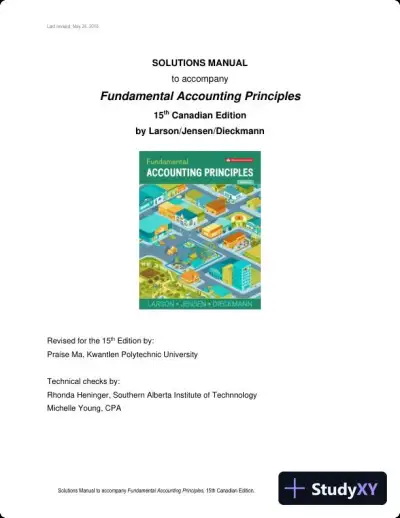 Textbook Guides
Fundamental Accounting Principles, Volume 1 15th Canadian Edition Solution Manual
Accounting
970 pages108downloadsFeb 2025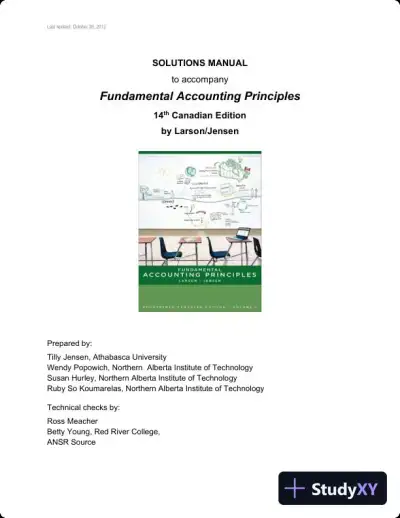 Textbook Guides
Fundamental Accounting Principles, Volume 1, 14th Canadian Edition Solution Manual
Accounting
883 pages71downloadsFeb 2025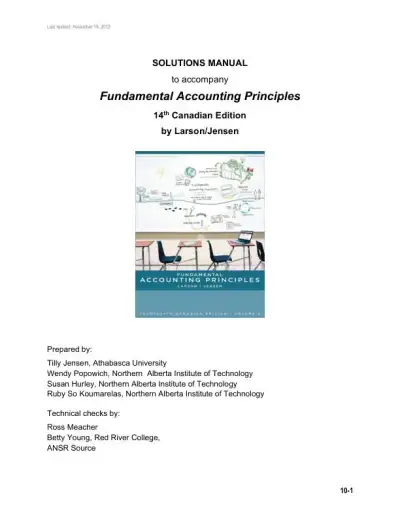 Textbook Guides
Fundamental Accounting Principles, Volume 2, 14th Canadian Edition Solution Manual
Accounting
551 pagesMay 2025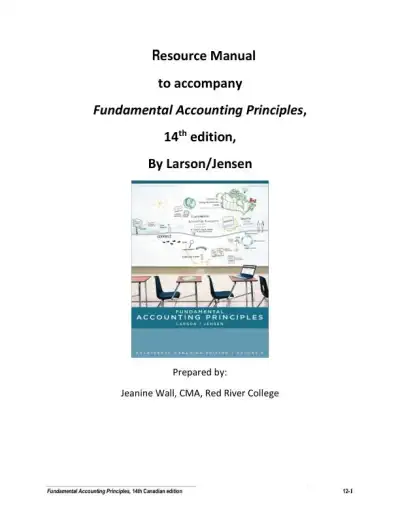 Class Notes
Fundamental Accounting Principles, Volume 2, 14th Canadian Edition Lecture Notes
Accounting
74 pagesMay 2025 Textbook Guides
Solution Manual for Fundamental Accounting Principles, Fifteenth Canadian Edition
Accounting
964 pagesMay 2025 Class Notes
Revision Notes for Fundamental Accounting Principles, 15th Edition
Accounting
75 pagesMay 2025 Exam Guides
Fundamental Accounting Principles, Vol 1, 15th Edition Test Bank
Accounting
633 pagesMay 2025 Exam Guides
Fundamental Accounting Principles, Volume 1, 15th Canadian Edition Test Bank
Accounting
320 pagesMay 2025
Study this document with CramX
Once it is in your library, every tool can work from it.