

Exam Ref AZ-304 Microsoft Azure Architect Design Certification and Beyond (2021)
- Azure Networking Practice Exam
- 520 pages
- Shared May 2025
Master the certification syllabus with Exam Ref AZ-304 Microsoft Azure Architect Design Certification and Beyond (2021) , featuring exam-focused notes, step-by-step solutions, and expert guidance.
Preview 16 of 520 pages
See the first 16 pages exactly as they appear in the document.
Page 1 Page 2 Page 3 Read page 3 as text
Exam Ref AZ-304 Microsoft Azure Architect Design Certification and Beyond Design secure and reliable solutions for the real world in Microsoft Azure Brett Hargreaves BIRMINGHAM—MUMBAI
Page 4 Read page 4 as text
Exam Ref AZ-304 Microsoft Azure Architect Design Certification and Beyond Copyright © 2021 Packt Publishing All rights reserved . No part of this book may be reproduced, stored in a retrieval system, or transmitted in any form or by any means, without the prior written permission of the publisher, except in the case of brief quotations embedded in critical articles or reviews. Every effort has been made in the preparation of this book to ensure the accuracy of the information presented. However, the information contained in this book is sold without warranty, either express or implied. Neither the author, nor Packt Publishing or its dealers and distributors, will be held liable for any damages caused or alleged to have been caused directly or indirectly by this book. Packt Publishing has endeavored to provide trademark information about all of the companies and products mentioned in this book by the appropriate use of capitals. However, Packt Publishing cannot guarantee the accuracy of this information. Group Product Manager : Wilson D'souza Publishing Product Manager : Rahul Nair Senior Editor : Shazeen Iqbal Content Development Editor : Romy Dias Technical Editor : Nithik Cheruvakodan Copy Editor : Safis Editing Project Coordinator : Shagun Saini Proofreader : Safis Editing Indexer : Manju Arasan Production Designer : Shankar Kalbhor First published: June 2021 Production reference: 1230621 Published by Packt Publishing Ltd. Livery Place 35 Livery Street Birmingham B3 2PB, UK. ISBN 978-1-80056-693-4 www.packt.com
Page 5 Read page 5 as text
To the doctors, nurses, public health officials, and first responders who are protecting us from COVID-19.
Page 6 Read page 6 as text
Contributors About the author Based in the UK, Brett Hargreaves is a lead Azure consultant who has worked for some of the world's biggest companies for over 25 years, helping them design and build cutting-edge solutions. With a career spanning infrastructure, development, consulting, and architecture, he has been involved in projects covering the entire solution stack, including hardware, virtualization, databases, storage, software development, and the cloud. He loves passing on his knowledge to others through books, blogging, and his online training courses, which have over 20,000 students (and counting!). I want to thank my amazing wife, Cathy, for giving me the space and support I've needed to write this book, even while the COVID-19 global pandemic was raging around us. I'd also like to thank the many experienced professionals who I work with daily and who continually provide exciting challenges that help deepen my knowledge. Finally, I would like to thank the Packt team for giving me this opportunity to put my knowledge down on paper.
Page 7 Read page 7 as text
About the reviewers Sandeep Soni is an Azure Solutions Architect with expertise in designing, developing, and architecting Azure solutions. He has had experience with all the services offered on the Azure cloud, including PaaS, IaaS, storage, virtual networking, and so on. He offers expertise across the whole spectrum of software technology. As a Microsoft Certified Trainer with 25 years of IT experience, he is adept at technology training, including corporate training, live training, and online webinars. He has trained over 100,000 individuals all over the world and delivered over 200 corporate training events across India and abroad in Microsoft Azure, covering development, infrastructure, security, architecture, Azure DevOps, orchestration microservices using Kubernetes and Azure Service Fabric, C#, .NET Core, ASP.NET, and ASP.NET Core, to name a few. I would like to thank my family for their continued support and encouragement in everything that I do, and the team of Deccansoft, who manage background work while I am delivering training, earning certifications, and making other contributions to the world of IT. Ricardo Cabral is a licensed computer engineer with several Microsoft certifications, and is also a Microsoft Certified Trainer ( MCT ). Having worked in both administration and development roles, with several years' experience in IT management, development, and projects, he now works as an IT consultant and trainer. In his spare time, he actively participates in, volunteers, and speaks at technical community meetings.
Page 8 Page 9 Read page 9 as text
Preface Section 1: Exploring Modern Architecture 1 Architecture for the Cloud Introducing architecture 4 Exploring the transition from monolithic to microservices 5 Mainframe computing 5 Personal computing 6 Virtualization 8 Web apps, mobile apps, and APIs 9 Cloud computing 11 Migrating to the cloud from on-premises 13 Understanding infrastructure and platform services 15 IaaS 16 PaaS 16 Moving from Waterfall to Agile projects 17 Waterfall 18 Agile 19 IaC 20 Summary 21 2 Principles of Modern Architecture Architecting for security 24 Knowing the enemy 24 How do they hack? 25 Defining your strategy 26 Networking and firewalls 26 Identity management 27 Patching 28 Application code 28 Data encryption 29 Defense-in-Depth 30 User education 31 Table of Contents
Page 10 Read page 10 as text
Architecting for resilience and business continuity 32 Defining requirements 33 Using architectural best practices 34 Testing and disaster recovery plans 35 Architecting for performance 35 Architecting for deployment 37 Architecting for monitoring and operations 39 Monitoring for security 40 Monitoring for resilience 40 Monitoring for performance 41 Network monitoring 41 Monitoring for DevOps and applications 41 Summary 42 Further reading 42 Section 2: Identity and Security 3 Understanding User Authentication Differentiating authentication from authorization 46 Introducing Azure AD 47 Why AD? 48 Azure AD versus AD DS 50 Azure tenants 52 Azure AD editions 53 Integrating AD 54 Cloud native 54 Azure AD Connect 55 Password Hash Synchronization 57 Azure AD PTA 58 Password Writeback 59 Seamless SSO 60 Federated authentication 61 Azure AD Connect Health 61 Understanding conditional access, MFA and security defaults 63 MFA 64 Security Defaults 65 Understanding and setting up CA 65 Using external identities 70 Multi-tenancy 70 Consumer applications – B2C 71 External user collaboration – B2B 72 Summary 73 Exam scenario 73
Page 11 Read page 11 as text
4 Managing User Authorization Technical requirements 76 Understanding Azure roles 76 Classic roles 76 Azure roles 78 Azure AD roles 82 Managing users with hierarchies 84 Management groups, subscriptions, and resource groups 84 Controlling access with PIM 87 Activating PIM 88 Just-In-Time elevated access 89 Managing risk with Identity Protection 97 User risk 97 Sign-in risk 98 Summary 100 Exam solution 100 5 Ensuring Platform Governance Technical requirements 102 Applying tagging 102 Adding tags manually 104 Managing tags through Azure PowerShell 105 Managing tags in ARM templates 106 Using tags 107 Understanding Azure policies 108 Using policies and initiatives 109 Policy structure 109 Creating a policy and initiative definition 112 Assigning an initiative 115 Viewing the compliance dashboard 116 Creating a remediation task 117 Using virtual machine guest configurations 118 Best practices 119 Using Azure Blueprints 119 Creating a blueprint definition 120 Publishing and assigning a blueprint 122 Summary 125 Exam scenario 126 Further reading 126 6 Building Application Security Technical requirements 128 Introducing Azure Key Vault 128 Creating a key vault 131 Managing Key Vault secrets 132 Using Key Vault keys 134 Using Key Vault certificates 136
Page 12 Read page 12 as text
Access policies 136 Working with security principals 138 Creating the service principal 138 Setting the access policy 139 Creating the web app 141 Integrating applications into Azure Active Directory 145 Deploying a web app 146 Enabling AD integration 148 Using managed identities 150 Assigning a managed identity 152 Using managed identities in web apps 153 Summary 154 Exam Scenario 155 Further reading 155 Section 3: Infrastructure and Storage Components 7 Designing Compute Solutions Technical requirements 160 Understanding different types of compute 160 Comparing compute options 164 Automating virtual machine management 176 Architecting for containerization and Kubernetes 180 Containerization 180 Azure Kubernetes Service 182 Pods 185 Summary 187 Exam scenario 187 Further reading 188 8 Network Connectivity and Security Technical requirements 190 Understanding Azure networking options 190 Understanding IP addressing and DNS in Azure 191 Understanding subnets and subnet masks 191 Public IP addresses 192 Private IP addresses 192 Azure DNS 194 Azure private DNS zones 196 Azure public DNS zones 196 Implementing network security 197 Network Security Groups 198 Application Security Groups 200
Page 13 Read page 13 as text
Azure Firewall 202 Service endpoints 204 Private endpoint connections 207 Connectivity 209 VNET peering 209 VPN gateways 210 ExpressRoute 214 Routing 214 Load balancing and advanced traffic routing 216 Azure Load Balancer 216 Azure Traffic Manager 218 Application Gateway 219 Azure Front Door 222 Choosing the right options 224 Summary 225 Exam scenario 226 Further reading 226 9 Exploring Storage Solutions Technical requirements 228 Understanding storage types 228 Azure Storage accounts 228 Data classification 232 Operational decisions 234 VM disks 238 Designing storage security 240 Network protection 240 Authorization 242 Encryption 246 Auditing 246 Using storage management tools 247 Azure Storage REST APIs 247 AzCopy 248 Azure Storage Explorer 248 Summary 249 Exam scenario 250 Further reading 250 10 Migrating Workloads to Azure Technical requirements 252 Assessing on-premises systems 252 The discovery phase 253 Understanding migration options 257 Migrating virtual machines and databases 258 Migrating virtual machines 258 Migrating databases 260
Page 14 Read page 14 as text
Monitoring and optimizing your migration 262 Azure Monitor 263 Azure Cost Management 264 Azure Advisor 264 Summary 266 Exam scenario 266 Section 4: Applications and Databases 11 Comparing Application Components Technical requirements 272 Working with web applications 272 Using deployment slots 273 App services VNet Integration 274 Managing APIs with Azure API Gateway 275 Using API policies 277 Securing your APIs with subscription keys 278 Client certificates 279 OAuth 2.0 and OpenID Connect 279 Understanding microservices 281 Using messaging and events 283 Azure Event Grid 284 Event Hubs 287 Storage queues 288 Azure Service Bus 288 Summary 290 Exam scenario 290 Further reading 291 12 Creating Scalable and Secure Databases Technical requirements 294 Selecting a database platform 294 Understanding SQL databases 294 NoSQL databases 296 Understanding database service tiers 298 SQL Database tiers 298 Designing scalable databases 306 Using read replicas 307 Using database sharding 309 Securing databases with encryption 311 Summary 314 Exam scenario 314 Further reading 315
Page 15 Read page 15 as text
13 Options for Data Integration Technical requirements 318 Understanding data flows 318 Comparing integration tools 319 ADLS Gen2 320 Azure Data Factory 323 Exploring data analytics 328 Azure Databricks 329 Azure Synapse Analytics 330 Putting it all together 332 Summary 332 Exam scenario 333 Further reading 333 14 High Availability and Redundancy Concepts Technical requirements 336 Understanding virtual machine availability 336 Fault domains and update domains 337 Availability Zones 338 Azure virtual machine scale sets 340 Understanding Azure storage resiliency options 342 Understanding SQL database availability 342 Understanding Cosmos DB availability 347 Consistency levels 349 Summary 350 Exam scenario 351 Further reading 352 Section 5: Operations and Monitoring 15 Designing for Logging and Monitoring Technical requirements 356 Understanding logs and storage options 356 Understanding data types and sources 357 Understanding log use cases 358 VM logging and monitoring 363 Understanding deployment options 365 Exploring monitoring tools 367 Activity logs 368 Azure Metrics 369 Azure alerts 371
Page 16 Read page 16 as text
Log Analytics workspaces 374 Understanding security and compliance 376 Azure Security Center 377 Azure Defender 378 Azure Sentinel 379 Using cost management and reporting 382 Summary 385 Exam scenario 386 Further reading 386 16 Developing Business Continuity Technical requirements 388 Understanding recovery solutions 388 Understanding the Recovery Time Objective (RTO) 388 Understanding the Recovery Point Objective (RPO) 389 Understanding Azure Backup options 389 Planning for Azure Backup 390 Understanding backup policies 392 Planning for Site Recovery 394 Understanding recovery plans 396 Planning for database backups 398 Understanding Azure SQL backups 398 Understanding Cosmos DB backups 400 Understanding the data archiving options 402 Summary 404 Exam scenario 404 Further reading 405 17 Scripted Deployments and DevOps Automation Technical requirements 408 Exploring provisioning options 408 Looking at the Azure REST API 409 Choosing between PowerShell and the Azure CLI 411 Signing in to Azure 412 Selecting a subscription 412 Listing resource groups 412 Understanding ARM templates 413 Looking at Azure DevOps 419 Azure Repos 420 Azure Pipelines 422 Azure Artifacts 426 Summary 426 Exam scenario 427 Further reading 427
504 more pages in the full document
Unlock it once and it stays in your library, ready to chat with or turn into flashcards.
Unlock the full documentMore Azure Networking Practice Exam study materials
See all Past Exams
Renewal for Microsoft Certified Azure Administrator Associate Practice Exam with Answers (43 Solved Questions)
Azure Networking Practice Exam
16 pages162downloadsFeb 2025 Past Exams
AZURE Networking Practice Exam with Answers (37 Solved Questions)
Azure Networking Practice Exam
7 pages118downloadsFeb 2025 Certification Guides
MCA Microsoft Certified Associate Azure Administrator Study Guide: Exam AZ-104 (2022)
Azure Networking Practice Exam
595 pages93downloadsFeb 2025 Past Exams
2024 AZ-104 Renewal Comprehensive Exam with Answers (270 Solved Questions)
Azure Networking Practice Exam
115 pages93downloadsFeb 2025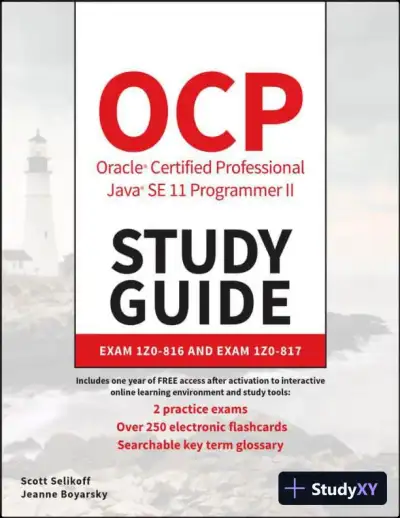 Certification Guides
Study Guide Exam 1Z0-816 and Exam 1Z0-817 (2020)
Azure Networking Practice Exam
996 pages92downloadsFeb 2025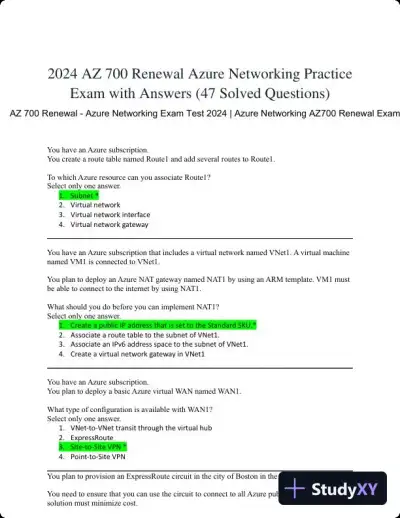 Past Exams
2024 AZ 700 Renewal Azure Networking Practice Exam with Answers (47 Solved Questions)
Azure Networking Practice Exam
13 pages71downloadsFeb 2025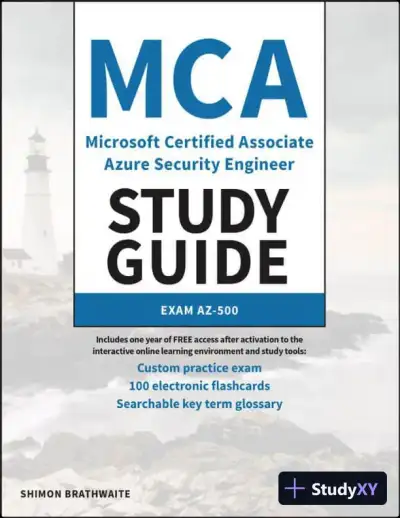 Certification Guides
MCA Microsoft Certified Associate Azure Security Engineer Study Guide: Exam AZ-500 (2022)
Azure Networking Practice Exam
489 pages65downloadsFeb 2025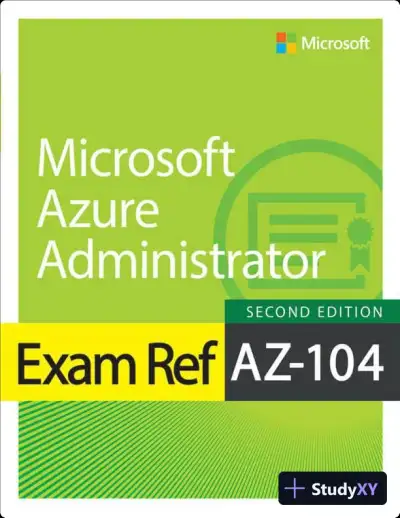 Certification Guides
Exam Ref AZ-104 Microsoft Azure Administrator (2024)
Azure Networking Practice Exam
604 pages59downloadsFeb 2025
Study this document with CramX
Once it is in your library, every tool can work from it.