

Test Bank For Advanced Nutrition and Human Metabolism 7th Edition Test Bank
- Biochemistry
- 266 pages
- Shared February 2025
- 145 downloads
Test Bank For Advanced Nutrition and Human Metabolism 7th Edition Test Bank boosts your confidence by simulating real exam scenarios.
Preview 31 of 266 pages
See the first 31 pages exactly as they appear in the document.
Page 1 Read page 1 as text
Chapter 01 The Cell A Microcosm of Life MULTICHOICE 1. Membrane lipid bilayers consist primarily of ____. (A) phospholipids (B) cholesterol (C) proteins (D) saturated fatty acids Answer : (A) 2. Membrane proteins do not serve as ____. (A) pumps (B) detoxifiers (C) receptors (D) enzymes Answer : (B) 3. What is the role of cholesterol in plasma membrane structure? (A) to produce bile (B) to regulate fluidity and permeability (C) to reduce stability (D) to produce hormones Answer : (B) 4. Signals generated at one part of a cell are transmitted quickly to other parts of the cell due to the interconnection of the cytosol and ____. (A) glycoproteins (B) filaments (C) glycolipids (D) integral proteins
Page 2 Page 3 Read page 3 as text
Answer : (B) 5. The carbohydrate moieties of the plasma membrane glycoproteins and glycolipids are oriented ____. (A) outwardly, away from the cytoplasmic matrix (B) inwardly, toward the lumen (C) equally inwardly and outwardly to maintain symmetry (D) between the bilayers of the membranes Answer : (A) 6. Proteins attached to the membrane through hydrophobic interactions and embedded in the membrane are called ____. (A) peripheral proteins (B) rough endoplasmic reticula (C) integral proteins (D) Golgi apparatuses Answer : (C) 7. In the cell structure, the ____ provides support and controls the movement of cell organelles. (A) endoplasmic reticulum (B) mitochondrion (C) cytoskeleton (D) matrix space Answer : (C) 8. The fluid portion of the cytoplasmic matrix does not contain ____. (A) amino acids (B) glucose (C) carbon dioxide (D) urea Answer : (D)
Page 4 Read page 4 as text
9. Enzymes of metabolic pathways within the cytoplasmic matrix are often oriented so that the product of one enzyme is released in close proximity to the next enzyme for which it is a substrate, to facilitate the velocity of the overall pathway. This arrangement includes enzymes of ____. (A) beta-oxidation (B) glycolysis (C) ketone production (D) the Krebs cycle Answer : (B) 10. The organelle responsible for production of most of the metabolic energy (ATP) is the ____. (A) Golgi apparatus (B) endoplasmic reticulum (C) nucleus (D) mitochondrion Answer : (D) 11. All components of the electron transport chain are embedded in the ____. (A) mitochondrial inner membrane (B) mitochondrial outer membrane (C) mitochondrial matrix (D) cytoplasmic matrix Answer : (A) 12. In which organelle do the TCA cycle and fatty acid oxidation occur? (A) Golgi apparatus (B) nucleus (C) microsomes (D) mitochondrion Answer : (D) 13. What is the major route for ATP production?
Page 5 Read page 5 as text
(A) oxidative phosphorylation (B) hydrolysis (C) peroxidation (D) transformation Answer : (A) 14. Which organelle is capable of performing both fission and fusion? (A) Golgi apparatus (B) mitochondria (C) rough endoplasmic reticulum (D) nucleus Answer : (B) 15. Genes contained in mitochondrial DNA are inherited only from the mother and code for ____. (A) all proteins functioning within the mitochondrial matrix (B) nonfunctional ancient proteins considered remnants of evolution (C) proteins vital to the production of ATP (D) antioxidant proteins Answer : (C) 16. The cell organelle responsible for the initiation and regulation of most cellular activity is the ____. (A) cytoplast (B) nucleus (C) mitochondrion (D) nucleolus Answer : (B) 17. In addition to the mitochondria, which organelle possesses an inner and outer membrane? (A) lysosome
Page 6 Read page 6 as text
(B) lysosome (C) Golgi apparatus (D) nucleus Answer : (D) 18. Microtubule organization centers (MTOCs) on the outer nuclear membrane are associated with which cellular process? (A) oxidative phosphorylation (B) electron transport (C) mitosis (D) protein synthesis Answer : (C) 19. Encoded within the nuclear DNA of each cell is ____. (A) the entire genome for that organism (B) the genes coding for proteins needed by that particular cell in the organism (C) chromatin (D) a cell-specific histone Answer : (A) 20. DNA in the nucleus is wrapped around ____. (A) proteins called histones (B) the nucleolus (C) the nuclear envelope (D) ribosomal RNA Answer : (A) 21. Which nitrogenous base is unique to RNA? (A) guanine (B) uracil
Page 7 Read page 7 as text
(C) thymine (D) cytosine Answer : (B) 22. Which enzyme is responsible for linking together the incoming nucleotides during DNA replication? (A) DNA ligase (B) helicase (C) DNA polymerase (D) reverse transcriptase Answer : (C) 23. Transcription is the process by which ____. (A) the genetic information in a single strand of DNA makes a specific sequence of bases in a messenger RNA (mRNA) chain (B) genetic information in an mRNA molecule specifies the sequence of amino acids in the protein product (C) amino acids are linked together to form the primary structure of a protein (D) the primary structure of a protein is folded several times to become the quaternary structure Answer : (A) 24. Translation is the process by which ____. (A) the genetic information (base sequence) in a single strand of DNA is used to specify a complementary sequence of bases in an mRNA chain (B) a daughter duplex DNA molecule that is identical to the parental duplex DNA is synthesized (C) the polypeptide chain of the protein product is extended (D) genetic information in an mRNA molecule specifies the sequence of amino acids in the protein product Answer : (D) 25. Elongation is the process by which ____. (A) the mRNA strand is formed
Page 8 Read page 8 as text
(B) peptide bonds are formed between aligned amino acids after the amino acids are positioned (C) amino acids are activated by ATP at their carboxyl end (D) activated amino acids are transferred to their specific tRNAs that contain the anticodon complementary to each amino acid's codon Answer : (A) 26. Transcription-level control mechanisms ____. (A) determine the path by which mRNA can be translated into a polypeptide (B) determine whether a particular mRNA is actually translated (C) determine if a particular gene can be transcribed (D) are driven by the interaction of tRNA and mRNA Answer : (C) 27. MicroRNAs are small noncoding RNAs that ____. (A) enhance gene expression by activating mRNA expression (B) silence gene expression by binding to mRNA to inhibit translation (C) modify gene expression by replacing specific nucleotides in mRNA (D) mediate DNA production in a reverse direction Answer : (B) 28. Which organelle is composed of an extensive network of membranous channels that connects the nuclear membrane, the Golgi apparatus, and the plasma membrane? (A) the lysosome (B) the nucleolus (C) the centrioles (D) the endoplasmic reticulum Answer : (D) 29. The smooth endoplasmic reticulum (SER) is associated with ____. (A) lipid synthesis (B) protein synthesis
Page 9 Read page 9 as text
(C) the calcium ion pump necessary for the contractile process (D) ribosomes and cytochrome P450 enzymes Answer : (A) 30. Which enzyme complex, used in metabolizing many drugs, is located on the rough endoplasmic reticulum in liver cells? (A) chromatins (B) lysozymes (C) cytochromes (D) polymerases Answer : (C) 31. What structural body is made up of flattened cisternae flanked by tubular networks and thought to be an extension of the endoplasmic reticulum? (A) nucleus (B) cytoplasm (C) lysosome (D) Golgi apparatus Answer : (D) 32. The Golgi apparatus is prominent in neurons and secretory cells and functions ____. (A) to stop the synthesis of proteins that may need carbohydrate additions (B) to add polysaccharide or lipid moieties to polypeptides (C) only for constitutive secretion of proteins (D) only for regulated secretion of proteins Answer : (B) 33. Which organelle prevents proteins that have not reached their normal tertiary or quaternary structure from reaching the cell surface? (A) the endoplasmic reticulum (B) the Golgi apparatus
Page 10 Read page 10 as text
(C) the nucleus (D) the mitochondrion Answer : (A) 34. The organelle that serves as the digestive system for the cell is the ____. (A) polysome (B) endosome (C) lysosome (D) ribosome Answer : (C) 35. The organelle that detoxifies by oxidizing molecules such as hydrogen peroxide and ethanol is the ____. (A) peroxisome (B) endosome (C) lysosome (D) ribosome Answer : (A) 36. Destruction of which organelle(s) would cause the cell to cease to function due to a total loss of energy? (A) the nucleus (B) the Golgi apparatus (C) the ribosomes (D) the mitochondria Answer : (D) 37. Digestive enzymes delivered to the small intestine from cells in the pancreas are able to leave those cells because of the functioning of the ____. (A) endoplasmic reticulum (B) ribosomes
Page 11 Read page 11 as text
(C) Golgi apparatus (D) lysosomes Answer : (A) 38. Damage to MTOCs will interfere with which cellular process? (A) oxidative phosphorylation (B) mitosis (C) electron transport (D) creation of an mRNA molecule Answer : (B) 39. Molecular stimuli that bind specifically to receptors are known as ____. (A) ligands (B) enzymes (C) allosteric enzymes (D) hydrolases Answer : (A) 40. Which are highly specialized membrane proteins that modify the cell's response to its environment? (A) transport proteins (B) enzymes (C) receptors (D) peroxisomes Answer : (A) 41. Most receptor proteins are most likely which type? (A) peripheral proteins (B) internal proteins (C) integral proteins
Page 12 Read page 12 as text
(D) glycoproteins Answer : (C) 42. Cyclic AMP activates which enzymes? (A) protein kinases (B) restriction endonucleases (C) allosteric enzymes (D) adenyl (adenylyl) cyclases Answer : (A) 43. Constitutive enzymes are ____. (A) uninfluenced by external stimuli (B) influenced by external stimuli (C) synthesized at variable rates (D) unaffected by induction Answer : (A) 44. Substances that bind with allosteric sites and alter the activity of regulatory enzymes are called ____. (A) transport proteins (B) modulators (C) Na pumps (D) sarcoplasmic reticula Answer : (B) 45. Diagnostic enzymology focuses on ____. (A) enzymes that are widely distributed among many tissues (B) intracellular enzymes that express their activity in the blood abnormally due to a disease process (C) secreted enzymes such as clotting proteins in blood (D) nuclear enzymes
Page 13 Read page 13 as text
Answer : (B) 46. One trigger of apoptosis is ____. (A) overexpression of Bcl-2 (B) inactivation of Casp-9 (C) swelling of the cell (D) release of mitochondrial cytochrome c Answer : (D) 47. Malformed Apaf-1 molecules in a cell might ____. (A) cause rapid apoptosis of the cell (B) inactivate cytochrome c (C) lead to the development of a tumor (D) have no effect on apoptosis Answer : (C) 48. What is released when nutrient molecules are oxidized? (A) oxygen (B) potential (or free) energy (C) kinetic energy (D) hydrogen Answer : (B) 49. In muscle cells, creatine phosphate is used to replenish which substance? (A) glucose (B) pyruvic acid (C) ATP (D) calcium Answer : (C)
Page 14 Read page 14 as text
50. Phosphorylation of a molecule is generally accomplished by transferring the terminal phosphate group from which substance? (A) GTP (B) pyruvic acid (C) G6PD (D) ATP Answer : (D) TRUEFALSE 51. The plasma membrane is a sheet-like structure composed solely of lipids. (A) True (B) False Answer : (B) 52. The lipid bilayer determines the function of the plasma membrane, while the proteins are primarily responsible for the structure of the membrane. (A) True (B) False Answer : (B) 53. The various components within a cell (e.g., mitochondria) are not "free-floating" in the cytosol, but rather, are held in place by the cytoskeleton. (A) True (B) False Answer : (A) 54. Peripheral proteins are involved in cell-cell recognition, whereas integral proteins function primarily as receptors/transporters. (A) True (B) False Answer : (A)
Page 15 Read page 15 as text
55. Different cells express different proteins because they contain different sequences of DNA in the nucleus. (A) True (B) False Answer : (B) 56. Polysomes function to transcribe mRNA into proteins. (A) True (B) False Answer : (B) 57. When discussing enzyme kinetics, K m refers to the substrate concentration at which the enzyme is saturated and functioning at maximal velocity. (A) True (B) False Answer : (B) 58. If two enzymes (e.g., pyruvate dehydrogenase and pyruvate carboxylase) compete for the same substrate (pyruvate), the one with the higher K m has less affinity and will be more active when pyruvate concentrations are high. (A) True (B) False Answer : (A) 59. Most cellular reactions are irreversible because the same enzyme that catalyzes the conversion cannot catalyze the reverse reaction. (A) True (B) False Answer : (B) 60. Allosteric regulation of enzymes is carried out by modulators, other proteins that bind to the enzyme to inhibit its activity. (A) True
Page 16 Read page 16 as text
(B) False Answer : (B) 61. Most of the metabolic energy produced in cells is made in the mitochondria. (A) True (B) False Answer : (A) 62. The nuclear envelope is a single membrane structure that helps to isolate the nucleus from the rest of the cell. (A) True (B) False Answer : (B) 63. Transcription of DNA cannot be altered. (A) True (B) False Answer : (B) 64. An increase in the concentration of a substrate will increase the rate of the enzyme-catalyzed reaction. (A) True (B) False Answer : (A) 65. Oncosis results from cell injury and is associated with cellular swelling and swelling of the mitochondrial nucleus. (A) True (B) False Answer : (A)
Page 17 Read page 17 as text
MATCH 66. Enzyme Classification: Match the correct enzyme classification with the examples provided. MATCH 67. Match each description to one of the following terms. SHORTANSWER 68. List the three mechanisms that can be used to regulate the function of a protein (e.g., an enzyme) and briefly (in one to two sentences) describe their key features. Answer : Mechanism 1: Covalent modification—no change in the abundance of a protein. Here, preexisting protein is made active or inactive by covalently modifying it (involves making or breaking covalent bonds). Examples include phosphorylation, carboxylation, glycosylation, or proenzyme activation by breaking a peptide bond. Answer : Mechanism 2: Allosteric regulation—here we also are not changing the abundance of the protein (in this case an enzyme), but we are inhibiting or stimulating its activity—not by covalently modifying the protein, but by having something bind to it, resulting in a change in its conformation that affects its enzymatic activity. What are these things that bind to enzymes to affect their activity? NOT other proteins or enzymes—they are typically substrates, intermediates, or products along the pathway in which the enzyme participates. The book calls them modulators. A good example is ATP—ATP is the end point of a lot of pathways (glycolysis, TCA cycle) and as such, when it is abundant, that is a good sign that we have enough ATP/energy. Once the concentration of ATP reaches a certain level, it begins to bind some of the key enzymes in glycolysis and the TCA cycle and inhibits them. Why continue to make ATP if we have enough? Conversely, when ADP levels are higher than ATP (a sign we need energy), ADP binds to these same enzymes, but the result is not inhibition of their activity, but rather ADP stimulates them to be more active (and thus make more energy). Then, when ATP levels begin to rise again... we’re back where this paragraph started. Answer : Mechanism 3: Induction—inducing a gene to be expressed, thereby ultimately resulting in an increase in the abundance of a protein. This is accomplished by increasing transcription and/or translation of the corresponding gene/mRNA. [By definition, induction means to increase abundance; writing "increase and/or decrease" would be incorrect.] Answer : [Note: For mechanism 1 or 3, the proteins we are talking about can be enzymes, transporters, and so forth. For 2, we are only talking about enzymes. Don’t let the term active confuse you—we use it mostly when we talk about enzymes, but an "active protein" means it is carrying out its function, be it catalytic or transport or anything else. Also note that mechanisms 1 and 2 are fast, whereas mechanism 3 is slower.] 69. Briefly describe the role of DNA in cell replication and transcription. Answer : Cell Replication:During cell division, DNA must be replicated into two daughter DNA molecules that are identical to the parental DNA molecule. The DNA molecule unzips and each strand of the double helix becomes a template used to synthesize a new complementary strand. The new strand is produced by the process of complementary base pairing. Nucleotide bases connect to the template at their complementary bases and become connected by phosphate diester bonds through the action of the enzyme DNA polymerase. In the end, two new DNA chains have joined with the two original DNA templates to form two new DNA molecules. Answer : Transcription: This process uses the gene sequence in a DNA strand to direct for the production of specific proteins. The base sequence of one strand of DNA acts as a template for the production of a single strand of mRNA. The same single strand of DNA may direct for the creation of
Page 18 Read page 18 as text
many different strands of mRNA which will leave the nucleus and bring the genetic code to the ribosomes for protein production. Specific DNA codons (three bases in a row) act as either initiators of the production of mRNA or as terminators to specify the length of the mRNA strand. 70. Choose three of the following terms and in one sentence per term, provide a concise definition of that term: nucleus, mitochondria, RER, transcription, translation, apoptosis, and cell replication. Answer : The nucleus is the largest organelle in the cell and, because it contains almost all of the cell’s DNA, it regulates most cellular activities. Answer : Mitochondria are the organelles in virtually all cells that are responsible for the major portion of energy (ATP) production, utilizing metabolic processes including the TCA cycle, β- oxidation, parts of gluconeogenesis, and the electron transport chain. Answer : The rough endoplasmic reticulum (RER) is studded with ribosomes and is intimately involved in protein synthesis. Answer : Transcription is the nuclear process of copying one strand of DNA into a single-stranded mRNA and substituting the base uracil in place of thymine. Answer : Translation is the process by which the genetic information carried by a molecule of mRNA becomes the sequence of amino acids in a protein. Answer : Apoptosis is programmed cell death brought about by several different mechanisms designed to regulate the number of cells in a tissue. Answer : Cell replication is the production of two daughter cells from a mother cell that includes the replication of a single DNA strand into two identical daughter DNA strands (one in each new cell). 71. Why is cholesterol important in plasma membrane function? Answer : The answer should include the following items: 72. Describe the cytoskeleton (microtrabecular lattice) and its role as an intercommunication system of proteins and other macromolecules. Answer : The answer should include the following items: 73. Define and describe diagnostic enzymology. Answer : Diagnostic enzymology studies intracellular enzymes that, due to a problem within the cell, escape and act within the serum where they do not normally exist. The serum activity of these now displaced enzymes is measured, which allows for a determination of the site and extent of the cellular damage. An accurate determination of the site of the damage requires that the enzyme being measured must exhibit a high degree of organ or tissue specificity. 74. Describe the important implications of the high K m for glucokinase in terms of maintaining normal blood glucose after a meal and during fasting. Answer : The answer should include the following items: 75. Describe the process of apoptosis in relation to the life span of the cell. Answer : The answer should include the following items: 76. Describe the uphill-downhill concept. Answer : The answer should include the following items: 77. Discuss the concept of coupled reactions in the transfer of energy. Answer : The answer should include the following items (note that students may provide other examples such as the coupling of phosphocreatine to creatine with the formation of ATP from ADP): MULTICHOICE 78. A researcher in the field of nutritional genomics is least likely to study ____.
Page 19 Read page 19 as text
(A) the interactions among genes and bioactive components in food that change gene expression without changing the DNA nucleotide sequence (nutritional epigenetics) (B) inborn changes in DNA nucleotide sequences or gene variants (nutrigenetics) (C) genetic alterations that can be compensated for by increasing or decreasing specific nutrients (nutrigenomics) (D) the interaction between genetically engineered enzymes and their substrates Answer : (D) 79. A common mutation in the 5,10-methylenetetrahydrofolate reductase enzyme (MTHFR) ____. (A) prevents the individual from activating the B vitamin folate (B) has no effect on the activity of the enzyme (C) increases the activity of the enzyme (D) modifies the folate molecule directly Answer : (A) 80. The primary mechanism by which gene expression is modified by bioactive factors in food appears to be ____. (A) mutations causing cancer (B) interactions with transcription factors (C) production of SNPs (D) downregulation of translation Answer : (B) 81. What lifestyle change would be most important to individuals with a common variant in the GST gene that impairs protection against toxins? (A) increasing levels of daily exercise (B) eating a low-fat diet (C) increasing ingestion of cruciferous vegetables (D) increasing intake of omega-3 fats Answer : (C)
Page 20 Read page 20 as text
82. Which class of bioactive food components has the ability to get into the nucleus of cells and bind to DNA to influence gene expression? (A) lipophilic, small-molecular-weight molecules (B) glycoproteins (C) phospholipids (D) water-soluble vitamins Answer : (A)
Page 21 Read page 21 as text
Chapter 02 The Digestive System Mechanism for Nourishing the Body MULTICHOICE 1. Within the lamina propria, lying just below the epithelium, is the mucosa-associated lymphoid tissue (MALT), which ____. (A) controls secretions from the mucosal glands (B) contains white blood cells and protects against ingested microorganisms (C) initiates peristalsis (D) secretes mucus, hormones, and digestive juices into the lumen Answer : (B) 2. Which structural component of the gastrointestinal tract lies within the muscularis externa and controls the contractions that cause motility? (A) muscularis mucosae (B) submucosal plexus (C) myenteric plexus (D) lumen Answer : (C) 3. Which structure is not considered an accessory organ? (A) pancreas (B) liver (C) gallbladder (D) spleen Answer : (D) 4. Bile is most important for the digestion and absorption of ____. (A) carbohydrates (B) proteins (C) fats
Page 22 Read page 22 as text
(D) vitamins Answer : (C) 5. A decrease in the function of the parotid glands is most likely to result in ____. (A) a lack of triglyceride digestion (B) bolus that is difficult to form (C) saliva that is too thin, that is, a high water to mucus ratio (D) diarrhea due to malabsorption Answer : (B) 6. What is the name of the digestive enzyme in saliva that digests starch? (A) lipase (B) synthetase (C) amylase (D) lactase Answer : (C) 7. Which substance is not a component of saliva? (A) mucus (B) enzymes (C) water (D) proteases Answer : (D) 8. Endocrine cells of the pancreas are found in which structure? (A) the pancreatic duct (B) the islets of Langerhans (C) the sphincter of Oddi (D) the beta cells Answer : (B)
Page 23 Read page 23 as text
9. Delayed gastric emptying is known as ____. (A) cholecystitis (B) cholelithiasis (C) gastritis (D) gastroparesis Answer : (D) 10. What product produced by neck cells in the oxyntic gland of the stomach protects the epithelium from mechanical and chemical damage? (A) amylase (B) pepsin (C) gastrin (D) mucus Answer : (D) 11. Which cells, found both in the oxyntic glands and pyloric glands of the stomach, secrete hydrochloric acid and intrinsic factor? (A) neck cells (B) parietal cells (C) chief cells (D) enteroendocrine cells Answer : (B) 12. Which cells, found in oxyntic glands in the body of the stomach, secrete pepsinogens? (A) neck cells (B) parietal cells (C) chief cells (D) enteroendocrine cells Answer : (C) 13. Which specialized cell of the gastric epithelium secretes a hormone?
Page 24 Read page 24 as text
(A) neck (B) parietal (C) chief (D) G-cell Answer : (D) 14. The chief cells secrete ____. (A) gastrin (B) mucus (C) zymogens (D) hydrochloric acid Answer : (C) 15. The parietal cells secrete ____. (A) hydrochloric acid and intrinsic factor (B) intrinsic factor and gastrin (C) gastrin and zymogens (D) zymogens and hydrochloric acid Answer : (A) 16. Gastrin stimulates which cells? (A) oxyntic cells (B) parietal and chief cells (C) pancreatic exocrine cells (D) alpha cells Answer : (B) 17. When the pH of the stomach is increased to avoid GERD, over time, the stomach may not be acidic enough. What is the most likely outcome? (A) lack of carbohydrate digestion
Page 25 Read page 25 as text
(B) decreased protein digestion (C) destruction of bacteria in the stomach (D) gastric ulcer Answer : (B) 18. Which glycoproteins bind water and are gel-forming? (A) mucins (B) proteoglycans (C) prostaglandins (D) zymogens Answer : (A) 19. The product(s) of pepsin's action is/are ____. (A) disaccharides (B) amylose (C) short-chain fatty acids (D) hydrolyzed proteins Answer : (D) 20. Pepcid, a drug that is classified as an H 2 receptor blocker, acts by ____. (A) inhibiting the secretion of hydrogen ions by the parietal cells (B) inhibiting the release of acetylcholine by the vagus nerve (C) inhibiting the binding of gastrin to the parietal cells (D) inhibiting the binding of histamine to the parietal cells Answer : (D) 21. Which medication inhibits hydrogen release into the gastric juice, which reduces GI mucosal irritation? (A) Pepcid (B) Nexium
Page 26 Read page 26 as text
(C) Tums (D) Tagamet Answer : (B) 22. Which process allows gastric expansion with food intake with minimal impact on intragastric pressure? (A) peristalsis (B) receptive relaxation (C) segmentation (D) pendular movement Answer : (B) 23. Pyloric glands are located predominantly ____. (A) at the juncture of the esophagus and the stomach (B) in the fundus and the body of the stomach (C) in the antrum of the stomach (D) in the cardiac portion of the stomach Answer : (C) 24. Which phrase best describes the function of the crypt of Lieberkühn? (A) mucus secretion (B) glucose oxidation (C) cellular differentiation (D) amylase secretion Answer : (C) 25. The pancreas is a digestive system accessory organ with two types of active tissue -t he ductless endocrine cells that secrete insulin and glucagon and the ____. (A) liver-like cells that produce bile (B) ductless absorptive tissue that controls bicarbonate (C) acinar exocrine cells that produce digestive enzymes
Page 27 Read page 27 as text
(D) erythropoietic cells that produce red blood cells Answer : (C) 26. Pancreatic juice that enters the duodenum through the sphincter of Oddi contains all of the following EXCEPT ____. (A) digestive enzymes (B) intrinsic factor (C) anions such as bicarbonate and chloride (D) cations such as sodium, potassium, and calcium Answer : (B) 27. In which part of the brain is the swallowing center located? (A) the hypothalamus (B) the medulla oblongata (C) the thalamus (D) the pons Answer : (B) 28. In which organ are enzymes produced that are responsible for digestion of 50 percent of carbohydrate and protein and 90 percent of fat? (A) liver (B) esophagus (C) pancreas (D) gallbladder Answer : (C) 29. Which hormone's major action is to alkalize intestinal contents by stimulating secretion of bicarbonate from the pancreas and by inhibiting gastric acid secretion and gastric emptying? (A) gastrin (B) secretin (C) cholecystokinin
Page 28 Read page 28 as text
(D) GRP Answer : (B) 30. Dumping syndrome may be caused by ____. (A) bacterial infections (B) viral infections (C) partial removal of the stomach to treat obesity (D) gall stones Answer : (C) 31. The hormone primarily responsible for contraction of the gallbladder and release of bile into the duodenum is ____. (A) gastrin (B) secretin (C) cholecystokinin (D) GRP Answer : (C) 32. Bile salts are synthesized from cholesterol in the ____. (A) canaliculi (B) common bile duct (C) hepatocytes (D) gallbladder Answer : (C) 33. The surface coat of microvilli is known as ____. (A) the glycocalyx (B) the crypts of Lieberkühn (C) motilin (D) proteases
Page 29 Read page 29 as text
Answer : (A) 34. The total bile acid pool in the human body is 2.5 to 5 g. What percentage of bile is reabsorbed in the distal ileum? (A) 10 percent (B) 30 percent (C) 65 percent (D) 90 percent Answer : (D) 35. A large gall stone blocking the cystic duct might result in ____. (A) a reduction in the production of bile by the liver (B) an increase in bile production by the liver (C) enhancement of fat digestion (D) interference with fat digestion Answer : (D) 36. Which substance is enterohepatically circulated? (A) pancreatic enzymes (B) bile (C) glucose (D) CCK Answer : (B) 37. In general, in which portion of the gastrointestinal tract does most absorption occur? (A) esophagus (B) stomach (C) small intestine (D) colon Answer : (C)
Page 30 Read page 30 as text
38. A common cause of peptic ulcer disease (PUD) is the bacterium ____. (A) Escherichia coli (B) Helicobacter pylori (C) Staphylococcus aureus (D) Enterobacter aerogenes Answer : (B) 39. Which structure helps to prevent the migration of bacteria from the large intestine back into the small intestine? (A) the cecum (B) the appendix (C) the ileocecal valve (D) the ileum Answer : (C) 40. Which hormone(s) is/are responsible for decreasing sodium absorption in the colon? (A) glucocorticoids (B) mineralocorticoids (C) vasopressin (D) glucagon Answer : (C) 41. Which division of the nervous system decreases digestive tract motility and secretions? (A) parasympathetic (B) somatic (C) adrenergic (D) sympathetic Answer : (D) 42. Which hormone diminishes gastric acid secretion?
Page 31 Read page 31 as text
(A) somatostatin (B) gastrin (C) cholecystokinin (D) pancreatic polypeptide Answer : (A) 43. Which hormone stimulates gall bladder contraction? (A) motilin (B) gastrin (C) cholecystokinin (D) secretin Answer : (C) 44. A deficiency in secretion of cholecystokinin might lead to which problem? (A) a reduction in gastric acid production (B) difficulty digesting fats (C) difficulty digesting proteins (D) a buildup of intestinal gas Answer : (B) 45. When diagnosing lactose intolerance, ____ is measured in the breath following oral consumption of 50 g lactose. (A) methane (B) hydrogen (C) carbon dioxide (D) sulfur Answer : (B) 46. Lactose intolerance is least common in _____. (A) European Americans
235 more pages in the full document
Unlock it once and it stays in your library, ready to chat with or turn into flashcards.
Unlock the full documentMore Biochemistry study materials
See all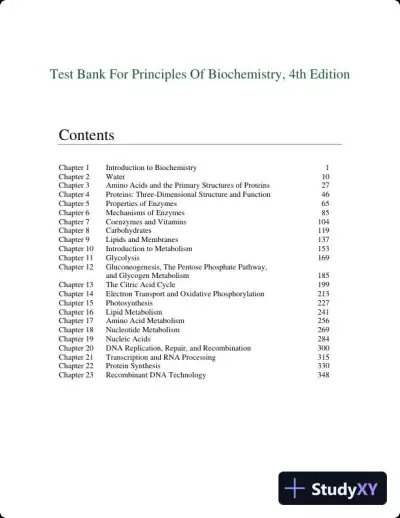 Exam Guides
Test Bank For Principles Of Biochemistry, 4th Edition
Biochemistry
362 pages61downloadsFeb 2025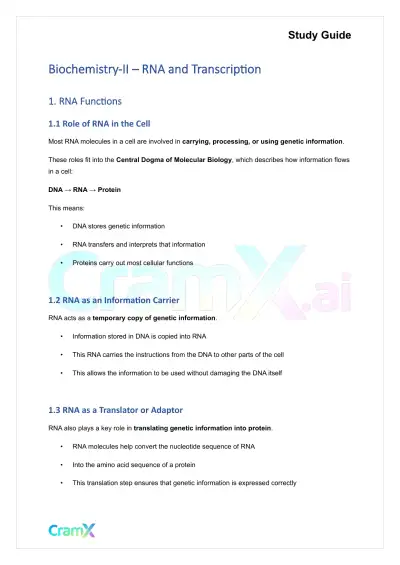 Quick Guides
Biochemistry-II - RNA and Transcription
Biochemistry
37 pagesMar 2026 Past Exams
BIOD171 Biochemistry Final Exam With Answers (29 Solved Questions)
Biochemistry
7 pagesMay 2025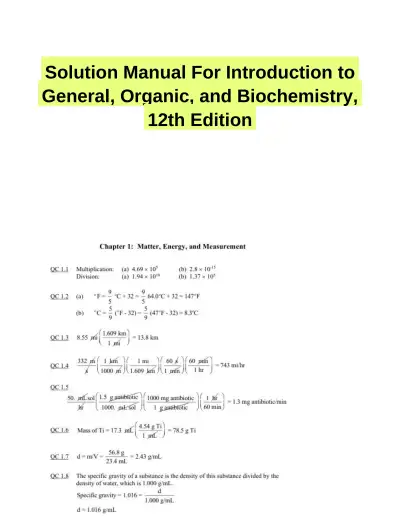 Textbook Guides
Solution Manual For Introduction to General, Organic, and Biochemistry, 12th Edition
Biochemistry
251 pagesMay 2025 Textbook Guides
Introduction To General, Organic And Biochemistry, 11th Edition Solution Manual
Biochemistry
250 pagesMay 2025 Quick Guides
Biochemistry I - Carbohydrate Metabolism II
Biochemistry
25 pagesMar 2026 Solved Assignments
Kami Export Biological Molecules POGIL
Biochemistry
5 pagesJun 2025 Textbook Guides
Lehninger Principles of Biochemistry Sixth Edition Solution Manual
Biochemistry
320 pagesMay 2025
Study this document with CramX
Once it is in your library, every tool can work from it.