

Solution Manual for Fundamentals of Law Office Management, 5th Edition
- Civil Law
- 171 pages
- Shared May 2025
Looking for a comprehensive textbook solution guide? Solution Manual for Fundamentals of Law Office Management, 5th Edition is your answer, providing clear solutions to every question.
Preview 16 of 171 pages
See the first 16 pages exactly as they appear in the document.
Page 1 Read page 1 as text
’s Manual to Accompany Fundamentals of Law Office Management: Systems, Procedures, and Ethics FIFTH EDITION Pamela Everett Nollkamper SOLUTIONS GUIDE
Page 2 Page 3 Read page 3 as text
ii Contents Chapter 1 The Legal Marketplace ..........................................................................................1 Chapter 2 The Legal Team ...................................................................................................10 Chapter 3 Personnel Relations..............................................................................................18 Chapter 4 The Attorney-Client Relationship........................................................................32 Chapter 5 Paralegal Ethics and Client Relations ..................................................................47 Chapter 6 Legal Fees ............................................................................................................61 Chapter 7 Timekeeping ........................................................................................................81 Chapter 8 Billing and Financial Management......................................................................90 Chapter 9 Managing the Client Funds Trust Account..........................................................98 Chapter 10 Technology in the Law Office ...........................................................................103 Chapter 11 Law Office Systems...........................................................................................121 Chapter 12 Docket Control Systems ....................................................................................129 Chapter 13 File and Records Management...........................................................................149 Chapter 14 Law Library Organization and Management.....................................................164 Test Bank Questions ..........................................................................................171 Test Bank Answer Key ......................................................................................241
Page 4 Read page 4 as text
1 CHAPTER 1 THE LEGAL MARKETPLACE Chapter 1 begins the student’s journey into the fascinating legal marketplace. It sets the foundation for the rest of the text by describing the characteristics inherent in all types of legal offices, as well as the differences between various types of law offices. These characteristics familiarize the student with how the legal business differs from other businesses. Two primary goals of this chapter are: 1. To give the student an understanding of the structure, organization, and management styles of various types of law offices in which paralegals work and 2. To give students an understanding of the many opportunities for employment a paralegal education offers. Consistent with the first goal, this chapter illustrates as closely as possible the various types of law offices and their differences in management styles. Many variables compose a law office’s environment, and this chapter identifies the factors that contribute to a law office’s atmosphere and culture. To give the student a “real-life” feel for the subject matter, the chapter contains examples of typical law offices. Consistent with the second goal, this chapter discusses career opportunities outside a traditional law firm. This will expand the student’s perspective of the paralegal profession and illustrate the many employment options in the legal marketplace. This chapter focuses on the legal marketplace as seen through the eyes of a lawyer rather than through the eyes of a paralegal. Viewing the business of law from a lawyer’s perspective will give readers an understanding of the reasons management decisions are made. Since paralegals are an integral part of a legal office, understanding these reasons can only enhance the paralegal’s understanding of the business of law in general. OBJECTIVES After completion of this chapter, the student should be able to do the following: • Describe the structure and organization of small, medium, and large firms. • Explain the autocratic, democratic, managing partner, committee, and combination management styles. • Discuss the differences between a sole proprietorship, partnership, professional corporation, and limited liability company. • Define a boutique firm, an office-sharing association, a legal clinic, and a virtual law office. • Discuss the differences between corporate legal departments, private companies, and government agencies. • Identify the changes that have affected the legal marketplace.
Page 5 Read page 5 as text
2 ’s Manual CHAPTER OUTLINE AND SLIDE GUIDE I. Introduction Slide 1.1 is the opening slide. II. Structure and Organization Slide 1.2 describes the structure and organization of a law office. A. Size Slide 1.3 describes the variation in size of firms according to the geographical area. 1. Small Firm 2. Medium Firm 3. Large Firm Slide 1.4 lists the four types of large firms. 4. Mega-Firm B. Specialties Slide 1.5 lists attorney specialties. This is a good time to discuss the difference between general specialists and certified specialists. C. Management Styles Slide 1.6 lists different types of management styles. Slide 1.7 describes law firm culture. The intangible areas that make up an office’s culture are reviewed here. This is an important discussion. Everyone is exposed to the culture of a business, whether at work, home, or community activities. Is the environment tense? Creative? Comfortable? What things make up an office’s environment that produce these feelings? When your discussion of law firm culture is completed, you can move on your discussion of management styles and how it affects law firm culture. 1. Autocratic Slide 1.8 is an autocratic organizational chart. This slide illustrates how an autocratic management style functions. 2. Democratic Slide 1.9 is a democratic organizational chart so the students can visualize how this management style functions. 3. Managing Partner Slide 1.10 is an organizational chart of a medium firm with a managing partner style of management. To illustrate the difference in structure between a medium and large firm, a large firm organizational chart is displayed on the next slide. Slide 1.11 is an organizational chart for a large firm managed by a managing partner. This will illustrate the difference in a managing partner style of management in the two sizes of firms.
Page 6 Read page 6 as text
Chapter 1: The Legal Marketplace 3 4. Committee Slide 1.12 illustrates how the committee style of management functions. 5. Combination Slide 1.13 displays an organization chart for a combination style of management. D. Forms of Management Slide 1.14 illustrates the difference between centralized and decentralized forms of management. III. Private Law Firms Slide 1.15 lists the types of private law firms. A. Sole Proprietorships Slide 1.16. B. Partnerships Slide 1.17 is an example of full partner and junior partner percentages. This is where you can discuss equity and nonequity partnership positions. C. Professional Corporations Slide 1.18 is an organizational chart illustrating how a professional corporation is structured. Discuss the definition of shareholders and the role of the board of directors. Discuss the functions of the officers and how officers relate to the board and shareholders. D. Limited Liability Company Slide 1.19 describes the three differences between a partnership and LLC. Mention that an LLC is not an option for a professional practice in some states. E. Boutique Firms Slide 1.20 describes the characteristics of the boutique firms. F. Office-Sharing Associations Slide 1.21 describes the two types of office sharing associations. 1. Suite Concept 2. Firm Concept 3. A Typical Office-Sharing Association G. Legal Clinics Slide 1.22 is a list of entities that establish legal clinics. Discuss the differences in these clinics, if any. H. Virtual Law Firm Slide 1.23. IV. Private Industry Slide 1.24. A. Corporate Legal Departments Slide 1.25 is an organizational chart of corporate legal departments. Slide 1.26 illustrates how a corporate legal department is structured around its product.
Page 7 Read page 7 as text
4 ’s Manual B. Private Industry Slide 1.27 is a list of positions paralegals have held in private companies other than a law firm. Ask if a student has had experience in one of these positions and discuss how a paralegal education would be beneficial in the position. 1. Self-Employed Paralegals Slide 1.28. You will present the two types of paralegal services separately. 2. Freelance Paralegal Services 3. Independent Paralegal Services C. Attorney Service and Nonprofit Companies V. Government Agencies Slide 1.29 begins the section on paralegals in governmental offices and lists the four main areas of government offices in which paralegals work. A. Federal Agencies Slide 1.30 lists the four types of governmental agencies that employ paralegals. Slide 1.31 lists the federal agencies that employ paralegals. B. State Agencies C. County Agencies D. City Agencies VI. The Changing Marketplace A. Multidisciplinary Practice B. Nonlawyer Ownership of Law Firms C. Globalization D. Nonlegal Subsidiaries E. Legal Insurance Plans Slide 1.32 is the closing slide. KEY WORDS 1. Autocratic: Relating to government by one person with unlimited power. 2. Autonomous: Being self-governing, independent, and subject to its own methods of management. 3. Boutique: A law firm that offers services in one area of law only. 4. Contract attorney: An attorney who works for a law firm on an assignment basis or as an independent contractor. 5. Contract basis: Working as an independent contractor on a per case or assignment basis. The person is not an employee of the firm.
Page 8 Read page 8 as text
Chapter 1: The Legal Marketplace 5 6. Culture: The working environment of a law firm, consisting of intangible elements such as the social environment, employee relationships, and attitudes. 7. Cybercrimes: Crimes committed on the Internet, including hacking and fraud. 8. Cybertorts: Actions or damages resulting from libelous material posted on the Internet. Also included is posting material that is protected by copyright or trademark, such as magazines and photos. 9. Dividend : A payment according to the profitability of a firm and the number of shares of stock owned by an attorney. 10. Executive committee: A committee comprising the heads of the various committees in a law firm. 11. Freelance paralegal : Contracts his or her services out to law offices and works under the supervision of an attorney. 12. General counsel : An attorney in charge of a corporate legal department; often an officer of the corporation. 13. General practitioner : An attorney who does not specialize but accepts cases in all areas of law. 14. Globalization: In the field of law, refers to law firms that establish offices in other countries to service international clients. 15. Independent paralegal : A person who does law-related work for the general public without the supervision of an attorney. 16. Indigent: Poor or needy. 17. In-house counsel : An attorney who is an employee of a corporation and works in the corporation’s legal department. 18. Legal administrator : Experienced manager who is hired to manage a law firm and has the authority of a managing partner. 19. Legal clinic: Legal offices formed for the purpose of providing low-income people with free, or low-cost, legal services. 20. Limited liability company : A company formed to shield its owners and their assets from liability arising from the misconduct of other owners or employees. 21. Mega-firm : A firm that employs more than 1,000 attorneys and has branch offices throughout the world. 22. Multidisciplinary practice : A lawyer and a member of another profession practice together to provide both legal and nonlegal services to a client. 23. Nonlegal subsidiary : A company that is owned by a law firm but provides nonlegal services. 24. Office manager : A person hired to assist a managing partner or legal administrator with management functions of a firm. 25. Outside counsel : A private law firm retained to do legal work for a corporation.
Page 9 Read page 9 as text
6 ’s Manual 26. P.C.: Professional Corporation. 27. Sole practitioner : An attorney who practices law alone. A sole practitioner does not employ other attorneys. 28. Sole proprietorship : A business that has one individual owner who operates the firm. A sole proprietor may employ other attorneys. 29. Virtual law firm: A professional law practice that is located online through a secure portal and is accessible to both the client and the attorney through the Internet. TEACHING TIPS AND SUGGESTIONS Communicating the broad topic of the legal marketplace is challenging because each law office is different. However, law offices have common elements. Concentrating on these common elements will give students an understanding of factors inherent in most offices, which will prepare them for their paralegal employment experience. Nontraditional Paralegal Positions: Nontraditional paralegal positions should be discussed. Review the list of nontraditional paralegal positions on pages 24 and 25. Ask the class to identify other positions not listed. Legal Specialties: Invite an attorney or paralegal that specializes in an uncommon specialty to speak to the class about the specialty. Cybercrimes: Have the students search the newspaper or magazines for an article concerning cybertorts or cybercrimes. Have them discuss hackers and the penalty imposed for hacking or cybertorts. Discuss identity theft over the Internet. Virtual Law Office: Have the students discuss their experience, or the experience of someone they know, with a virtual law office such as Legal Zoom or Rocket Lawyer. What are the pros and cons? Group Projects 1. Break the class into five groups. Each group will demonstrate the five management styles: autocratic, democratic, managing partner, committee, and combination. Each group will role-play the style. For example, the autocratic group demonstrates positive autocratic characteristics such as requesting input from subordinates and delegating responsibility. Negative autocratic characteristics are also displayed, such as authoritarian demands and not requesting input from subordinates. The committee group demonstrates a committee making a management decision such as purchasing new computer equipment. 2. Another method of role-playing the various management styles is to develop a problem and demonstrate how each management style resolves the problem. For example, a valued paralegal refuses to work on an accounting project. Each time the paralegal is reminded of the project, the paralegal states that the project will be completed on a certain date, but it never is. The supervising attorney is frustrated and asks management for assistance.
Page 10 Read page 10 as text
Chapter 1: The Legal Marketplace 7 Management has agreed to discuss the matter with the paralegal. The paralegal has not completed the project because she has dyslexia and cannot perform accounting functions. However, she is embarrassed about her problem and does not want anyone to know about it. Role-play management’s meeting with the paralegal and demonstrate how each style would resolve this problem. An autocratic style would resolve the problem alone; a democratic style would involve others; a committee style would discuss it among themselves. After the exercise is over, have the class discuss each style’s manner of solving the problem. These exercises demonstrate the various management styles and show how each style functions with everyday problems. They also allow individuals in the group to express their creativity. Perhaps some members of the class have experience with the various management styles and can communicate those experiences to the class through this exercise. Internet Projects The Internet Resources section lists law firm websites, paralegal websites, and government websites. Assign a research project to review the sites and report their contents to the class. What are the differences between the websites of U.S. firms and foreign firms, if any? What are the similarities? Research the Freelance and Independent Paralegal websites found in the Internet Resources section. What are the qualifications of the paralegals? What are their specialties? Research how to apply for a federal job by visiting the Federal Jobs Internet Resources section. Access a legal blawg and list the subject matter of the topics discussed. What is the general “tone” of the blawg? What is each student’s general impression of the blawg? ANSWERS TO CHAPTER REVIEW QUESTIONS 1. The four things that determine the structure and organization of a law office are size, specialty, management style, and form of office (p. 2). 2. The growing complexity of the law and frequent changes in the law have forced attorneys to specialize (p. 3). 3. The five management styles used in most law firms are autocratic, democratic, managing partner, committee, and combination (p. 6). 4. The difference between centralized and decentralized management is that a centralized form of management exists when a firm is managed from one source as opposed to a decentralized form of management, which is managed in segments (p. 12). 5. The most common management style found in law firms is managing partner (p. 8). 6. The three classes of attorneys in a partnership are partners (owners), associates, and nontraditional attorneys (p. 14). 7. A legal clinic is different from a private law firm because a legal clinic is formed for the purpose of providing low-income people with free, or low-cost, legal services (p. 19).
Page 11 Read page 11 as text
8 ’s Manual 8. Outside counsel is a private law firm retained to do legal work for a corporation (p. 22). 9. The head attorney in a corporate legal department is called General Counsel (p. 22). 10. The management style of a corporate legal department must conform to the management style of the whole corporation. A legal department is not autonomous in its management decisions. (p. 23). 11. Two distinct managerial areas are addressed by any law firm: administrative (financial, office systems, and so forth) and governance (associates, client relations, personnel, marketing, and the like) (p. 6). 12. The difference between a freelance paralegal and an independent paralegal is that a freelance paralegal works for attorneys and an independent paralegal does work for the general public (p. 25). 13. The federal government’s General Schedule is the government’s compensation schedule for federal workers (p.28). 14. A nonlegal subsidiary is a nonlegal business owned by a law firm (p. 33). 15. A multidisciplinary practice is a firm that employs nonlegal professionals from other disciplines to offer its clients nonlegal services in addition to legal services (p. 31). EXAMPLES FOR DISCUSSION 1. The Books Are in the Safe This example illustrates the liability of all partners in a partnership situation. This example also illustrates the problems that can arise if sound management principles are not followed. In addition, it illustrates that some lawyers are reluctant to participate in management and would rather delegate that responsibility to another. In this case, the two partners suffered a severe financial loss because of the fraud of the third partner and poor management systems. A. Many things went wrong with this partnership. David and James did not participate in management and left all decisions to Edward. While this is often done in partnerships, it is important that all partners have knowledge of the actions and decisions of the managing partner. All partners should have been familiar with the financial accountings of the law firm. B. David and James had to pay the $3.1 million judgment because the partnership, including each partner, is liable for the debts and obligations of the partnership even though they did not personally participate in the fraud. Edward was ordered to pay restitution to the partnership but does not have to pay the judgment. C. The situation could have been avoided if all partners were familiar with the financial accountings of the firm. If a system was in place where the partners reviewed the billings before they were mailed, a problem could have been found in Dresser’s billings. D. This question will produce a discussion of review mechanisms. Many students may answer that they would require that the bills be reviewed. Questions to ask to prompt additional discussion would be:
Page 12 Read page 12 as text
Chapter 1: The Legal Marketplace 9 1. How much time should other partners spend on management functions if the managing partner is delegated all management responsibility? 2. Is there a duplication of efforts here that is not profitable for the firm? 3. Would a review mechanism indicate a lack of trust of the managing partner? Tip: Have each student write out two or three things they would do to avoid this problem. Put the suggestions on the board and discuss the pros and cons of each suggestion. After this exercise, have the class choose the best solution. 2. Management Styles This question will allow students to contribute their personal experiences with the various management styles. If a student has not worked, ask him or her to identify people in his or her family or acquaintances to identify the various management styles. For example, could they apply a management style to their parents or other family members? This exercise will encourage students to identify the different styles in their daily lives. ANSWERS TO ASSIGNMENTS 1. Individual student response. 2. This assignment is designed to assist students in determining their ideal place to work. To do this, students must identify their needs. Students are asked to list their needs and desires for an employment situation. This assignment is Part 1 of a two-part assignment. The second part is Assignment Number 3. 3. In this assignment, students are asked to apply chapter material to their employment needs and desires. They are to choose the type of office, management style, and culture that best suit their needs. Even though it is too early for many students to choose a specialty, they should indicate what area of law interests them the most. Students should keep this assignment until they have finished their paralegal education to see if their ideal work environment has changed. 4. Individual student response. 5. Individual student response. 6. Individual student response. 7. A decentralized form of management would be effective for a firm that has large branch offices located in other states. It would be ineffective for a firm that has one location, for example, a firm whose departments are managed independently. A centralized form of management is effective for smaller firms with one location. 8. Individual student response. 9. A corporate legal department has only one client: the corporation. Therefore, it is not concerned with client cultivation like a private law firm. A corporate legal department is not autonomous in its management decisions and could be more concerned with budget constraints than a private law firm. A corporate legal department’s budget is normally set by the executives of the corporation instead of the General Counsel alone.
Page 13 Read page 13 as text
10 CHAPTER 2 THE LEGAL TEAM Now that students have an overview of the structure and organization of a law office, a description of law office personnel will familiarize them with each person’s duties and responsibilities. With knowledge of each employee’s duties and responsibilities, students will understand how the legal team functions and their participation on the legal team. OBJECTIVES After completion of this chapter, the student should be able to do the following: • Describe the titles, functions, and duties of each member of a legal team. • Describe the functions and differences of the different categories of attorneys in a law firm. • Describe the history, present position, and responsibilities of a law office administrator and a law office manager. • Explain the difference between an office administrator and an office manager. • Identify the various types of managers in a large firm. • Describe tiered paralegal programs. • Explain how different law office staff members contribute to a legal team. • Describe the types of outside services and consultants contracted by a law office and how they contribute to the delivery of legal services. • List the many employment opportunities for a person with a paralegal education. CHAPTER OUTLINE AND SLIDE GUIDE I. Introduction Slide 2.1 is the opening slide. II. Historical Perspective Slide 2.2 lists the elements that have contributed to the growth of the paralegal profession. III. Legal Team Members A. Attorney Slide 2.3 introduces your discussion of the four categories of attorneys. 1. Rainmakers 2. Owners
Page 14 Read page 14 as text
Chapter 2: The Legal Team 11 3. Associates Slide 2.4 lists the four classes of associates. Slide 2.5 is an illustration of how to calculate a leverage ratio. 4. Nontraditional Slide 2.6 lists the types of nontraditional attorneys. B. Legal Administrator Slide 2.7 discusses the three differences between a legal administrator and an office manager. C. Law Office Manager Slide 2.8 is an illustration of Exhibit 2.2 in the book showing the hierarchy of legal administrators and office managers. 1. Financial Manager 2. Human Resource Manager 3. Technology Manager 4. Administrative Manager 5. Facilities Manager 6. Marketing Manager 7. Paralegal Manager Slide 2.9 lists the Legal Administrator’s areas of responsibility. D. Paralegal Slide 2.10 begins your discussion on paralegals and discusses the common elements of a definition of a paralegal. 1. Education Slide 2.11 shows the paralegal educational statistics as reported by the Paralegal Today 2011 salary survey. 2. Specialization Slide 2.12 illustrates the areas in which most paralegals specialize, according to the 2011 Paralegal Today salary survey. 3. Paralegal Responsibilities Slide 2.13 shows where paralegals work according to statistics compiled by Paralegal Today 2011 salary survey. This is a good time to discuss tiered paralegal programs, which is the topic of the next slide. Slide 2.14 illustrates tiered paralegal programs. When you have completed your discussion, click on the forward arrow. The next topic, Salary and Benefits, will display. Slide 2.15 lists the ten tasks most commonly performed by a paralegal. 4. Salary and Benefits
Page 15 Read page 15 as text
12 ’s Manual E. Law Clerk Slide 2.16 lists other law office personnel and introduces the topic for discussion. F. Legal Secretary G. Receptionist H. Other Personnel 1. Law Librarian 2. Calendar Clerk 3. Paralegal Assistant 4. Legislative Analyst 5. Investigator 6. Messenger 7. Process Server 8. Case Coordinator 9. Clerk 10. File Clerk I. Outsourcing Slide 2.17 lists some types of services that law firms outsource. 1. Attorney Service 2. Paralegal Service 3. Employment Agency 4. Bonding Company 5. Records Search Company 6. Consultants Slide 2.18 is the closing slide. KEY WORDS 1. CPA: Certified public accountant. 2. Equity: An ownership position in a firm. The owner is entitled to a portion of the firm’s profits and is responsible for a portion of the firm’s losses. 3. Expert witness: A person who testifies at trial on the basis of professional expertise. 4. Leverage: To make money from the work of others. 5. Leverage ratio: A formula used to identify the number of income-producing employees per owner. 6. Liaison: A person responsible for communication between groups; spokesperson. 7. MBA: Masters of business administration degree.
Page 16 Read page 16 as text
Chapter 2: The Legal Team 13 8. Nonequity: Not entitled to a portion of the profits and is not responsible for a portion of the losses of a firm. 9. Of-counsel: Attorney affiliated with a firm on a part-time basis. 10. Outsourcing: A firm’s use of outside services for support functions. 11. Permanent associate: An employed attorney who is not eligible for a partnership in, or ownership of, a firm. 12. Rainmaker: An attorney responsible for client development for a firm. 13. Service of process: The personal delivery of summonses, complaints, or other legal documents to a defendant or respondent. 14. Staff attorney: An employee of a law firm who has no advancement opportunities. TEACHING TIPS AND SUGGESTIONS Law Office Personnel: Demonstrating the functions and duties of law office personnel is an effective method of communicating the chapter material. Ask an attorney, legal administrator, paralegal, legal secretary, law clerk, and/or other law firm personnel to come to class and explain their duties and responsibilities. Or, you may have groups of attorneys come in and explain the differences in their functions such as a rainmaker, associate, partner, and staff attorney. Students enjoy guest speakers, and the material comes to life for the student. Tiered Paralegal Programs: Tiered paralegal programs vary among legal offices. Contact some law offices in your area that offer a tiered paralegal program and invite them to come to the class to describe their program. Large law firms, corporate legal departments, and private industry are the most likely to have tiered paralegal programs. This activity will give students an idea of the career ladders available to them in your area of the country. The Paralegal Profession: Appendix B contains a list of national law related organizations and state paralegal organizations. Contact them for information regarding their profession. They are also a good source of speakers. Group Projects 1. Break the class up into five groups. One group will be a small firm administrator, one group a medium firm administrator, another group a large firm administrator, another an administrator of a corporate legal department, and the last group an administrator in a governmental agency. Each person will research and interview an administrator in his or her particular environment and answer one of the following questions. Each group will report its findings to the class. A. What is the administrator’s job title? B. What is the administrator’s status within the law office? C. To whom is that person responsible?
155 more pages in the full document
Unlock it once and it stays in your library, ready to chat with or turn into flashcards.
Unlock the full documentMore Civil Law study materials
See all Exam Guides
Test Bank For Fundamentals of Law Office Management, 5th Edition
Civil Law
224 pagesMay 2025 Class Notes
Class Notes For Legal Terminology, 6th Edition
Civil Law
168 pages149downloadsFeb 2025 Class Notes
Lecture Notes for Introduction to Law, 7th Edition
Civil Law
310 pages121downloadsFeb 2025 Past Exams
2024-2025 TCOLE Basic Jailer Course Practice Exam with Answers (1401 Solved Questions)
Civil Law
84 pages72downloadsFeb 2025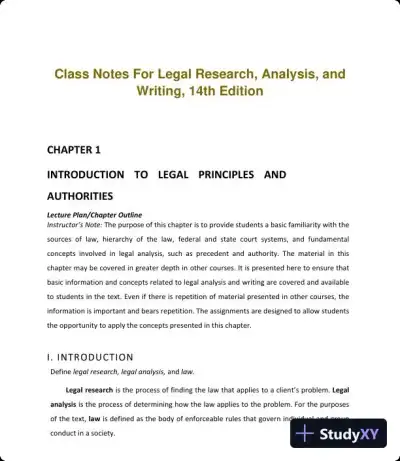 Class Notes
Lecture Notes For Legal Research, Analysis, and Writing, 14th Edition
Civil Law
618 pages57downloadsFeb 2025 Solved Assignments
Assessment 1 Long Answer Question
Civil Law
9 pagesJun 2025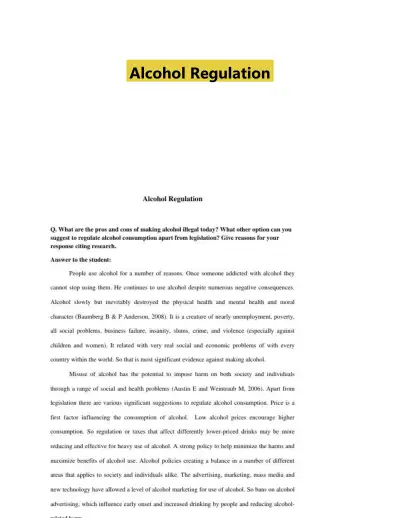 Solved Assignments
Alcohol Regulation
Civil Law
3 pagesMay 2025- Solved AssignmentsSolved Assignments
Ethical and Practical Challenges in Elder Law
Civil Law
1 pageJun 2025
Study this document with CramX
Once it is in your library, every tool can work from it.