

CASP+ CompTIA Advanced Security Practitioner Study Guide: Exam CAS-004 (2022)
- CompTIA Certifications
- 595 pages
- Shared February 2025
- 57 downloads
Learn faster with CASP+ CompTIA Advanced Security Practitioner Study Guide: Exam CAS-004 (2022), featuring key study points for certification.
Preview 31 of 595 pages
See the first 31 pages exactly as they appear in the document.
Page 1 Read page 1 as text
T= StudyX
Page 2 Read page 2 as text
Downloaded from StudyXY.com & + StudyXY ~~ as . a TB Study [| Anything This ContentHas been Posted On StudyXY.com as supplementary learning material. StudyXY does not endrose any university, college or publisher. Allmaterials posted are under the liability of the contribu:ors. wv 6) www.studyxy.com
Page 3 Read page 3 as text
T= StudyX
Page 4 Read page 4 as text
on Exam Vouchers”
Page 5 Read page 5 as text
T= StudyX
Page 6 Read page 6 as text
CASP+ Fourth Edition
Page 7 Read page 7 as text
T= StudyX
Page 8 Read page 8 as text
CASP+ Fourth Edition Nadean H. Tanner Jeff T. Parker Cusmex
Page 9 Read page 9 as text
Copyright © 2023 by John Wiley & Sons, Inc. All rights reserved. Published by John Wiley & Sons, Inc., Hoboken, New Jersey. Published simultaneously in Canada and the United Kingdom. ISBN: 978-1-119-80316-4 ISBN: 978-1-119-80318-8 (ebk.) ISBN: 978-1-119-80317-1 (ebk.) No part of this publication may be reproduced, stored in a retrieval system, or transmitted in any form or by any means, electronic, mechanical, photocopying, recording, scanning, or otherwise, except as permitted under Section 107 or 108 of the 1976 United States Copyright Act, without either the prior written permission of the Publisher, or authorization through payment of the appropriate per-copy fee to the Copyright Clearance Center, Inc., 222 Rosewood Drive, Danvers, MA 01923, (978) 750-8400, fax (978) 750-4470, or on the web at vw copyright. com. Requests to the Publisher for permission should be addressed to the Permissions Department, John Wiley & Sons, Inc., 111 River Street, Hoboken, NJ 07030, (201) 748-6011, fax (201) 748-6008, or online at www. wiley. com/go/permission. Trademarks: WILEY, the Wiley logo, Sybex, and the Sybex logo are trademarks or registered trademarks of John Wiley & Sons, Inc. and/or its affiliates, in the United States and other countries, and may not be used without written permission. CompTIA and CASP+ are trademarks or registered trademarks of CompTIA, Inc. All other trademarks are the property of their respective owners. John Wiley & Sons, Inc. is not associated with any product or vendor mentioned in this book. Limit of Liability/Disclaimer of Warranty: While the publisher and author have used their best efforts in preparing this book, they make no representations or warranties with respect to the accuracy or completeness of the contents of this book and specifically disclaim any implied warranties of merchantability or fitness for a particular purpose. No warranty may be created or extended by sales representatives or written sales materials. The advice and strategies contained herein may not be suitable for your situation. You should consult with a professional where appropriate. Further, readers should be aware that websites listed in this work may have changed or disappeared between when this work was written and when it is read. Neither the publisher nor authors shall be liable for any loss of profit or any other commercial damages, including but not limited to special, incidental, consequential, or other damages. For general information on our other products and services or for technical support, please contact our Customer Care Department within the United States at (800) 762-2974, outside the United States at (317) 572-3993 or fax (317) 572-4002. Wiley also publishes its books in a variety of electronic formats. Some content that appears in print may not be available in electronic formats. For more information about Wiley products, visit our web site at www. wi Ley . com. Library of Congress Control Number: 2022942942 Cover image: © Jeremy Woodhouse/Getty Images, Inc. Cover design: Wiley Study
Page 10 Read page 10 as text
Acknowledgments My first three books were dedicated to Kenneth, Shelby, and Gavin: thank you for your love and support and all your electronical advice. To Kelly Talbot, my editor, thank you for your kind patience and making things easy when you could, which wasn’t often. To Chris Crayton, my technical editor, you were right—most of the time. As a woman in IT for 20+ years, I know there are still man-made disasters. And to Ophelia. . .because I can, so I did. Study
Page 11 Read page 11 as text
T= StudyX
Page 12 Read page 12 as text
About the Authors Nadean H. Tanner is the senior manager of consulting at Mandiant, working most recently on building real-world cyber range engagements to practice threat hunting and incident response. She has been in IT for more than 20 years and specifically in cybersecurity for more than a decade. She holds more than 30 industry certifications including CompTIA CASP+, Security+, and (ISC)* CISSP. Tanner has trained and consulted for Fortune 500 companies and the U.S. Department of Defense in cybersecurity, forensics, analysis, red/blue teaming, vulnerability management, and security awareness. She is the author of the Cybersecurity Blue Team Toolkit, published by Wiley in 2019, and CASP+ Practice Tests: Exam CAS-004, published by Sybex in 2020. She also was the technical editor for the CompTIA Security+ Study Guide: Exam SY0-601 and CompTIA PenTest+ Study Guide: Exam PT0-002 written by Mike Chapple and David Seidl. In her spare time, Tanner enjoys speaking at technical conferences such as Black Hat, Wild West Hacking Fest, and OWASP events. Jeff T. Parker is an information security professional with more than 20 years’ experience in cybersecurity consulting and IT risk management. Jeff started in information security while working as a software engineer for HP in Boston, Massachusetts. Jeff then took the role of a global IT risk manager for Deutsche Post to enjoy Prague in the Czech Republic with his family for several years. There he developed and oversaw the implementation of a new IT risk management strategy. Today, Jeff most enjoys time with his two children in Nova Scotia. Currently, Jeff is developing custom e-learning courses in security awareness for Mariner Innovations. Jeff maintains several certifications, including CISSP, CEH, and CompTIA’s CySA+ and ITT+. He also coauthored the book Wireshark for Security Professionals: Using Wireshark and the Metasploit Framework (Wiley, 2017) with Jessey Bullock. Jeff also has written Wiley practice exam books for the CompTIA certifications CySA+ and the A+ (2018 and 2019, respectively).
Page 13 Read page 13 as text
T= StudyX
Page 14 Read page 14 as text
About the Technical Editor Chris Crayton is a technical consultant, trainer, author, and industry-leading technical editor. He has worked as a computer technology and networking instructor, information security director, network administrator, network engineer, and PC specialist. Chris has authored several print and online books on PC repair, CompTIA A+, CompTIA Security+, and Micro- soft Windows. He has also served as technical editor and content contributor on numerous technical titles for several of the leading publishing companies. He holds numerous industry certifications, has been recognized with many professional and teaching awards, and has served as a state-level SkillsUSA final competition judge.
Page 15 Read page 15 as text
T= StudyX
Page 16 Read page 16 as text
Contents at a Glance Introduction xxv Assessment Test xxXxXV Chapter 1 Risk Management 1 Chapter 2 Configure and Implement Endpoint Security Controls 43 Chapter 3 Security Operations Scenarios 63 Chapter 4 Security Ops: Vulnerability Assessments and Operational Risk 91 Chapter 5 Compliance and Vendor Risk 165 Chapter 6 Cryptography and PKI 2n Chapter 7 Incident Response and Forensics 265 Chapter 8 Security Architecture 301 Chapter 9 Secure Cloud and Virtualization 415 Chapter 10 Mobility and Emerging Technologies 467 Appendix Answers to Review Questions 505 Index 529 T= Study)
Page 17 Read page 17 as text
T= StudyX
Page 18 Read page 18 as text
Contents Introduction xxv Assessment Test xxXxXV Chapter 1 Risk Management 1 Risk Terminology 4 The Risk Assessment Process 6 Asset Identification 6 Information Classification 8 Risk Assessment 9 Risk Assessment Options 14 Implementing Controls 16 Policies Used to Manage Employees 17 Pre-Employment Policies 18 Employment Policies 18 End of Employment and Termination Procedures 20 Cost-Benefit Analysis 21 Continuous Monitoring 22 Enterprise Security Architecture Frameworks and Governance 23 Training and Awareness for Users 24 Best Practices for Risk Assessments 25 Business Continuity Planning and Disaster Recovery 27 Reviewing the Effectiveness of Existing Security Controls 28 Conducting Lessons Learned and After-Action Reviews 30 Creation, Collection, and Analysis of Metrics 31 Metrics 31 Trend Data 32 Analyzing Security Solutions to Ensure They Meet Business Needs 32 Testing Plans 33 Internal and External Audits 34 Using Judgment to Solve Difficult Problems 35 Summary 3s Exam Essentials 36 Review Questions 38 Chapter 2 Configure and Implement Endpoint Security Controls 43 Hardening Techniques 45 Address Space Layout Randomization Use 47 Hardware Security Module and Trusted Platform Module ~~ 48 Trusted Operating Systems 52 Compensating Controls 55
Page 19 Read page 19 as text
xvi Contents Summary 57 Exam Essentials 58 Review Questions 59 Chapter 3 Security Operations Scenarios 63 Threat Management 66 Types of Intelligence 66 Threat Hunting 67 Threat Emulation 67 Actor Types 67 Intelligence Collection Methods 71 Open-Source Intelligence 71 Human Intelligence and Social Engineering 73 Frameworks 74 MITRE Adversarial Tactics, Techniques and Common Knowledge 74 ATT&CK for Industrial Control Systems 75 Cyber Kill Chain 76 Diamond Model of Intrusion Analysis 76 Indicators of Compromise 77 Reading the Logs 77 Intrusion Detection and Prevention 78 Notifications and Responses to IoCs 79 Response 80 Summary 85 Exam Essentials 85 Review Questions 36 Chapter 4 Security Ops: Vulnerability Assessments and Operational Risk 91 Terminology 97 Vulnerability Management 98 Security Content Automation Protocol 103 Self-Assessment vs. Third-Party Vendor Assessment 105 Patch Management 108 Information Sources 110 Tools 112 Assessments 124 Penetration Testing 129 Assessment Types 131 Vulnerabilities 134 Buffer Overflow 134 Integer Overflow 135 Memory Leaks 136
Page 20 Read page 20 as text
Contents xvii Race Conditions (TOC/TOU) 136 Resource Exhaustion 137 Data Remnants 138 Use of Third-Party Libraries 138 Code Reuse 138 Cryptographic Vulnerabilities 138 Broken Authentication 139 Security Misconfiguration 140 Inherently Vulnerable System/Application 140 Client-Side Processing vs. Server-Side Processing 141 Attacks 145 Proactive Detection 153 Incident Response 153 Countermeasures 153 Deceptive Technology 154 USB Key Drops 155 Simulation 155 Security Data Analytics 155 Application Control 156 Allow and Block Lists 157 Security Automation 157 Physical Security 158 Summary 159 Exam Essentials 160 Review Questions 161 Chapter 5 Compliance and Vendor Risk 165 Shared Responsibility in Cloud Computing 168 Cloud Service/Infrastructure Models 169 Cloud Computing Providers and Hosting Options 169 Benefits of Cloud Computing 171 Security of On-Demand/Elastic Cloud Computing 174 Geographic Location 175 Infrastructure 175 Compute 175 Storage 175 Networking 176 Managing and Mitigating Risk 182 Security Concerns of Integrating Diverse Industries 185 Regulations, Accreditations, and Standards 187 PCI DSS 187 GDPR 190 ISO 192 CMMI 193
Page 21 Read page 21 as text
xviii Contents NIST 194 COPPA 195 CSA-STAR 196 HIPAA, SOX, and GLBA 197 Contract and Agreement Types 198 Third-Party Attestation of Compliance 202 Legal Considerations 203 Summary 204 Exam Essentials 205 Review Questions 206 Chapter 6 Cryptography and PKI 21 The History of Cryptography 216 Cryptographic Goals and Requirements 217 Supporting Security Requirements 218 Compliance and Policy Requirements 219 Privacy and Confidentiality Requirements 219 Integrity Requirements 220 Nonrepudiation 220 Risks with Data 221 Data at Rest 221 Data in Transit 222 Data in Process/Data in Use 222 Hashing 223 Message Digest 225 Secure Hash Algorithm 225 Message Authentication Code 226 Hashed Message Authentication Code 226 RACE Integrity Primitives Evaluation Message Digest 226 Poly1305 226 Symmetric Algorithms 227 Data Encryption Standard 230 Triple DES 231 Rijndael and the Advanced Encryption Standard 231 ChaCha 232 Salsa20 232 International Data Encryption Algorithm 232 Rivest Cipher Algorithms 233 Counter Mode 233 Asymmetric Encryption 233 Diffie-Hellman 235 RSA 236 Elliptic Curve Cryptography 237
Page 22 Read page 22 as text
Contents xix ElGamal 238 Hybrid Encryption and Electronic Data Exchange (EDI) 238 Public Key Infrastructure Hierarchy 239 Certificate Authority 240 Registration Authority 241 Digital Certificates 241 Certificate Revocation List 243 Certificate Types 243 Certificate Distribution 244 The Client’s Role in PKI 245 Implementation of Cryptographic Solutions 247 Application Layer Encryption 248 Transport Layer Encryption 249 Internet Layer Controls 250 Additional Authentication Protocols 251 Cryptocurrency 252 Digital Signatures 252 Recognizing Cryptographic Attacks 254 Troubleshooting Cryptographic Implementations 256 Summary 259 Exam Essentials 259 Review Questions 261 Chapter 7 Incident Response and Forensics 265 The Incident Response Framework 268 Event Classifications 268 Triage Events 269 Pre-Escalation Tasks 270 The Incident Response Process 270 Response Playbooks and Processes 273 Communication Plan and Stakeholder Management 274 Forensic Concepts 277 Principles, Standards, and Practices 278 The Forensic Process 279 Forensic Analysis Tools 283 File Carving Tools 284 Binary Analysis Tools 284 Analysis Tools 286 Imaging Tools 288 Hashing Utilities 289 Live Collection vs. Postmortem Tools 290 Summary 294 Exam Essentials 294 Review Questions 295
Page 23 Read page 23 as text
xx Contents Chapter 8 Security Architecture 301 Security Requirements and Objectives for a Secure Network Architecture 310 Services 310 Segmentation 334 Deperimeterization/Zero Trust 344 Merging Networks from Various Organizations 352 Software-Defined Networking 357 Organizational Requirements for Infrastructure Security Design 358 Scalability 358 Resiliency 359 Automation 359 Containerization 360 Virtualization 361 Content Delivery Network 361 Integrating Applications Securely into an Enterprise Architecture 362 Baseline and Templates 362 Software Assurance 367 Considerations of Integrating Enterprise Applications 370 Integrating Security into the Development Life Cycle 373 Data Security Techniques for Securing Enterprise Architecture ~~ 384 Data Loss Prevention 384 Data Loss Detection 387 Data Classification, Labeling, and Tagging 388 Obfuscation 390 Anonymization 390 Encrypted vs. Unencrypted 390 Data Life Cycle 391 Data Inventory and Mapping 391 Data Integrity Management 391 Data Storage, Backup, and Recovery 392 Security Requirements and Objectives for Authentication and Authorization Controls 394 Credential Management 394 Password Policies 396 Federation 398 Access Control 399 Protocols 401 Multifactor Authentication 403 One-Time Passwords 404 Hardware Root of Trust 404 Single Sign-On 405
Page 24 Read page 24 as text
Contents xxi JavaScript Object Notation Web Token 405 Attestation and Identity Proofing 406 Summary 406 Exam Essentials 407 Review Questions 410 Chapter 9 Secure Cloud and Virtualization 415 Implement Secure Cloud and Virtualization Solutions 418 Virtualization Strategies 419 Deployment Models and Considerations 425 Service Models 429 Cloud Provider Limitations 433 Extending Appropriate On-Premises Controls 433 Storage Models 439 How Cloud Technology Adoption Impacts Organization Security 443 Automation and Orchestration 445 Encryption Configuration 445 Logs 446 Monitoring Configurations 447 Key Ownership and Location 448 Key Life-Cycle Management 448 Backup and Recovery Methods 449 Infrastructure vs. Serverless Computing 450 Software-Defined Networking 450 Misconfigurations 451 Collaboration Tools 451 Bit Splitting 461 Data Dispersion 461 Summary 461 Exam Essentials 462 Review Questions 463 Chapter 10 Mobility and Emerging Technologies 467 Emerging Technologies and Their Impact on Enterprise Security and Privacy 471 Artificial Intelligence 472 Machine Learning 472 Deep Learning 472 Quantum Computing 473 Blockchain 473 Homomorphic Encryption 474 Distributed Consensus 475 Big Data 475
Page 25 Read page 25 as text
xxii Contents Virtual/Augmented Reality 475 3D Printing 476 Passwordless Authentication 476 Nano Technology 477 Biometric Impersonation 477 Secure Enterprise Mobility Configurations 478 Managed Configurations 479 Deployment Scenarios 486 Mobile Device Security Considerations 487 Security Considerations for Technologies, Protocols, and Sectors 495 Embedded Technologies 495 ICS/Supervisory Control and Data Acquisition 496 Protocols 498 Sectors 499 Summary 500 Exam Essentials 500 Review Questions 501 Appendix Answers to Review Questions 505 Chapter 1: Risk Management 506 Chapter 2: Configure and Implement Endpoint Security Controls 507 Chapter 3: Security Operations Scenarios 509 Chapter 4: Security Ops: Vulnerability Assessments and Operational Risk 511 Chapter 5: Compliance and Vendor Risk 513 Chapter 6: Cryptography and PKI 514 Chapter 7: Incident Response and Forensics 516 Chapter 8: Security Architecture 519 Chapter 9: Secure Cloud and Virtualization 522 Chapter 10: Mobility and Emerging Technologies 524 Index 529
Page 26 Read page 26 as text
Table of Exercises Exercise 1.1 Calculating Annualized Loss Expectancy. ...........................12 Exercise 1.2 Reviewing the Employee Termination Process . ......................21 Exercise 2.1 Running a Security Scanner to Identify Vulnerabilities ................50 Exercise 2.2 Bypassing Command Shell Restrictions . ...........................51 Exercise 3.1 Using WinDump to Sniff Traffic ...................................79 Exercise 3.2 Reviewing and Assessing ACLs .......................c000nu......84 Exercise 4.1 Tracking Vulnerabilities in Software...............................103 Exercise 4.2 Performing Passive Reconnaissance on Your Company, School, or Another Organization .................cooeveuniaeeeaa.... 114 Exercise 5.1 What Services Should Be Moved to the Cloud? .....................171 Exercise 5.2 Identifying Risks and Issues with Cloud Computing .................180 Exercise 5.3 Reviewing Documents ..................coiiiiiiiiiieaao.....200 Exercise 8.1 Configuring iptables ..................coiiiiiaeeiiiiinna.....317 Exercise 8.2 Using Pingdom Full PageTest. ........................ccoooo......323 Exercise 8.3 Testing Your Antivirus Program ..................................333 Exercise 8.4 Reviewing and Assessing ACLs ..................................343 Exercise 9.1 Creating a Virtual Machine ......................................420 Exercise 9.2 Identifying What Services Should Be Moved to the Cloud ............428 Exercise 9.3 Identifying Risks and Issues with Cloud Computing .................436 Exercise 9.4 Understanding Online Storage ....................coooeennn.....441 Exercise 9.5 Turning to the Cloud for Storage and Large FileTransfer .............444 Exercise 9.6 Eavesdropping on Web Conferences. .............................452 Exercise 9.7 Sniffing Email withWireshark ...................................457 Exercise 9.8 Sniffing VoIP with Cain & Abel ...................................459
Page 27 Read page 27 as text
T= StudyX
Page 28 Read page 28 as text
Introduction The CASP+ certification was developed by the Computer Technology Industry Association (CompTIA) to provide an industry-wide means of certifying the competency of security pro- fessionals who have a minimum of 10 years’ general hands-on IT experience with at least 5 years” hands-on IT security experience. The security professional’s job is to protect the confi- dentiality, integrity, and availability of an organization’s valuable information assets. As such, these individuals need to have the ability to apply critical thinking and judgment. oe According to CompTIA, the CASP+ certification is a vendor-neutral cre- << dential. CASP+ validates advanced-level security skills and knowledge internationally. There is no prerequisite, but CASP+ certification is intended to follow CompTIA Network+, Security+, CySA+, Cloud+, and PenTest+ or equivalent certifications/experience and has a technical, “hands-on” focus at the enterprise level. Many certification books present material for you to memorize before the exam, but this book goes a step further in that it offers best practices, tips, and hands-on exercises that help those in the field of security better protect critical assets, build defense in depth, and accu- rately assess risk. If you're preparing to take the CASP+ exam, it is a good idea to find out as much information as possible about computer security practices and techniques. Because this test is designed for those with years of experience, you will be better prepared by having the most hands-on experience possible; this study guide was written with this in mind. We have included hands-on exercises, real-world scenarios, and review questions at the end of each chapter to give you some idea as to what the exam is like. You should be able to answer at least 90 percent of the test questions in this book correctly before attempting the exam; if you're unable to do so, reread the problematic chapters and try the questions again. Your score should improve. Before You Begin the CompTIA CASP+ Certification Exam Before you begin studying for the exam, it’s good for you to know that the CASP+ certification is offered by CompTIA (an industry association responsible for many certifica- tions) and is granted to those who obtain a passing score on a single exam. Before you begin studying for the exam, learn all you can about the certification.
Page 29 Read page 29 as text
xvi Introduction Alist of the CASP+ CAS-004 exam objectives is presented in this intro- TE duction. See the section “The CASP+ Exam Objective Map.” Obtaining CASP+ certification demonstrates that you can help your organization design and maintain system and network security services to secure the organizations assets. By obtaining CASP+ certification, you show that you have the technical knowledge and skills required to conceptualize, design, and engineer secure solutions across complex enterprise environments. Who Should Read This Book The CompTIA CASP+ Study Guide: Exam CAS-004, Fourth Edition, is designed to give you insight into the working world of IT security, and it describes the types of tasks and activ- ities that a security professional with 5-10 years of experience carries out. Organized classes and study groups are the ideal structures for obtaining and practicing with the recommended equipment. College classes, training classes, and boot camps are recommended TE ways to gain proficiency with the tools and techniques discussed in the book. However, nothing delivers hands-on learning like experiencing your own attempts, successes, and mistakes—on a home lab. More on home labs later. What You Will Learn This CompTIA CASP+ Study Guide covers all you need to know to pass the CASP+ exam. The exam is based on exam objectives, and this study guide is based on the current iteration of the CASP+ exam, version CAS-004. Per the CASP+ CompTIA objectives for exam version CAS-004, the four domains include the following: = Domain 1.0 Security Architecture = Domain 2.0 Security Operations = Domain 3.0 Security Engineering and Cryptography = Domain 4.0 Governance, Risk, and Compliance Each of these four domains further divide into objectives. For example, the fourth domain, “Governance, Risk, and Compliance,” is covered across three objectives: Study
Page 30 Read page 30 as text
Introduction vii 4.1 Given a set of requirements, apply the appropriate risk strategies. 4.2 Explain the importance of managing and mitigating vendor risk. 4.3 Explain compliance frameworks and legal considerations, and their organiza- tional impact. 4.4 Explain the importance of business continuity and disaster recovery concepts. These objectives read like a job task, but they are more akin to a named subset of knowledge. Many subobjectives and topics are found under each objective. These are listed hierarchically, ranging from 20 to 50 topics per objective. Yes, that’s a lot of topics when you add it all up. In short, there is a lot of material to cover. Next, we address how the book tackles it all. How This Book Is Organized Remember how we just explained the CASP+ exam is based on domains and objectives? Your goal for exam preparation is essentially to cover all of those subobjectives and topics. That was our goal, too, in writing this study guide, so that’s how we structured this book—around the same exam objectives, specifically calling out every subobjective and topic. If a topic or phrase from the exam objectives list isn’t specifically called out, the con- cepts and understanding behind that topic or phrase are discussed thoroughly in the relevant chapters. Nonetheless, CompTIA didn’t structure the exam objectives to make for good reading or an easy flow. It would be simple to tell you that each chapter correlates exactly to two or three objectives. Instead, the book is laid out to create a balance between a relevant flow of information for learning and relatable coverage of the exam objectives. This book structure then serves to be most helpful for identifying and filling any knowledge gaps that you might have in a certain area and, in turn, best prepare you for the exam. Extra Bits Beyond what the exam requires, there is of course some “added value” in the form of tips, notes, stories, and URLs where you can go for additional information online. This is typ- ical for the Sybex study guide format. The extra bits are obviously set apart from the study guide text, and they can be enjoyed as you wish. In most cases, URLs will point to a recent news event related to the topic at hand, a link to the cited regulation, or the site where a tool can be downloaded. If a particular concept interests you, you are encouraged to follow up with that article or URL. What you will learn in this study guide is exactly what you need to know to prepare for the CASP+ certification exam. What you will learn from those tips, notes, and URLs is additional context in which the topic at hand may be better understood. Next, we discuss what you should already have in order to be successful when learning from this book. Study
Page 31 Read page 31 as text
viii Introduction Requirements: Practice and Experience To be most successful in reading and learning from this book, you will need to bring something to the table yourself, that is, your experience. Experience You're preparing to take one of CompTIA’s most advanced certification exams. CompTIA’s website associates the CASP+ exam with the SANS Institute GIAC Certified Enterprise Defender (GCED) exam, as only these two exams focus on “cybersecurity practitioner skills” at an advanced level. In comparison, the Certified Information Systems Security Professional (CISSP) and Certified Information Security Manager (CISM) exams focus on cybersecurity management skills. The CASP+ exam covers a very wide range of information security topics. Understand- ably, the range is as wide as the range of information security job disciplines. As each of us grows from a junior level to the higher-level, technical lead roles, the time we spend working in one specialty area overshadows our exposure to other specialties. For example, three senior security practitioners working as an Active Directory engineer, a malware reverse engineer, and a network administrator might be highly skilled in their respective jobs yet have only a simple understanding of each other’s roles. The exam topics include specific techniques and technologies that would be familiar to people who have held lead roles in the corresponding area of information security. Someone with experience in one or more technical areas has a great advantage, and that experience will benefit the candidate studying from this book and taking the CASP+ exam. Last, CompTIA’s recommended level of experience is a minimum of 10 years of gen- eral hands-on IT experience, including at least five years of hands-on technical security experience. If you have the five years, it is very likely that you have had at least minimal exposure to or understanding of most topics covered, enough for you to benefit from reading this book. Practice Given that the certification’s title includes the word practitioner, you are expected to have, or be capable of building, a home lab for yourself. This does not mean that you need a 42U rack full of servers and network hardware in the basement (though it might bring up a lot of excitement at home). A home lab can be as simple as having one or two virtualized machines (VMs) running on your laptop or desktop with adequate CPU and RAM. This can be done using VirtualBox or VMware Workstation Player, both of which are free. There are many prebuilt VMs available online, designed specifically for security practice. A home lab can be started at little to no cost and be running within 15 minutes. No excuses. Dedicating some routine time on a home lab will advance your skills and experience as well as demonstrate your passion for the subject. Current and future managers will love it! Seriously, though, when you make time to build, tweak, break, and rebuild systems in your home lab, not only do you readily advance your skills and learn new technologies, but you do so without the consequences of bringing down production.
564 more pages in the full document
Unlock it once and it stays in your library, ready to chat with or turn into flashcards.
Unlock the full documentMore CompTIA Certifications study materials
See all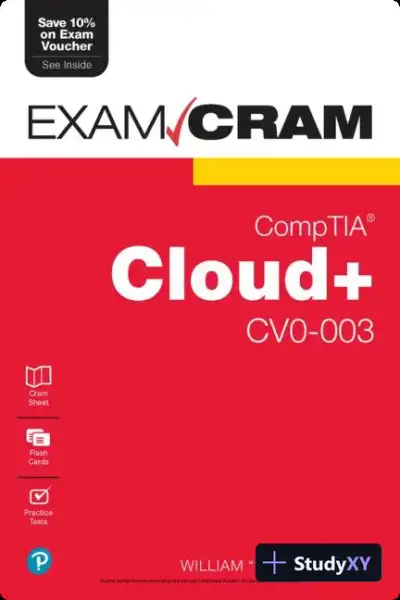 Certification Guides
CompTIA Cloud+ CV0-003 Exam Cram (2021)
CompTIA Certifications
434 pages156downloadsFeb 2025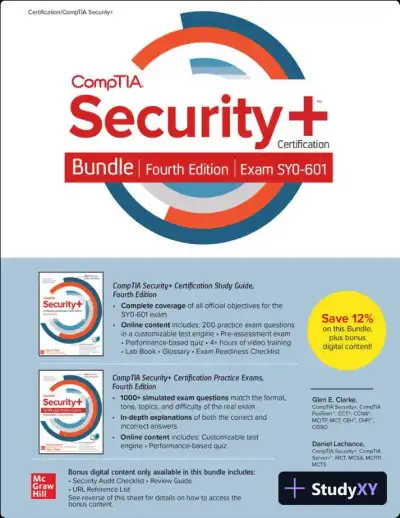 Certification Guides
CompTIA Security+ SY0-601 Exam Certification Bundle, 4th Edition (2021)
CompTIA Certifications
1897 pages152downloadsFeb 2025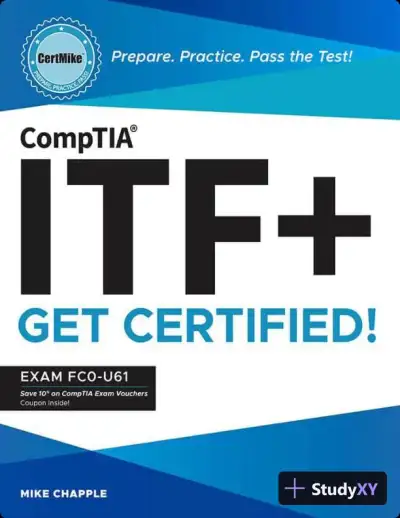 Certification Guides
CompTIA ITF+ CertMike: Exam FC0-U61 (2023)
CompTIA Certifications
464 pages144downloadsFeb 2025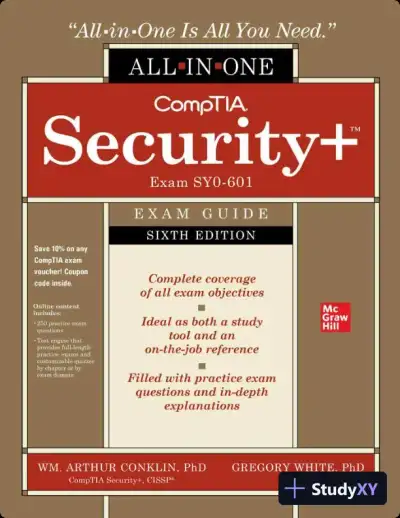 Certification Guides
CompTIA Security+ All-in-One SY0-601 Exam Guide, 6th Edition (2021)
CompTIA Certifications
1093 pages144downloadsFeb 2025 Certification Guides
Comptia Security+ Practice Tests : exam sy0-601, 2nd Edition (2021)
CompTIA Certifications
339 pages144downloadsFeb 2025 Certification Guides
CompTIA Server+ SK0-005 Certification All-in-One Exam Guide, 2nd Edition (2021)
CompTIA Certifications
628 pages144downloadsFeb 2025 Certification Guides
CompTIA Network+ N10-008 Exam Cram (2021)
CompTIA Certifications
654 pages143downloadsFeb 2025 Certification Guides
CompTIA Security+ Certification Study Guide Exam SY0-601 (2022)
CompTIA Certifications
1024 pages134downloadsFeb 2025
Study this document with CramX
Once it is in your library, every tool can work from it.