

The Evolution of Freezers
- History
- 1 pages
- Shared June 2025
Explore the evolution of freezers from 1800s ice harvesting to modern energy-efficient models, highlighting key inventions like the electric refrigerator, chest and upright freezers, and frost-free technology shaping food preservation today.
Preview 1 of 1 pages
See the first page exactly as it appears in the document.
Page 1 Read page 1 as text
When natural ice was harvested and kept in icehouses in the early 1800s. the freezer's history began. The invention of the first industrial ice maker in the 1860s completely altered how food was transported and stored. Due to this, the first mechanical refrigeration unit was created in 1876. It used a compressor and coolant to cool the air, which then cooled the food. In 1913, a coolant, compressor, and motor were combined to create the first electric refrigerator. But it wasn't until the 1940s that the first freezer was invented, and it wasn't until the 1950s that the first standalone freezer for residential use was made. The original freezers had doors that opened upward and were typically top- loading. The first chest-style freezer, which provided more storage space and was more energy-efficient, was introduced in the 1960s. The upright freezer's popularity increased in the 1970s as a result of its accessibility and convenience. Today freezers are a common fixture in homes and businesses,, and there are many different models and types to choose from to suit a range of requirements. Since their modest beginnings in the early 1900s, these appliances have advanced significantly, including chest freezers, upright freezers, and even combination refrigerator-freezer units. Homes began to use refrigerators more frequently bythe 1930s, and World War II saw a rapid increase in the development of freezers because of their value in preserving food supplies. Freezer prices dropped after World War II, and more homes began to have them. When the first commercial chest freezers were first introduced in the 1940s, they were primarily used by grocery stores and food establishments to store frozen goods. Upright freezers, which had a smaller footprint and could fit in smaller spaces, started to b e made available for residential use in the 1950s. Freezer technology has developed and gotten better over time. Energy- efficient models were created in the 1970s and 1980s, which reduced their environmental impact and lowered energy costs. Frost-free freezers were introduced in the 1990s, doing away with the requirement for manual defrosting. Small chest freezers and large upright models with multiple compartments and digital controls are both common sizes and styles of freezers today. They have developed into a necessary piece of equipment for both homes and businesses, as they aid in food preservation and waste reduction.
More History study materials
See all Exam Guides
Test Bank For Visions of America: A History of the United States, Combined Volume 2nd Edition Test Bank
History
1084 pages111downloadsFeb 2025 Exam Guides
Cengage Advantage Books: Making America, Volume 1 To 1877: A History Of The United States, 7th Edition Test Bank
History
170 pages60downloadsFeb 2025 Exam Guides
Test Bank for The American Journey: A History of the United States, Combined Volume, 8th Edition
History
447 pagesMay 2025 Exam Guides
Palmer, A History of Europe in the Modern World, 11th Edition Test Bank
History
766 pagesMay 2025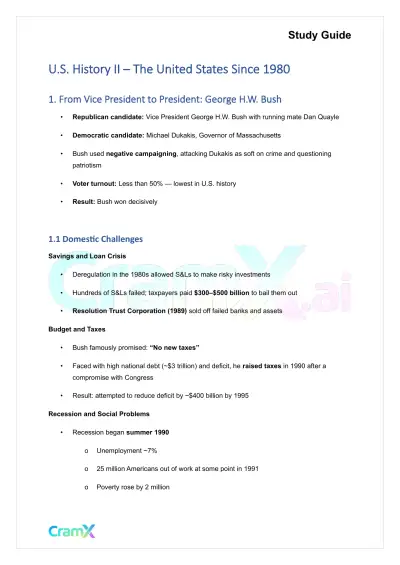 Quick Guides
U.S. History II - The United States Since 1980
History
16 pagesMar 2026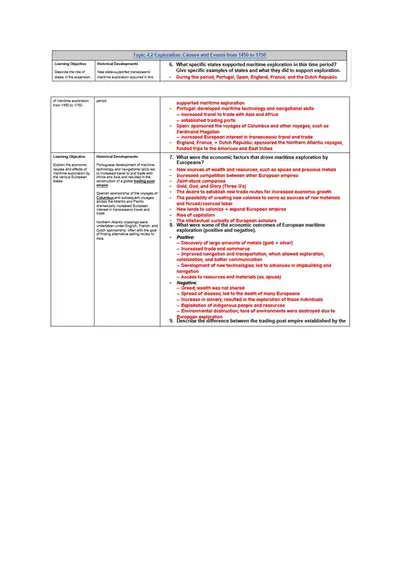 Solved Assignments
AP World History Unit 4 Study Guide (Transoceanic
History
14 pagesJun 2025 Solved Assignments
Liberty University CSTU 101 Quiz 3 Complete Solutions Correct Answers Key Four different versions
History
9 pagesMay 2025 Solved Assignments
Liberty University HIUS 221 Quiz 2 Complete Solutions Correct Answers Key
History
31 pagesMay 2025
Study this document with CramX
Once it is in your library, every tool can work from it.