

SHRM Society for Human Resource Management Complete Study Guide: SHRM-CP Exam and SHRM-SCP Exam (2022)
- Society for Human Resource Management
- 499 pages
- Shared February 2025
- 138 downloads
SHRM Society for Human Resource Management Complete Study Guide: SHRM-CP Exam and SHRM-SCP Exam (2022) provides real-world examples to reinforce your learning.
Preview 31 of 499 pages
See the first 31 pages exactly as they appear in the document.
Page 1 Read page 1 as text
T= StudyX
Page 2 Read page 2 as text
Downloaded from StudyXY.com & + StudyXY nas, as . a TB Study [| Anything This ContentHas been Posted On StudyXY.com as supplementary learning material. StudyXY does not endrose any university, college or publisher. Allmaterials posted are under the liability of the contribu:ors. wv 6) www.studyxy.com
Page 3 Read page 3 as text
T= StudyX
Page 4 Read page 4 as text
Society for Human Resource Management Sandra M. Reed, SHRM-SCP
Page 5 Read page 5 as text
Copyright © 2022 by John Wiley & Sons, Inc. All rights reserved. Published by John Wiley & Sons, Inc., Hoboken, New Jersey. Published simultaneously in Canada. ISBN: 978-1-119-80548-9 ISBN: 978-1-119-80550-2 (ebk.) ISBN: 978-1-119-80549-6 (ebk.) No part of this publication may be reproduced, stored in a retrieval system, or transmitted in any form or by any means, electronic, mechanical, photocopying, recording, scanning, or otherwise, except as permitted under Section 107 or 108 of the 1976 United States Copyright Act, without either the prior written permission of the Publisher, or authorization through payment of the appropriate per-copy fee to the Copyright Clearance Center, Inc., 222 Rosewood Drive, Danvers, MA 01923, (978) 750-8400, fax (978) 750-4470, or on the web at vw copyright. com. Requests to the Publisher for permission should be addressed to the Permissions Department, John Wiley & Sons, Inc., 111 River Street, Hoboken, NJ 07030, (201) 748-6011, fax (201) 748-6008, or online at http: //www.wiley.com/go/permission. Limit of Liability/Disclaimer of Warranty: The publisher and the author make no representations or warranties with respect to the accuracy or completeness of the contents of this work and specifically disclaim all warranties, including without limitation warranties of fitness for a particular purpose. No warranty may be created or extended by sales or promotional materials. The advice and strategies contained herein may not be suitable for every situation. This work is sold with the understanding that the publisher is no engaged in rendering legal, accounting, or other professional services. If professional assistance is required, the services of a competent professional person should be sought. Neither the publisher nor the author shall be liable for damages arising herefrom. The fact that an organization or Website is referred to in this work as a citation and/or a potential source of further information does not mean that the author or the publisher endorses the information the organization or Website may provide or recommendations it may make. Further, readers should be aware the Internet Websites listed in this work may have changed or disappeared between when this work was written and when it is read. For general information on our other products and services or for technical support, please contact our Customer Care Department within the United States at (800) 762-2974, outside the United States at (317) 572-3993 or fax (317) 572-4002. Wiley also publishes its books in a variety of electronic formats. Some content that appears in print may not be available in electronic formats. For more information about Wiley products, visit our web site at www. wi Ley . com. Library of Congress Control Number: 2021948880 TRADEMARKS: WILEY, the Wiley logo, Sybex, and the Sybex logo are trademarks or registered trademarks of John Wiley & Sons, Inc. and/or its affiliates, in the United States and other countries, and may not be used without written permission. SHRM is a registered trademark of Society for Human Resource Management. All other trademarks are the property of their respective owners. John Wiley & Sons, Inc. is not associated with any product or vendor mentioned in this book. Cover image: © Jeremy Woodhouse/Getty Images Cover design: Wiley Study
Page 6 Read page 6 as text
This book is dedicated to the tireless HR professionals that show up every single day and try to make their workplaces—and themselves—better. I see you. Study)
Page 7 Read page 7 as text
T= StudyX
Page 8 Read page 8 as text
Acknowledgments I would like to start by acknowledging the efforts of the incredible editorial team I had the privilege of working with on this project! It would not have happened without the guidance (and nudging) from my project manager, Gary Schwartz, who barely digitally reacted when I added four chapters halfway through the project and submitted content in such a nonlinear fashion. Similarly, thanks to my editor, Kenyon Brown, whose “flexibility-with- accountability” approach is exactly what my INTP (Introverted, Intuitive, Thinking, and Per- ceiving) personality requires. Whenever I start a new book, I put in a special request for Pantelis Markou as the technical editor. Having him review my work gives me confidence that, if I make an error, he will not only catch it, but he will also provide feedback on how to make the content stronger. I was also fortunate to call upon his expertise for the special features in Chapter 11, “Diversity and Inclusion,” along with the professional expertise of Reut Schwartz-Hebron, Jeffrey Pietrzak, and Dawn Kelley. I am grateful that they understood my vision for that chapter and for their generosity in sharing their work. I have had the absolute luxury of working with clients and students whom I adore. Thank you to the businesses and students who put their trust in me and allowed me to conduct my experiments in their “petri dishes.” We have learned together the incredible value of heart- felt leadership over these last 18 months, and they (the leaders and employees) were my role models. Finally, I'd like to acknowledge my family, Chris, Clara, Calvin, and Jen. I tend to disap- pear when writing, and yet they continue to support and encourage and love and demand and enrich my life beyond any professional work I could imagine. This last year was intense beyond belief, and I wouldn’t want to “do life” without them!
Page 9 Read page 9 as text
T= StudyX
Page 10 Read page 10 as text
About the Author Sandra M. Reed, SPHR, SHRM SCP is a leading expert in the certification of human resource professionals. She is the author of HRCI: A Guide to the Human Resource Body of Knowledge (HRBoK) (Wiley, 2017), PHR and SPHR Professional in Human Resources Certification Complete Deluxe Study Guide: 2018 Exams, Second Edition (Wiley, 2019), and PHR/SPHR Exam For Dummies with Online Practice, Second Edition (For Dummies Press, 2021). Reed has trained adult learners at the University of California, Davis; the Uni- versity of the Pacific, and California State University, Stanislaus. She holds an undergraduate degree in industrial-organizational psychology and a graduate degree in organizational lead- ership. She is a master practitioner of the Myers-Briggs Type Indicator (MBTI) personality assessment, and the owner of a business consulting group that specializes in strategy, organi- zational effectiveness and design, and leadership development for small businesses. You can find her at www. sandrareed. co. About the Technical Editor Pantelis Markou, PhD, is the chief administrative officer for Mikimoto America and an adjunct professor of business psychology at the Chicago School of Professional Psychology. He has over 20 years of corporate experience managing human capital in the fashion and luxury jewelry industries, and some of his specialties are business strategy, executive selection and coaching, talent management and leadership development, change management, orga- nizational design and restructuring, and cultural integration for mergers and acquisitions. In addition to his responsibilities in human resources, he oversees information technology, real estate, legal, and operations at t=company headquarters in New York. Markou holds a bachelor of science in psychology from Brooklyn College, a master’s degree in organizational psychology from Columbia University, and a PhD in business psychology from the Chicago School of Professional Psychology.
Page 11 Read page 11 as text
T= StudyX
Page 12 Read page 12 as text
Contents at a Glance Introduction xxiii SHRM CP Assessment Test XXVi Part | Preparing for the Exams 1 Chapter 1 The Basics of SHRM Certification 3 Chapter 2 Preparing for the Exam 19 Part Il Understanding Human Resource Competencies 33 Chapter 3 The Dynamic Environment of Human Resource Management 35 Chapter 4 The Business Competency Cluster 47 Part Ill The People Knowledge Domain 69 Chapter 5 Strategic Human Resource Management al £4 Chapter 6 Talent Acquisition 93 3 Chapter 7 Employee Engagement and Retention 115 Chapter 8 Learning and Development 141 Chapter 9 Total Rewards 163 Part IV The Workplace Knowledge Domain 181 Chapter 10 HR in the Global Context 183 Chapter 11 Diversity and Inclusion 199 Chapter 12 Risk Management 227 Chapter 13 Corporate Social Responsibility 251 Chapter 14 U.S. Employment Laws and Regulations 271 Part V The Organization Knowledge Domain 309 Chapter 15 Structure of the HR Function 3N1 Chapter 16 Organizational Effectiveness and Development 335 Chapter 17 Workforce Management 355 Study! || Rees ocorins 9 & svn 71209 |
Page 13 Read page 13 as text
x Contents at a Glance Chapter 18 Employee and Labor Relations 377 Chapter 19 Technology Management 399 Appendix A Answers to the Chapter Review Questions 413 Appendix B Summary of Form 1-9 Changes 433 Index 437 Study! [JE E— & svn 71209 |
Page 14 Read page 14 as text
Contents Introduction xxiii SHRM CP Assessment Test xxvi Part | Preparing for the Exams 1 Chapter 1 The Basics of SHRM Certification 3 Exam Notables 4 Exam Overview 4 Exam Eligibility 5 Exam Basics 6 The SHRM Exam Objectives 10 Breaking Down the BoCK 10 The Value of HR Certification 14 Summary 16 Key Terms 16 Exam Essentials 16 Chapter 2 Preparing for the Exam 19 Exam Notables 20 Study Plans 20 Group vs. Self-Study 21 The SHRM Exam Objectives 22 Using Exam Weights 22 Practice Exams 24 Exam-Taking Strategies 24 Understand the Stem 25 Guess When Necessary 26 Exam Day Basics 26 Mental Mechanisms 27 Mindset 28 Confidence Building 29 Summary 30 Exam Essentials 31 Part II Understanding Human Resource Competencies 33 Chapter 3 The Dynamic Environment of Human Resource Management 35 Exam Notables 36 An Evolving Landscape 36 Study)
Page 15 Read page 15 as text
xii Contents Strategic Alignment 37 Global Operations 37 Diversity, Equity, and Inclusion 37 Talent Acquisition and Workforce Management 37 Regulatory Environment 38 Measuring Results 38 Corporate Social Responsibility 38 HR Demographics 38 A Day in the Life of HR 40 HR Professional Development 42 Managing Burnout 43 Summary 45 Exam Essentials 45 Chapter 4 The Business Competency Cluster a7 Exam Notables 48 Business Competencies 49 Business Acumen 49 Business and Competitive Awareness 49 Financial Analysis 51 Strategic Alignment 53 Consultation 58 Evaluating Business Challenges 59 Designing and Implementing HR Solutions 59 Critical Evaluation 63 Data Advocate 63 Data Gathering and Analysis 64 Summary 66 Key Terms 66 Exam Essentials 66 Part lll The People Knowledge Domain 69 Chapter 5 Strategic Human Resource Management 7 Exam Notables 72 The SHRM Exam Objectives 73 Strategic Business Management 75 Systems Theory 76 Systems Thinking 76 Strategic Planning 77 Strategic Analysis 78 The Strategic Planning Process 81 Strategy Formulation 81
Page 16 Read page 16 as text
Contents xiii Strategy Implementation and Evaluation 83 Project Management 84 SHRM SCP Only 85 Becoming Strategic Business Partners 86 Engaging Leaders 86 Evaluating HR Activities 87 Summary 88 Key Terms 88 Exam Essentials 89 Review Questions 90 Chapter 6 Talent Acquisition 93 Exam Notables 94 The SHRM Exam Objectives 94 Aligning Strategy 9% Mergers and Acquisitions 9% Joint Ventures 97 Strategic Alliance 97 Divestitures and Downturns 97 Talent Planning 98 The Employer Brand 99 Employee Value Proposition 99 Job Analysis and Descriptions 100 Recruiting 102 Recruiting Methods 103 Selection 104 Employment Interviews 104 Assessment Centers 105 Job Offers 106 Education, Certification, and Licensing 106 Negotiation Techniques 107 Acculturation, Socialization, Orientation, and Onboarding 108 Workforce Analytics 108 SHRM SCP Only 110 Summary 110 Key Terms 111 Exam Essentials 112 Review Questions 113 Chapter 7 Employee Engagement and Retention 115 Exam Notables 116 The SHRM Exam Objectives 116 Employee Engagement 119 Organizational Behavior 119
Page 17 Read page 17 as text
xiv Contents Job Attitudes 119 Organizational Commitment 120 Job Characteristics 121 The Role of Culture 122 Assessing Engagement 123 Positive Engagement Strategies 124 Engaging a Remote Workforce 125 Human Resources and the Employee Life Cycle 126 Performance Management Systems 128 Performance Standards 129 Evaluating Performance 130 Appraisals 132 Positive Feedback Systems 133 Evaluating Performance Management Systems 134 SHRM SCP Only 134 Summary 136 Key Terms 136 Exam Essentials 137 Review Questions 138 Chapter 8 Learning and Development 141 Exam Notables 142 The SHRM Exam Objectives 142 The Learning and Development System 144 Knowledge Management 145 Learning Management Systems 146 Career Development 146 L&D Intervention Strategies 147 Needs Analysis 147 Training Interventions and Delivery 150 Instructional Design 151 Developmental Interventions 154 Leadership Development 157 SHRM SCP Only 158 Summary 158 Key Terms 159 Exam Essentials 160 Review Questions 161 Chapter 9 Total Rewards 163 Exam Notables 164 The SHRM Exam Objectives 164 Strategic Total Rewards 166 Building Pay Structures 166
Page 18 Read page 18 as text
Contents xv Job Evaluation 167 Collecting Compensation Data 168 Data Collection Methods 171 Pay Practices 172 Labor Law Compliance 173 Benefits 174 Compensation Metrics 175 SHRM SCP Only 176 Summary 177 Key Terms 178 Exam Essentials 178 Review Questions 179 Part IV The Workplace Knowledge Domain 181 Chapter 10 HR in the Global Context 183 Exam Notables 184 The SHRM Exam Objectives 184 Defining Global Strategy 186 Multinational Enterprises 187 Structuring an MNE 187 HR and Due Diligence 188 Global Staffing 188 Managing Expatriates 189 SHRM SCP Only 194 Summary 195 Key Terms 195 Exam Essentials 196 Review Questions 197 Chapter 11 Diversity and Inclusion 199 Exam Notables 200 The SHRM Exam Objectives 201 Defining Diversity, Equity, and Inclusion 202 Focusing on Diversity, Equity, and Inclusion 205 A Strategic Focus 207 An Operational Focus 209 Demographic Barriers to Success 212 Workplace Accommodations 220 Competency and Knowledge Alignment 221 Operating in a Diverse Workplace 221 Advocate for Diversity and Inclusion 221 SHRM SCP Only 223 Summary 223
Page 19 Read page 19 as text
xvi Contents Key Terms 224 Exam Essentials 224 Review Questions 225 Chapter 12 Risk Management 227 Exam Notables 228 The SHRM Exam Objectives 228 Types of Risk 230 Workplace Safety and Health 231 Security Risks 235 Enterprise Risk Management 238 The Risk Management Process 239 Risk Management Techniques 241 Written Risk Management Plans 243 SHRM SCP Only 245 Summary 246 Key Terms 247 Exam Essentials 247 Review Questions 248 Chapter 13 Corporate Social Responsibility 251 Exam Notables 252 The SHRM Exam Objectives 252 Defining Corporate Social Responsibility (CSR) 254 Corporate Shared Value 257 Benefits of Corporate Social Responsibility 258 Corporate Citizenship 258 Sustainable Business Practices 260 The Role of Human Resources 262 Business Strategy 262 Talent Acquisition 262 Risk Management 263 Total Rewards 264 Learning and Development 265 SHRM SCP Only 265 Summary 266 Key Terms 267 Exam Essentials 267 Review Questions 268 Chapter 14 U.S. Employment Laws and Regulations 271 Exam Notables 272 The SHRM Exam Objectives 272 The Regulatory Environment 275
Page 20 Read page 20 as text
Contents xvii Laws Enforced by the Equal Employment Opportunity Commission 277 Americans with Disabilities Act 278 Civil Rights Act of 1964 278 Genetic Information Nondiscrimination Act 279 Laws Enforced/Administered by the Occupational Safety and Health Administration 279 Occupational Safety and Health Act 280 National Institute for Occupational Safety and Health 281 Whistleblower Protection 281 Laws Administered by the Office of Workers’ Compensation Programs 282 Federal Employees’ Compensation Act 282 Longshore and Harbor Workers’ Compensation Act 282 Laws Administered by the National Labor Relations Board and the Office of Labor-Management Standards 282 National Labor Relations Act 283 Labor Management Relations Act 283 Labor-Management Reporting and Disclosure Act 285 Laws Administered by the Wage and Hour Division 286 Davis-Bacon Act 287 Employee Polygraph Protection Act 287 Fair Labor Standards Act 288 Family and Medical Leave Act 289 ‘Walsh-Healey Public Contracts Act 290 Laws Administered by the Mine Safety and Health Administration 290 Federal Mine Safety and Health Act 291 The Mine Improvement and New Emergency Response Act 292 Laws Administered by the Employee Benefits Security Administration 292 Employee Retirement Income Security Act 293 Patient Protection and Affordable Care Act 294 Laws Administered by the Department of Homeland Security or the Department of Justice 294 H2A Temporary Agricultural Workers 294 Immigration and Nationality Act 295 Miscellaneous Laws and Concepts 296 Drug Free Workplace Act 296 Garnishment of Wages 296 Harassment 296 Lilly Ledbetter Fair Pay Act 297
Page 21 Read page 21 as text
xviii Contents LGBTQ Sex-Based Discrimination 298 Retaliation 298 Sexual Harassment 299 Worker Adjustment and Retraining Notification Act 299 Retention of Documents 300 SHRM-SCP Only 302 Summary 303 Key Terms 304 Exam Essentials 304 Review Questions 306 Part V The Organization Knowledge Domain 309 Chapter 15 Structure of the HR Function 31 Exam Notables 312 The SHRM Exam Objectives 312 Human Resources as a Core Competency 314 The Role of Human Resources 315 HR’s Job 317 Integrating Human Resources 320 Human Resource Service Models 322 Centralized/Decentralized HR Structures 322 Outsourcing 323 Measuring Human Resource Contributions 324 Competency and Knowledge Alignment 326 Delivering Messages 326 Exchanging Organizational Information 327 Listening 327 Networking 328 Relationship Building 329 SHRM SCP Only 329 Summary 330 Key Terms 331 Exam Essentials 331 Review Questions 332 Chapter 16 Organizational Effectiveness and Development 335 Exam Notables 336 The SHRM Exam Objectives 336 Organizational Effectiveness and Development Defined 338 People Interventions 339 Individual Behaviors 339 Group and Team Dynamics 341
Page 22 Read page 22 as text
Contents xix Process Interventions 344 International Organization for Standardization 345 Structural Interventions 345 Customer or Product 345 Functional 346 Geographic 346 Matrix 346 Managing Change 346 Competency and Knowledge Alignment 348 Teamwork 348 Conflict Management 349 SHRM SCP Only 350 Summary 351 Key Terms 352 Exam Essentials 352 Review Questions 353 Chapter 17 Workforce Management 355 Exam Notables 356 The SHRM Exam Objectives 356 Integrating Workforce Management 358 Workforce Planning 358 Identify Gaps and Plan Action 361 Knowledge Management 362 Leadership Development 363 The Leadership Gap 363 Leadership Theories and Styles 365 Competency and Knowledge Alignment 369 Navigating the Organization 369 Vision 370 Managing HR Initiatives 370 Influence 371 SHRM SCP Only 372 Summary 372 Key Terms 373 Exam Essentials 373 Review Questions 375 Chapter 18 Employee and Labor Relations 377 Exam Notables 378 The SHRM Exam Objectives 378 Employment Rights and Responsibilities 380 Employment Agreements 381 Employment Disputes 383
Page 23 Read page 23 as text
xx Contents Intellectual Property Rights 386 Trade Unions 387 Works Councils 389 Collective Bargaining 390 Contract Administration 390 Union Strategies 391 International Labor Relations 392 Competency and Knowledge Alignment 392 Negotiation 393 SHRM SCP Only 394 Summary 394 Key Terms 395 Exam Essentials 395 Review Questions 396 Chapter 19 Technology Management 399 Exam Notables 400 The SHRM Exam Objectives 400 Impact of Technology on HR Management 402 Technology and General HR Practices 403 Automation 403 Third-Party Vendor Management 404 Technology Policies 404 Employee Monitoring 407 Risk Management 407 SHRM SCP Only 408 Summary 408 Key Terms 409 Exam Essentials 409 Review Questions 410 Appendix A Answers to the Chapter Review Questions 413 Chapter 5: Strategic Human Resource Management 414 Chapter 6: Talent Acquisition 415 Chapter 7: Employee Engagement and Retention 416 Chapter 8: Learning and Development 417 Chapter 9: Total Rewards 419 Chapter 10: HR in the Global Context 420 Chapter 11: Diversity and Inclusion 421 Chapter 12: Risk Management 423 Chapter 13: Corporate Social Responsibility 424 Chapter 14: U.S. Employment Laws and Regulations 425 Chapter 15: Structure of the HR Function 426 Chapter 16: Organizational Effectiveness and Development 427
Page 24 Read page 24 as text
Contents xxi Chapter 17: Workforce Management 429 Chapter 18: Employee and Labor Relations 430 Chapter 19: Technology Management 431 Appendix B Summary of Form 1-9 Changes 433 Exam Notables 434 Summary of Changes 434 Updates Based on Form I-9 Revision 434 Major Guidance Changes 434 New Content 435 Major Clarifications 435 Plain Language Updates 435 Index 437 Study
Page 25 Read page 25 as text
T= StudyX
Page 26 Read page 26 as text
Introduction Writing a book at any time is always exciting; writing a book in the middle of a pandemic is an extreme adventure. Toward the beginning of this project, I became ill with Covid-19. Six months later, my Type 1 diabetic husband also caught the virus. Five months later my oldest son got married. In between these major events, my daughter began her independent study at high school, there were a couple of job changes in the house, a cancelled vacation to New York, a strategic rebrand, an added 10 pounds, and a switch to a vegetarian diet. Oh, and one other small item: I let my SHRM SCP certification expire and had to retest—not because I didn’t have the credits, but because I simply did not register them. My first thought when I found out was “Am I an adult or not?” Anxiety, joy, lack of balance, a healthy dose of curiosity, and the original cast of “Hamilton: An American Musical” were the companions inside my head. As I navigated these circumstances and thoughts that informed my perspective: I am you, and you are me. Your experiences may bedifferent, but we have weathered this time in his- tory, and all of its uncertainties, together. During the pandemic, my LinkedIn message box filled daily with questions about certification, specifically: “Is now the right time to take the exam?” Other concerns included pass rates, fear of failure, finances, job security, and perhaps the most common of concerns—capacity and time. The truth is, doing anything of significance is never convenient, even in the absence of a global shutdown. Those issues have always been barriers to taking a first step toward professional certification. The pandemic simply spotlighted them in a more emotionally intensive way. If the exam concerns and my experience are familiar to you, consider the words of Lao Tzu, who asked, “Do you have the patience to wait until your mud settles, and the right course of action comes along?” (Tao Te Ching, Stephen Mitchell translation, 1995). When 1 read this, I visualize myself thrashing about in a stream, blocking my own vision by stir- ring up the mud. It was in one of these underwater moments that the theme for my writing process (and quite frankly, life), declared itself: Be still, not idle. I encourage you to do the same. Read this book. Take practice exams. Reach out to your network. Set the worry aside. Wander when stuck. Rest before you quit. Life will happen whether you prepare, pass, or fail. The key to success of all sorts is to plant your feet firmly on the ground and stop thrash- ing about. This will allow you to be on your path with a still mind and a clear vision. This is important because, as a therapist told me, “We are not human thinkers, we are human beings, meant to do, to act.” Stop thinking, start doing, and enjoy the people you meet and the perspectives you gain along the way. I truly wish you the best of luck! How This Book Is Organized The goal of this book is to serve two outcomes: prepare for a difficult exam and be a go-to resource as you practice the craft of human resources. For these reasons, a few structural features were included.
Page 27 Read page 27 as text
xxiv Introduction Applied Examples As you may be aware, these exams are experience-based, and thus it is critical that you see examples of how the content applies to the workplace. This is accomplished in three ‘main ways: Exam Notables: Each chapter opens with a section entitled “Exam Notables.” The purpose of this section is to introduce SHRM'’s definition of the exam functional area and to pro- vide a relevant example that demonstrates how the concepts apply in real life. You will also see a list of key terms within each chapter. Some of these terms are drawn straight from SHRM’s Glossary of Terms, whereas others are drawn from the best practices of HR. Chapter Feature: Titled “Note,” “Case Study,” or “Tip,” these sidebars feature relevant examples of an exam concept as it is being practiced in the field or as it may appear on the exam. Review Questions: Chapters 5-19 closes with 10 Review Questions that are designed to test your knowledge. A few are written to place you into the workplace, requiring that you use critical thinking skills to apply what you just read. Parts As you begin to prepare for the exams, your main tool from SHRM will be the exam Body of Competency and Knowledge (BoCK). This document outlines the content focus of the exams, and it is divided into behavioral competencies, technical competencies, and functional areas. These are further sorted into clusters and sub-competencies. More on this will be found in the coming chapters. For our purposes here, though, I sought to organize the book into parts to reduce the confusion that the BoCK can produce. The five main “parts” of this book are briefly reviewed next. Part I: Preparing for the Exams In Part I, you will find a review of the certification pro- cess and take a closer look at the BoCK. Part II: Understanding Human Resource Competencies In Part II, we break down the various competencies that are reviewed throughout the content areas. This includes a look at the differences between the behavioral competencies and the domains of knowledge competencies (also called technical expertise), which are further broken down into HR functional areas. Part ITI: The People Knowledge Domain Part III takes a deep dive into the functional areas related to the workers we trust to achieve organizational goals. Part IV: The Workplace Knowledge Domain The technical competencies of the work- place focuses on the internal and external environments where work gets done and how workplace practices affect achieving organizational results. It is in Part IV that SHRM’s behavioral competencies begin to be introduced at the end of each chapter. Part V: The Organization Knowledge Domain This part’s major focus is on the struc- tures and relationships that drive organizational behavior and successful strategies. Study
Page 28 Read page 28 as text
Introduction ov Other Resources Finally, I took care to ensure that each chapter includes additional resources to augment your studying efforts. Hearing from multiple perspectives, in multiple voices, and in multiple ways will increase the odds that you will retain information on exam day and beyond. I encourage you to build additional time each week into your study plan to access the web- site links, watch the recommended videos, read summaries of the cited authors, or even chase down a headline about a topic of interest. Context matters with these exams. Interactive Online Learning Environment and Test Bank The interactive online learning environment that accompanies the SHRM® Society for Human Resource Management Complete Study Guide: SHRM-CP Exam and SHRM- SCP Exam provides a test bank with study tools to help you prepare for the certification exams—and increase your chances of passing them the first time! The test bank includes the following: Sample Tests All the questions in this book are provided, including the chapter review questions at the end of each chapter. In addition, there are two practice exams (one each for the SHRM-CP and SHRM-SCP). Use these questions to test your knowledge of the material. The online test bank runs on multiple devices. Flashcards Two sets of questions are provided in digital flashcard format (a question followed by a single correct answer); one set is for the SHRM-CP and the other set is for the SHRM-SCP. You can use the flashcards to reinforce your learning and provide last-minute test prep before the exam. Other Study Tools A glossary of key terms from this book and their definitions is available as a fully searchable PDE. on Go to www.wiley.com/go/sybextestprep to register and gain access << to this interactive online learning environment and test bank with study tools. Study
Page 29 Read page 29 as text
xvi SHRM CP Assessment Test SHRM CP Assessment Test 1. Which of the following intervention strategies would work best for an employee who had low engagement with their job? A. Offer training. B. Place them on a performance improvement plan. C. Have a conversation with them about career development. D. Engage a coach or mentor. 2. Which of the following is an equity challenge for performance management systems? A. Lack of supervisor training B. Lack of efficacy C. Being tied to pay increases D. How time-consuming they are to complete 3. Which of the following is the best example of a team in the workplace? A. Individuals who work for the same organization B. Individuals who report to the same boss C. Individuals who share responsibilities D. Individuals who work in the same department 4. Which of the following examples best represents an organization that competes using knowledge as a core competency? A. A people-analytics corporation B. A staffing agency C. An automobile manufacturing company D. A financial services company 5. Which of the following is necessary for an internship to be legal? A. The interns effort cannot materially produce the work of a paid employee. B. The intern must agree in writing that the work will be unpaid. C. The work must be tied to the student’s field of study. D. The student must come from an accredited college or university. 6. You manage HR for a large employer that has just broke ground on their first global facility, which will be operational within the next 2 years. The national cultures are significantly dif- ferent, as are the host-country labor laws. Which of the following HR service models should you recommend? A. Centralized B. Decentralized C. Offshoring D. Outsourcing
Page 30 Read page 30 as text
SHRM CP Assessment Test vii 7. Which of the following HR metrics is used to establish the departments annual budget? A. HR expense-to-revenue B. Revenue per FTE C. Return on investment D. A balanced scorecard 8. Which of the following statements about the primary purpose of employee hand- books is true? A. Handbooks are required by various labor laws. B. Handbooks are used to communicate the expected standards of employee behaviors. €. Handbooks are used to help employers manage risk. D. All of the above. 9. The behavioral competencies required of a human resource professional is best described by which of the following? A. HR professionals must be active listeners to understand needs. B. HR professionals must be competent in their work. C. HR professionals must be geared toward taking action. D. HR professionals must be highly educated. 10. Which of the following best describes the value of HR networking? A. Networking builds relationships that may be mutually beneficial. B. Networking helps create a pipeline of talent from which to recruit. C. Networking identifies best HR practices from which to draw upon. D. Networking is an effective way to socialize with like-minded individuals. 1. Of the four dimensions of diversity, where does a person's religion and age belong? A. Demographics B. Organizational C. Internal and external D. Personality 12. Which of the following represent a demographic barrier to success? A. Transgenderism B. Age C. Religion D. All of the above
Page 31 Read page 31 as text
viii SHRM CP Assessment Test 13. What is the age group identified for protection under the Age Discrimination in Employment Act (ADEA)? A. Individuals over the age of 40 B. Individuals over the age of 50 C. Individuals over the age of 60 D. Individuals over the age of 65 14. Which of the following statements regarding the failing of diversity initiatives is true for most organizations? A. Most fail because there continues to be systemic racial and other bias in the workplace. B. Many fail for the same reasons most business strategy fails, including lack of resource and leadership commitment. C. Many fail because organizations do not understand the true value of diversity at work. D. Most fail because HR teams themselves lack diversity. 15. Why do individuals with high STEM skills self-select into routine work? A. They tend to have lower social skills. B. They are smart enough to navigate complex technology. C. There is an abundance of routine jobs within the United States that drives employment patterns. D. There are not enough nonroutine jobs to keep people employed. 16. Which of the following data collection methods would be most useful to understand how employees perceive their company’s pay practices? A. Conduct online research to see what competitors are paying. B. Purchase an external salary survey. C. Conduct an employee survey. D. Use an online service, such as salary. com. 17. What was the primary outcome from the Lilly Ledbetter Fair Pay Act of 2009? A. The filing period for a claim of wage discrimination resets with every pay period. B. Gender-based wage disparity is a form of unlawful discrimination. C. Employers must pay jobs of comparable worth equally. D. Nothing; Lily Ledbetter lost her case against her employer. 18. plans focus on keeping critical operations running in the event of an emergency. A. Injury and illness B. Risk management C. Emergency response D. Business continuity
468 more pages in the full document
Unlock it once and it stays in your library, ready to chat with or turn into flashcards.
Unlock the full documentMore Society for Human Resource Management study materials
See all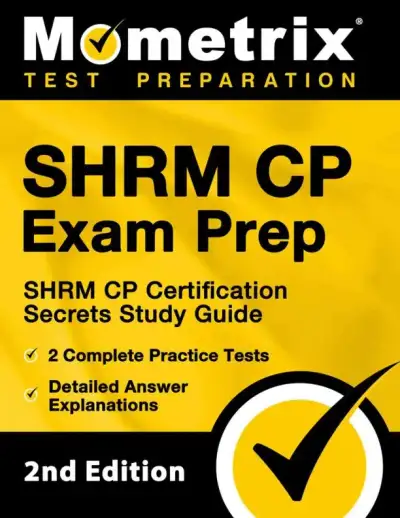 Certification Guides
SHRM CP Exam Prep - SHRM CP Certification Secrets Study Guide, 2 Complete Practice Tests (2021)
Society for Human Resource Management
266 pagesMay 2025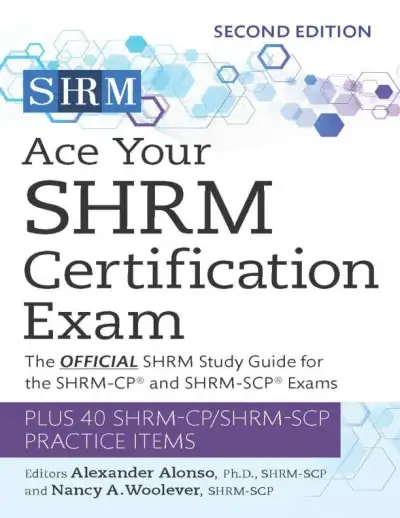 Certification Guides
Ace Your SHRM Certification Exam: The OFFICIAL SHRM Study Guide for the SHRM-CP® and SHRM-SCP® Exams (2021)
Society for Human Resource Management
181 pagesMay 2025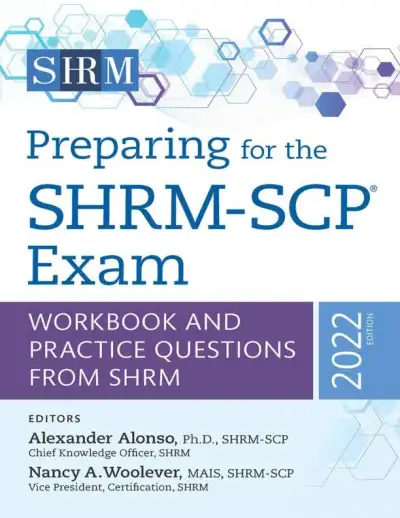 Certification Guides
Preparing for the SHRM-SCP® Exam: Workbook and Practice Questions from SHRM, 2022 Edition
Society for Human Resource Management
109 pagesMay 2025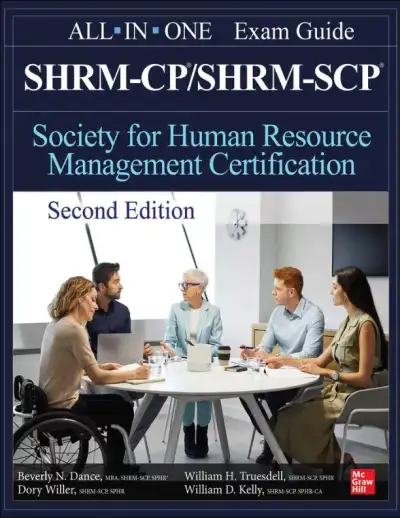 Certification Guides
Shrm-Cp/Shrm-Scp Certification All-In-One Exam Guide (2023)
Society for Human Resource Management
982 pagesMay 2025
Study this document with CramX
Once it is in your library, every tool can work from it.