
Past Exams
2023-2024 TNCC 9th Edition with Answers (498 Solved Questions)
- Trauma Nursing Core Course
- 100 pages
- Shared May 2025
Master the exam with 2023-2024 TNCC 9th Edition with Answers, offering real exam questions and detailed answers to improve your skills.
Preview · 16 of 100 pages
100%
Page 1
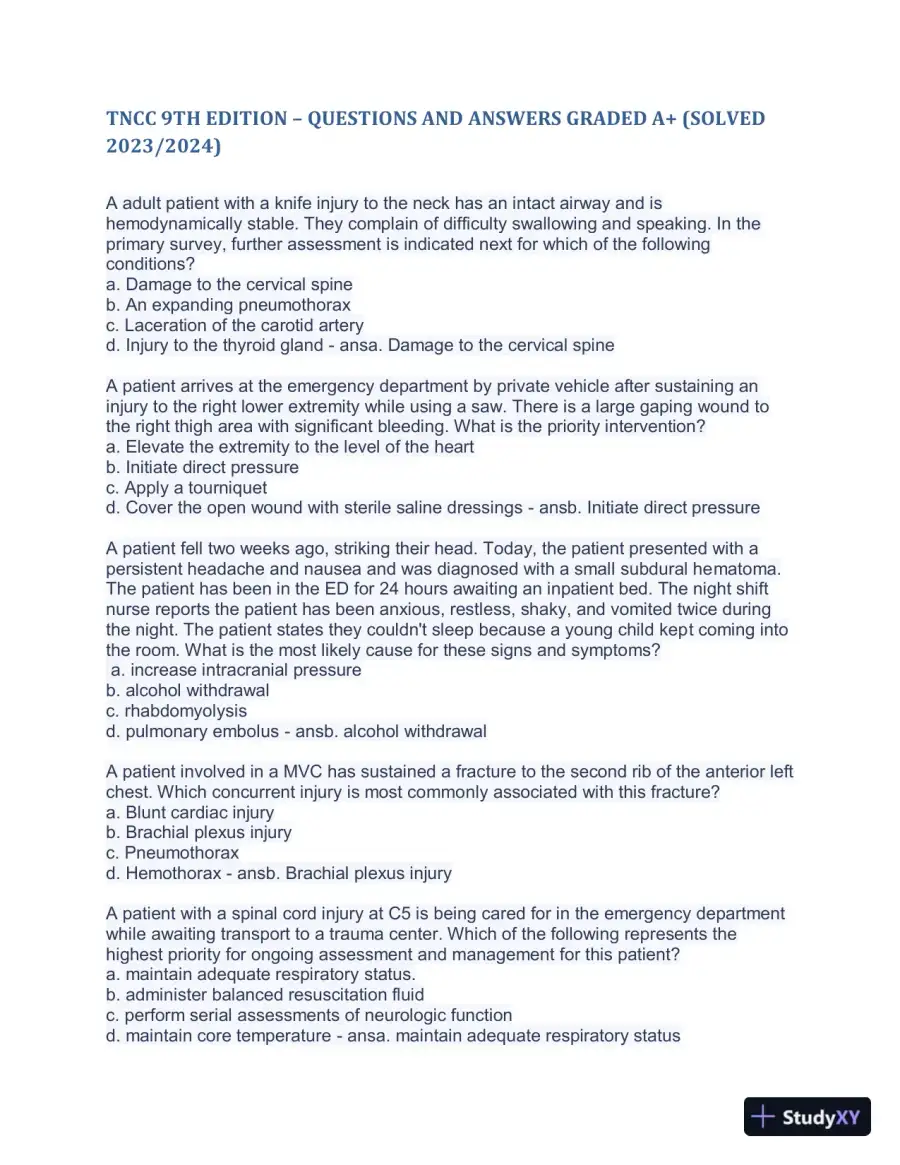 TNCC 9TH EDITION–QUESTIONS AND ANSWERS GRADED A+ (SOLVED2023/2024)A adult patient with a knife injury to the neck has an intact airway and ishemodynamically stable. They complain of difficulty swallowing and speaking. In theprimary survey, further assessment is indicated next for which of the followingconditions?a.Damage to the cervical spineb. An expanding pneumothoraxc. Laceration of the carotid arteryd. Injury to the thyroid gland-ansa. Damage to the cervical spineA patient arrives at the emergency department by private vehicle after sustaining aninjury to the right lower extremity while using a saw. There is a large gaping wound tothe right thigh area with significant bleeding. What is the priority intervention?a. Elevate the extremity to the level of the heartb. Initiate direct pressurec. Apply a tourniquetd. Cover the open wound with sterile saline dressings-ansb. Initiate direct pressureA patient fell two weeks ago, striking their head. Today, the patient presented with apersistent headache and nausea and was diagnosed with a small subdural hematoma.The patient has been in the ED for 24 hours awaiting an inpatient bed. The night shiftnurse reports the patient has been anxious, restless, shaky, and vomited twice duringthe night. The patient states they couldn't sleep because a young child kept coming intothe room. What is the most likely cause for these signs and symptoms?a. increase intracranial pressureb. alcohol withdrawalc. rhabdomyolysisd. pulmonary embolus-ansb. alcohol withdrawalA patient involved in a MVC has sustained a fracture to the second rib of the anterior leftchest. Which concurrent injury is most commonly associated with this fracture?a. Blunt cardiac injuryb. Brachial plexus injuryc. Pneumothoraxd. Hemothorax-ansb. Brachial plexus injuryA patient with a spinal cord injury at C5 is being cared for in the emergency departmentwhile awaiting transport to a trauma center. Which of the following represents thehighest priority for ongoing assessment and management for this patient?a. maintain adequate respiratorystatus.b. administer balanced resuscitation fluidc. perform serial assessments of neurologic functiond. maintain core temperature-ansa. maintain adequate respiratory status
Page 2

Page 3
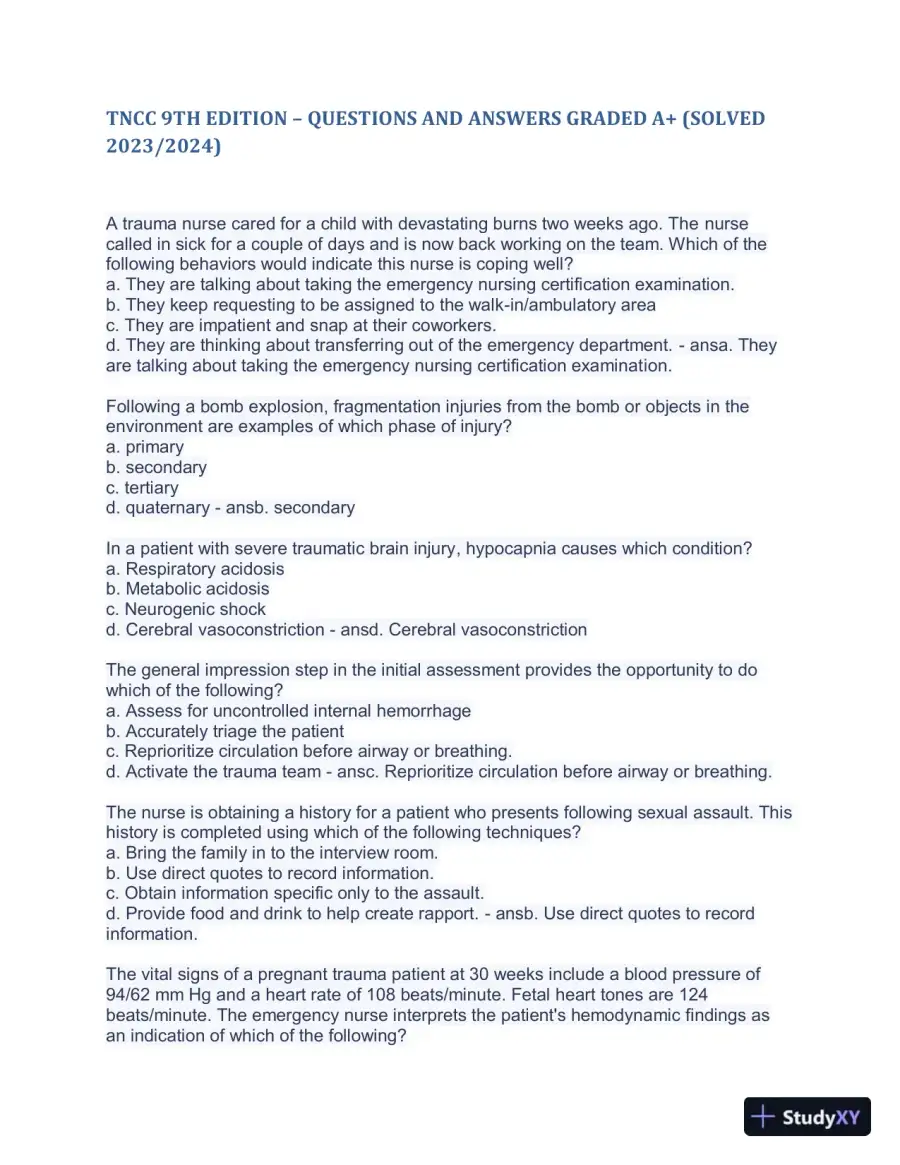 TNCC 9TH EDITION–QUESTIONS AND ANSWERS GRADED A+ (SOLVED2023/2024)A trauma nurse cared for a child with devastating burns two weeks ago. Thenursecalled in sick for a couple of days and is now back working on the team. Which of thefollowing behaviors would indicate this nurse is coping well?a. They are talking about taking the emergency nursing certification examination.b. They keep requesting to be assigned to the walk-in/ambulatory areac. They are impatient and snap at their coworkers.d. They are thinking about transferring out of the emergency department.-ansa. Theyare talking about taking the emergency nursing certification examination.Following a bomb explosion, fragmentation injuries from the bomb or objects in theenvironment are examples of which phase of injury?a. primaryb. secondaryc. tertiaryd. quaternary-ansb. secondaryIn a patient with severe traumatic brain injury, hypocapnia causes which condition?a. Respiratory acidosisb. Metabolic acidosisc. Neurogenic shockd. Cerebral vasoconstriction-ansd. Cerebral vasoconstrictionThe general impression step in the initial assessment provides the opportunity to dowhich of the following?a. Assess for uncontrolled internal hemorrhageb. Accurately triage the patientc. Reprioritize circulation before airway or breathing.d. Activate the trauma team-ansc. Reprioritize circulation before airway or breathing.The nurse is obtaining a history for a patient who presents following sexual assault. Thishistory is completed using which of the following techniques?a. Bring the family in to the interview room.b. Use direct quotes to record information.c. Obtaininformation specific only to the assault.d. Provide food and drink to help create rapport.-ansb. Use direct quotes to recordinformation.The vital signs of a pregnant trauma patient at 30 weeks include a blood pressure of94/62 mm Hg and a heart rateof 108 beats/minute. Fetal heart tones are 124beats/minute. The emergency nurse interprets the patient's hemodynamic findings asan indication of which of the following?
Page 4
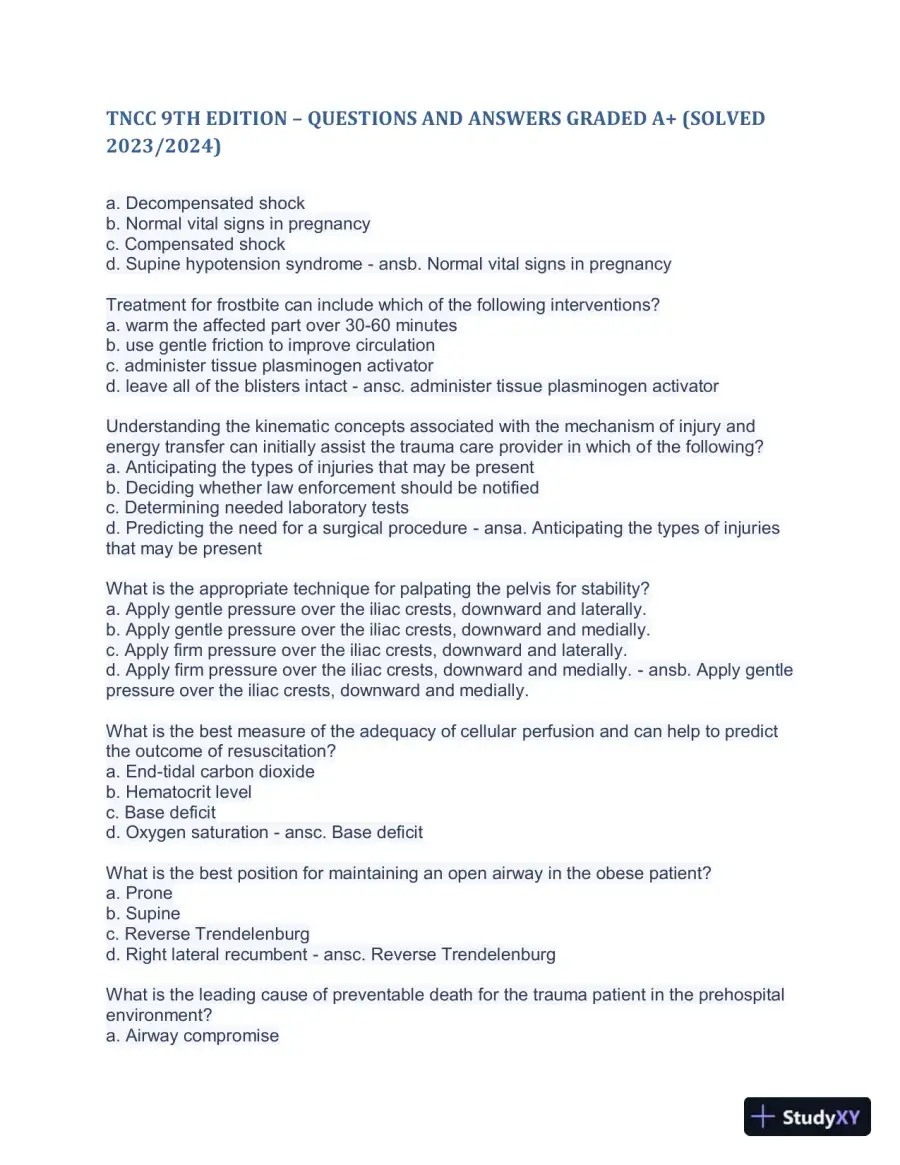 TNCC 9TH EDITION–QUESTIONS AND ANSWERS GRADED A+ (SOLVED2023/2024)a. Decompensated shockb. Normal vital signs in pregnancyc. Compensated shockd. Supine hypotension syndrome-ansb. Normal vital signs in pregnancyTreatment for frostbite can include which of the following interventions?a. warm the affected part over 30-60 minutesb. use gentle friction to improve circulationc. administer tissue plasminogen activatord. leave all of the blisters intact-ansc. administer tissue plasminogen activatorUnderstanding the kinematic concepts associated with the mechanism of injury andenergy transfer can initially assist the trauma care provider in which of the following?a. Anticipating the types of injuries that may be presentb. Deciding whether law enforcement should be notifiedc. Determining needed laboratory testsd. Predicting the need for a surgical procedure-ansa. Anticipating the types of injuriesthat may be presentWhat is the appropriate technique for palpating the pelvis for stability?a. Apply gentle pressure over the iliac crests, downward and laterally.b. Apply gentle pressure over the iliac crests, downward and medially.c. Apply firmpressure over the iliac crests, downward and laterally.d. Apply firm pressure over the iliac crests, downward and medially.-ansb. Apply gentlepressure over the iliac crests, downward and medially.What is the best measure of the adequacy of cellularperfusion and can help to predictthe outcome of resuscitation?a. End-tidal carbon dioxideb. Hematocrit levelc. Base deficitd. Oxygen saturation-ansc. Base deficitWhat is the best position for maintaining an open airway in the obese patient?a.Proneb. Supinec. Reverse Trendelenburgd. Right lateral recumbent-ansc. Reverse TrendelenburgWhat is the leading cause of preventable death for the trauma patient in the prehospitalenvironment?a. Airway compromise
Page 5
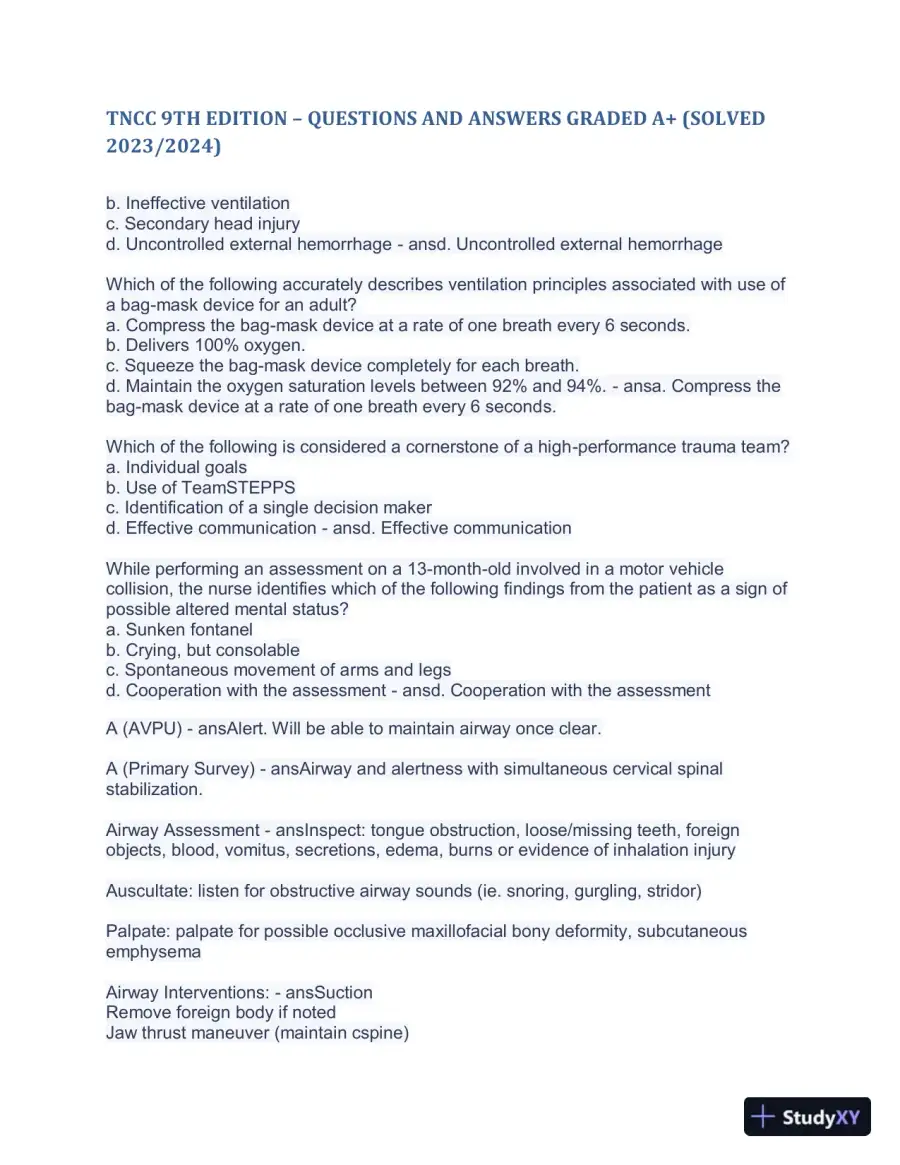 TNCC 9TH EDITION–QUESTIONS AND ANSWERS GRADED A+ (SOLVED2023/2024)b. Ineffective ventilationc. Secondary head injuryd. Uncontrolled external hemorrhage-ansd. Uncontrolled external hemorrhageWhich of the following accurately describes ventilation principles associated with use ofa bag-mask device for an adult?a. Compress the bag-mask device at a rate of one breath every 6 seconds.b. Delivers 100% oxygen.c. Squeeze the bag-mask device completely for each breath.d. Maintain the oxygen saturation levels between 92% and 94%.-ansa. Compress thebag-mask device at a rate of one breath every 6 seconds.Which of the following is considered a cornerstone of a high-performance trauma team?a. Individual goalsb. Use of TeamSTEPPSc. Identification of a single decision makerd. Effective communication-ansd. Effective communicationWhile performing anassessment on a 13-month-old involved in a motor vehiclecollision, the nurse identifies which of the following findings from the patient as a sign ofpossible altered mental status?a. Sunken fontanelb. Crying, but consolablec. Spontaneous movement of arms and legsd. Cooperation with the assessment-ansd. Cooperation with the assessmentA (AVPU)-ansAlert. Will be able to maintain airway once clear.A (Primary Survey)-ansAirway and alertness with simultaneous cervical spinalstabilization.AirwayAssessment-ansInspect: tongue obstruction, loose/missing teeth, foreignobjects, blood, vomitus, secretions, edema, burns or evidence of inhalation injuryAuscultate: listen for obstructive airway sounds (ie. snoring, gurgling, stridor)Palpate: palpate for possible occlusive maxillofacial bony deformity, subcutaneousemphysemaAirway Interventions:-ansSuctionRemove foreign body if notedJaw thrust maneuver (maintain cspine)
Page 6
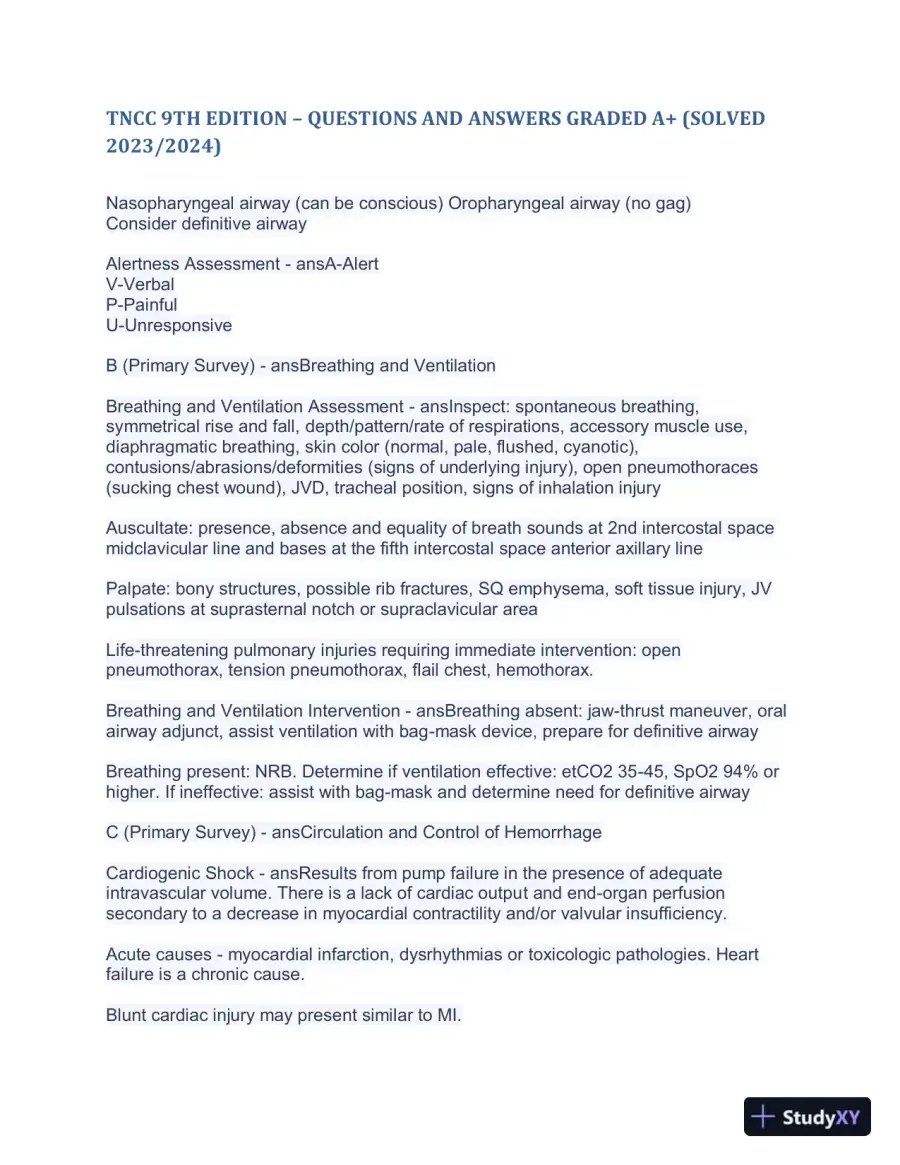 TNCC 9TH EDITION–QUESTIONS AND ANSWERS GRADED A+ (SOLVED2023/2024)Nasopharyngeal airway (can be conscious) Oropharyngeal airway (no gag)Consider definitive airwayAlertness Assessment-ansA-AlertV-VerbalP-PainfulU-UnresponsiveB (Primary Survey)-ansBreathing and VentilationBreathing and Ventilation Assessment-ansInspect: spontaneous breathing,symmetrical rise and fall,depth/pattern/rate of respirations, accessory muscle use,diaphragmatic breathing, skin color (normal, pale, flushed, cyanotic),contusions/abrasions/deformities (signs of underlying injury), open pneumothoraces(sucking chest wound), JVD, tracheal position, signs of inhalation injuryAuscultate: presence, absence and equality of breath sounds at 2nd intercostal spacemidclavicular line and bases at the fifth intercostal space anterior axillary linePalpate: bony structures, possible rib fractures, SQ emphysema, soft tissue injury, JVpulsations at suprasternal notch or supraclavicular areaLife-threatening pulmonary injuries requiring immediate intervention: openpneumothorax, tension pneumothorax, flail chest, hemothorax.Breathing and Ventilation Intervention-ansBreathing absent: jaw-thrust maneuver, oralairway adjunct, assist ventilation with bag-mask device, prepare for definitive airwayBreathing present: NRB. Determine if ventilation effective: etCO2 35-45, SpO2 94% orhigher. If ineffective: assist with bag-mask and determine need for definitive airwayC (Primary Survey)-ansCirculation and Control of HemorrhageCardiogenic Shock-ansResults from pump failure in the presence of adequateintravascular volume. There is a lack of cardiac output and end-organ perfusionsecondary to a decrease in myocardial contractility and/or valvular insufficiency.Acute causes-myocardial infarction, dysrhythmias or toxicologic pathologies. Heartfailure is a chronic cause.Blunt cardiac injury may present similar to MI.
Page 7
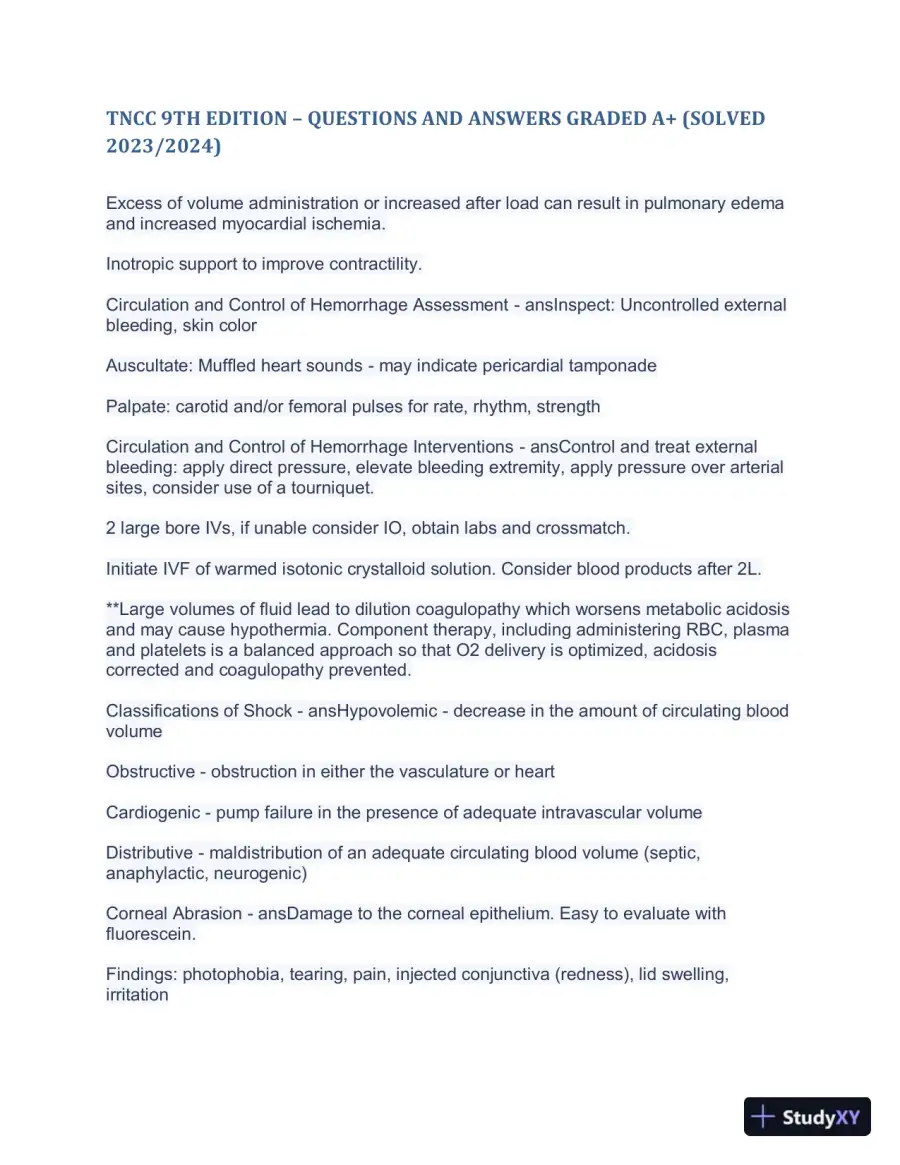 TNCC 9TH EDITION–QUESTIONS AND ANSWERS GRADED A+ (SOLVED2023/2024)Excess of volume administration or increased after load can result in pulmonary edemaand increased myocardial ischemia.Inotropic support to improve contractility.Circulation and Control of Hemorrhage Assessment-ansInspect: Uncontrolled externalbleeding, skin colorAuscultate: Muffled heart sounds-may indicate pericardial tamponadePalpate: carotid and/or femoral pulses for rate, rhythm, strengthCirculation and Control of Hemorrhage Interventions-ansControl and treatexternalbleeding: apply direct pressure, elevate bleeding extremity, apply pressure over arterialsites, consider use of a tourniquet.2 large bore IVs, if unable consider IO, obtain labs and crossmatch.Initiate IVF of warmed isotonic crystalloid solution. Consider blood products after 2L.**Large volumes of fluid lead to dilution coagulopathy which worsens metabolic acidosisand may cause hypothermia. Component therapy, including administering RBC, plasmaand platelets is a balanced approach so thatO2 delivery is optimized, acidosiscorrected and coagulopathy prevented.Classifications of Shock-ansHypovolemic-decrease in the amount of circulating bloodvolumeObstructive-obstruction in either the vasculature or heartCardiogenic-pump failure in the presence of adequate intravascular volumeDistributive-maldistribution of an adequate circulating blood volume (septic,anaphylactic, neurogenic)Corneal Abrasion-ansDamage to the corneal epithelium. Easy to evaluate withfluorescein.Findings: photophobia, tearing, pain, injected conjunctiva (redness), lid swelling,irritation
Page 8
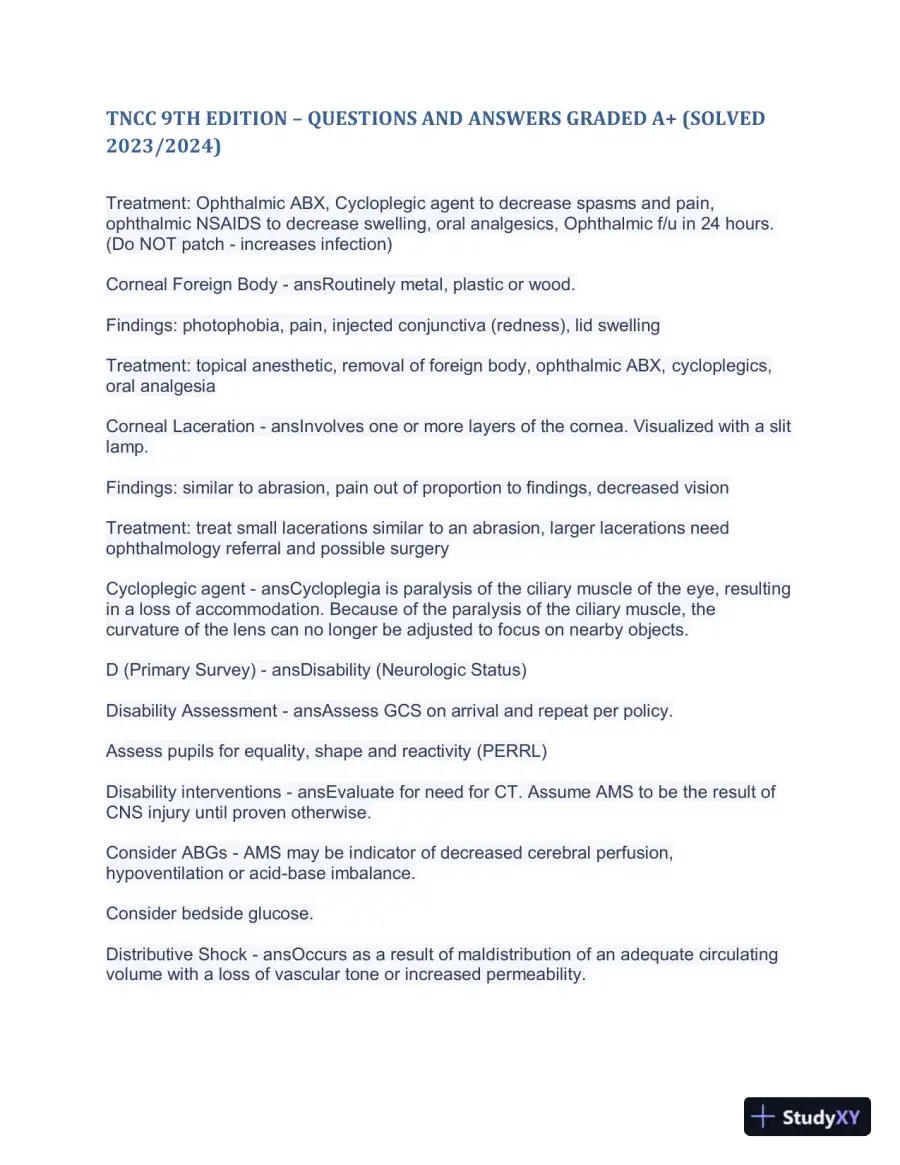 TNCC 9TH EDITION–QUESTIONS AND ANSWERS GRADED A+ (SOLVED2023/2024)Treatment: Ophthalmic ABX, Cycloplegic agent to decrease spasms and pain,ophthalmic NSAIDS to decrease swelling, oral analgesics, Ophthalmic f/u in 24 hours.(DoNOT patch-increases infection)Corneal Foreign Body-ansRoutinely metal, plastic or wood.Findings: photophobia, pain, injected conjunctiva (redness), lid swellingTreatment: topical anesthetic, removal of foreign body, ophthalmic ABX,cycloplegics,oral analgesiaCorneal Laceration-ansInvolves one or more layers of the cornea. Visualized with a slitlamp.Findings: similar to abrasion, pain out of proportion to findings, decreased visionTreatment: treat small lacerations similarto an abrasion, larger lacerations needophthalmology referral and possible surgeryCycloplegic agent-ansCycloplegia is paralysis of the ciliary muscle of the eye, resultingin a loss of accommodation. Because of the paralysis of the ciliary muscle, thecurvature of the lens can no longer be adjusted to focus on nearby objects.D (Primary Survey)-ansDisability (Neurologic Status)Disability Assessment-ansAssess GCS on arrival and repeat per policy.Assess pupils for equality, shape and reactivity(PERRL)Disability interventions-ansEvaluate for need for CT. Assume AMS to be the result ofCNS injury until proven otherwise.Consider ABGs-AMS may be indicator of decreased cerebral perfusion,hypoventilation or acid-base imbalance.Consider bedside glucose.Distributive Shock-ansOccurs as a result of maldistribution of an adequate circulatingvolume with a loss of vascular tone or increased permeability.
Page 9
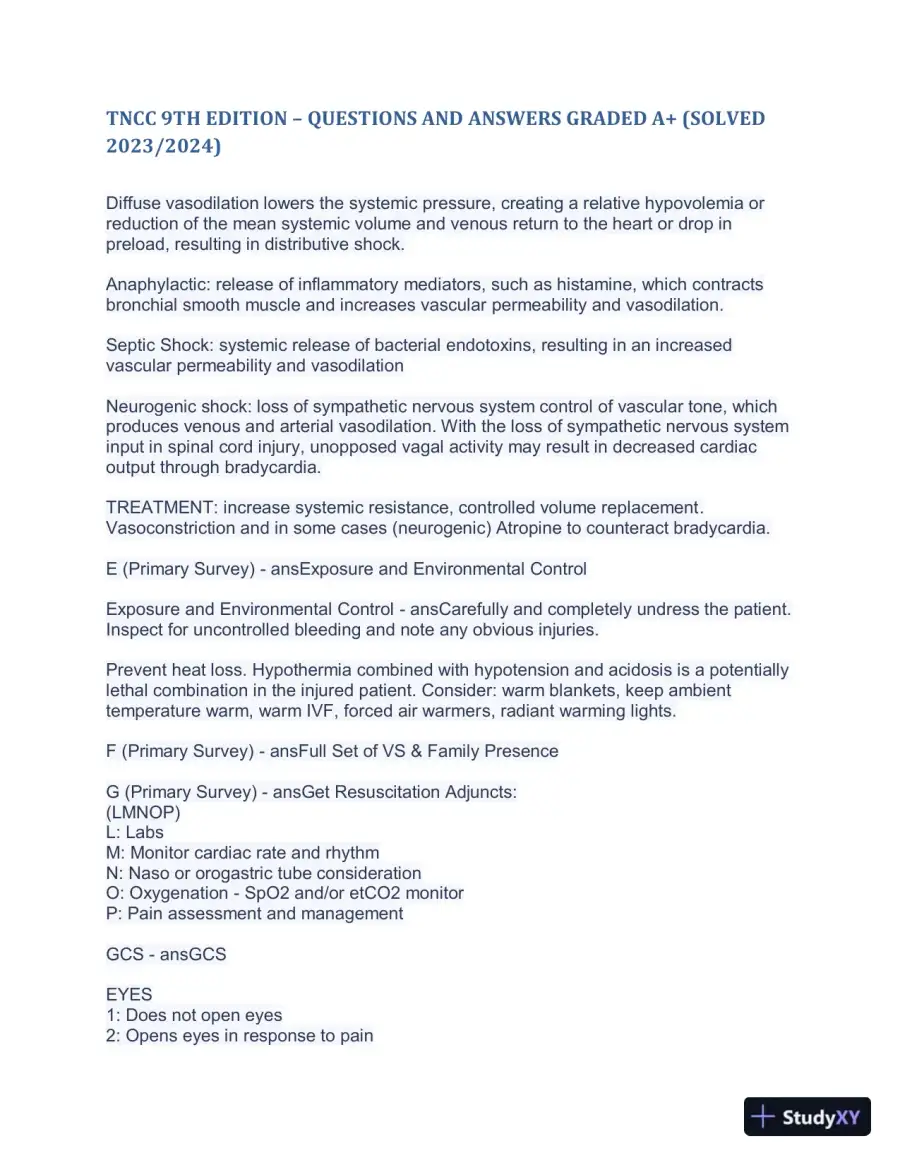 TNCC 9TH EDITION–QUESTIONS AND ANSWERS GRADED A+ (SOLVED2023/2024)Diffuse vasodilation lowers the systemic pressure, creating a relative hypovolemia orreduction of the mean systemic volume and venous return to the heart or drop inpreload, resulting in distributive shock.Anaphylactic: release of inflammatory mediators, such as histamine, which contractsbronchial smooth muscle and increases vascularpermeability and vasodilation.Septic Shock: systemic release of bacterial endotoxins, resulting in an increasedvascular permeability and vasodilationNeurogenic shock: loss of sympathetic nervous system control of vascular tone, whichproduces venous and arterial vasodilation. With the loss of sympathetic nervous systeminput in spinal cord injury, unopposed vagal activity may result in decreased cardiacoutput through bradycardia.TREATMENT: increase systemic resistance, controlled volume replacement.Vasoconstriction and in some cases (neurogenic) Atropine to counteract bradycardia.E (Primary Survey)-ansExposure and Environmental ControlExposure and Environmental Control-ansCarefully and completely undress the patient.Inspect for uncontrolled bleeding and note any obvious injuries.Prevent heat loss. Hypothermia combined with hypotension and acidosis is a potentiallylethal combination in the injured patient. Consider: warm blankets, keep ambienttemperature warm, warm IVF, forced air warmers, radiant warming lights.F (Primary Survey)-ansFull Set of VS & Family PresenceG (Primary Survey)-ansGet Resuscitation Adjuncts:(LMNOP)L: LabsM: Monitor cardiac rate and rhythmN: Naso or orogastric tube considerationO: Oxygenation-SpO2 and/or etCO2 monitorP: Pain assessment and managementGCS-ansGCSEYES1: Does not open eyes2: Opens eyes in response to pain
Page 10
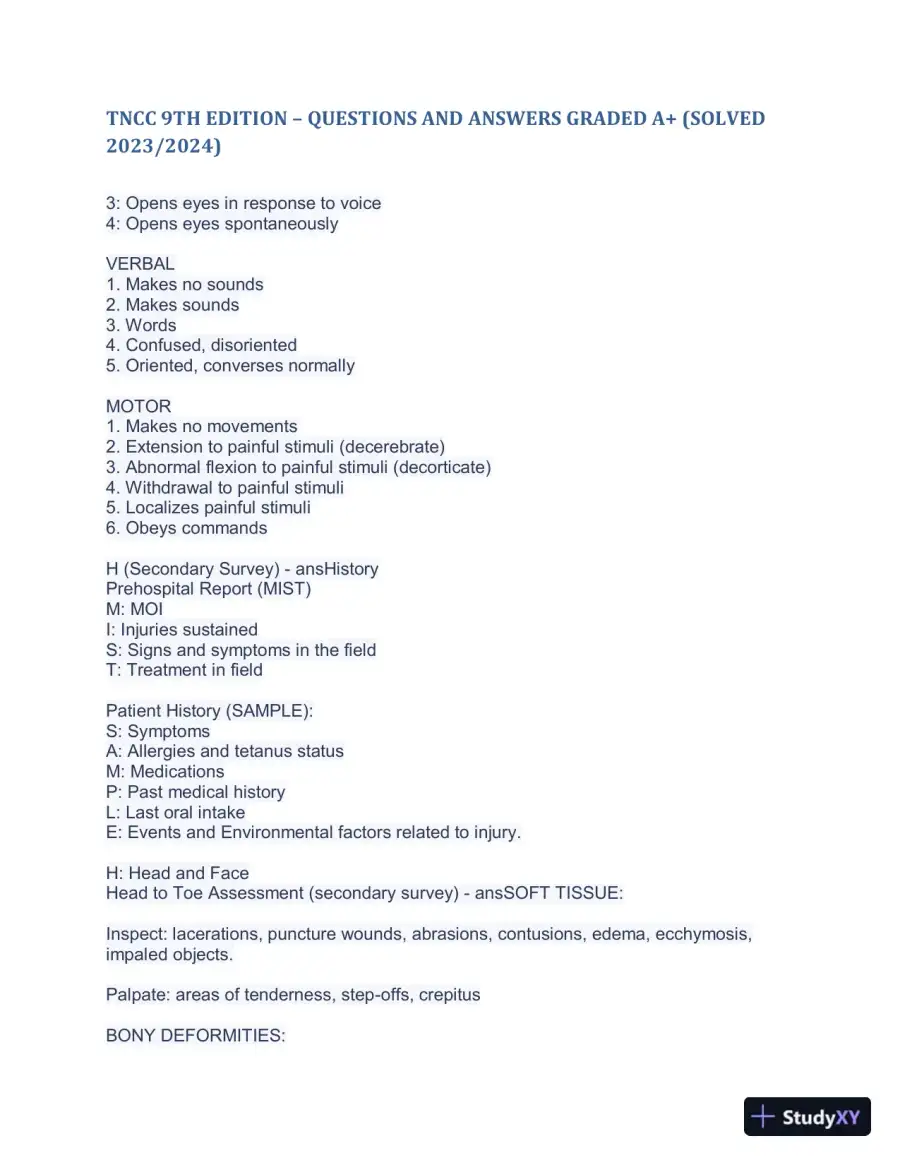 TNCC 9TH EDITION–QUESTIONS AND ANSWERS GRADED A+ (SOLVED2023/2024)3: Opens eyes in response to voice4: Opens eyes spontaneouslyVERBAL1. Makes no sounds2. Makes sounds3. Words4.Confused, disoriented5. Oriented, converses normallyMOTOR1. Makes no movements2. Extension to painful stimuli (decerebrate)3. Abnormal flexion to painful stimuli (decorticate)4. Withdrawal to painful stimuli5. Localizes painful stimuli6. ObeyscommandsH (Secondary Survey)-ansHistoryPrehospital Report (MIST)M: MOII: Injuries sustainedS: Signs and symptoms in the fieldT: Treatment in fieldPatient History (SAMPLE):S: SymptomsA: Allergies and tetanus statusM: MedicationsP: Pastmedical historyL: Last oral intakeE: Events and Environmental factors related to injury.H: Head and FaceHead to Toe Assessment (secondary survey)-ansSOFT TISSUE:Inspect: lacerations, puncture wounds, abrasions, contusions, edema, ecchymosis,impaled objects.Palpate: areas of tenderness, step-offs, crepitusBONY DEFORMITIES:
Page 11
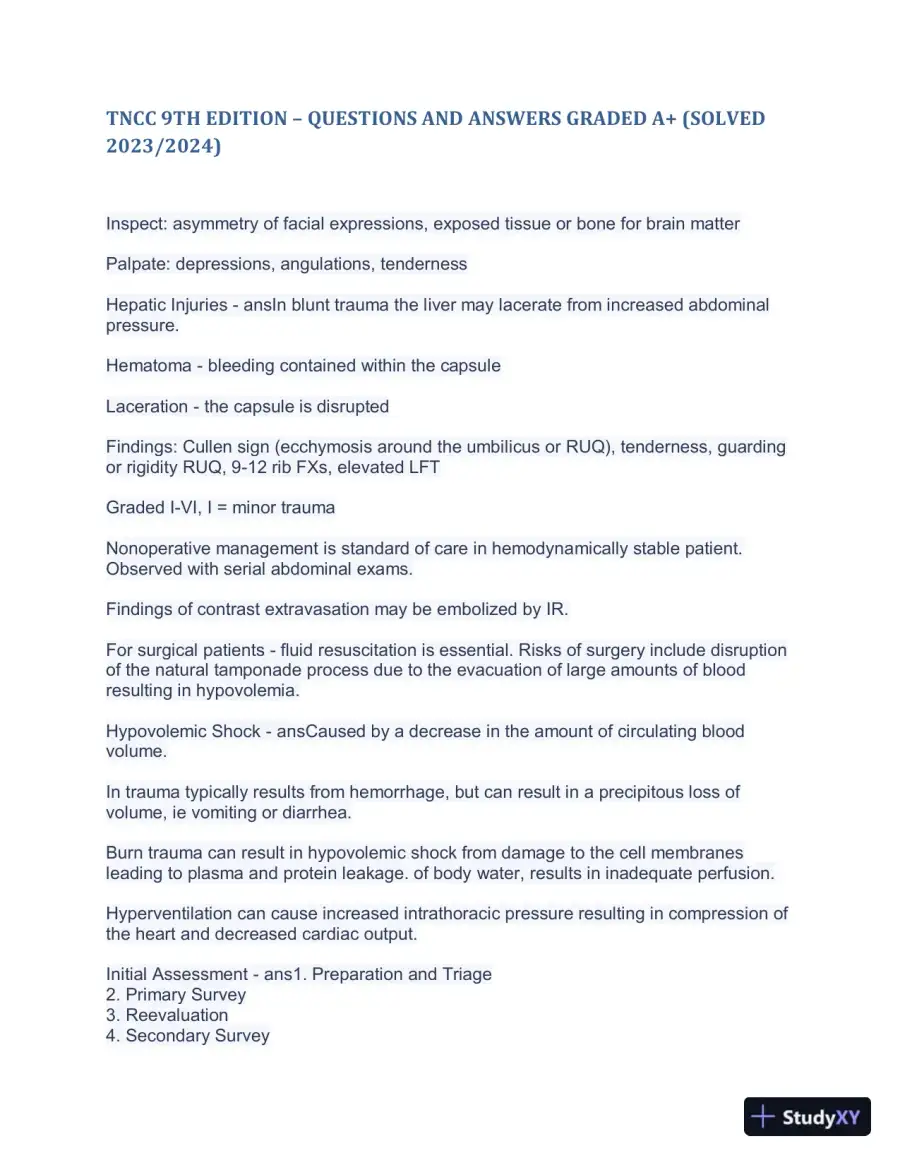 TNCC 9TH EDITION–QUESTIONS AND ANSWERS GRADED A+ (SOLVED2023/2024)Inspect: asymmetry of facial expressions, exposed tissue or bone for brain matterPalpate: depressions, angulations, tendernessHepatic Injuries-ansIn blunt trauma the liver may lacerate from increased abdominalpressure.Hematoma-bleeding contained within the capsuleLaceration-the capsule is disruptedFindings: Cullen sign (ecchymosis around the umbilicus or RUQ), tenderness, guardingor rigidity RUQ, 9-12 rib FXs, elevated LFTGraded I-VI, I = minor traumaNonoperative management is standard of care in hemodynamically stable patient.Observed with serial abdominal exams.Findings of contrast extravasation may be embolized by IR.For surgical patients-fluid resuscitation is essential. Risks of surgery include disruptionof the natural tamponade process due to the evacuation of large amounts of bloodresulting in hypovolemia.Hypovolemic Shock-ansCaused by a decrease in the amount of circulating bloodvolume.In trauma typically results from hemorrhage, but can result in a precipitous loss ofvolume, ie vomiting or diarrhea.Burn trauma can result in hypovolemic shock from damage to the cell membranesleading to plasma and protein leakage. of bodywater, results in inadequate perfusion.Hyperventilation can cause increased intrathoracic pressure resulting in compression ofthe heart and decreased cardiac output.Initial Assessment-ans1. Preparation and Triage2. Primary Survey3. Reevaluation4.Secondary Survey
Page 12
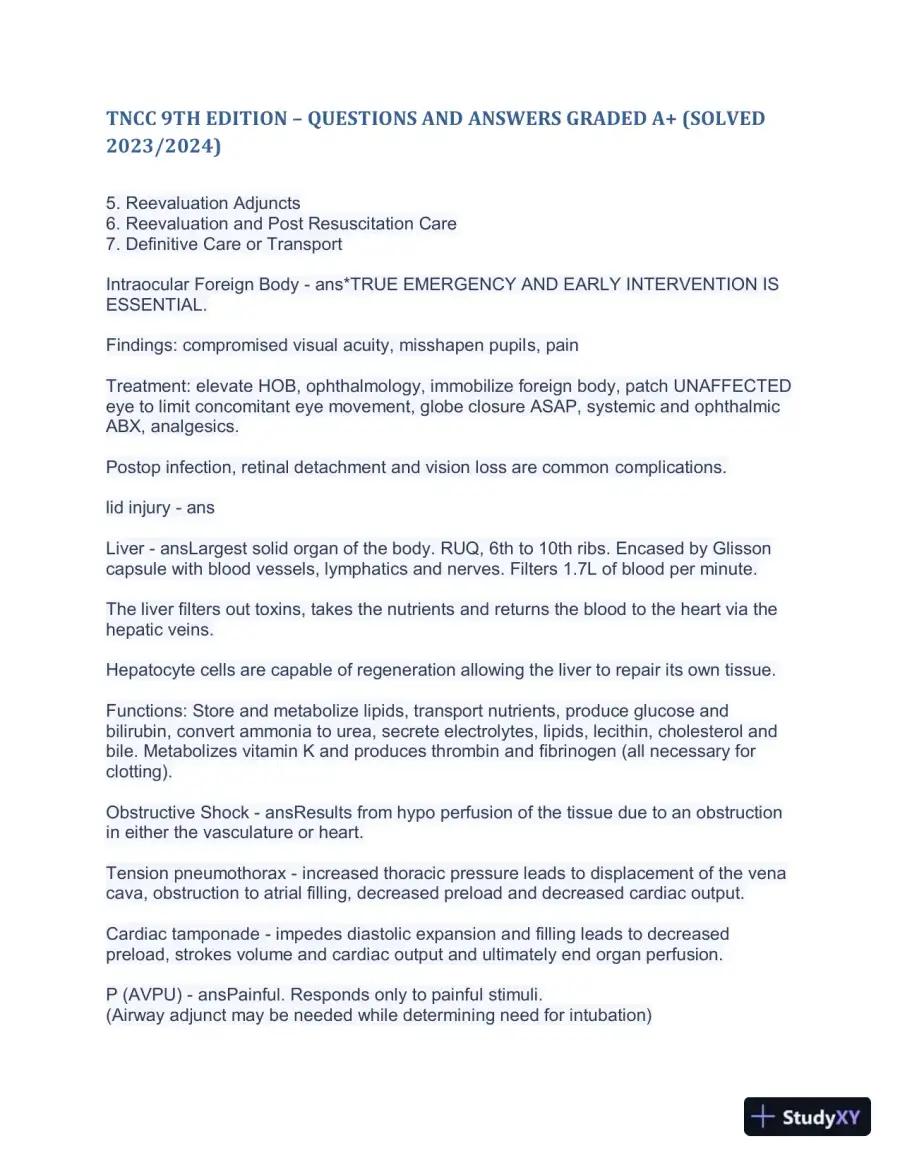 TNCC 9TH EDITION–QUESTIONS AND ANSWERS GRADED A+ (SOLVED2023/2024)5. Reevaluation Adjuncts6. Reevaluation and Post Resuscitation Care7. Definitive Care or TransportIntraocular Foreign Body-ans*TRUE EMERGENCY AND EARLY INTERVENTION ISESSENTIAL.Findings: compromised visual acuity, misshapen pupils, painTreatment: elevate HOB, ophthalmology, immobilize foreign body, patch UNAFFECTEDeye to limit concomitant eye movement, globe closure ASAP, systemic and ophthalmicABX, analgesics.Postop infection, retinal detachment and vision loss are commoncomplications.lid injury-ansLiver-ansLargest solid organ of the body. RUQ, 6th to 10th ribs. Encased by Glissoncapsule with blood vessels, lymphatics and nerves. Filters 1.7L of blood per minute.The liver filters out toxins, takes the nutrientsand returns the blood to the heart via thehepatic veins.Hepatocyte cells are capable of regeneration allowing the liver to repair its own tissue.Functions: Store and metabolize lipids, transport nutrients, produce glucose andbilirubin, convert ammonia to urea, secrete electrolytes, lipids, lecithin, cholesterol andbile. Metabolizes vitamin K and produces thrombin and fibrinogen (all necessary forclotting).Obstructive Shock-ansResults from hypo perfusion of the tissue due to an obstructionineither the vasculature or heart.Tension pneumothorax-increased thoracic pressure leads to displacement of the venacava, obstruction to atrial filling, decreased preload and decreased cardiac output.Cardiac tamponade-impedes diastolic expansion and filling leads to decreasedpreload, strokes volume and cardiac output and ultimately end organ perfusion.P (AVPU)-ansPainful. Responds only to painful stimuli.(Airway adjunct may be needed while determining need for intubation)
Page 13
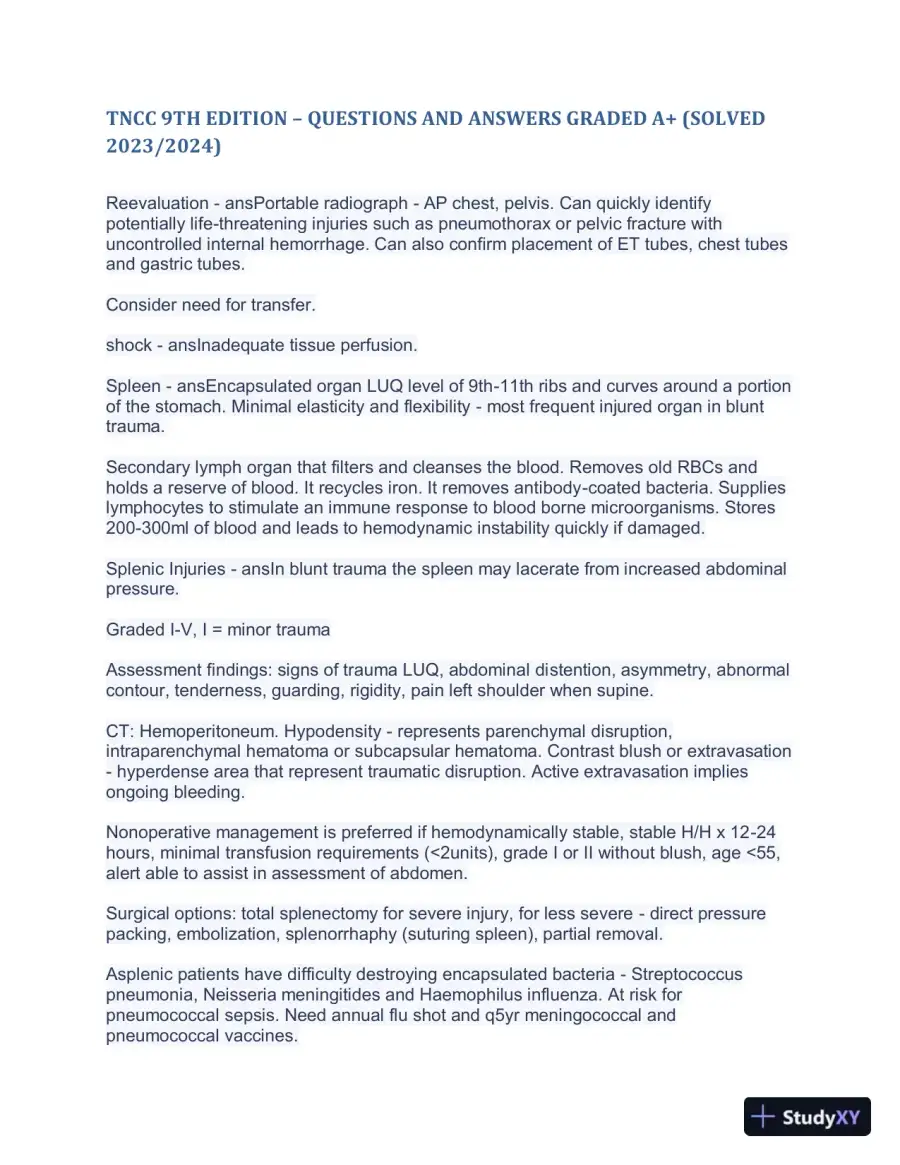 TNCC 9TH EDITION–QUESTIONS AND ANSWERS GRADED A+ (SOLVED2023/2024)Reevaluation-ansPortable radiograph-AP chest, pelvis. Can quickly identifypotentially life-threatening injuries such as pneumothorax or pelvic fracture withuncontrolled internal hemorrhage. Can also confirm placement of ET tubes, chest tubesand gastric tubes.Consider need for transfer.shock-ansInadequate tissue perfusion.Spleen-ansEncapsulated organ LUQ level of 9th-11th ribs and curves around a portionof the stomach. Minimal elasticity and flexibility-most frequent injured organ in blunttrauma.Secondary lymph organ that filters and cleanses the blood. Removes old RBCs andholds a reserve of blood. It recycles iron. It removes antibody-coated bacteria. Supplieslymphocytes to stimulate an immune response to blood borne microorganisms. Stores200-300ml of blood and leads to hemodynamic instability quickly if damaged.Splenic Injuries-ansIn blunt trauma the spleen may lacerate from increased abdominalpressure.Graded I-V, I = minor traumaAssessment findings: signs of trauma LUQ, abdominal distention, asymmetry, abnormalcontour, tenderness, guarding, rigidity, pain left shoulder when supine.CT: Hemoperitoneum. Hypodensity-represents parenchymal disruption,intraparenchymal hematoma or subcapsular hematoma. Contrast blush or extravasation-hyperdense area that represent traumatic disruption. Active extravasation impliesongoing bleeding.Nonoperative management is preferred if hemodynamically stable, stable H/H x 12-24hours, minimal transfusion requirements (<2units), grade I or II without blush, age <55,alert able to assist in assessment of abdomen.Surgical options: total splenectomy for severe injury, for less severe-direct pressurepacking, embolization, splenorrhaphy (suturing spleen), partial removal.Asplenic patients have difficulty destroying encapsulated bacteria-Streptococcuspneumonia, Neisseria meningitides and Haemophilus influenza. At risk forpneumococcal sepsis. Need annual flu shot and q5yr meningococcal andpneumococcal vaccines.
Page 14
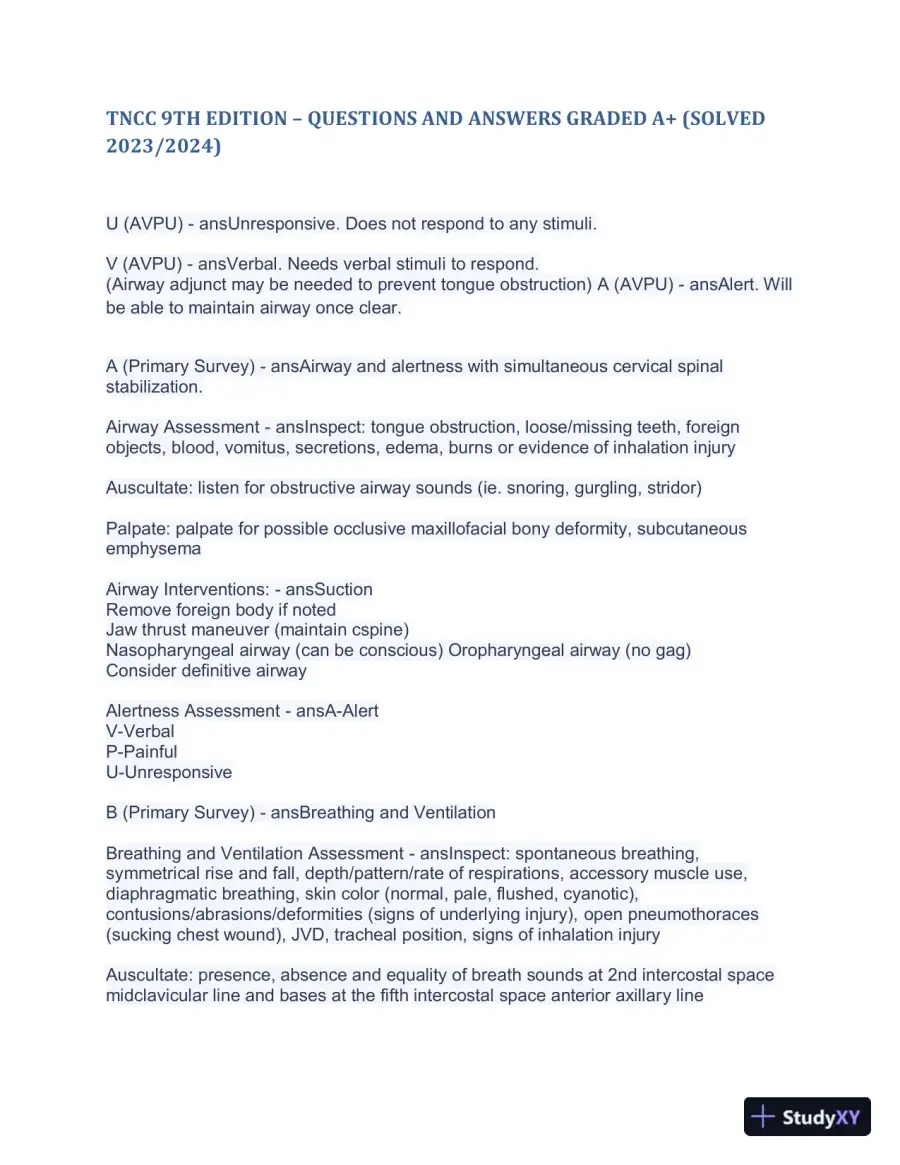 TNCC 9TH EDITION–QUESTIONS AND ANSWERS GRADED A+ (SOLVED2023/2024)U (AVPU)-ansUnresponsive. Does not respond to any stimuli.V (AVPU)-ansVerbal. Needs verbal stimuli to respond.(Airway adjunct may be needed to prevent tongue obstruction)A (AVPU)-ansAlert. Willbe able to maintain airway once clear.A (Primary Survey)-ansAirway andalertness with simultaneous cervical spinalstabilization.Airway Assessment-ansInspect: tongue obstruction, loose/missing teeth, foreignobjects, blood, vomitus, secretions, edema, burns or evidence of inhalation injuryAuscultate: listen forobstructive airway sounds (ie. snoring, gurgling, stridor)Palpate: palpate for possible occlusive maxillofacial bony deformity, subcutaneousemphysemaAirway Interventions:-ansSuctionRemove foreign body if notedJaw thrust maneuver (maintain cspine)Nasopharyngeal airway (can be conscious) Oropharyngeal airway (no gag)Consider definitive airwayAlertness Assessment-ansA-AlertV-VerbalP-PainfulU-UnresponsiveB (Primary Survey)-ansBreathing and VentilationBreathing and Ventilation Assessment-ansInspect: spontaneous breathing,symmetrical rise and fall, depth/pattern/rate of respirations, accessory muscle use,diaphragmatic breathing, skin color (normal, pale, flushed, cyanotic),contusions/abrasions/deformities (signs of underlying injury),open pneumothoraces(sucking chest wound), JVD, tracheal position, signs of inhalation injuryAuscultate: presence, absence and equality of breath sounds at 2nd intercostal spacemidclavicular line and bases at the fifth intercostal space anterior axillary line
Page 15
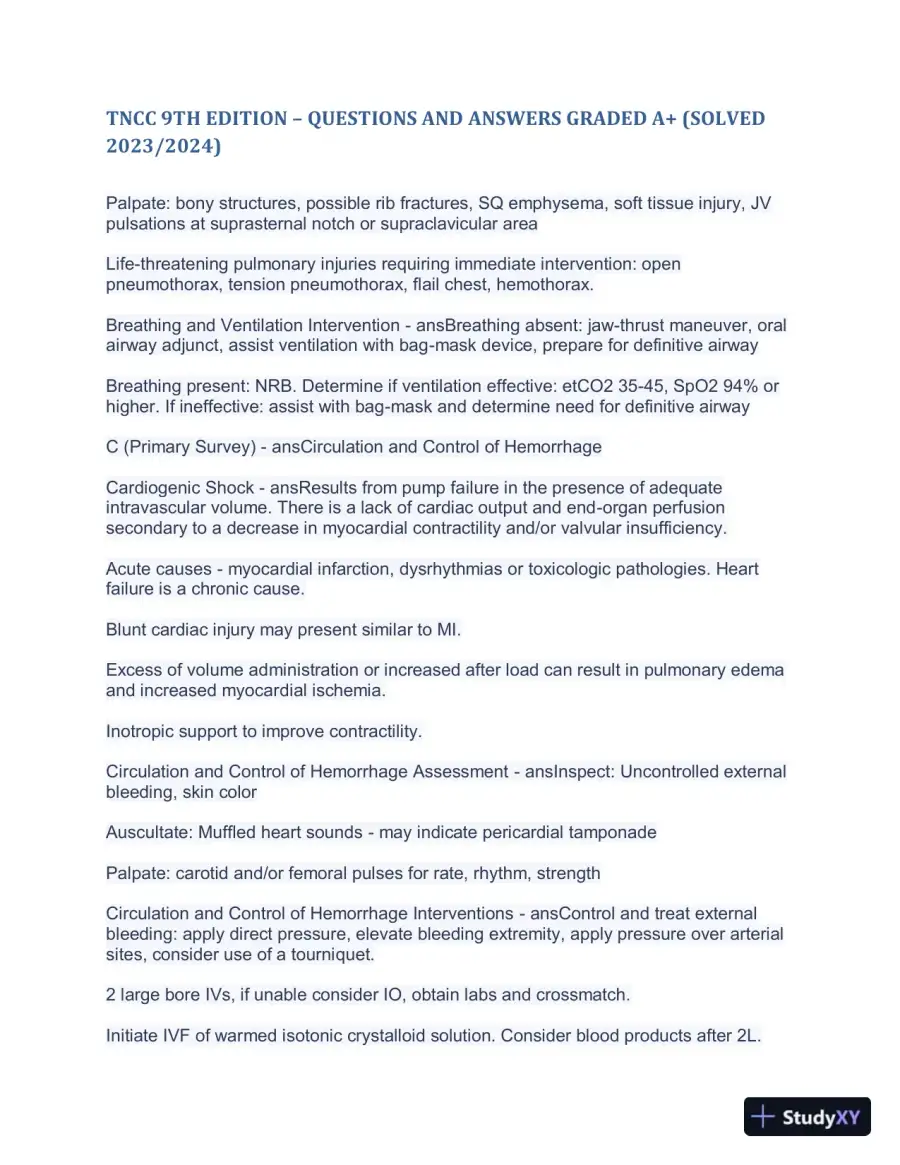 TNCC 9TH EDITION–QUESTIONS AND ANSWERS GRADED A+ (SOLVED2023/2024)Palpate: bony structures, possible rib fractures, SQ emphysema, soft tissue injury, JVpulsations at suprasternal notch or supraclavicular areaLife-threatening pulmonary injuries requiring immediate intervention: openpneumothorax, tension pneumothorax, flail chest, hemothorax.Breathing and Ventilation Intervention-ansBreathing absent: jaw-thrust maneuver, oralairway adjunct, assist ventilation with bag-mask device, prepare for definitive airwayBreathing present: NRB. Determine if ventilation effective: etCO2 35-45, SpO2 94% orhigher. If ineffective: assist with bag-mask and determine need for definitive airwayC (Primary Survey)-ansCirculation and Control of HemorrhageCardiogenic Shock-ansResults from pump failure in the presence of adequateintravascular volume. There is a lack of cardiac output and end-organ perfusionsecondary to a decrease in myocardial contractility and/or valvular insufficiency.Acute causes-myocardial infarction, dysrhythmias or toxicologic pathologies. Heartfailure is a chronic cause.Blunt cardiac injury may present similar to MI.Excess of volume administration or increased after load can result in pulmonary edemaand increased myocardial ischemia.Inotropic support to improve contractility.Circulation and Control of Hemorrhage Assessment-ansInspect: Uncontrolled externalbleeding, skin colorAuscultate: Muffled heart sounds-may indicate pericardial tamponadePalpate: carotidand/or femoral pulses for rate, rhythm, strengthCirculation and Control of Hemorrhage Interventions-ansControl and treat externalbleeding: apply direct pressure, elevate bleeding extremity, apply pressure over arterialsites, consider use of a tourniquet.2 large bore IVs, if unable consider IO, obtain labs and crossmatch.Initiate IVF of warmed isotonic crystalloid solution. Consider blood products after 2L.
Page 16
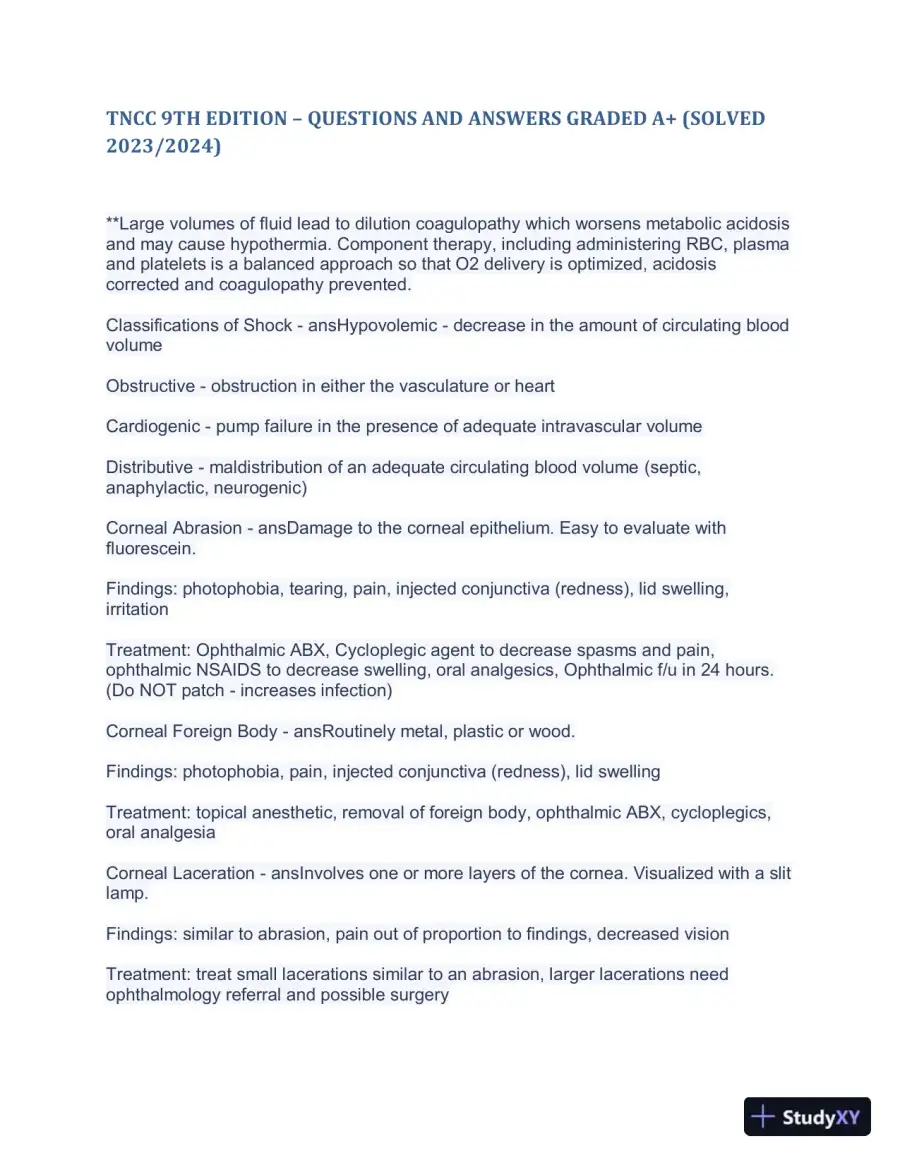 TNCC 9TH EDITION–QUESTIONS AND ANSWERS GRADED A+ (SOLVED2023/2024)**Large volumes of fluid lead to dilution coagulopathy which worsens metabolic acidosisand may cause hypothermia. Component therapy, including administering RBC, plasmaand platelets is a balanced approach so that O2 delivery is optimized, acidosiscorrected and coagulopathy prevented.Classifications of Shock-ansHypovolemic-decrease inthe amount of circulating bloodvolumeObstructive-obstruction in either the vasculature or heartCardiogenic-pump failure in the presence of adequate intravascular volumeDistributive-maldistribution of an adequate circulating blood volume(septic,anaphylactic, neurogenic)Corneal Abrasion-ansDamage to the corneal epithelium. Easy to evaluate withfluorescein.Findings: photophobia, tearing, pain, injected conjunctiva (redness), lid swelling,irritationTreatment: Ophthalmic ABX, Cycloplegic agent to decrease spasms and pain,ophthalmic NSAIDS to decrease swelling, oral analgesics, Ophthalmic f/u in 24 hours.(Do NOT patch-increases infection)Corneal Foreign Body-ansRoutinely metal, plastic or wood.Findings: photophobia, pain, injected conjunctiva (redness), lid swellingTreatment: topical anesthetic, removal of foreign body, ophthalmic ABX, cycloplegics,oral analgesiaCorneal Laceration-ansInvolves one or more layers of the cornea. Visualized with a slitlamp.Findings: similar to abrasion, pain out of proportion to findings, decreased visionTreatment: treat small lacerations similar to an abrasion, larger lacerations needophthalmology referral and possible surgery
84 more pages in the full document
Unlock it once and it stays in your library, ready to chat with or turn into flashcards.
Unlock the full documentMore Trauma Nursing Core Course study materials
See all Past Exams
2024 TNCC Nursing Process with Answers (17 Solved Questions)
Trauma Nursing Core Course
2 pages144downloadsFeb 2025 Past Exams
2023-2024 TNCC Final Practice Exam 4 with Answers (49 Solved Questions)
Trauma Nursing Core Course
11 pages123downloadsFeb 2025 Past Exams
TNCC Trauma Nursing Core Course 11th Edition ENA Test with Answers (220 Solved Questions)
Trauma Nursing Core Course
53 pages106downloadsFeb 2025 Past Exams
2023-2024 TNCC Final Practice Exam 4 with Answers (1343 Solved Questions)
Trauma Nursing Core Course
196 pages92downloadsFeb 2025 Past Exams
2024-2025 TNCC: Trauma Nursing Process with Answers (71 Solved Questions)
Trauma Nursing Core Course
11 pages84downloadsFeb 2025 Past Exams
TNCC 10th Edition Practice Exam 3 Version A and B with Answers (740 Solved Questions)
Trauma Nursing Core Course
124 pages77downloadsFeb 2025 Past Exams
2023-2024 TNCC Final Exam 4 with Answers (1343 Solved Questions)
Trauma Nursing Core Course
196 pages76downloadsFeb 2025 Past Exams
2023-2024 TNCC Final Exam with Answers (48 Solved Questions)
Trauma Nursing Core Course
11 pages40downloadsFeb 2025
Study this document with CramX
Once it is in your library, every tool can work from it.