

Subject
Civil Engineering study materials
Civil engineering is a core branch of engineering focused on the design, construction, and maintenance of infrastructure that supports modern society.
Shared by students: 39 documents.
Most used Civil Engineering documents
All 39 Textbook Guides
Solution Manual for Transportation Engineering and Planning, 3rd Edition
78 pages92downloadsFeb 2025 Textbook Guides
Reinforced Concrete Design, 9th Edition Solution Manual
198 pages65downloadsFeb 2025 Exam Guides
Principles Of Foundation Engineering, 8th Edition Test Bank
166 pages49downloadsFeb 2025 Textbook Guides
Solution Manual for A First Course in the Finite Element Method, 6th Edition
644 pagesMay 2025 Past Exams
The CE Shop Construction Final Exam With Answers (100 Solved Questions)
55 pagesMay 2025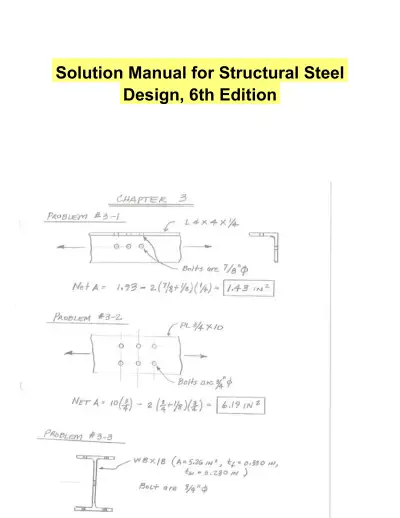 Textbook Guides
Solution Manual for Structural Steel Design, 6th Edition
511 pagesMay 2025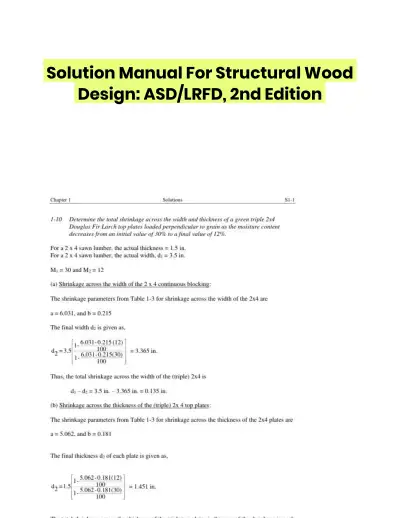 Textbook Guides
Solution Manual For Structural Wood Design: ASD/LRFD, 2nd Edition
268 pagesMay 2025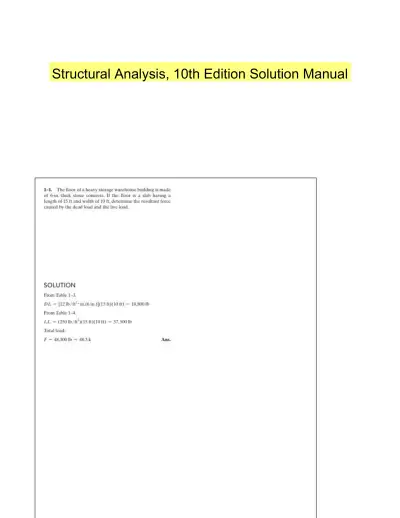 Textbook Guides
Structural Analysis, 10th Edition Solution Manual
716 pagesMay 2025
Recently shared
See newest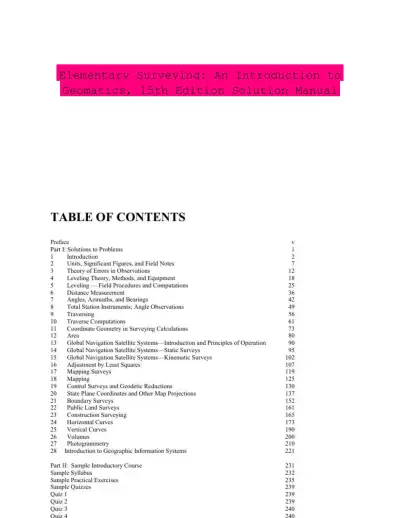 Textbook Guides
Elementary Surveying: An Introduction to Geomatics, 15th Edition Solution Manual
270 pagesMay 2025 Textbook Guides
Solution Manual for Reliability Engineering, 1st Edition
594 pagesMay 2025 Textbook Guides
Solution Manual For Elementary Surveying: An Introduction To Geomatics, 13th Edition
242 pagesMay 2025 Textbook Guides
Solution Manual For Structural Analysis, 8th Edition
558 pagesMay 2025
Where students share Civil Engineering material
About Civil Engineering
Civil engineering is a core branch of engineering focused on the design, construction, and maintenance of infrastructure that supports modern society. It includes projects such as roads, bridges, buildings, dams, and water systems that are essential for transportation, urban development, and public services.
On CramX, you can explore a wide range of civil engineering resources, including study notes and concept guides and flashcards for quick revision. These materials help students understand design principles, engineering calculations, and real-world applications.
Civil engineering covers key areas such as structural engineering, geotechnical engineering, transportation systems, environmental engineering, and water resource management. Students learn how to design safe and efficient structures, analyze materials, and manage large-scale infrastructure projects.
The field combines technical knowledge with practical problem-solving, focusing on safety, sustainability, and long-term performance of structures and systems.
You may also explore related subjects such as Mechanical Engineering, Engineering, and Architecture, which are closely connected to infrastructure design and construction.