

Subject
Engineering study materials
Engineering is a broad field that applies science, mathematics, and practical knowledge to design, build, and improve systems used in everyday life.
Shared by students: 41 documents and 4 flashcard decks.
Most used Engineering documents
All 41 Class Notes
Lecture Notes for HDEV: Human Lifespan Development, 6th Edition
431 pages50downloadsFeb 2025 Class Notes
MyOakton Instructions Change Term View Placement I
3 pagesJun 2025 Solved Assignments
Reliability Science: Reducing the Error Rate in Your Practice
7 pagesMay 2025 Textbook Guides
Solution Manual for Introduction to Creativity and Innovation for Engineers, 1st Edition
48 pagesMay 2025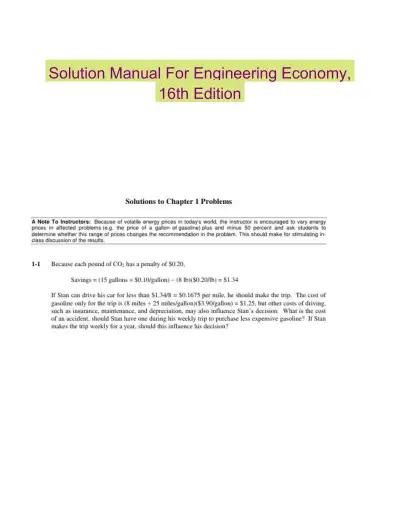 Textbook Guides
Solution Manual For Engineering Economy, 16th Edition
790 pagesMay 2025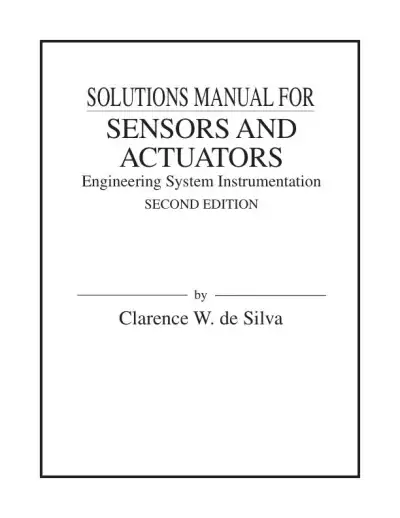 Textbook Guides
Solution Manual for Sensors and Actuators: Engineering System Instrumentation, 2nd Edition
318 pagesMay 2025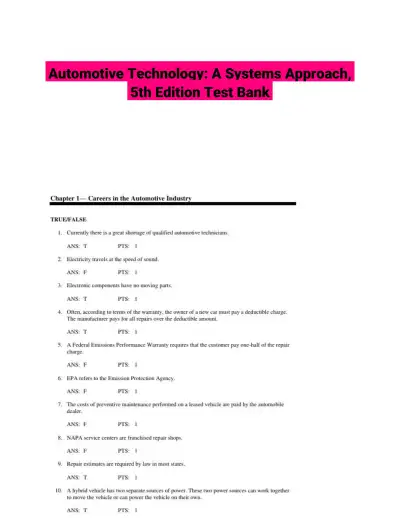 Exam Guides
Automotive Technology: A Systems Approach, 5th Edition Test Bank
670 pagesMay 2025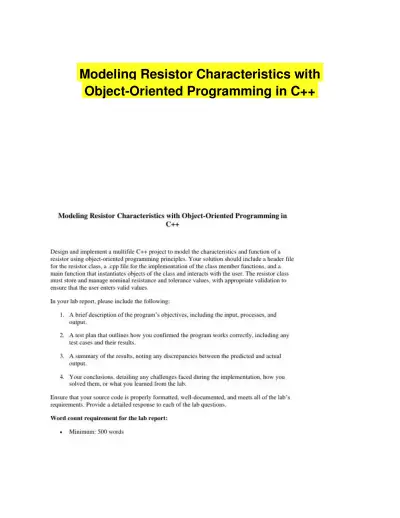 Solved Assignments
Modeling Resistor Characteristics with Object-Oriented Programming in C++
4 pagesMay 2025
Flashcard decks
All decksRecently shared
See newest
Where students share Engineering material
About Engineering
Engineering is a broad field that applies science, mathematics, and practical knowledge to design, build, and improve systems used in everyday life. From infrastructure and machines to software and energy systems, engineering focuses on solving real-world problems through innovation and technical thinking.
On CramX, you can explore a wide range of engineering resources designed to support learning across different disciplines. This includes engineering notes and study documents and flashcards for quick revision. These materials help students understand concepts, practice problem-solving, and prepare effectively for exams.
Engineering covers major branches such as civil engineering, mechanical engineering, electrical engineering, and chemical engineering, along with specialized areas like software engineering, environmental engineering, and biomedical systems. Each discipline focuses on designing and improving systems, structures, or technologies.
Students develop analytical, technical, and critical thinking skills that are essential for solving complex challenges in industries such as construction, manufacturing, energy, healthcare, and information technology.
If you're exploring specific areas, you may also find useful resources in Mechanical Engineering, Electrical Engineering, Civil Engineering, and Information Technology.