

Microbiology: An Introduction, 11th Edition Test Bank
- Microbiology
- 509 pages
- Shared May 2025
Study smarter, not harder, with Microbiology: An Introduction, 11th Edition Test Bank, a guide that breaks down tough concepts into easy-to-understand steps.
Preview 16 of 509 pages
See the first 16 pages exactly as they appear in the document.
Page 1 Read page 1 as text
Exam Name___________________________________ MULTIPLE CHOICE. Choose the one alternative that best completes the statement or answers the question. 1) Which of the following is NOT associated with viruses? 1) A) capsid B) envelope C) spikes D) organelles E) nucleic acid Answer: D Explanation: A) B) C) D) E) 2) Microorganisms are involved in each of the following processes EXCEPT 2) A) decomposition of organic material. B) infection. C) food production. D) smog production. E) O 2 production. Answer: D Explanation: A) B) C) D) E) 3) Gene therapy is currently used to treat all of the following diseases EXCEPT 3) A) cystic fibrosis. B) severe combined immunodeficiency disease (SCID). C) colon cancer. D) Duchenne’s muscular dystrophy. E) LDL - receptor deficiency. Answer: C Explanation: A) B) C) D) E) 1
Page 2 Page 3 Read page 3 as text
Figure 1.1 4) The bacterial shape of the cells in Figure 1.1 would best be described as 4) A) coccus. B) bacillus. C) ovoid. D) columnar. E) spiral. Answer: B Explanation: A) B) C) D) E) 5) The infectious agent that causes AIDS is a 5) A) bacterium. B) mold. C) virus. D) protozoan. E) yeast. Answer: C Explanation: A) B) C) D) E) 6) In which of the following situations would Koch’s postulates be utilized? 6) A) determination of the cause of cancer in a patient B) formulation of a vaccine against a new pathogen in a genetic engineering lab C) whenever the scientific method is used to investigate a microbiological problem D) determination of the cause of a patient’s illness in a hospital microbiology lab E) development of a new antibiotic in a pharmaceutical lab Answer: D Explanation: A) B) C) D) E) 2
Page 4 Read page 4 as text
7) The major food producers for other living organisms is/are 7) A) higher plants. B) cyanobacteria. C) algae. D) higher plants and algae. E) higher plants, cyanobacteria, and algae. Answer: E Explanation: A) B) C) D) E) 8) Recombinant DNA refers to the 8) A) interaction between human and bacterial cells. B) DNA resulting when bacterial genes are inserted in an animal genome. C) study of bacterial ribosomes. D) synthesis of proteins from genes. E) study of the function of genes. Answer: B Explanation: A) B) C) D) E) 9) Viruses are not considered living organisms because they 9) A) are structurally very simple. B) typically associated with disease. C) cannot reproduce by themselves. D) can only be visualized using an electron microscope. E) are ubiquitous in nature. Answer: C Explanation: A) B) C) D) E) 10) The use of phenol (carbolic acid) as a wound disinfectant was first practiced by 10) A) Lister. B) Semmelweis. C) Koch. D) Holmes. E) Pasteur. Answer: A Explanation: A) B) C) D) E) 3
Page 5 Read page 5 as text
11) The formal system for classifying and naming organisms was developed by 11) A) Carolus Linnaeus. B) Robert Koch. C) Aristotle. D) Louis Pasteur. E) Ignaz Semmelweis. Answer: A Explanation: A) B) C) D) E) 12) Microorganisms are essential to our life. Each of the following is an example of a beneficial function of microorganisms EXCEPT 12) A) agriculture. B) increased morbidity. C) bioremediation. D) alternative fuel production. E) gene therapy. Answer: B Explanation: A) B) C) D) E) 13) Antibiotics are produced by 13) A) bacteria. B) viruses. C) fungi. D) protozoa. E) bacteria and fungi. Answer: E Explanation: A) B) C) D) E) 14) The first antibiotic to be utilized was 14) A) salvarsan. B) quinine. C) sulfonamides. D) penicillin. E) vancomycin. Answer: D Explanation: A) B) C) D) E) 4
Page 6 Read page 6 as text
15) Molecular biology is the study of 15) A) RNA replication. B) DNA synthesis. C) enzyme function. D) the structure and function of macromolecules essential to life. E) protein synthesis. Answer: D Explanation: A) B) C) D) E) 16) Protozoan motility structures include 16) A) cilia. B) pseudopods. C) flagella. D) cilia and pseudopods only. E) cilia, flagella, and pseudopods. Answer: E Explanation: A) B) C) D) E) 17) Biogenesis refers to the 17) A) spontaneous generation of organisms from nonliving matter. B) development of life forms from preexisting life forms. C) germ theory of disease. D) development of aseptic technique. Answer: B Explanation: A) B) C) D) 18) Fungal infections are studied by 18) A) virologists. B) parasitologists. C) mycologists. D) herpetologists. E) bacteriologists. Answer: C Explanation: A) B) C) D) E) 5
Page 7 Read page 7 as text
19) Which of the following is NOT a domain in the three - domain system? 19) A) bacteria B) archaea C) eukarya D) animalia Answer: D Explanation: A) B) C) D) 20) Mycology is the study of 20) A) protozoa. B) mycoplasma. C) mushrooms. D) molds. E) molds, yeast, and mushrooms. Answer: E Explanation: A) B) C) D) E) 21) Which of the following statements about biofilms is FALSE? 21) A) Biofilms in your body protect mucous membranes from harmful microbes. B) Biofilms on rocks provide food for animal life. C) Biofilms in pipes can block the flow of water. D) Compared to free - living bacteria, biofilms are more sensitive to antibiotics. E) Biofilms on medical devices cause infections. Answer: D Explanation: A) B) C) D) E) 22) Common commercial benefits of microorganisms include synthesis of 22) A) insulin. B) aspirin. C) antibiotics. D) antibiotics and aspirin. E) antibiotics and insulin. Answer: E Explanation: A) B) C) D) E) 6
Page 8 Read page 8 as text
23) The term used to describe a disease - causing microorganism is 23) A) microbe. B) infection. C) virus. D) bacterium. E) pathogen. Answer: E Explanation: A) B) C) D) E) 24) Archaea differ from bacteria in that archaea 24) A) lack nuclei. B) use organic compounds for food. C) have diverse cell wall compositions. D) are prokaryotic. E) reproduce by binary fission. Answer: C Explanation: A) B) C) D) E) 25) Which of the following findings was essential for Edward Jenner’s vaccination process? 25) A) A weakened microorganism will not cause disease. B) Pathogenic microorganisms infect all humans and animals in the same manner. C) Someone who recovers from a disease will not acquire that disease again. D) Exposure to a milder disease form may produce immunity. E) Disease is caused by viruses. Answer: D Explanation: A) B) C) D) E) 26) Development of emerging infectious disease can be a result of all of the following EXCEPT 26) A) changes in the environment. B) overuse of antibiotics. C) microbial mutation. D) modern transportation. E) use of genetically modified foods. Answer: E Explanation: A) B) C) D) E) 7
Page 9 Read page 9 as text
27) Proof that a microbe could cause disease was provided by 27) A) Pasteur. B) Lister. C) Wasserman. D) Semmelweis. E) Koch. Answer: E Explanation: A) B) C) D) E) 28) Who was the first scientist to pursue a “magic bullet” that could be used to treat infectious disease? 28) A) Ehrlich B) Semmelweis C) Pasteur D) Lister E) Jenner Answer: A Explanation: A) B) C) D) E) 29) If you were setting up an experiment to disprove spontaneous generation in a liquid medium, which of the following would be essential to the experiment? 29) A) using a sterile liquid and eliminating exposure to microorganisms B) adding carbon dioxide to the liquid C) starting with a liquid that contains microorganisms D) adding antibiotics to the liquid E) supplying the liquid with nutrients Answer: A Explanation: A) B) C) D) E) 30) Classification of organisms into three domains is based on 30) A) cellular proteins. B) cellular organization. C) the presence of a cell wall. D) nutritional requirements. E) the number of cells in the organism. Answer: B Explanation: A) B) C) D) E) 8
Page 10 Read page 10 as text
31) Commercial utilization of microbial products has become increasingly popular due to their environmentally friendly nature. Removal of these products from the environment typically utilizes 31) A) alcohol. B) organic solvents. C) soap. D) enzymes. E) organic acids. Answer: D Explanation: A) B) C) D) E) 32) The microbial process of converting sugars to alcohol is known as 32) A) pasteurization. B) fermentation. C) alcoholism. D) tyndallization. E) lyophilization. Answer: B Explanation: A) B) C) D) E) 33) ________ is the physician first associated with vaccination. 33) A) Jenner B) Pasteur C) Lister D) Koch E) Escherich Answer: A Explanation: A) B) C) D) E) 34) Normal microbiota are typically found in and on all the following body locations EXCEPT the 34) A) skin. B) blood. C) colon. D) mouth. E) upper respiratory system. Answer: B Explanation: A) B) C) D) E) 9
Page 11 Read page 11 as text
35) Recombinant DNA technology has become an increasingly important part of our life. It is used for all of the following EXCEPT 35) A) drug production. B) enhancing food longevity. C) synthesis of water. D) vaccine production. E) increasing the nutritional value of food. Answer: C Explanation: A) B) C) D) E) 36) Who is credited with first observing microorganisms? 36) A) Robert Hooke B) Anton van Leeuwenhoek C) Louis Pasteur D) Robert Koch E) Carolus Linnaeus Answer: B Explanation: A) B) C) D) E) 37) The first step for directly linking a microbe to a specific disease according to Koch’s postulates is to 37) A) inject a sample of blood or other body fluid from a diseased animal into a healthy animal. B) isolate microbes from the blood of healthy animals. C) culture the blood or other body fluid from a diseased animal using nutrient medium. D) obtain a sample of blood or other body fluid from a diseased animal. E) compare the blood of a sick animal to blood obtained from a healthy animal. Answer: D Explanation: A) B) C) D) E) 38) Robert Koch identified the cause of 38) A) diphtheria. B) tuberculosis. C) smallpox. D) anthrax. E) AIDS. Answer: D Explanation: A) B) C) D) E) 10
Page 12 Read page 12 as text
39) Regarding Louis Pasteur’s experiments with the S - neck flask, which of the following statements is TRUE? 39) A) Air exchange was involved. B) All preexisting microorganisms were killed. C) A food source was provided. D) The possibility of contamination was removed. E) All of the answers are correct. Answer: E Explanation: A) B) C) D) E) 40) Who is credited with first observing cells? 40) A) Anton van Leeuwenhoek B) Louis Pasteur C) Carolus Linnaeus D) Robert Koch E) Robert Hooke Answer: E Explanation: A) B) C) D) E) 41) In the name Staphylococcus aureus , aureus is the 41) A) genus. B) kingdom. C) domain name. D) family name. E) specific name. Answer: E Explanation: A) B) C) D) E) 42) A prokaryotic cell may possess each of the following cellular components EXCEPT 42) A) ribosomes. B) a nucleus. C) a cell wall. D) flagella. E) a cell membrane. Answer: B Explanation: A) B) C) D) E) 11
Page 13 Read page 13 as text
43) Each of the following organisms would be considered a microbe EXCEPT 43) A) virus. B) bacterium. C) mushroom. D) yeast. E) protozoan. Answer: C Explanation: A) B) C) D) E) 44) The arguments supporting spontaneous generation were finally disproved by 44) A) Louis Pasteur. B) John Needham. C) Lazzaro Spallanzani. D) Francesco Redi. E) Rudolf Virchow. Answer: A Explanation: A) B) C) D) E) 45) Vaccinations are available for all of the following diseases EXCEPT 45) A) mumps. B) hepatitis B. C) rubella. D) measles. E) strep throat. Answer: E Explanation: A) B) C) D) E) TRUE/FALSE. Write 'T' if the statement is true and 'F' if the statement is false. 46) Bovine spongiform encephalitis (BSE, or “mad cow disease”) is caused by a virus. 46) Answer: True False Explanation: 47) All pathogens known to infect humans have been identified at this point in time. 47) Answer: True False Explanation: 12
Page 14 Read page 14 as text
48) Infectious disease is almost totally eradicated in our world. 48) Answer: True False Explanation: 49) The process of pasteurization to reduce food spoilage utilizes high heat to kill all bacteria present. 49) Answer: True False Explanation: 50) Spontaneous generation refers to living cells arising only from other living cells. 50) Answer: True False Explanation: 51) Some viruses can contain both DNA and RNA. 51) Answer: True False Explanation: 52) All cells possess a cell wall. 52) Answer: True False Explanation: 53) Microbes are associated with life - sustaining benefits as well as life - threatening diseases. 53) Answer: True False Explanation: 54) Anton van Leeuwenhoek was the first microbiologist to use a microscope to examine environmental samples for the presence of microorganisms. 54) Answer: True False Explanation: 55) A student has obtained a sample of pond water for study. Using the high - power lens, he observes several cells with nuclei. He can conclude that the cells are NOT bacteria. 55) Answer: True False Explanation: ESSAY. Write your answer in the space provided or on a separate sheet of paper. 56) Explain the germ theory of disease and discuss why this theory is essential to the treatment of infectious disease. Answer: 57) What was the function and importance of S - necked flasks in Louis Pasteur’s experiments in disproving spontaneous generation? Answer: 58) Compare and contrast prokaryotic and eukaryotic cells. Answer: 59) What is an emerging disease, and what are some of the sources for these “new” infectious diseases? Answer: 13
Page 15 Read page 15 as text
Answer Key Testname: C1 1) D 2) D 3) C 4) B 5) C 6) D 7) E 8) B 9) C 10) A 11) A 12) B 13) E 14) D 15) D 16) E 17) B 18) C 19) D 20) E 21) D 22) E 23) E 24) C 25) D 26) E 27) E 28) A 29) A 30) B 31) D 32) B 33) A 34) B 35) C 36) B 37) D 38) D 39) E 40) E 41) E 42) B 43) C 44) A 45) E 46) FALSE 47) FALSE 48) FALSE 49) FALSE 50) FALSE 14
Page 16 Read page 16 as text
Answer Key Testname: C1 51) FALSE 52) FALSE 53) TRUE 54) TRUE 55) TRUE 56) 57) 58) 59) 15
493 more pages in the full document
Unlock it once and it stays in your library, ready to chat with or turn into flashcards.
Unlock the full documentMore Microbiology study materials
See all Textbook Guides
Solution Manual For Microbiology: An Introduction, 13th Edition
Microbiology
298 pages36downloadsFeb 2025 Exam Guides
Test Bank For Microbiology: An Introduction, 1st Edition
Microbiology
509 pagesMay 2025 Past Exams
2024-2025 Boards: Microbiology - Vandy's Review PP Exam with Answers (55 Solved Questions)
Microbiology
22 pages171downloadsFeb 2025 Exam Guides
Test Bank For Microbiology: A Systems Approach, 3rd Edition
Microbiology
546 pages124downloadsFeb 2025 Exam Guides
Test Bank for Foundations In Microbiology, 9th Edition
Microbiology
338 pages120downloadsFeb 2025 Exam Guides
Test Bank For Microbiology with Diseases by Taxonomy, 6th Edition
Microbiology
532 pagesMay 2025 Quick Guides
Microbiology - DNA and Gene Expression
Microbiology
15 pagesMar 2026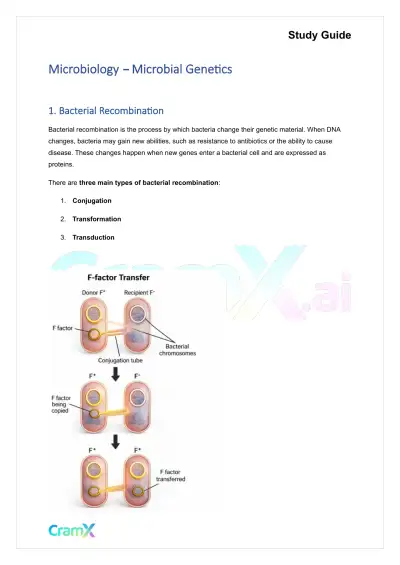 Quick Guides
Microbiology - Microbial Genetics
Microbiology
13 pagesMar 2026
Study this document with CramX
Once it is in your library, every tool can work from it.