

Subject
Microbiology study materials
Microbiology is the study of microorganisms such as bacteria, viruses, fungi, and parasites, and how they interact with humans, animals, and the environment.
Shared by students: 51 documents.
Most used Microbiology documents
All 51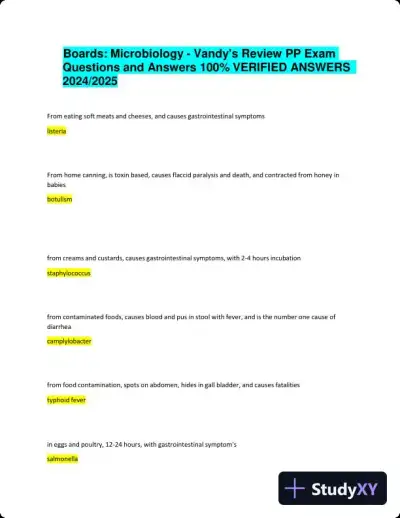 Past Exams
2024-2025 Boards: Microbiology - Vandy's Review PP Exam with Answers (55 Solved Questions)
22 pages171downloadsFeb 2025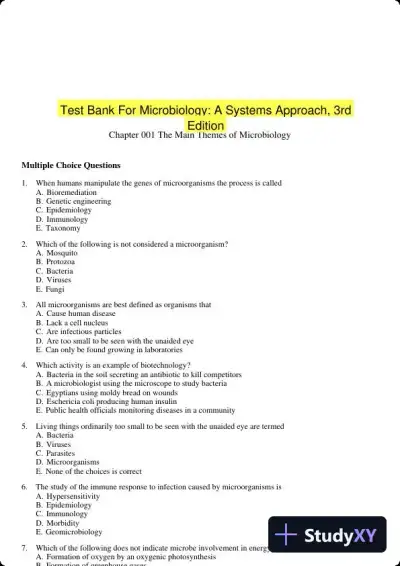 Exam Guides
Test Bank For Microbiology: A Systems Approach, 3rd Edition
546 pages124downloadsFeb 2025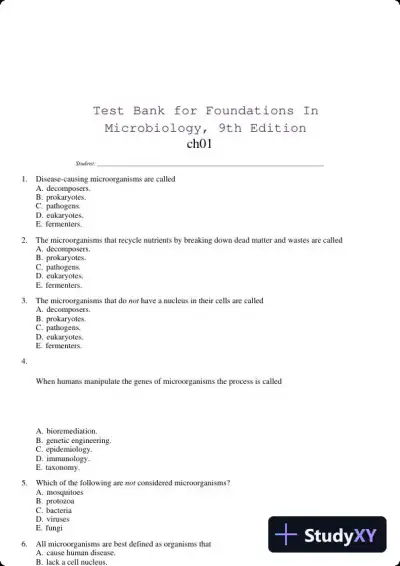 Exam Guides
Test Bank for Foundations In Microbiology, 9th Edition
338 pages120downloadsFeb 2025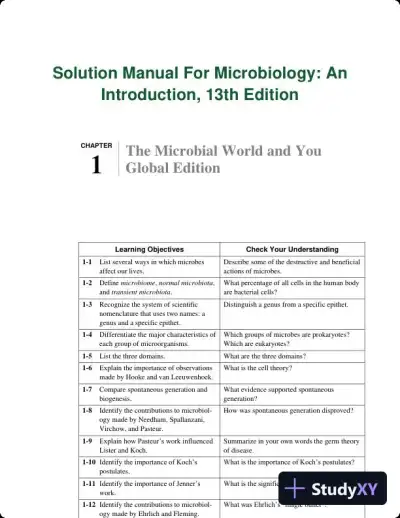 Textbook Guides
Solution Manual For Microbiology: An Introduction, 13th Edition
298 pages36downloadsFeb 2025 Quick Guides
Microbiology - DNA and Gene Expression
15 pagesMar 2026 Textbook Guides
Solution Manual for Microbiology with Diseases by Body System, 4th Edition
299 pagesMay 2025 Quick Guides
Microbiology - Microbial Genetics
13 pagesMar 2026 Exam Guides
Microbiology: An Introduction, 11th Edition Test Bank
509 pagesMay 2025
Recently shared
See newest
Where students share Microbiology material
About Microbiology
Microbiology is the study of microorganisms such as bacteria, viruses, fungi, and parasites, and how they interact with humans, animals, and the environment. These microscopic organisms play a key role in health, disease, and various biological processes.
On CramX, you can explore a wide range of microbiology resources, including study notes and learning materials and flashcards for quick revision. These resources are designed to help you understand core concepts and prepare effectively for exams.
Microbiology includes major areas such as bacteriology, virology, mycology, parasitology, and immunology. Students learn how microorganisms grow, cause infections, and interact with the immune system, as well as how they can be controlled through sterilization, antibiotics, and preventive measures.
This subject is especially important in healthcare, medicine, and life sciences, where understanding infectious diseases, microbial behavior, and laboratory techniques is essential.
Key areas you can study:
- Bacterial structure, growth, and classification
- Viruses and mechanisms of infection
- Fungi and parasitic organisms
- Immunology and host defense systems
- Antimicrobial therapy and infection control
You may also find useful resources in related subjects such as Medicine, Biology, and Pharmacology.