

Solution Manual For Microbiology: An Introduction, 13th Edition
- Microbiology
- 298 pages
- Shared February 2025
- 36 downloads
Solution Manual For Microbiology: An Introduction, 13th Edition simplifies tough problems, making them easier to understand and solve.
Preview 31 of 298 pages
See the first 31 pages exactly as they appear in the document.
Page 1 Read page 1 as text
1 CHAPTER 1 The Microbial World and You Global Edition Learning Objectives Check Your Understanding 1 - 1 List several ways in which microbes affect our lives. Describe some of the destructive and beneficial actions of microbes. 1 - 2 Define microbiome , normal microbiota , and transient microbiota . What percentage of all cells in the human body are bacterial cells? 1 - 3 Recognize the system of scientific nomenclature that uses two names: a genus and a specific epithet. Distinguish a genus from a specific epithet. 1 - 4 Differentiate the major characteristics of each group of microorganisms. Which groups of microbes are prokaryotes? Which are eukaryotes? 1 - 5 List the three domains. What are the three domains? 1 - 6 Explain the importance of observations made by Hooke and van Leeuwenhoek. What is the cell theory? 1 - 7 Compare spontaneous generation and biogenesis. What evidence supported spontaneous generation? 1 - 8 Identify the contributions to microbiol- ogy made by Needham, Spallanzani, Virchow, and Pasteur. How was spontaneous generation disproved? 1 - 9 Explain how Pasteur’s work influenced Lister and Koch. Summarize in your own words the germ theory of disease. 1 - 10 Identify the importance of Koch’s postulates. What is the importance of Koch’s postulates? 1 - 11 Identify the importance of Jenner’s work. What is the significance of Jenner’s discovery? 1 - 12 Identify the contributions to microbiol- ogy made by Ehrlich and Fleming. What was Ehrlich’s “magic bullet”? 1 - 13 Define bacteriology , mycology , parasit- ology , immunology , and virology . Define bacteriology , mycology , parasitology , immunology , and virology . 1 - 14 Explain the importance of microbial genetics, molecular biology, and genomics. Differentiate microbial genetics, molecular biology, and genomics.
Page 2 Page 3 Read page 3 as text
2 INSTRUCTOR'S GUIDE FOR MICROBIOLOGY: AN INTRODUCTION, GE, 13e 1 - 15 List at least four beneficial activities of microorganisms. Name two beneficial uses of bacteria. 1 - 16 Name two examples of biotechnology that use recombinant DNA technology and two examples that do not. Differentiate biotechnology from recombinant DNA technology. 1 - 17 Define resistance. Differentiate normal microbiota and infectious disease. 1 - 18 Define biofilm . Why are biofilms important? 1 - 19 Define emerging infectious disease . What factors contribute to the emergence of an infectious disease? New in This Edition • The resurgence in microbiology is highlighted in sections on the Second and Third Golden Ages of Microbiology. • The Emerging Infectious Diseases section has been updated. • A discussion of normal microbiota and the human microbiome has been added. Chapter Summary Microbes in Our Lives (p. 28 ) The Microbiome (pp. 28 – 29 ) ASM 5.4: Microorganisms, cellular and viral, can interact with both human and nonhuman hosts in beneficial, neutral, or detrimental ways. ASM 6.2: Microorganisms provide essential models that give us fundamental knowledge about life processes. 1. Living things too small to be seen with the unaided eye are called microorganisms. 2. Microorganisms are important in maintaining Earth’s ecological balance. 3. Everyone has microorganisms in and on the body; these make up the normal microbiota or human microbiome. The normal microbiota are needed to maintain good health. 4. Some microorganisms are used to produce foods and chemicals. 5. Some microorganisms cause disease. Naming and Classifying Microorganisms (pp. 30 – 32 ) ASM 2.4: While microscopic eukaryotes (e.g., fungi, protozoa, and algae) carry out some of the same processes as bacteria, many of the cellular properties are fundamentally different. Nomenclature (p. 30 )
Page 4 Read page 4 as text
CHAPTER 1 The Microbial World and You 3 1. In a nomenclature system designed by Carolus Linnaeus (1735), each living organism is assigned two names. 2. The two names consist of a genus and a specific epithet, both of which are underlined or italicized. Types of Microorganisms (pp. 30 – 32 ) 3. Bacteria are unicellular organisms. Because they have no nucleus, the cells are described as prokaryotic. 4. Most bacteria have a peptidoglycan cell wall; they divide by binary fission, and they may possess flagella. 5. Bacteria can use a wide range of chemical substances for their nutrition. 6. Archaea consist of prokaryotic cells; they lack peptidoglycan in their cell walls. 7. Archaea include methanogens, extreme halophiles, and extreme thermophiles. 8. Fungi (mushrooms, molds, and yeasts) have eukaryotic cells (cells with a true nucleus). Most fungi are multicellular. 9. Fungi obtain nutrients by absorbing organic material from their environment. 10. Protozoa are unicellular eukaryotes. 11. Protozoa obtain nourishment by absorption or ingestion through specialized structures. 12. Algae are unicellular or multicellular eukaryotes that obtain nourishment by photosyn- thesis. 13. Algae produce oxygen and carbohydrates that are used by other organisms. 14. Viruses are noncellular entities that are parasites of cells. 15. Viruses consist of a nucleic acid core (DNA or RNA) surrounded by a protein coat. An envelope may surround the coat. 16. The principal groups of multicellular animal parasites are flatworms and roundworms, collectively called helminths. 17. The microscopic stages in the life cycle of helminths are identified by traditional microbiological procedures. Classification of Microorganisms (p. 32 ) 18. All organisms are classified into one of three domains: Bacteria, Archaea, and Eukarya. Eukarya include protists, fungi, plants, and animals. A Brief History of Microbiology (pp. 32 – 40 ) ASM 7.4: Ability to understand the relationship between science and society The First Observations (pp. 32 – 33 ) 1. Hooke’s observations laid the groundwork for development of the cell theory, the concept that all living things are composed of cells. 2. Anton van Leeuwenhoek, using a simple microscope, was the first to observe microorganisms (1673).
Page 5 Read page 5 as text
4 INSTRUCTOR'S GUIDE FOR MICROBIOLOGY: AN INTRODUCTION, GE, 13e The Debate over Spontaneous Generation (pp. 33 – 35 ) 3. Until the mid - 1880s, many people believed in spontaneous generation, the idea that living organisms could arise from nonliving matter. 4. Francesco Redi demonstrated that maggots appear on decaying meat only when flies are able to lay eggs on the meat (1668). 5. John Needham claimed that microorganisms could arise spontaneously from heated nutrient broth (1745). 6. Lazzaro Spallanzani repeated Needham’s experiments and suggested that Needham’s results were due to microorganisms in the air entering his broth (1765). 7. Rudolf Virchow introduced the concept of biogenesis: living cells can arise only from preexisting cells (1858). 8. Louis Pasteur demonstrated that microorganisms are in the air everywhere and offered proof of biogenesis (1861). 9. Pasteur’s discoveries led to the development of aseptic techniques used in laboratory and medical procedures to prevent contamination by microorganisms. The First Golden Age of Microbiology (pp. 35 – 37 ) 10. The science of microbiology advanced rapidly between 1857 and 1914. 11. Pasteur found that yeast ferment sugars to alcohol and that bacteria can oxidize the alcohol to acetic acid. 12. A heating process called pasteurization is used to kill bacteria in some alcoholic beverages and milk. 13. Agostino Bassi (1835) and Pasteur (1865) showed a causal relationship between microorganisms and disease. 14. Joseph Lister introduced the use of a disinfectant to clean surgical wounds in order to control infections in humans (1860s). 15. Robert Koch proved that microorganisms cause disease. He used a sequence of procedures, now called Koch’s postulates (1876), that are used today to prove that a particular microorganism causes a particular disease. 16 . In 1798, Edward Jenner demonstrated that inoculation with cowpox material provides humans with immunity to smallpox. 17. About 1880, Pasteur discovered that avirulent bacteria could be used as a vaccine for fowl cholera; he coined the word vaccine . 18. Modern vaccines are prepared from living avirulent microorganisms or killed pathogens, from isolated components of pathogens, and by recombinant DNA techniques. The Second Golden Age of Microbiology (pp. 37 – 40 ) 19. The Second Golden Age began with the discovery of penicillin’s effectiveness against infections. 20. Two types of chemotherapeutic agents are synthetic drugs (chemically prepared in the laboratory) and antibiotics (substances produced naturally by bacteria and fungi to inhibit the growth of other microorganisms).
Page 6 Read page 6 as text
CHAPTER 1 The Microbial World and You 5 21. Paul Ehrlich introduced an arsenic - containing chemical called salvarsan to treat syphilis (1910). 22. Alexander Fleming observed that the Penicillium fungus inhibited the growth of a bacterial culture. He named the active ingredient penicillin (1928). 23. Researchers are tackling the problem of drug - resistant microbes. 24. Bacteriology is the study of bacteria, mycology is the study of fungi, and parasitology is the study of parasitic protozoa and worms. 25. The study of AIDS and analysis of the action of interferons are among the current research interests in immunology. 26. New techniques in molecular biology and electron microscopy have provided tools for advancing our knowledge of virology. 27. The development of recombinant DNA technology has helped advance all areas of microbiology. The Third Golden Age of Microbiology (p. 40 ) 28 . Microbiologists are using genomics, the study of all of an organism’s genes, to study microbiomes in different environments. Microbes and Human Welfare (pp. 40 – 42 ) ASM 4.5: Cell genomes can be manipulated to alter cell function. ASM 6.1: Microbes are essential for life as we know it and the processes that support life (e.g., in biogeochemical cycles and plant and/or animal microflora). ASM 6.2: Microorganisms provide essential models that give us fundamental knowledge about life processes. ASM 6.3: Humans utilize and harness microorganisms and their products. 1. Microorganisms degrade dead plants and animals and recycle chemical elements to be used by living plants and animals. 2. Bacteria are used to decompose organic matter in sewage. 3. Bioremediation processes use bacteria to clean up toxic wastes. 4. Bacteria that cause diseases in insects are being used as biological controls of insect pests. Biological controls are specific for the pest and do not harm the environment. 5. Using microbes to make products such as foods and chemicals is called biotechnology. 6. Using recombinant DNA, bacteria can produce important substances such as proteins, vaccines, and enzymes. 7. In gene therapy, viruses are used to carry replacements for defective or missing genes into human cells.
Page 7 Read page 7 as text
6 INSTRUCTOR'S GUIDE FOR MICROBIOLOGY: AN INTRODUCTION, GE, 13e 8. Genetically modified bacteria are used in agriculture to protect plants from frost and insects and to improve the shelf life of produce. Microbes and Human Disease (pp. 42 – 45 ) ASM 5.4: Microorganisms, cellular and viral, can interact with both human and nonhuman hosts in beneficial, neutral, or detrimental ways. 1. The disease - producing properties of a species of microbe and the host’s resistance are important factors in determining whether a person will contract a disease. 2. Bacterial communities that form slimy layers on surfaces are called biofilms. 3. An infectious disease is one in which pathogens invade a susceptible host. 4. An emerging infectious disease (EID) is a new or changing disease showing an increase in incidence in the recent past or a potential to increase in the near future. Contributions to the field of microbiology by the following individuals are noted in this chapter: Oswald Avery Agostino Bassi Fran ç oise Barr é - Sinou ss i George Beadle Martinus Beijerinck Francis Crick Paul Ehrlich Alexander Fleming Robert Hooke Dmitri Iwanowski François Jacob Edward Jenner Robert Koch Rebecca Lancefield Antoine Lavoisier Joshua Lederberg Carolus Linnaeus Joseph Lister Colin MacLeod Maclyn McCarty C é sar Milstein Jacques Monod John Needham Louis Pasteur Francesco Redi Ignaz Semmelweis Lazzaro Spallanzani Wendell Stanley Edward Tatum Youyou Tu Anton van Leeuwenhoek Rudolf Virchow James Watson Chaim Weizmann Sergei Winogradsky Carl Woese The Loop The chapter defines organisms studied in microbiology. Topics introduced in the overview of microbiology can be covered in more depth by reading the following sections: Bioremediation p. 41 , Chapter 2 (p. 57 ) Classification Chapter 10 Emerging infectious diseases pp. 43 – 45 Industrial microbiology/biotechnology Chapters 9 and 28 Koch’s postulates p. 36 , Chapter 14 (Figure 14.3) Vaccines pp. 36 – 37 , Chapter 18 Biofilms p. 42 , Chapter 6 (pp. 183 – 184 ) Exploring the Microbiome How Does Your Microbiome Grow?
Page 8 Read page 8 as text
CHAPTER 1 The Microbial World and You, GE 7 This introductory chapter contains an introductory segment on how the microbiome of people may vary depending on their diet. Discussion questions: • Is the ability to break down red algae a desirable trait (from the perspective of humans) or is it just beneficial to bacteroides? • If the ability to break down red algae is indeed beneficial, should the FDA consider allowing raw algae? What are the potential risks and benefits? • A related topic to discuss is how infants acquire their microbiome. A January 2017 article discusses vertical transmission of microbes. Blum, K. (2017) Researchers Use Innovative Methods to Study Vertical Transmission of Microbes. https://www.asm.org/index.php/mbiosphere/item/5474 - researchers - use - innovative - methods - to - study - vertical - transmission - of - mi - crobes?utm_source=TrendMD&utm_ medium=cpc&utm_campaign=mBiosphere_TrendMD_0 Answers Figure Questions Figure Question Answer 1.1 How do we benefit from the produc- tion of vitamin K by microbes? Vitamin K is necessary for blood clotting. 1.2 How are bacteria, archaea, fungi, pro- tozoa, algae, and viruses distinguished on the basis of cellular structure? Bacteria are prokaryotic with peptidoglycan cell walls. Archaea are prokaryotes lacking pepti- doglycan. Fungi are eukaryotes with chitin cell walls. Protozoa are unicellular eukaryotes without cell walls. Algae are unicellular eukaryotes with chloroplasts and cell walls. Viruses are not composed of cells. They consist of a protein coat enclosing a nucleic acid. 1.3 Why was van Leeuwenhoek’s discov- ery so important? It led the way to look for microbial causes of disease and changes in food. 1.5 Why do you think the First Golden Age of Microbiology occurred when it did? Technology (microscopes) combined with Pasteur’s discovery that microbes cause “diseases” of food. 1.6 Why do you think penicillin is no longer as effective as it once was? Overuse has selected for penicillin - resistant bacteria. 1.7 What advances occurred during the Second Golden Age of Microbiology? Discovery and development of antibiotics and other antimicrobial agents, development of techniques for sequencing DNA and for producing monoclonal antibodies.
Page 9 Read page 9 as text
8 INSTRUCTOR'S GUIDE FOR MICROBIOLOGY: AN INTRODUCTION, 13e, GE 1.8 How do you think parasitic worms survive and live off a human host? Worms could actively ingest human tissue or could absorb nutrients from the host’s intestinal contents. 1.9 Why is it important to identify strepto- cocci quickly? Streptococci include several important pathogens including Streptococcus pyogenes , Streptococcus agalactiae , and Streptococcus pneumoniae . 1.10 How does a biofilm’s protective barrier make it resistant to antibiotics? The barrier makes it difficult for the antibi- otics to penetrate the biofilm and access the microorganisms. Review 1. Rudolf Virchow’s concept of biogenesis, stating that living cells arise only from preexist- ing ones, challenged the case for spontaneous generation. 2. a. Certain microorganisms cause diseases in insects. Microorganisms that kill insects can be effective biological control agents because they are specific for the pest and do not persist in the environment. b. Carbon, oxygen, nitrogen, sulfur, and phosphorus are required for all living organisms. Microorganisms convert these elements into forms that are useful for other organisms. Many bacteria decompose material and release carbon dioxide into the atmosphere that plants use. Some bacteria can take nitrogen from the atmosphere and convert it into a form that can be used by plants and other microorganisms. c. Normal microbiota are microorganisms that are found in and on the human body. They do not usually cause disease and can be beneficial. d. Organic matter in sewage is decomposed by bacteria into carbon dioxide, nitrates, phosphates, sulfate, and other inorganic compounds in a wastewater treatment plant. e. Recombinant DNA techniques have resulted in insertion of the gene for insulin production into bacteria. These bacteria can produce human insulin inexpensively. f. Microorganisms can be used as vaccines. Some microbes can be genetically engineered to produce components of vaccines. g. Biofilms are aggregated bacteria adhering to each other and to a solid surface. 3. a. 1, 3 d. 2 g. 6 b. 8 e. 5 h. 7 c. 1, 4, 5 f. 3 4. a. 7 d. 2 g. 1 b. 4 e. 6 c. 3 f. 5 5. a. 11 g. 10 m. 7 b. 14 h. 2 n. 5 c. 15 i. 1 o. 6 d. 17 j. 12 p. 8
Page 10 Read page 10 as text
CHAPTER 1 The Microbial World and You, GE 9 e. 3 k. 18 q. 13 f. 9 l. 4 r. 16 6. No. E. coli can be beneficial for health as they aid in digestion and vitamin production. However, infection by a strain called E. coli O157:H7 causes bloody diarrhea. Certain species of bacteria of the genera Pseudomonas and Bacillus are among the most commonly used microbes for cleaning up pollutants. 7. Virus 8. Multiple Choice 1. b 6. c 2. a 7. c 3. d 8. a 4. c 9. d 5. b 10. a Analysis 1. Pasteur showed that life comes from preexisting life. The microorganisms that produced chemical and physical changes in beef broth and wine came from a few cells that entered the liquids from dust, containers, or the air. After showing that microorganisms could both grow on and change organic matter, Pasteur and others began to suspect that diseases were the result of microorganisms growing on living organic matter. 2. Semmelweis had observed an increased incidence of fever when medical students worked in obstetrics, as compared to the incidence during the students’ summer break. The medical students were carrying bacteria from the autopsy room. Lister observed that compound bone fractures could result in death, whereas recovery from simple fractures occurred without incident. 3. Erwinia amylovora is the correct way to write this scientific name. Scientific names can be derived from the names of scientists. In this case, Erwinia is derived from Erwin F. Smith, an American plant pathologist. Scientific names also can describe the organism, its habitat, or its niche. E. amylovora is a pathogen of plants ( amylo = starch, vora = eat). 4. There are many! Check the dairy section for fermented products, such as sour cream, yogurt, and cheese. Protein supplements often are yeasts. Bread, wine, and beer are products of yeasts and some bacteria. Sauerkraut is cabbage that has been fermented by lactobacilli. Vinegar is produced by bacterial growth on ethyl alcohol (wine). Xanthan, a thickener in many foods, is made by Xanthomonas bacteria.
Page 11 Read page 11 as text
10 INSTRUCTOR'S GUIDE FOR MICROBIOLOGY: AN INTRODUCTION, 13e, GE 5. Factors contributing to infectious disease include mutations in existing organisms, spread of diseases to new areas, ecological disturbances such as deforestation, lack of immun- ization, pesticide resistance, and antibiotic resistance. Clinical Application and Evaluation 1. a. Antibiotic treatment (e.g., penicillin, ampicillin). b. The warm and humid environment of tropical regions during the rainy season is very conducive to the growth of Leptospira . Also, when rain water contaminated by Lepto- spira mixes with sources of drinking water, the incidence of leptospirosis increases. 2. Pasteur showed that microbes were omnipresent and were responsible for “diseases” (i.e., spoilage) of food; Lister reasoned that these microbes might be responsible for diseases of people. Neither Lister nor Pasteur proved that microbes caused diseases. Koch provided a repeatable proof to demonstrate that a microbe causes a disease. 3. According to the U.S. FDA there is not enough evidence that use antibacterial soaps and detergent in the home is better than plain soap and water. Questions persist regarding long - term safety of antibacterial products and laboratory studies suggest that household use may contribute to bacterial resistance. Case Study: Are Ulcers an Infectious Disease? Background In 1981, the following information came to the attention of Barry Marshall, a gastroenterolo- gist at the Royal Perth Hospital in Australia. Household members of ulcer patients do not develop antibodies against Helicobacter. However, clinical staff involved in obtaining biopsy samples from ulcer patients developed antibodies against Helicobacter. If acid - suppressive therapy is combined with antibiotics, ulcers usually do not recur. Marshall concluded that ulcers are an infectious disease. Questions What caused Marshall to reach his conclusion? What additional proof would be needed? The Solution The presence of antibodies against Helicobacter is evidence of current or prior infection by the organism. Exchange of bacteria of the intestinal and skin microbiota, which is normal among household members, does not transmit Helicobacter , but direct contact with stomach contents does. Marshall collected the additional proof by demonstrating Koch’s postulates. Healthy volunteers were inoculated with Helicobacter ; they developed symptoms of the disease; and the Helicobacter was recovered from them.
Page 12 Read page 12 as text
11 CHAPTER 2 Chemical Principles Global Edition Learning Objectives Check Your Understanding 2 - 1 Describe the structure of an atom and its relation to the physical properties of elements. How does 14 6 C differ from 12 6 C? What is the atomic number of each carbon atom? The atomic mass ? 2 - 2 Define ionic bond , covalent bond , hydro- gen bond , molecular weight , and mole . Differentiate an ionic bond from a covalent bond. 2 - 3 Diagram three basic types of chemical reactions. This chemical reaction below is used to remove chlorine from water. What type of reaction is it? HClO + Na 2 SO 3 → Na 2 SO 4 + HCl 2 - 4 List several properties of water that are important to living systems. Why is the polarity of a water molecule important? 2 - 5 Define acid , base , salt , and pH. Antacids neutralize acid by the following reaction. Mg(OH) 2 + 2HCl → MgCl 2 + H 2 O Identify the acid, base, and salt. 2 - 6 Distinguish organic and inorganic compounds. Define organic. 2 - 7 Define functional group. Add the appropriate functional group(s) to the ethyl group below to produce each of the following compounds: ethanol, acetic acid, acetaldehyde, ethanolamine, diethyl ether. 2 - 8 Identify the building blocks of carbohy- drates. Give an example of a monosaccharide, a disaccharide, and a polysaccharide. 2 - 9 Differentiate simple lipids, complex lipids, and steroids. How do simple lipids differ from complex lipids? 2 - 10 Identify the building blocks and structure What two functional groups are in all amino
Page 13 Read page 13 as text
12 INSTRUCTOR'S GUIDE FOR MICROBIOLOGY: AN INTRODUCTION, GE, 13e of proteins. acids? 2 - 11 Identify the building blocks of nucleic acids. How do DNA and RNA differ? 2 - 12 Describe the role of ATP in cellular activities. Which can provide more energy for a cell and why: ATP or ADP? New in T his Edition • A discussion of the relationship between starch and normal microbiota has been added. Chapter Summary Introduction (p. 50 ) ASM 3.2 : The interactions of microorganisms among themselves and with their environment are determined by their metabolic abilities (e.g., quorum sensing, oxygen consumption, nitrogen transformations). ASM 6.2: Microorganisms provide essential models that give us fundamental knowledge about life processes. 1. The science of the interaction between atoms and molecules is called chemistry. 2. The metabolic activities of microorganisms involve complex chemical reactions. 3. Microbes break down nutrients to obtain energy and to make new cells. The Structure of Atoms (pp. 51 – 52 ) 1. An atom is the smallest unit of a chemical element that exhibits the properties of that element. 2. Atoms consist of a nucleus, which contains protons and neutrons, and electrons, which move around the nucleus. 3. The atomic number is the number of protons in the nucleus; the total number of protons and neutrons is the atomic mass . Chemical Elements (p . 51 ) 4. Atoms with the same number of protons and the same chemical behavior are classified as the same chemical element. 5. Chemical elements are designated by abbreviations called chemical symbols. 6. About 26 elements are commonly found in living cells. 7. Atoms that have the same atomic number (are of the same element) but different atomic masses are called isotopes. Electronic Configurations (p. 52 ) 8. In an atom, electrons are arranged around the nucleus in electron shells.
Page 14 Read page 14 as text
CHAPTER 2 Chemical Principles 13 9. Each shell can hold a characteristic maximum number of electrons. 10. The chemical properties of an atom are due largely to the number of electrons in its outermost shell. How Atoms Form Molecules: Chemical Bonds (pp. 53 – 55 ) 1. Molecules are made up of two or more atoms; molecules consisting of at least two different kinds of atoms are called compounds. 2. Atoms form molecules in order to fill their outermost electron shells. 3. Attractive forces that bind two atoms together are called chemical bonds. 4. The combining capacity of an atom — the number of chemical bonds the atom can form with other atoms — is its valence. Ionic Bonds (p . 53 ) 5. A positively or negatively charged atom or group of atoms is called an ion. 6. A chemical attraction between ions of opposite charge is called an ionic bond. 7. To f o rm an ionic bond, one ion is an electron donor, and the other ion is an electron acceptor. Covalent Bonds (p p . 53 – 54 ) 8. In a covalent bond, atoms share pairs of electrons. 9. Covalent bonds are stronger than ionic bonds and are far more common in organic molecules. Hydrogen Bonds (pp. 54 – 55 ) 10. A hydrogen bond exists when a hydrogen atom covalently bonded to one oxygen or nitrogen atom is attracted to another oxygen or nitrogen atom. 11. Hydrogen bonds form weak links between different molecules or between parts of the same large molecule. M olecular Mass and Moles (p. 55 ) 12. The molecular mass is the sum of the atomic masses of all the atoms in a molecule. 13. A mole of an atom, ion, or molecule is equal to its atomic or molecular mass expressed in grams. Chemical Reactions (pp. 56 – 57 ) 1. Chemical reactions are the making or breaking of chemical bonds between atoms. 2. A change of energy occurs during chemical reactions. 3. Endergonic reactions require more energy than they release; exergonic reactions release more energy. 4. In a synthesis reaction, atoms, ions, or molecules are combined to form a larger molecule.
Page 15 Read page 15 as text
14 INSTRUCTOR'S GUIDE FOR MICROBIOLOGY: AN INTRODUCTION, GE, 13e 5. In a decomposition reaction, a larger molecule is broken down into its component molecules, ions, or atoms. 6. In an exchange reaction, two molecules are decomposed, and their subunits are used to synthesize two new molecules. 7. The products of reversible reactions can readily revert to form the original reactants. Important Biological Molecules (pp. 57 – 73 ) Inorganic Compounds (pp. 57 – 59 ) 1. Inorganic compounds are usually small, ionically bonded molecules. Water (p p . 57 – 58 ) 2 . Water is the most abundant substance in cells. 3 . Because water is a polar molecule, it is an excellent solvent. 4 . Water is a reactant in many of the decomposition reactions of digestion. 5 . Water is an excellent temperature buffer. Acids, Bases, and Salts (p. 58 ) 6 . An acid dissociates into H + and anions. 7 . A base dissociates into OH a nd cations. 8 . A salt dissociates into negative and positive ions, neither of which is H + or OH . Acid – Base Balance: The Concept of pH (pp. 58 – 59 ) 9 . The term pH refers to the concentration of H + in a solution. 1 0 . A solution of pH 7 is neutral; a pH value below 7 indicates acidity; pH above 7 indicates alkalinity. 1 1 . The pH inside a cell and in culture media is stabilized with pH buffers. Organic Compounds (pp. 59 – 73 ) 1. Organic compounds always contain carbon and hydrogen. 2. Carbon atoms form up to four bonds with other atoms. 3. Organic compounds are mostly or entirely covalently bonded . Structure and Chemistry (pp. 60 – 61 ) 4. A chain of carbon atoms forms a carbon skeleton. 5. Functional groups of atoms are responsible for most of the properties of organic molecules. 6. The letter R may be used to denote the remainder of an organic molecule. 7. Frequently encountered classes of molecules are R — OH (alcohols) and R — COOH (organic acids). 8. Small organic molecules may combine into very large molecules called macromolecules.
Page 16 Read page 16 as text
CHAPTER 2 Chemical Principles 15 9. Monomers usually bond together by dehydration synthesis, or condensation reactions, that form water and a polymer. 10. Organic molecules may be broken down by hydrolysis, a reaction involving the splitting of water molecules. Carbohydrates (pp. 61 – 62 ) 11. Carbohydrates are compounds consisting of atoms of carbon, hydrogen, and oxygen, with hydrogen and oxygen in a 2:1 ratio. 1 2 . Monosaccharides contain from three to seven carbon atoms. 1 3 . Isomers are two molecules with the same chemical formula but different structures and properties — for example, glucose (C 6 H 12 O 6 ) and fructose (C 6 H 12 O 6 ). 1 4 . Monosaccharides may form disaccharides and polysaccharides by dehydration synthesis. Lipids (pp. 62 – 66 ) 1 5 . Lipids are a diverse group of compounds distinguished by their insolubility in water. 16 Simple lipids (fats) consist of a molecule of glycerol and three molecules of fatty acids. 1 7 . A saturated lipid has no double bonds between carbon atoms in the fatty acids; an unsatu- rated lipid has one or more double bonds. Saturated lipids have higher melting points than unsaturated lipids. 18 . Phospholipids are complex lipids consisting of glycerol, two fatty acids, and a phosphate group. 19 . Steroids have carbon ring structures; sterols have a functional hydroxyl group. Proteins (pp. 66 – 70 ) 2 0 . Amino acids are the building blocks of proteins. 2 1 . Amino acids consist of carbon, hydrogen, oxygen, nitrogen, and sometimes sulfur. 2 2 . Twenty amino acids occur naturally in proteins. 2 3 . By linking amino acids, peptide bonds (formed by dehydration synthesis) allow the formation of polypeptide chains. 2 4 . Proteins have four levels of structure: primary (sequence of amino acids), secondary (helices or pleat ed ), tertiary (overall three - dimensional structure of a polypeptide), and quaternary (two or more polypeptide chains). 2 5 . Conjugated proteins consist of amino acids combined with inorganic or other organic compounds. Nucleic Acids (pp. 70 – 72 ) 2 6 . Nucleic acids — DNA and RNA — are macromolecules consisting of repeating nucleotides. 2 7 . A nucleotide is composed of a pentose, a phosphate group, and a nitrogen - containing base. A nucleoside is composed of a pentose and a nitrogen - containing base. 28 . A DNA nucleotide consists of deoxyribose (a pentose) and one of the following nitrogen - containing bases: thymine or cytosine (pyrimidines) or adenine or guanine (purines).
Page 17 Read page 17 as text
16 INSTRUCTOR'S GUIDE FOR MICROBIOLOGY: AN INTRODUCTION, GE, 13e 29 . DNA consists of two strands of nucleotides wound in a double helix. The strands are held together by hydrogen bonds between purine and pyrimidine nucleotides: AT and GC. 3 0 . Genes consist of sequences of nucleotides. 3 1 . An RNA nucleotide consists of ribose (a pentose) and one of the following nitrogen - containing bases: cytosine, guanine, adenine, or uracil. Adenosine Triphosphate (ATP) (p. 72 ) 3 2 . ATP stores chemical energy for various cellular activities. 3 3 . When the bond to ATP’s terminal phosphate group is hydrolyzed, energy is released. 3 4 . The energy from oxidation reactions is used to regenerate ATP from ADP and inorganic phosphate. The Loop 1. Have students study Chapter 2 and use the Study Questions as a self - test. 2. Have students study Chapter 2 and take a pretest for Chapter 5. Pretests can be adminis- tered individually during office hours, in open laboratories, during study sessions , or online . Students who score at least 9 points out of 15 questions from the Chapter 2 Test Bank show mastery. A student who does not achieve mastery can study and take a second chapter test. 3. Students with some chemistry but less than one year of college chemistry may find it useful to have the last half of this chapter, “Important Biological Molecules,” which begins on page 57 , used as an introduction to Chapter 5, “Microbial Metabolism.” Exploring the Microbiome Feed Our Intestinal Bacteria , Feed Ourselves: A Tale of Two Starches This chapter includes coverage of the role that carbohydrates play in the cell. The Exploring the Microbiome segment suggest s that specific carbohydrates in conjunction with certain microbes produce short - chain fatty acids, which may play a role in electrolyte absorption and prevention of colorectal cancer. Discussion questions: • Are there other (possibly) more efficient ways to obtain these short - chain fatty acids? • Does research performed on mice translate to people? • Could the same benefit of short - chain fatty acids be achieved by simply consuming those directly? • Relevant publication: Sivaprakasam S., Prasad P.D., and Singh N. (2016) Benefits of short - chain fatty acids and their receptors in inflammation and carcinogenesis. Pharmacology & Therapeutics, 164: 144 - 151.
Page 18 Read page 18 as text
CHAPTER 2 Chemical Principles 17 Answers Figure Questions Figure Question Answer 2.1 What is the atomic number of this atom? Six. It is carbon. 2.2 What is an ionic bond? An ionic bond is an attraction between atoms that have lost or gained electrons (ions). 2.3 What is a covalent bond? A covalent bond is formed by the sharing of electrons between atoms. 2.4 Which chemical elements are usually involved in hydrogen bonding? Hydrogen and oxygen or nitrogen. A hydrogen bond is an attraction between a hydrogen atom that is covalently bonded to one oxygen or nitrogen atom and another oxygen or nitrogen atom. 2.5 What happens during ionization? An atom or molecule gains or loses electrons. 2.6 How do acids and bases differ? Acids dissociate into an anion and a hydrogen ion (H + ). Bases dissociate into a cation and a hydroxide ion (OH – ). 2.7 At what pH are the concentrations of H + and OH equal? 7 2.8 What is the difference between a polymer and a monomer? A polymer consists of smaller molecules called monomers. 2.9 How do saturated and unsaturated fatty acids differ? Unsaturated lipids have one or more double bonds between carbon atoms. 2.10 Where are phospholipids found in cells? Membranes 2.11 Where are sterols found in cells? Membranes 2.12 What distinguishes one amino acid from another? Side groups called R groups . 2.13 Which isomer is always found in proteins? L - isomers 2.14 How are amino acids related to proteins? Proteins are composed of amino acids. 2.15 What property of a protein enables it to carry out specific functions? The three - dimensional shape 2.17 How are DNA and RNA similar in structure? Both are polymers of nucleotides. 2.18 How is ATP similar to a nucleotide in RNA? In DNA? Ribose is the sugar in the adenosine nucleotides in ATP and RNA. Deoxyri- bose is the sugar in the adenosine in DNA.
Page 19 Read page 19 as text
18 INSTRUCTOR'S GUIDE FOR MICROBIOLOGY: AN INTRODUCTION, GE, 13e Review 1. Isotopes are atoms that have the same number of protons but different number of neutrons. 2. 3. a. Ionic b. Single covalent bond c. Double covalent bonds d. Hydrogen bond 4. a. False. It is an endergonic reaction, meaning that energy is directed inward. b. False. Exchange reactions are part synthesis and part decomposition. 5. The H + concentration of the broth is 10 −6 moles/liter, so its pH is −log 10 [10 −6 ] = −(−6) = 6. To maintain the pH of a medium, pH buffers are used. 6. a. Lipid b. Protein c. Carbohydrate d. Nucleic acid 7. a. Amino acids b. Right to left c. Left to right
Page 20 Read page 20 as text
CHAPTER 2 Chemical Principles 19 8. 9. 10. Cellulose Multiple Choice 1. c 6. c 2. b 7. a 3. b 8. a 4. e 9. b 5. b 10. c Analysis 1. a. Synthesis reaction b. H 2 CO 3 is an acid. 2. ATP and DNA have 5 - carbon sugars. ATP has ribose, and DNA has deoxyribose; ATP and DNA contain the purine, adenine. 3. To maintain the proper fluidity, the percentage of unsaturated lipids decreases at the higher temperature. 4. These animals have cellulose - degrading bacteria in specialized structures in their digestive tracts.
Page 21 Read page 21 as text
20 INSTRUCTOR'S GUIDE FOR MICROBIOLOGY: AN INTRODUCTION, GE, 13e Clinical Applications and Evaluation 1. PHB is a fatty acid used as an energy storage molecule by Ralstonia . 2. T. ferrooxidans can oxidize sulfur (“thio”) as well as iron (“ferro”). The oxidation of sulfide in pyrite produces sulfuric acid, which dissolves the limestone. Gypsum forms in a subsequent exchange reaction. 2 2 2 2 4 2S 3O 2H O 2SO 4H − − + + + → + + 2 + 3 4 4 3 2CaCO + 4H + 2SO 2CaSO + 2H + 2HCO − − → 3. a. Amino acid b. Phenylalanine is not present in the baby’s blood. c. The phenylalanine from the aspartame (see Review question 7) will accumulate in their bodies. 4. Amphotericin B would not work against most bacteria because they lack sterols. Fungi have sterols and are generally susceptible to amphotericin B. Human cells have sterols. 5. Methionine and cysteine Case Study: A Fussy Baby Background The alarm clock was set to go off at 6:00 am. Staring at it, Harold saw it change from 5:58 to 5:59 a m . He reached over and turned it off, gently shook Naomi awake, then grabbed the video monitor to check on Amica. He was relieved to see his daughter was still asleep. Amica had passed a rough night, waking up on multiple occasions. Two weeks earlier, Naomi had noticed small, irregular, white patches inside of Amica’s mouth. She had become increasingly irritable, only breastfeeding or taking the bottle for short periods. Naomi experienced discom- fort while nursing Amica, so she purchased some over - the - counter ointment. Five days ago, the patches in Amica’s mouth returned and both Naomi and Amica were more irritable. Amica kept on spitting out the pacifier that Harold gave her. At his wits ’ end, Harold searched the Internet for answers after he returned Amica to her crib for the fifth time that night. He came across pictures of similar - looking patches in the mouths of babies. Could it be thrush? It had been two weeks; it was definitely time to bring Amica to the pediatrician. Dr. Kelly Warner examined a fussy Amica. Her vitals were normal: her temperature was 36.9°C (98.4°F), pulse 120 bpm (beats per minute), and blood pressure 75/55. However, Dr. Warner noticed a reddish rash in Amica’s diaper area. Harold told her they were treating it with zinc ointment and that it had shown improvement. Harold also mentioned the increased discomfort that Naomi had experienced during breastfeeding recently. “You are right, this is thrush,” said Dr. Warner. “Everybody has microbes in their mouth, including the organism that causes thrush. In healthy people the growth of the yeast, Candida albicans that causes thrush is kept in check by other microbes living in the mouth.” “Also,” continued Dr. Warner, “milk is such a rich source of organic compounds such as carbohydrates and proteins, the very nutrients that the yeast uses to grow.”
Page 22 Read page 22 as text
CHAPTER 2 Chemical Principles 21 “So why did the microbes in Amica’s mouth not prevent this overgrowth?” asked Harold. “Is she sick?” “No, she is not sick. Infants just have an underdeveloped microbiome in their mouth. It takes time for the balance to be established. If Naomi experiences discomfort during breastfeeding, she probably has the yeast on her skin and it gets passed back and forth between Naomi and Amica. Both should be treated at the same time.” “Naomi has been using ointments” said Harold. “I know” said Dr. Warner. “She should stop for now. Most of the time thrush disappears on its own, but since you say it’s been going on for two weeks now, I will prescribe something and give you instructions for both Naomi and Amica so they can both get better.” “And what about the diaper rash?” asked Harold. “The diaper rash is caused by the same microbe. Make sure to keep the diaper area as dry as possible and wash your hands thorough- ly before and after diaper changes. You may use a wet wash cloth to wipe Amica’s tongue gently after feeding to remove excess milk.” replied the Dr. Warner. Question s 1. Could the patches in Amica’s mouth, and Noami’s discomfort be related? 2. What is the role of carbohydrates and proteins in cells? Answers 1. Yes, the fungus that causes thrush can also cause irritation of the breast. 2. Carbohydrates and proteins are nutrients. Carbohydrates are a source of energy, proteins provide amino acids.
Page 23 Read page 23 as text
22 CHAPTER 3 Observing Microorganisms t hrough a Microscope Global Edition Learning Objectives Check Your Understanding 3 - 1 List the units used to measure microorganisms. How many nanometers is 10 μm? 3 - 2 Diagram the path of light through a compound microscope. Through what lenses does light pass in a compound microscope? 3 - 3 Define total magnification and resolution. What does it mean when a microscope has a resolution of 0.2 nm? 3 - 4 Identify a use for darkfield, phase - contrast, differential interference contrast, fluores- cence, confocal, two - photon, and scanning acoustic microscopy, and compare each with brightfield illumination. How are brightfield, darkfield, phase - contrast, and fluorescence microscopy similar? 3 - 5 Explain how electron microscopy differs from light microscopy. Why do electron microscopes have greater resolution than light microscopes? 3 - 6 Identify use s for the transmission electron microscope ( TEM ) , scanning electron microscope ( SEM ) , and scanned - probe microscopes. For what is TEM used? SEM? Scanned - probe microscopy? 3 - 7 Differentiate an acidic dye from a basic dye. Why doesn’t a negative stain color a cell? 3 - 8 Explain the purpose of simple staining. Why is fixing necessary for most staining procedures? 3 - 9 List Gram stain steps , and describe the appearance of gram - positive and gram - negative cells after each step. Why is the Gram stain so useful? 3 - 10 Compare and contrast the Gram stain and the acid - fast stain. Which stain would be used to identify microbes in the genera Mycobacterium and Nocardia ? 3 - 11 Explain why each of the following is used: capsule stain, endospore stain, flagella stain. How do unstained endospores appear? Stained endospores?
Page 24 Read page 24 as text
CHAPTER 3 Observing Microorganisms through a Microscope 23 New in T his Edition • Coverage of super - resolution light microscopy has been added. Chapter Summary Units of Measurement (p. 78 ) 1 . Microorganisms are measured in micrometers , μ m (10 6 m), and in nanometers, nm (10 9 m). Microscopy: The Instruments (pp. 78 – 87 ) ASM 2.1 : The structure and function of microorganisms have been revealed by the use of microscopy (including bright field, phase contrast, fluorescent, and electron). 1. A simple microscope consists of one lens; a compound microscope has multiple lenses. Light Microscopy (pp. 78 – 84 ) 2. The most comm o n microscope used in microbiology is the compound light microscope (LM). 3. The total magnification of an object is calculated by multiplying the magnification of the objective lens by the magnification of the ocular lens. 4. The compound light microscope uses visible light. 5. The maximum resolution, or resolving power (the ability to distinguish two points) of a compound light microscope is 0.2 μ m; maximum magnification is 1 , 500 . 6. Specimens are stained to increase the difference between the refractive indexes of the specimen and the medium. 7. Immersion oil is used with the oil immersion lens to reduce light loss between the slide and the lens. 8. Brightfield illumination is used for stained smears. 9. Unstained cells are more productively observed using darkfield, phase - contrast, or DIC microscopy. 10. The darkfield microscope shows a light silhouette of an organism against a dark background. It is most useful for detecting the presence of extremely small organisms. 11. A phase - contrast microscope brings direct and reflected or diffracted light rays together (in phase) to form an image of the specimen on the ocular lens. It allows the detailed observation of living organisms. 1 2. The DIC microscope provides a colored, three - dimensional image of living cells . 1 3 . In fluorescence microscopy, specimens are first stained with fluorochromes and then viewed through a compound microscope by using an ultraviolet light source . The micro- organisms appear as bright objects against a dark background.
Page 25 Read page 25 as text
24 INSTRUCTOR'S GUIDE FOR MICROBIOLOGY: AN INTRODUCTION, GE, 13e 14 . Fluorescence microscopy is used primarily in a diagnostic procedure called fluorescent - antibody (FA) technique, or immunofluorescence. 15 . In confocal microscopy, a specimen is stained with a fluorescent dye and illuminated with short - wavelength light. Two - Photon Microscopy (p. 84 ) 16 . In TPM, a live specimen is stained with a fluorescent dye and illuminated with long - wavelength light. Super - Resolution Light Microscopy (pp. 84 – 85 ) 17. Super - resolution light microscopy uses two lasers to excite fluorescent molecules. 18. When a computer is used to process the images, two - dimensional and three - dimensional images of cells can be produced. Scanning Acoustic Microscopy (p. 85 ) 19 . Scanning acoustic microscopy (SAM) is based on the interpretation of sound waves through a specimen. 2 0 . It is used to study living cells attached to surfaces such as biofilms. Electron Microscopy (pp. 85 – 87 ) 2 1 . Instead of light, a beam of electrons is used with an electron microscope. 2 2 . Instead of glass lenses, electromagnets control focus, illumination, and magnification. 2 3 . Thin sections of organisms can be seen in an electron micrograph produced using a transmission electron microscope (TEM). Magnification: 10,000 – 10,000 ,000 . Resolving power: 10 pm. 2 4 . Three - dimensional views of the surfaces of whole microorganisms can be obtained with a scanning electron microscope (SEM). Magnification: 1 , 000 – 500 ,000 . Resolution: 10 nm. Scanned - Probe Microscopy (p . 87 ) 2 5 . Scanning tunneling microscopy (STM) and atomic force microscopy (AFM) produce three - dimensional images of the surface of a molecule. Preparation of Specimens for Light Microscopy (pp. 87 – 95 ) ASM 8.1: Properly prepare and view specimens for examination using microscopy (bright field and, if possible, phase contrast). ASM 8.5: Use appropriate microbiological and molecular lab equipment and methods. Preparing Smears for Staining (pp. 87 – 91 ) 1. Staining means coloring a microorganism with a dye to make some structures more visible.
Page 26 Read page 26 as text
CHAPTER 3 Observing Microorganisms through a Microscope 25 2. Fixing uses heat or alcohol to kill and attach microorganisms to a slide. 3. A smear is a thin film of material used for microscopic examination. 4. Bacteria are negatively charged, and the colored positive ion of a basic dye will stain bacterial cells. 5. The colored negative ion of an acidic dye will stain the background of a bacterial smear; a negative stain is produced. Simple Stains (p. 91 ) 6. A simple stain is an aqueous or alcohol solution of a single basic dye. 7 . A mordant may be used to improve bonding between the stain and the specimen. Differential Stains (pp. 91 – 92 ) 8 . Differential stains, such as the Gram stain and acid - fast stain, differentiate bacteria according to their reactions to the stains. 9 . The Gram stain procedure uses a purple stain , iodine as a mordant, an alcohol decolorizer, and a red counterstain. 1 0 . Gram - positive bacteria remain purple after the decolorization step; gram - negative bacteria do not , and appear pink from the counterstain. 1 1 . Acid - fast microbes, such as members of the genera Mycobacterium and Nocardia , retain carbolfuchsin after acid - alcohol decolorization and appear red; non - acid - fast microbes take up the methylene blue counterstain and appear blue. Special Stains (pp. 92 – 95 ) 1 2 . Negative staining is used to make microbial capsules visible. 1 3 . The endospore stain and flagella stain are special stains that are used to visualize specific structures in bacterial cells. The Loop Chapter 3 should provide a good reference for laboratory exercises on microscopy and staining. The test questions can be used as laboratory quizzes. Exploring the Microbiome Obtaining a More Accurate Picture of Our Microbiota This segment explains how the microscopy techniques described in this chapter can be used to visualize the diversity of microbiota. Discussion questions: • How can microscopy results be interpreted correctly, if g ram - positive bacteria sometimes stain g ram negative? • What are the possible reasons that g ram - positive bacteria stain g ram negative?
Page 27 Read page 27 as text
26 INSTRUCTOR'S GUIDE FOR MICROBIOLOGY: AN INTRODUCTION, GE, 13e • Does the presence of certain bacteria mean that they play an important role in our microbiota? • Knowing that our assumptions about the predominant bacteria in the microbiota may not be accurate, which other experiments should be performed? Answers Figure Questions Figure Question Answer 3.1 What is the total magnification of a compound light microscope with objective lens magnification of 40 and ocular lens of 10 ? 400 3.3 Why is immersion oil necessary at 1 , 000 but not with the lower power objective? The oil prevents refraction of light away from the specimen, because it has a similar refraction index to the glass of the lens. 3.4 What are the advantages of brightfield, darkfield, and phase - contrast microscopy? Brightfield: Easy to see stained cells quickly . Darkfield: Looking at the silhouette of unstained cells . Phase - contrast: Looking at intracellular structures in live, unstained cells . 3.5 Why is a DIC microscope appear brightly colored? Prisms split light into component wavelengths. 3.6 Why won’t other bacteria fluoresce in the FTA - ABS test? The antibody is specific for a particular organism. 3.7 What are the advantages of confocal microscopy? Images can be made into a three - dimensional view. 3.8 What are the differences between TPM and confocal microscopy? TPM uses long wavelengths to illumi- nate the specimen. Confocal uses short wavelengths to illuminate the specimen. 3.9 What is the advantage of super - resolution microscopy? Improved resolution as the image is prepared 1 nm at a time. 3. 10 What is the principal use of SAM? SAM is used to study living cells attached to another surface, such as cancer cells, arterial plaque, and bacterial biofilms. 3. 11 How do TEM and SEM images of the same organism differ? TEM images are flat, while SEM images are three - dimensional. 3. 12 What is the principle employed in scanned - Electric current is used to detect surface
Page 28 Read page 28 as text
CHAPTER 3 Observing Microorganisms through a Microscope 27 probe microscopy? structures. 3. 13 How can the Gram reaction be useful in prescribing antibiotic treatment? Gram - positive bacteria are not necessarily susceptible to the same antibiotics as gram - negative bacteria. 3. 14 Why is Mycobacterium tuberculosis easily identified by the acid - fast stain? Mycobacterium is acid - fast, and normal microbiota are not acid - fast. 3. 15 Of what value are capsules, endospores, and flagella to bacteria? Capsules: Adherence, protection against phagocytes . Endospores: Survive adverse environ- ments . Flagella: Motility allows finding new food source . Review 1. a. 10 – 6 m b. nm c. 10 3 nm 2. a. Compound light microscope b. Darkfield microscope c. Phase - contrast microscope d. Fluorescence microscope e. Electron microscope f. Differential interference contrast microscope 3. 4. Ocular lens magnification oil immersion lens magnification = total magnification of specimen 10 100 = 1,000 5. a. 1 , 500 c. 0.2 μm e. Seeing three - dimensional detail b. 10,000,000 d. 1 0 pm
Page 29 Read page 29 as text
28 INSTRUCTOR'S GUIDE FOR MICROBIOLOGY: AN INTRODUCTION, GE, 13e 6. Alcohol wash disrupts the outer lipopolysaccharide layer of gram - negative bacteria, washing out the CV – I complex through the thin layer of peptidoglycan and making it colorless to be couterstained pink or red with safranin. Without alcohol wash, the gram negative will retain the purple color and would falsely appear to be gram positive. 7. A simple stain is an aqueous or alcohol solution of a single basic dye. Methylene blue, carbolfuchsin, crystal violet, and safranin are a few commonly used simple stains. 8. Staining makes it possible for a cell to be distinguished from its surroundings under brightfield illumination, while in darkfield microscopy, staining is unnecessary as only light reflected by a specimen enters the objective lens, making the specimen visible against a dark background without the presence of staining. 9. a. Purple d. Purple g. Colorless b. Purple e. Purple h. Red c. Purple f. Purple 10. An acid - fast bacterium ( Mycobacterium) Multiple Choice 1. c 6. e 2. c 7. d 3. c 8. b 4. d 9. a 5. a 10. b Analysis 1. The counterstain safranin can be omitted. Gram - positive bacteria will appear purple, and gram - negative bacteria will be colorless. 2. You would be able to discern two objects when they are separated by 2 μm but not when they are separated by 0.2 μm or 200 nm because in these two cases (0.2 μm and 200 nm), the distance between the objects is less than the resolving power of the microscope. 3. The high lipid content of acid - fast cell walls makes them impermeable to most stains. If the primary stain penetrates, the Gram stain decolorizer will not decolorize the cell. Therefore, acid - fast bacteria would be gram - positive if they could be Gram stained. The Gram reaction of non - acid - fast bacteria may be positive or negative, depending on the bacterial cell wall structure. 4. Inclusions as well as endospores may not stain in a Gram stain. The endospore stain will identify the unstained structure as an endospore. Clinical Applications and Evaluation 1. Ehrlich observed that mycobacteria could not be decolorized with acid - alcohol, so he reasoned that an acidic disinfectant would not be able to penetrate the cell wall. 2. N. gonorrhoeae bacteria are gram - negative (red) diplococci, often found in the large human cells (phagocytes). 3. The cells are gram - positive and possess endospores.
Page 30 Read page 30 as text
30 INSTRUCTOR'S GUIDE FOR MICROBIOLOGY: AN INTRODUCTION, GE, 13e Case Study: Preparing Bacterial Smears Background Mason was a bit nervous. After all, today was the first day at his new job. Granted, it was just an internship, but he thought of it as his first official job. Since he would be working in a microbiological diagnostics lab, everything he did would be important. Even if he was just assigned to clean the benches in the laboratory, if he didn’t do it right, he might be responsi- ble for contaminating cultures from patient samples. He had been shown around the lab last week, completed all the safety training, and he had spent the whole weekend reviewing his Microbiology notes. Once he was settled, the laboratory manager told him that his first assignment would be to prepare bacterial smears from patient samples. There were three groups of samples, Group 1 contained sputum samples from patients tentatively diagnosed with pneumonia; Group 2 contained sputum samples from patients tentatively diagnosed with tuberculosis; and Group 3 contained samples of cerebrospinal fluid from patients tentatively diagnosed with meningitis. The laboratory manager mentioned that Mason should prepare bacterial smear for each of the samples. A Gram stain and capsule stain were to be performed on the samples in Groups 1 and 3, and an acid - fast stain was ordered on the samples in G roup 2. “Remember,” said the laboratory manager, “you will prepare two separate bacterial smears for the samples in Groups 1 and 3. One for the Gram stain, and one for the capsule stain. Do not heat - fix the bacterial smears for the capsule stain. And be extra careful with those samples. You should treat those smears very gently.” “Sure, I remember how to do this,” thought Mason, “but why do I have to be extra careful?” Question s 1. What is the purpose of heat - fixing bacterial smears? 2. Why does Mason need to be extra careful with the smears prepared for performing a capsule stain? 3. What is an acid - fast stain used for? Why is it necessary to perform a different type of stain than the Gram stain or the capsule stain in suspected cases of tuberculosis? Answers 1. Heat - fixing kills the bacteria and adheres them to the glass slide so that they do not wash off easily. 2. Since the slide will not be heat - fixed, the bacteria will be alive (and therefore potentially infectious) and can wash off easily. 3. An acid - fast stain is used to stain bacteria belonging to the genus Mycobacterium , which have a thick layer of the waxy lipid mycolic acid outside their cell wall. Mycolic acid does not take up the dyes used in the Gram stain. Tuberculosis is caused by a bacterium belonging to the genus Mycobacterium , so an acid - fast stain is necessary.
Page 31 Read page 31 as text
30 CHAPTER 4 Functional Anatomy of Prokaryotic and Eukaryotic Cells Global Edition Learning Objectives Check Your Understanding 4 - 1 Compare the cell structure of prokaryotes and eukaryotes. What is the main feature that distinguishes prokaryotes from eukaryotes? 4 - 2 Identify the three basic shapes of bacteria. How can you be able to identify streptococci with a microscope? 4 - 3 Describe the structure and function of the glycocalyx. Why are bacterial capsules medically important? 4 - 4 Differentiate flagella, axial filaments, fimbriae, and pili. How do bacteria move? 4 - 5 Compare and contrast the cell walls of gram - positive bacteria, gram - negative bacteria, acid - fast bacteria, archaea, and mycoplasmas. Why are drugs that target cell wall synthesis useful? 4 - 6 Compare and contrast archaea and myco- plasmas. Why are mycoplasmas resistant to antibiotics that interfere with cell wall synthesis? 4 - 7 Differentiate protoplast , spheroplast , and L form . How do protoplasts differ from L forms? 4 - 8 Describe the structure, chemistry, and functions of the prokaryotic plasma membrane. Which agents can cause injury to the bacterial plasma membrane? 4 - 9 Define simple diffusion , facilitated diffu- sion , osmosis , active transport , and group translocation. How are simple diffusion and facilitated diffusion similar? How are they different? 4 - 10 Identify the functions of the nucleoid and ribosomes. Where is the DNA located in a prokaryotic cell? 4 - 11 Identify the functions of four inclusions. What is the general function of inclusions? 4 - 12 Describe the functions of endospores, sporulation, and endospore germination. Under what conditions do endospores form?
267 more pages in the full document
Unlock it once and it stays in your library, ready to chat with or turn into flashcards.
Unlock the full documentMore Microbiology study materials
See all Exam Guides
Test Bank For Microbiology: An Introduction, 1st Edition
Microbiology
509 pagesMay 2025 Exam Guides
Microbiology: An Introduction, 11th Edition Test Bank
Microbiology
509 pagesMay 2025 Past Exams
2024-2025 Boards: Microbiology - Vandy's Review PP Exam with Answers (55 Solved Questions)
Microbiology
22 pages171downloadsFeb 2025 Exam Guides
Test Bank For Microbiology: A Systems Approach, 3rd Edition
Microbiology
546 pages124downloadsFeb 2025 Exam Guides
Test Bank for Foundations In Microbiology, 9th Edition
Microbiology
338 pages120downloadsFeb 2025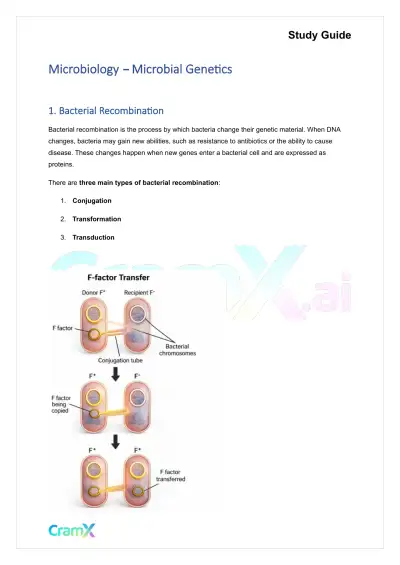 Quick Guides
Microbiology - Microbial Genetics
Microbiology
13 pagesMar 2026 Exam Guides
Test Bank For Microbiology with Diseases by Taxonomy, 6th Edition
Microbiology
532 pagesMay 2025 Quick Guides
Microbiology - DNA and Gene Expression
Microbiology
15 pagesMar 2026
Study this document with CramX
Once it is in your library, every tool can work from it.