

ATI NCLEX Tips
- National Council Licensure Examination
- 48 pages
- Shared June 2025
Quick Med-Surg & Lab Reference Guide: Includes normal lab values, isolation precautions, assessment order, mobility aids use, delegation rules, and key mnemonics for cardiac, infection control, and emergency care. Great for nursing reviews!
Preview 15 of 48 pages
See the first 15 pages exactly as they appear in the document.
Page 1 Read page 1 as text
Laboratory Values: Sodium 136-145 mEq/L Potassium 3.5-5.0 mEq/L Total Calcium 9.0-10.5 mg/dL Magnesium 1.3-2.1 mg/dL Phosphorus 3.0 -4.5 mg/dL BUN 10-20 mg/dL Creatinine 0.6 - 1.2mg/dL males, 0.5 - 1.1 mg/dL females Glucose 70-105 mg/dL HgbAlc <6.5% WBC 5,000-10,000/mm-- RBC Men 4.7-6.1 million/mm- : Women 4.2-5.4 million/mm 2 Hemoglobin Men 14-18g/100 mL, Women 12-16 g/100 mL Hematocrit Men 42-52%,Women 37-47% Platelet 150,000-40 0,00 0/mnrP pH 7.35-7.45 pC02 35 to45 mm Hg p02 80-100 mmHg HCO3 21-26mmol/L Normal PT = 11-12.5 sec, Normal INR = 0.7-1.d (Therapeutic INR 2-3) Normal PTT = 30-40 sec (Therapeutic PTT 1.5- 2 x normal or control values) Digoxin 0.5 to 2.0ng/mL Lithium 0.8 to 1.4 mEq/L Dilantin 10-20 mcg/mL Theophylline 10 to 20mcg/mL 1
Page 2 Read page 2 as text
Latex Allergies: Note that clients allergic to bananas, apricots, cherries, grapes, kiwis, passion fruit, avocados, chestnuts, tomatoes, and/or peaches may experience latex allergies as well. Orde of assessment: l-inspection P-paIpation P-percussion A-auscultation Except with abdomen it is lAPP-inspect, auscultate, percuss and palpate. Cane walking: C-cane O-opposite A-affected L-leg Crutch walking: Remember the phase "step up" when picturing a person going up stairs with crutches. The good leg goes up first followed by the crutches and the bad leg. The opposite happens going down the stairs....OR "up to heaven...down to hell Delegation: RNs DO NOT delegate what they can EAT - evaluate, assess, teach Helpful tool to remember Isolation Precautions: AIRBORNE: "My Chicken Hez TB" -Measles -Chicken pox -Herpes zoster -TB Management: neg. pressure room, private room, mask, n-95forTB
Page 3 Read page 3 as text
DROPLET: ”SPIDE RMAn” -Sepsis -Scarlet Fever -Strep -Pertussis -Pneumonia -Parvovirus -Influenza -Diphtheria -Epiglottitis -Rubella -Mumps -Adenovirus Management: Private room /mask CONTACT: "MRS WEE” -MRSA -VRSA -RSV -Skin infections (herpes zoster, cutaneous diphtheria, impetigo, pediculosis, scabies, and staphylococcus) -Wound infections -Enteric infections (Clostridium difficile) -Eye infections (conjunctivitis) Management: gown, gloves, goggles, private room
Page 4 Read page 4 as text
Med-Surg Tips: Angina Precipitating Factors: 4 E's Exertion: physical activity and exercise Eating Emotional distress Extreme temperatures: hot or cold weather Arterial Occlusion: 4 P's Pain Pulselessness or absent pulse Pallor Paresthesia Congestive Heart Failure Treatment: MADD DOG Morphine Aminophylline Digoxin Dopamine Diuretics Oxygen Gasses: Monitor arterial blood gasses Heart Murmur Causes: SPASM Stenosis of a valve Partial obstruction Aneurysms Septa] defect Mitral regurgitation Heart Sounds: All People Enjoy the Movies Aortic: 2nd right intercostal space Pulmonic: 2nd left intercostal space Erb's Point 3rd left intercostal space Tricuspid: 4th left intercostal space Mitral or Apex: 5th left intercostal space
Page 5 Read page 5 as text
Hypertension Care: DIURETIC Daily weight Intake and Output Urine output Response of blood pressure Electrolytes Take pulse Ischemic episodes orTIAs Complications: CVA, CAD. CHF. CRF Shortness of Breath (SOB) Causes: 4As+4Ps Airway obstruction Angina Anxiety Asthma Pneumonia Pneumothorax Pulmonary Edema Pulmonary Embolus Stroke Signs: FAST Face Anns Speech Time Compartment Syndrome Signs and Symptoms: 5 P's Pain Pallor Pulse declined or absent Pressure increased Paresthesia Shock Signs and Symptoms: CHORD ITEM Cold, clammy skin Hypotension Oliguria Rapid, shallow breathing Drowsiness, confusion Irritability T achycardia Elevated or reduced central venous pressure Multi-organ damage
Page 6 Read page 6 as text
Hypoglycemia Signs: TIRED Tachycardia Irritability Restlessness Excessive hunger Depression and diaphoresis Hypocalcemia Signs and Symptoms: CATS Convulsions Arrhythmias. Tetany Stridor and spasms Hypokalemia Signs and Symptoms: 6 L's Lethargy Leg cramps Limp muscles Low, shallow respirations Lethal cardiac dysrhythmias Lots of urine (polyuria) Hypertension Complications: The 4 C's Coronary artery disease (CAD) Congestive heart failure (CHF) Chronic renal failure (CRF) Cardiovascular accident (CVA): Brain attack or stroke Traction Patient Care: TRACTION Temperature of extremity is assessed for signs of infection Ropes hang freely Alignment of both' and injured area Circulation check (5 P's) Type and location of fracture Increase fluid intake Overhead trapeze No weights on bed or floor
Page 7 Read page 7 as text
Cancer Early Warning Signs: CAUTION UP Change in bowel or bladder A lesion that does not heal Unusual bleeding or discharge Thickening or lump in breast or elsewhere Indigestion or difficult}’ swallowing Obvious changes in wart or mole Nagging cough or persistent hoarseness Unexplained weight loss Pernicious Anemia Leukemia Signs and Symptoms: ANT Anemia and decreased hemoglobin Neutropenia and increased risk of infection Thrombocytopenia and increased risk of bleeding Clients Who Require Dialysis: AEIOU (The Vowels) Acid base imbalance Electrolyte imbalances Intoxication Overload of fluids Uremic symptoms Asthma Management: ASTHMA Adrenergics: Albuterol and other bronchodilators Steroids Theophylline Hydration: intravenous fluids Mask: oxygen therapy Antibiotics (for associated respiratory infections) Hypoxia: RAT (signs of early) BED (signs of late) Restlessness Anxiety Tachycardia and tachypnea Bradycardia Extreme restlessness Dyspnea
Page 8 Read page 8 as text
Pneumothorax Signs: P-THORAX Pleuritic pain Tracheal deviation Hyperresonance Onset sudden Reduced breath sounds (and dyspnea) Absent fremitus X-ray shows collapsed lung Transient Incontinence Causes: DIAPERS Delirium Infection Atrophic urethra Pharmaceuticals and psychological Excess urine output Restricted mobility Stool impaction Dealing with Constipation: Constipation is difficult or infrequent passage of stools, which may be hard and dry. Causes include: irregular bowel habits. psychogenic factors, inactivity. chronic laxative use or abuse, obstruction, medications, and inadequate consumption of fiber and fluid. Encouraging exercise and a diet high in fiber and promoting adequate fluid intake may help alleviate symptoms. Dealing with Dysphagia: Dysphagia is an alteration in the client's ability to swallow. Causes include: Obstruction Inflammation Edema Certain neurological disorders Modifying the texture of foods and the consistency of liquids may enable the client to achieve proper nutrition. Clients with dysphagia are at an increased risk of aspiration. Place the client in an upright or high-Fowlef s position to facilitate swallowing. Provide oral care prior to eating to enhance the client's sense of taste. Allow adequate time for eating, utilize adaptive eating devices. and encourage small bites and thorough chewing. Avoid thin liquids and sticky foods.
Page 9 Read page 9 as text
Dumping Syndrome: Dumping Syndrome occurs as a complication of gastric surgeries that inhibit the ability of the pyloric sphincter to control the movement of food into the small intestine. This "dumping" results in nausea, distention, cramping pains, and diarrhea within 15 min after eating. Weakness, dizziness, a rapid heartbeat, and hypoglycemia may occur. Small, frequent meals are indicated. Consumption of protein and fat at each meal is indicated. Avoid concentrated sugars. Restrict lactose intake. Consume liquids 1 hr before or after eating instead of with meals (a dry diet). Gastroesophageal Reflux Disease (GERD): GERD leads to indigestion and heartburn from the backflow of acidic gastric juices onto the mucosa of the lower esophagus. Encourage weight loss for overweight clients. Avoid large meals and bedtime snacks. Avoid trigger foods such as citrus fruits and juices, spicy foods, and carbonated beverages. Avoid items that reduce low'er esophageal sphincter (LES) pressure, such as alcohol, caffeine, chocolate, fatty foods, peppermint and spearmint flavors, and cigarette smoking. Peptic Ulcer Disease (PUD): PUD is characterized by an erosion of the mucosal layer of the stomach or duodenum. This may be caused by a bacterial infection with Helicobacter pylori or the chrome use of non-steroidal anti-inflammatory drugs (NSAIDs), such as aspirin and ibuprofen. Avoid eating frequent meals and snacks, as the}' promote increased gastric acid secretion. Avoid alcohol, cigarette smoking, aspirin and other NSAIDs, coffee, black pepper, spicy foods, and caffeine Lactose Intolerance: Lactose intolerance results from an inadequate supply of lactase, the enzyme that digests lactose. Symptoms include distention, cramps, flatus, and diarrhea. Clients should be encouraged to avoid or limit their intake of foods high in lactose such as: milk, sour cream, cheese, cream soups, coffee creamer, chocolate, ice cream, and puddings. Diverticulosis and Diverticulitis: A high-fiber diet may prevent diverticulosis and diverticulitis by producing stools that are easily passed and thus decreasing pressure within the colon. During acute diverticulitis, a low’-fiber diet is prescribed in order to reduce bowel stimulation. Avoid foods with seeds or husks. Clients requue instruction regarding diet adjustment based on the need for an acute inten’ention or preventive approach.
Page 10 Read page 10 as text
Cholecystitis: Cholecystitis is characterized by inflammation of the gallbladder. The gallbladder stores and releases bile that aids in the digestion of fats. Fat intake should be limited to reduce stimulation of the gallbladder. Other foods that may cause problems include coffee, broccoli, cauliflower. Brussels sprouts, cabbage, onions, legumes, and highly seasoned foods. Otherwise, the 'diet is individualized to the client's needs and tolerance. Nephrotic Syndrome: Nephrotic syndrome results in serum proteins leaking into the urine. The goals of nutritional therapy are to minimize edema, replace lost nutrients, and minimize permanent renal damage. Dietarc recommendations indicate sufficient protein and low-sodium intake. Nephrolithiasis (Kidney Stones): Increasing fluid consumption is the primary intemention for the treatment and prevention of the formation of renal calculi Exc essive intake of protein, sodium, calcium, and oxalates (rhubarb, spinach, beets) may increase the risk of stone formation. Acute Renal Failure (ART): ARE is an abrupt, rapid decline in renal function. It is usually caused by trauma, sepsis, poor perfusion, or medications. ARE can cause hyponatremia, hyperkalemia, hypocalcemia, and hyperphosphatemia. Diet therapy for ARE is dependent upon the phase of xARF and its underlying cause.
Page 11 Read page 11 as text
Pre-End Stage Renal Disease Ipre-ESRD): Pre-ESRD, or diminished renal reserve renal insufficiency, is a predialysis condition characterized by an increase in serum creatinine. Gcals of nutritional therapy for pre-ESRD are to: Help preserve remaining renal function by limiting the intake of protein and phosphorus. Control blood glucose levels and hypertension. which are both risk factors. Protein restriction is key for clients with pre-ESRD. Slows the progression of renal disease. Too little protein results in breakdown of body protein, so protein intake must be carefully determined . Restricting phosphorus intake slows the progression of renal disease. High levels of phosphorus contribute to calcium and phosphorus deposits in the kidneys. Dietary recommendations for pre-ESRD: Limit meat intake. Limit dairy products to W cup per day. Limit high-phosphorus foods (peanut butter, dried peas and beans, bran, cola, chocolate, beer, some whole grains). Restrict sodium intake to maintain blood pressure. Caution clients to use vitamin and mineral supplements ONLY when recommended by tlreir provider. End Stage Renal Disease (ESRD): ESRD. or chronic renal failure, occurs when the glomerular filtration rate (GFR) is less than 25 mL min. the serum creatinine level steadily rises, or dialysis or transplantation is required. The goal of nutritional therapy is to maintain appropriate fluid status, blood pressure, and blood chemistries. A high-protein, low-phosphorus. low-pota&sium, low-sodium. fluid-restricted diet is recommended. Calcium and vitamin D are nutrients of concern. Protein needs increase once dialysis is begun because protein and amino acids are lost in the dialysate. Fifty percent of protem intake should come from biologic sources (eggs, milk, meat, fish, poultry, soy). Adequate calories (35 cal kg of body weight) should be consumed to maintain body protein stores. Phosphorus must be restricted. The high protein requirement leads to an increase in phosphorus intake. Phosphate binders must be taken with all meals and snacks. Vitamin D deficiency occurs because the kidneys are unable to convert it to its active form. This alters the metabolism of calcium, phosphorus, and magnesium and leads to hyperphosphatemia, hypocalcemia, and hypermagnesemia. Calcium supplements will likely be required because foods high in phosphorus (which are restricted) are also high in calcium. Potassium intake is dependent upon the client's laboratory values, which should be closely monitored. Sodium and fluid allowances are determined by blood pressure, weight, serum electrolyte levels, and urine output. Achieving a well-balanc ed diet based on the above guidelines is a difficult task. The National Renal Diet provides clients with a list of appropriate food choices.
Page 12 Read page 12 as text
Cleft lip: nursing care plan (postoperative) — "CLEFT LIP Crying, minimize Logan bow Elbow restraints Feed with Brecht feeder Teach feeding techniques; two months of age (average age at repair) Liquid (sterile water), rinse after feeding Impaired feeding (no sucking) Position—never on abdomen Complication of severe preeclampsia — "HELLP" syndrome Hemolysis Elevated Liver enzymes Low Platelet count Dystocia: general aspects (maternal)—'MP's" Powers Passageway Passenger Psych Infections during pregnancy — "TORCH" Toxoplasmosis Other (hepatitis B, syphilis, group B beta strep) Rubella Cytomegalovirus Herpes simplex virus IUD: potential problems with use — "PAINS" Period (menstrual: late, spotting, bleeding) Abdominal pain, dyspareunia Infection (abnormal vaginal discharge) Not feeling well, fever or chills String missing Newborn assessment components — "APGAR" Appearance Pulse Grimace Activity Respiratory effort
Page 13 Read page 13 as text
Obstetric (maternity) history — "GTPAL" Gravida Term Preterm Abortions (SAB, TAB) Living children Oral contraceptives: Signs of potential problems — "ACHES" Abdominal pain (possible liver or gallbladder problem) Chest pain or shortness of breath (possible pulmonary embolus) Headache (possible hypertension, brain attack) Eye problems (possible hypertension or vascular accident) Severe leg pain (possible thromboembolic process) Preterm infant: Anticipated problems — "TRIES" Temperature regulation (poor) Resistance to infections (poor) Immature liver Elimination problems (necrotizing enterocolitis [NEC]) Sensory-perceptual functions (retinopathy of prematurity [ROP]) VEAL CHOP-which relates to fetal heart rate. Variable decels => Cord compression (usually a change in mothers position helps) Early decels => Head compression (decels mirror the contractions; this is not a sign of fetal problems) Accelerations => O 2 (baby is well oxygena ted-this is good) Late decels => Placental utero insufficiency (this is bad and means there is decreased perfusion of blood/oxygen/nutrients to the baby). Nine-point Postpartum Assessment...BUBBLEHER B- Breasts U- Uterus B- Bladder B- Bov el function L- Lochia E- Episiotomy H- Hemorrhoids E- Emotional Status R- Respiratory System
Page 14 Read page 14 as text
Considerations for the pregnant client Admittance of a pregnant client to a medical-surgical unit: You may have a pregnant client admitted with a diagnosis unrelated to her pregnancy and, therefore, she may be admitted to a general medical-surgical floor. A mnemonic to assist you in performing important assessment elements for these clients is FETUS. * F: Document fetal heart tones every shift. To assess fetal heart tones, use a handheld Doppler ultrasound and place it in an area corresponding to uterine height. For example, for a client who’s less than 20 weeks pregnant, the most likely area to find fetal heart tones is at the pubic hairline or the symphysis pubis. For a client whose pregnancy is more advanced, such as at 24 weeks, the fetal heart rate can most probably be heard midline between the symphysis pubis and the umbilicus. As the pregnancy advances in weeks, fetal heart tones can be heard closer to and possibly above the umbilicus. * E Provide emotional support. Pregnant women who are experiencing unexpected medical conditions are at a high level of anxiety related to how the current medical problem may affect the fetus. You should take extra care to alleviate and reduce your client's anxiety by explaining all medications and treatments. Additionally, be prepared to listen for fetal heart tones anytime the client requests it to further reduce her worry of the fetus' well-being. * T: Measure maternal temperature. Because your client's core body temperature is higher than you can detect through oral or tympanic thermometers, be alert to the presence of a fever. A high maternal temperature can lead to fetal tachycardia and distress. An order for antipyretics on admission to ensure their quick availability will be a prudent request you should make to the admitting physician. * U: Ask about uterine activity or contractions. Make it a normal part of your routine to ask about any type of uterine pain, tightening, or discomfort throughout your shift. Be aware that early contractions often present as lower back pain. Don't attribute complaints of lower back pain to the hospital bed. If your client reports any unusual activity, take care to softly palpate the lower abdomen for periods of greater than 2 minutes while conversing with her. Watch for subtle changes of facial expression while simultaneously detecting a change in uterine tone. If contractions are suspected, your client will need to be monitored with continuous fetal monitoring in the labor and delivery unit. * S: Assess for the presence of and changes in sensations of fetal movement. After 20 weeks gestation, all women should be able to report feeling the fetus move. This is an important assessment to perform and document at least every shift, easily accomplished by asking "How often are you feeling the baby move?" By asking this as an open-ended question, you'll receive more information about the quantity of fetal movement such as, "I haven't felt the baby move as much as usual today."
Page 15 Read page 15 as text
Admittance of a postpartum client to a medical-surgical unit There are times when a woman may be hospitalized during the postpartum period for a medical condition. When this occurs, she'll most likely be placed on a general medical-surgical unit. Her admission will cause you to ask: "What's normal during the weeks following the birth of a baby?" * Breasts Within the first 24 hours postpartum, colostrum appears and is followed by breast milk within the first 72 hours. Breast engorgement is most likely to occur around day 4 postpartum. The engorged breast will appear full, taut and even shiny. Although this is normal, it may be very uncomfortable for your client In contrast, a woman with mastitis will usually run a fever higher than 100" F, report feeling "ill," and have one breast that's affected (firm, inflamed, swollen, and exquisitely tender to touch). If your client is breastfeeding her newborn, she'll require a breast pump. Depending on the medications ordered, the milk may need to be disposed of and not used for the baby. * Lochia. Sometimes women will experience lochia (vaginal discharge) until the time of their 6-week postpartum visit. Immediately after delivery, the lochia is red and heavy enough to require a pad change every 1 to 2 hours. By 7 days postpartum, the lochia should be lighter in color (pink to red) and amount, requiring a pad change every 4 hours. Lochia that becomes heavier, has a foul odor, and is accompanied by pelvic pain isn’t a normal finding and requires immediate intervention. * Perinea/ care. For the first 2 weeks following delivery, clients will need to perform perineal hygiene as taught during the immediate postpartum period. This may include perineal water rinses following elimination using warm water or medicinal rinses, use of sitz baths, and comfort medications to the perineal and anal area. * Cesarean section. If your client delivered her baby via cesarean section, continued assessment of the surgical incision is warranted for the first 2 to 3 weeks postpartum. Redness and warmth around the incision, excessive bruising around the incision, or incisional drainage requires immediate intervention. If the surgeon used staples to close the incision, they're usually removed approximately 5 days post-delivery. Remember, the hospitalized postpartum client is likely to be very emotional. Not only will she be experiencing the normal hormonal fluctuations of the postpartum period, she may also be distraught leaving her newborn at home and feeling that she's missing bonding lime with her child. Visitation between the mother and her infant may be very limited to minimize the infant's risk of infection, but visits should be arranged if at all possible.
33 more pages in the full document
Unlock it once and it stays in your library, ready to chat with or turn into flashcards.
Unlock the full documentMore National Council Licensure Examination study materials
See all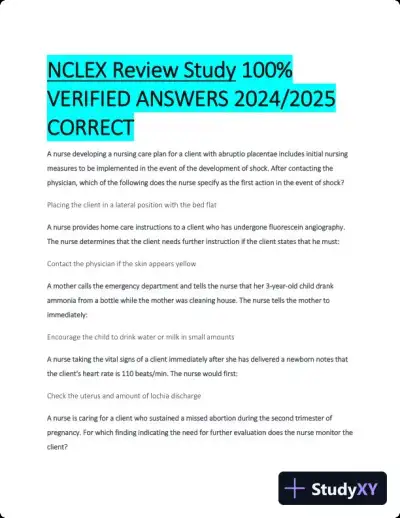 Past Exams
2024-2025 NCLEX Review Study Guide with Answers (50 Solved Questions)
National Council Licensure Examination
9 pages169downloadsFeb 2025 Certification Guides
Developing Clinical Judgment for Professional Nursing and the Next-Generation NCLEX-RN® Examination (2020)
National Council Licensure Examination
713 pages162downloadsFeb 2025 Certification Guides
NCLEX-RN Notes: Core Review and Exam Prep (2007)
National Council Licensure Examination
281 pages156downloadsFeb 2025 Certification Guides
HESI Comprehensive Review for the NCLEX-RN Examination 6th Edition (2019)
National Council Licensure Examination
842 pages150downloadsFeb 2025 Certification Guides
2020 NCLEX-PN Test Prep. Questions and Answers with Explanations (2020)
National Council Licensure Examination
943 pages147downloadsFeb 2025 Certification Guides
CliffsTestPrep NCLEX-RN (2011)
National Council Licensure Examination
510 pages130downloadsFeb 2025 Past Exams
2024-2025 NCLEX Rationals and Study Guide with Answers (168 Solved Questions)
National Council Licensure Examination
41 pages130downloadsFeb 2025 Certification Guides
NCLEX-RN For Dummies with Online Practice Tests (2020)
National Council Licensure Examination
485 pages125downloadsFeb 2025
Study this document with CramX
Once it is in your library, every tool can work from it.