

Physiological Changes Style Questions
- National Council Licensure Examination
- 11 pages
- Shared June 2025
NCLEX-style questions on age-related physiologic changes: skin, heart, lungs, GI, neuro, senses & more. Includes causes, symptoms, treatments & nursing care—ideal for board exam prep.
Preview 4 of 11 pages
See the first 4 pages exactly as they appear in the document.
Page 1 Read page 1 as text
Integumentary System 1. An 80-year-old patient presents with dry, flaky skin. What age-related change in the- integumentary system is most likely responsible? Answer: Decreased sebaceous and sweat gland function. 2. A nurse is assessing an older adult's skin. Which finding is most likely due to decreased- vascularity of the dermis? Answer: Increased palor in white skin. 3. A patient with senile lentigo is concerned about the brown spots on their skin. What- should the nurse explain about these Lesions? Answer: They a r e a common age-related change due to increased localized pigmentation. 4. An older adult is at increased risk for pressure ulcers due to which age-related change? Answer: Decreased thickness of the epidermis and decreased subcutaneous fat. 5. An older adult reports experiencing frequent episodes of itching. What nursing- intervention is appropriate to address this concern? Answer: Modify skin care to reduce drying and refer to a dermatologist if necessary. 6. Which of the following is a common type of inflammation seen in older adults? Answer: Rosacea. 7. An older adult is admitted to the hospital with a diagnosis of shingles. What is the most- likely causative agent?
Page 2 Read page 2 as text
Answer: Varicella-zoster virus. 8. What is the primary reason for an older adult r s increased risk of hypothermia? Answer: Decreased subcutaneous tissue, reducing their ability to regulate body temperature. Musculoskeletal System 9. A patient with osteoporosis is at increased risk for which type of fracture? Answer: Vertebral fracture. 10. What is the most common medication category used to treat osteoporosis? Answer: Antiresorptive medications. 11. An older adult complainsof pain and stiffness intheirjoints, particularly after rest. What- condition is most likely responsible? Answer: Rheumatoid arthritis. 12. What is the primary cause of osteoarthritis? Answer: The exact cause is unknown, but risk factors include age, obesity, joint injury, and genetics. 13. Whatis a Heberden's node? Answer: A bony enlargement on the distal finger joint, often associated with osteoarthritis. 14. What is the primary treatment goal for rheumatoid arthritis? Answer: To reduce inflammation, improve joint function, and maintain independence. 15. What is the most common symptom of bursitis? Answer: Joint stiffness and pain. 16. What dietary recommendations are appropriate for a patient with gouty arthritis? Answer: Reduce body weight and decrease intake of alcohol and purine-rich foods. Respiratory System 17. What age-related change in the respiratory system contributes to a decreased ability to- humidify air?
Page 3 Read page 3 as text
Answer: Decreased body fluids. 18. An older adult is at increased risk for respiratory infections due to which age-related- change? Answer: Decreased number of macrophages. 19. Which nursing intervention is most appropriate to address an olderadult's decreased- ability to breathe deeply? Answer: Encourage incentive spirometer use. 20. What is the primary characteristic of emphysema? Answer: Changes in alveolar structure, leading to overinflation and ineffective gas exchange. 21. What is the most common cause of chronic bronchitis? Answer: Chronic irritation, often due to smoking or environmental pollutants. 22. What is the primary mode of transmission for tuberculosis? Answer: Airborne droplets. 23. What is the most common risk factor for lung cancer? Answer 1, obaccu smoke. Cardiovascular System 24. What age-related change in the cardiovascular system contributes to decreased tissue- oxygenation? Answer: Decreased cardiac muscle tone. 25. What is the most common symptom of coronary artery disease in older adults? Answer: Chest pain, but it may also present as vague gastrointestinal discomfort or shortness of- breath. 26. What is the primary cause of heart block? Answer: Disruption of the electrical conduction system of the heart, often due to fibrotic tissue- infiltration or myocardial infarction. 27. What is the most common type of conduction disorder seen in older adults? Answer: Sinus node dysfunction, also known as sick sinus syndrome.
Page 4 Read page 4 as text
28. What is the primary cause of heart failure in older adults? Answer: Ineffective pumping action of the heart. 29. What is the most common symptom of varicose veins? Answer: Twisting discoloration in the superficial veins of the lower extremities. 30. What is the primary risk factor for developing aneurysms? Answer: Arteriosclerotic blood vessel changes. 31. What is the most common location for aneurysms in older adults? Answer: Abdominal aorta. 32. Whatis the most serious complication of an aneurysm? Answer: Rupture, leading to massive hemorrhage. Gastrointestinal System 33. What age-related change in the gastrointestinal system contributes to decreased- nutritional status? Answer: l n c r e a s e d dental caries and tooth loss, leading to decreased ability to chew normally. 34. What is the most common cause of esophageal reflux in older adults? Answer: Decreased sphincter muscle tone, particularly the lower esophageal sphincter. 35. What is the most common cause of peptic ulcers? Answer: Helicobacter pylori infection. 36. What is the primary treatment goal for peptic ulcers in older adults? Answer: Medical treatment, such as antibiotics and proton pump inhibitors, is generally preferred over- surgical correction. 37. What is the most common symptom of diverticulitis? Answer: Abdominal pain, often accompanied by fever and rectal bleeding. 38. Whatis the primary treatment goal for diverticulitis? Answer: Rest the diseased area with intravenous fluids and restrict oral food intake. 39. What is the most common symptom of hemorrhoids?
7 more pages in the full document
Unlock it once and it stays in your library, ready to chat with or turn into flashcards.
Unlock the full documentMore National Council Licensure Examination study materials
See all Past Exams
2024-2025 NCLEX Review Study Guide with Answers (50 Solved Questions)
National Council Licensure Examination
9 pages169downloadsFeb 2025 Certification Guides
Developing Clinical Judgment for Professional Nursing and the Next-Generation NCLEX-RN® Examination (2020)
National Council Licensure Examination
713 pages162downloadsFeb 2025 Certification Guides
NCLEX-RN Notes: Core Review and Exam Prep (2007)
National Council Licensure Examination
281 pages156downloadsFeb 2025 Certification Guides
HESI Comprehensive Review for the NCLEX-RN Examination 6th Edition (2019)
National Council Licensure Examination
842 pages150downloadsFeb 2025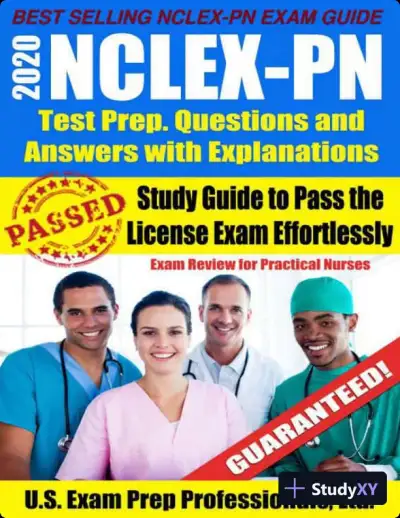 Certification Guides
2020 NCLEX-PN Test Prep. Questions and Answers with Explanations (2020)
National Council Licensure Examination
943 pages147downloadsFeb 2025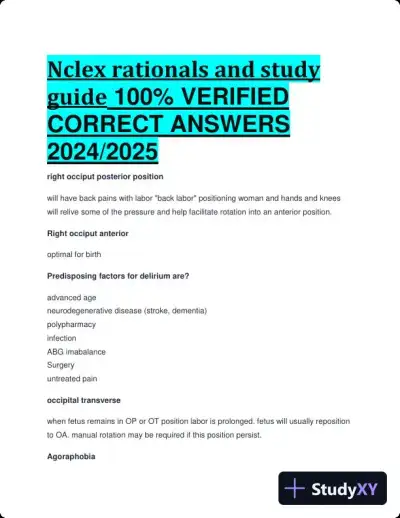 Past Exams
2024-2025 NCLEX Rationals and Study Guide with Answers (168 Solved Questions)
National Council Licensure Examination
41 pages130downloadsFeb 2025 Certification Guides
CliffsTestPrep NCLEX-RN (2011)
National Council Licensure Examination
510 pages130downloadsFeb 2025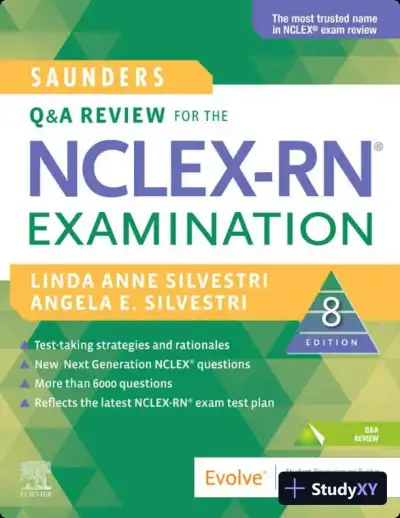 Certification Guides
Saunders QandA Review for the NCLEX-RN Examination (2021)
National Council Licensure Examination
1761 pages125downloadsFeb 2025
Study this document with CramX
Once it is in your library, every tool can work from it.