

Subject
Physics study materials
Physics explores the fundamental principles that govern matter, energy, motion, and forces in the universe. It explains how physical systems behave, from the movement of everyday objects to the interactions of particles and fields at…
Shared by students: 62 documents and 11 flashcard decks.
Most used Physics documents
All 62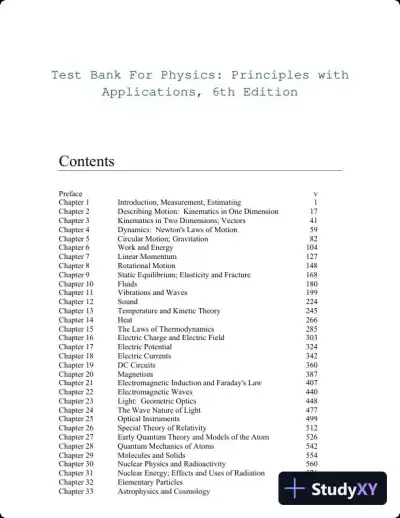 Exam Guides
Test Bank For Physics: Principles with Applications, 6th Edition
606 pages160downloadsFeb 2025 Textbook Guides
Solution Manual for Modern Physics, 2nd Edition
187 pages141downloadsFeb 2025 Class Notes
Class Notes for Financial Accounting, 10th Edition
208 pages139downloadsFeb 2025 Textbook Guides
Solution Manual for Physics: for Scientists and Engineers with Modern Physics, 3rd Edition
1291 pages136downloadsFeb 2025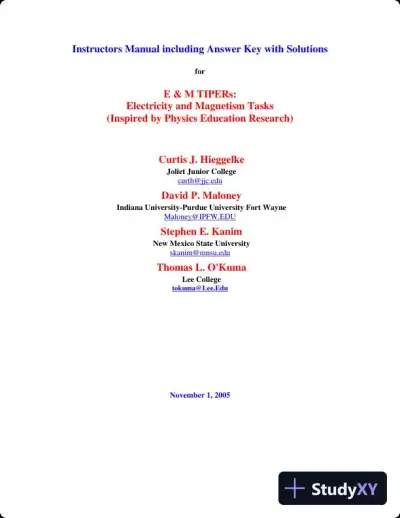 Textbook Guides
Solution Manual for E and M TIPERs Electricity And Magnetism: Electricity And Magnetism Tasks: Inspried By Physics Education Research, 1st Edition
257 pages118downloadsFeb 2025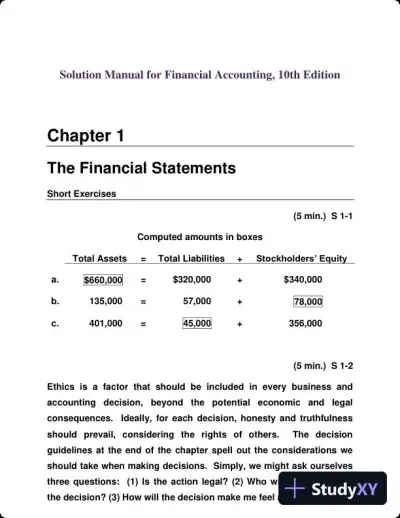 Textbook Guides
Solution Manual for Financial Accounting, 10th Edition
1061 pages107downloadsFeb 2025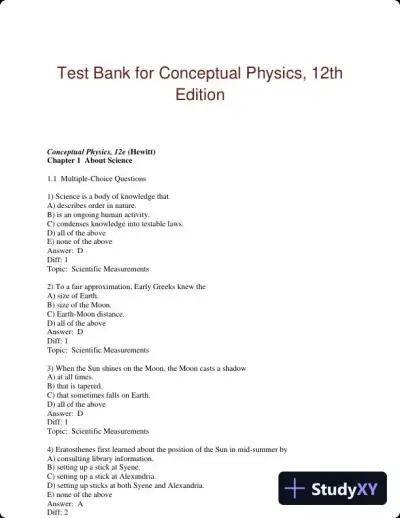 Exam Guides
Test Bank for Conceptual Physics, 12th Edition
581 pages71downloadsFeb 2025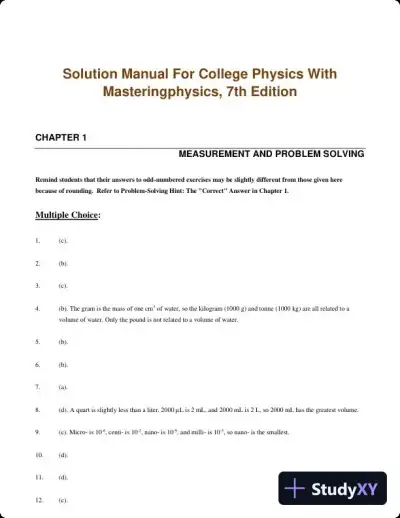 Textbook Guides
Solution Manual For College Physics With Masteringphysics, 7th Edition
536 pages37downloadsFeb 2025
Flashcard decks
All decksRecently shared
See newest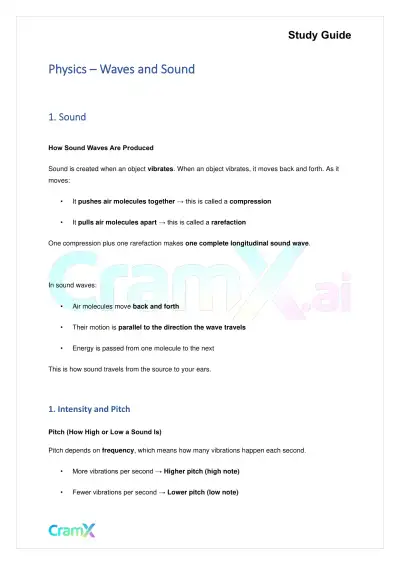
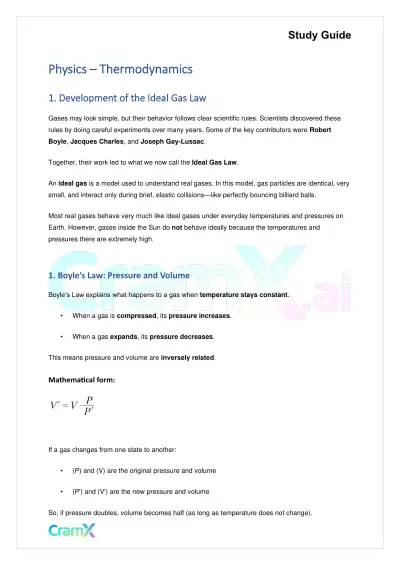
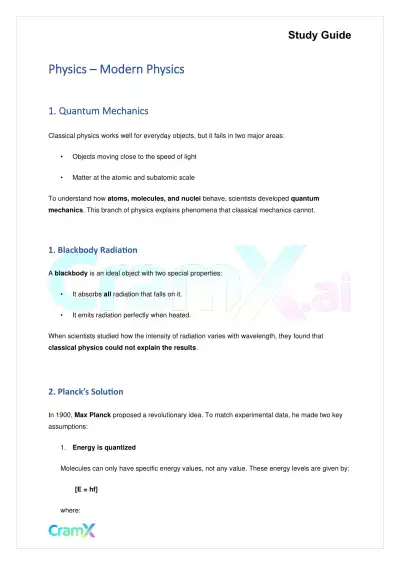
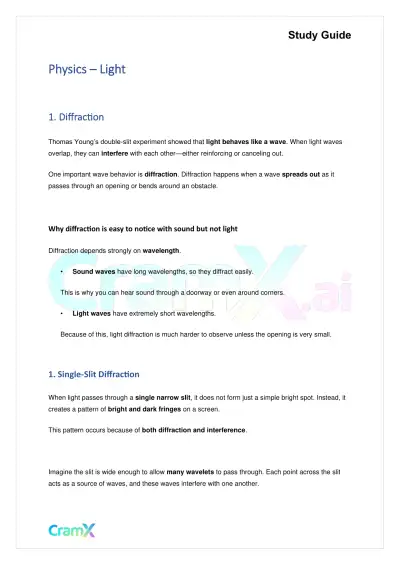
Where students share Physics material
About Physics
Physics explores the fundamental principles that govern matter, energy, motion, and forces in the universe. It explains how physical systems behave, from the movement of everyday objects to the interactions of particles and fields at atomic and cosmic levels.
On CramX, you can access a variety of physics learning resources including study notes and conceptual materials and flashcards for revision. These resources help students understand core principles and develop analytical problem-solving skills.
Key areas of physics include mechanics, thermodynamics, electromagnetism, waves and optics, and modern physics topics such as quantum theory and relativity. These concepts form the foundation for many scientific and technological developments.
Studying physics helps build strong reasoning and mathematical skills that are useful in fields such as engineering, research, computing, and applied sciences.