

Subject
Cisco Certified Network Associate study materials
The Cisco Certified Network Associate (CCNA) is a widely recognized certification that validates essential skills required to install, configure, and troubleshoot modern computer networks.
Shared by students: 29 documents and 1 flashcard decks.
Most used Cisco Certified Network Associate documents
All 29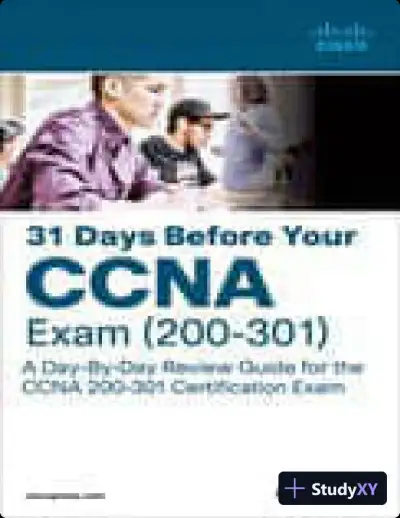 Certification Guides
31 Days Before your CCNA Exam: A Day-By-Day Review Guide for the CCNA 200-301 Certification Exam (2020)
1154 pages107downloadsFeb 2025 Past Exams
CCNA 1 v7 Modules 4 to 7 Ethernet Concepts Exam An
33 pagesJun 2025 Class Notes
CCNA 1 v7
21 pagesJun 2025 Past Exams
CCNA 1 v7 Modules 4 7 Ethernet Concepts Exam
29 pagesJun 2025 Past Exams
CCNA 1 - Introduction to Networks
44 pagesJun 2025 Class Notes
CCNA Week 1 Networks Basic Configuration
33 pagesJun 2025 Past Exams
CCNA Exam Review Fundamentals12 Stamped
70 pagesJun 2025 Past Exams
CCNA 1 v7
17 pagesJun 2025
Flashcard decks
All decksRecently shared
See newest
About Cisco Certified Network Associate
The Cisco Certified Network Associate (CCNA) is a widely recognized certification that validates essential skills required to install, configure, and troubleshoot modern computer networks. Offered by Cisco, the CCNA credential builds a strong foundation in networking concepts and prepares learners for roles in IT support, network administration, and infrastructure management.
On CramX, you can explore a variety of CCNA learning resources including study notes and networking documents and flashcards for quick revision. These materials help learners understand networking principles and prepare effectively for certification exams.
The CCNA 200-301 exam covers important domains such as network fundamentals, IP connectivity, network access, IP services, security basics, and automation concepts. Students learn how routing and switching technologies work, how IP addressing is structured, and how devices communicate across wired and wireless networks.
Learners also develop practical knowledge of configuring routers and switches, understanding TCP/IP models, managing network traffic, and implementing basic security measures. These skills are essential for roles such as network administrator, technical support engineer, and systems engineer.
You may also find related resources in Network+ Certification, Information Technology, and Cisco Certified Network Professional, which expand networking and infrastructure knowledge.