

Microbiology - Diseases Cardiovascular Lymphatic Systems
- Microbiology
- Texas A&M University
- 12 pages
- Shared March 2026
Preview 4 of 12 pages
See the first 4 pages exactly as they appear in the document.
Page 1 Read page 1 as text
Study Guide Microbiology – Diseases Cardiovascular Lymphatic Systems 1. Protozoal and Parasitic Diseases Protozoa and parasites are living organisms that can cause disease in humans. Some of these diseases affect the blood, brain, or other organs and are often spread through animals, insects, or contaminated water. Below are three important examples. 1.1 Toxoplasmosis Toxoplasmosis is a protozoal disease caused by Toxoplasma gondii . This organism belongs to a group called sporozoans. The disease is commonly spread by domestic house cats . Humans can become infected through contact with cat urine or feces, especially when cleaning litter boxes. Once inside the human body, the protozoa multiply in the bloodstream and go through a complex reproductive cycle. Most infected people experience mild symptoms , such as fever and general discomfort. In many cases, individuals may not even realize they are infected. However, toxoplasmosis can be very dangerous in certain people : • In pregnant women , the protozoa can pass to the unborn baby and cause serious tissue damage. • In AIDS patients , toxoplasmosis can lead to seizures and inflammation of the brain. In severe cases, it can be fatal. 1.2 Malaria Malaria is a serious blood disease caused by several species of the protozoan genus Plasmodium . These organisms belong to a group known as Sporozoa (also called Apicomplexa). The disease is spread by mosquitoes of the genus Anopheles . When an infected mosquito bites a person, the parasites enter the bloodstream in a form called merozoites . These parasites invade red blood cells.
Page 2 Read page 2 as text
Study Guide Inside the red blood cells, the protozoa grow and multiply through different life cycle stages. Eventually, the red blood cells burst, releasing large numbers of parasites into the blood. This rupture also releases toxic substances. These toxins cause the classic cycles of chills and fever , known as paroxysms, that are typical of malaria. As red blood cells are repeatedly destroyed, severe anemia develops. New red blood cells are then infected, allowing the cycle to continue. Malaria can be treated with drugs such as quinine, chloroquine, and primaquine . Despite effective treatments, malaria remains a major global health problem. The mortality rate is still high, and the disease infects about 300 million people worldwide each year . 1.3 Schistosomiasis Schistosomiasis is caused by a multicellular parasitic flatworm , commonly called a fluke. One important species responsible for the disease is Schistosoma mansoni , along with several related species. These parasites have a complex life cycle. In water, they live inside snails . Humans become infected when they walk or swim in contaminated water. The parasites can enter directly through the skin , without the need for a bite or wound. Once inside the body, the parasites live and multiply in the bloodstream . They interfere with the normal flow of blood and lymph and cause damage to surrounding tissues. Several chemotherapeutic drugs are available to treat schistosomiasis, and treatment can be effective when the disease is diagnosed early. Key Takeaway Protozoal and parasitic diseases often spread through animals, insects, or water and can have serious health effects. While some infections cause mild symptoms, others can be life - threatening, especially in vulnerable populations. Early diagnosis, proper t reatment, and preventive measures are essential for controlling these diseases. 2. Bacterial Diseases of the Cardiovascular and Lymphatic Systems Bacterial diseases of the cardiovascular system affect the blood, blood vessels, and heart. Some infections stay limited to these areas, while others spread to different organs of the body.
Page 3 Read page 3 as text
Study Guide Diseases of the lymphatic system involve the lymph fluid, lymph vessels, lymph nodes, and lymphoid organs such as the spleen, tonsils, and thymus. Because these systems are closely connected, infections often affect both at the same time. 2.1 Streptococcal Septicemia Septicemia is a general term for a serious bacterial infection of the blood and blood vessels. In the past, it was commonly called blood poisoning . One of the most common causes is Streptococcus pyogenes , a Gram - positive, beta - hemolytic streptococcus. This infection causes: • High fever • Extreme weakness (malaise) • A dangerous drop in blood pressure In severe cases, shock may occur. Treatment requires aggressive antibiotic therapy, usually with penicillin . Septicemia can also be caused by Gram - negative rod - shaped bacteria, which release endotoxins that worsen symptoms. Endocarditis (a Serious Complication) A major complication of streptococcal septicemia is endocarditis , which is an infection of the heart valves. This condition usually results from immune reactions where antigen - antibody complexes damage the valves. • Subacute endocarditis (often due to Streptococcus pyogenes ) causes fever, weakness, and a heart murmur. • Acute endocarditis is usually caused by Staphylococcus aureus and leads to rapid destruction of heart valves. In severe cases, heart valve replacement surgery may be necessary. Rheumatic Fever Rheumatic fever is another immune - related condition linked to antigens from Streptococcus pyogenes . It affects the heart tissues and is often associated with joint inflammation and arthritis, known as rheumatoid arthritis . This condition is commonly preceded by a streptococcal sore throat .
Page 4 Read page 4 as text
Study Guide 2.2 Tularemia Tularemia is caused by Francisella tularensis , a Gram - negative rod - shaped bacterium. People can become infected through: • Direct contact with infected animals • Inhalation of bacteria • Eating contaminated rabbit meat • Bites from ticks and other arthropods The disease affects the blood and causes fever, weakness, and many nonspecific symptoms. Treatment usually includes antibiotics such as gentamicin . 2.3 Plague Plague is caused by Yersinia pestis , a Gram - negative rod. The bacteria are carried by rodents and transmitted to humans by the rat flea . The disease can appear in different forms: • Bubonic plague : bacteria infect the lymphatic system, causing swollen lymph nodes called buboes • Septicemic plague : bacteria enter the bloodstream • Pneumonic plague : bacteria infect the lungs and can spread through airborne droplets Plague requires rapid and aggressive antibiotic treatment to prevent death. A unique laboratory feature of Yersinia pestis is its safety - pin appearance , caused by dye collecting at both ends of the cell. This is known as bipolar staining . 2.4 Brucellosis (Undulant Fever) Brucellosis is also called undulant fever because the fever rises and falls in cycles. The disease is caused by bacteria from the genus Brucella , which includes several species. These bacteria are small, Gram - negative rods.
8 more pages in the full document
Unlock it once and it stays in your library, ready to chat with or turn into flashcards.
Unlock the full documentMore Microbiology study materials
See all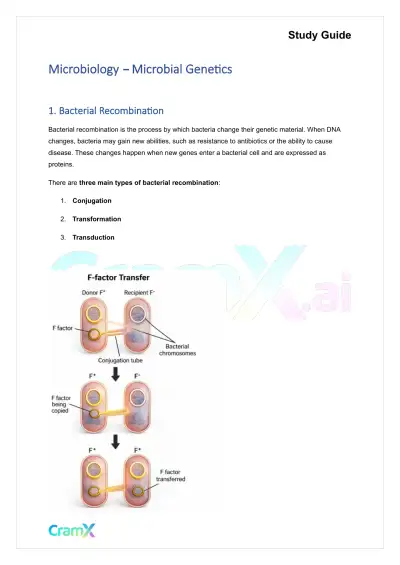 Quick Guides
Microbiology - Microbial Genetics
Microbiology
13 pagesMar 2026 Quick Guides
Microbiology - DNA and Gene Expression
Microbiology
15 pagesMar 2026 Quick Guides
Microbiology - Diseases of the Digestive System
Microbiology
15 pagesMar 2026 Quick Guides
Microbiology - Microbial Metabolism
Microbiology
16 pagesMar 2026 Quick Guides
Microbiology - Food Microbiology
Microbiology
13 pagesMar 2026 Quick Guides
Microbiology - Prokaryotes and Eukaryotes
Microbiology
13 pagesMar 2026 Quick Guides
Microbiology - Microbial Cultivation and Growth
Microbiology
15 pagesMar 2026 Quick Guides
Microbiology - Control of Microbial Growth
Microbiology
22 pagesMar 2026
Study this document with CramX
Once it is in your library, every tool can work from it.